Skip to content
Richard Godden

Richard Godden

‘A Voice to be Heard: Christian Entrepreneurs Living out Their Faith’ by Richard Higginson & Kina Robertshaw

A Voice to be Heard: Christian Entrepreneurs Living out Their Faith by Richard Higginson and Kina Robertshaw (published 2017) is an easy and enjoyable read. It comprises ordered reflections on Christian entrepreneurship based around the stories and thoughts of 50 contemporary UK based Christian entrepreneurs. It examines a series of issues that are of particular relevance to entrepreneurs and contains challenges for both entrepreneurs and local churches.
Continue Reading →

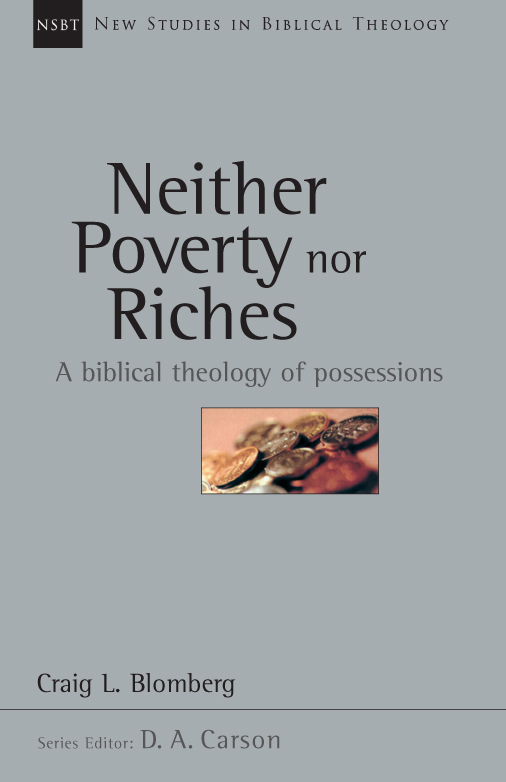
‘Neither Poverty nor Riches’ by Craig Blomberg

Neither Poverty nor Riches by Craig Blomberg (published 1999) is described by its author as a “biblical theology of material possessions”. It is not an easy read and its analysis of every single New Testament passage relevant to its subject may leave the reader feeling exhausted but it is an important book that deserves to be read even if this takes time.

Continue Reading →

Richard Godden: “Public Good by Private Means” by Rhodri Davies

The subject of Public Good by Private Means by Rhodri Davies (published 2016) is much narrower. It considers issues associated with UK (and, to a lesser extent, US) philanthropy and its main (though not exclusive) focus is on philanthropy as a means of tackling poverty. It contains a good historical overview of its subject and is worth reading, not least in order to understand the attacks on philanthropy and philanthropists that have, rightly or wrongly, been made over the years. Some of its underlying assumptions are unstated and it needs to be read with care but it is both interesting and important in the context of our overall response to poverty.

Continue Reading →

‘For the Least of These’ by Anne Bradley & Art Lindsley

For the Least of These edited by Anne Bradley and Art Lindsley (published 2014). This is a collection of essays mainly from a US viewpoint addressing the question how Christians should address poverty. It is not a systematic treatment of this subject and it has deficiencies (including, in some places, an overly polemical style) but it is challenging and interesting and should inspire reflection and further reading.

Continue Reading →

‘Wealth, Poverty and Politics’ by Thomas Sowell

Wealth, Poverty and Politics by Thomas Sowell (revised edition published 2016) is overlong and largely repeats things that its author has been saying for many years. However, it is worth reading as a robust and systematic attack on the prevailing liberal approach to the tackling of poverty that is supported by a wealth (but not an overwhelming quantity) of quantitative and qualitative material. It could be read alongside Saving Capitalism: For the Many, not the Few, which presents what might be called the standard left of centre approach (see our reviews relating to “Capitalism”).

Continue Reading →

‘Platform Capitalism’ by Nick Srnicek

Platform Capitalism by Nick Srnicek (published 2017) has many defects and, were it longer, these might outweigh its merits. However, it is short and is worth reading as a brief analysis of the digital age phenomenon of “platform companies”. It should assist understand of the way in which the business world is moving and reduce the risk of outdated solutions being proposed to modern business problems.

Continue Reading →

‘Managing as if Faith Mattered’ by Helen Alford & Michael Naughton

Managing as if Faith Mattered is an older book (published 2001). It addresses some of the same issues from the perspective of Catholic Social Thought and, as its title implies, ranges widely into management issues generally. Non-Catholics (and even Catholics who are not familiar with Catholic Social Thought) may prefer to start elsewhere, since the book is heavy going in places. However, it adds a useful additional perspective to the other books and, as would be expected, is carefully argued and builds on previous thinking. Further analysis is provided by “Rethinking the Purpose of Business” (Cortright and Naughton Ed.), which we have not reviewed but which comprises a series of essays on the purpose of business from a Catholic perspective.

Continue Reading →

‘Why Business Matters to God’ by Jeff Van Duzer

“Why Business Matters to God” is addressed to Christians. Jeff Van Duzer, now Provost of Seattle Pacific University and formerly Dean of its School of Business and Economics, suggests that Christians in business “have often been made to feel like second-class citizens in God’s kingdom” (page 9). His aim is to counter the attitudes that underlie this by affirming the intrinsic value of business work “as work full of meaning and importance to God”, whilst at the same time challenging what he describes as the “dominant business paradigm of the…

Continue Reading →

‘Business for the Common Good’ by Scott Rae and Kenman Wong

  The concept of “the common good” dates back at least to Aristotle and has been used by political theorists, moral philosophers and economists down the ages, including people as diverse as Thomas Aquinas, John Locke and Adam Smith. It is a basic concept in Catholic social teaching and is easily understandable by all. However, it is not familiar today in discourse about the purpose and role of business. Wong and Rae want to change this. They suggest that, “it is an important time to reconsider what business, and our…

Continue Reading →

‘With Liberty & Justice for Whom?’ by Craig M Gay

Those interested in the range of Christian views should also read With Liberty and Justice for Whom? by Craig Blomberg. It analyses the spectrum of conservative protestant views about capitalism. It is also quite old (published 1991) but remains valuable as an overview of the various approaches and the issues raised in it are of continuing importance. Indeed, there would be merit in reading it before reading any Christian analysis of capitalism since it will help lay bare the theological and other factors underlying such analyses.

Continue Reading →

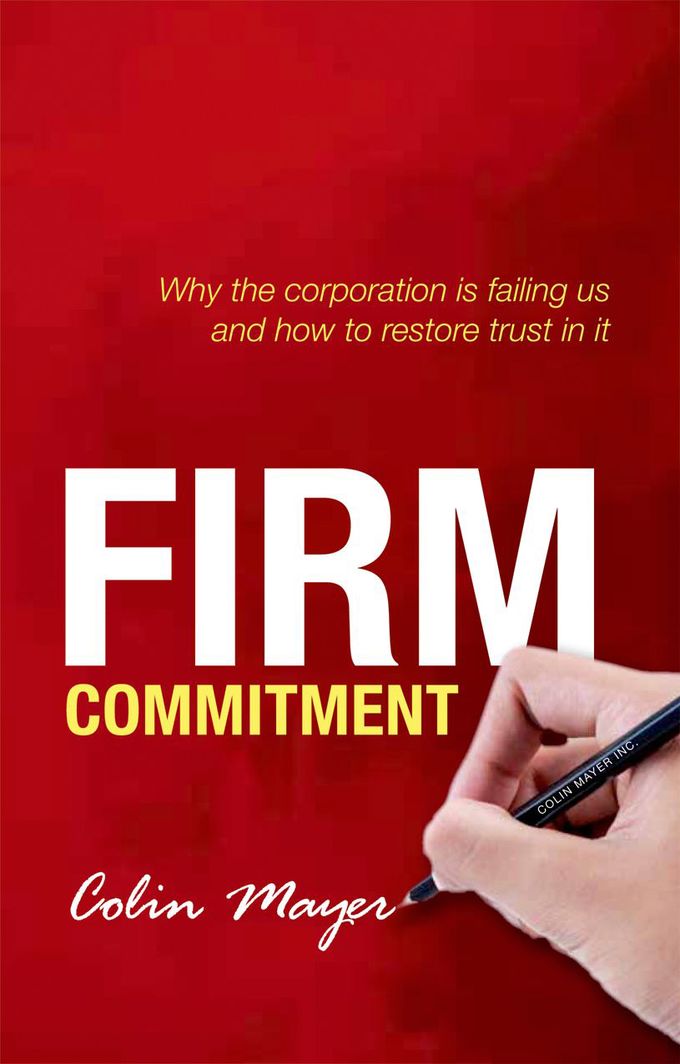
‘Firm Commitment’ by Colin Mayer

Richard Godden reviews Colin Mayer’s Firm Commitment, examining his case that corporations are failing stakeholders and his proposal for “trust firms” as a remedy.

Continue Reading →