Skip to content
Richard Godden

Richard Godden

‘The Economics of Belonging’ by Martin Sandbu

The Economics of Belonging (published 2020) appears to be aimed at the kind of person who reads the Financial Times. Sandbu argues that Western liberal democracy is under threat from within owing to the erosion of a sense of economic belonging. He presents a radical programme for dealing with this threat and, although much of what he says is contentious and unconvincing, the problem is real and those concerned about the current situation will benefit from reading what he has to say.”
Continue Reading →

‘Faith, Finance, and Economy’ edited by T. Akram and S. Rashid

Faith, Finance, and Economy (published 2020) is a fascinating miscellany of essays exploring the relationship between fair and financial or economic matters. Its focus is on Christian perspectives but it also contains interesting essays relating to consumerism in China, Islamic finance and faith in the work place. Although not all the essays will interest all readers, it is a good introduction to various important issues.

Continue Reading →

‘The Power of Creative Destruction’ by Philippe Aghion, Céline Antonin and Simon Bunel

The target audience of The Power of Creative Destruction (published 2021) is less clear but anyone who is interested in the economics of innovation and is not put off by innumerable graphs will find it valuable. The authors draw attention to a number of studies that should challenge those from all parts of the political spectrum and challenge policy makes to accompany the process of creative destruction without obstructing it.

Continue Reading →
Winners and Losers

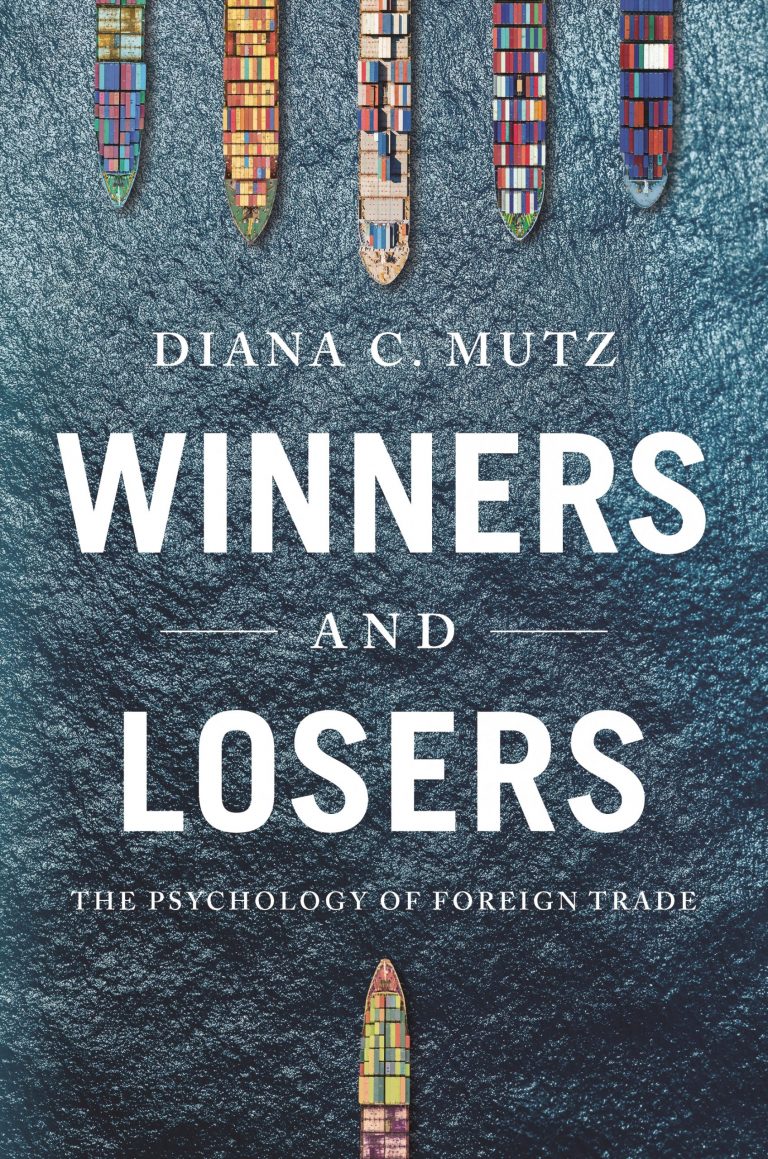
‘Winners and Losers’ by Diana C. Mutz

Winners and Losers: The psychology of foreign trade (published 2021) seeks to understand what determines public attitudes to free trade (which tend to be far more negative than those of economists). Mutz summarises her own research and considers the evidence gathered by others, draws conclusions and reflects on their implications. The result is fascinating and should be considered by all those who wish to see democratic countries pursue free trade.

Continue Reading →

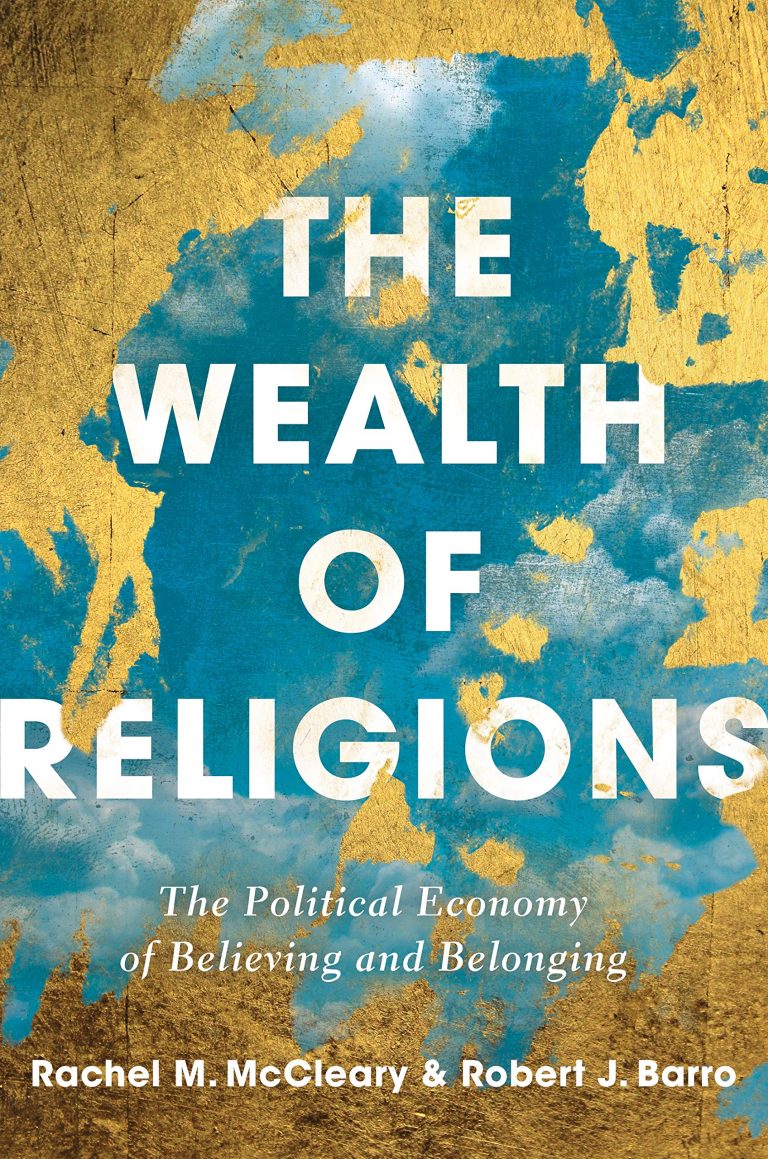
‘The Wealth of Religions’ by R. M. McCleary and R. J. Barro

The Wealth of Religions (published 2019) is an unusual book. It explores both the interplay between religion and economic growth and issues associated with the connection between religion and the political economy. There is an element of miscellany about it but it addresses interesting and thought provoking questions and the diversity of its material should ensure that a wide range of readers will be interested in at least some parts of it.

Continue Reading →
Money and the Rule of Law

“Money and the Rule of Law” by Peter J. Boettke, Alexander William Salter and Daniel J. Smith

Money and the Rule of Law (published 2021) is more specialist than most of the books that we have reviewed: it deals with the question, whether discretionary central banking is a good or a bad thing. It nonetheless deserves to be widely read since it raises issues of societal importance that deserve to be debated far more widely than they are. The authors argue that there are practical reasons for rejecting discretionary central banking and, more fundamentally, that it is inconsistent with the rule of law and thus incompatible with liberal democracy. The book is US centric but the issues are of general applicability and, despite being technical in part, is not a difficult read.

Continue Reading →

Richard Godden: “The World Made Otherwise” by Timothy J. Gorringe

Timothy Gorringe’s more recent book, The World Made Otherwise (published 2018) repeats his call for radical, political, economic and social change and environmental issues have added to the imperative tone of his appeals for this. Unfortunately, his proposals are Utopian and the book is unlikely to prove persuasive to those who do not share his liberal Christian and Marxist views.

Continue Reading →

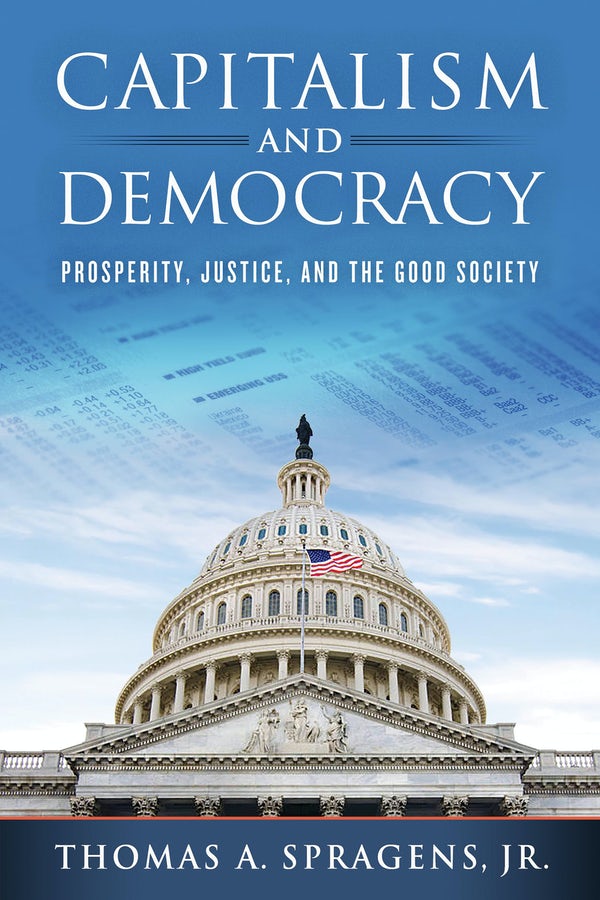
Richard Godden: “Capitalism and Democracy” by Thomas Spragens

Capitalism and Democracy (published 2021) should provide a good introduction to the issues that underlie contemporary disagreements about the role of the market and of government in the economy. It is aimed at the general public who want to improve their understanding of the relevant issues and university students and many others will benefit from its succinct overview of the relevant issues. In an age of political polarisation, Spragens refreshingly argues that reasonable people may differ and that we need to bear in mind that we cannot have it all so we need to balance differing objectives.

Continue Reading →

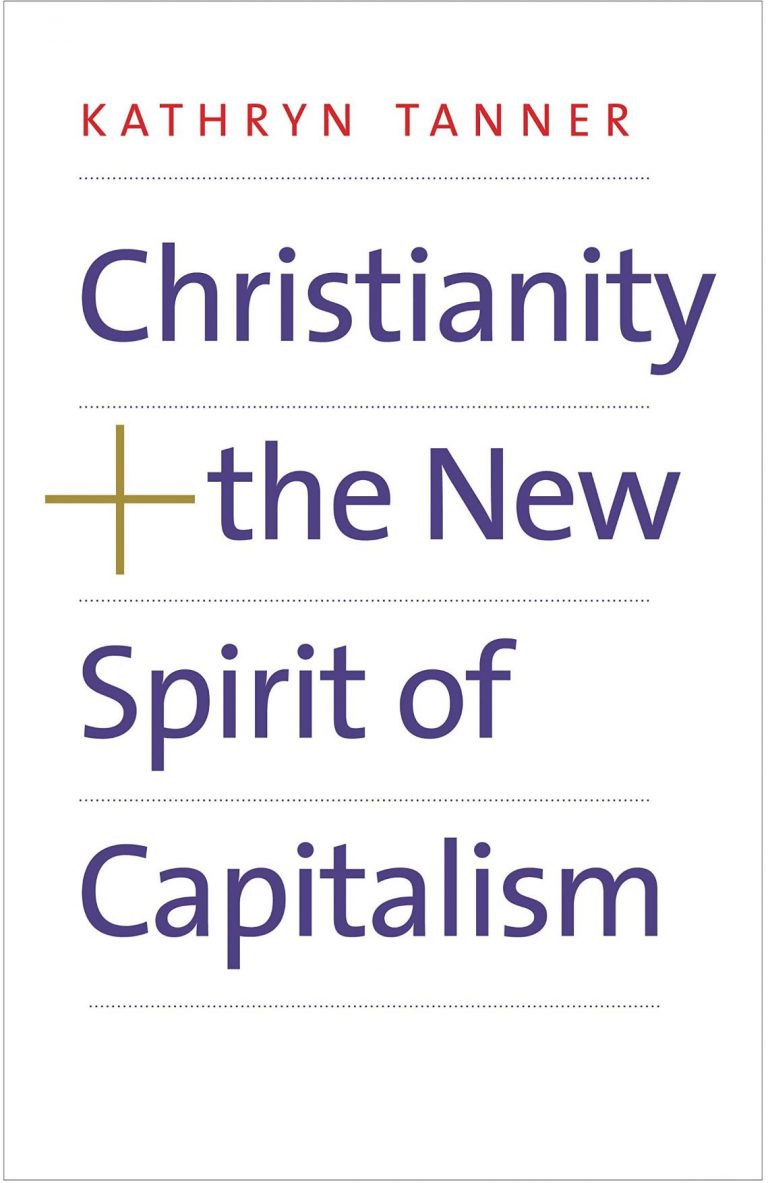
‘Christianity and the New Spirit of Capitalism’ by Kathryn Tanner

Christianity and the New Spirit of Capitalism by Kathryn Tanner (published 2019) also comes from a left of centre starting point. It purports to offer “an imaginative counter to the whole world of capitalism” but its description of capitalism is a muddled caricature and it lacks suggestions that would help people in relation to their everyday work and other actions. Those looking for help in relation to these things would be better off reading some of the other books reviewed in the section of this website entitled “The Business World” (see, in particular, those mentioned under “The Purpose of Business”).

Continue Reading →

‘The Moral Responsibility of Firms’ By Eric Orts and N. Craig Smith

The holding of corporations to account for their actions has become a major issue in recent years but there remains confusion as to the appropriate basis for this and, hence, the extent to which corporations (rather than individuals associated with them) should be held responsible for wrongdoing. As its name suggests, The Moral Responsibility of Firms edited by Eric Orts and Craig Smith (published 2017) addresses an important aspect of this issue. It comprises 12 high quality essays from leading academics who have a variety of different views. It deserves to be widely read.

Continue Reading →

‘The Social Licence for Financial Markets’ by David Rouch

The Social Licence for Financial Markets (published 2020) is, as its name suggests, focussed on banks and other financial institutions. David Rouch seeks to develop the concept of the “social licence” that was coined by the former Governor of the Bank of England, Mark Carney. The book is not an easy read and there are some serious issues with its basic thesis. Those who persevere will, however, find much food for thought and, probably, plenty to applaud in what Rouch says.

Continue Reading →