
This article was first published by Christian Today on 18 September 2019.
It is a good question and thankfully it is one that Edward Carter has been wrestling with. I’m just back from a talk he gave to launch his book God and Competition and I’m buzzing with ideas and questions.
For me in particular it is one of those issues I have long wondered about. I was – am – an entrepreneur by nature. Before I became a vicar, I ran a brand agency. I grew up in a family business. Competition certainly wasn’t a dirty word.
In my days in commerce, in particular, it was what made the world go round. We’d compete against other agencies. Sometimes we won. Sometimes we didn’t. If we lost, we didn’t take it personally.
But Christians are a bit squeamish about competition. There is a feeling that it might be ungodly. That it might be all about greed and trampling over others to get what you want. And sometimes, of course, it is or can be. There is such a thing as very unhealthy competition when it leads to the destruction of another’s way of life.
But as I listened to Edward Carter I began to wonder if we might have been too quick to write off competition. Perhaps it can be redeemed and seen as part of living life to the full.
There is some biblical merit to this view. St Paul talks about running and winning the race. He doesn’t seem to place competition outside of God’s orbit. He refers to winning a running race because it will appeal to his listeners and because he has a sense that competition, done the right way, may be part of being a fully functioning person.
What’s more competition can be healthy. It is one of the ways we can disrupt the power of monopolies, oligarchs and vested interests. It can be a way of liberating markets and opening them up as places where merit can triumph.
If you think about it, what would life be like without competition? There would be no sport, or board games or music charts. Competition has a way of bringing the best out of us and helping organisations to crack problems and lead advances in knowledge and practice. Monopolies tend to be sluggish and inefficient and tend not to make the most of people’s talents.
At its best, competition can be win-win. Even if we lose we can befriend the victors and see that we both played a part in the competition. Competition can lead to communities pulling together and generate a kind of winning solidarity. We seem to be hard-wired for competition. Perhaps God might see it as part of being a person.
It is such an interesting area and certainly bears thought. There is a theological movement that paints a picture of the trinity as a social, non-competitive group. It argues from this that society should be, and could be non-competitive. But I ask again, is competition wholly bad?
On the one hand, of course, the kind of competition that leaves the defeated crushed is hard to love and difficult to see as part of the faith. But competition with some kind of ethical edge might be part of what drives us on to a sense of identity and worth. Unfettered competition may be brutal, but that is only part of the story.
I wonder where you stand in all this? I used to play for a local cricket team. I loved the camaraderie of the group. And yes, it was a pleasure to win. If we hadn’t competed then it wouldn’t have been worth playing cricket. At the end both sides had a beer together and chatted about the match. Competition was healthy.
So perhaps there is a more positive theology of competitive behaviour. Edward Carter, a vicar in Norwich, certainly thinks so. I lived in Norwich for six years in the 80s during which time I started supporting Norwich City FC. This week we defeated Manchester City. It was David defeating Goliath. Perhaps we can agree that in this instance, competition was part of another bible passage that declares that the last will one day be first.

Steve Morris is the parish priest at St Cuthbert’s North Wembley. In earlier days he ran a brand agency, worked as a journalist and wrote books about management.

The Centre for Enterprise, Markets and Ethics (CEME) is pleased to announce the publication of God and Competition – Towards a Positive Theology of Competitive Behaviour by Edward Carter.
A hardcopy can be purchased by contacting CEME’s offices via email at: office@theceme.org
The Centre for Enterprise, Markets & Ethics (CEME) was delighted to organise an event on God and Competition – Towards a Positive Theology of Competitive Behaviour. Hosted by CCLA Investment Management, the event featured a book launch, lecture, group discussion and reception. Author Revd Canon Edward Carter talked about his new book on competitive behaviour and how we can develop a positive and constructive understanding of competition.
Brian Griffiths – Chairman, CEME
Richard Turnbull – Director, CEME
Andrew Lilico – Executive Director, Europe Economics
Andrew Baughen – Soulful Enterprise research project
Richard Godden – Partner, Linklaters
Andrew Packman – Partner, PwC
John Tattersall – Partner, PwC, Chair Oxford Diocesan Board of Finance
Revd Dr Michael Lloyd – Principal, Wycliffe Hall, Oxford
Revd Canon Edward Carter – Vicar, St Peter, Mancroft, Norwich, Director, CBF Funds
Andrei Rogobete – Associate Director, CEME
Adrian de la Touche – Company Director
Anand Selvarajan – European Region Leader, RSM Global
Peter Eckley – Economist, Bank of England
Michelle Meagher – Centre for Law, Economics and Society, UCL
Graeme Pollard – Diocesan Secretary (CEO), Diocese of Blackburn
Revd Julian Macro – United Reformed Church
Revd Steve Morris – Vicar, entrepreneur
Noemie Wiroth – UNIAPAC
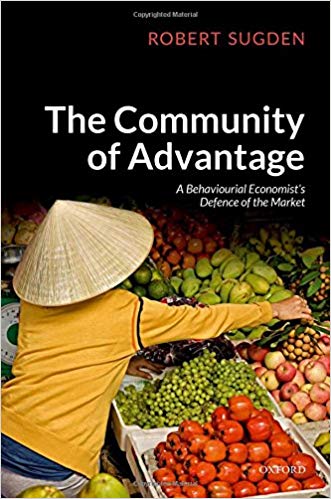
Neoclassical normative economics seeks to avoid state paternalism. On the assumption that human beings display “integrated preferences” (i.e. preferences that are stable, context-independent and internally consistent), this objective may be secured by public policy objectives being based on “preference-satisfaction”. However, psychological experiments over the past 30 years have demonstrated that the assumption is false: human preferences are highly context-dependent (e.g. people display loss aversion and thus value an item more when they possess it than when they do not). This finding challenges neoclassical economics and raises the question whether there is no alternative to centre-left paternalism.
Professor Robert Sugden of the University of East Anglia thinks that there is an alternative and in The Community of Advantage makes “an attempt to maintain the liberal tradition against … a challenge from behavioural economics” (page 4).
Sugden dismisses previous efforts to meet that challenge. In particular, he takes on those who argue that, whilst human decisions may be influenced by irrational factors, people have “latent preferences” which may be used as a plumb line for preference-satisfaction. He asserts that there is no experimental basis for believing that such preferences exist and thus they cannot form the foundation of welfare planning. He thus dismisses Sunstein and Thaler’s concept of welfare planners creating conditions in which people are “nudged” towards decisions that satisfy their latent preferences. In short, Sugden shares Hume’s scepticism about human rationality and believes that economics should proceed on the basis that such rationality does not exist.
Some might conclude that this leaves liberal economics nowhere to go. However, Sugden suggests that it can be saved by the substitution of what he calls the “Individual Opportunity Criterion” for the traditional preference-satisfaction criterion. He argues that, “as viewed by each citizen separately, more opportunity for that person is better than less” (page xi) and hence he attaches “normative significance to opportunity sets without explicit reference to individuals’ preferences” (page 115). He defends this approach on the basis that it treats humans as responsible agents and the concept of responsibility “provides philosophical underpinning for the claim that opportunity has value” (page 106).
Sugden sets this proposal in the context of “a contractarian perspective”. He points out that, whether expressly or impliedly, economists normally address “an impartially benevolent autocrat” (page 23) and argues that it is both more useful and more consistent with a liberal view of society, to adopt the point of view of individual participants in society: “the most fundamental characteristic of this perspective is that a recommendation is addressed to a set of individuals, showing those individuals how they can coordinate their behaviour to achieve mutual benefit” (page 37).
This is, of course, a liberal, market-based view and Sugden, therefore, examines and defends the moral status of market relationships. He recognises that the findings of behavioural experiments challenge the idea that the achievement of mutual benefit is generally well served by the free actions of self-interested agents in competitive markets. Such experiments have found situations in which self-interested agents would fail to realise opportunities for mutual benefit but ordinary human beings succeed in doing so. Sugden, however, argues that it is wrong to think that there is “a fundamental opposition between the attitudes that are expressed in market relationships and those that are expressed in genuinely social relationships” (page 207). His conclusion is that “it may be possible to think of market relationships as expressing cooperative attitudes that are complementary with kinds of pro-sociality that can help individuals to solve collective action problems” (page 208).
Underlying these ideas is a long history of philosophical thought. The “contractarian” viewpoint is expressly derived from the thinking of Hobbes and Hume and a nuanced view of human behaviour in a market context can be traced back to Adam Smith (see Humanomics by Vernon Smith and Bart Wilson, which is reviewed on this website). More fundamentally, as Sugden acknowledges, he is greatly indebted to John Stuart Mill’s concept of the market as a “community of advantage”, hence the title of his book.
Sugden’s approach is thus vulnerable to some of the charges levelled against his philosophical forebears. In particular, many will question the moral relativism inherent in it and point out that, despite his best efforts to eliminate absolute moral values, the statement that “the ultimate authority for judging what is in a person’s interests is that person himself” (page 83), which underlies the Individual Opportunity Criterion, appears to be an assertion of an absolute reference point.
The psychological foundations of Sugden’s approach are of more recent origin than its philosophical foundations and some caution is required in relation to them. The results of “trust games” and similar experiments are not in doubt but the interpretation of at least some of their findings is controversial, as Sugden himself acknowledges. Consequently, whilst his case for the consistency of his theory with human psychology is persuasive, it is not conclusive. In particular, whilst it is clear that people often do not display “integrated preferences”, it is not clear that the concept of rational preferences must be completely discarded. Sugden asserts that he does “not want to claim that individuals are never conscious of akrasia” (i.e. acting against their better judgement; page 81) and, once this concession has been made, one has to take seriously the possibility that individuals have some latent preferences (their “better selves”) even if this concept cannot bear the weight that has sometimes been placed on it by economists.
Many readers will thus take issue with much of what Sugden says. However, those who dislike his moral relativism may still accept that a “contractarian” viewpoint is useful and those who disagree with his view of human psychology should still take note of the fact that he is suggesting that a liberal approach to economics is justified even if one adopts this. Furthermore, the philosophy inherent in his defence of the market economy should not distract from the fact that his underlying position is one that can be endorsed by a wide spectrum of people. The final few lines of the book are worth quoting in full:
“I share Mills’ conviction that cooperation for mutual benefit is the fundamental organising principle of a well-ordered society. The market is not, or should not be, an arena of non-moral, instrumental motivation from which practices that are more genuinely or more intrinsically valuable need to be insulated. Market transactions are a crucial part of the network of cooperative relations that make up civil society” (page 281).
The Community of Advantage is not an easy read. Indeed, Chapter 6 (The Invisible Hand) is such heavy going that some readers may be tempted to give up at that point. However, the reader who leaves out some parts of the book will still benefit from other parts and the fact that large parts are stitched together sections of previously published papers is helpful since key concepts are considered on a number of occasions.
Those who persevere with the book will be rewarded. Whatever one’s philosophical starting point, it is worth reading.
“The Community of Advantage” by Robert Sugden was published in 2018 by Oxford University Press (ISBN 978-0-19-882514-2). 281 pp, plus notes.

Richard Godden is a Lawyer and has been a Partner with Linklaters for over 25 years during which time he has advised on a wide range of transactions and issues in various parts of the world.
Richard’s experience includes his time as Secretary at the UK Takeover Panel and a secondment to Linklaters’ Hong Kong office. He also served as Global Head of Client Sectors, responsible for Linklaters’ industry sector groups, and was a member of the Global Executive Committee.

The Centre for Enterprise, Markets, and Ethics (CEME) was delighted to co-host a roundtable discussion with St. Mary’s University on the 6th June 2019. The event took place at St Mary’s University, Twickenham and focused on Quakers, Business and Social Responsibility.
Key speakers included:
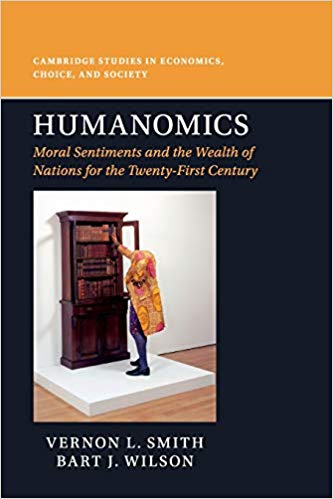
Economics is a social science. It relates to the behaviour of human beings and its success as a science turns to a considerable extent upon its ability credibly to model that behaviour in such a way as to enable reliable predictions to be made.
Neoclassical economists have focused on the concept of utility maximisation as a governing model (“Mr Maximise Utility” or “Max-U”). This approach has come under sustained attack in recent years and Nobel Prize winning economist Vernon Smith and his colleague at Chapman University, Bart Wilson have been at the forefront of these attacks. Humanomics is their latest salvo. It brings together in a concise form (the book being only 207 pages long) the research and thinking that they have undertaken over the past couple of decades.
Smith and Wilson accept that Max-U “served well-enough the observational demands of decision in market supply and demand experiments under perfect enforcement of property” (page 159) but they point to its failure to account for the results of two person trust game experiments of the past 30 years. They argue that a new theoretical model of the relevant human behaviour is necessary, and they seek this in Adam Smith’s first book, The Theory of Moral Sentiments (1759). They suggest the theory put forward in that work both explains modern experimental results and has predictive force.
Most prospective readers of Humanomics will have heard of Adam Smith’s later and more famous work “An Inquiry into the Nature and Causes of the Wealth of Nations” (1776) but it is likely that few will have read The Theory of Moral Sentiments and many will question whether a largely forgotten book written over 250 years ago is worthy of resurrection. However, few will have any doubts on this score once they have read what Smith and Wilson have to say about it.
The first half of Humanomics largely comprises an explanation of the perceived problem in the concept of utility maximisation, the dismissal of previous attempts to solve that problem and a detailed analysis of Adam Smith’s theory. It includes a close examination of Smith’s terminology, which is vital since some of his key concepts are no longer in everyday use (e.g. “beneficence”) and others of them are used in a sense that does not quite correspond to some modern usage (e.g. “sentiments”). Having done this, Smith and Wilson move on to extract various axioms, assumptions and principles from Smith’s work. Some of these may seem self-evident but the reader may have a sneaking suspicion that many economists have forgotten them (e.g. “Axiom 1: Human beings fellow feel with each other”, page 71). Others are less obvious but appear to correspond with everyday experience (e.g. “Axiom 4: As compared to a normal baseline condition, human beings experience an asymmetrical change between feeling something good (e.g. joy) and feeling something bad (e.g. sorrow)”, page 73 – an axiom which is evidenced by the disconcerting fact that vendettas tend to have rather longer lives than alliances).
Smith and Wilson particularly stress Adam Smith’s concepts of “fellow feeling” and “the impartial spectator”. Quoting Deirdre McCloskey’s Bourgeoise Equality (which is reviewed on this website), they point out that we misunderstand Adam Smith if we focus solely on his concept of the invisible economic hand of the market place: Smith saw two invisible hands, the second being the social hand of the impartial spectator (pages 5-6). We are social beings and, as Adam Smith put it, “we endeavour to examine our own conduct as we imagine any other fair and impartial spectator would examine it” (page 75).
Having set out their theoretical stall, in the second half of the book, Smith and Wilson move on to summarise the results of the trust game experiments of recent years and explain them by reference to the theory. They suggest that this provides a convincing explanation of a number of the experimental observations. For example, they suggest that it explains why many people are willing to take a financial risk by trusting another person (even an unknown stranger) to “do the right thing” and why a clear majority of people, having been trusted in this way, prove trustworthy even though they could benefit financially by being selfish and even though this selfishness would never be known to anyone other than themselves. It may even explain the counter intuitive fact that the addition to the trust game of a mechanism whereby the first person can financially punish the second if they are selfish increases rather than reduces the incidence of selfish behaviour
Humanomics is a dense book that requires detailed study. It also contains a significant amount of mathematical and quasi-mathematical propositions, which will put off some readers. However, it repays careful attention, most of the maths will be understood by those who have some experience of formal logic and, since all of the key arguments are explained verbally, other readers can skip the maths without thereby losing the thread of the argument (although, in a few places, they may worry that they have missed something).
Inevitably, the book has shortcomings. For example, in places, it betrays the fact that large parts of it comprise reworked papers published previously by the authors and other collaborators (e.g. there is a lot of repetition and the end of chapter 10 reads like the climax of the book even though three more chapters follow it). More seriously, many readers will find the explanations of the experiments so compressed as to be hard to follow, at least without reading on and then referring-back to earlier parts of the book. Furthermore, the book does not explore the economic or policy implications of the experimental results and theoretical explanations advanced in it, although it contains tantalising hints of some of these (e.g. the comment that some “features of good conduct cannot be extorted, coerced or legislated”, page xv).
More seriously, whilst the authors have done an excellent job in analysing Adam Smith’s theory of moral sentiments, they have barely scratched the surface of a critique of it. Of course, at a high level, they are arguing that its predictive power suggests that is passed the test of being a good theory. However, a close examination of their experimental results suggests that the predictive value may not be as great as they would like to believe. Furthermore, they don’t examine the origins of the sentiments that Smith finds in human beings: they accept Smith’s assertions that either “they seem to have been given us by nature” (page 46) or they arise inexorably from the process of socialisation (e.g. page 74).
For some purposes, this deficiency doesn’t matter but many Christians and other theists will wish to suggest that there is a deeper, more fundamental explanation of human nature. Furthermore, the failure to examine closely the origins of human sentiments leaves open the question whether and to what extent they may be culturally relative and thus less universal than Adam Smith believed. For example, it may be that, at the very high level of generality dealt with by the axioms, principles and assumptions identified by Smith and Wilson, human sentiments are universal. However, what humans perceive to be worthy of gratitude and resentment (to quote Axiom 3, page 71) and, more generally, what is perceived to “satisfy our social impulse” (Principle 1, page 74) may vary from time to time and place to place.
Deirdre McCloskey considers the impact of changes in ideas in works such as Bourgeoise Equality and articles such as Adam Smith Did Humanomics: So should we (2016) and Max U versus Humanomics: a critique of neo-institutionalism (2015). It is clear that her theories and those of Smith and Wilson are related but it would be interesting to explore further whether, ultimately, hers are more subtle and ultimately more persuasive than those of Smith and Wilson or, for that matter, those of the great Adam Smith himself.
That said, one should not criticise a book for not being the last word on a subject or for giving rise to questions that require further attention. Humanomics is deeply thought provoking and, although not an easy read for the non-specialist, should be read by those who want to think further about human economic behaviour.
“Humanomics: Moral Sentiments and the Wealth of Nations for the Twenty-First Century” by Vernon L. Smith and Bart J. Wilson, was published in 2019 by Cambridge University Press (ISBN 978-1-316-64881-0). 207pp.
Richard Godden is a Lawyer and has been a Partner with Linklaters for over 25 years during which time he has advised on a wide range of transactions and issues in various parts of the world.
Richard’s experience includes his time as Secretary at the UK Takeover Panel and a secondment to Linklaters’ Hong Kong office. He also served as Global Head of Client Sectors, responsible for Linklaters’ industry sector groups, and was a member of the Global Executive Committee.

The Centre for Enterprise, Markets, and Ethics (CEME) was pleased to co-host a roundtable discussion with St. Mary’s University on the 9th May 2019. The event took place at CCLA Investment Management (London) and focused on the issue of Data Privacy and Ethics.
Vivienne Artz was our guest speaker for the day. Vivienne is Chief Privacy Officer at Refinitiv; formerly, Thomson Reuters and President of Women in Banking and Finance.
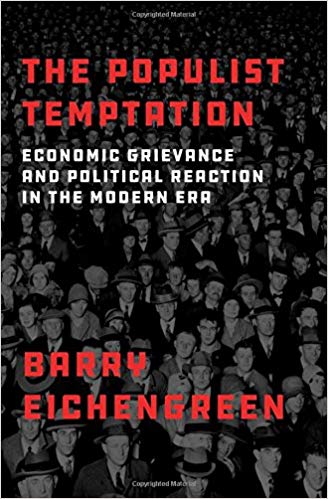
Populism seems to have taken centre stage in today’s public discourse. Whether it’s the election of Donald Trump or Brexit, media outlets, academics, and indeed, the politicians themselves seem to be pointing the finger towards populism. Yet what exactly is populism? Which social and/or economic conditions might give rise to populism? Can populism be countered and if so, how? These are a few of the timely questions that Barry Eichengreen attempts to explore in his book, “The Populist Temptation: Economic Grievance and Political Reaction in the Modern Era”.
Barry Eichengreen is an American economist and Professor of Economics and Political Science at the University of California, Berkeley. An economic historian by background, Barry’s previous notable publications include, “Golden Fetters: The Gold Standard and the Great Depression”, “The European Economy since 1945”, and “Globalizing Capital: A History of the International Monetary System”.
Throughout his works Barry Eichengreen displays a strong command of global economic history and his latest work The Populist Temptation is no exception to the rule. Divided into twelve chapters, the structure is more akin to a collection of essays than the traditional narrative format. Paradoxically, the book is both straightforward yet dense, making the reader take far more time on any given chapter than he or she would have done so otherwise. It reads like a history book with a particular emphasis on economics and while many of the historical remarks are factual, much of the interpretation is subjective. Here it is worth touching upon some of the more contentious issues that can be found:
The author sets out the aim of the book from the onset, that is, to look back at Western history and attempt to identify under which “economic, social, and political” circumstances populism tends to take hold and what are the most effective policies to combat it (page ix). In this pursuit, Barry Eichengreen argues that “populism is activated by a combination of economic insecurity, threats to national identity and an unresponsive political system” – but can be “quelled by economic and political reforms that address the concerns of the disaffected” (page x). We will touch upon some of these reforms shortly.
Chapters 1-3 therefore open up with a conceptual discussion on populism and a historical account of populism in the United States and the United Kingdom. Barry Eichengreen defines populism as, “a political movement with anti-elite, authoritarian, and nativist tendencies” (page 1). He rightly points out that both left and right-wing populism can take on these characteristics – albeit the former focuses hostility toward the so-called ‘elites’, while the latter towards minorities and immigration (ibid).
Another interesting point made is that populism is also a political style. Populist politicians portray themselves as ‘no-nonsense’ leaders, ready to listen and speak directly to the people (page 4). They also make highly effective use of social media by undercutting the traditional media outlets. Most importantly however, populist leaders are able to capitalise on economic uncertainty coupled with a ‘low-trust’ society where significant demographic groups feel that the system is rigged against them (page 10).
Chapters 4-6 turn the attention toward Germany and the socio-economic reforms of Otto von Bismark in the late 19th century but also the American ‘associationalist way’ in the first half of the 20th century. The chapter highlights the positive role of government welfare measures in combating economic uncertainty. This included a combination of the social insurance state and tariff protection for both agriculture and industry that led to an effective suppression of anxiety about economic change on both the “left and the right” (page 57).
Chapters 7-9 bring the historical narrative to the post-war era. The so-called ‘baby boomer’ generation benefited from a period of relative stability and moderation where most of the economic growth was more widely shared (page 102). The problems started from the economic slowdown of the 1970s and exacerbated by the OPEC oil shocks of 1973 and 1979 (page 104).
Barry Eichengreen argues in chapters 9 and 10 that the rise of Trump in the US and Brexit in the UK built against more than just economic insecurity (post the 2008 financial crisis). Trump’s election reflected deep national, social, and personal insecurities that were only exacerbated by economic insecurity – conditions which in turn fed opposition to immigration (page 117). Similar things can be said about Nigel Farage and Brexit in the UK which the author discusses in Chapter 10.
Therefore, what are the solutions to rising populism? Chapters 11-13 explore several possibilities. A return to economic growth and rising wages would perhaps be the first and most important change (page 146). Others include investment in education and skills, and a more inclusive economy where firms could be given “tax incentives to adopt employee stock option plans. […] and a curbing of [corporate] excesses” (page 148). Reforming the immigration system could also be effective in combating populism yet the author acknowledges the deep disagreements in the best way to go about it (page 158-159). The EU could also take more steps to being more democratically accountable and closer to the people, such as nominating the president of the Commission by popular vote (page 176). However, the book acknowledges in its ending that both the US and the Europe will remain susceptible to populism and that neither “admit to easy solutions” (page 187), yet understanding the underlying problems is a starting point.
In concluding The Populist Temptation by Barry Eichengreen is a worthy addition on a topic that seemingly engulfs our time. The book is dense which makes it informative but may prove to be a rather slow read for some. No doubt the reader will walk away with a greater perspective and sense of understanding of populism. The problem however remains on the author’s subjective interpretation of government initiatives and their direct impact on controlling populism. Provided that the reader views the ‘government and/or regulation is the solution’ dogma through a critical lens, The Populist Temptation is certainly a worthwhile read.
“The Populist Temptation: Economic Grievance and Political Reaction in the Modern Era” by Barry Eichengreen was first published in 2018 by Oxford University Press (ISBN-9780190866280), 244 pp.

Andrei Rogobete is the Associate Director of the Centre for Enterprise, Markets & Ethics. For more information about Andrei please click here.

The Centre for Enterprise, Markets and Ethics (CEME) is delighted to announce the appointment of Anne Devlin, Richard Godden and Joanna Moriarty as new members of the Board. Their unique combination of skills and experience will prove invaluable in steering the strategic direction of the organisation.

Anne Devlin worked for 22 years at BP Oil International, 10 of which as Crude Book Leader in Oil Trading in London. She has significant experience of energy markets including trading strategies and international contract negotiations. She retired from trading in December 2018. She joined the board of Terra Solar, a solar development business operating in Ireland, as a non-executive director in February 2019. She is particularly involved in strategic development.
She is the treasurer and a Trustee of Christian Responsibility in Public Affairs (CPRA).
Anne holds a Masters in Management from ESCP Europe.

Richard is a corporate lawyer and has been a Partner in Linklaters for over 30 years, during which time he has advised on a wide range of transactions and issues in various parts of the world. These include many involving industrial reorganisations and transformations and corporate responses to serious operational problems, fraud and other crises. He has held senior roles within the Linklaters’ management including being Global Head of Client Sectors from 2003 to 2010 and a member of the firm’s Executive Committee. In recent years, he has also led a number of Linklaters’ governance and other projects including, currently, its project relating to the Rule of Law.
Richard was secretary to the UK Takeover Panel between 1988 and 1990 and is now a member of the Panel Code Committee, which is responsible for the promulgation and amendment of the UK’s securities rules relating to public takeovers. He is also a member of the Global Goals Leadership Team of Business in the Community (a Prince’s Charity) and from time to time works with Tomorrow’s Company in connection with its consideration of the response of corporates to current societal issues.
He now devotes a significant part of his time to working with various Christian organisations. He is Chairman of Scripture Union and a director (and Chair of Finance) of London City Mission. He also works with Evangelical Alliance in connection with its “Speak Up” project, which aims to ensure that Christians are aware of the freedom of speech that we enjoy in the UK and use it wisely.

Joanna worked for many years in senior leadership at SPCK. She was responsible for the Publishing division, with strong lists in theology, biblical studies and spirituality across the full range of the Christian tradition. She is now a Director in the Charities and Social Enterprise practice at Green Park Executive Search, and leads the Faith practice, recruiting senior executives and trustees.

In a recent interview with the BBC our Associate Director, Andrei Rogobete was invited to discuss the highly contested topic of socioeconomic inequality in the UK.
The full interview can be found here – some of Andrei’s main arguments include:
Inequality becomes a large-scale societal problem when those at the lower end of the income spectrum are unable rise out of poverty, despite their willingness to do so.
Government and increased taxation is not the solution to solving long-term inequality. The real change is more profound and must come from businesses that behave responsibly in paying their employees a fair wage, and a charity sector that can supply the necessary education and skills. Government must help in providing a favourable environment for these changes to take place.
The solution is not going to be quick or easy – but then again when was any great change quick and easy. As a society we need to demand higher levels of ethics and morality from the public and private sectors – both our politicians in power, as well as the businesses we interact with on a daily basis. Collectively as consumers we are powerful.
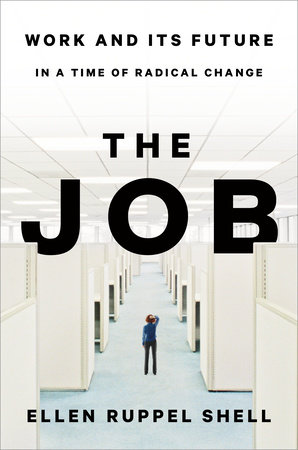
The Job has received rave reviews and it is easy to understand why. Its subject is an important one, the future of work in the digital age, and it is the kind of book that people like. Shell is a journalist who writes well, using eye-catching turns of phrase and telling innumerable stories to provide human interest. She taps in to the feeling that all is not well but, as the book progresses, shifts from heart-breaking stories to heart-warming stories, suggesting that we can do something about the problems that she has identified and that there is a bright future in front of us. Indeed, the book ends with a rallying cry: “Let’s shake off the dread and recalibrate our priorities. The Enlightenment ideal of human advance lifting us from a life of toil into a life of purpose and meaning is at our doorstep. We only need to muster the political will – and the trust – to answer the bell” (page 322).
In the course of this progression from worry to hope, Shell makes some important points and raises important issues, especially relating to the place of work in society and in individual lives. Her focus on the impact of work on people is to be applauded and represents a valuable corrective to those academic tomes that, intentionally or unintentionally, depersonalise economic activity.
Unfortunately, however, The Job is a deeply flawed book. It contains little by way of true economic analysis and, whilst most of the stories are interesting, Shell makes few attempts to analyse the extent to which each of them is typical or what lessons we may legitimately draw from them.
More fundamentally, it is hard to know precisely what Shell is advocating. In the introduction, she states that “In what follows, I make the case to squarely place the innovation of sustainable and worthy work on our public agenda” (page 14) and she constantly refers to “good work”. However, she never defines what she means by this. In some places, she appears to have a somewhat romantic view of work in factories in the twentieth century (e.g. “For many workers, factories can be a kind of second home, and fellow workers a second family”, page 100) but she recognises that there can be no return to the past; in other places, she appears to equate a “good” job with a reasonably paid job (e.g. when she quotes statistics about pay in the United States, page 58) and the subject of the book is largely paid work, although she also recognises the value of unpaid work. More fundamentally, she appears to agree with Michael Pratt that “the quest for meaning through work is among life’s most powerful drivers” (page 97), yet she also suggests that we should not be seeking meaning through work, (page 134).
It is hard to work out exactly what she believes the problem to be. Having apparently, in the early chapters, lamented and explained (at least to her satisfactory) the decline in “good” work and asserted that we need to respond “as good jobs grow scarcer” (page 134), towards the end of the book, she dramatically states that “our National Work Disorder is not really about scarce opportunities: there will always be more than enough good work to go around” (page 319).
Unsurprisingly in light of the confusion as to the nature of the problem, Shell’s “solutions” are unclear. She states that “For many if not most of us, the first step is to question the hard-held assumption that we must make ourselves a good fit for the job rather than create work that is right for us, work that we control rather than a job that controls us” (page 66). Yet later she quotes Michael Pratt as saying that “it’s a dangerous business to advise young people to ‘follow their passion’. Most of us never find one, at least not one that pays the bills” (page 106).
She is equally confused in relation to job stability. Having early in the book demonstrated the decline of the life-long job, one of the stories towards the end of the book illustrates the warmth generated by one particular initiative by quoting an employee who states that they “plan to spend 40 years with this company” (page 310). Shell gives no warning that this may be a pipedream.
The detailed “solutions” put forward in the second half of the book are a hotchpotch of ideas which Shell would doubtless defend on the basis that they illustrate the fact that there is no one over-arching “solution”. However, the solutions themselves are full of contradictions and lack adequate analysis. For example, she spends some pages talking about promoting arts and crafts and asserts that “for every hundred jobs created directly in the arts, sixty-two more jobs blossom in retail, information technology, manufacturing, hospitality, and food service” (page 201). However, she appears to have forgotten what she herself has said about the unreliability of craft production (page 99) and the far greater leveraging effect of heavy industry (page 177). Likewise, her feel-good stories about cooperatives, employee ownership, the use of wasteland and small manufacture, whilst illustrating initiatives that are commendable and doubtless enriching the variety of economic and societal activity, smack more of romanticism than serious proposals for economic change. One of the big problems with Shell’s proposals is that she gives no evidence that they are scalable.
Some of Shell’s other ideas leap from nowhere and are inadequately worked through or justified. These include the suggestion of modifications in the tax structure to incentify employers to create “not just more jobs but better jobs” (page 236) and the suggestion of a “Basic Income Guarantee” (page 315ff). Shell might respond that, in some cases, she is merely noting what others have suggested and, in others, she is merely putting forward ideas for further discussion. However, if this is the case then the book is saying little that is new, which is not its claim.
Following a deluge of stories towards the end of the book, Shell says, “Great stories, sure, but you have every right to ask, “What’s your point?”” (page 311). Indeed we do and this question may be applied not only to the stories in the chapter in which it appears but to the book as a whole. It may well be that one of the main reasons for the popularity of the book is that, by asserting so many different things (including things that are contradictory), by avoiding specificity and clarity and by not committing unequivocally to particular ideas, the book can be all things to all people (at least those of a mildly centre-left disposition). In any event, whilst many will enjoy reading The Job and will be stimulated by parts of it, those who are seeking careful analysis and clearly worked through proposals need to look elsewhere.
“The Job” by Ellen Shell, was published in 2018 by Currency, an imprint of Crown Publishing Group, a division of Penguin Random House (ISBN 978-0-4514-9725-3). 326pp, plus notes.
Richard Godden is a Lawyer and has been a Partner with Linklaters for over 25 years during which time he has advised on a wide range of transactions and issues in various parts of the world.
Richard’s experience includes his time as Secretary at the UK Takeover Panel and a secondment to Linklaters’ Hong Kong office. He also served as Global Head of Client Sectors, responsible for Linklaters’ industry sector groups, and was a member of the Global Executive Committee.