Publications

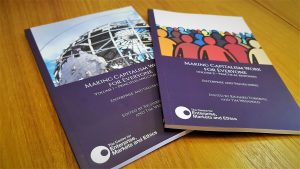
CEME publications include longer form engagements with topics in theology, enterprise, and economics and more specific research papers. A full chronological list is available below along with explanations of the the three series of major publications.

View Complete List ↓

Enterprise and Faith

Our Enterprise and Faith publication series explores questions about business from a Judeo-Christian perspective


Enterprise and Values

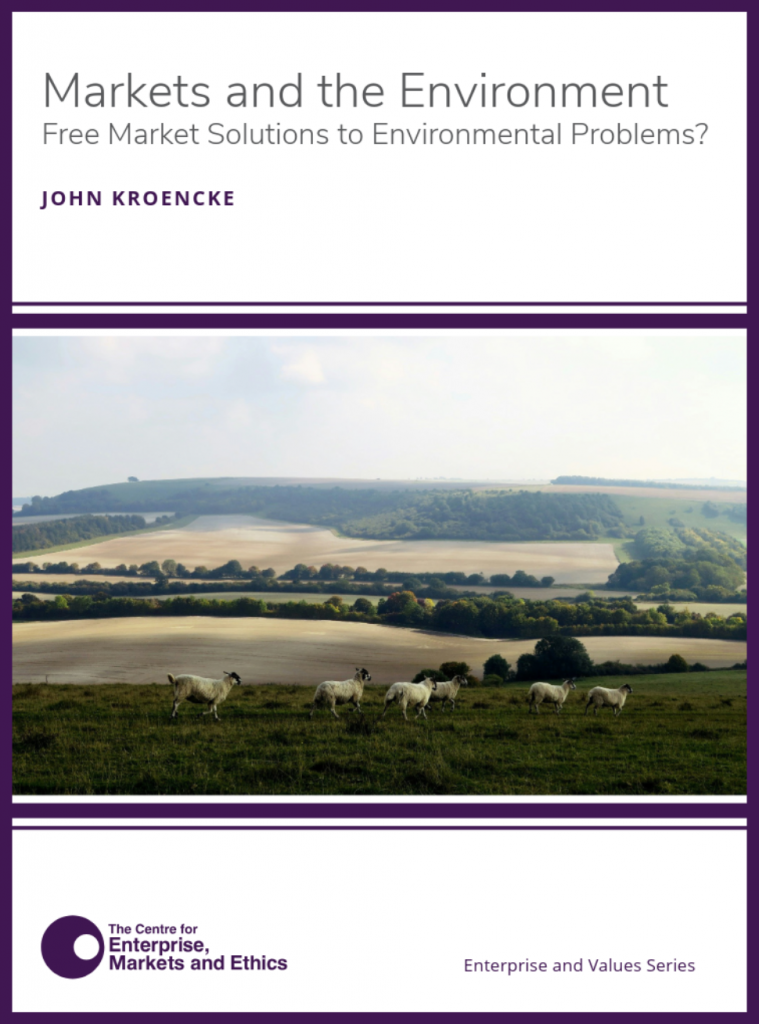
Our Enterprise and Values publication series explores important social and economic issues from basic principles.


Theology and the Market

Our Theology and the Market publication series explores the theological foundations of economic life.


All Publications & Research

The CEME Fforestfach Colloquia Series

Fforestfach Colloquia Series Exploring a Christian perspective on contemporary issues of political economy There are growing concerns that capitalism and democracy are in crisis. Despite the success of free markets in creating global prosperity over two centuries, the recent slowdown in growth in Western economies, the persistence of inflation, increasing economic inequality, financial instability and […]
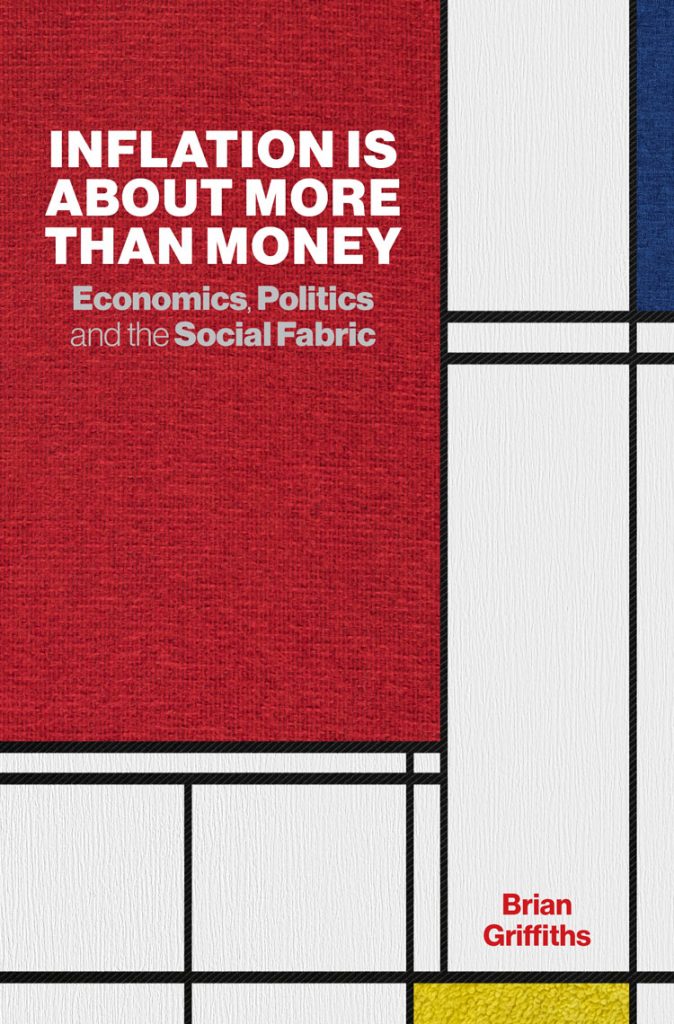
Brian Griffiths: Inflation Is About More Than Money

Selected as a Financial Times Best Summer Book of 2025: Economics The Centre for Enterprise, Markets and Ethics is delighted to announce the official release today of our latest publication, a book by Brian Griffiths (Lord Griffiths of Fforestfach) which addresses the problem of inflation – Inflation Is About More Than Money: Economics, Politics and […]

Richard Turnbull: Is the Non-Executive Director Worth Saving?

The Centre for Enterprise, Markets and Ethics (CEME) is pleased to announce the publication of a report on the topic of non-executive directors. Is the Non-Executive Director Worth Saving? Richard Turnbull PDF  Summary Is the non-executive director (NED) an endangered species? Does it matter? This publication argues that the continued role of the NED matters […]
William Wilberforce: His Life and Significance by Richard Turnbull

On the 24 February 1807, the House of Commons voted by 283 votes to 16 to end the trade in human slaves in all British territory. The principal opponent of the slave trade within Parliament and a leading figure in the diverse coalition of campaigners against the evil trade was a man named William Wilberforce. […]

Andrei Rogobete: Artificial Intelligence & Management Theory

This paper is part of a series of essays that seek to explore the current and prospective impact of AI on business. A PDF version can be accessed here. The advent of Artificial Intelligence (AI) upon the business world raises a myriad of challenges and opportunities for management theorists. The first of these is a […]

Andrei Rogobete: AI and the Future of Work

This paper is part of a series of essays that seek to explore the current and prospective impact of AI on business. A PDF copy of this paper can be accessed here.   The advent of Generative AI is challenging and redefining the world of work. While exacting data on its impact remain at a […]

Lyndon Drake: Virtues of Growth and Restraint

In this final article, I will draw from two stories in the Bible that will be well-known to many readers, to give an example of how those who read the Bible as scripture can draw from those stories in developing modern economic ethics. The first story is of the Garden of Eden, and of the […]

Lyndon Drake: The Task of Modern Economic Ethics

As I suggested in my previous article, my preferred way to read the biblical texts is to identify in them a particular kind of method, rather than precise prescriptions. In this article, I will suggest some specific aspects of method in modern, theologically-informed economic ethics. Above all, I suggest that we give attention to human […]

Lyndon Drake: Types of Creativity in Biblical Texts

One way to approach biblical texts is to read them as if they prescribe economic medicine for modern social maladies. For example, Paul Mills argues that an appropriate and devout appreciation of the Jubilee of Leviticus 25 will result in the construction of an economic system where no interest is charged on debts. This has […]

Andrei Rogobete: The Challenge of Artificial Intelligence

The Centre for Enterprise, Markets and Ethics (CEME) is pleased to announce the publication of The Challenge of Artificial Intelligence: Responsibly Unlocking the Potential of AI by Andrei E. Rogobete. A PDF copy can be found here. A hardcopy of the publication can be ordered by contacting CEME’s offices at office@theceme.org         […]

John Kroencke: Private Planning and the Great Estates

The Centre for Enterprise, Markets and Ethics (CEME) is pleased to announce the publication of:   Private Planning and the Great Estates: Lessons from London A PDF copy can be found here. It is available in a web-friendly format (with clickable endnotes) separated by section: (It has also been split into a Substack series) About […]

Approaching a Biblical Economic Ethic – The Sins of Biblical Economists

Numerous modern authors draw on biblical texts as support for economic rules in modern societies. Notably, contemporary writers often draw contradictory conclusions about the message and intent of the texts in their ancient settings, as well as about the rules that they derive for modern life. In this article, I show the methodological failures of […]

CEME Polling: What is the Value of Business?

The Centre for Enterprise, Markets and Ethics (CEME) is pleased to announce the publication of What is the Value of Business? by Richard Turnbull. The report can be downloaded here. A hardcopy can be purchased by contacting CEME’s offices at office@theceme.org

CEME Publication: Government Debt

The Centre for Enterprise, Markets and Ethics (CEME) is delighted to announce the publication of Government Debt: A Neglected Theme of Catholic Social Teaching by Philip Booth, Kaetana Numa, Stephen Nakrosis and Richard Turnbull. A PDF copy can be found here. A hardcopy of the publication can be ordered by contacting CEME’s offices at office@theceme.org […]

Brian Griffiths: A Celebration of Advent

  The meaning of Advent I must first make a confession. I love carol services. I love singing carols. I love the Christmas tree. I love Christmas decorations. I love the festivities of Christmas. They remind me of when I was very young singing carols from house to house in Fforestfach which was then a […]

Barbara Ridpath: Ethics and Economics

The Centre for Enterprise, Markets and Ethics (CEME) is pleased to announce the publication of Ethics and Economics: Economics as a Servant or Master? by Barbara Ridpath. A copy of the publication can be found here. The publication can be purchased in hardcopy by contacting CEME’s offices via email at office@theceme.org             […]

CEME Project: Why Saving Matters

Most people today who pay any attention to the news will be familiar with key economic concepts – consumption, investment, public expenditure, output, exports, imports, unemployment, economic growth, the balance of payments, public borrowing, interest rates, inflation, the national debt. Yet the one measure we hear little about is saving. Saving has become the Cinderella […]