The best study available online
Works in Progress
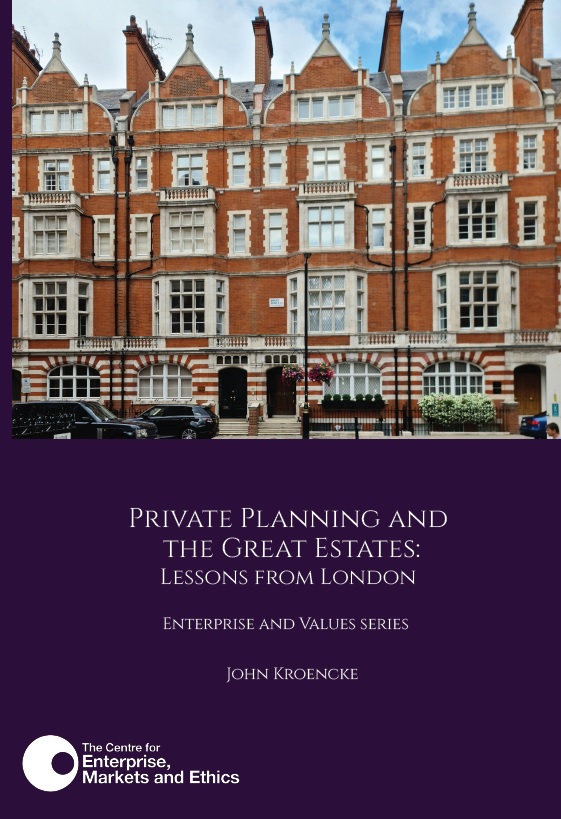
As John Kroencke explains in his excellent recent monograph, Private Planning and the Great Estates, many of those “graceful suburbs”, beloved by residents, were in large part built through leasehold — the very ogre the Housing Secretary’s proposed legislation purports to slay.
The Critic
The reasons for London’s comparative beauty in residential architecture to, say, New York’s, are myriad and beyond simple illustration, but one compelling explanation is the strength of private landholders in the capital, who during crucial eras of development wielded considerably more power than either the state or the Crown. We owe London’s formidably memorable terraces to the Grosvenors, Cadogans, Portmans, Bedfords, and other illustrious families who constructed leasehold properties with an eye to posterity rather than the quick flip. In Private Planning and the Great Estates: Lessons from London, John Kroencke, a senior research fellow at the Oxford-based Centre for Enterprise, Markets and Ethics, explores the nature of London’s traditional housing market and draws lessons that may be useful today.
The New Criterion