
Skip to content
Philip Booth

Philip Booth

Philip Booth is professor of Catholic Social Thought and Public Policy at St. Mary’s University, Twickenham (the U.K.’s largest Catholic university) and Director of Policy and Research at the Catholic Bishops’ Conference of England and Wales. He is also Senior Research Fellow and Academic Advisor to the Centre for Enterprise, Markets and Ethics.

Previously, Philip was academic and research director at the Institute of Economic Affairs from 2002 to 2016 and senior academic fellow there from 2016 to 2021. He has worked for the Bank of England and as associate dean of Bayes (formerly Cass) Business School. He held the positions of Director of Research and Public Engagement; Dean of the Faculty of Education, Humanities and Social Sciences; and Director of Catholic Mission at St. Mary’s.

Philip has written widely on investment, finance, social insurance, and pensions, as well as on the relationship between Catholic social teaching and economics. He curates the website: www.catholicsocialthought.org.uk.

His books include Catholic Social Teaching and the Market Economy; Catholic Social Thought the Market and Public Policy; The Road to Economic Freedom; Verdict on the Crash; and Christian Perspectives on the Financial Crash.

He is a fellow of the Royal Statistical Society, a fellow of the Institute of Actuaries, and an honorary member of the Society of Actuaries of Poland.

He has a B.A. in Economics from the University of Durham and a Ph.D. in Real Estate Finance from City University.

Government Debt

Government Debt (Introduction)

Introduction In recent decades, a significant number of developed countries have accumulated high levels of government debt. Historically, countries have borrowed to fight wars or finance profligate spending. However, the development of modern debt markets and instruments, together with post-war thinking in economics, has changed both the nature of government borrowing and indebtedness, as well […]

Continue Reading →

Is Polycentricity the Solution to Regulating AI?

Philip Booth weighs state, civil society and market solutions to AI’s power problem and judges polycentric governance the most workable path.

Continue Reading →
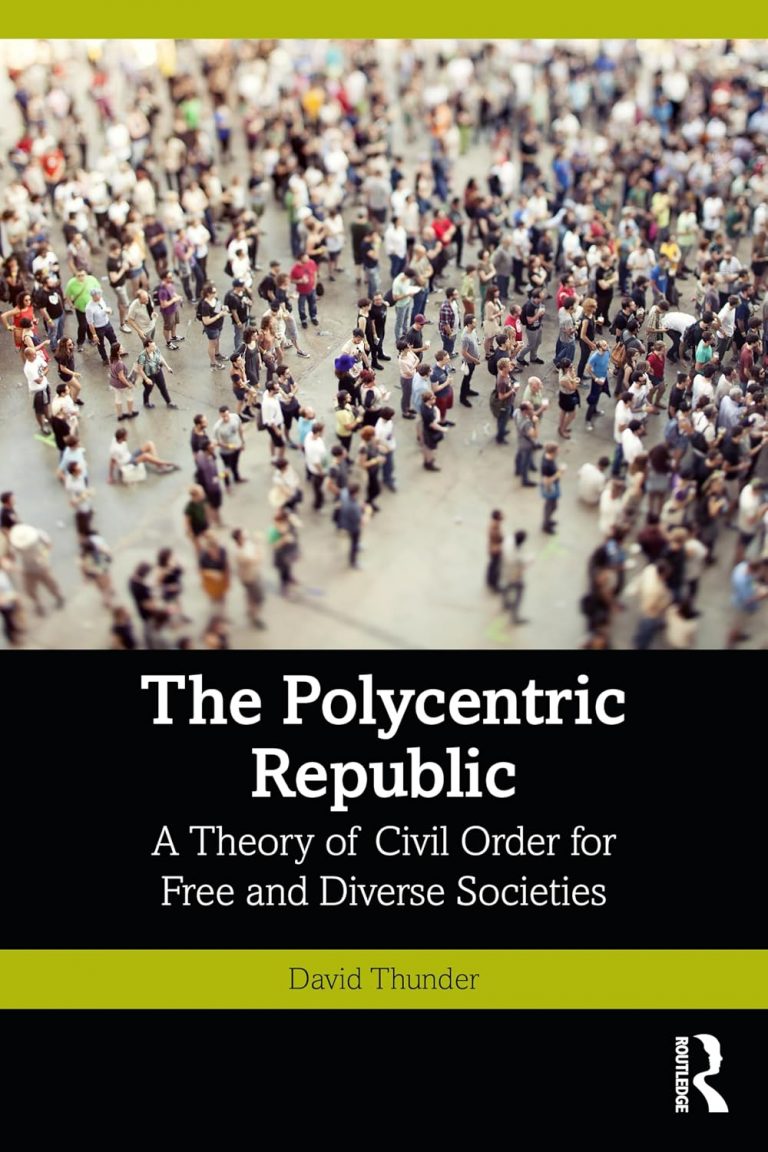
The Polycentric Republic

‘The Polycentric Republic’ by David Thunder

Philip Booth assesses an argument for a limited state and dispersed, competing forms of governance based not simply on a concern for increased freedom, but the ability to flourish.

Continue Reading →
AI and the future of higher learning

AI and the Future of Higher Learning, Think Tanks and Universities

In his Nobel Prize lecture, Ronald Coase said: ‘a large part of what we think of as economic activity is designed to accomplish what high transaction costs would otherwise prevent’. Think of the retail sector, for example. Its sole function is to reduce transactions costs – not to produce anything tangible. If you want a roast […]

Continue Reading →
Rerum Novarum

A Guide to Rerum Novarum, Part Three

The Protection of Workers, Unions and the Duties of Employers This is a repost of an article originally published on the Catholic Social Teaching blog of St Mary’s University (https://catholicsocialthought.org.uk/).  Part I, Part II In this final part of the encyclical, the treatment and protection of the working class is dealt with directly and at […]

Continue Reading →
Rerum Novarum

A Guide to Rerum Novarum, Part Two

The Church, the Family, the State and the Use of Riches We ended Part One of this guide to Rerum novarum with the encyclical’s reminder to the rich that they would have to answer to God if they were not generous with their riches. The focus of that first part was the staunch defence of the […]

Continue Reading →

Back to Budget Basics

Back to Budget Basics Providing Christian commentary on the recent budget is not especially easy. There was a measure to remove the two-child cap on Universal Credit payments that was welcomed by many Christians. But the rest of the budget was really a collection of bits and pieces with many deferred tax rises, on which […]

Continue Reading →
Rerum Novarum

A Guide to Rerum Novarum, Part One: The Political Context and the Right to Property

This is a repost of an article originally published on the Catholic Social Teaching blog of St Mary’s University (https://catholicsocialthought.org.uk/). Historical Context Upon his election, Pope Leo XIV said that he was inspired to take the name ‘Leo’ by Pope Leo XIII’s work on Catholic social teaching. The newly-elected pope especially mentioned Pope Leo XIII’s […]

Continue Reading →

Pope Francis, Fraternity and Globalisation

This is a repost of an appreciation of Pope Francis by CEME Fellow, Professor Philip Booth, first published on the Catholic Social Teaching blog of St Mary’s University. We thought it would be of interest to CEME readers, but reposting does not mean endorsement of every point. In the coverage of the passing of Pope Francis […]

Continue Reading →

Philip Booth: Tariffs are No Solution to a Non-Existent Problem

President Trump has certainly brought the issue to the fore with a bang. Perhaps his attempts at protectionism will show the error in the thinking of the anti-globalists in our own country. We don’t get many controlled experiments in economics. Perhaps this will be one. The anti-globalisation trend, which is strongly supported by Christians in […]

Continue Reading →
Government Debt

Government Debt (Chapter 1)

The characteristics and consequences of government debt Growth of government debt often goes unnoticed – the spending decisions that lie behind it are more likely to feature in headlines and comment. In addition, government debt may be related to more hidden costs, such as pensions and health care. This chapter reflects on the way government […]

Continue Reading →