
Starbucks and corporation tax
What are the issues with Starbucks and tax? Dr Richard Turnbull has undertaken a detailed analysis of Starbucks' accounts and published statements. His paper is available here.

What are the issues with Starbucks and tax? Dr Richard Turnbull has undertaken a detailed analysis of Starbucks' accounts and published statements. His paper is available here.
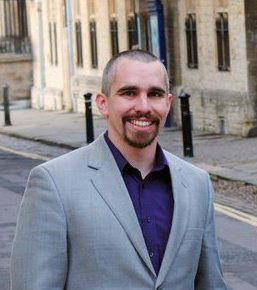
The first in our series of "Conversations in Theology" was held on 15 May 2013 in London. A paper was delivered by our Associate Christopher Hays, to a gathering of around 20 invited guests, interested in the topic "Wealth Ethics in the New Testament". Please find a copy of the paper here.

Today the role of the Christian church in business seems to be mainly, in England anyway, as a vocal critic of the capitalist system. Business and wealth creation– let alone the dreaded banking industry - is viewed with suspicion in many Christian circles. The role of addressing the ills of society seems, as far as I can understand the Church of England’s views, to be the responsibility of the state, not business and certainly not Christians in business. Sadly, we have lost our Christian history. For there was a time…

A message from the Director, Dr Richard Turnbull: Tax and morality Is the purpose of taxation payment for common services (defence, health, welfare) or a tool for the redistribution of wealth? That decision, and the balance between them, is a political one. However, there is nothing intrinsically moral about either high or progressive taxation. First, higher rates of taxation may not raise more revenue (the argument would be about the precise positioning on the Laffer Curve). Second, an extra pound raised for the government means a pound less at the disposal of individuals and families or for philanthropic activities. There is…
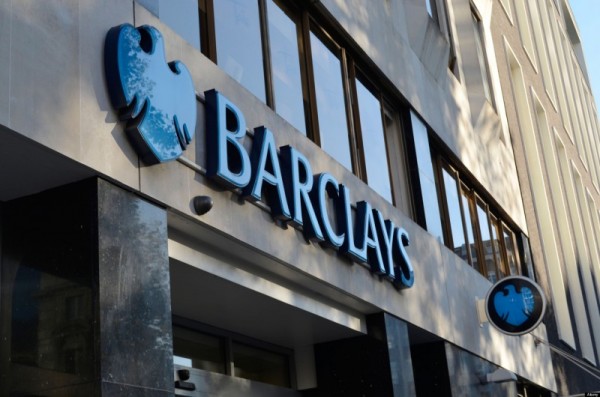
The frugality and simplicity of the Quaker character encouraged the patient wait for economic return in entrepreneurial activity - the precise opposite of the greed that seems so much at the forefront today. On the 26th of November 2014, the Centre for Enterprise, Markets and Ethics held a discussion on Quaker Capitalism: Lessons for today? We need to ask what were the principles that drove the Quaker vision and how might we apply those principles today? Perhaps if greater attention had been paid to the stewardship of the historic Quaker values in…
A message from the Director, Dr Richard Turnbull: The market and morality The market economy is not perfect. However, we do sometimes forget that it is the market that has delivered significant prosperity to the world and lifted millions of people out of poverty. Improvements in literacy and sanitation have contributed to a significant reduction in the number of people existing on the benchmark measurement of $1 a day. Enterprise,trade, micro-credit and social venture capital are, however, foundational to a global reduction in poverty. This reminds us that there is a moral case…

The second in the series "Conversations in Business" was held on 21 February 2013. The papers presented by the panellists, on the topic "Regulation and the British Economy : Freeing up the Enterprise Economy" can be found here. The panel consisted of: Bernard Grenville-Jones, Businessman & Entrepreneur - click here Baroness Judith Wilcox - click here Dr Richard Turnbull, Director, CEME - click here
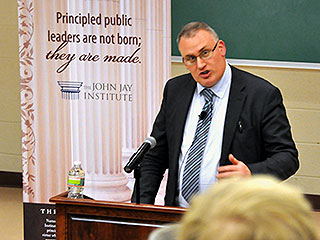
The Revd Dr Richard Turnbull presented a paper at the Entrepreneurial Leaders' Conference in Vancouver in November 2012 on the topic : Can I be ethical and make money at the same time? A video of this presentation is now available on the ELO website. Please find Richard Turnbull's paper here.
A message from the Director, Quaker Capitalism and virtuous companies I am fascinated that in the early years of the industrial revolution some of the great businesses were established by Quakers – not least the first iron foundry established by Abraham Darby. There were many others, Cadbury, Rowntree, Clarks’ Shoes, Barclays and Lloyds. Why was this so? The answer lies in some combination of moral integrity, culture, networks and spiritual commitment or purpose. I am not suggesting we all become Quakers but rather that there are lessons, both commercial and moral, which we could usefully learn. Later this…