Saving for a Property-Owning Democracy – Andrei E. Rogobete
Andrei E. Rogobete is Associate Director with the Centre for Enterprise, Markets and Ethics. He is the author of several publications, including Ethics in Global Business: Building Moral Capitalism and The Challenges of Migration and The UK Savings Crisis. His main areas of research include business ethics, sustainable governance, as well as the contemporary role of Judaeo-Christian teaching. He also writes regularly on the wider socioeconomic challenges facing Britain and beyond.
Andrei’s background is in political consulting and media relations, having previously worked in Westminster for Media Intelligence Partners (MIP). During his time at MIP, Andrei worked on bespoke political campaigns for several high-profile politicians and members of the Cabinet.
Andrei holds an MSc from University College London in Business and a BA in Politics and International Relations from Royal Holloway, University of London, together with a CTS in Theology from the University of Oxford.

Most people today who pay any attention to the news will be familiar with key economic concepts – consumption, investment, public expenditure, output, exports, imports, unemployment, economic growth, the balance of payments, public borrowing, interest rates, inflation, the national debt. Yet the one measure we hear little about is saving. Saving has become the Cinderella of economic thinking. This is because saving was discredited by Keynes in his The General Theory of Employment, Interest & Money.
In the nineteenth century and up to The Second World War classical British economists such as Adam Smith, David Ricardo and James Mill as well as neo-classical economists such as John Stuart Mill, Edgeworth, Marshall and Pigou paid great attention to saving. Saving was key to investment and economic growth. Within society saving was seen as a virtue. It enabled people to stand on their own two feet and fend for themselves and their families should they encounter adversity. It enabled them to build up some capital and buy their own homes.
Facing the problem of mass unemployment in the 1930s Keynes argued that increased saving would not necessarily be channelled into investment through the banking system or capital markets, but simply remain an inert stock of savings, which was good for very little. The emphasis switched to stimulating consumption expenditure by increasing investment which would have a multiplier effect on increasing income. In the concluding notes of The General Theory (ch.24) Keynes recognised that his policy prescription would lead to the ‘the euthanasia of the rentier’ which he described as ‘the functionless investor’.
Serious deflation however is rare. In the past century it occurred in the 1930s. in this century there was a prospect of it following the banking crisis of 2008. In both these cases deflation was not just a prospect of falling prices but the collapse of the financial system as well.
With the publication of Andrei Rogobete’s monograph on The UK Savings Crisis, CEME embarked on a project to explore the importance of saving in the UK.
Today we are publishing four short essays on different aspects of each of the subjects. Andrei explores how the state is creating disincentives to saving alongside the growth of new savings products which are emerging. Peter Warburton shows how the Bank of England’s ultra-low interest rate policy is deterring saving, stoking inflation and protecting zombie companies from the discipline of competitive markets. Richard Turnbull examines the significance for present policy of the large number of small local savings banks, building societies and co-operative institutions which emerged in the 19th century and enabled a culture of saving to make an important contribution to economic growth. Bishop Peter Selby in his admirably contrarian and idiosyncratic style, challenges us by the teaching of Jesus regarding the purpose and character of saving as well as the practice of profligate generosity.

Brian Griffiths
Lord Griffiths of Fforestfach, Chairman CEME.
Richard Turnbull explores the principles and practices of saving in Victorian England, highlighting the significance of local financial institutions and their impact on society.
Richard Turnbull is the Director of CEME. He brings to the Centre a wide range of experience in business, the church and public life. He holds a degree in Economics and Accounting and spent over eight years as a Chartered Accountant with Ernst and Young. He also served as the youngest ever member of the Press Council.
Richard also holds a first class honours degree in Theology and PhD in Theology from the University of Durham. He was ordained into the ministry of the Church of England in 1994. He has served on the General Synod and was a member of the Archbishops’ Council, the Chairman of the Synod’s Business Committee and chaired a number of church working parties including a review of the remuneration of the clergy.
Richard served in the pastoral ministry for over 10 years, was Principal of Wycliffe Hall, a Permanent Private Hall of the University of Oxford from 2005-2012 and has been the Director of the Centre from 2012. He has authored several books including an acclaimed biography of the social reformer, Lord Shaftesbury, and is a Fellow of the Royal Historical Society.

Who Needs Barns? – Bishop Peter Selby
Peter Selby was the Bishop of Worcester and Bishop to HM Prisons until his retirement in 2007, and was President of the National Council for Independent Monitoring Boards from 2008 to 2013. He is the author of Grace and Mortgage: the Language of Faith and the Debt of the World (reissued 2018) and An Idol Unmaksed: a Faith Perspective on Money (2014). He is an Assistant Bishop in the diocese of Southwark and an Honorary Visiting Professor at King’s College, London.

The Case for Normalised Interest Rates – Dr Peter Warburton
Peter Warburton has worked as an applied economist in the UK since 1975, starting out as a researcher at the London Business School. He gained his PhD from City University in 1987 and has worked as a City economist for Lehman Brothers and Flemings. He spent 15 years as an economist at Ruffer LLP and has run his own macro-financial consultancy, Economic Perspectives, since 1996. He is a founder member of the Shadow Monetary Policy Committee and lectures in Cardiff and Edinburgh.

The success of major advanced countries in dealing with Covid over the last twelve months has been remarkable. Scientists first discovered the vaccines. Then business accelerated their manufacture on an enormous scale. And as the vaccinations have been rolled out, the economic recovery has been dramatic. As new variants appear we are still not out of the woods, but as more people are vaccinated the greater the expectation of a continued and rapid economic recovery and a return to full employment. Last spring the challenge was the need to avoid mass unemployment. This summer the challenge is to prevent a successful recovery presaging a new age of inflation.
For the past three decades we have lived in a world of price stability. Inflation has averaged two per cent a year. For economists this is effectively price stability, because of the constant improvements in the quality of goods and services. One year ago inflation was just a spectre on the horizon. Today it is a menacing cloud hanging over the recovery, which could raise the cost of living and the cost of borrowing for households, increase uncertainty for companies making investment decisions and increase the cost of borrowing for governments.
The idea that a little inflation is nothing to worry about is a dangerous perception. One does not need a hyperinflation to experience the pain of inflation. Once inflation becomes embedded in an economy, the whole population becomes poorer, unemployment rises, those in debt are rewarded and those with savings are penalised. Inflation invariably creates division, conflict and an erosion of trust in society, with everyone blaming everyone else for the chaos. Margaret Drabble captured the turmoil of the mid-1970s in her novel The Ice Age (1977): “All over the country people blamed other people for the things that were going wrong — the trades unions, the present government, the miners, the car workers, the seamen, the Arabs, the Irish, their own husbands, their own wives, their own idle good-for-nothing offspring, comprehensive education. Nobody knew whose fault it really was but most people managed to complain fairly forcefully about somebody: only a few were stunned into honourable silence.”
Most people under the age of sixty have no memory of living through those inflationary times. This includes all members of the present Cabinet, most civil servants and special advisers, most of the staff at the Bank of England and many editors of newspapers, radio and television news and current affairs programmes. Neither do they remember the political struggle and costs of bringing it under control: for the first Thatcher government, this meant bank rate at 17 per cent (Nov 79) and unemployment exceeding three million (1982). It is not surprising that Friedrich von Hayek, the Nobel prize winner for economics, likened conquering inflation to catching a tiger by the tail.
The uncomfortable fact is that inflation has now returned in major Western economies.
The publication of 4.2 per cent consumer price inflation for April in the US sent shock waves through financial markets, resulting in a sell-off of equity stocks and a rise in interest rates on US government debt. It was only one observed data point and measured from a low base, but by May it had increased further to 5 per cent. By contrast between 2010 and 2020 annual inflation in the US averaged 1.7 per cent. This increase supported Warren Buffett’s much-publicised opinion that the US economy was “running red hot” and that for companies in which he had invested there was no resistance to rising prices. This over-heating of the economy is against the background of $6 trillion spent on dealing with Covid to date and a further $6 trillion proposed by President Biden as stimulus for the decade ahead.
Inflation is also rising in the UK. The annual rate for consumer price inflation for May was 2.1 per cent, having steadily climbed from 0.3 per cent last November. Factory gate prices rose by 4.6 per cent, input prices increased by 10.7 per cent. Andy Haldane, the chief economist at the Bank of England, has broken ranks with his colleagues on the Monetary Policy Committee and warned that “the beast of inflation is stalking the land”. He argues that the Bank should slow down money creation by phasing out quantitative easing (purchasing government debt in the markets and so increasing monetary aggregates).
In the Euro-area, getting on top of Covid has taken longer, but the recovery is well under way, with demand for goods and services at its highest for 15 years. Inflation for May is expected to be two per cent. In Germany — always wary, after suffering two hyperinflations in the last century — previous leaders of the Social Democrat and Christian Democrat parties are concerned that rising inflation will lead to a serious “social-explosion” which could undermine the German social market economy. The Bundesbank forecasts that inflation could hit four per cent later this year.
The key question raised by the return of inflation is whether the current increase will be “transitory”, as central banks claim, climbing to three or at most four per cent over the next year, but then falling back to two per cent — or whether we are entering a new age of inflation in which inflation keeps rising, feeding through to higher wage demands. This cycle could lead to higher and less stable inflation, possibly accompanied by higher unemployment and lower economic growth.
The US Federal Reserve, the Bank of England and the European Central Bank (ECB) take the first view. Inflation will rise in the short term, they believe, but then return to a stable two per cent. Others are less sanguine and fear that the seeds are being sown for a new inflationary era.
My personal view is that a return to the 1970s, with inflation rates in the upper twenties, is not likely, but neither is a return to a stable two per cent. I believe we face a serious prospect of higher and more variable inflation than we have seen for the past three decades, for many reasons.
The first reason is that inflation expectations can are no longer be considered to be anchored at two per cent.
Economists, central bankers and financial markets all expect inflation to rise. So does the general public. For thirty years there has been little discussion of inflation. Now it is impossible to open a newspaper or search a digital news channel without seeing details of the latest price rises: since the start of the year, house prices in the UK have risen by more than 5 per cent, gas by 10 per cent, food by 17 per cent, copper by 26 per cent and petrol by 30 per cent.
Some of the current price increases will prove temporary, due to short-term supply shortages. Some may be longer than expected: microchip manufacturers report that shortages could last at least another year, which will restrict production of cars and electronic devices. Labour shortages have emerged in the UK and the US. There are many unknowns in the recovery from Covid. Yet judged by the criterion that price stability is when people stop talking about inflation, price instability must surely be when people cannot stop talking about it, which is precisely what is happening at present.
For many businesses, especially at the beginning of an inflationary cycle, inflation is welcome, as costs can be passed on to customers and revenues increase. The more inflation edges up, however, the greater the uncertainty about its future direction and the less confidence they can have that expectations of future inflation will remain anchored at 2 per cent.
Paul Volcker, in his 2018 memoir Keeping At It: the Quest for Sound Money and Good Government, recalls an interesting conversation which adds greater precision to the meaning of price instability. In a July 1996 Federal Open Market Committee meeting, Janet Yellen (now US Treasury Secretary) asked the then chairman of the Fed, Alan Greenspan, “How do you define price stability?”. Volcker comments: “To me he gave the only sensible answer: ‘that state in which expected changes in the general price level do not effectively alter business or household decisions’.” We might call this definition the Greenspan test.
At present, if households are making decisions about saving rather than spending, house purchase or improvement or the investments they wish to make, they must take account of the future path of inflation. Similarly, companies wishing to make strategic business decisions must reckon with changes in the level of prices. Because of the sheer uncertainty of future inflation, it is simply not possible for either households or businesses to pass the Greenspan test.
The Federal Reserve, the Bank of England and the ECB all expect inflation to revert to 2 per cent. We need to ask: why? Their sophisticated forecasting models all employ a New Keynesian framework, which in technical language is “dynamic, stochastic and general equilibrium (DGSE)”. The strength of their models is in forecasting the short-term impact of changes in interest rates on aggregate output. The weakness of the models is that they do not explain inflation. The future rate of inflation is assumed rather than determined.
Peter Warburton argues forcefully that in the New Keynesian framework the role of inflation expectations gives too much credence to the influence central bankers can have simply by announcing to the world their desired objectives:
“Modern central banks appear to believe that policy objectives define inflation expectations and that inflation expectations define inflation outcomes. In their minds the inflation rate is detached from the economic system…the strength of their resolve to maintain a low inflation rate is the guarantee of success; hence the importance of the repeated assertions and restated commitments. For them inflation…is a behavioural phenomenon.” (Peter Warburton: ‘Monetary Policy without Anticipation’, Economic Perspectives, March 25, 2021)
Lord (Mervyn) King, former Governor of the Bank of England, expresses the same sentiment with humour: “Forecasts of inflation made by central banks always tend to revert to the target in the medium term. Because they assume rather than explain inflation in the long term, the models are reminiscent of the old joke about the physicist, the chemist and the economist stranded on a desert island with a single can of food. ‘How can we open it?’ The economist’s answer is: ‘Assume we have a can opener.’”
The simple fact is that neither central banks, governments nor the general public have any reason at present to assume that future inflation is anchored at 2 per cent.
A second reason to be concerned over the future of inflation is that the Covid pandemic has been a game-changer in terms of what the public wants and expects from governments.
Fighting Covid has been like fighting a war and past wars have invariably been a source of changed expectations. After the First World War and because of their contribution to the war effort on the home front, expectations changed regarding the role of women. In some countries they were granted the franchise, in others they were employed in a far greater range of occupations than before the war, such as the civil service and manufacturing. After the Second World War, which followed the Great Depression of the 1930s, Churchill, who had won the war, lost the peace. Attlee, who succeeded him as Prime Minister, led a government which set up a comprehensive welfare state, including establishing the NHS, completely restructuring schools, creating a minimum state income as well as nationalising swathes of British industry, including coal, steel, electricity, gas and the railways.
Even before Covid, several books — by David Goodhart and Sir Paul Collier in the UK and Robert Putnam, Charles Murray and Anne Case and Angus Deaton in the US — documented the growing financial, geographic and cultural inequalities in society between the successful and those left behind, as well as the failure of society to provide avenues for social mobility.
Against this background, the Red Wall voters in the 2019 election effectively said: “We’ve had enough. We demand change.” The Covid pandemic and the war against it have strengthened and crystallised the expectations of the electorate.
People want greater security in healthcare, welfare, jobs and the environment. The public expect greater resources to be devoted to current healthcare and future resilience against possible pandemics, increased welfare spending on social care to meet the needs of an ageing population, and a commitment to maintain welfare benefits if inflation rises, even if adjustments have to be made to the triple lock on state pensions.
The success of the furlough scheme has meant that the prospect of mass unemployment because of a financial crisis is no longer the catastrophe it once was: it can be “managed by the Treasury”, even though it involves a high cost to the taxpayer. Alongside this is concern over the degradation of the environment, climate change and sustainability of the planet, leading to net zero targets for households, business and society.
And there is the fairness agenda. Levelling up is a response to economic inequality, regional disparities and discrimination. In the US it is the major thrust of Biden’s $6 trillion future spending plan and in the UK of Boris Johnson’s domestic programme. The communiqué of this month’s G7 summit in Cornwall stated that their ambition was to “level up so that no place or person, irrespective of age, ethnicity or gender is left behind. This has not been the case with past global crises and we are determined that this time it will be different.”
When I last sat on the all-party Select Committee on Economic Affairs of the House of Lords, we reviewed HS2, the high speed railway connecting the North and South of England. After taking evidence we were all agreed that this project would never make an economic return. We proposed it should be scrapped. Why, you may ask, is it still then going ahead? I believe it is a response to the public’s new expectations. It is more than a public sector transport infrastructure project: it is a symbol of the attempt to reduce regional disparities and create opportunity for enterprise throughout the UK.
The levelling up agenda is an attempt to tackle inequality. In education and training, it is about greater public provision, not for universities, other than for scientific research and IT, but the need for greater resources for schools, further education colleges, skills training and apprenticeships.
This demand for a fairer economic outcome is global. In the US, President Biden has embarked on a series of projects to renew infrastructure and to create a European-style welfare state. In Italy, Prime Minister Draghi is attempting to bolt on to the economic recovery structural changes in the Italian economy and the governance of the Italian state which create opportunity for wealth creation.
A third reason to be concerned over future inflation is the scale of the extraordinary fiscal stimulus which governments are now prepared to make.
Biden, Johnson and Draghi have recognised the political implications of the electorate’s changed expectations of governments. Not only have they spent unprecedented sums of money in response to the pandemic itself, but all are equally committed to enlarging the role of the state, increasing public spending as a proportion of GDP, tolerating large public sector deficits and higher taxes on income, wealth and business (though it is consumers and investors who ultimately pay).
At the end of the first session of the recent G7 summit, President Biden won backing from other leaders to “carry on spending” despite having already outlined plans for a staggering $6 trillion over the next six years. Mario Draghi, Italy’s prime minister announced that “there is a compelling case for expansionary fiscal policy” and Boris Johnson declared that the austerity of the past decade had been a “mistake”. The final communiqué was a commitment to “continue to support our economies for as long as is necessary, shifting the focus from crisis response to promoting growth…with a plan that creates jobs, invest in infrastructure, drives innovation, supports people”.
Fiscal deficits across advanced countries are now running at 15-30 per cent of GDP with the UK near the bottom and the US at the top. Deficit spending to deal with Covid for the past year has been, I think, what Keynes would have recommended. Future deficit spending to increase the size of the state is different: it is not simply to avert mass unemployment, but to move to a much more statist society.
By historical standards the Biden response is simply staggering: a $6 trillion increase in public spending over eight years, $8 trillion over ten years (according to a leaked report), following $6 trillion since the pandemic started. This programme is on a par with President Roosevelt’s New Deal (1933-39) and President Johnson’s Great Society (1964-68). Taxes on income and business will be raised to pay for it, but the increase in the deficit is huge. By 2024 the ratio of debt to GDP in the US is set to rise to 117 per cent.
Even among Democrats there is serious concern at the scale of what is happening. Lawrence (Larry) Summers — a Harvard economics professor, formerly Treasury Secretary under Clinton and director of the National Economic Council under Obama — states that: “Policymakers at the Fed and in the White House need to recognise the risk of a Vietnam inflation scenario is now greater than the deflation risks facing the US over the next year or two.” He is concerned that removing this inflation will provoke disinflation and recession, as happened in the US several times in the last century: in the three recessions of the 1950s, the slowdown at the end of the 1960s, in 1975 and in 1980-82. He accuses the Federal Reserve of “dangerous complacency”.
The future course of inflation in the US is relevant to the rest of the world, including the UK. The last time the US experienced inflation in the second half of the 1960s and early 1970s, oil producing countries — holding dollars and seeing their value constantly fall — decided to hike up oil prices. If the dollar falls and US interest rates need to be raised suddenly, this will affect global financial markets, could well lead to recession and will shatter expectations of greater fairness.
As the UK economy grows rapidly, tax revenues will also increase rapidly, reducing the size of the government deficit. Some believe that this will be insufficient so that the only way exceptional fiscal support will be withdrawn is through “the mother of all fiscal tightenings” (Martin Sandhu, Financial Times 24 May 2021). Sandhu also believes, more speculatively, that high demand brings people into work who were previously not in the labour force. Demand creates new supply, so that it would be wrong for the Treasury take its foot off the accelerator any time soon.
Certainly the recovery will reduce the UK deficit through increased tax revenue. However, Boris is no Margaret Thatcher or even a George Osborne. He is a big spending Tory in the tradition of Macmillan and Heath. Even before the pandemic broke, the Conservative manifesto for the December 2019 election rejected any return to austerity. Eighteen months later, following a staggering fiscal deficit accompanied by only modest inflation, the risk must surely be that the policy Boris least wishes to be associated with is austerity.
Grand plans for public spending have to be financed, either by borrowing, higher taxes or inflation. It is this which in my judgment makes an age of inflation more likely.
A fourth reason for concern regarding inflation is the conflicting objectives with which central banks are now saddled.
When New Zealand introduced inflation targeting in 1990 it followed “Tinberger’s law”, namely that policymakers need one policy tool to achieve one target. In wishing to bring inflation under control it had only one objective, price stability, and one instrument to achieve it, monetary policy.
Today most central banks have multiple objectives. The Bank of England has traditionally had responsibility for price stability. Following the 2008 financial crisis, it also has responsibility by law for monetary stability, as well as for supporting the Government’s objectives of achieving full employment and economic growth. In 2014 the Bank was handed responsibility for competition between banks, and their safety and soundness. In March this year the Bank’s mandate was extended by the Chancellor to include environmental sustainability and helping the Government to reach its net zero targets. The Federal Reserve has a dual mandate to achieve maximum employment and stable prices.
There are a number of reasons against central banks having multiple objectives. Multiple objectives lead to conflict. The central bank cannot simultaneously target price stability and maximum employment. One must be primary, the other secondary. If there is an empirical trade-off between inflation and unemployment, as in the Phillips curve (the lower the unemployment the higher the inflation), the choice should be made by politicians, not central bankers, even though in the longer run there is no choice at all.
In addition, multiple objectives make the boundary between government and the central bank undefined, indistinct and unclear. Decisions taken by government should be taken by elected politicians, those taken by central banks’ unelected officials should be clearly defined and within limits. Central banks should not be required to decide which companies’ bonds they should buy to keep interest rates low or to meet environmental objectives. This route could easily become fiscal policy by stealth.
Multiple objectives also jeopardise the political independence of central banks. I firmly believe that, in general, central bankers would not bow to political pressure. However, central banks have a responsibility to support overall government policy and obviously will wish, rightly, to be seen as team players and responsible citizens. I recognise that the relationship between the Bank and the Treasury is eggshell territory and one proceeds with caution. At a time of crisis it is important that the Bank and Treasury work together, not against each other. But what does a Bank of England Governor do if the Chancellor encourages him to keep interest rates low for a somewhat longer period, in order to ensure the recovery is not put in jeopardy? Do the Bank and the Treasury work too closely together at present? The Federal Reserve does not have this challenge in quite the same way as the Bank of England, because of the way in which it was established as independent of Congress.
Imposing multiple objectives inevitably leads to central banks having conflicts. Multiple objectives get in the way of each other. That is certainly the experience of three hugely respected former central bankers.
The legendary US chairman of the Fed, Paul Volcker, in his memoirs concluded: “A key issue for monetary policy is the degree to which that so-called dual mandate leads to clarity or confusion in the operating decisions of the Federal Reserve Board and the open Market Committee. I fear the latter.”
Ottmar Issing is a distinguished economist and central banker, first with the German Bundesbank and later as a founder of the Euro and the ECB. While he is convinced that central bankers would not bow to political pressure, he believes that they are more exposed to the risk of giving priority to political considerations, such as keeping long term interest rates at a low level for too long: “Exit from the zero interest rate policy will bring central banks into conflict with their governments. It will be a very hard test for the central bank to withstand political pressure and I see a great risk that exit, once needed to wipe inflationary development in the bud, might be delayed because central banks have come closer to political decisions during the financial crisis and now in the context of the pandemic.”
Mervyn King, former Governor of the Bank of England, has also become increasingly outspoken at the threat to central bank independence caused by having multiple objectives: “A combination of political pressure to assist in financing budget deficits, unwise central bank promises not to tighten policy too soon and an expansion of central bank mandates into political areas such as climate change, all threaten to weaken de facto central bank independence leading to a slow response to signs of higher inflation.” (FT 8 June 2021)
The fifth reason to believe that we might be entering a new age of inflation is the potential for supply side constraints to reduce real output growth in the face of an extraordinary monetary and fiscal stimulus, such that demand exceeds supply.
If the supply side constraints were simply a ship stranded in the Suez Canal for a few days, Le Gavroche having to close at lunchtime for the lack of staff or the short-term capacity of the chip industry, unable to provide supply until new plants are constructed, the case for concern would be diminished. All of these can be fixed. If interest rates were raised and money supply growth checked, inflation would come down after a period of time.
However, there are longer-term supply side issues. We are much further from free trade than before the 2008 crisis. President Trump’s trade war with China, the protectionist outlook of the EU as a customs union backing “national champions” and a weak World Trade Organisation are very different from the 1980s, 1990s and 2000s.
Brexit enabled the UK to introduce controls over migration. Having introduced a new system of immigration control into the UK, it will prove very difficult to swing open the doors again to allow unlimited numbers of continental Europeans to work here, even assuming they would come.
More importantly the demographics point to an ageing population. In Germany the labour force has been declining for the past ten years. At the beginning of the era of globalisation, 2 billion people entered the global labour market. That has now been reversed.
Supply constraints could be more of a problem in the future that they have been in the past three decades.
No one doubts that the central banks have the means to reduce the growth of monetary aggregates and bring inflation under control. They have done it before and they can do it again.
They are, however, handicapped by having multiple objectives which require them to give too much weight to the political implications of their decisions. This problem has been made even more challenging by a national and international crisis on the scale of Covid. I believe that aggressive monetary easing with zero interest rates and massive intervention in financial markets through quantitative easing was the correct policy response when the crisis broke.
The “V-shaped” recovery is proving stronger than almost everyone expected and inflation is clearly rising. The problem is that we now have two narratives, a short-term narrative embedded in a longer term narrative. The first is the “transitory” view held by central banks. The rise in inflation is temporary, inflation expectations are unchanged, monetary easing will be tightened, interest rates will be raised at a future date and we will return to price stability of two per cent.
This short-term narrative, however, is embedded in a longer-term narrative. Covid has been a game changer. Price expectations are no longer at two per cent. The electorate’s expectations of what governments should provide in health, education, training, the environment and levelling up have changed. Governments are responding with a commitment to a larger role and unprecedented increases in public spending. The multiple objectives imposed on central banks mean they are being drawn into becoming key players in the delivery of the larger narrative, as well as the lesser, which places their independence of government in jeopardy.
The danger now is “too little, too late”. The longer central banks delay in monetary tightening, the more inflation will rise, prompting especially public sector trade unions to demand wage increases greater than inflation, kick starting a wage-price spiral.
The major monetary policy lesson of the post-Second World War years is that it is far better to take one’s foot off the accelerator now rather than slam the brakes on later, jeopardise the recovery and raise unemployment. Executing this policy is not only in the interests of the Bank of England, it is also in the interests of HM Treasury and 10 Downing Street.
This was first published in The Article.

Lord Griffiths is the Chairman of CEME. For more information please click here.

CEME hosted, in partnership with CCLA Investment Management, an online event entitled, “Invest or Divest in Brown Industries? The Moral Dilemmas”. The purpose of this event was to bring together key speakers concerned with investment in, or management of, ‘brown industries’ from both the companies and the investment community. The discussion focused on the questions of investment and engagement versus increasing demands for disinvestment.
Thursday 8th July 2021.
 Anne Devlin, Board member, Centre for Enterprise, Markets and Ethics
Anne worked for 22 years at BP Oil International, mostly as a crude oil trader and book-leader. Since leaving BP in 2018, she has been working as an independent board member and as an investor with a particular focus on energy transition. She is a director of Terra Solar II, a utility size solar development company in Ireland and an investor in Sitigrid, a carbon offset venture. She also chairs the Finance Committee of St Mary’s RC Church Hampstead.
 Alan Haywood, Senior Vice-President, ESG Transformation, BP plc
In April 2020, Alan Haywood assumed the role of Head of Group Strategy for BP. He led the work to define the direction and ambition of the company as it transitions through major change in the energy industry. This is part of BP’s drive to “net zero” by 2050 or sooner.
From April 2021, he has been Head of ESG, coordinating the communication of BP’s strategy as relates to implementation of the themes of ESG, particularly climate.
With the exception of when he held the Treasurer role in BP, Alan’s career has centred on energy trading over more than 30 years. Prior to assuming the Strategy lead, he was CEO of the Trading business.
 Orith Azoulay, Global Head of Green & Sustainable Finance Managing Director at Natixis.
Orith Azoulay is the Global Head of Green & Sustainable Finance at Natixis Corporate & Investment Banking division. She started her career in 2000 at JP Morgan Chase in London as an Equity Analyst. Following working for French think tank ORSE (Observatoire de la RSE – Observatory for Corporate Social Responsibility), in 2003, she joined Groupama Asset Management as a senior SRI analyst, where she created and led their socially responsible investment (SRI) research practice.
She joined Natixis in 2008 to create and lead the SRI sell-side Research team, and was appointed in 2017 to create and lead Natixis Corporate Investment Banking’s Green & Sustainable Hub.
 Dr James Corah, Head of Ethical and Responsible Investment, CCLA Investment Management Limited
James Corah is the Head of Ethical and Responsible Investment for CCLA Investment Management Limited, a leading investment management company in the church and charity sector.
James is responsible for maintaining CCLA’s position as a leader in stewardship and ethical investment. James joined CCLA in 2010. Prior to joining CCLA, James completed his PhD in Economic Geography.
James is also Secretary to the Church Investors Group (a group of 56 institutional Church investors predominately in the UK who have assets of approximately £15bn), a role that involves promoting ecumenical collaboration and cooperation on ethical investment.
In 2012, James was made an Industrial Fellow, attached to the School of Geography, at the University of Nottingham.
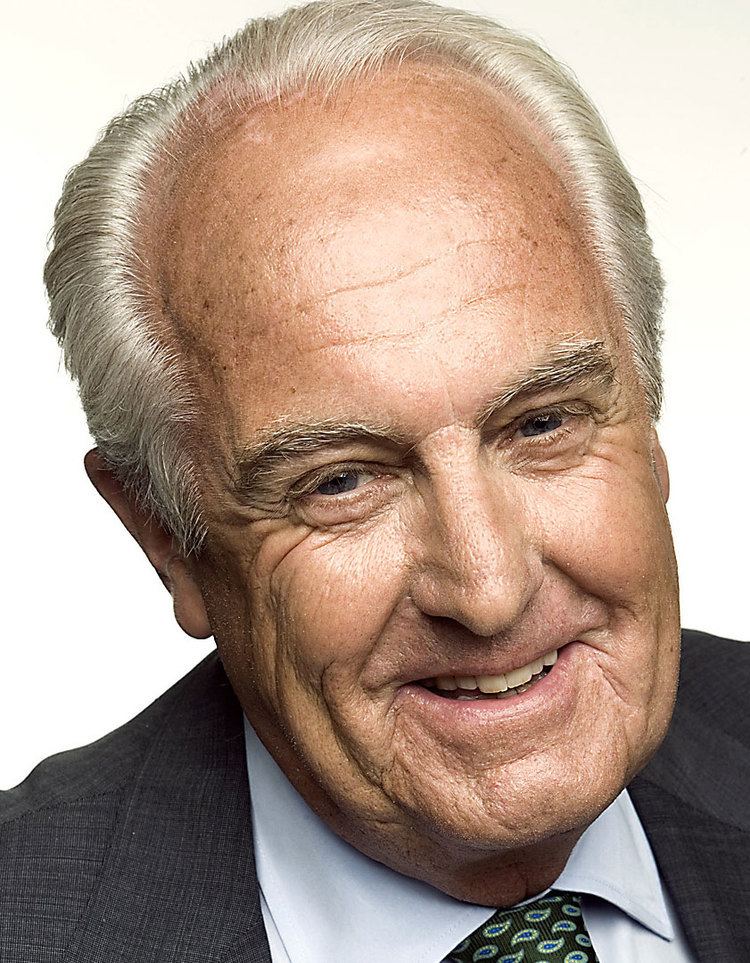
Jan Carlzon, the dynamic architect of the rescue of Scandinavian Air Services in the 80s, had a good deal to say about what it is to be a leader. We would do well to listen because he counters some of the common misconceptions about leadership.
One of those things is that the leader should always be busy, available and there to solve every problem. How many times has a government minister or even the Prime Minister been called back from holiday because they have to be there to sort something out? I almost feel sorry for them. For goodness sake let them have a few days off and let other people do some of the work.
The image of the superhero leader who never gets tired, is always available on the end of his or her phone is deeply destructive because it leads in the end to people who burn-out and organisations that are so heavy at the top that those who are doing the job feel they have no power.
Carlzon begins his dissection of leadership with an interesting story. In the summer of 1981, the first year he became president of SAS, he decided to take two weeks holiday. As soon as he got to the country house, the telephone began ringing. It rang so much over the first couple of days that he gave up on his holiday and returned to Stockholm. The following summer a Swedish newspaper interviewed him on the subject of taking it easy. He agreed but only if the article was published a week before his own vacation so that everyone in SAS read it and knew what he had to say.
In the interview Carlzon explained that he believed responsibilities should be delegated within a company so that the decisions are made right at the moment of truth, the place where they need to be made. The higher up decisions need to be referred in the organisational chart the more likely it is that people won’t take responsibility and those at the top won’t be able to take a holiday. In the article, he explained this and said that he intended to take four weeks holiday and would see his telephone not ringing as proof that he was succeeding.
As a leader it’s always good to feel wanted and relevant but we need to know that this kind of hero leader is not sustainable Carlzon talks about his earlier experience at a smaller airline where he tended to take every single decision. He came to the realisation though, that a leader is not appointed because he knows everything and makes every decision; he’s appointed to bring together the knowledge that’s available and then create the circumstances in which people can be successful . Delegation is key to leadership and that means delegating whole tasks not just parts of them.
Carlzon argues that what’s needed is a leader who has a helicopter sense, a talent for rising above the details to see how the land is laying. Today’s business leader needs to understand finances and production and technology but must also be an expert in human resources. The leader therefore helps to set the culture of the organisation – the way things are done around here.
Carlzon’s view of leadership is far more than utopianism. It is nuanced. He admits there are some areas in which the leader has to be an enlightened dictator. They must, without variance, explain convincingly the vision and the goals and strategies so that everyone knows exactly what the company is doing and to keep doing that even when life looks difficult.
The leader has to deal with difficult people and those who don’t agree and give them more information and attempt to make them understand. If people can’t be that persuaded, Carlzon says, the least that can be expected from them is loyalty even if they’re not emotionally committed to the goals. If this isn’t achievable, they should be asked to leave.
Carlson makes it very clear that he’s not calling for corporate democracy in its purest form. He believes that everyone; middle managers, frontline employees, union leaders, and board members must be given the opportunity to air their views, but they are not all involved in making every final decision.
The leader is the one who creates just the right environment for business to be done – not too hands on, not too distant. Carlzon uses a football analogy. The coach is the leader whose job it is to select the right players, ensure that the team go onto the field in the best condition to play a good game, and on the field there is a team captain who is really analogous to the company managers who issue orders and make changes during the match. Most important of all, of course, are the individual players all of whom are their own boss during the game. He asks us to imagine when a player with an open goal suddenly abandons the ball to run back to the bench and ask the coach for orders on how to kick it.
Carlzon argues that it makes no difference who comes up with a good idea, all that matters are the ideas that work which, he says, was one of the key factors in the success of SAS.
Carlzon’s is a deeply challenging and interesting vision of leadership. It is easy to admire. It makes the world look a bit simpler. But there are those circumstances when all the consulting others and training them might not be what is needed. In some circumstances the leader just has to tell us what to do and we just get on with it. But the principle is a good one; that the more the leader’s phone rings, the less people have taken on delegated responsibility.
 Steve Morris is the Vicar of St Cuthbert’s, North Wembly, an entrepreneur, and the author of several publications for CEME and beyond including Enterprise and Entrepreneurship, and Lessons from Family Business, both available from the CEME office. He is married, with two children and has three cats. His latest writing, Our Precious Lives, dealing with the power of story-telling is available here.
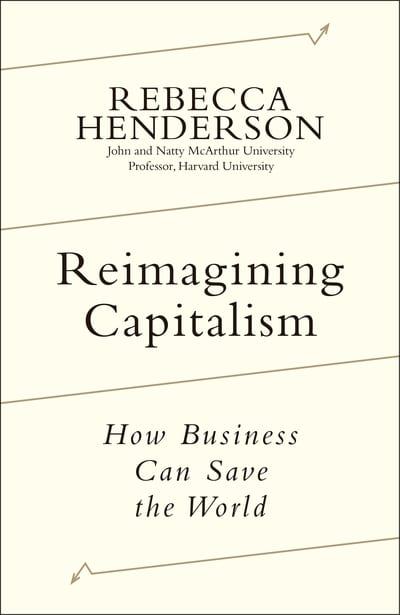
Reimagining Capitalism: How business can save the world is a very didactic, easy to read book. Unfolding like a captivating lecture, it is highly structured and each point is illustrated with a wealth of business examples taken from a wide spectrum of enterprises, old and new.
You can easily imagine Rebecca Henderson on the campus of the Harvard Business School answering the challenging questions of Millennials who fully embrace sustainability and inclusion topics. The resulting book challenges head-on the paradigm of business management theory over the last fifty years that held shareholder value maximisation as the most powerful way to increase general prosperity. She does not seek to list the shortcomings or fix the problems of the current model, rather, she is more ambitious. Tapping into her considerable experience of business consultancy and her knowledge of history of corporations and national institutions, she builds block by block a path to rethink or Reimagine Capitalism.
She takes stock of Shareholder Value Maximisation theory and highlights that the conditions deemed necessary by its early advocates are not always present: markets fail us because externalities are not properly priced, genuine freedom of opportunity is not available to many because of lack of fair access to education and health services and firms are increasingly able to fix the rules of the game in their favour. Uncontrolled free markets lead people to believe that they can do without government, “without shared social and moral commitments to the health of the entire society” on which however all market activity ultimately relies.
In her effort to build a path to “reimagine capitalism in practice”, she lays out five foundation blocks to lead us on the journey.
Firstly, she tackles the strong economic business case for creating shared value. It is somewhat abstract and ethereal as a theoretical economic concept, however, she effectively uses examples to illustrate how it can manifest itself and its importance in a business context. Reducing environmental damage and treating people well reduce reputational risk. Shared value can also help securing the long-term viability of a supply chain, increase the demand for your product and reduce costs. Achieving shared value however, is not a small feat. To help us project how shared value can be established in a company, she introduces the interesting concept of architectural innovation.
Following this logic, she highlights how the adoption by any enterprise of an authentic purpose “makes it easier to identify the kind of architectural innovations that enable the creation of shared value.” Rejecting the commonly held belief of profits and purpose being mutually exclusive, she sees purpose-driven organisations as better equipped to handle transition in disruptive market conditions. The clear sense of their mission in the world, the commitment to building an organisation in which every employee is treated with dignity and respect “release creativity, commitment and raw energy”. She does not elaborate much on the strong spiritual or political convictions that sustain “the courage and vision of the leaders necessary to manage with purpose” even though she recognises its critical importance.
She then turns her attention to the need for finance to focus on the long-term. Asset owners and asset managers might have a different appetite (and incentives) to hold assets long-term but investors in general need better data to be convinced to hold their interest longer. ESG metrics, especially those with potential significant impact on short-term profitability and long-term liabilities must continue to be rigorously developed and used. While the investment community as a whole may not yet be ready to wholeheartedly embrace the company purpose and ready to give time to its implementation, Rebecca Henderson suggests a possible limitation, even reduction of investor power to the benefit of other stakeholders. Harnessing the power and influence of investors is a key enabler to drive change at scale. The examples she cites demonstrate that this is beginning to happen within the investment community.
However, one company cannot do much on its own about genuine public good problems. Industry-wide self-regulation has been criticised in the past as a way to anticipate and diffuse the threat of government regulations or also to set up barriers to new entrants. Nevertheless, the powerful example of how Unilever and Paul Polman socialized the problem of palm oil sustainability shows that increasing everyone’s incentive to cooperate and being able to enforce cooperation can have a major impact and create collective shared value.
Her last avenue of reflection in Reimagining Capitalism is the role of government as a guarantor and enabler of a free and fair market. “While economic growth and social well-being are often enormously advanced by the presence of free markets, they are also critically dependent on a host of complementary institutions.” Denouncing the systematic campaign of the last 50 years to discredit government in the US, she suggests answers to the fundamental question she raises namely “how do we protect the institutions that have made us rich and free?”
Rebecca Henderson is determined to provide each reader with nothing less than a roadmap to find their own path forward towards changing the world. She is a staunch believer in the positive power of capitalism but is also clear about the dangers of unchecked capitalism, leading to the explosion of inequalities and the raise of populism. While the topics she develops could have justified further ethical considerations, she keeps the debate firmly in the logic of the business case, adopting a rigorous, business-like approach. She manages nevertheless to communicate and share a real passion for the issue at stake. This book is highly topical as demonstrated by the speech on March 15 2021, by the acting chair of the US Securities and Exchange Commission, Allison Lee who stated:
“That supposed distinction—between what’s ‘good’ and what’s profitable, between what’s sustainable environmentally and what’s sustainable economically, between acting in pursuit of the public interest and acting to maximize the bottom line—is increasingly diminished,” Lee told the audience at the liberal think tank Centre for American Progress. “[There’s] no historical precedent for the magnitude of the shift in investor focus that we’ve witnessed over the last decade.”
It is overall a very interesting and relevant book, well worth reading and reflecting upon.
“Reimagining Capitalism: How business can save the world” by Rebecca Henderson was published in 2020 by Portfolio Penguin (ISBN-13: 978-0241379660). 336pp.
 Anne Devlin is a director of Terra Solar II, a former oil trader with BP and a member of the Board of CEME.

The sub-title of The World Made Otherwise is “Sustaining Humanity in a Threatened World” and climate change or other environmental issues form the book’s starting point and backdrop. Gorringe sees climate change as creating a burning platform that makes thorough-going political, economic and social change imperative.
His prognosis is dire. He opines that “civilisational collapse is likely” (page 19) and that, together, environmental issues and current socio-political trends “could suggest the ‘new dark ages’ of which MacIntyre spoke nearly 40 years ago” (page 153). He asserts that the resulting problems are primarily moral and political and that “neither technological fixes nor tweaking of the present economic system are sufficient to address them” (page 117). Instead, he thinks that the heart of the problem lies in false values.
Much of Gorringe’s discussion relating to values will be widely applauded: he rejects the post-modern relativism that reduces discussions of values to discussions of psychology or sociology, confusing values with either societal norms or preferences linked to self-realisation; he defends the idea of universal values against those who would deny their existence (including those on the left who suggest that the very idea of human rights is a form of Western cultural imperialism); he also rejects “the claim of the neoliberal market to provide the fundamental standard for everything whatsoever” (page 57) and instead seeks to establish a value system based on the ultimate end or object of human life, which he suggests is, in essence, the creative fulfilment of human potential, “a fulfilment that is both individual and social” (page 85).
His discussion of the problems within the existing political, economic and social order also contains much that will command wide acceptance, albeit not much that is new. In particular, the history of the twentieth century supports the wisdom of his call for “a critical watchfulness” with regards to our political practices and his warning that “all claims for absolute allegiance on the part of the state are idolatrous” (pages 133/134). Likewise, his warning about making an idol of the market will be accepted by all but the most extreme free marketeers and his criticisms of the workings of modern democracies (including the basis on which people cast their vote, the role of the media and lobbying) ring true.
Unfortunately, however, time and again Gorringe gravely overstates his case and, whilst some parts of the book are closely argued, much of what he asserts is not backed up by detailed analysis or engagement with different views. For example, he asserts that “equality must mean equality of outcome” (page 163) on the basis of five lines of argument and he makes no effort to comprehend the practical and moral arguments for the market economy or recognise the different conceptions of justice that underly much current socio-political debate (as to which, see Capitalism and Democracy by Thomas Spragens). Furthermore, the version of the market economy that he attacks is extreme and he fails to acknowledge that one can be in favour of a market economy yet at the same time recognise the need for guiding values outside it. Instead, he makes a number of unsupported ex cathedra assertions that, on occasions, descend into mere left-wing jibes (e.g. his side swipe at “austerity” measures, which he defines as “making sure the bankers do not have to pay for their mistakes”, page 198, and his distinction between “genuine science” and “the spurious corporate-financed variety”, page 290).
The least satisfactory part of the book is its suggestions for change: they are almost totally lacking in specificity and are absurdly Utopian. Gorringe says that he is putting forward what he calls “rights cosmopolitanism”, which he describes as “a vision of a cosmopolitan world of federated states where all people enjoy basic rights and freedoms simply in view of their humanity” (page 147). However, the vision is vague and Gorringe gives no clue as to how it might be realised. He envisages the break-up of current nation states and talks of “a world of small and devolved, but often federated states, where economic and environmental rules would be worked out together and held to be binding by the United Nations and its agencies” (page 152); he suggests that “local economies will have shorter supply chains and keep real wealth within the community” and that they “will not import products they can produce for themselves or export local products until local needs have been met”, citing apparently with approval, Molly Scott Cato’s suggestion that there might be perhaps 20 bioregions forming the basis for a reformed economy with each bioregion having “the task of provisioning its inhabitants” (pages 233/234); and he advocates monetary reform. Yet his political proposals amount to little more than a vague idea relating to the creation of local deliberative assemblies; leaving aside a few specific proposals (e.g. to mutualise utilities and provide a basic citizen’s income), his economic ideas are packed into a bewildering four page section in which he advocates the localisation of economic life; and, apart from discussing a few examples of what are, in essence, local or restricted use currencies, he gives us no clear idea of what monetary reforms he is seeking.
Gorringe defends himself against the charge of being Utopian by suggesting, first, “that nothing is so wildly Utopian as to try and build a sustainable world on the basis of greed and competition” and, secondly, that his proposals “are actually being modelled on the ground the world over” (page 236) but this defence fails. The first of these points has no bearing on the realism of his proposals and the second fails to recognise that the only examples he gives of anything remotely resembling the kind of localised system that he advocates are very small scale and, as he himself recognises, have many problems.
It is difficult to know precisely who the book is aimed at. It is not an academic work yet it is overloaded with quotations from and references to the views of different authors (e.g. the main text in the first five pages of the chapter relating to values includes references to the views of no less than 15 different authors). These come so thick and fast that parts of the book are heavy-going and they are likely to render it inaccessible to many potential readers. Furthermore, Gorringe is a liberal Christian who is heavily influenced by Marxist thinking and these starting points pervade The World Made Otherwise. Gorringe makes no attempt to justify them, with the result is that the book is unlikely to prove persuasive to those who do not share his assumptions. Thus, whilst most Christians will welcome his reminder that God ultimately owns all things (a fact which necessarily relativizes property rights), his approach to Scriptural interpretation will baffle and alarm many. For example, his suggestion that “The Eucharist (when not fetishized) adumbrates as a sign the view that the world is gifted to all creatures and is to be shared equally between them” (page 224) is, to put it mildly, difficult to extract from the biblical text, whilst his assertion that Hebrews 13:14 (“Here we have no abiding city”) “promises us that Rome (which for us is neoliberalism) will not last forever” (page 66) is extraordinary.
Gorringe has, for a long time, passionately believed in the need for radical, political, economic and social change and environmental issues have added to the imperative tone of his appeals for such change. However, passion and urgency do not of themselves make up a viable political programme. Gorringe’s theological villain is clearly St. Augustine of Hippo, who he feels is responsible for generations of Christians believing that “the possibility of a truly different society… belongs only to the next life” (page 67). On this basis, one might expect him to show us the way to an earthly paradise but, despite its title, The World Made Otherwise fails to provide one and, whatever one’s political views, Gorringe’s diagnosis and prognosis are simply depressing.
The World Made Otherwise by Timothy J. Gorringe was published in 2018 by Cascade Books (ISBN: 978-1-5326-4867-0). 348 pp

Richard Godden is a Lawyer and has been a Partner with Linklaters for over 25 years during which time he has advised on a wide range of transactions and issues in various parts of the world.
Richard’s experience includes his time as Secretary at the UK Takeover Panel and a secondment to Linklaters’ Hong Kong office. He also served as Global Head of Client Sectors, responsible for Linklaters’ industry sector groups, and was a member of the Global Executive Committee.

CEME was pleased to host an event on “Ethics and Economics” which took place on Wednesday 12th May 2021.
The full audio recording of the event can be found here.
Business and markets exist to serve society and not the other way round. Has our economic system become detached from its values and ethical moorings? Have we moved from Adam’s Smith’s concept of self-interest as bound up in the fortunes of others to a merely transactional system driven by selfishness? The discussion will consider how we can bring our moral and value judgements to the market for the good of society.
Our two distinguished speakers were:
 Barbara Ridpath chairs the Ethical Investment Advisory Group of the Church of England and is a non-executive director of Paragon Banking Group and ORX. She previously worked with the Federal Reserve Bank of New York, Standard & Poor’s and JP Morgan. She was also Director of St Paul’s Institute at St Paul’s Cathedral.
 Edward Hadas is a Research Fellow at Blackfriars, Oxford. He previously worked in finance and in financial journalism, including writing weekly column on financial and economic topics, with an ethical perspective, for Reuters Breakingviews. His book, Counsels of Imperfection: Thinking Through Catholic Social Teaching, was published by Catholic University Press in 2020. A new book, Money, Finance, Reality, Morality is searching for a publisher.