Theology for Changing Times is a diverse collection of essays by different authors, all responding to a greater or lesser extent to the work of John Atherton, who died in 2016. Atherton was one of the leading practitioners of his generation when it came to Anglican ‘public theology’, part of a tradition that included William Temple and Ronald Preston, and is now represented by Malcolm Brown and others.
It is rather a piece-meal book and, for me, it did not really in the end describe a coherent or systematic Anglican method for doing public theology, or for engaging theologically with themes such as the economy and enterprise – perhaps this is impossible or even undesirable. However, it conveys in a hopeful and optimistic way the challenge of the task, and illustrates convincingly the kinds of ways in which the Church (perhaps especially the Church of England) might continue to engage in this ministry. Taken as a whole, it captures well the importance of the Anglican “public theology” tradition, as well as the sense that the Church of England increasingly has other preoccupations, perhaps more focused on the perceived need to attend to internal, rather than ‘public square’, matters. It also contains a good number of valuable nuggets.
There are twelve chapters, the first and last being provided by the editors, Christopher Baker and Elaine Graham, in traditional festschrift style. These set out a clear description of Atherton’s programme, using summary statements such as this 1992 description of Christian social thought: ‘A dynamic interaction between the understanding of God’s purposes mediated through Christian tradition, but equally through the secular realities of life’ (page 7). Such an approach allows for collaboration with people of all faiths and none, and sketches out a ‘big picture’ way of doing public theology which takes seriously inter-disciplinary studies. Atherton was deeply familiar with the study of economics, history and politics, as well as theology.
For those interested in the work of the Centre for Enterprise, Markets and Ethics, the section in Chapter One on the Morality of the Market (pages 10-14) will be of particular interest. This covers themes such as human flourishing, the problem of scarcity, the role for the market, questions of interconnection and integration, as well as Atherton’s attempt to use the language of transfiguration when it comes to describing Christianity’s potential effect on the market. Although Atherton strained some of his personal friendships with his increasingly broadly sympathetic stance towards the market economy, I found myself wondering at one or two points whether he was really willing to work with the raw competitive power within it. In more general terms, the well-made point in the Chapter Twelve ‘Afterword’, that the Holy Spirit is bigger than the Church, even while the Church is a necessary part of the picture, serves as a kind of framework or backdrop for the entire Athertonian approach.
Chapter Two is a revised version of an Atherton article published in Sweden in 2017, being one of the last things he wrote. It contains some fascinating economic history, and espouses a desire to develop a theological methodology that can be fit for purpose in the face of ever-increasing economic change. I was struck by how ‘secular’ this chapter was; the themes of change and progress were presented through the lens of economic history, which raised questions for me about other ways of describing growth and ‘pilgrim’s progress’, which seemed to be missing.
Chapter Three, by Hilary Russell, offers a warm appreciation of Atherton’s method and how it evolved over time. Complementing this is Peter Sedgwick’s piece (Chapter Four) on the ‘Manchester School’ of public theology, which involves the University, the Cathedral, and the William Temple Foundation. John Atherton embodied all of these aspects, and without him this ‘School’, or ‘story and a place’ (page 57) as Sedgwick prefers, might not have gained such prominence. Of interest here are the attacks on the ‘Manchester School’ approach by theologians such as the late John Hughes, springing out of the Hauerwas tradition which places more emphasis on ecclesial ethics.
Chapter Five, by Carl-Henric Grenholm (Atherton had strong links to academia in Sweden), addresses the question of globalization. It was pleasing to find Brian Griffiths, the Chairman of the CEME, mentioned as part of the discussion. Then Chapter Six, by Malcolm Brown, turns to the subject of Industrial Mission. Brown always writes clearly and engagingly, and his survey of the history of Industrial Mission in England is informative and set well within the bigger context of theological shifts.
Chapter Seven, from Ian Steedman, comes from a rather different perspective. Steedman is an economist, and as such is happy to argue for a place for efficiency – and to suggest that Atherton could accept this. However, the heart of Steedman’s discussion focuses on the role of advertising, and the way in which ‘wants’ are generated in the economy. I feel sure Steedman’s themes could be productively engaged with in a more theological way, exploring the place for persuasion and education within human interactions and the forming of societal norms.
In Chapter Eight, John Reader makes an attempt at wrestling with the consequences of the digital revolution, which he describes as ‘blurring the boundaries between the physical, digital and biological spheres.’ (page 110) I was pleased to find a section of this kind in the book, as otherwise it might have felt slightly behind the curve in terms of the impact of social media and other recent developments. Reader’s best elucidated comments connect to the significance of speed in economic life, and the loss of space for critical reflection and even silence.
William Storrar, in Chapter Nine, addresses the current ‘angry’ nature of public discourse. I learnt a great deal about Kant and his theories of ‘publicity’ and ‘transition’, by which a steady but slow formation of opinion and of the public view can come about. The need for a richer and more nuanced political discourse is argued for eloquently by Storrar, and his connection to the Manchester School’s ‘middle axioms’ is intriguing.
Chapter Ten, by Anna Ruddick, is focused on urban mission, and she draws approvingly on the Sam Wells ‘being with’ theme. Her definition of human flourishing stood out for me: ‘…a stronger love of self, a more positive approach to life choices, an increased ability to act, increasing awareness of a good God, and mutuality.’ (page143) Finally, Chapter Eleven, by Maria Power, concerns the need for a Roman Catholic public theology for Northern Ireland, and looks to resources within Atherton’s incarnational and practical methodologies.
My sense is that the ever-increasing pace of change within the economy and within politics will be a challenge for the kind of Public Theology done by the William Temple Foundation. The recent emergence of the HeartEdge network, led by St Martin-in-the-Fields, and which my own church is a member of, perhaps points to another model which is both theologically rich but also potentially more nimble and responsive. It would have been fascinating to ask John Atherton for his view on this initiative, which has only emerged since his death.
“Theology for Changing Times – John Atherton and the Future of Public Theology”, edited by Christopher R Baker & Elaine Graham was published in 2018 by SCM Press (ISBN-13: 978-0334056959). 192 pp.
 Edward Carter is Vicar of St Peter Mancroft Church in Norwich, having previously been the Canon Theologian at Chelmsford Cathedral, a parish priest in Oxfordshire, a Minor Canon at St George’s Windsor and a curate in Norwich. Prior to ordination he worked for small companies and ran his own business.
He chairs the Church Investors Group, an ecumenical body that represents over £10bn of church money, and which engages with a wide range of publicly listed companies on ethical issues. His research interests include the theology of enterprise and of competition, and his hobbies include board-games, volleyball and film-making. He is married to Sarah and they have two adult sons.
Some of the most important conversations in Christianity today involve questions of justice and how Christians should not only respond as individuals and as members of the “holy catholic church” to injustice, but also be positive catalyst of just societies and social institutions. It is heartbreaking for those of us within the camp of Christianity to look into the past and see ways in which those who have come before in our tradition have sometimes actively contributed to injustice due to cultural blinders, a lack of familiarity with social or technological developments, or any number of other factors. Economic issues are no exception to this and in an age of unparalleled prosperity among some, there is no doubt that questions of justice as they relate to economics is a necessary part of this conversation. Barram is to be applauded for engaging in such a worthy dialogue.
In this work Barram begins by describing an emerging field in biblical studies that takes the name “missional hermeneutics.” Given that I am not a scholar in the field, I can attest that his discussion is helpful for the non-specialist and there are some aspects of this approach for which I have great enthusiasm. This approach recognizes that the church has a “calling as a community sent into the world to bear witness to God’s holistic purposes.” (page 25). Such a corrective is needed in all traditions as Christians often become narrowly focused on particular aspects of our mission to the detriment of others. It is also laudable that he turns to Scripture as a primary source of Christian formation. (page 12).
But not all that the author lays out is helpful in the analysis. Primarily I am referring to his advocacy for “the contemporary Christian community as the locus of biblical interpretation.” (page 33). I am always cautious to read such claims because, as Barram concedes, such claims often accompany a “loss of objectivity.” (page 34). It is not possible, as the author argues, to approach hermeneutics without bias influenced by time and space, but the solution is not to understand questions posed to Scripture as novel and therefore demanding a “new” interpretation. This approach seems to understand the Christian tradition as a strand of discreet epochs defined by the culture in which the church is immersed rather than an organic and interconnected flow of generations of the faithful in different times and places, which is inherent in the concept of catholicity. Making this assumption leaves open the grave possibility of introducing contemporary biases without any external referent to provide a corrective.
Serious moral reflection guided by biblical considerations is vitally important for Christians if the church is to be a vehicle for accomplishing God’s mission in the world. But the proper definition of the problems about which we reflect is the starting point for this reflection, and it appears in places that Barram makes assumptions that reveal a bias. In fact, his conclusion to the book states it clearly. He asserts that our “contemporary economic environment…encourage[s]” us to “choose death,” followed by a litany of caricatures of the positions held by proponents of free market capitalism. (page 241). At one point he even suggests that the biblical ideal is a communal Christian socialism, an idea that has been addressed and rebutted by a number of authors (page 165). The author also often uses terms critical to his arguments that are never clearly defined such as “justice” and “injustice” (page 120).
There is no doubt that there are excesses in our society that require moral and ethical correction, and for the Christian that correction should be rooted in Scripture. Barram makes these points well, but this project reads very much like a thinly veiled critique of market economics that never directly engages the field in an honest and fair way. As stated above, Barram does makes some accurate and important observations, but does not do quite as well in attempting to diagnose the root causes. But there are other sources from those within theological studies and the social sciences alike that more honestly and fairly examine the application of the biblical text to real and pressing social and economic problems.
Missional Economics: Biblical Justice and Christian Formation by Michael Barram was published in 2018 by Wm. B. Eerdmans (ISBN-13: 978-0802875075). 232pp.

Trey currently works for the First Liberty Institute, one of the the largest public interest law firms in the United States. He holds degrees in law, theology, and ethics and has worked as an attorney, educator, non-profit administrator, and pastor. He is the co-editor of Work in Christian Perspective (SCM, 2018), and the author of several articles, essays, and editorials on a wide range of topics. He has spoken around the world on issues as diverse as housing policy, philosophy of law, and religious freedom.
Populism seems to have taken centre stage in today’s public discourse. Whether it’s the election of Donald Trump or Brexit, media outlets, academics, and indeed, the politicians themselves seem to be pointing the finger towards populism. Yet what exactly is populism? Which social and/or economic conditions might give rise to populism? Can populism be countered and if so, how? These are a few of the timely questions that Barry Eichengreen attempts to explore in his book, “The Populist Temptation: Economic Grievance and Political Reaction in the Modern Era”.
Barry Eichengreen is an American economist and Professor of Economics and Political Science at the University of California, Berkeley. An economic historian by background, Barry’s previous notable publications include, “Golden Fetters: The Gold Standard and the Great Depression”, “The European Economy since 1945”, and “Globalizing Capital: A History of the International Monetary System”.
Throughout his works Barry Eichengreen displays a strong command of global economic history and his latest work The Populist Temptation is no exception to the rule. Divided into twelve chapters, the structure is more akin to a collection of essays than the traditional narrative format. Paradoxically, the book is both straightforward yet dense, making the reader take far more time on any given chapter than he or she would have done so otherwise. It reads like a history book with a particular emphasis on economics and while many of the historical remarks are factual, much of the interpretation is subjective. Here it is worth touching upon some of the more contentious issues that can be found:
The author sets out the aim of the book from the onset, that is, to look back at Western history and attempt to identify under which “economic, social, and political” circumstances populism tends to take hold and what are the most effective policies to combat it (page ix). In this pursuit, Barry Eichengreen argues that “populism is activated by a combination of economic insecurity, threats to national identity and an unresponsive political system” – but can be “quelled by economic and political reforms that address the concerns of the disaffected” (page x). We will touch upon some of these reforms shortly.
Chapters 1-3 therefore open up with a conceptual discussion on populism and a historical account of populism in the United States and the United Kingdom. Barry Eichengreen defines populism as, “a political movement with anti-elite, authoritarian, and nativist tendencies” (page 1). He rightly points out that both left and right-wing populism can take on these characteristics – albeit the former focuses hostility toward the so-called ‘elites’, while the latter towards minorities and immigration (ibid).
Another interesting point made is that populism is also a political style. Populist politicians portray themselves as ‘no-nonsense’ leaders, ready to listen and speak directly to the people (page 4). They also make highly effective use of social media by undercutting the traditional media outlets. Most importantly however, populist leaders are able to capitalise on economic uncertainty coupled with a ‘low-trust’ society where significant demographic groups feel that the system is rigged against them (page 10).
Chapters 4-6 turn the attention toward Germany and the socio-economic reforms of Otto von Bismark in the late 19th century but also the American ‘associationalist way’ in the first half of the 20th century. The chapter highlights the positive role of government welfare measures in combating economic uncertainty. This included a combination of the social insurance state and tariff protection for both agriculture and industry that led to an effective suppression of anxiety about economic change on both the “left and the right” (page 57).
Chapters 7-9 bring the historical narrative to the post-war era. The so-called ‘baby boomer’ generation benefited from a period of relative stability and moderation where most of the economic growth was more widely shared (page 102). The problems started from the economic slowdown of the 1970s and exacerbated by the OPEC oil shocks of 1973 and 1979 (page 104).
Barry Eichengreen argues in chapters 9 and 10 that the rise of Trump in the US and Brexit in the UK built against more than just economic insecurity (post the 2008 financial crisis). Trump’s election reflected deep national, social, and personal insecurities that were only exacerbated by economic insecurity – conditions which in turn fed opposition to immigration (page 117). Similar things can be said about Nigel Farage and Brexit in the UK which the author discusses in Chapter 10.
Therefore, what are the solutions to rising populism? Chapters 11-13 explore several possibilities. A return to economic growth and rising wages would perhaps be the first and most important change (page 146). Others include investment in education and skills, and a more inclusive economy where firms could be given “tax incentives to adopt employee stock option plans. […] and a curbing of [corporate] excesses” (page 148). Reforming the immigration system could also be effective in combating populism yet the author acknowledges the deep disagreements in the best way to go about it (page 158-159). The EU could also take more steps to being more democratically accountable and closer to the people, such as nominating the president of the Commission by popular vote (page 176). However, the book acknowledges in its ending that both the US and the Europe will remain susceptible to populism and that neither “admit to easy solutions” (page 187), yet understanding the underlying problems is a starting point.
In concluding The Populist Temptation by Barry Eichengreen is a worthy addition on a topic that seemingly engulfs our time. The book is dense which makes it informative but may prove to be a rather slow read for some. No doubt the reader will walk away with a greater perspective and sense of understanding of populism. The problem however remains on the author’s subjective interpretation of government initiatives and their direct impact on controlling populism. Provided that the reader views the ‘government and/or regulation is the solution’ dogma through a critical lens, The Populist Temptation is certainly a worthwhile read.
“The Populist Temptation: Economic Grievance and Political Reaction in the Modern Era” by Barry Eichengreen was first published in 2018 by Oxford University Press (ISBN-9780190866280), 244 pp.

Andrei Rogobete is the Associate Director of the Centre for Enterprise, Markets & Ethics. For more information about Andrei please click here.
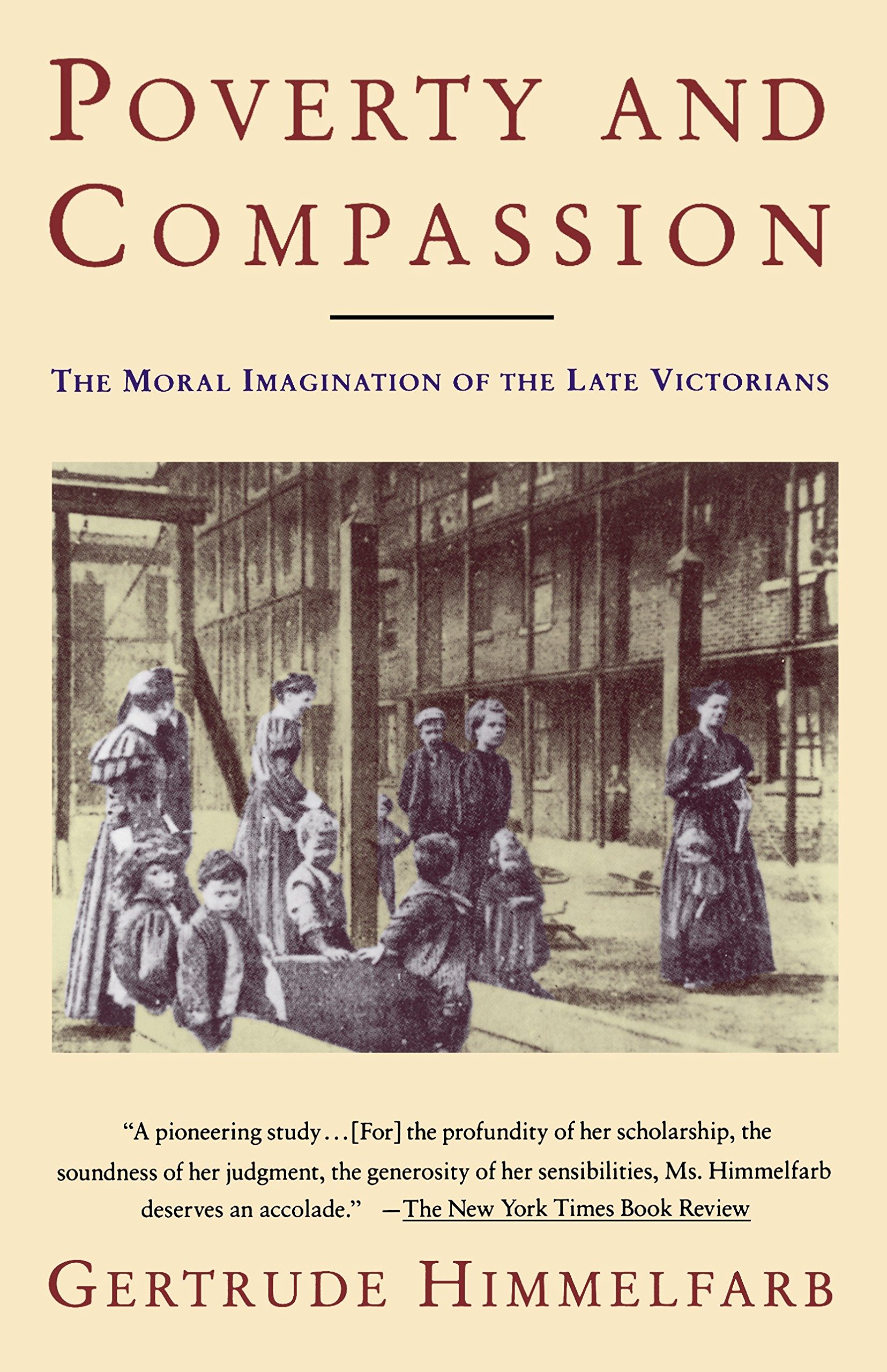
Gertrude Himmelfarb was married to the late Irving Kristol and together they formed a formidable intellectual partnership in the reassertion of conservative ideas. Himmelfarb, a historian, in this book, brings to the table the debate around poverty in Victorian England. The book was first published in 1991, but represents an important strand of thinking and, indeed, of methodology.
One of the many complexities in the polarisation of political and public discourse is that it becomes impossible to have a rational discussion or debate without being compartmentalised into one position or another. We seem to have lost the ability to debate ‘ideas’. Gertrude Himmelfarb’s intellectual history of the ideas, notions and responses to poverty in the Victorian era is broad-reaching, incisive and gripping in both scope and content. The reassertion of the history of ideas – from all parts of the spectrum – would be a great service in our public life.
The great strength of the book is in its breadth. Himmelfarb’s twenty-three chapters range from the work of the social statistician, Charles Booth, to the Salvation Army’s, William Booth, from the rather worthy Charity Organisation Society, to Toynbee Hall and the settlement movement. Himmelfarb comes into her own in dealing with the moral ideas of poverty and compassion and how the Victorian era understood these concepts and responded to them both practically and intellectually. So, her assessment of, and interpretation of, the statistics of poverty and what that meant, the literature, the personalities, religious and moralistic responses and the impact of the rise of socialism in various guises are all central features of her exposition of the idea of poverty.
Himmelfarb puts this Victorian world under a microscope. A key building block is that “the moral imagination of the late Victorians…was neither sentimental nor utopian” (page 4). This is rather startling as many might think that the very epitome of Victorian ideas was indeed sentimentality. True compassion, she argues, is actually doing good rather than feeling good. The true Victorian philanthropist was moral and humane, interested in the good, not only of the self, but of society, and was shaped by ends that were realistic rather than utopian. This principle allows Himmelfarb to appreciate the extensive variety and range of responses to poverty in Victorian England, and we should thank her for that.
The book is divided into five parts, each with a number of chapters.
Part 1, “The Arithmetic of Woe”, is a fascinating introduction to the social statistics of the age, the complexity of poverty in late Victorian London, and the particular issues of housing and employment. Conditions had unquestionably improved from the mid-Victorian period and in the discussions around the Bitter Cry of Outcast London, Himmelfarb makes the point that the debate is not whether the ‘abject poor’ had dreadful housing conditions but whether this was generally true of the working classes; indeed, as Lord Shaftesbury’s evidence to the Royal Commission of 1884 suggests, this may indeed not have been the case. Himmelfarb suggests that the Royal Commission failed because it did not deal with this distinction and hence, she argues the question of housing became a social rather than a moral problem and, hence, “a legitimate subject for state intervention” (page 67).
Part 2, “Life and Labour of the People in London” develops these themes further including consideration of the work of the social scientist, Charles Booth. In this section Himmelfarb also reflects on some the religious influences upon the debate as well as dealing with what she refers to as “special subjects”, including women and children.
Part 3, “The ‘Time-Spirit’: Charity and Philanthropy”, introduces the Charity Organisation Society and the development of benevolence into a science of charity, or at least, as the name implies, its systematic organisation. In this part we also see some of Himmelfarb’s breadth with reflections as diverse as upon the Salvation Army and Toynbee Hall. Himmelfarb argues that if “the mission of the Charity Organisation Society was to organize and professionalize philanthropy, that of Toynbee Hall was to humanize and ‘civilize’ it” (page 243). All of this reflects Himmelfarb’s neo-conservative interests in practical outcomes alongside the debate of ideas.
Parts 4 (“Social Philosophy and Social Reform”) and 5 (“’We Are All Socialists Now’”) returns us to the nature of social, economic and philosophical debate at the end of the Victorian era.
Essentially, Himmelfarb’s argument is that a proper response to poverty is to recognise that it is a moral question. By moving away from dealing with abject need to the more general situation of the working class, the question of poverty is removed from being a moral problem to a social or political issue. Consequently, the real questions are frequently not dealt with. She argues (capitals in original), that “the ‘DE-MORALIZATION’, as it were, of the problem of poverty was accompanied by a ‘relativization’ of the problem” (page 384).
The book cannot be described as an easy read but it is an engaging and wide-ranging one. Indeed, the book makes you think and I had to stop at several places to do just that, think about what I had just read and its implications. My only criticism is that she does not really deal to any extent with Evangelical Christian responses to poverty concentrating more on the development of Christian socialism, which is rather odd given that Himmelfarb was concerned with practical responses as well as theoretical ones. The Victorians are not presented as a solution to today’s problems, but on their own terms, speaking for themselves, in ways we may not have really appreciated because we read back our own presuppositions. She reminds us that poverty “is as protean and diverse as the remedies proposed for it” (page 388).
This is a fascinating book which I recommend. Our contemporary discourse would be much improved if we could debate these ideas, their breadth, diversity and their implications, across the traditional political divides, restoring the debate to its proper moral basis.
“Poverty and Compassion: The Moral Imagination of the Late Victorians” by Gertrude Himmelfarb was published in 1991 by Vintage Books, New York (ISBN-13:978-0-67-974173-2). 475 pp.
 Dr Richard Turnbull is the Director of the Centre for Enterprise, Markets & Ethics (CEME). For more information about Richard please click here.

James P. Bailey is Associate Professor of Theology at Duquesne University. In his book entitled, “Rethinking Poverty: Income, Assets, and the Catholic Social Justice Tradition”, James Bailey explores the political, social, and economic reforms that are needed to promote the alleviation of poverty. As the title may suggest, the book also incorporates Catholic social teaching on this issue.
Although the book shares the same title as Barry Knight’s Rethinking Poverty, Bailey’s argument takes a markedly different approach. He starts from the premise that the role of assets and asset-building has been vastly undervalued in the development of public policy on poverty and addressing the needs of the most vulnerable in society. His central argument therefore is that poverty “must be conceived more broadly in terms of both insufficient income and deficient assets. A robust, effective, and morally adequate response to poverty must go beyond traditional income-enhancement strategies to include complementary efforts aimed at enabling asset development in the poor” (pages 1-2). The book is structured in five chapters and it would be useful to touch upon some of the main points in each.
The first chapter lays out the broader contextual framework for the lack and necessity of asset-building for the poor. Bailey presents two main paradigms: the asset and the income paradigm. He rightly argues that for too long the welfare state and poverty alleviation initiatives have been defined in terms of income – i.e. what ‘goes in’ to a household, and too little emphasis has been placed on what remains in the household – i.e. assets and savings. Bailey argues that the goal therefore, is “developing a more permanent and enduring remedy to poverty, […] distinguishing asset-building approaches from other policy initiatives over the last thirty or forty years” (page 13).
The second chapter looks at asset-building for the poor in light of Catholic Social Thought. Catholic teaching benefits from a rich tradition of thought and discussions on public issues and this shows throughout the chapter. For instance, Catholic teaching stresses the importance and virtues of ownership. From Pope Leo XIII to John Paul II there has always been an explicit defence of the right to private property and the expansion of private ownership across the social classes (page 27). Bailey also touches upon several key concepts in Catholic thought such as, human dignity (page 44), the social nature of the person (page 46), the common good (page 49), and human freedom (page 50).
The third chapter provides an interesting discussion on the relationship between assets and human capabilities. It starts from the Church’s premise that the dignity of the human being starts from a universal threshold of minimum material well-being – one that includes not only income, but also savings and assets (page 61). Here Bailey rightly points out that public policy that is asset driven is less about addressing short-term needs and more about developing an ability to withstand economic shocks in the long-term. This in turn enables households to “…secure adequate housing, to provide a stable household environment for one’s children, to benefit from educational attainment, to be able to devote one’s time and energy to a chosen vocation or speciality, to have the security take risks for those things which one values” (page 83), and the list goes on.
Chapter four looks at historical narratives of ‘asset discrimination’. From the onset Bailey affirms that “…the Church’s social teachings have rejected the idea that optimal economic conditions will be obtained so long as the market is left to its own devices; economies are not governed by impersonal and unalterable laws but are, rather, human institutions which need to be subordinated for the good of all” (page 85). This will no doubt prove to be a highly contentious issue for many readers. The remainder of the chapter builds upon the historical narrative of asset discrimination driven by race and class segregation in the US.
The fifth and final chapter concludes with strengthening the case for asset-driven public policy in combating poverty. Asset building should be a shared goal throughout society and not just reserved for the middle and upper classes. Bailey’s final two chapters are rather US-centric. He addresses US initiatives such as the Individual Development Account (IDA) and explores steps toward passing asset-driven policy through Congress.
To conclude: James Bailey’s Rethinking Poverty is a welcome addition to the body of literature that promotes the alleviation of poverty. It is clear and for the most part, well-researched. But its true strength lies in the rarity of its thesis – there has not been much literature that so clearly and explicitly argues for asset building as a means to fighting poverty. No doubt readers may take issue with some of Bailey’s more ideologically inclined statements (mostly found in chapters four and five), but for its larger message alone, the book is certainly a worthwhile read.
“Rethinking Poverty: Income, Assets, and the Catholic Social Justice Tradition” by James P. Bailey was first published in 2010 by the University of Notre Dame Press (ISBN-13: 9780268022235), 192 pp.
Andrei Rogobete is a Research Fellow with the Centre for Enterprise, Markets & Ethics. For more information about Andrei please click here.
The past 200 years have seen a huge increase in aggregate global wealth, which has benefited the vast majority of people around the world. Conservative estimates suggest that average real wages have increased ten-fold and the increase in wealth has probably been considerably greater than this (perhaps thirty-fold or even a hundred-fold). Why has this happened? Why are we now so rich? This is the fundamental question that Deirdre McCloskey seeks to address in Bourgeois Equality, the final volume in her trilogy relating to bourgeois values.
Those who have not read it may doubt that we needed yet another book about “the causes of the Industrial Revolution”. Those who have read it will disagree. Its scope is breath-taking: in which other book about economic development would you find 20 pages of analysis of the novels of Jane Austen, two chapters relating to the historical change in the meaning of the word “honest” and its equivalents in other languages, a discussion of the economic impact of post-millennialism and comments on subjects as diverse as the philosophy of the mind and the economics of the temple systems of the Ancient Middle East? McCloskey is Distinguished Professor of Economics, History, English and Communications at the University of Illinois in Chicago and her inter-disciplinary approach to her subject is anything but conventional.
She begins by attacking almost all of the widely accepted explanations of what she calls “The Great Enrichment”: trade and export lead growth (whether or not accompanied by political domination); the accumulation of capital; consumer lead demand; the scientific revolution; the growth in modern institutions; and much else. The role of some of these things is dismissed in summary terms, often with a quotable quote. Other factors (such as property rights, the accumulation of capital and trade) are recognised as being, to some extent at least, necessary for economic growth but dismissed on the ground that they are historically commonplace. As McCloskey puts it, “Oxygen is necessary for a fire but it would be at least unhelpful to explain the Chicago Fire of October 8-10, 1871 by the presence of oxygen in the earth’s atmosphere” (page (xiii)).
In place of the normal list of explanatory factors, McCloskey puts “ideas”. The book is subtitled, “How ideas, not capital or institutions enriched the world” and McCloskey asserts that the key thing that changed in the period leading up to the start of The Great Enrichment was “ideology” (page xxii). Her claim is “that the initiating change leading The Great Enrichment was in words” (page 235) and she spends hundreds of pages defending this thesis. She argues that aristocratic values were replaced by bourgeois values (“The new ethic was of betterment, novelty, risk taking, creativity, democracy, equality, liberty, dignity”, page 279) and this led to the wave of innovation that she calls, “trade-tested betterment”, which directly resulted in The Great Enrichment, first in the UK and then elsewhere.
So is McCloskey’s theory simply Max Weber revisited? Although, unsurprisingly, McCloskey dismisses Webber’s view of the role of anxiety caused by the doctrine of predestination, her approach is clearly related to that of Weber, probably more closely than she would admit. It is based on ideas rather than material causes and recognises the profound role of religion in the creation of the relevant ideas. However, there are important differences between Weber’s and McCloskey’s approaches including their opinions as to precisely which religious beliefs gave rise to the key ideas and the relationship between, on the one hand, these ideas and, on the other, psychology and sociology.
Speaking generally, it would be reasonable to assert that McCloskey believes that the crucial change between 1600 and 1800 was a cultural change. However, she vigorously objects to this characterisation of her view, saying that calling ideas “culture” is “the vague way people talk when they have not actually taken on board the exact and gigantic literature about ideas, rhetoric, ideology, ceremonies, metaphors, stories and the like since the Greeks or the Talmudists or the Sanskrit grammarians” (page 122). She also, and perhaps with more justification, is at pains to point out that she is not asserting that there was a psychological change but rather that there was a sociological change.
McCloskey writes passionately and this passion points to a key issue: deep down, this book is not about the causes of Industrial Revolution but about how we should behave today in order to ensure that The Great Enrichment does not stall. McCloskey says that she is an optimist but she is clearly worried that things could go badly wrong. As she puts it, “Modern politics is a four-way tug of war between liberalism in the sensible part of the elite, socialism in the rest of the elite, traditionalism in the peasantry, and populism in the proletariat” (page 136). She turns aside from her central thesis to attack the left’s focus on equality of outcomes (and specifically the Gini coefficient), the power of the state to secure economic betterment (which she contemptuously dismisses), the idea that mechanisation and betterment causes poverty rather than wealth, regulation in general and what she refers to as “well-intentioned but erroneous policies that make us feel helpful even when they in fact damage the people we intend to help” (page 73).
She reserves her most savage comments for what she calls “the clerisy”, a term that she uses to refer to academics and intellectuals who sneer at Bourgeois values and promote either socialism or, on the other side of the political spectrum, nostalgic paternalism or worse: “The liberty of the bourgeoisie to venture was matched by the liberty of the workers, when they got the vote, to adopt growth-killing regulations, with a socialist clerisy cheering them on. And the dignity of workers was overmatched by an arrogance amongst successful entrepreneurs and wealthy rentiers, with a fascist clerisy cheering them on. Such are the usual tensions of liberal democracy. And such are the often mischievous dogmas of the clerisy” (page 404).
A book written with such passion and having such a broad scope inevitably has its defects. McCloskey has a tendency to overstate things (e.g. her assertions regarding the ubiquity of the rule of law including, surprisingly, in the empire of Genghis Khan, page 111, cannot go unchallenged); many other academics could legitimately feel bruised by the strength of the language with which she attacks them; and the book is too long, the final 150 pages in particular containing much material that repeats earlier points. There are also less important issues: errors of fact (e.g. Rev John Newton was not a Quaker as it stated on page 306); ex-cathedra statements that many will dispute (e.g. “Ordinary Europeans in the Middle Ages were barely Christian”, page 333); and statements that will only be comprehensible to a minority of readers (e.g. the reference to Ian Botham hitting a six, page 126).
However, these defects should not put anyone off. The book is essential reading for those who want to broaden their perspective on the causes of our current prosperity and to consider possible solutions to current economic and societal issues in the light of the lessons of the past. McCloskey’s passion is justified by the importance for her subject for the modern world. The onus is now on those who disagree with her arguments to answer them and on those who agree with these arguments to refine them.
“Bourgeois Equality” by Deirdre McCloskey was published in 2016 by The University of Chicago Press (ISBN-13:978-0-26-52793-2). 650 pp.
 Richard Godden is a Lawyer and has been a Partner with Linklaters for over 25 years during which time he has advised on a wide range of transactions and issues in various parts of the world.
Richard’s experience includes his time as Secretary at the UK Takeover Panel and a secondment to Linklaters’ Hong Kong office. He also served as Global Head of Client Sectors, responsible for Linklaters’ industry sector groups, and was a member of the Global Executive Committee.

Theology Reforming Society – Revisiting Anglican Social Theology arose out of a 24-hour conference held at Mirfield (a monastic community where Anglican ministers are also trained) in January 2017, on Anglican Social Theology. The various contributors were admirably swift in shaping and adapting their papers into a publishable form, and, for those who had not attended such as me, the resulting book brings the conference to life in a manner that is sometimes difficult to do. I found myself wishing that I’d been there.
Stephen Spencer’s introduction sketches out a loose definition of Anglican Social Theology (AST) as being something that attempts to ‘change the structures of society as a whole through changing relationships across social groups’ (page xii), and then outlines the historical shape of the tradition with reference to certain key people and church bodies. This sets the scene for eight different authors’ varied but complimentary chapters, followed by an Afterword from Peter Manley Scott. Each contribution stands alone, but there are good cross-references made.
Chapter 1 is by Jeremy Morris, and looks at F.D. Maurice, often felt to be the founding father of AST in the nineteenth century. I found this to be scholarly but very readable. Alison Milbank, in chapter 2, then takes the Maurice heritage and interprets it for today. I found at least two gems in her contribution, not least her comments on the proper place for nationalism.
Chapter 3, not in fact part of the January 2017 conference, is a short interpolation by Diane Ryan on Octavia Hill, who was deeply influenced by Maurice and is famous for her work as a reformer of the Victorian era, notably in social housing. This chapter is a clear and straightforward description drawing skillfully on a number of sources, but for me the comments Ryan makes about Hill’s emphasis on natural beauty, and its link to the inner, moral ‘beauty’, were particularly interesting. I found myself engaged by Ryan’s suggestion that this is perhaps one of the distinctive features of an English, if not Anglican, theology.
Chapter 4 is a very informative contribution from Paul Avis, shedding light on the significance of Brooke Foss Westcott, Henry Scott Holland, and Charles Gore, all in some sense inheritors and developers of the F.D. Maurice tradition. While broadly descriptive, Avis opens up plenty of ground for thoughtful engagement. For example, his account of Westcott on ‘progress’ (pages 59-60) set off all sorts of ideas in my own mind. Gore comes across as a thoroughly modern Bishop, ‘an inspirer and organiser of initiatives and projects – a strategist…’ (page 71), with probably too strong a focus on the life of the church. I had the feeling he would have thrived in today’s Church of England.
In chapter 5 Stephen Spencer describes William Temple’s towering role within the AST tradition. However, I found this chapter to be especially skillful in tilting history forwards so that it meets the present. Spencer achieves this by putting Temple in dialogue with Rowan Williams so as to elucidate an attractive description of how an individual relates to the state, and in some sense is superior to the state. Christianity and Social Order, Temple’s well-known 1942 book, is brought into the discussion, and I enjoyed reading again the eight policy recommendations that Temple added in an appendix (page 100). They suddenly seemed extremely current and relevant, for example the suggestion that labour should be represented on the directorates through the Unions, which is once again the subject of a lively political debate. I found myself re-assessing Archbishop Justin Welby’s September 2018 speech to the TUC as flowing directly from Temple. Spencer, of course, is not engaged in hagiography. Rather, he ends by pointing out that the Temple approach has become very influential in almost every space except the church.
Chapter 6 sees Susan Lucas bringing the Temple legacy more deliberately into dialogue with today’s world, and as a tool in the hands of today’s rather different church. I felt Lucas was the most successful contributor in making the AST tradition live, as a central part of the task facing Christians today, post-Brexit and in the Trump (if not quite Corbyn) era, perhaps because she is a parish priest in East London. Her description of the church needing to ‘recover again a vocation to be gracious at the margins…’ (page 110) with true prophetic imagination made me nod in agreement, and her concise description of the problems with neoliberalism is brilliant.
In chapter 7 Malcolm Brown has space to reflect on the 2014 book, Anglican Social Theology, which he put together and edited in response to a request from a number of Bishops. This allows him to develop the suggestion that the need to locate the evangelical tradition securely within (or alongside) AST has become the most pressing task. The changing political landscape also allows Brown to propose the idea that Anglicanism, a ‘contested tradition’ (page 126) is uniquely placed to speak into the highly contested contexts of today’s world.
Matthew Bullimore brings the main series of contributions to a close with chapter 8, a discussion weaving together Augustine’s two cities, William Temple, and the contemporary ecclesial way of doing ethics. I found this slightly pedestrian and somewhat defensive of the Hauerwasian method. This is followed by Peter Scott’s afterword, in which the idea that AST is distinctive for its pastoral style is floated and discussed.
I enjoyed this book, which while being properly scholarly has a liveliness that hints at its genesis at what was clearly a fine conference. For someone who knows relatively little about AST, or indeed public theology, it would make a challenging but good introduction that feels contemporary and relevant. In places the book also hints at the rapidly changing landscape, and so leaves me hopeful that there will be increasingly more to come from these and other authors, and that AST will be something of a strengthening counter-weight to the church’s tendency to look inwards and become preoccupied with its own initiatives, however laudable they seem to be.
“Theology Reforming Society – Revisiting Anglican Social Theology” Edited by Stephen Spencer was published in 2017 by SCM Press (ASIN B079KXQYB). 188pp.
Edward Carter is Vicar of St Peter Mancroft Church in Norwich, having previously been the Canon Theologian at Chelmsford Cathedral, a parish priest in Oxfordshire, a Minor Canon at St George’s Windsor and a curate in Norwich. Prior to ordination he worked for small companies and ran his own business.
He chairs the Church Investors Group, an ecumenical body that represents over £10bn of church money, and which engages with a wide range of publicly listed companies on ethical issues. His research interests include the theology of enterprise and of competition, and his hobbies include board-games, volleyball and film-making. He is married to Sarah and they have two adult sons.
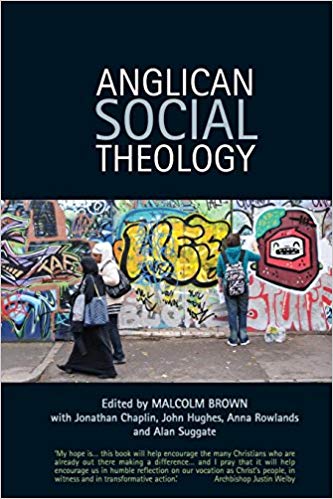
Anglican Social Theology – Renewing the vision today, published in 2014, consists of four heavy-weight essays, by Alan Suggate, John Hughes, Jonathan Chaplin and Anna Rowlands, each of which wrestles in a different way with the idea that there has been and remains such a thing as a distinctive ‘Anglican Social Theology’. These four contributions are sandwiched by a thoughtful and helpful introduction and conclusion from Malcolm Brown, the Director of Mission and Public Affairs for the Archbishops’ Council of the Church of England.
Suggate and Hughes take the influential work of Archbishop William Temple in the years before and during the Second World War as a kind of sounding board, on which to explore the ways in which Anglicans have thought about social and political questions. Chaplin specifically considers the part that the evangelical tradition has played in this story, while Rowlands places Anglican Social Theology in dialogue with Catholic Social Teaching. The overall effect yields a book that combines a broad historical review with an instructive theological and philosophical treatment of Christian responses to the Enlightenment and post-Enlightenment world.
As Brown states (page 188), the book aims to ‘…set out the claim that the continuities in the tradition of Anglican social theology are sufficiently robust to have a great deal to offer the Church in its relationship to society, culture and politics today.’ As such, all of the authors are essentially optimistic, even if some notes of caution are sounded.
There were a number of specific points of interest for me. I enjoyed Brown’s description of Archbishop Justin Welby’s intervention over Wonga (page 20), with his acknowledgement that this was a new and fresh way of the Church speaking into a real and pressing situation. I was persuaded by Suggate’s argument and evidence that William Temple was rather less of a patrician than I’d previously thought (see especially page 66). I nodded as I read Hughes’ description of how both the world and the church have changed in very different ways since Temple’s day. I found myself reassured if not surprised by Chaplin’s suggestion that one of the main gifts to Anglican social theology from evangelicalism has been and remains an ‘associationist’ model of social transformation, based on self-governing voluntary societies. I was struck by the parallels Rowlands drew between the 1930s and today, within her discussion of what a proper vision of a national community might look like, especially in the face of fascistic tendencies (page 147).
The above are mere snap-shots, to illustrate the richness and quality of the discussion throughout all the contributions. However, I was left with two main concerns as I finished the book. First, I remained unsure who would read it. On one level it feels as though its purpose is to defend the need for such a tradition within today’s Church of England, and even to defend the work of the Mission and Public Affairs Department. If so, it should be read by members of the House of Bishops and the General Synod of the Church of England. My feeling, however, is that this probably hasn’t been the case; it is more of a theologians’ book than that. Similarly, it would be somewhat too abstract and theologically dense to give to someone thinking about setting up a food bank, not withstanding Bishop John Packer’s words of praise for the book in this direction (page 190). Is it then a book for theologians? Perhaps, although many of the themes are set out in general terms and would be familiar to anyone working in this field. Might it be helpful for a certain kind of thinking politician to read it? Again, this would be a possibility, but my hunch is that the jargon and assumed knowledge is rather too strong. I was left not entirely sure who the audience is supposed to be, although I would certainly recommend it to anyone seriously studying political theology.
My second concern connects to the fact that this book is now four years old. It was written prior to the ‘Brexit’ event and debates, prior to the election of Trump in the USA, and prior to the rise of Corbyn as Labour leader in the UK, and the outcome of the 2017 UK general election. The genesis of the book as it stands has more to do with the financial crisis of 2008 rather than the political crises to do with national identity, refugees, and protectionism. A few hints are tucked away within the book, for example when Suggate flags up the identity question: ‘what it means to be an ‘I’…’ (page 37), and an oblique reference to space/place by Rowlands (page 145). My own reflection was that the optimistic conclusions about the state of Anglican social theology had been found somewhat wanting by the weak and cautious public voice of the Church of England in the face of the EU referendum, and the rather impoverished theological discussion about the nature of geographical places in a world where huge population movements are of growing concern. Brown, with admirable prescience, worries in his conclusion that the Church of England may be poorly placed: ‘…today’s culture demands much greater clarity about identity and boundaries…’ (page 185), but on balance he feels able, in 2014 anyway, to set these worries largely to one side.
As an Anglican myself, I am confident that the theological resources are there to be found, and in that sense this book is helpful, by way of an intelligent reminder that the Church of England should speak and act in the public square. It would be interesting to ponder how a 2019 version should be updated.
“Anglican Social Theology – Renewing the vision today” edited by Malcolm Brown was published in 2014 by Church House Publishing (ISBN-10 0715144403). 226pp.
Edward Carter is Vicar of St Peter Mancroft Church in Norwich, having previously been the Canon Theologian at Chelmsford Cathedral, a parish priest in Oxfordshire, a Minor Canon at St George’s Windsor and a curate in Norwich. Prior to ordination he worked for small companies and ran his own business.
He chairs the Church Investors Group, an ecumenical body that represents over £10bn of church money, and which engages with a wide range of publicly listed companies on ethical issues. His research interests include the theology of enterprise and of competition, and his hobbies include board-games, volleyball and film-making. He is married to Sarah and they have two adult sons.
God and the Evil of Scarcity: Moral Foundations of Economic Scarcity was written in 2005, its central question is timeless. Why would an omnipotent and benevolent God permit evil? Theologians and philosophers have long struggled to explain why God would permit the suffering of innocents or natural disasters. Most conclude that God permits evil so some greater good may come forth. Ultimately, however, it is the belief that such a God exists and that He knows what is best for us which settles the argument. “Where were you when I laid the earth’s foundation?” is the beginning of God’s answer to Job (38:4).
Stronger faith and trust in God’s goodness is a pious response to the problem of evil, one that is perhaps most applicable to overwhelming evils such as those that afflicted Job. But what about those “lesser” evils, where the good God seeks involves human action of the mundane economic sort? Could it be that we are too fatalistic in the face of evil, cursing the stars when the fault is in ourselves? On the other hand, those who think they can “solve” the problem of evil may come to see themselves as gods, the self-creating masters of their own existence rather than humble servants of God.
Albino Barrera is a theologian as well as an economist. He grapples with the problem of material scarcity as a “participative theodicy” as opposed to a Malthusian one. Malthus (wrongly) predicted that population growth would outstrip the supply of the earth’s resources, leading to widespread penury and death. Barrera sees scarcity as an opportunity for human beings to partake in God’s goodness by learning through economics how to allocate scarce resources with alternative uses and sharing the resulting wealth for the common good of all, especially the less fortunate.
Actually, for Barrera, fortune has little to do with it. Material poverty is a moral evil that God wants us to eradicate through the redistribution and transfers of wealth to the poor. God commands that we care for the poor. Since we now have the means to lift people out of poverty, any shortcomings must be someone’s fault. (Presumably, the greedy rich are to blame, rather than certain policies that may keep their poor destitute.) Barrera’s economics is moralistic, in contrast with the technical studies of mainstream economics today. It is therefore part of an older tradition than modern social sciences which refuse to make “value judgments” about how human beings should live.
God gave us the material world to thrive and flourish together. Contra Malthus, Paul Ehrlich and other population control advocates, human beings are more than mouths to feed; they also have minds that can think and hands that can build, as well as hearts that feel pity for the poor. God does not simply give us what we need without our own effort and striving; faith and works complement each other. Barrera makes a strong case of the Catholic work ethic and the spirit of capitalism.
The bulk of this book, however, deals with metaphysics, not economics. The appendices contain extensive discussions of the three types of causation (formal, efficient and final) to explain how God can exercise providence, govern and still leave human beings free to act in accordance with His will. Human activity takes place within a twofold order (the whole and its parts) of the universe. These are philosophically dense but necessary treatments if one desires to bring the worlds of theology and economics together.
Yet between theology and economics, there is a yawning gap. Politics, the question of who should rule, determines the types of communities we have, how we promote the common good and much more. Law and history shape how we divide our public responsibilities. Who, for instance, will protect property rights and enforce contracts that make the creation of wealth possible? Who will ensure that wealth is not only produced but also adequately distributed? In addition, who will decide when goods such as national defense or social cohesion, to say nothing of religious observances, take precedence over material prosperity?
Barrera’s treatment of politics, law and history focuses on the Bible, especially the Old Testament. The covenantal politics of Israel offers many insights into its persistent disobedience and ingratitude towards God as well as His unbounded mercy and love for His chosen people. The political drama of the New Testament is less evident but vexing issues of Church and State are still with us. Jesus repeatedly denies to rule as an earthly king, despite the subsequent attempts of Christians to rule in His name. There have been many different forms of Christian rule, i.e. monarchic, aristocratic and democratic, through the ages. It is hard to believe that they shared the same metaphysical principles of economics, irrespective of their political arrangements.
It is unfortunate that Barrera does not engage with thinkers other than Malthus, who explicitly denied divine providence and turned out to be mistaken about economics as well. John Locke would have been a much worthier adversary, since he formulated a theological-political economy in the Two Treatises of Government, yet he only receives two brief mentions in the book. Adam Smith similarly receives short shrift, with just one citation. Both were much more influential in prescribing the transformation from feudal to commercial societies, likely contributing to the decline of metaphysics among the moderns.
It is unfair to criticize Barrera for the book he chose not to write, so let me conclude by recommending this important work to anyone seeking a deeper foundation to economics than self-interest or the profit motive. As an academic work, it is primarily intended for those who have had some exposure to, and some taste for, metaphysics and therefore not for the average entrepreneur and businessperson. It will serve its purpose if it helps high-minded theologians and philosophers understand the importance of economics in doing God’s will.
“God and the Evil of Scarcity: Moral Foundations of Economic Scarcity” by Albino Barrera was published in 2005 by University of Notre Dame Press (ISBN-10: 0268021937). 304pp.
 Kishore Jayabalan is Director of Istituto Acton, the Acton Institute’s Rome office. For more information about Kishore please click here.
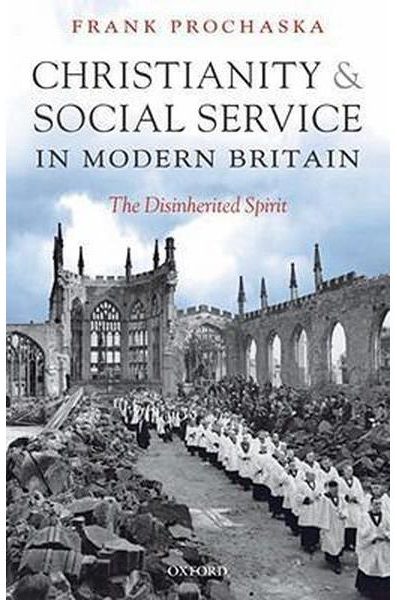
Frank Prochaska describes Christianity & Social Service in Modern Britain as “an interpretative study, which seeks to contribute to the history of social service, religious decline, and democratic traditions” (page (vii)). There is no doubt that, between the late Victorian years and the twenty-First century, the voluntary provision of social services in the UK was substantially replaced by State provision and, over the same period, Christianity in the UK declined. Frank Prochaska seeks to examine the connection between these two processes.
He does this by first examining the beliefs that underlay nineteenth century Christian social action and providing a general overview of the nineteenth century philanthropic landscape before moving on to consider four specific areas: schooling, visiting, mothering and nursing. In each case, he examines the motivation, nature and growth of voluntary Christian action during the nineteenth century and the changes (principally, the decline) that occurred between the last quarter of that century and the years following the Second World War and, to some extent, beyond. In the final chapter, he turns to examining post-war attitudes and endeavouring to draw broader conclusions.
These conclusions are damming of UK Christian leaders, especially those in the Church of England. Prochaska suggests that, by the post-war years “The ministerial, civil service state had dislodged civil pluralism, whose foundations lay in Christian notions of individual responsibility” (page 150) and that “Christian leaders failed to appreciate the consequences of endorsing a collectivist secular world without redemptive purpose” (page 151). Referring to the Church of England, he comments that “rarely has a British institution so willingly participated in its undoing. The Bishops blew out the candles to see better in the dark” (page 152).
Bishops and other Christian leaders would do well to reflect on this but they are not the only ones who should pause for thought. The book raises important questions about the impact of the Welfare State on moral responsibility, freedom and democracy. Prochaska’s conclusions should be considered by all those who have enthusiastically supported its creation and enlargement. He asserts that “in what may be seen as the welfare equivalent of urban renewal, comprehensive reconstruction ravaged much of the historical fabric of the voluntary social services” (page 150) and that, in the post-war years, “Individuals could take satisfaction from paying their taxes, but they were in many ways more impotent in an age of universal suffrage and Parliamentary democracy than their disenfranchised ancestors had been under an oligarchic system” (page 149).
Prochaska concedes that, to some extent, the landscape has altered in the past 40 years but he does not believe that the change is fundamental and he discusses with concern the increasing channelling of Government money through charities, suggesting that it undermines the essence of voluntarism. He suggests that “whether a voluntary sector increasingly funded and regulated by government will promote freedom remains an issue” (page 174).
Those of a left leaning disposition may well recoil from this kind of analysis but it would be wrong to conclude that Prochaska is on a crusade against the Welfare State. He does not in fact analyse the merits and de-merits of it. That is not his subject. Furthermore, whilst he clearly has respect for nineteenth century voluntarism and for what he calls “the religious temper and its role in society and politics” (page (vii), he is not starry eyed about it and his comments on the impact of Christianity and its decline come from outside the Church since he says that he has no personal religious faith (page (vii)).
The book has a number of failings. As the quotes above suggest, Prochaska has a penchant for big statements and many of these are less closely tied to the evidence that he has presented than might be expected of a senior Harvard-based academic. Furthermore, some of his assertions relating to Christianity are misguided. For example, on the basis of his understanding of John Wesley’s theology, he appears to believe that Arminianism had replaced Calvinism within British Evangelicalism by the end of the eighteenth century (page 7), which is certainly not the case.
More seriously, whilst many of the connections he draws between the rise of the Welfare State and the decline of Christianity are thought provoking, most readers are likely to be left questioning whether he has truly demonstrated a relationship of cause and effect between the two. The verdict on his fundamental thesis must be “unproven”.
That said, his examination of nineteenth century voluntarism is fascinating. It will be an eye opening to many readers who will have no idea of the enormous scale of Christian (largely Evangelical) voluntary endeavor in the nineteenth century. The description of the beliefs and societal structures that underpinned this (including the role of women) is of great importance. Any discussion of the Welfare State in the twenty-first century needs to take account of these things if it is to avoid proceeding on the basis of false premises as to what is and what is not possible.
More generally, few people today (whether or not Christian) have a clear appreciation of the extent to which the values and culture of the UK have changed over the past 125 years. In common with most generations, we have a tendency to dismiss our predecessors as ignorant or at least unenlightened and uncritically to equate change and progress. As Prochaska says, “As we reject the pieties and social hierarchies of our ancestors, we tend to forget that benevolence and neighborliness, self-help and helping others, were among the most urgent Christian values. We also tend to forget that much of Britain’s idealism and democratic culture grew out of these values” (page 2). Prochaska helps us to remember and understand.
What is more, the book is a good read and contains an informative and engaging mix of statistical and anecdotal evidence, the latter bringing the subject to life in a way that mere statistics can never do. Even those who fundamentally disagree with what Prochaska is saying should enjoy reading the book and benefit from doing so.
“Christianity & Social Service in Modern Britain” by Frank Prochaska, was published in 2006 by Oxford University Press (ISBN-10: 0199539790). 228PP.
Richard Godden is a Lawyer and has been a Partner with Linklaters for over 25 years during which time he has advised on a wide range of transactions and issues in various parts of the world.
Richard’s experience includes his time as Secretary at the UK Takeover Panel and a secondment to Linklaters’ Hong Kong office. He also served as Global Head of Client Sectors, responsible for Linklaters’ industry sector groups, and was a member of the Global Executive Committee.

The Poverty of Nations comes with enthusiastic endorsements: Robert Sirico says that “The table of contents alone provides clearer instruction than many graduate students get in economics courses” and Rick Warren asserts that “It should be required reading in every Christian college and seminary, by every relief and mission organisation, and by every local church pastor”. The authors have high ambitions: they state that their goal “Is to provide a sustainable solution to poverty in the poor nations of the world” (page 25) and that their “primary audience” is Christian leaders in poor nations (page 31), and they hope that Christians in more prosperous nations will also read the book. Readers, therefore, start with great expectations. Unfortunately, however, many will end up disappointed. Although the underlying thesis is sound and the book contains sensible analysis, it suffers from serious deficiencies.
Wayne Grudem is a well known theologian and Barry Asmus an equally well known economist. Both are committed Christians and are at pains to stress that financial well-being is not the ultimate goal in life. Indeed, this may be the only economics book that contains a call to trust in Jesus Christ (page 41). Nonetheless, the book’s subject is material well-being. The authors suggest that, once the fundamentals are understood, “it becomes evident that if we want to solve poverty, the correct goal is that a nation continually produces more goods and services per person each year” (page 45). They passionately believe that the best (perhaps, only) mechanism for achieving this is the free market but they also emphasise that “the right kind of economic system does not by itself bring a nation out of poverty” (page 107). They discuss the importance of political and legal systems (especially the rule of law, property rights, the absence of corruption and the provision of adequate education and healthcare), various different kinds of freedom (including freedom of movement and of establishment and freedom from excessive regulation) and core political values (i.e. cultural attitudes and norms).
The authors place the responsibility for pulling a nation out of poverty firmly with the nation’s own leaders. They recognise that wealthy nations have a part to play (e.g. by lowering trade barriers and stopping “commodity dumping”); they accept that limited, targeted use of foreign aid may be appropriate (although they repeat the well rehearsed arguments against its widespread use); and they recognise that some of the blame for Third World poverty rests with more wealthy nations. However, they conclude that “even if external factors or entities have had some negative effect in poor nations, they are still secondary causes of poverty today, not primary causes” (page 83). The poor are not poor because the rich are rich.
The authors recognise that what they are saying is not new. In particular, they owe a huge debt to David Landes, quoting “The Wealth and Poverty of Nations” several dozen times (perhaps, excessively). Nonetheless, it is good to see the core arguments for a free market system clearly re-asserted and the chapter on its moral advantages is particularly welcome. The authors defend the system against all comers and suggest that, even in relation to the evils of selfishness and materialism, it is better than the other options. Conversely, they attack these other options, quoting with approval Claire Berlinski’s summary of Margaret Thatcher’s view that “socialism was not a fine idea that had been misapplied, it was an inherently wicked idea” (page 198).
There are also shorter but nonetheless interesting discussions of the dangers of governments becoming monopoly purchasers and the moral issues associated with “wants” (i.e. desires), which the authors suggest should not be equated with greed but rather regarded as “a good thing, part of God’s original creation” (page 218). This leads to the conclusion that “it is important for people to think of an “ideal” life as one of joyful production that benefits both themselves and others” (page 345).
So what is wrong with the book? First, it tries to deal with too many different issues. It contains no less than 79 different recommendations and the result is that the second half of the book at times feels like a list. Many of the points overlap (which results in repetition) and some are not properly argued or developed. For example, the brief discussion of need for religious freedom fails to show how it connects with economic growth, whilst the discussion relating to the family (including sexuality in general) is shallow.
In principle, the idea of bringing together a theologian and economist is a good one, allowing the economic analysis to be firmly grounded in theological and ethical considerations. However, in practice, the result is that neither the economic nor the theological arguments are properly developed. In particular, some of the biblical analysis is disappointingly superficial and contentious. For example, Grudem argues that the Bible sees the role of government as being essentially limited but fails to explain why it is that the authors favour universal compulsory government provided education (which many Christians until the 20th century would have strongly opposed).
The authors place great weight on the Biblical command to “Be fruitful and multiply and fill the earth and subdue it” (Genesis 1:28, which they quote a dozen times). This is a good starting point for a Christian view of economics but the authors place a weight on it that it cannot bear. In particular, it underlies their comments relating to the need to secure “freedom to utilise energy resources” (page 283) and other comments relating to the environment, some of which are highly contentious yet asserted in strident terms. This is a pity because (as Landes has pointed out), the Judeo-Christian subordination of nature to man has been important to economic development and there is a dangerous element of pagan animism underlying parts of the ecological movement today.
The statement that society needs to believe “that the earth’s resources will never be exhausted” (page 339) is another example of the same issue. There is a respectable case for this belief and it is important to challenge at the doom mongers who for two centuries have been constantly warning of catastrophe caused by excessive resource utilisation. However, the single page that the authors devote to this subject results in their claim appearing as an a priori belief rather than a carefully thought through conclusion.
More generally, despite the acknowledgement that the free market system is not perfect (page 207), the book contains little in the way of balanced critique of it and it is disappointing that, after some very good analysis and foundation laying in the first two-thirds of the book, the final third leaves one with the impression that the authors are inviting poorer countries to adopt the U.S. system wholesale, including things such as the right to bear arms (page 232) and the U.S. concept of patriotism (page 359), which do not appear to have much to do with economic development.
These are serious defects. They are likely to alienate many readers and fail to persuade others who might be open in principle to persuasion, including the Third World leaders who the authors claim are their target audience. Furthermore, those wanting detailed historic economic analysis would be better off with The Wealth and Poverty of Nations. Nonetheless, there is enough that is good within the book to make it worth reading and it might also be useful as a book to be critically discussed in the Christian colleges, seminaries, relief and mission organisations and churches to whom Rick Warren has recommended it.
“The Poverty of Nations: A Sustainable Solution” was published in 2013 by Crossway (ISBN: 978-1-4335-3911-4). 373pp (excluding bibliography).
Richard Godden is a Lawyer and has been a Partner with Linklaters for over 25 years during which time he has advised on a wide range of transactions and issues in various parts of the world.
Richard’s experience includes his time as Secretary at the UK Takeover Panel and a secondment to Linklaters’ Hong Kong office. He also served as Global Head of Client Sectors, responsible for Linklaters’ industry sector groups, and was a member of the Global Executive Committee.