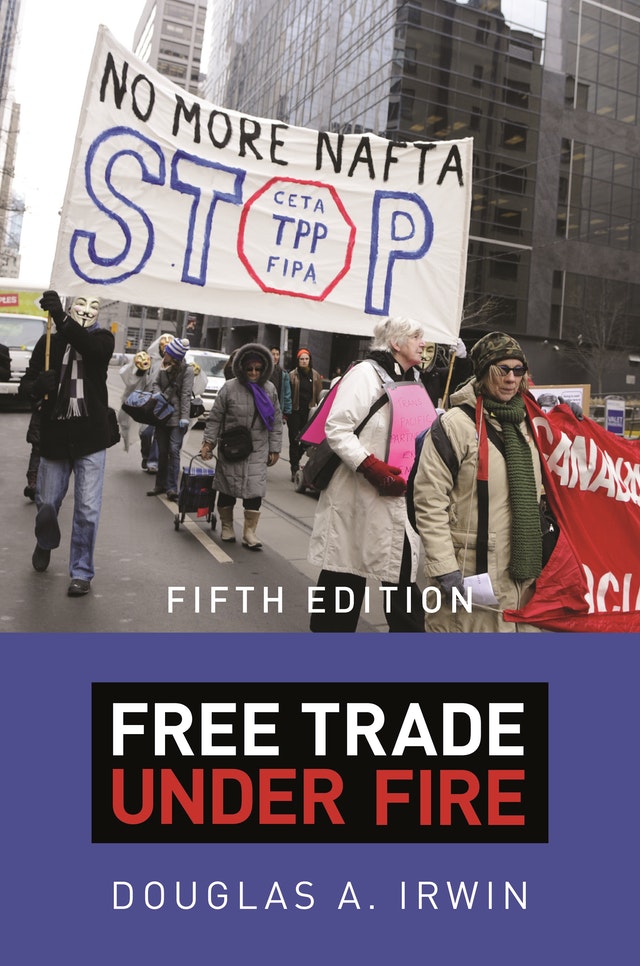
“Free Trade Under Fire” by Douglas A. Irwin is, as the title suggests, a book on the debate and defence of international trade. It covers a wide spectrum of (sometimes sensitive) issues on the subject. From national sovereignty and trade policies, to popular misconceptions about trade, the book tackles each argument with considerable depth and backed by evidence.
Douglas Irwin is John Sloan Dickey Third Century Professor in Social Sciences at Dartmouth College. He speaks regularly on trade policy (particularly U.S trade), and writes for various news outlets including the Wall Street Journal, New York Times, and Financial Times.
It perhaps comes as no surprise that the structure and language of the book is somewhat of a hybrid between the academic and ‘professional’ spheres. In parts it reads like a handbook for postgraduate students, while in others it is more opinionated and empirically driven. Regardless, each chapter is well written and considers the various angles of approaching the subject in question.
Therefore, one aim of the book is to “…introduce the reader to some basic economic principles and empirical evidence regarding international trade and trade policies” (page 8). It also seeks to address some of the misconceptions around trade in the “…modest hope that it may improve our understanding of the trade policy issues that confront us” (page 10).
The first and second chapters look at the position of the United States within international trade and evaluates the arguments for free trade. One of the first interesting points that the author makes is highlighting how the impact of international trade is rather blown out of proportion within US public discourse: over 85% of what is consumed in America is produced in America (page 26). Foreign imports therefore only account for less than 15%. Consumption spending is even higher with around 90% being spent on domestic goods (page 27).
A second interesting point emphasises how misguided our perception of the national economic impact of buying imported goods actually is, “…we sometimes exaggerate how much of the money goes to other countries. When you buy a $100 pair of Nike shoes, only $25 goes to the Asian factory that assembles them” (page 27). The rest of the $75 is spent in the US on design, shipping, insurance, and retail costs (ibid.).
Yet beyond these misconceptions surrounding international trade, the book’s most compelling argument in favour of trade liberalisation (based on Adam Smith’s Wealth of Nations), is the specialisation, division of labour and increased productivity that naturally occur under a free trade regime between nation-states. This results in economic gains for all parties involved.
The author uses individuals as an analogy to illustrate the benefits of trade, “Most people do not produce themselves even a fraction of the goods they consume. Rather, we earn an income by specialising in certain activities and then use our earnings to purchase various goods and services. […] Like individuals, countries benefit immensely from this division of labour and enjoy higher real incomes than they would by foregoing such trade” (page 36). This relatively simple but little-known fact is critical to understanding the benefits of free trade.
Chapters three and four turn the discussion to protectionism and the impact of free trade on jobs and wages. Here the book makes an important point that seeks to explain the paradox between the gains from free trade and the controversiality in the adoption and implementation of free trade policies.
The answer lies in successfully (if that is an adequate word here) managing the short- versus long-term beneficiaries of free trade. Not all industries are impacted the same, “…in the short-run, not everyone stands to benefit from the trade policy. […] Specific groups that benefit from protectionist barriers usually exert political influence beyond their numbers” (page 104). The bottom line is that protectionist measures “… provide large benefits to a small number of people and cause a very great number of consumers a slight loss” (ibid.). Reaping the benefits of free trade often requires time and this is perhaps one of the greatest challenges for set-term elected officials that often prefer policies with a much shorter time horizon.
The final chapters look at the international free-trade system itself and the current governing bodies (e.g. the World Trade Organisation). The book concludes with re-emphasising the importance of free trade and the economic benefit it bought to quite literally, billions of people around the world (page 322).
Yet free trade also remains a contentious issue because of partisan politics. Under President Trump, the US has in many ways inclined to a protectionist approach of trade that is more rooted in populism than theory. The danger is that, as the book points out, a weakened commitment from the US for free trade will lead other countries to follow suit, “…trade policy choices that the US makes have ramifications far beyond America’s shores…” (page 319).
In concluding, “Free Trade Under Fire” by Douglas A. Irwin is a well-written, well-researched, and timely piece of work. It is excellent reading for anyone with a remote interest in free trade. The book arises multiple remaining questions and challenges for the rest of us: How can the truth about free trade be presented in a so-called, “post-truth” society? How can our elected representatives be better equipped to argue in favour of free trade when the alternative is often simpler, clearer, and electorally more attractive? How do we explain to millions that feel left out of the system that they and their families only stand to gain from free trade in the long-run?
It seems therefore that free trade is currently facing a PR problem. It has been ousted in many places by seemingly sharper nationalist rhetoric. We need to be re-educated on the matter and “Free Trade Under Fire” by Douglas A. Irwin is an excellent step in that direction.
“Free Trade Under Fire – Fifth Edition” by Douglas A. Irwin was published in 2020 by Princeton University Press, (ISBN:9780691201009, 0691201005), 352pp.

Andrei E. Rogobete is the Associate Director of the Centre for Enterprise, Markets & Ethics. For more information about Andrei please click here.
Christianity and the New Spirit of Capitalism is, in one sense, inspired by Max Weber’s famous suggestion that Protestant Christian beliefs gave rise to a work ethic that provided the foundation of modern capitalism. Weber believed that the Protestant ethic produced what he called the “Spirit of Capitalism” and Kathryn Tanner agrees that “religious beliefs (Christian beliefs specifically) have the capacity to provide powerful psychological sanctions for economic behavior” (page 4). She also adopts the concept of the “Spirit of Capitalism” but her aim is far removed from that of Weber: she seeks “to show how Christian beliefs … might undermine rather than support the new spirit of capitalism” (page 7).
Tanner’s thesis is that capitalism is now finance-dominated and has cultural commitments that are at odds with Christianity. She thus wants “to provide a Protestant anti-work ethic” (page 30). With this objective in mind, each chapter of her book (other than the first) comprises a description of an aspect of what Tanner considers to be the spirit of “finance-dominated capitalism” followed by a contrasting description of what she considers to be the relevant Christian philosophy. She concludes by expressing the hope that she has “shown the coherence of a whole new world to be entertained as an imaginative counter to the whole world of capitalism as it presently exists” (page 219).
A number of Tanner’s criticisms of the extremes of some forms of capitalism would be widely accepted. For example, she criticises the demand for total commitment to paid work that leaves no time for reflection, the maximising of profit at the expense of everything else, the regarding of people as mere economic property, short termism in management and the devastating social consequences of personal debt among the poor. Furthermore, many Christians and other theists will agree with her starting point in relation to commitment, identity and value: “Commitment to God and the conversion that brings it about interfere with total commitment to anything else, thereby limiting the degree to which I could ever be completely personally invested in a company’s aims” (page 86); “the tasks one undertakes at work cannot be taken to exhaust one’s identity – and should not be pursued in any all-consuming fashion that would suggest as much” (page 98); and “What matters in the end is one’s relation with God, one’s value in God’s eyes and not one’s relative worth measured against others” (page 204). Put simply, capitalism cannot be accepted as an all embracing world view.
That said, however, Tanner’s thesis does not hold together. She states that her accounts of finance-dominated capitalism and its spirit “are offered as ideal types in a Weberian sense of that phrase: that is, they are analytical constructs that accentuate certain aspects of the messy reality of the current economic and cultural scene and show how they might be brought together into relationships with an internal consistency” (page 10). However, what she offers is a muddled caricature.
She fails to distinguish between situations that are fundamentally different: comments that could only relate to investment banks are mixed in with comments that appear to relate to industrial companies without the distinction being acknowledged; she fails to distinguish between the activities and motives of market-makers and other dealers, those of corporate users of the financial markets and those of long-term investors; and comments relating to people fail to identify the exact groups to which they relate, with the result that the problems faced by professionals, other white collar workers, skilled and unskilled workers are jumbled together as though they represented problems common to the mass of humanity exposed to modern capitalism.
Many of Tanner’s statements are absurdly extreme. She makes modern corporations sound like Maoist states, commenting that “Workers themselves are to want nothing more than what corporations ask of them; their own desires are to be brought into complete compliance with finance-dominated corporate interests” (page 64) and “Workers are to be encouraged to want for themselves what the company wants from them” (page 70). It seems that corporations can do nothing right in her eyes: she laments the pushing down of responsibility for decision making, continual assessment, the use of relative rather than absolute measures of performance, the need for workers to perform increasingly complex tasks and even multi-skilling!
Her criticisms of the financial markets are similarly exaggerated. She recognises that derivatives may be a form of insurance and, on occasions, makes comments that suggest that she may have an inkling that the reality is more complex than her thesis suggests. However, she spends many pages asserting, essentially, that the financial markets are divorced from underlying economic reality and that they offer “promises of a defanged future” that “turn out to be spurious” (page 156).
Tanner is also critical of governments suggesting that they too have become finance-dominated and are reneging on “previously accepted obligations to guarantee the welfare of the population, through medical or unemployment benefits, for instance” (page 22). However, the bogeymen in relation to this are clear: she says that “government policy can easily be taken hostage by foreign investors and the increasingly few rich among its own citizens with the ability to make significant purchases of government bonds” (page 23). Absurdly, she asserts that “Only efficiently run governments, which means governments run like finance-dominated corporations so as to cut costs to the bone, are deemed credit-worthy on the open market” (page 48). If this were true then the majority of governments around the world would find it impossible to secure finance!
Many Christians will take issue with Tanner’s theology. Some aspects of this are peripheral to her thesis. However, her theology of work is central to that thesis and is highly contentious. She asserts that “there is surprisingly little reason to think Christianity has a direct interest in developing a work ethic at all” (page 198) and she rejects the idea of secular vocation (i.e. the view that “one can serve God directly in economic pursuits because those are thought to be themselves divine vocations, part of God’s specific plans for one’s life”, page 200). Unfortunately, once again, she caricatures the view that she is criticising and never engages properly with the arguments in its favour. She asserts that “The problem with direct assignment of religious value to economic pursuits is that it provides religious sanction for whatever form of employment society happens to saddle one with, no matter how limiting or degrading” (page 201), which is blatantly untrue of most forms of the Protestant work ethic. She then justifies her “anti-work ethic” on the basis that one’s individual worth comes from God and not from comparison with other people, which is true but beside the point.
She never engages with the statements of Jesus and St. Paul and other biblical writers that appear to ascribe real value to secular work (e.g. “Whatever you do, work at it with all your heart, as working for the Lord, not human masters”, Colossians 3:23, NIV). She also asserts that “God…does not create and save people for the sake of some objective they are tasked with pursuing” (page 206) without engaging properly with parts of the Bible that appear to assert that part of the objective of creation and redemption is productive work. She says that “there was no need for extreme effort in Eden before the disordering of the world as God intended it” (page 207) and appears to believe that she has thereby demonstrated that those who appeal to the Genesis account in support of the Protestant work ethic are wrong. However, the inclusion of the word “extreme” results in her attacking an Aunt Sally. She does not deal with the fact that the Bible indicates that, prior to the Fall, God intended people to work (Genesis 2:16) or the fact that we live in a fallen world.
Even those who accept Tanner’s basic thesis are likely to find the book unsatisfactory since it lacks suggestions as to what Christians should do about the mismatch between the spirit of modern capitalism and that of Christianity. Bizarrely, the only specific practical suggestion in the whole book is that employers should make “no-interest advances on worker’s paychecks in a routine fashion … rather than leaving them with high-interest payday loans as their only option” (page 128), a suggestion that misses the point that such advances would simply bring forward the monthly payday without solving the financial problems of employees that result in the recourse to payday debt.
Tanner may object that her purpose is merely to encourage Christians (and, perhaps, others) to adopt an ethic that it is at odds with what she perceives to be the spirit of modern capitalism. She says that she is suggesting “that the financial approach to the future is part of the present world to be left behind, a world to be repudiated in all the very basic ways it counsels people to relate to themselves and others, in favour of a whole new world to come that will be as different from this world as possible” (page 166). This is fine sounding but it is hard to see how it will help anyone decide how to behave in relation to their everyday work. If one accepts her rejection of the view that secular work can be a calling, one has to determine the role that it should play in one’s life and the relationship between it and other aspects of life. Furthermore, if one wishes to have an influence on companies and governments, then one needs to have some specific policy suggestions to offer.
Those looking for help in relation to these things would be better off reading some of the other books reviewed in the section of this website entitled “The Business World” (see, in particular, those mentioned under “The Purpose of Business”).
“Christianity and the New Spirit of Capitalism” by Kathryn Tanner was published in 2019 by Yale University Press (ISBN 9780300219036). 219pp, plus notes.
 Richard Godden is a Lawyer and has been a Partner with Linklaters for over 25 years during which time he has advised on a wide range of transactions and issues in various parts of the world.
Richard’s experience includes his time as Secretary at the UK Takeover Panel and a secondment to Linklaters’ Hong Kong office. He also served as Global Head of Client Sectors, responsible for Linklaters’ industry sector groups, and was a member of the Global Executive Committee.
In the aftermath of the Global Financial Crisis, Mark Carney, the former Governor of the Bank of England, coined the concept of a “social licence” for financial markets and, in the Forward to David Rouch’s book, he commends Rouch for the progress he has made in defining a framework for this social licence.
Rouch’s basic thesis is concisely summarised in a six-page overview at the start of the book. He acknowledges that “Capitalism in one form or another is the only realistic option for meeting a host of human needs” (page xx). However, he also recognises that there has been a breakdown of trust of the kind that Mark Carney has identified and that “the usual toolkit of laws and regulations has been powerless to heal the fracture between the financial sector and surrounding society” (page xx). He suggests that the view that financial markets are really only about money-making is wrong and that recognition of a social licence is “both an observation about the relationship between finance and society and an expression of aspiration about how it could be at its best” (page xxii). Rouch wants to ensure that this recognition becomes universal and argues that paying attention to it “has the potential to help reorientate the individual relationships that comprise the wider relationship between finance and society, by strengthening positive reciprocity” (page xxiii). This, in turn, leads to various policy proposals designed to bring an overarching “social licence” narrative to financial market practice and regulation.
The resulting book is not an easy read. Rouch expresses the hope that traders, directors, lawyers, campaigners, regulators, academics, politicians and policy makers will approach finance differently as a result of what they read in it but even many of them will find it heavy going. Some parts are highly specialist (the 22 page “Written Standards Map” at the end of Chapter 5 being an extreme example of this), the language throughout is complex and a lot of the book is devoted to discussions of psychological, sociological and philosophical issues (e.g. theories of group behaviour and human motivation and concepts of human dignity and justice).
Rouch appears to be conscious of this issue and provides what he describes as a “Fast Track” summary at the start of each chapter, which sets out the key messages of the chapter and its main implications. He also frequently reminds the reader of what has been said earlier in the book and points to the direction of travel of his argument. Unfortunately, however, these devices do not completely solve the problem and they result in both a significant amount of repetition and an over self-conscious stress on the structure of the book.
Those who persevere will, however, find much food for thought and, probably, plenty to applaud in what Rouch says. Most fundamentally, he is surely right in asserting that markets are in fact, and should be, about more than simply making money. The knee jerk reaction of people (including market participants) to the effect that they care about nothing other than money can be proved to be wrong not only by reference to modern behavioural psychology but very simply through questions and answers posed to market participants. Moreover, the suggestion that markets should have a broader purpose is consistent with most major ethical systems, whether religious or secular.
Rouch is also surely right in recognising the power of ideas, or “narratives” as he calls them. If people believe that they are operating in a dog-eats-dog world constrained only by a jumble of complex regulations, they will behave differently and they would if they believed that they were working in an environment having a broad social purpose in which the relevant rules are, however imperfectly, reflections of that purpose. Furthermore, market and corporate culture exerts its own pressure for good or for ill. In part, these things explain why good people do bad things or, conversely, why even bad people may be constrained by the culture in which they find themselves.
In this connection, it is good to see Rouch acknowledge “the idea that legally enforceable regulatory rules that overlap with aspirational standards may diminish the force of the latter” (page 189) as well as the fact that “you cannot ultimately legislate for a sense of urgency. Nor can you force people to have a healthy relationship or to be trustworthy” (page 9). It is also encouraging to see his repeated references to issues of trust, which recognise that market behaviour comes down to the actions of individuals and groups of people and that relationships are key to the achievement of desired outcomes.
That said, there is a serious problem at the heart of the book: Rouch’s definition of “the social licence for financial markets” is vague. Indeed, he himself recognises that “Defining the substance of the social licence is … challenging” (page 133). He frequently says what it is not: It is “not a ‘mere’ metaphor” (page 113), it is not a “social contract” (page 115) and it is not to be identified with the “social licence to operate” that has been perceived in relation to other industries, particularly extractive industries (page 117). Furthermore, it is not to be identified with the legal authorisations which are required in order to be a market participant. It is, on the contrary, something that is granted by society as a whole and it “can be treated as granted to the extent that those in society have given their justified trust to financial operators, trust based on solid reasons for believing that those in financial markets will carry on business in a way that is consistent with the licence” (page xxii). It comprises “a freedom to pursue just ends by just means in financial markets, where justice is a situation in which the human dignity of market participants and those affected by their activities can be experienced most fully” (page xxii, italics in the original).
Almost every element of these statements gives rise to serious issues. For example, since most members of society (including many who are well educated) will have little idea of what the financial markets do let alone how they operate, in what sense can they be said to give “their justified trust … based on solid reasons”? In any event, what society are we talking about? Rouch appears to be having regard to nation states (or, perhaps, some super-national entities like the European Union) but is that realistic in a modern globalised world? Equally seriously, since there is no common understanding of the concept of “just” behaviour in society (see, for example, “What is Economic Justice?” by Andrew Hartropp), how can this form the basis of an adequate definition of the social licence?
Rouch acknowledges some of these difficulties, including the lack of consensus in relation to some key concepts such as the nature of “justice”, (page 135) but he believes that there is sufficient high-level consensus to render the concept of the social licence itself viable. Unfortunately, however, one may legitimately doubt whether this is true and ask whether the vague language of “social licence” has the effect of generating the appearance of agreement among those who use the term, without its reality. For example, as Hartropp demonstrates, an approach to justice that is based upon rights or needs will necessarily arrive at completely different conclusions from an approach that is based on due rewards or deserts and concepts based on justice in production will talk of completely different things from a concept based on justice in distribution (which, incidentally, Rouch appears to adopt).
There also seem to be problems in evaluating the role of laws and regulations in relation to the “social licence”. Rouch regards these laws and regulations as both evidence for such a licence and, to some extent, indicative of the terms and conditions of the licence. However, it is surely arguable that ever increasing regulation is indicative of the withdrawal or, at least, restriction of the terms of the “licence” rather than evidence of its grant. Furthermore, Rouch relies heavily on written materials produced by a variety of sources as the evidence of the terms of the licence and one is left with the impression that he has simply included “soft law” and related matters within his concept without really altering the regulation-based framework which he has previously recognised to be inadequate.
Some other questionable aspects of Rouch’s underlying analysis are less fundamental but nonetheless important in relation to the impact of his proposals. In particular, he places great stress upon the need to promote “other regarding behaviour” in contrast to “self-interest”. This is obviously morally right but, as Adam Smith long ago famously demonstrated, the two categories are not completely discreet. The building of trust may involve “other regarding behaviour” but, as Rouch recognises, it is absolutely necessary in business relationships and even the most self-interested person will need to have regard to this in order to advance their own interests. Similarly, most people have a desire for the approbation of others and this too may involve behaviours that, from one perspective, are other regarding but, from another perspective, are self-interested. In places, Rouch appears to acknowledge this and he clearly does not believe that the pursuit of profit is wrong in itself but, if his goal of widespread recognition of the “social licence” is to be realised, it would be desirable to avoid an undue bifurcation of motivations and instead to ensure that the narrative recognises that self-interested and other regarding behaviour are not in opposition as often as may sometimes be thought.
As one reaches the end of the book, one is left with a nagging feeling that the concept of a “social licence” is too vague and hard to get hold of for it to be capable of comprising the compelling narrative that Rouch rightly believes to be necessary to replace the distorted narrative of unbridled self-interest that is often wheeled out even by those within the financial markets. Might it not be better to focus on a simpler narrative?
Such a narrative might commence by focussing (as the book does) on the clearly evidenced positive role of financial markets within society, thus addressing both self-esteem of those within the markets who desire to be doing something worthwhile and the misplaced hostility of some outside; it might demonstrate how the aspirations of organisations operating in the financial sector and the personal aspirations of those who work for them (including financial aspirations) are advanced rather than held back by “other regarding behaviour”, which (as Rouch also agrees) is thus not code for abandoning the pursuit of profit let alone a demand that financial institutions turn themselves into quasi-charities; and it might stress some simple ethical values that are neither obscure nor disputed among reasonable people.
In doing this, the narrative could build on concepts that are well understood, widely accepted and of proven worth such as the hard monetary value of trust and brand reputation, the role of client/customer focus in developing this, the need for long term business sustainability and the motivational impact on staff of being an organisation that is known for its high standards, including ethical standards.
Such an approach would focus on the culture of financial services organisations rather than metaphysical concepts. It would avoid the obscure language of the “social licence” with the negative over-tones of constraint and implicit threat that may be perceived in it and replace it with a simpler and more positive narrative which invites participants in the financial markets to take pride in what they are doing and recognise that they will best prosper, both financially and otherwise, in an environment that is ultimately beneficial to society as a whole.
“The Social Licence for Financial Markets” by David Rouch was published in 2020 by Palgrave Macmillan (ISBN 978-3-0-30-40219-8) 327pp excluding bibliography.
Richard Godden is a Lawyer and has been a Partner with Linklaters for over 25 years during which time he has advised on a wide range of transactions and issues in various parts of the world.
Richard’s experience includes his time as Secretary at the UK Takeover Panel and a secondment to Linklaters’ Hong Kong office. He also served as Global Head of Client Sectors, responsible for Linklaters’ industry sector groups, and was a member of the Global Executive Committee.
Optimist or pessimist?
We stand on the edge of a technological revolution which is proceeding at an exponential pace and which will impact and alter our work and indeed our way of life in ways we can hardly imagine. The paradox of technological advance and of artificial intelligence is well recognized. Do these developments enhance human well-being and welfare to the benefit of all or is the threat posed to employment so dramatic that the traditional responses of education, reskilling and training will be insufficient to protect us? Some commentators refer to the present period of technological change as ‘the fourth industrial revolution.’ The first represented the move to mechanisation, the second, the introduction of electrical power, the third, digitisation and automation. The change we are now experience is one of exponential speed in processing, the impact of connectivity and access to knowledge that is transformational.
In The Rise of the Robots, Martin Ford essentially argues we are ill-equipped and poorly prepared to face the onslaught heading our way. His two main arguments proceed as follows. First, a change in the types of job which will be affected. The advance of digitisation has alerted society to the possibilities of automating routine processes – hence the advent of robotic methods in production replacing the traditional methods of assembly-line production in, for example, the car industry. This is a familiar story and the usual response is to educate, train and reskill. Ford argues that the problem now is that “the machines are coming for the high-wage, high-skill jobs as well” (page 27). Higher education and knowledge skills which traditionally attracted a premium will no longer protect the worker, so much so, he argues that “the ongoing race between technology and education may well be approaching the endgame” (page 124). Indeed, many professions will find that increasingly capable machines will take on many of the tasks previously seen as exclusive to certain professions such as the law. This is then linked to his second argument, that the ability to replicate and scale machine intelligence will “create winner-take-all scenarios’ with ‘dramatic implications for both the economy and society” (page 82). One example here would be the dominance of a very small number of book distribution platforms effectively eliminating all competition. To return to the example of the law, it is not that the high-street lawyer has digitised conveyancing documents; rather it is the speed and extent of access of processing power that can identify cases and precedents in an instant previously requiring hours in a legal library.
Martin Ford, then, is a pessimist. He understands and appreciates that technological advance has largely driven a more prosperous society. However, on this occasion, he thinks it will be different.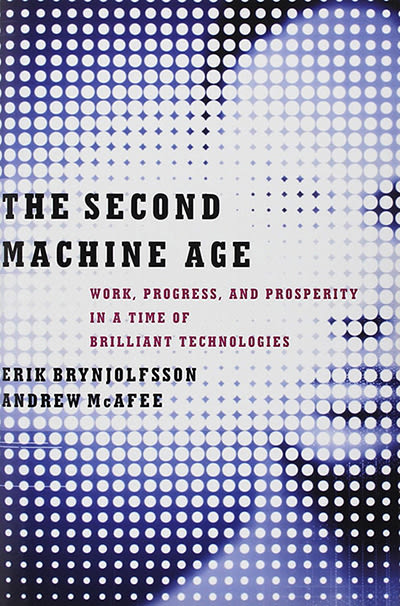
Erik Brynjolfsson and Andrew McAfee are optimists. In The Second Machine Age they do not deny the challenges but establish a framework that argues that “the transformations brought about by digital technology will be profoundly beneficial ones” (page 9), adding that “innovation is also the most important force that makes our society wealthier” (page 72) and “technological progress typically helps even the poorest people around the world” (page 168). They recognise the challenge to employment but remain convinced that “acquiring an excellent education is the best way to not be left behind as technology races ahead” (page 199). Brynjolfsson and McAffee agree with Ford that there are few jobs which will be left untouched by the scaling of digital power. However, they have more confidence in the innovative elements of the human person and human adaptability and flexibility which will enable humanity to seize the opportunities. Importantly, they also point out that despite the rhetoric “digital labour is still far from a complete substitute for human labour. Robots and computers, as powerful and capable as they are, are not about to take all of our jobs” (page 206). They argue that the best way to tackle the labour force challenges is to grow the economy and to encourage entrepreneurship – “entrepreneurship is the best way to create jobs and opportunity” (page 214).
How are we to assess these two approaches?
First, we need to recognise, as the authors of both these books do, that the shift we are experiencing is profound and will have enormous implications for business, industry and society as a whole. We cannot bury our head in the sand.
Secondly, the impact on employment and how we have traditionally responded points up many of the inadequacies of our education systems. If the optimism of Brynjolfsson and McAfee is to be the prevailing argument then life-long education and technical education will need to come back to the fore. What about reducing college degrees to 2-years and allowing the ‘third year’ to be credited to a personal training account to be accessed and used over the course of a person’s working career?
Thirdly, the nature of the human person cannot be overlooked. Humanity is endowed, by God, with ingenuity and creativity which will find expression in innovation and entrepreneurship. These activities are part of the very expression of the human character.
The issues are real and serious. Both of these books, and I recommend reading both together as it were, represent serious thought and insight and present the challenges in a well-researched and thought-provoking manner. For a Christian believer, optimism must win the day because of the nature of God and of the human person. However, the road will be bumpy, and for that optimism to prevail requires a degree of self-awareness, policy changes and collaboration across disciplines which have not been the recent characteristics of our society. However, to allow Brynjolfsson and McAfee the last word, the progress of digital technologies remain “the best economic news on the planet” (page xiii).
The Second Machine Age by Erik Brynjolfsson & Andrew McAfee was published in 2014 by W.W. Norton (ISBN:978-0-393-35064-7), 306pp
The Rise of the Robots by Martin Ford was first published in 2015 by OneWorld (ISBN: 978-1-78074848-1), 334pp
 Dr Richard Turnbull is the Director of the Centre for Enterprise, Markets & Ethics (CEME). For more information about Richard please click here.
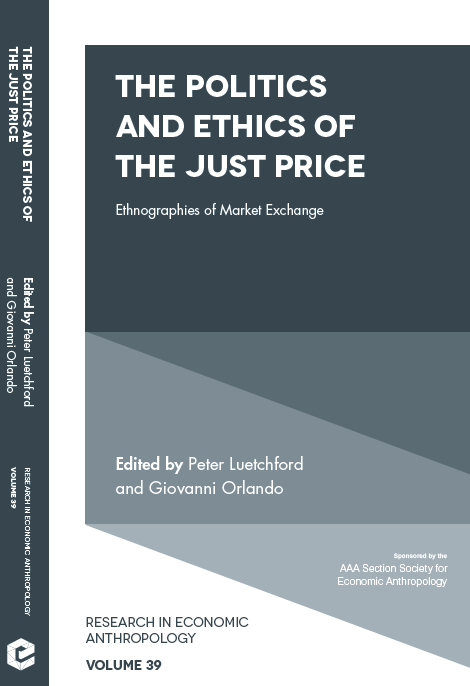
The Politics and Ethics of the Just Price is a collection of essays in economic anthropology. The volume, which is academic orientated, consists of an introduction to the theme and then eight case studies in different anthropological settings. The core issue at stake is the idea of what constitutes a just price, the relationship of price to value and hence to justice, the manner in which this then interacts with the market price and how this relates to real life activity in individual settings. Many of the individual stories and scenarios are fascinating and bring out some genuine tensions and complexities. Those anthropological settings ranger from waste pickers in Turkey, fruit growers in southern Spain, corn and bean trading in Nicaragua to small holders in Tuscany.
The first chapter is a scene-setting introduction. Four approaches to the idea of a just price are noted. The first of these is the classic model in which the interaction of supply and demand in a clearing market reflects consumer utility and hence represents a just price. The other approaches are labour value, the idea that commensuration – the comparison of use value and exchange value – is socially mediated in different historical and geographical circumstances (that is, social value) and, finally, a denial of the possibility of a just price or the possibility of reconciling exchange value and use value. The other key definition is that of “moral economy”, a term derived from the Marxist historian, E.P. Thompson. Unsurprisingly, the term is defined as “a critique of the laissez-faire economic model” (page 14), which really fails to give proper weight to the potential richness of the term, not least since the authors acknowledge that Adam Smith’s argument “resembles a notion of the just price” (page 8). More work is required in this area and the book is over-dependent on Thompson.
There are two aspects in particular that are worthy of further reflection in a review. The first is, notwithstanding the complexities and indeed alternative approaches, how many of the detailed anthropological settings which are analysed still give considerable, if not unlimited, weight to the classic determination of the just price. To give just one example from the volume. The actors in the Turkish scrap metal waste recycling industry include the waste-pickers who sell to warehouses and then sell on to recycling companies who in turn sell the recycled materials into the manufacturing process. Consequently, there are numerous opportunities for collusion, state intervention and global market dominance (London Metal Exchange) not to mention other contested areas. Perhaps surprisingly, or perhaps not, when “the state intervenes to alter the price at which waste-pickers and traders sell, either by direct imposition or through legal regulations, waste-pickers and traders perceive this as unfair and defend the average market price as the just price” (page 28). The study even concluded that “contestations over price in the Turkish recycling sector did not generate claims for justice against the abstract market price.” Adam Smith lives on.
The second area of fruitful reflection which is reflected in several of the studies is the relationship of exchange value and use value as mediated through social relationships. Thus, fruit and vegetable growers in southern Spain, small holders in Tuscany and corn traders in Nicaragua all proceed on the economic anthropological assumption that whilst accepting “important aspects of market exchanges, a substantive frame suggests a just price must also consider social and political relations” (page 92). These examples also proceed on emphasising the distinction between exchange value and use value. Hence, the vegetable growers will supply food to their own town at a different price at which surplus is sold into the market (page 95). The Tuscan small-holders hold to an ideal for a household “to own sufficient land to meet the bulk of their subsistence needs with a small surplus for sale” (page 141). Numerous familial and local exchanges would take place none of which were monetarised. In the Nicaraguan context the authors tells us that “peasants consciously oppose use values to exchange values through their moral ideologies” (page 116). Essentially all of these examples operate with two prices in two separate markets – a global, distant and anonymous exchange value based on supply and demand and a localised market based on face-to-face transactions grounded in personal and social relationships.
The strength of the volume is two-fold. First, that the role of a market price as a just price is recognised and accepted in a wide variety of anthropological settings. Secondly, that there are political, but in particular social factors that impact and form and shape prices in the local setting. In a sense this should be no surprise – differential pricing in different markets in accordance with then varying aims and objectives of sellers in alternative markets. There is nothing incompatible here with a market economy, but it is a valuable and helpful reminder as to how various communities respond locally in the context of wider and global markets.
The somewhat disappointing chapter was the essay on the compensation scheme following the Rana Plaza garment factory collapse. Although fascinating and incisive in its own right, and in a truly horrific context, the chapter seemed out of place in a discussion of just pricing.
Each individual chapter is self-contained and relatively concise and quite a fascinating read. Some real insights, extraordinary contexts, complex history and genuine engagement with the relationship of economic and social considerations in markets and pricing.
The weakness of the essays is that much of the language is simply turgid, and unnecessarily so. The academic foundations of the volume are both its strength and weakness; some interesting questions but shrouded in a mystical academic language of a rather obscure discipline. The book is very expensive and you would need a specific interest in the academic subject matter to justify purchase (at the market price one might add!).
The Politics and Ethics of the Just Price, edited by Peter Luetchford and Giovanni Orlando was published 2019 by Emerald Publishing (ISBN: 978-1-78743-574-2) as volume 39 in the series Research in Economic Anthropology. 245pp.
Dr Richard Turnbull is the Director of the Centre for Enterprise, Markets & Ethics (CEME). For more information about Richard please click here.
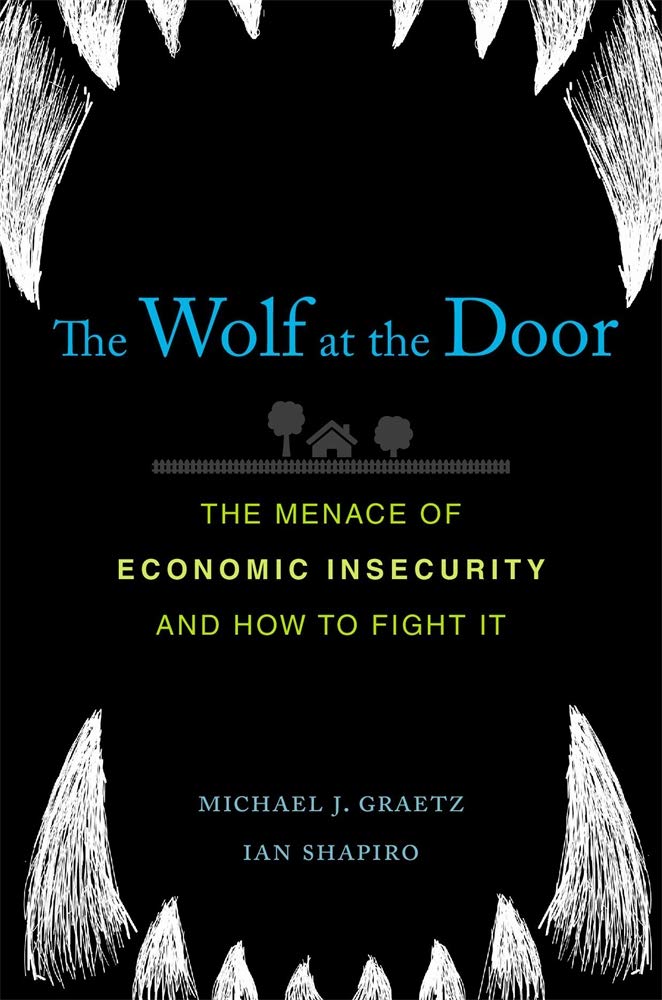
The publication of yet another left of centre book asking “What has gone wrong with American capitalism and what should be done to fix it?” may provoke a sigh or a yawn. However, in the case of The Wolf at the Door such a reaction would be misplaced. It is a constructive and engaging book that has things to say that are worth considering.
Its starting point is that there is a serious economic and consequent social problem in the USA that is giving rise to dangerous populism both of the right (Donald Trump) and of the left (Bernie Sanders). Those on the right of American politics are denying that there is a problem whilst those on the left are focusing on the wrong issue: taking their cue from Thomas Piketty, they focus on inequality and, in particular, the wealth of the top one per cent. This, Graetz and Shapiro suggest, is a serious mistake since “Obsessing about the very top is a distraction from the more pressing problems of economic stagnation and insecurity among increasing numbers of the middle class as well as the poor” (page 28). They acknowledge that “fighting insecurity might involve attending to some aspects of the growth of inequality” but insist that “the primary focus must be on mitigating the sources of economic insecurity” (page 7). They are surely right about this and their book thus gets off on a sound footing.
The authors aim to identify the various elements of economic insecurity and come up with a feasible agenda for addressing these. This result in a basket of proposals: a substantial expansion of the US Earned Income Tax Credit system (which provides a refundable tax credit for low to moderate income workers); the merger of the US Trade Adjustment Assistance and Unemployment Insurance programmes into one national programme (which the authors call “Universal Adjustment Assistance); major investment in infrastructure; the progressive expansion of Medicare starting by extending it to the youngest working age people, such that, over a generation, it becomes available to all; and the establishment of a system of universally available “pre-K” child care for young children under the age of five.
The authors recognise that many on the left will regard their proposed programme as unambitious, but they defend it on the basis that it addresses the right issue (i.e. economic insecurity) and is politically, economically and socially feasible. They are realists and pragmatists: they recognise that many on the left wish to return to what is seen as the utopia of the decades following the Second World War but, in the context of comments about the steel industry, warn that “this nostalgic yearning ignores the realities of lower-cost production abroad and of the technological transformations that now enable steel to be produced with a fraction of the workers once required” (page 18); they bluntly assert that the “unavoidable fact is that the good old days of well-paying, long-lasting employment are behind us, and they are not coming back” (page 115); they recognise that US politics is dysfunctional but seek to identify ways of achieving their goals despite this, in particular, by identifying “six features of successful distributive politics” (page 35) including building coalitions and pragmatically pursuing proximate goals; and on this basis they dismiss many policies favoured by the left both in the US and elsewhere including the establishment of universal basis income and a dramatic increase in the minimum wage.
This pragmatism results in a commendable absence of ideological shibboleths and the recognition of fundamental economic realities. Graetz and Shapiro are prepared to contemplate privatisation, they strongly favour free trade and they recognise the essential role of business both in the creation of prosperity and in the building of the coalitions that they recognise are essential for the implementation of their reform programme. They also refuse to take positions on a number of economic issues that divide left from right including the impact of statutory minimum wages and, perhaps most significantly, whether or not Piketty’s analysis and predictions are right. They dismiss Piketty’s suggestions of a global wealth tax and a trans-national European assembly with taxing and re-distributive powers as “so utterly deaf to anything that is feasible politically that it is hard to take them seriously” (page 261).
The book is wholly focused on the USA and non-Americans may fear that it will not be of interest to them. However, it is addressing issues that exist in many developed nations and, whilst much of the detail is likely to be relevant only to the USA, the analysis of the problems, the core elements of the proposals for solving them and the authors’ reflections on what is necessary to effect change should be of wide applicability. Furthermore, the insight that the book provides into the Byzantine complexities of the US legislative and governmental processes is of considerable interest in itself.
Of course, the biggest question to which the book gives rise is whether its proposals would work. Would they have the dramatic net positive effect that the authors’ hope for, even in the longer term? Unfortunately, this is open to serious doubt.
Graetz and Shapiro draw their inspiration from Roosevelt’s New Deal, which they mention on numerous occasions and which they credit with significant achievements. However, whilst unquestionably, there was much to applaud in the New Deal, it is far from clear that it dealt with economic insecurity. As Graetz and Shapiro admit, US unemployment remained above 20 per cent. through the 1930s and it was the Second World War that paradoxically transformed the US economy.
Some of the proposals are also vulnerable to other, more specific, criticism. In particular the authors never adequately deal with the economic issues associated with the subsidisation of wages that has been recognised ever since the Speenhamland magistrates tried this in late eighteenth century Britain. More fundamentally, they do not address issues associated with the control of mushrooming costs that have bedevilled social security systems around the world.
Leaving aside the economics, there must also be doubt over the US political feasibility of some of the proposals. In some cases, the authors give good reasons for believing that the coalitions necessary to secure the enactment of appropriate legislation could be assembled (e.g. in relation to the expansion of earned income tax credits). In other cases, however, they do not. Indeed, in relation to their proposed establishment of Universal Adjustment Assistance, they admit that “there is no obvious coalition to step in to the breach” (page 168) and their emphasis on infrastructure investment is somewhat undermined by their frank recognition that the apparent support for investment from across the US political spectrum has not prevented the visible decay of US infrastructure over a long period of time.
Those on the right of the political spectrum will also wonder how the proposals are to be paid for. Graetz and Shapiro are not classic “tax and spend” liberals. Indeed, they fear that left-wing populism could lead to “pressure for tax regimes that hamper competitiveness” (page 273). Furthermore, they acknowledge that the level of US government debt is already unsustainable yet raising income tax is politically impossible, having been rejected by both major parties in the US, and they dismiss wealth taxes as a solution on the basis that experience in other countries shows that their promise has been “oversold” (page 246). Hence they fall back on a basket of proposals that they suggest would, collectively, raise the necessary funds. Of these, the most dramatic would be the introduction of value added tax in the USA. Less dramatic proposals include the introduction of a gifts tax and the elimination of tax breaks for specific industries (although they do not generally favour raising business taxes.
British readers will probably recognise echoes of Tony Blair’s approach to taxation in these proposals. Indeed, the whole of Graetz and Shapiro’s programme has overtones of New Labour (which, it will be remembered, drew inspiration from the centre-left in the USA). This should give pause for thought. Some may argue that the rejection of New Labour by both the left and the right following the Global Financial Crisis resulted in us being unable to evaluate the long-term impact of Blairite policies. However, it is clearly arguable that those policies only worked because the economy was expanding at the time and they ultimately failed to address the underlying issues that Graetz and Shapiro identify and also stored up both economic and political problems for the future.
There are thus many challenges that can fairly be addressed to Graetz and Shapiro. However, this does not diminish the importance of what they have written. The Wolf at the Door represents a challenge to those on the left to reconsider priorities and to focus on policies that are both capable of implementation and will make a real difference to people’s lives. It is also a challenge to those on the right to recognise the reality of economic insecurity and, if Graetz and Shapiro’s proposals are considered unacceptable, to come up with an alternative. Whatever one’s political starting point, The Wolf at the Door is worth reading.
“The Wolf at the Door” by Michael J. Graetz and Ian Shapiro was published in 2020 by Harvard University Press (ISBN 9780674980884). 285pp including glossary.
Richard Godden is a Lawyer and has been a Partner with Linklaters for over 25 years during which time he has advised on a wide range of transactions and issues in various parts of the world.
Richard’s experience includes his time as Secretary at the UK Takeover Panel and a secondment to Linklaters’ Hong Kong office. He also served as Global Head of Client Sectors, responsible for Linklaters’ industry sector groups, and was a member of the Global Executive Committee.
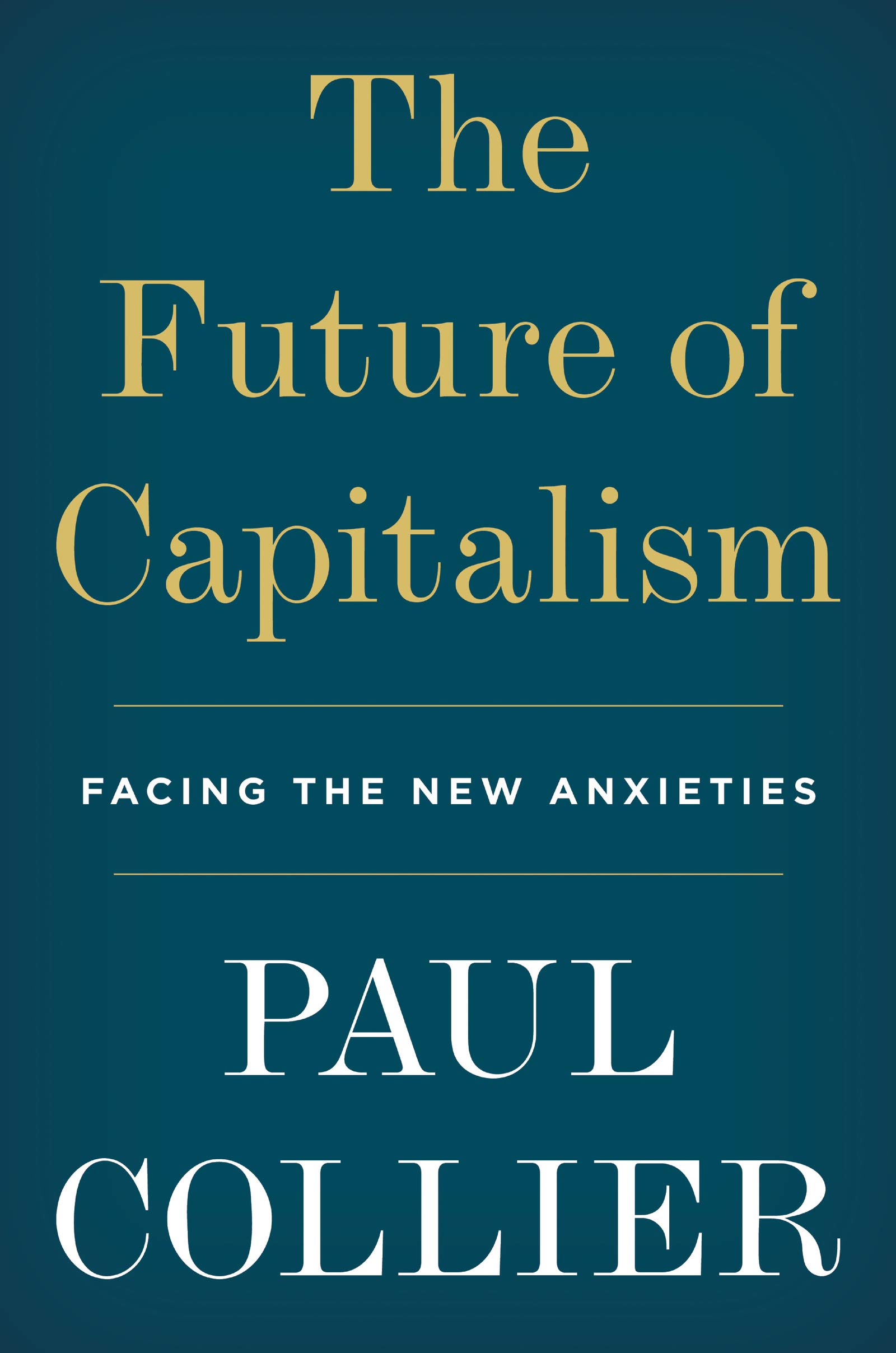
The Future of Capitalism tackles one of the big issues of our time. Its impressive author, Sir Paul Collier, CBE, FBA is a distinguished member of the Blavatnik School of Government at the University of Oxford and a seasoned practitioner in development economics for which he received a knighthood. He is convinced that capitalism is the only economic system which can generate mass prosperity. Regrettably it has also divided societies, created dysfunctional democracies and posed risks to the planet. More than that he claims it is morally bankrupt. The challenge he set himself in this book is how to restore ethics within capitalism to prevent it drifting into either a totalitarian state (China) or populist nationalism (East European countries). In doing so, he eschews ideology claiming that all his policy prescriptions are based on evidence, analysis and pragmatism.
The inspiration for the book was Anthony Crosland’s The Future of Socialism, published in the 1950s, which set an agenda for the social democracy of the post war years in the UK. (To some readers Anthony Crosland might seem a minor figure out of a history book, but in his heyday he was the leading UK intellectual of the centre left and a Cabinet minister in the Wilson and Callaghan Labour Governments attempting to put his ideas into practice). Collier claims that the Crosland agenda worked well between 1945-70, even at one point describing it as the “miracle period”. It failed however because it neglected its roots in the ethical foundations of the nineteenth century cooperative movement.
It was replaced by a combination of Utilitarian technocrats (mainly economists) intent on redistributing income to those below the poverty line (however defined) and lawyers committed to John Rawls philosophy which promoted the rights of disadvantaged groups based on race, gender, sexual preference and so on, which has become the basis for identity politics.
Both of these philosophical approaches emphasise the individual not the collective and differences between groups based on either income or disadvantage rather than the needs of persons and families. Each elevates a single moral prescription, “the greatest happiness of the greatest number” and “laws in a society must be designed for the most disadvantaged groups”. However, they neglect the normal moral instincts and values of people such as loyalty, fairness, obligation and desert which were central to the cooperative movement.
The philosophical foundation which Collier builds on is found in the writings of David Hume and Adam Smith (especially The Theory of Modern Sentiments) and the Pragmatism of nineteenth century American philosophers such as William James and Charles Peirce. After laying this down he devotes four chapters to restoring ethics within the state, firm, family and world. Then, in the final section he presents a plethora of ideas for restoring an inclusive society.
To tackle the geographical divide, he proposes taxing the metropolis and regenerating broken cities and regions through establishing local banks, local universities and business zones. Families can be strengthened by preventing them from falling apart in the first place, supporting children in the early years, from pregnancy to the first day of school, raising standards of teaching in schools, offering improved post-school vocational education and extending home ownership. Tackling the negative effects of globalisation requires redistribution of resources to those areas which have lost out through free trade and technology.
In putting forward all these proposals he is not afraid to be controversial. He is scathing about the greed of investment banks. He argues for taxes on financial transactions and raise taxes on the incomes of highly skilled workers especially in finance and law. He wishes to see a new criminal law comparable to manslaughter which he calls bankslaughter. He backs immigration controls, strengthening traditional two parent families from whom they are genetically descended and having less state intervention through social policy dealing with the needs of children.
Although it is not fundamental to the main theme of the book I question Collier’s judgement that the period 1945-70 was as successful as he claims. It is certainly true that the new social contract devised by Beveridge, Temple and others which produced the post war Welfare State and mixed economy lasted the course. However, by the 1960s inflation was back accompanied by rising unemployment, prices and incomes policy were a failure and the nationalised industries were mired in the red, while by the end of the 50s the social infrastructure began to show signs of fraying through increased violent crime, illegitimacy and addiction. Meanwhile, some of Crosland’s policies were proving destructive; “If it’s the last thing I do, I’m going destroy every fucking grammar school in England. And Wales. And Northern Ireland”. By the time of his early death (58 years old) he became so disillusioned with the crisis of capitalism that he thought the creation of a ‘serious revolutionary socialist party’ was worth thinking about.
One question which needs to be asked is whether he has succeeded in the task he set himself, namely restoring ethics to firms, families and states. In the case of firms he devotes an interesting chapter to the way in which ethical firms of the past which he mentions – Imperial Chemical Industries (ICI), Cadbury, The Halifax Building Society – have given way to the vampire squids of today which are held in contempt as greedy, selfish and corrupt.
In order to achieve change he believes competition is an important discipline on business but increasingly limited because of the power of networks (electricity, water, railways) and the role of technology in creating unregulated natural private monopolies (Facebook, Amazon, Google, eBay and Uber). The conventional responses to these problems are regulation and public ownership, but both have severe limitations. As an alternative he suggests taxing economic rent, which by definition does not discourage productive activity or risk taking; reforming corporate law so that concern for the public interest should be mandatory for all board members, such as Public Interest Companies in the US; and introducing the new criminal offence of bankslaughter.
The problem with all these, which he recognises is that regulations can be got around by talented management, taxes reduced by clever accounting and laws fudged by legal argument. After acknowledging that the cupboard is fairly bare he puts forward the novel suggestion that society needs to build a critical mass of ethical citizens who can judge the behaviour of companies, favourably or not. This is less than a specialised sub-police force and more a form of neighbourhood watch strengthened to have teeth. This may seem fanciful but the achievement of the women’s movement and climate change protests, based on evidence of discrimination or degradation show that great oaks grow from acorns. Post COVID-19 many questions will be asked about the future of our society, so his proposals may not be so fanciful.
To restore ethics to the state he rejects ethnicity, religion and shared values as a way to create shared identity because they are incompatible with modernity, despite the showing of how popular Judeo-Christian based ethics still remain. He plumps for a sense of belonging to place, something which is hard-wired in our psyche, especially the place in which we grew up and which we call home. Unlike Nationalism, Patriotism is an inspiring concept and he claims a good example of it is found in the politics of President Macron. A major raison d’etre of politicians should be to create narratives of shared belonging. To restore the ethical family, he suggests a greater acceptance of mutual obligations by parents in raising children rather than one focused on their own individual, personal success in work.
The one surprising weakness of the book is its treatment of religion. The book contains four references to religion and six to religious fundamentalism. All are wholly negative: religion leads to cultural separation, marriage is tainted by its religious association, it is the basis of a new nationalism, heir to fascism. Religion is almost always qualified by the adjective “extreme”. Jihad pogroms and other cultic, barbaric practices deserve the treatment he delivers and the Christian religion has many shameful episodes in its history. However, if restoring ethical behaviour in business, politics and society requires ethical citizens, ethical politicians and ethical family members, a rejection of self-aggrandisement, ‘freedom is not bound in servitude to the self but in escape from the self’ (p. 108), and strengthening a sense of obligation, surely a religion based on transcendence and true humanism must be a help to the cause.
On the evidence of nineteenth century history in the work of Gertrude Himmelfarb and Christie Davies, the irony is that ICI, Cadbury and The Halifax Building Society were deeply rooted in a late nineteenth century Christian culture, especially non-conformist, which was also an inspiration for the cooperative movement, friendly societies and the social reforms of the period. Non-conformity would also at this time have been a major force in Collier’s beloved Sheffield.
I enjoyed book but at the end it left me with a nagging question. It certainly respects the evidence, applies analysis to good effect and makes a number of interesting practical proposals. However, its conclusion is that religion has no place in the future of capitalism. In its neglect of the positive contribution of the Christian faith on British life and culture I fear it has strayed across the boundary of social science into ideology.
“The Future of Capitalism: Facing the New Anxieties” by Sir Paul Collier was published in 2018 by Harper Collins (ISBN 978-0062748652). 256pp.

This book is a concise attempt to grapple with the subject of the global economy, especially in the light of events such as the Brexit decision and the election of Donald Trump. Written by two business practitioners, it has a clear and slightly breathless style – one might almost say, an executive summary stretched over 150 pages.
The book is set out in four parts: (1) The World Today; (2) The Changing Worldview; (3) The Tumultuous World; (4) The World Tomorrow. While there are connections and overlaps in terms of the content throughout, there is certainly not any sense of a carefully developing argument as one moves through the different chapters. Instead, stand-alone insights are offered in a descriptive rather than an analytical manner.
In the opening chapter, I particularly noted statements along the following lines, many of which did not seem to me to be especially startling or fresh, but which none-the-less were of interest and value:
The chapter ends by including this statement: “When politics becomes the dominant feature in an economic domain the situation quickly becomes dangerous.” For me, this betrayed the methodological core of the book as understanding economics in a technical way rather than as a question for public debate and reflection.
I was therefore not surprised that chapter 2, which addresses local business, did not seem to have a deep sense of geography or engage with the political and philosophical questions surrounding the relationships between people and places. Modern economic and business theory (if not practice) famously has a weak sense of place. Chapter 3, which addresses inclusive capitalism and social purpose, also takes a rather instrumental vision of society and business, rather than feeling for an organic relationship.
Chapter 4 looks at global finance, and rightly sees this as a critical element within the globalisation of the economy. There is some interesting analysis here, but stating that “money is a commodity” (page 27) is, in my mind, to miss the unique property of the financial sector. Chapter 5 has some rich and helpful thoughts about diversity and kinship, and brings out the importance leaders have in helping others find meaning. Chapter 6, on NGOs, seemed to me to underplay the differences between these organisations and businesses, but it was helpful to see them included.
Part 2 takes the reader through the oil and gas sector, the emerging economies, China, India, Africa, and finally Australia. There are some good historical vignettes here, although I suspect the history is at times fairly superficial, and my overall impression was that these chapters are very readable, full of common sense, but somewhat lightweight on any deep or critical thinking and interpretation.
Part 3 begins with a chapter focused specifically on Brexit and Trump. There is some good descriptive work here, and the reason why these two events happened is judged to have been some kind of failure of economic theory, the need for “more active states” (page 102), and a better ‘partnership of public and private finance’ (page 103).
The rest of Part 3 covers the important subjects of new and disruptive technologies, the “internet of things”, new and much more responsive production models, lifestyle innovations, big data and analytics. I found all of this very interesting, albeit descriptive rather than attempting any thoughtful or reflective interpretation of the modern global economy.
Part 4 sets out to look ahead into the future, and considers the themes of work, human workers (over and against robots and AI), entrepreneurship, and then finally the future of globalization. Again, there is much of interest here, but mainly in terms of a description of current trends with some extrapolation rather than any far-reaching or radical “future-thinking”. Many of the developments described resonated with my own experiences, and I was especially pleased and intrigued to read the following: “The need today… is for humans to be more human-like” (page 141). This would make a great theme for a follow-up book.
Having been published in 2018 there could not, of course, have been any descriptive reference in this book to the Covid-19 virus episode, which has arguably been responsible for a bigger shock to the global economy and the assumptions underlying it than any other occurrence within the past 50 years. A bigger weakness in my mind was the strange almost complete absence of any engagement with the eco-agenda, which asks huge questions of the global economy and has rapidly become mainstream. However, notwithstanding these lacunae this book sets out a great deal of material in a concise and readable way. Alongside other more evaluative and thoughtful discussions it makes for a potentially useful resource for theorists, policy-makers and practitioners as they wrestle with the puzzles of the global economy of today.
“Global Business” by Mahesh K Joshi and J R Klein was published in 2018 by Oxford University Press (ISBN 9780198827481 ). 158pp.
 Edward Carter is Vicar of St Peter Mancroft Church in Norwich, having previously been the Canon Theologian at Chelmsford Cathedral, a parish priest in Oxfordshire, a Minor Canon at St George’s Windsor and a curate in Norwich. Prior to ordination he worked for small companies and ran his own business.
He chairs the Church Investors Group, an ecumenical body that represents over £10bn of church money, and which engages with a wide range of publicly listed companies on ethical issues. His research interests include the theology of enterprise and of competition, and his hobbies include board-games, volleyball and film-making. He is married to Sarah and they have two adult sons.

Dr Justin Thacker describes Global Poverty: A Theological Guide as “In essence … a systematic theology of global poverty” (page 2). He explains that, in terms of the public apologetic content of the book, he has two primary aims: first, to issue a “plea for a reformed capitalism” and, secondly, to suggest “on theological grounds” that aid is not a long-term solution and should rather be viewed as “an essential but temporary measure” (page 4). He states that global poverty is complex and that there are no quick fixes and, in the course of a wide ranging discussion of theological, ethical and economic issues, he endeavours to draw out the implications of the big themes of the Bible, critique the views of other writers, analyse different approaches to development and comment on practical matters. The result is a book that is deeper and more conceptual than many Christian books on poverty. Unfortunately, however, it does not live up to its promise.
The book is arranged around the Biblical themes of creation, fall, Israel and redemption (the inclusion of Israel reflecting Thacker’s adoption of Christopher Wright’s view of the paradigmatic role of ancient Israel and the Old Testament law). In relation to each of these, Thacker seeks to draw out the implications in relation to poverty and our response to it of core Biblical truths.
There is much in the theological analysis that is well founded and helpful but there is also much that is highly contentious. Some of the contentious statements are of little importance (e.g. the statement that the purpose of the Jubilee regulations in the Old Testament “is that the nation might be a holistic blessing to all the nations”, page 116) and some, while of greater theological importance, are not fundamental to Thacker’s argument (e.g. his adoption of the Christus Victor model of atonement, page 148). Others, however, are both important and fundamental (e.g. the statements that “spiritual liberation is one of the fruits of political liberation”, page 109, and that “perhaps sin is not an individual concept at all”, page 56). It is hard to see how such statements can be squared with the Bible. Indeed it is hard to square them with other things that Thacker says (e.g. his critique of liberation theology). The result is that the theological underpinning of his conclusions is shaky.
Thacker’s statements relating to economic issues are also confused. He accepts things that are often ignored by those in Church circles: he recognises that “this side of the new heaven and new earth, there is no perfect and just political and economic system” (page 180), the inherent dignity of work (page 25) and the fact that corruption has a devastating impact on many low income countries (page 89); he acknowledges that inequalities between countries are decreasing and that this decrease is not as a result of the giving of aid (page 240); and he warns against “a victim mentality that denies agency” (page 167). Yet he refers to “systemic issues that keep the poor, poor” (page 65), he appears to believe that the poverty in low income countries is linked to the consumer lifestyles of high income countries (page 83), he asserts that “The core, wealthier nations are not accidentally wealthy but wealthy precisely because the peripheral nations are poor” (page 165) and he devotes considerable space to the alleged impact of “the colonial legacy” (e.g. “at least part of the reason Britain is wealthy today is because we stole from India during the eighteenth and nineteenth centuries”, page 70, and “we enjoy the fruits of … slavery”, page 80). Hence, he comments “I wonder if Cynthia Moe-Lobeda actually speaks the truth when she says, ‘when I donate money to an agency working in Mozambique, dare I consider a gift what is frankly stolen goods?’” (page 76). It is hard to reconcile all these statements. Indeed, one gets the impression that Thacker has found himself compelled to accept some important economic truths yet cannot bring himself to accept their implications.
Despite Thacker’s acknowledgement of the complexity of his subject, much of his analysis is simplistic. He often asserts a particular view without adequately analysing the arguments for and against it, his comments relating to price controls being an obvious example of this (page 119). He also falls into the common trap of leaving people feeling guilty about their behaviour (e.g. for what they buy) on the basis of statements that fail to recognise the complexity of the situation or provide a practical and problem free alternative.
Thacker wants to present his analysis as a via media but it ends up well to the left of centre. He appears to have bought a lot of Thomas Piketty’s analysis and might do well to consider the fact that even left-leaning economists doubt much of what Piketty has said (see After Piketty, which is reviewed on this website). Conversely, he caricatures free market approaches, criticising extreme statements that few Christians would seriously believe (e.g. the suggestions that “individuals sin within a basic structure that is righteous”, page 62, and that it doesn’t matter that we engage in morally questionable behaviour since avoiding it “will make no difference because everyone else is engaging in it anyway”, page 103). He also appears to believe that the only Christian free market approach on offer is that advocated by Wayne Grudem and Barry Asmus in The Poverty of Nations, which he attacks obsessively throughout the book. As the review of The Poverty of Nations on this website makes clear, it is a flawed book and a number (but certainly not all) of Thacker’s criticisms of the views expressed in it are well deserved. However, attacking Grudem and Asmus, does not dispose of the arguments in favour of a free market approach and against some of the things that Thacker advocates.
It is one of his attacks that reveals most clearly Thacker’s defective economics. He summarily dismisses Grudem and Asmus’ view that enlarging a nation’s overall gross domestic product is ultimately the only way of eliminating poverty (page 120) and, later in the book, baldly asserts that “continual economic growth is simply not a sustainable solution for the whole planet; it is only a solution for the rich minority” (page 245). He presumably believes the earth’s resources to be limited and the environmental costs of their use to be unacceptable. What he appears not to have considered is the possibility that human ingenuity (and in particular, scientific and technological advances) will release more resources and satisfactorily mitigate the environmental costs of their use. To recognise this, one only needs to imagine the impact that the harnessing of nuclear fusion would have.
Of course, Thacker is right that there is much more to human flourishing than can be provided by economic growth but, as the past 200 years demonstrate, economic growth is an engine that drives, even a precondition for, many desirable human outcomes.
The above litany of criticisms may give the impression that there is nothing good about Global Poverty but this is not the case. It contains some worthwhile analysis of various issues, such as paternalism, the concept of a moral obligation existing when no moral responsibility for a particular situation exists and the manifestation of sin in societal structures. The final third of the book is also better argued and more insightful than what proceeds it.
Thacker’s critique of secular and theological theories of development is particularly worth reading. It includes a discussion of the theologies of Christian Aid and Tearfund, two high profile UK based Christian aid agencies. Thacker commends the practical work of both of them and has included them among the charities to which he is generously donating the royalties from his book. However, whilst he rightly commends the theological grounding of Tearfund, he is (again rightly) highly critical of that of Christian Aid. It is thus unsurprising that it is the Global Advocacy and Influencing Director of Tearfund, Ruth Valerio, who is quoted on Global Poverty’s cover, saying “This is a superb book and I encourage you to read it”.
It would be nice to be able to agree with Valerio or, at least, to say that the stronger parts of the book outweigh its defects. Sadly, however, this is not the case, those wishing to consider an economically and theologically sound approach to poverty would be well advised to look elsewhere, perhaps starting with some of the other books reviewed on this website.
“Global Poverty: A Theological Guide” by Justin Thacker, was published in 2017 by SCM Press (ISBN 978 0 334 05515 0). 257pp.
Richard Godden is a Lawyer and has been a Partner with Linklaters for over 25 years during which time he has advised on a wide range of transactions and issues in various parts of the world.
Richard’s experience includes his time as Secretary at the UK Takeover Panel and a secondment to Linklaters’ Hong Kong office. He also served as Global Head of Client Sectors, responsible for Linklaters’ industry sector groups, and was a member of the Global Executive Committee.

Thomas Piketty’s Capital in The Twenty-First Century, published in 2013 (English edition, 2014), is the economics equivalent of Stephen Hawking’s A Brief History of Time: it is a technical book that has secured mass sales, over two and a quarter million copies having been sold worldwide. One may wonder how many of the purchasers have read and properly understood it but there is no doubt that it has achieved almost cult status among those on the left of the political spectrum.
Its reception amongst economists has been mixed with divisions along predictable lines. Few, however, deny that its arguments, and the wealth of data underlying them, require critical evaluation and After Piketty, edited by Heather Boushey, J. Bradford DeLong and Marshall Steinbaum, is a significant academic contribution to this process. It focusses on the issue of economic inequality and comprises 21 essays framed by an introduction from the editors and a response to the essays from Piketty himself. Most of the contributors are economists, although some come from other disciplines (e.g. Daina Ramey Berry is Professor of History and African Diaspora Studies at the University of Texas and Gareth Jones is Professor of Urban Geography at the London School of Economics).
It is not a book to be read quickly and non-economists will find some parts heavy going, especially those littered with mathematical formulae. However, most of the book is accessible to any intelligent reader and, since Piketty’s key arguments are clearly set out, a prior knowledge of these arguments is not essential.
Most of the contributors are left-leaning and share significant parts of Piketty’s political outlook and the editors pin their colours to the mast in their introduction: they ask whether Piketty’s arguments are right or, at least, if they are not definitely right, whether his “disturbing scenario” is plausible and state that “the answer strongly appears to us to be: yes” (page 9). However, the book as a whole is by no means uncritical of Piketty. In fact, parts of it attack the foundations of his arguments and leave his edifice tottering.
Some of the essays are poor. In particular, a few descend into tedious left-wing rants (e.g. the section of Suresh Naidu’s essay entitled “Spheres of Wealth-Dictated Injustice”) and a number contain flashes of imprecise polemic, of which the reference to “proto-fascist populism” in the editors’ introduction is the first example (page 4).
Sadly, the essays of two of the editors (Heather Boushey and Marshall Steinbaum) are among the weakest in the book: Heather Boushey’s “A Feminist Interpretation of Patrimonial Capitalism” contains a few important points but ultimately adds little to the debate whilst Marshall Steinbaum’s “Inequality and the Rise of Social Democracy: an Ideological History” comprises a whistle-stop 30 page economic history of the USA, UK, France and Germany which is packed with contentious and unsupported assertions (of which perhaps the most extraordinary is the statement that the American entry into the First World War “had the flavour of a fanciful, elite foreign adventure”, page 448) and simple factual inaccuracies (such as the assertion that the UK government ministers during the Second World War “were for the most part the Labourites who had long advocated for a planned economy”, page 456). Gareth Jones’s essay (subtitled “Inequality, Political Economy, and Space”) is likewise short on careful logic and long on aggressive attacks on standard left-wing targets.
Parts of the book focus on issues that most people would regard as peripheral to its main subject (e.g. the two chapters that focus on historic – not modern – slavery) and there are a number of points that are assumed rather than argued (e.g. the Fabian sounding belief, expressed by several of the authors, that education is a key to overcoming the equality gap, which needs to be examined in the light of the growing evidence of the existence in a number of countries of a significant number of university educated people who are unable to secure anything other than low paid jobs). Furthermore, there are significant omissions. In particular, despite the commendable desire of the editors to integrate economics and other social sciences, there is no discussion of the impact of the conclusions and policy prescriptions on individual freedom, an omission that is most notable in David Singh Grewal’s essay, “The Legal Constitution of Capitalism”, which chillingly attacks the rule of law on the basis that it upholds capitalism.
These failings unquestionably mar the book but it remains well worth reading. It contains a number of high quality essays and much that should be thought provoking for all readers, whatever their political persuasions. The high points include Devesh Raval’s essay critiquing Piketty’s model, Eric Nielsen’s essay on human capital and wealth, Laura Tyson and Michael Spence’s essay on the effects of technology on income and wealth inequality and Mark Zandi’s essay on the macro-economic implications of rising inequality. Christoph Lakner’s essay regarding the global perspective is also an important correction corrective to the unduly western (or US) perspectives of some of the other essays.
Devesh Raval attacks Piketty’s famous assertion that inequality will continue to rise because r > g (the rate of return on capital is greater than the rate of economic growth). He points out that Piketty’s estimates of the elasticity of capital-labour substitution are out of line with the available literature and suggests that, in fact, capital and labour are not substitutable enough to sustain Piketty’s argument. He goes on to put forward two other explanations for the rise in the capital share of the economy: globalisation and labour saving technical change. These themes are then developed in subsequent essays, notably by Tyson and Spence and by Lakner. The conclusion of the former is that, “Inequality in market-based wealth and incomes is likely to increase over the next several decades, not because of features inherent in the capitalist system, but because of the effects of the digital revolution …” (page 203).
Neilsen questions Piketty’s focus on capital as the market value of tradeable goods. He cogently argues that “the omission of human capital is a serious weakness for both the data and the theory presented by Piketty” (page 151). In particular, he points out that inherited endowments include not merely the financial endowments considered by Piketty but also “social networks, cultural attitudes, and much else” (page 165). He rightly suggests that the inclusion in human capital in the mix is likely to result in policy proposals dramatically different from those put forward by Piketty. Indeed, he is bold enough to point out that, “A possible effect of Piketty’s plan … would be the immiseration of everyone to achieve a reduction in inequality”.
Some of the other contributors are likewise willing to draw conclusions that are unlikely to be welcome to many of Piketty’s supporters. In particular, coming from a global perspective, Lakner asserts that “The available evidence suggests that the Gini index of the global distribution of income has fallen for the first time since the Industrial Revolution, a development that is likely to continue” (page 261) and Zandi suggests that the “hand wringing over the prospects of a further erosion in income and wealth inequality the implications for the economy’s performance”, although reasonable, is likely to be misplaced since “prospects are good that inequality has peaked” (pages 406/7).
Such comments and conclusions demonstrate that, taken as a whole, After Piketty is by no means a simple contribution to the left wing scriptures: it is a serious exploration of the issues raised by Piketty. In fact, perhaps its most valuable contribution to the ongoing debate about inequality is the honest admission in a number of the essays that, despite the wealth of data that is now available and despite Piketty’s analysis, there remains much that we don’t know or don’t understand. Zandi points to numerous methodological and modelling problems that limit our understanding and several of the other authors point to deficiencies in the available data. The result is that, as Mariacristina De Nardi, Giulio Fella and Fang Yang point out in their essay, “Macro Economic Models of Wealth Inequality”, the mechanisms that cause both overall wealth inequality and individual outcomes within that distribution of wealth remain uncertain. Zandi thus wisely concludes, “Macro-economists should … not be comfortable that they have a good grip on what inequality means for our economic prospects” (page 411).
“After Piketty”, edited by Heather Boushey, J. Bradford DeLong and Marshall Steinbaum, was published in 2017 by Harvard University Press (ISBN 9780674504776). 565pp, plus notes.
Richard Godden is a Lawyer and has been a Partner with Linklaters for over 25 years during which time he has advised on a wide range of transactions and issues in various parts of the world.
Richard’s experience includes his time as Secretary at the UK Takeover Panel and a secondment to Linklaters’ Hong Kong office. He also served as Global Head of Client Sectors, responsible for Linklaters’ industry sector groups, and was a member of the Global Executive Committee.
As an economic system, unfettered capitalism in the post-recession era has come under considerable scrutiny. Reports of business scandals and misdealings, as well as serious social inequalities, are but a few of the most cited examples. In the face of these criticisms, proponents of capitalism have come to its defence. In “The Ethical Capitalist”, entrepreneur Julian Richer joins these proponents, arguing not only that capitalism is the only viable option but also that, when pursued responsibly, it is a force for good.
The founder and owner of the remarkably successful home entertainment retailer Richer Sounds, the author is five times winner of the Which? ‘retailer of the year’ award. He has been an active supporter of the National Living Wage and has taken up the mantel against tax avoidance and in relation to the housing crisis but he maintains that capitalism can be practiced ethically.
Building on over forty years of business experience, Richer begins his book by setting out his understanding of ‘ethics.’ At this point, the reader might be forgiven for any scepticism towards his somewhat simplistic definitions which often revert to rather superficial ideas of what it means to be ethical – as well as quoting mantras such as ‘what goes around comes around’ and you ‘get nowt for nowt’ (page 29).
However, as Richer really gets going with his practical applications, we start to realise that he may just have some valid points. In the first part of the book, he explains how the ethical business should treat its key players – employees, customers and suppliers. Chapter 1 draws into focus the importance of company culture, revealing how costly practices such as employee fraud, theft and absenteeism are often learnt behaviours from management. Being ethical, therefore, involves actively pursuing a positive work culture, starting at the beginning of the hiring process with honest job adverts, which attract the right candidates. Imploring businesses to follow through with prioritising internal promotions, paying a Living Wage and providing ongoing training opportunities, he makes it clear that this is not simply an optimistic vison for business altruism. By changing the way in which a business relates to its employees, it will minimise the cost of high staff turnover and this can only be positive for profitable success.
Chapters 2 and 3 make a similar case for a more ethical approach towards customers, suppliers and supporters. The overall message is that reputation is critical, in so much as it encourages repeat custom and builds crucial relationships. At times, the examples Richer includes from his own business can almost appear too saccharine, such as the time he delivered flowers to the home of a woman after a poor customer service experience.
Some may also challenge his assumption that customers are always concerned about a company’s conduct, more so than lower prices. Could it be that consumer consciousness of certain issues is only significant in periods of high media attention? Nevertheless, businesses are indeed playing a very short-sighted game when they prioritise crisis management over risk management, in a world of increasing consumer savviness and a ruthless social media scene.
In the second part of the book, Richer goes on to tackle capitalism itself, recommending points of reform and highlighting areas where limitation is both intentional and desirable. In chapter four he demonstrates the compatibility of capitalism and the principle of a National Living Wage. Using both national and international examples, Richer argues that higher wages have not automatically equated to fewer jobs. Instead, they improve a company’s reputation, which in turn boosts profitability. The wage-profitability relationship will no doubt be a contentious issue for many readers.
Richer further argues that we need to name and shame those companies which continue to resist it. Again, the assumption that reputation is a make or break factor in consumer decisions underpins his arguments, but he does provide empirical evidence to support his view.
In chapter 5, Richer critiques Thatcherite individualism, arguing that society is very much a reality. Often conveniently forgotten is that government is essential for business, not least because it provides the very environment required for it to thrive. He argues that nobody is entirely ‘self-made’ and we’re called to consider, who runs the banking system necessary for transactions, creates the laws under which businesses operate and maintains the infrastructure which holds everything together? Here too it is suggested that naming and shaming those who purposefully avoid paying their taxes would be effective, drawing on the Scandinavian model as an example. What exactly Richer views as ‘purposefully avoiding taxes’ could benefit from a more detailed discussion.
Taken from a simple game theory perspective, one might reason that it would require more than this to produce change. Businesses may very well take the view that they can ride out an unpopular image if their product or service is valued highly enough and therefore refuse to be the first in their industry to reform. Nevertheless, if we accept that consumers are becoming ever-more discerning, Richer is right to assert that capitalism doesn’t have to equal the eradication of civil society.
Finally, in chapter 6, we are cautioned that the principles of the free market cannot and should not be applied everywhere. Using privately run prisons as a key example, Richer instead focuses on the separation between ownership and management. Whilst this is perhaps the hardest of his arguments to follow, as it is unclear where exactly we should draw the line, separating complex social needs from simplistic market equations is a refreshing message from a believer in capitalism, who recognises that it need not be all or nothing.
Richer leaves business owners with the charge to get started somewhere in making a difference – and he’s provided plenty of examples and inspiration throughout his book to get them going. Despite possible criticism that his ideas rest upon certain assumptions about motivation for human behaviour, his argument that treating people well is not only admirable but also good for business, is compelling, well-evidenced and convincingly nuanced.
“The Ethical Capitalist” by Julian Richer was published in 2018 by Random House (ISBN-13: 978-1847942197). 192pp.
 Georgina Bishop is Senior Editorial Assistant within the Social Sciences at Routledge. She obtained her BA in History and Politics from the University of Nottingham in 2016.