In their recent book How the World Became Rich (published 2022), the economic historians Mark Koyama and Jared Rubin provide an accessible introduction to the best – often competing – explanations for sustained economic growth. The obvious difficulty of this approach is that it can seem scattershot, but Koyama and Rubin weave disparate threads into a cohesive lay of the land.
This is an important task. Academic economics has become increasingly inaccessible to those outside the field. The advanced methods used by practitioners on highly specific questions yield valuable insights in academic journals and books, but rarely inform popular narratives that in many cases offer more heat than light.
The book is divided into two main sections and eleven chapters. After an introductory chapter (including among other things the hockey stick graph of per capita income), the first section is divided into five chapters on the high-level explanations: geography, institutions, culture, demography, and colonisation/exploitation. The second section deftly weaves these categories of explanation and historical facts to explore four topics in chronological order: why did sustained economic growth that resulted in the world becoming rich occur first in Northwestern Europe, how was Britain’s Industrial Revolution different from what came before, the Second Industrial Revolution and the rise of the United States and Soviet Union, and Asian economic growth in the last seventy years.
The first section is as good an introduction to the existing explanations as one can hope for. In presenting these explanations, Koyama and Rubin exhibit the kind of judgement one fears they might not when they write that “the goal of this book is not to privilege our preferred theories at the expense of others” (page 10). They present the strengths of, for instance, geographical explanations for some types of variation in comparative economic development but also the obvious, fundamental problem of the timing of the rise in real incomes for geographical explanations.
On the controversial and increasingly influential debate on the role of colonisation and exploitation in the Industrial Revolution, the authors are quite firm: the most influential and most incendiary claims overpromise. Colonisation, especially in places like the Belgian Congo, terrorised and extracted wealth from natives and their land but provide little explanatory power for the great increase in the rate of innovation and real per capita income.
In the chapters on culture and institutions, the authors introduce explanations that were discounted by earlier (perhaps more familiar) materialist explanations. “To understand the causes of growth,” they summarise Douglass North as thinking “one has to study the incentives that led individuals in some societies to build factories and invest, to go to school, and to acquire new skills” (page 38). They then summarise the work of the last decades on the roles of various institutional features like the rule of law, property rights, and political institutions in economic growth.
On cultural explanations they show the weakness of broad arguments like, for instance, the supposed fundamental incompatibility of Islamic culture and economic growth while also showing the real, path-dependent effects of institutional features (like bans on printing presses, and the ability to use slave soldiers rather than cede power to feudal lords and parliaments) themselves influenced by cultural and religious features of Islamic society (the subject of Rubin’s previous book).
This is representative of a particular strength of the book: it is supported by contemporary research on economic history both before the Industrial Revolution and outside of northwestern Europe that is little known outside the field.
The book is most interesting in the second section, particularly in chapters 7 and 8. Rather than simply dismissing geography, colonisation, or demography in some quest for a monocausal explanation, the authors weave it into their nuanced chronological narrative about first how and why sustained growth began in Britain and then how it spread until much of the world had escaped poverty.
By the 18th century, the authors argue, there were a collection of preconditions for sustained economic growth in northwestern Europe most particularly in the Netherlands and Britain. For instance, many of the common institutional explanations for “Why Britain?” also apply to the Netherlands. These explanations are not wrong in the sense that they were necessary, but they were obviously not sufficient for the increase in commercially important innovations and then the resulting rise in real income per person. Among other things they show that, compared to the Netherlands, Britain was better able to fund wars (and therefore not smother economic growth with high rates of taxation) and better able to reform institutions to sustain an unprecedented rate of economically viable commercial innovation (as distinct from scientific discoveries, many of which were made elsewhere).
Drawing on recent research they show two of the main explanations for how Britain stood apart and turned these preconditions into innovation and industrialisation. Past periods of rising incomes were snuffed out by Malthusian dynamics (discussed in Chapter 5) and they stress the crucial difference in the 18th and 19th century Britain that allowed escape: “Above all else, the major revolutionary change during the Industrial Revolution was an increase in the rate of innovation” (page 150). One theory of this increase is a more materialist theory about it being the rational response to relatively high labour costs and relatively low energy costs. The second is more dependent on specific ideas and cultural attitudes about innovation, science, and human progress. While these ideas may have been widespread throughout Europe, only Britain had both the skilled craftsmen that industrial innovation required and the institutional preconditions.
Britain’s Industrial Revolution started the climb out of widespread poverty with positive knock-on effects for the rest of the world, but its cause is not the only important question covered in the second section. In the span of just 40 pages Koyama and Rubin race (perhaps too quickly) through the resulting benefits of innovation and industrialisation in Britain and then the (uneven) global diffusion of economic growth.
The authors rightly stress the important distinction between innovations, which determine economic growth at the frontier, and the diffusion of these productivity-enhancing innovations, which determines the ability of less developed countries to catch up with the wealthiest ones. Catch up growth is not simply a question of adopting new technologies, but rather (among other things) having the right set of institutions to enable their adoption. Chapter 10 delves some of the examples of successful convergence emphasising the culturally and politically contingent nature of reforms that enable it (and the past barriers to convergence).
Koyama and Rubin have managed to condense these and other issues into just 240 pages. This is mostly for the better. However, the limited length and scope of the work necessarily rules out a rich, compelling historical narrative. The prose does not stir and some conceptual references could be better explained, but these criticisms are insignificant compared to the successes of what the book does do. Its own claims and its assessments of existing work will be interesting to a wide range of readers.
Others may be disappointed by the lack of easy answers for the remainder of the world that still struggles with extreme poverty:
“We know what has worked in various historical contexts. But merely transplanting what worked elsewhere to poverty-stricken societies isn’t the solution. Context matters. Culture and the historical past matter. So do demography and geography” (page 224).
Koyama and Rubin don’t offer an easy answer; they offer to introduce readers to the best ideas surrounding some of the most important questions in human history.

John Kroencke is a Senior Research Fellow at the Centre for Enterprise, Markets and Ethics. For more information about John please click here.

Barry Eichengreen is Professor of Economics and Political Science at the University of California, Berkeley. His economic and economic history research focuses on monetary and financial systems, and he is an author of over 20 books, among them Golden Fetters: The Gold Standard and the Great Depression, 1919–1939, Globalizing Capital: A History of the International Monetary System, and The European Economy since 1945: Coordinated Capitalism and Beyond.
Eichengreen’s and his co-authors’ In Defense of Public Debt is organised into 14 chapters, tracing the history of public debt from its earliest origins in the Greek city–states and the Roman Republic, and arriving at the Covid economic scene (the book was published in September 2021). Each chapter focuses on a specific time period with its particular theme and relevant cases studies. For example, Chapter 3 “States and the Limits of Borrowing” recounts the fiscal and political developments primarily in the European states in the sixteenth–eighteenth centuries that augmented commitment to repay debts and enabled more borrowing; it also identifies certain ‘impediments’ (such as fiscal decentralization and competition) that limited states’ abilities to borrow more.
The book reads like a history of public debt, and in that respect, it presents a thorough historical account of the topic. In addition to analysing the overall levels of public debt, the authors also examine the development of the actual methods of public borrowing, creditors’ rights and representation, and the role of banks and various intermediaries. Readers may be pleased to find that the history of taxation and monetary systems are interwoven into this historical narrative of public debt.
In the introduction chapter, the authors promised to give a “balanced account” of public debt; curiously, “balanced” was meant as “placing more weight on the positive aspects than is typical of the literature” (page 5). Even so, the positive aspects put forward in this book are often vague. There is surprisingly little discussion of the use and efficiency of public debt, beyond the general recognition that states have historically relied on borrowing to fund wars, invest in infrastructure, social services, and, more recently, to bail out the financial sector and bankroll public services during a pandemic. The readers are expected to take it for granted that debt is used to fund vital causes. Yet are all uses of debt equally sound and defensible? This question is mostly ignored, except for some hints that spending on general consumption would not be as desirable as spending on investment. It admits that even though budget surpluses should be pursued to reduce debt when the economy is growing, this is difficult to achieve in practice. When it comes to generating primary surpluses, the book’s proposed answer is always higher tax, rather than spending cuts.
Eichengreen’s book leaves one with an impression that there is economic evidence of a positive relationship between public debt and economic growth. This relationship is meant to act as a “positive feedback” in the economic growth models, whereby “The link from public debt and its role in financial development to faster growth, and from faster growth back to financial deepening and economic development, is just such a feedback” (page 212). Among other things, we learn that with respect to foreign borrowing in the nineteenth century, “Countries that borrowed more invested more and grew faster on average, suggesting that issuing sovereign debt paid” (page 7), with a concession in the Notes section that evidence of a positive link “is weaker for the twentieth century” (page 228). However, a more balanced account of public debt would have had to mention the ample economic evidence of a negative relationship between high levels of public debt and economic performance. For example, most recent economic studies on this subject identified a negative link between high public debt and economic growth; there is also a tipping point threshold (in the range of 70% to 100% of GDP) when debt begins to have a significantly detrimental effect on growth (see, for example, De Rugy, V. and Salmon, J. Debt and Growth: A Decade of Studies).
This is not to say that Eichengreen’s book does not mention any negative aspects of public debt, as it does recount examples of heavy interest payments, defaults, and, in worst cases, loss of sovereignty. Yet even though the various debt default episodes make for interesting reading, they ignore the subsequent harm caused to society, and do not show the full extent of the social and economic miseries experienced during such episodes. Moreover, the negative aspects are often presented as examples of debt mismanagement or perils of public debt, even though they could in fact point to more systemic issues.
The question of morality of accumulating public debt does appear towards the end of this book, yet the moral arguments against public debt, as well as those making these arguments, are presented here in a dismissive tone: “They fret”, “worry”, “complain” (page 181). Readers appreciating the vital link between market and ethics may find it strange to see moral objections to public debt being dismissed outright as not belonging to the economic realm, with the authors suggesting that “there was also another view, in which debt was viewed in economic rather than moralistic terms, and where its issuance was seen as a solution to problems, not as their source” (page 182). Yet as already noted above, plenty of recent economic evidence shows high levels of public debt having a detrimental effect on economic performance; thus, even when analysed in economic terms, debt is hardly a solution. Meanwhile, moral issues stemming from public debt, such as the distributional and intergenerational justice issues, raise serious dilemmas that deserve to be answered.
The lack of a response to these moral arguments is but one of the questions left unanswered. Another one, just as problematic, relates to how to deal with rising debt in the future. This book does not engage with the alarming long–term projections of public debt. For example, the UK public sector net debt as a share of GDP is forecast to quadruple by 2070 to 418% of GDP (Office for Budget Responsibility Fiscal Sustainability Report – July 2020). Developed countries will be faced with growing social security and healthcare costs (which have not been pre–funded and are further hampered by unfavourable demographic circumstances), raising more issues for the policymakers. Even with respect to the immediate public debt situation, Eichengreen’s book concedes “there are no simple solutions” (page 223), noting the possibility of runaway inflation (even though the book was sceptical about such a development), the dangers of higher interest rates, and the limited prospects of economic growth or budget surpluses.
Unfortunately, the fears of sharp inflation and rising interest rates have already materialised by mid–2022. This brings us back to the moral issues with debt, namely, to the responsibility of architects of fiscal and monetary policy for the economic pain presently being inflicted upon the wider society. Eichengreen’s book referred to debt as a temptation to which politicians may succumb to. This demonstrates that there is more to public debt than pure economics, and that those seeking a way out of the looming debt crisis should not dismiss the ethical arguments against public debt after all.
Those looking for a truly balanced account of public debt will need to look elsewhere but there is much of value in this book for those interested in economic history.
“In Defense of Public Debt” by Barry Eichengreen, Asmaa El–Ganainy, Rui Esteves and Kris James Mitchener was published in 2021 by Oxford University Press (ISBN-13: 9780197577899). 320pp.
 Kaetana Numa, PhD is Research Fellow at the Centre for the Study of Governance and Society, King’s College London.
Martin Sandbu’s basic thesis in The Economics of Belonging is simple: Western liberal democracy (essentially, the post Second World War socio-economic model) is under threat from within, owing to a significant proportion of western electors losing confidence in it; this loss of confidence is caused by the erosion of a sense of economic belonging, which is the result of decades of economic mis-management by Western governments; and, if the threat is to be dealt with, these governments need to adopt a package of policies radically different from those that have been adopted to date.
The book is sub-titled “A radical plan to win back the left behind and achieve prosperity for all” and, having spent five chapters setting out and defending his view of what has gone wrong, in the remainder of the book, Sandbu sets out a long list of ideas for dealing with the issue he has identified: the establishment of what he calls a “high pressure economy” (involving fiscal and monetary policy designed to keep demand pressure high and other policies to secure high minimum wages); the introduction of universal basic income (UBI); the introduction of a meaningful wealth tax; the removal of tax relief for debt; the strengthening of collective bargaining (including giving unions bargaining rights on behalf of non-members); the provision of significant subsidies to disadvantaged regions; and a host of other, less dramatic, initiatives. He commends governments which, during the Covid pandemic, pursued policies “bolder than anything ever seen in peacetime” (page xii) and his only criticism of the asset purchase programme of the past decade is that it has not gone far enough. He wants more of the same sorts of economic stimuli and much more besides.
Sandbu is a Financial Times journalist and, although the book does not indicate its target audience, it gives the impression that it is aimed at the kind of people who might read the FT. They are certainly the kind of people who are likely to enjoy, and potentially benefit, from reading it. Economists will not find much new in it and, conversely, those who are not used to thinking about socio-economic matters may struggle with some of the analysis. However, non-specialists who are used to thinking about such matters should find it a worthwhile read especially since it deals with an issue that should be a great concern to anyone who values Western liberal democracy: the concern that Western electorates might become so discontented that they themselves destroy it.
This is not to say that the book can be given an unequivocal recommendation. It needs to come with a health warning: Sandbu writes well and with great conviction and there is a danger that readers will fail to notice leaps of logic and inadequately supported assertions that litter the book. Paradoxically, this danger is particularly acute because Sandbu commendably frequently mentions at least some of the main concerns about his proposed policies. The problem is that it is easy to miss the fact that, having raised some concerns, he often does not deal with them adequately or does not mention other material concerns. For example, although he acknowledges that there is risk associated with his proposed “high pressure economy”, he does not properly examine the nature and extent of this risk (e.g. the serious role of inflation and its consequences) let alone discuss how it can be mitigated. Furthermore, he never considers the issues associated with the transition from existing policies to those proposed by him. Those in the UK who remember Chancellor Anthony Barber’s “dash for growth” in the early 1970s or who have reflected on the impact of Kwasi Kwarteng’s disastrous recent budget will recognise that these are serious omissions.
In some cases, the absence of adequate analysis of potential issues results in Sandbu’s proposals seeming to be surprisingly naïve. For example, his arguments for the UBI are interesting and worth considering. However, his defence against the counter-argument that its cost would be exorbitant is that previous calculations have shown that a basic income of £6,700 for a couple with two children could be provided by abolishing tax-free income tax allowance (page 120). This may be true but Sandbu fails to explain how a basic income of this amount would provide the economic security that he is seeking.
Another example of apparent naivety is provided by his suggestions relating to collective bargaining and the role of trade unions. He acknowledges that the role of trade unions has not always been beneficial and that they can be a barrier to change and he recognises that what is needed is unions that “function well” (page 122). However, he fails to explain how it is that this can be secured. Once again, those with long memories will wonder how his proposals would avoid a return to the industrial paralysis of the 1970s in the UK.
On occasions, the book contains hints of romanticism or, at least, rose tinted spectacles. President Roosevelt and the post-war politico-economic consensus are its particular heroes. In fact, a reader who is unaware of post war history could be forgiven for believing that the period from the end of the Second World War down to the last 20 or 30 years was one of universal contentment and satisfaction. Unfortunately, the social tensions, economic problems and, in particular, industrial relations chaos of the 1960s to 1980s, tell a different story. Furthermore, some of Sandbu’s proposals seem worthy rather than realistic and world changing. Among these are his proposal for community banks (page 163), which are surely never going to have more than a marginal role in the economy, and his extoling of the merits of libraries and arts institutions (page 200), which one suspects are rather too middle class to deal with the problem of belonging which Sandbu is addressing.
Perhaps the reality is that Sandbu has tried to cram too much into 239 pages, with the result that his has been guilty of superficiality and a lack of convincing analysis. This is frustrating because he commendably takes issue with those who, simplistically, see globalisation or immigration as the cause of our current problems and, taken individually, a number of his points are interesting. For example, his defence of a net wealth tax as an alternative to other taxes is worthy of consideration and Switzerland provides an example supporting Sandhu contention that his proposal is not necessarily about high taxes. Likewise, his arguments in relation to the removal of tax relief for debt are powerful are supported by a number of respected economists.
These are, however, points of detail and Sandbu is not inviting us to tinker with the detail of our existing economy but adopt his radical package of change. He is clearly convinced that he is right in advocating it but one needs to ask whether all Western governments over the past general have really been quite as stupid as he believes. It is at least worth considering whether there might be a reason why his policy prescriptions have nowhere been implemented. He admits that the problem of belonging exists in almost all Western countries (pages 58-62) despite them having pursued very different policies over the years (e.g. contrast the USA, France and Sweden). Furthermore, although Sandbu is surely right that there is a problem relating to people feeling alienated (i.e. having lost their sense of belonging) and that economic factors have played a large part in the creation of this problem, his dismissal of cultural issues as a material contributor to the problem and his assertion that, despite globalisation, the solution largely lies in the hands of national governments (page 181) may justifiably be challenged.
That said, Sandbu rightly sounds a warning siren and those who cannot accept his prescription for dealing with the current Western malaise need to ask themselves what their solution to the problem is.
“The Economics of Belonging” by Martin Sandbu was published in 2020 (the paperback edition being published with a new preface in 2022) by Princeton University Press (ISBN-13:9780691228907). 239pp.
 Richard Godden is a Lawyer and has been a Partner with Linklaters for over 25 years during which time he has advised on a wide range of transactions and issues in various parts of the world.
Richard’s experience includes his time as Secretary at the UK Takeover Panel and a secondment to Linklaters’ Hong Kong office. He also served as Global Head of Client Sectors, responsible for Linklaters’ industry sector groups, and was a member of the Global Executive Committee.
Faith, Finance, and Economy is a collection of essays broadly related to the relationship between faith and financial or economic matters. The editors state that their overall aim “is to convince the reader that faith and finance are not disjoint entities” (page 3). They do this by serving up a collection of essays that provide different examples of the connection between faith and finance rather than by developing a single theme.
The result is a fascinating miscellany containing material that should engage, and probably challenge, most people who are interested in considering the way in which faith does, or may, or should impact financial and economic and, hence, political, matters. Inevitably, however, different readers will be interested in different essays and, although the book includes chapters on some of Gandhi’s philosophical ideas, on attitudes to consumerism in Communist China, on Islamic finance and on the accommodation of faith of all kinds in the workplace, approximately half of it relates to the issue from a specifically Christian perspective, which readers may or may not find helpful.
The essays that focus on Christianity are diverse. The first two (by Ronald Sider and Anne Bradley, respectively) describe how a biblical world view can provide a framework for economic thought. Their views differ materially but both express these views in careful moderate terms and readers who are only familiar with Sider’s famous “Rich Christians in an Age of Hunger” and Bradley’s strong free market views may be surprised by the degree of convergence in what they say. For example Sider concedes basic merits of the free market, commenting that “The market mechanism of supply and demand simply works better” (page 23), adding that “always, government activity must be shaped in a way that nurtures self-sufficiency, not dependency” (page 27). Conversely, Bradley stresses inter-dependency and the dangers of greed, commenting that “The word that best describes God’s creation is inter-dependence” (page 34) and asserting that “We need a society where greed is mitigated (not fuelled by a system of incentives)” (page 44).
The essays thus help to clarify the issues on which bible-believing Christians disagree. Furthermore, all type of Christians would do well to listen to Sider’s warning that the mere fact that they seek to ground their agenda in a normative biblical framework does not guarantee that their concrete proposals will be wise and effective (page 28).
Some of the themes identified by Sider and Bradley are relevant to Heath Carter’s essay entitled “Christianity and Inequality in the Modern United States”, which describes itself as “a concise introduction to the history of social Christianity” (page 175). Unfortunately, however, despite the author’s claim to be writing history, he has produced something akin to a polemical tract, concluding “American Christians played pivotal roles in getting us into this New Gilded Age and we are in urgent need of a renewal of Christian economic thought and practices today if we are to have any hope of finding out way out” (page 192). The essay has heroes and villains, the latter comprising Christians who do not share Carter’s left-wing social gospel views. It is unlikely that it will assist readers understanding the views of those with whom they disagree or perceiving potential weaknesses in their own views.
In contrast, Michael Naughton’s essay, which brings the book to a conclusion, is balanced and carefully argued. It discusses what comprises “good wealth” from within the tradition of Catholic social teaching. Naughton separately analyses the issues of wealth creation, wealth distribution and wealth dispersion (i.e. charity) but recognises that, as he puts it, “The principal challenge is not dividing these three areas…but providing a social vision of how they are related” (page 232). Some readers may legitimately object that his essay does not advance the debate but it is nonetheless a useful reminder of the component parts of the issues involved.
Salim Rashid’s essay is the most specialist of those relating to Christian perspectives. It considers the contribution of Anglican clergy to economic thought in the 18th century. It is probably because this subject might sound dry that Rashid and his co-editor decided not to place it first in the collection but it serves well as an illustration of the book’s primary thesis and, indeed, of Rashid’s contention that “Christianity is the backbone of European economic growth” (page 108).
Rashid particularly focuses on three Anglican clergymen: George Berkeley (whose economic insights included the observation that national debt can stabilise the entire monetary system), Jonathan Swift (who established what may have been the world’s first micro credit facility) and Josiah Tucker (who raged against the economic absurdity of 18th century mercantilism and, consequently, favoured US independence at a time when many feared that it would be economically disastrous).
The essays dealing with issues unconnected with Christianity are even more diverse. Bearing in mind the importance of China and Muslim countries in the world economy today, Karl Gerth’s essay “Consumerism in Contemporary China” and Faisal Kutty’s essay “Islamic Finance, Consumer Protection and Public Policy” are well worth reading. The former comprises an interesting description of the changing policies and attitudes (official and unofficial) to consumer goods over the past 70 years of Communist rule in China; the latter explains the theological issues underlying Islamic finance and discusses some of the issues that such finance faces. Each contains surprises for those unfamiliar with the relevant subject. For example, Gerth suggests that the Mao era promoted rather than quelled consumerism and Kutty gets beyond the common view that Islamic finance is solely about dressing up interest as something else.
Akeel Bilgrami’s essay is the most philosophical of the collection. It considers the relevance of Gandhi’s thinking to the apparent conflict between equality and liberty. Bilgrami suggests that Gandhi’s conception of individual liberty as a form of self-governance and his desire to make overcoming “alienation” the chief goal of politics and social life could provide the key to resolving this conflict. He analyses Locke’s concept of liberty and the “Tragedy of the Commons” and suggests that the pursuit of an un-alienated life undermines the former and renders the latter irrelevant, claiming that even to raise the question “would my efforts and contributions to the collective cultivation (or restraint from over-cultivation) be wasted if others don’t also contribute?” is already to be thoroughly alienated (page 69).
The bringing of an Indian perspective to a debate is interesting but Bilgrami’s style is dense in places and his thesis is ultimately unconvincing. Indeed, it is legitimate, if unpopular, to ask whether Gandhi’s economic thought was ultimately damaging to the alleviation of poverty in India.
The book’s final author, David Miller, addresses a radically different subject. His essay seeks to make the case for employers embracing faith in the workplace: being, as he puts it, “faith-friendly” rather than “faith-avoiding”, “faith-tolerant” or “faith-based”. Although Miller’s contribution is in places shallow and perhaps naïve, it contains a lot of worthwhile analysis and suggestions and deserves to be considered by employers. It may be that the current catchphrase “Bring your whole self to work” may make it easier than has historically been the case for those of strong faith to be open about this (and its consequences) even if their views may not be popular.
Overall, the essays more than adequately demonstrate the relevance of faith, and more broadly, a person’s world view, to finance and economics. Politicians and economists ignore this at their – and our – peril.
“Faith, Finance, and Economy” edited by Tanweer Akram and Salim Rashid was published in 2020 by Palgrave Macmillan (Springer Nature Switzerland) (ISBN-13:9783030387860). 232pp.
Richard Godden is a Lawyer and has been a Partner with Linklaters for over 30 years during which time he has advised on a wide range of transactions and issues in various parts of the world.
Richard’s experience includes his time as Secretary at the UK Takeover Panel and a secondment to Linklaters’ Hong Kong office. He also served as Global Head of Client Sectors, responsible for Linklaters’ industry sector groups, and was a member of the Global Executive Committee.
French economist Philippe Aghion has long been associated with the model of growth through creative destruction – the so-called “Schumpeterian Paradigm”. In The Power of Creative Destruction he, together with his two French co-authors, seeks to summarise this paradigm and explain its implications. The authors believe, surely correctly, that “innovation and the diffusion of knowledge are at the heart of the growth process” (page 4) and they thus focus on the causes, impediments and consequences of innovation.
The scope of the book is vast and its pace breath-taking. The authors state that their purpose is to “Penetrate some of the great historical enigmas associated with the process of world growth… Revisit the great debates over innovation and growth in developed nations… [and] Rethink the role of the state and civil society” (page 2). The history of the world’s economy is reviewed in 20 pages and is followed by 13 further chapters dealing with issues as diverse as whether we should fear technological revolutions, whether competition is a good thing, the impact of innovation on inequality, whether developing countries can bypass industrialisation by moving immediately to a service economy, the impact of creative destruction on health and happiness, managing globalisation, the role of the state and the “golden triangle” of markets, state, and civil society. All this in 319 pages!
Inevitably, the result is broad but shallow and the reader’s reaction to it will depend upon what they are looking for. Those seeking insights based on new original research or indepth analysis of issues and carefully argued conclusions should look elsewhere, perhaps to some of Philippe Aghion’s other works; on the other hand, those who wish to think about a broad range of issues and to have some previously unexamined assumptions challenged will find the book stimulating and, probably, an inspiration for further exploration.
It is based on the authors’ lectures at the College de France and it could well serve as a student text. However, the preface strongly suggests that the real target audience is policymakers: it contains much advice, even instructions, for Western Governments, of which perhaps the most stern is that “they must accompany the process of creative destruction, without obstructing it” (page vii).
The book was written between late 2019 and mid 2020 against the background of the Covid pandemic. The authors suggest that the pandemic has acted “as a wake-up call by revealing deeper problems that plague capitalism” (page vii) and they argue that what is required is a reformation of capitalism. So many recent books have adopted this starting point that there is a danger of it being greeted with a yawn and the expectation that what will follow will comprise the standard left-wing prescription of more government intervention and redistributive taxation. However, as the emphasis on creative destruction should suggest, this is not what Philippe Aghion and his colleagues advocate.
They see a role for the state that is larger than that which many free market economists would support. In particular, they see a role for it in financing and generally promoting the development of certain technologies that might otherwise not be developed (particularly those associated with the transition to a low carbon economy). However, they accept that “Objections to industrial policy from the 1950s through to the 1980s are difficult to counter, all the more because later work, such as that of Jean-Jacques Laffont and Jean Tirole, pointed to several sources of inefficiency in state intervention” (page 68). In particular, they recognise that national industrial policy has the effect of limiting or distorting competition, that governments are not great at picking winners and that governments may be receptive to lobbying by large incumbent firms. Consequently, they recognise that we must look primarily to the market rather than to governments to secure economic prosperity.
Some parts of The Power of Creative Destruction are basic, even to the point of distortion. For example, the description of the drivers of the industrial revolution is hopelessly superficial and does not even consider the role of beliefs, ideas and culture (which Deirdre McClosky has analysed so carefully in Bourgeois Equality). There are also some irritating inaccuracies in the book. For example, James Watt did not invent the steam engine (as is stated on page 40), the wheel was not invented in China (as is wrongly stated on page 20) but most likely in Eastern Europe and there was no “year zero” (which is bizarrely referred to on both page 22 and page 26). However, these errors are minor and the book contains a lot that is of real substance. Most readers will, at the very least, find thought provoking material within it.
For example, the authors draw attention to a number of studies that should at least cause pause for thought among those who see greater equality and better social outcomes coming primarily from government action: a comparison among different American states that suggests that innovation increases “both the share of income of the richest 1% (top income in equality) and social mobility” (page 82); other evidence points to a very strong positive correlation between job creation and job destruction (i.e. that the preservation of “zombie” corporations is an obstacle to the creation of new jobs; page 214ff); and evidence from Finland suggests that parental influence remains a decisive factor in whether a child will become an innovator even in a country where the educational system is highly egalitarian and of high quality (page 199ff).
Other parts of the book presents challenges to those who favour less government intervention. For example, the authors present evidence that “strongly suggests that as a firm gains greater market power and moves towards market dominance, it focuses its efforts less and less on innovation and more and more on political connections and lobbying” (page 92). There are also some tantalisingly brief policy suggestions, perhaps the most interesting of which is the idea (originally put forward by Richard Gilbert in Innovation Matters) that antitrust authorities need to change the way that they look at mergers by not using the definition of existing markets as their loadstar and instead evaluating the extent to which a merger could discourage the entry of new innovative firms (page 123).
Much of the evidence supporting these assertions and suggestions is set out in innumerable graphs. These are interesting and informative but a few words of warning need to be sounded: the graphs require careful study and this is rendered more difficult in some cases by the inadequacies of their labelling; furthermore, in a number of cases, it is difficult properly to understand and evaluate the relevant graph without access to the book or paper from which it has been extracted.
More generally readers need to be careful that the readability of the text does not cause them to be swept along by the authors and fail to spot the points at which the evidence presented fails adequately to support the argument being made. This is not to say that the relevant arguments are wrong but merely to warn that, in many cases, the authors have not proved that they are right.
That said, The Power of Creative Destruction is a good read: it avoids overly technical language, does not assume a lot of prior knowledge, has been well translated by Jodie Cohen-Tanugi and clearly presents important ideas.
“The Power of Creative Destruction: Economic Upheaval and the Wealth of Nations” by Philippe Aghion, Céline Antonin and Simon Bunel was published in 2021 by The Belknap Press of Harvard University Press (ISBN-13:9780674971165).319pp
Richard Godden is a Lawyer and has been a Partner with Linklaters for over 25 years during which time he has advised on a wide range of transactions and issues in various parts of the world.
Richard’s experience includes his time as Secretary at the UK Takeover Panel and a secondment to Linklaters’ Hong Kong office. He also served as Global Head of Client Sectors, responsible for Linklaters’ industry sector groups, and was a member of the Global Executive Committee.
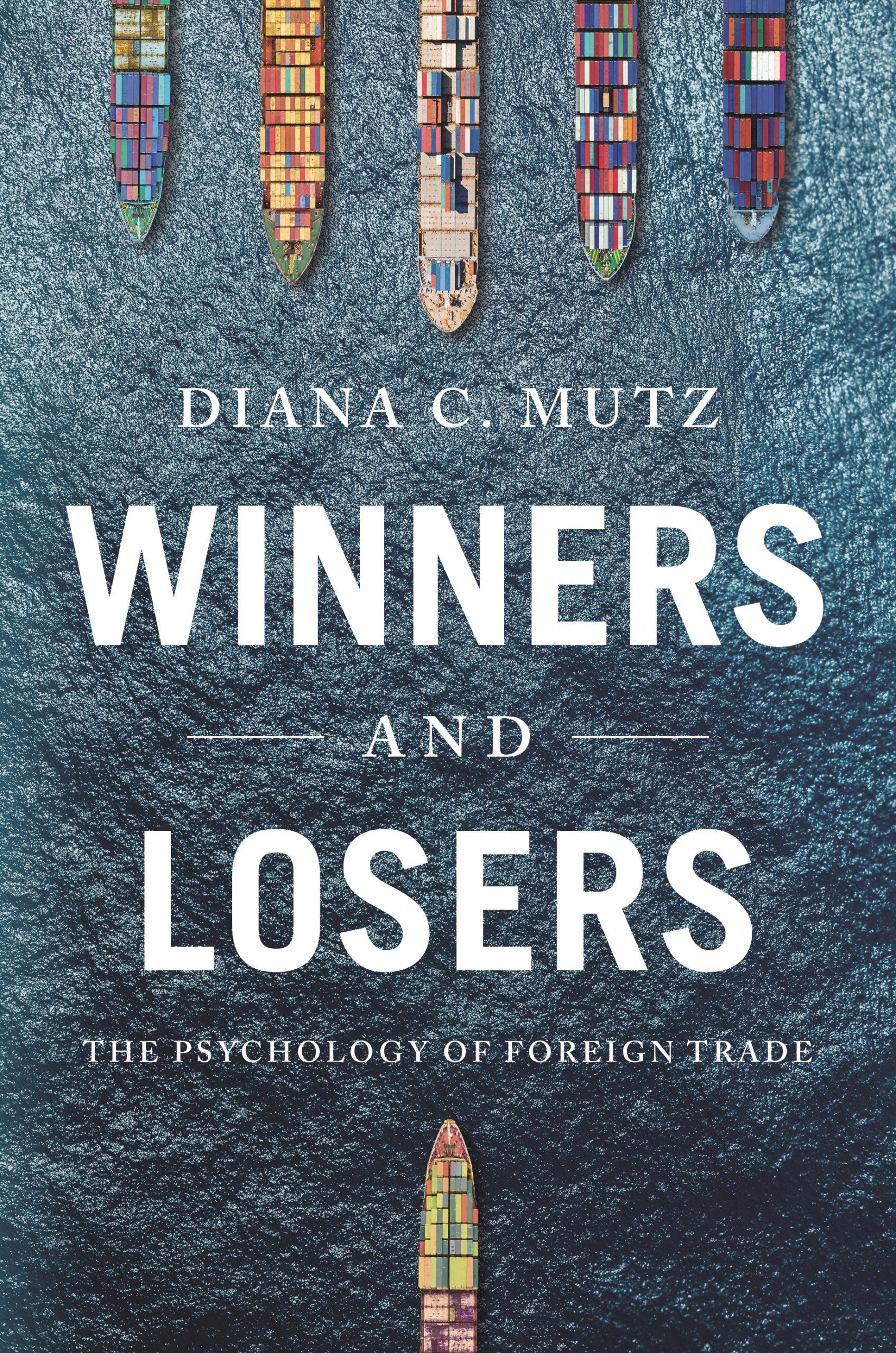
Thomas Macaulay observed that “Free trade, one of the greatest blessings which a government can confer on a people, is in almost every country unpopular.”. There is plenty of evidence to support this assertion but the reason for public hostility is less clear. What is it that impacts public opinion about trade and why is it not better liked?
Diana Mutz, Professor of Political Science and Communications at the University of Pennsylvania, has spent a number of years researching these questions in the United States and, in Winners and Losers: The psychology of foreign trade, she summarises the results of her research, considers the evidence of other researchers, draws conclusions and reflects upon their implications. She says that her “central purpose … is to bridge a gap in our understanding of the causes and consequences of American attitudes toward international trade” (page 15).
The result is both fascinating and important. All those who believe in the merits of free trade and wish to see it widely pursued by democratic countries should read what Mutz has to say.
She begins with three basic propositions, each of which she successfully justifies. First, “for most Americans, globalization is something happening ‘out there’, away from their everyday lives” (page 2). Secondly, unsurprisingly, most Americans are largely unaware of the economic arguments for and against free trade. As Mutz puts it, “few wax poetic about the wonders of the invisible hand, the efficiency of market specialization, or even the lower cost of consumer goods” (page 3). Thirdly, despite their profound ignorance, people do nonetheless hold opinions about international trade, holding “alternative, lay theories about how international trade works” (page 3).
Many economists have asserted that these home-spun theories are based on the self-interest and Milton Friedman asserted that “Complete free trade is not politically feasible … because it is only in the general interest and in no-one’s special interest”. Mutz’s research, however, provides little support for this. Instead, she suggests that public opinion is based upon sociotropic factors or what, more bluntly, might be called unsophisticated nationalism.
Mutz observes that trade is often seen in terms of competition rather than cooperation and American attitudes to trade are determined to a considerable extent by whether or not it is expected that America will be the “winner”. Furthermore, many people perceive trade as a zero sum game in relation to job gains and losses and, when coupled with uncertainty as to whether America will be the “winner”, this perception can produce highly negative attitudes to it.
Mutz suggests that people’s reasoning in relation to trade is similar to their reasoning in relation to human relationships at a personal level: “People trust people who look more like them” (page 101) and people are influenced by things as basic as who they like and who they do not like. Hence, in a survey conducted by Mutz, those who, in answer to a request to name the US’s three largest trading partners forgot Canada were less likely to support international trade than those who remembered Canada, whilst those who forgot China were more likely to support trade than those who remembered it.
Unfortunately, all of the attitudes that lead to a negative view of trade receive regular reinforcement. Mutz’s survey of references to trade in major US newspapers between 2000 and 2018 indicates that the vast majority of such references viewed trade as competition rather than cooperation; her survey of references to job losses in major US newspapers over the same period indicates that trade is frequently blamed for losses, whilst automation is very rarely blamed despite most economists believing that this is the primary cause of US manufacturing job loss; the idea of trade being a zero sum game is reinforced by concepts such as “trade deficits” and even “fair trade” (which sound, to the uninitiated, as though a fixed sized pie is being unevenly divided); and news stories reporting the benefits of free trade generally support their narrative with graphs and other impersonal material whilst those opposing it show pictures of forlorn American workers who have lost their jobs, which naturally have a bigger emotional impact. More fundamentally, Mutz points to the simplicity of the claims made by those who oppose free trade (primarily relating to job losses) in comparison to the complexity of the arguments in favour of free trade.
Mutz provides copious evidence that, overall, supports her theories. However, the book is not without flaw. Some of the numerous graphs and charts are not well labelled and space limitations have resulted in Mutz cross referring to a significant amount of online material. Readers also need to be on their guard since a number of the graphs are not based to zero, which results in differences being exaggerated (the graphs on page 127 relating to racial differences being particularly egregious examples of this). Furthermore, some of the research results, whilst statistically significant, do not suggest huge differences among different categories of people and Mutz may on occasions be guilty of over-interpreting them.
Mutz is clearly highly pro trade and moderately to the left of centre in her political views. She does not disguise her distaste for some of those who take a different view and, unfortunately, this may have distorted some of her conclusions. For example, she appears to believe that those who are pro trade are more rational than those who oppose it but this does not seem consistent with her own evidence. Thus, she comments that “protectionist attitudes in the US are driven largely by non-economic, symbolic beliefs” (page 241) apparently forgetting that the same appears to be true of attitudes that favour free trade. She also appears reluctant to acknowledge that some non-economic arguments relating to trade may be rational and reasonable. For example, no matter how pro free trade one might be, it is hard to disagree that there are downsides in trading with countries governed by authoritarian regimes and thus the apparent implication in Mutz’s comments that logical and reasonable people should favour trade with China as much as they favour trade with Canada is surely misplaced.
Mutz recognises that her findings are limited to the USA and her evidence from Canada suggests that they may not apply elsewhere. Nonetheless, the findings present those who favour free trade with a challenge: what are we to do about this? Mutz makes a number of reasonable suggestions: efforts should be made to make people realise that most job losses are not caused by trade but by automation; we need to make efforts to enable people to understand trade in terms of cooperation and to realise that it is not a zero sum game; and we need to build on the finding that the vast majority of Americans believe that trade is good for relationships with other countries. However, these suggestions are vague and do not relate closely to all of the issues that Mutz identifies.
In particular, she fails to focus adequately on her recognition that many influences on people’s attitude to free trade “pale in comparison to the impact of prospective financial concern” (page 225). The more insecure that people feel, the more they “hunker down” and one suspects that negative attitudes to trade in the USA are to a significant extent a reflection of a loss of national self-confidence and feelings of insecurity. In The Wolf at the Door, Michael Graetz and Ian Shapiro suggest that addressing this is the most important domestic challenge faced by America and it may be that, if it were adequately addressed, support for free trade would materially increase.
That said, Diana Mutz has done a great service to those who favour free trade by clarifying the causes of opposition to it. It is now up to others to work out how best to apply the implications of her research in influencing both politicians and public opinion.
“Winners and Losers” by Diana C. Mutz was published in 2021 by Princeton University Press (ISBN 978-0-691-20302-7). 275pp plus notes and bibliography.
Richard Godden is a Lawyer and has been a Partner with Linklaters for over 25 years during which time he has advised on a wide range of transactions and issues in various parts of the world.
Richard’s experience includes his time as Secretary at the UK Takeover Panel and a secondment to Linklaters’ Hong Kong office. He also served as Global Head of Client Sectors, responsible for Linklaters’ industry sector groups, and was a member of the Global Executive Committee.
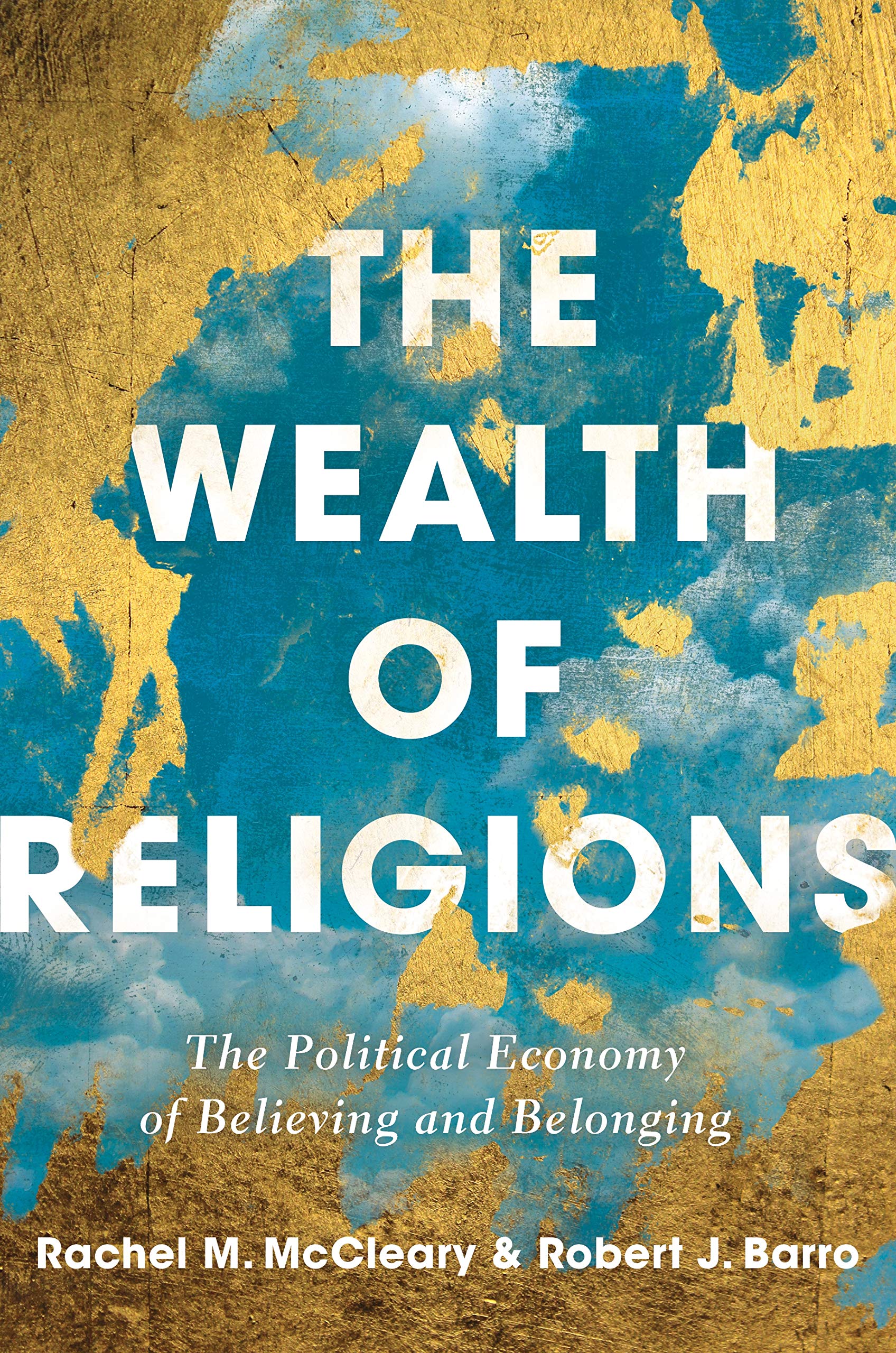
The Wealth of Religions is an unusual book. It is subtitled, “The Political Economy of Believing and Belonging” and its authors, one an economist and the other a moral philosopher (who, as it happens, are married to one another), seek to present a multidisciplinary approach to issues at the interface between religion and economics. They say that they “are interested in the economic costs and benefits of holding certain religious beliefs and the influence of those beliefs on behavior” (page 4) and that their central approach “is the application of economic and political principles to the study of religions across countries and over time” (page 9).
The book is divided into two sections: the first looks at the interplay between religion and economic growth whilst the second deals with issues associated with the connection between religion and political economy. The first takes as its starting point Max Weber’s famous argument relating to the protestant work ethic, although the authors’ arguments are not by any means identical to those of Weber; the second is particularly indebted to what the authors regard as Adam Smith’s ingenuity in applying his market model to religious goods and services “as if they were analogous to brands of toothpaste” (page 106).
The book has severe limitations. It is based on short articles published over the past couple of decades and it fails to disguise this; despite only being a short book (172 pages), there is a significant amount of repetition and there is an element of miscellany about its contents, particularly in the second section. Some of the material is frustratingly general (e.g. the section relating to the impact of religion on economic growth) whilst some of it is so specific that it will not interest many readers (e.g. the 23 page chapter relating to beatifications and canonisations by the last three popes). The result is that the book lacks an overarching argument or sense of direction, and it is unlikely that many readers will be interested in all of it.
Nonetheless, the book addresses interesting and thought provoking questions and the diversity of its material has an upside: any reader who is interested in either the interaction between economics and religion or the way in which economic concepts may have an impact upon organised religion will find something engaging in it.
This mixture of the unsatisfactory and the engaging is exemplified by the second chapter, which explores how the economy and the regulatory system influence religion in society. John Wesley famously observed that, as people become richer, they become less devout and the authors wish to test this observation (the so-called “secularisation hypothesis”). Many readers will be impatient that it takes the authors 12 pages to come to what they will regard as a blindingly obvious conclusion: “we find a strong negative effect on all measures of religiosity from higher economic development” (page 28). However, the authors also discuss some less obvious issues and reach some interesting conclusions including, contrary to the views (and perhaps hopes) of some vociferous atheists, “there is no evidence in cross-country data that more years of education reduce religiosity” (page 31).
The third chapter (relating to the impact of religion upon economic growth) is likewise a mixture of the disappointingly superficial and the tantalisingly interesting. The Weber thesis is explained and various religious views of salvation surveyed in a mere eight pages, which include some highly contentious statements (e.g. the assertion that Calvin did not believe in the possibility of assurance of salvation, which is justified by a statement in his Institutes that is taken out of context and fails to notice that, in the very same section of the Institutes, Calvin states that faith is “a firm and sure knowledge of the divine favour toward us, founded on the truth of a free promising Christ, and revealed to our minds, and sealed on our hearts, by the Holy Spirit”). However, from this unpromising start, the authors go on to discuss their own analysis of detailed international data and come up with some interesting conclusions. For example, they show that this data suggests that belief in heaven and hell (and particularly the latter) is positively correlated to economic growth but belief in God or a general posture of being religious is not. Furthermore, for any given belief in hell, an increase in monthly church attendance appears to lead to a decline in economic growth and, to put the matter the other way up, for any given church attendance, an increase in belief in hell leads to an increase in economic growth. The authors also provide a brief survey of various pieces of academic research that suggest that the oft-repeated suggestions that the positive impact of Protestantism is either associated with “belonging” or to Protestantism’s promotion of human capital via education are misconceived.
Of course, Weber’s thesis related to the impact of Christianity and, specifically Protestantism, in Europe and any globally applicable theories relating to the impact of religion on economic growth (or vice versa) need to take account of the impact of other religions. The authors recognise this issue and, to some extent, seek to address it, particularly in chapter 4, which relates to Islam and economic growth. However, these parts of the book are again superficial. The entire sweep of Islamic economic history is dealt with in 10 pages and the authors fail to provide convincing evidence of the impact of Islam on the economy; other major religions are scarcely considered. The result is that a number of major questions of significant importance in the modern world are not addressed at all (e.g. the impact of Hinduism on the economic development of India).
More generally, the application of economic concepts to organised religion, whilst potentially thought provoking, is contentious and may even be offensive to some people. For example, one does not need to be a Roman Catholic to raise eyebrows at the statement that “our assessment is that the increased numbers and geographical spread of persons named as blessed and the targeting of popular ex-Popes are clever innovations aimed at raising the enthusiasm of Catholics” (page 154); and one does not need to be a Buddhist to feel somewhat uneasy when reading the title of chapter 6: “Religious Clubs, Terrorist Organisations, and Tibetan Buddhism”. Furthermore, many Christians will consider that the “supplier and consumer” model of religion presented by the authors is indicative of precisely what is wrong with much Christianity today rather than an indication of fundamental features of its success or failure.
That said, despite all of its inadequacies, and having regard to its relative brevity, The Wealth of Religions is worth reading and, having read it, some readers may well find that there is plenty to interest them in the bibliography, which reflects the cross disciplinary nature of the book itself.
“The Wealth of Religions” by Rachel M. McCleary and Robert J. Barro was published in 2019 by Princeton University Press (ISBN – 13:9780619217109). 172pp.
Richard Godden is a Lawyer and has been a Partner with Linklaters for over 25 years during which time he has advised on a wide range of transactions and issues in various parts of the world.
Richard’s experience includes his time as Secretary at the UK Takeover Panel and a secondment to Linklaters’ Hong Kong office. He also served as Global Head of Client Sectors, responsible for Linklaters’ industry sector groups, and was a member of the Global Executive Committee.

Charles Boix is Professor of Politics and Public Affairs at Princeton University. His primary research interests are in political economy and comparative politics, with a particular emphasis on empirical democratic theory. Previous notable publications include Political Parties, Growth and Equality (Cambridge University Press, 1998), Democracy and Redistribution (Cambridge University Press, 2003), and Political Order and Inequality (Cambridge University Press, 2015).
In Democratic Capitalism at a Crossroads Charles Boix seeks to explore both the historical chapters of democratic free-market tensions and current issues facing capitalism within western democracies. The author divides the narrative into three main eras: 19th century Manchester capitalism, 20th century Detroit capitalism, and the current 21st century Silicon Valley-based model of capitalism. The final chapters consider the implications of these forms of capitalism on the future workforce, in particular with respect to automation, the rate of technological change, income distribution and politics (or the role of government more broadly).
Charles Boix’s thesis is that, “the consequences of today’s technological changes […] are not set in stone. They will work their way into the economy through their direct (although, at this point, still uncertain) impact on the demand for different types of labour and on the cost and ownership of capital. Yet they will also depend on the institutional and political strategies we follow in response to those technological transformations” (page 3).
The book is well-written and comprehensively researched. The author does a commendable job of avoiding the clichés that often surround the topic of technology and maintains both nuance and a satisfactory degree of objectivity. We will touch upon some of the more intriguing points made throughout the book.
Chapters 1-3 explore the impact of technology on society and politics from a historical perspective. Chapter 2 dedicates a fair amount of attention (and rightly so), to the first industrial revolution. Boix points out that automatization brought by a new class of comparatively poorly skilled labour that replaced “…an old class of artisans and highly skilled operators” (page 57). In 20th Century capitalism however, the advent of technology (and automisation more specifically), led to a further replacement of low skilled workers with semi-skilled workers – albeit in much lower numbers. This new workforce of semi-skilled labour was needed to oversee, maintain, and repair the machinery in operation. Yet perhaps the most important consequence of the process of automisation was the arrival of “… new layers of white-collar, relatively well-paid jobs – from accounting departments to car dealerships” (page 59).
This in effect resulted in a new form of Corporatism whereby the relationship between employees, trade unions and the employers are far more interwoven than before. An interesting point is made in chapter 3 whereby the continual development of a company’s human capital became a vested interest for the company itself. Henry Ford for instance invested heavily in the education of his workforce. He established the Ford English School to teach English to recently arrived immigrants and he even established a “…Sociological Department, with about two hundred employees, to ensure that the family lives and overall behaviour of his factory workers did not deviate from a clear set of norms such as thriftiness, continence, and basic hygiene” (page 78).
Chapters 4-6 move the conversation to the contemporary debate around technology, artificial intelligence (AI), and its impact on the labour markets and consequently, on democracy itself. Charles Boix rightly points out the difference between simple AI and machine learning. The key form of impact here is that while computers/AI displaced routinable jobs at a large scale, they have “…hardly replaced nonroutine jobs” (page 103). Though this may be changing with machine learning.
Boix acknowledges in Chapter 6 that, ultimately, we cannot predict the impact of technological change or indeed “…depict the society it will give birth to…” (page 180). Therefore, any future policy responses must be made in a piecemeal fashion (ibid.). The chapter concludes the book with a few tentative proposals for reform. Rather unexpectedly, Universal Basic Income (UBI) is presented as one such proposal – yet the arguments made against UBI seem more convincing than those in favour. For instance, the author claims that UBI has two main advantages: “First, it may free individuals from routine, repetitive tasks, allowing them to engage in more creative and inventive professional paths. Second, it should reduce poverty and arguably, equalise conditions” (page 206). Perhaps the keywords here are ‘may’ and ‘should’ – one cannot help but feel that this is mere wishful thinking.
On the challenges of UBI, Boix acknowledges a rather lengthy list: UBI cannot be tailored to individual needs, it distorts the incentives that people have to work, it may keep the pre-existing structure of inequality in place, it reduces the need for schooling, it enables firms to offer lower wages, it affects the inner motivations and ambitions of youngsters, it can create antagonism between those that are earning against those that are not (pages 207-208). We don’t have space to go into further detail here, and surely each reader will make up their own mind – but it is a strange and slightly disappointing end to an otherwise interesting book.
In summary, Democratic Capitalism at a Crossroads is an engaging read about the impact of technological change on the transformation of labour markets, society and indeed, democratic systems themselves. It is accessible to the educated reader and while some might take issue with certain sections of the book, the author does a laudable job of curtailing his more subjective opinions by also presenting the counterarguments. One result is that some readers may find the counterarguments more compelling than the main arguments themselves (UBI is a case in point). This might not necessarily be a bad thing. The book is a recommended read to those looking to expand their knowledge of the intersection between technology, the economy, and democracy.
“Democratic Capitalism at the Crossroads” by Carles Boix was first published in 2021 by Princeton University Press, ISBN: 9780691216898, 272pp.

Andrei E. Rogobete is the Associate Director of the Centre for Enterprise, Markets & Ethics. For more information about Andrei please click here.

Is the delegation of monetary policy to independent central banks that are granted constrained discretion a good or a bad thing? Most non-specialists have probably never pondered this question and many that have done so have probably concluded that it is a good thing. But is it? Peter Boettke, Alexander Salter and Daniel Smith think not and in Money and the Rule of Law they argue their case.
Parts of the book are difficult for a non-specialist to evaluate and some readers will find its US centricity unhelpful. The endless citations of previous works within the text rather than footnotes and the existence of a significant amount of repetition is also irritating. However, none of these failings should put off potential readers whether specialist or not and whether American or not. The book raises issues that deserve to be debated far more widely than they are.
The authors’ starting point comprises two points: first, that good money is essential for human flourishing and that, consequently “monetary institutions are not peripheral, but central, to human betterment” (page xi); secondly, that as Adam Smith long ago pointed out, governments have an unfortunate habit of spending in excess of revenue, accumulating these deficits into long-standing public debt and paying off the debt through the debasement of their currency. This tension creates a problem that needs to be addressed by all modern societies.
To many, the solution lies in the existence of an independent central bank because it is seen as a way of transferring control over monetary policy into the hands of experts free from government interference. Furthermore, the conferring of discretion on these experts is considered necessary in view of the balance of policy considerations involved and in order to allow flexible responses designed to preserve macroeconomic stability, particularly in a crisis.
This solution superficially appears convincing but Boettke, Salter and Smith attack it head on. First, they challenge the notion that the US Fed has contributed to macroeconomic stability saying that “the Fed’s century-long experiment with discretionary central banking is at best inconclusive, and at worst a failure” (page 147). In particular, they argue that, far from discretion being essential in a crisis, it makes matters worse, asserting that the Fed contributed to the Great Depression of the 1930s and that its interventions may have made the recession resulting from the Global Financial Crisis worse than it would otherwise have been and, at the very least, have added to moral hazard in the financial sector. These claims may be surprising to some but they are by no means self-evidently wrong and, in relation to the Great Depression at least, the authors are able to point to the support of Ben Bernanke, the former Chair of the Fed, as well as Milton Friedman and others.
The failings of the Fed and other central banks might be accepted as unfortunate but inevitable stages in their learning process but Boettke, Salter and Smith suggest that the problem is far more fundamental than this would suggest. They point to the serious problems faced by central banks including technical problems (e.g. lack of clarity as to objectives), knowledge problems (uncertainty being, as Alan Greenspan put it, “not just a pervasive feature of the monetary policy landscape but the defining characteristic of that landscape”, page 23) and incentive problems (including the internal and external pressures brought to bear on central bankers, which the authors catalogue with some enthusiasm). They recognise that some of these problems are, at least in theory, soluble but they argue that “Knowledge problems render discretionary central banking not just difficult but impossible” (page 4). Discretionary central banking fails for exactly the same reason as other forms of central economic planning in that “monetary policymakers lack a feedback mechanism that generates the requisite knowledge to maintain, or even tend towards, monetary equilibrium” (page 37).
These are important points. It is odd that the West has largely rejected central economic planning on practical as well as philosophical grounds and yet appears to believe a planned monetary system is workable and it is even more odd that, despite evidence to the contrary, many continue to believe that it is possible for central banks to fine tune the system, turning the steering wheel to adjust to unexpected irregularities of the route, to use Friedman’s analogy. Consideration of the track record of central banks and appreciation of the problems that they face might thus of themselves be sufficient to cause us to doubt the merits of discretionary central banking.
That said, the failings and problems of central banks are not the primary reason why Boettke, Salter and Smith object to discretionary banking: their primary objection is that “discretion on the part of monetary policymakers is inconsistent with basic jurisprudential tenets of post-Enlightenment political thought” (page 13). In particular, it is “incompatible with the justificatory tenets of constitutional democracy” (page 15) and “fails to adhere to the rule of law in any meaningful sense” (page 146).
These claims may seem to be extreme but they deserve close attention. A proposal to transfer control over tax policy to an independent body of experts exercising “constrained discretion” based on vague and conflicting policy objectives would doubtless be greeted with incredulity. It would be regarded as incompatible with accepted principles of democratic control and the fundamental tenet of the rule of law that “questions of legal right and liability should ordinarily be resolved by application of the law and not the exercise of discretion” as well as the principle that “the law must be accessible and so far as possible intelligible, clear and predictable” (Bingham, The Rule of Law 2010). So why is the transfer of control over monetary policy viewed differently? It may be felt that control over monetary policy is very different from control over taxation, but is it? Monetary policy has a huge indirect impact upon property rights (e.g. it may result in an arbitrary redistribution of wealth and inflation results in a form of arbitrary taxation) and central banks now exercise discretionary power over the grant of liquidity that is opaque and unconstrained by anything other than very vague principles. Furthermore, the problem has become progressively more acute as central bankers (including even the European Central Bank) have interpreted their mandates widely and changed their views as to the way in which to balance various policy objectives and as they have engaged in increasingly novel activities (e.g. the Fed is now lending directly to US corporations which represents an extraordinary lurch away from free market principles).
So how should these concerns be addressed? Unfortunately, Boettke, Salter and Smith have no precise answer to this question. They argue that central banking should be rule-based rather than discretionary and, at one point, suggest that the answer may lie in the “Richmond Fed doctrine”, which “holds that the central bank should limit itself to the creation and supply of high-powered money to the market, even during financially turbulent times” (page 118). However, they clearly recognise that this could only ever be part of the solution and they describe the conflicting views of the three leading economists who have shared their concern about central banking (Hayek, Friedman and Buchanan) without clearly expressing their own views on the relevant issues. This is a significant failing but it is only fair to point out that the authors’ illustrious predecessors also struggled at this point and changed their views radically over the course of their careers. Perhaps the only viable and effective options (e.g. potentially, Hayek’s competing currencies or Friedman’s computer automated monetary policy) are so radical and so untried in a modern context that we all find them difficult to contemplate.
In any event, Money and the Rule of Law comprises a wake-up call: we need to ask ourselves whether we are sleep-walking into an economy governed by discretionary central planning that is both economically damaging and philosophically unacceptable. The book deserves to be widely read.
“Money and the Rule of Law: Generality and Predictability in Monetary Institutions” by Peter J. Boettke, Alexander William Salter and Daniel J. Smith was published in 2021 by Cambridge University Press (ISBN 978-1-108-79084-0). 184pp.
Richard Godden is a Lawyer and has been a Partner with Linklaters for over 25 years during which time he has advised on a wide range of transactions and issues in various parts of the world.
Richard’s experience includes his time as Secretary at the UK Takeover Panel and a secondment to Linklaters’ Hong Kong office. He also served as Global Head of Client Sectors, responsible for Linklaters’ industry sector groups, and was a member of the Global Executive Committee.

The sub-title of The World Made Otherwise is “Sustaining Humanity in a Threatened World” and climate change or other environmental issues form the book’s starting point and backdrop. Gorringe sees climate change as creating a burning platform that makes thorough-going political, economic and social change imperative.
His prognosis is dire. He opines that “civilisational collapse is likely” (page 19) and that, together, environmental issues and current socio-political trends “could suggest the ‘new dark ages’ of which MacIntyre spoke nearly 40 years ago” (page 153). He asserts that the resulting problems are primarily moral and political and that “neither technological fixes nor tweaking of the present economic system are sufficient to address them” (page 117). Instead, he thinks that the heart of the problem lies in false values.
Much of Gorringe’s discussion relating to values will be widely applauded: he rejects the post-modern relativism that reduces discussions of values to discussions of psychology or sociology, confusing values with either societal norms or preferences linked to self-realisation; he defends the idea of universal values against those who would deny their existence (including those on the left who suggest that the very idea of human rights is a form of Western cultural imperialism); he also rejects “the claim of the neoliberal market to provide the fundamental standard for everything whatsoever” (page 57) and instead seeks to establish a value system based on the ultimate end or object of human life, which he suggests is, in essence, the creative fulfilment of human potential, “a fulfilment that is both individual and social” (page 85).
His discussion of the problems within the existing political, economic and social order also contains much that will command wide acceptance, albeit not much that is new. In particular, the history of the twentieth century supports the wisdom of his call for “a critical watchfulness” with regards to our political practices and his warning that “all claims for absolute allegiance on the part of the state are idolatrous” (pages 133/134). Likewise, his warning about making an idol of the market will be accepted by all but the most extreme free marketeers and his criticisms of the workings of modern democracies (including the basis on which people cast their vote, the role of the media and lobbying) ring true.
Unfortunately, however, time and again Gorringe gravely overstates his case and, whilst some parts of the book are closely argued, much of what he asserts is not backed up by detailed analysis or engagement with different views. For example, he asserts that “equality must mean equality of outcome” (page 163) on the basis of five lines of argument and he makes no effort to comprehend the practical and moral arguments for the market economy or recognise the different conceptions of justice that underly much current socio-political debate (as to which, see Capitalism and Democracy by Thomas Spragens). Furthermore, the version of the market economy that he attacks is extreme and he fails to acknowledge that one can be in favour of a market economy yet at the same time recognise the need for guiding values outside it. Instead, he makes a number of unsupported ex cathedra assertions that, on occasions, descend into mere left-wing jibes (e.g. his side swipe at “austerity” measures, which he defines as “making sure the bankers do not have to pay for their mistakes”, page 198, and his distinction between “genuine science” and “the spurious corporate-financed variety”, page 290).
The least satisfactory part of the book is its suggestions for change: they are almost totally lacking in specificity and are absurdly Utopian. Gorringe says that he is putting forward what he calls “rights cosmopolitanism”, which he describes as “a vision of a cosmopolitan world of federated states where all people enjoy basic rights and freedoms simply in view of their humanity” (page 147). However, the vision is vague and Gorringe gives no clue as to how it might be realised. He envisages the break-up of current nation states and talks of “a world of small and devolved, but often federated states, where economic and environmental rules would be worked out together and held to be binding by the United Nations and its agencies” (page 152); he suggests that “local economies will have shorter supply chains and keep real wealth within the community” and that they “will not import products they can produce for themselves or export local products until local needs have been met”, citing apparently with approval, Molly Scott Cato’s suggestion that there might be perhaps 20 bioregions forming the basis for a reformed economy with each bioregion having “the task of provisioning its inhabitants” (pages 233/234); and he advocates monetary reform. Yet his political proposals amount to little more than a vague idea relating to the creation of local deliberative assemblies; leaving aside a few specific proposals (e.g. to mutualise utilities and provide a basic citizen’s income), his economic ideas are packed into a bewildering four page section in which he advocates the localisation of economic life; and, apart from discussing a few examples of what are, in essence, local or restricted use currencies, he gives us no clear idea of what monetary reforms he is seeking.
Gorringe defends himself against the charge of being Utopian by suggesting, first, “that nothing is so wildly Utopian as to try and build a sustainable world on the basis of greed and competition” and, secondly, that his proposals “are actually being modelled on the ground the world over” (page 236) but this defence fails. The first of these points has no bearing on the realism of his proposals and the second fails to recognise that the only examples he gives of anything remotely resembling the kind of localised system that he advocates are very small scale and, as he himself recognises, have many problems.
It is difficult to know precisely who the book is aimed at. It is not an academic work yet it is overloaded with quotations from and references to the views of different authors (e.g. the main text in the first five pages of the chapter relating to values includes references to the views of no less than 15 different authors). These come so thick and fast that parts of the book are heavy-going and they are likely to render it inaccessible to many potential readers. Furthermore, Gorringe is a liberal Christian who is heavily influenced by Marxist thinking and these starting points pervade The World Made Otherwise. Gorringe makes no attempt to justify them, with the result is that the book is unlikely to prove persuasive to those who do not share his assumptions. Thus, whilst most Christians will welcome his reminder that God ultimately owns all things (a fact which necessarily relativizes property rights), his approach to Scriptural interpretation will baffle and alarm many. For example, his suggestion that “The Eucharist (when not fetishized) adumbrates as a sign the view that the world is gifted to all creatures and is to be shared equally between them” (page 224) is, to put it mildly, difficult to extract from the biblical text, whilst his assertion that Hebrews 13:14 (“Here we have no abiding city”) “promises us that Rome (which for us is neoliberalism) will not last forever” (page 66) is extraordinary.
Gorringe has, for a long time, passionately believed in the need for radical, political, economic and social change and environmental issues have added to the imperative tone of his appeals for such change. However, passion and urgency do not of themselves make up a viable political programme. Gorringe’s theological villain is clearly St. Augustine of Hippo, who he feels is responsible for generations of Christians believing that “the possibility of a truly different society… belongs only to the next life” (page 67). On this basis, one might expect him to show us the way to an earthly paradise but, despite its title, The World Made Otherwise fails to provide one and, whatever one’s political views, Gorringe’s diagnosis and prognosis are simply depressing.
The World Made Otherwise by Timothy J. Gorringe was published in 2018 by Cascade Books (ISBN: 978-1-5326-4867-0). 348 pp
Richard Godden is a Lawyer and has been a Partner with Linklaters for over 25 years during which time he has advised on a wide range of transactions and issues in various parts of the world.
Richard’s experience includes his time as Secretary at the UK Takeover Panel and a secondment to Linklaters’ Hong Kong office. He also served as Global Head of Client Sectors, responsible for Linklaters’ industry sector groups, and was a member of the Global Executive Committee.
Capitalism and Democracy is a short book and, as Tomas Spragens admits, it does not contain “a great deal of cutting-edge scholarship” (page vii). Nonetheless, it deserves to be widely read.
It comprises an explanation and analysis of “the sharp disagreement encountered these days between advocates of laissez-faire and champions of a more expansive welfare state” (page 10). Spragens suggests that, properly analysed, this debate involves disagreements in relation to three different issues: whether markets maximise prosperity; the moral defensibility of the distributions of resources produced by the capitalist marketplace; and whether the kind of society that free markets and minimal government produces would be a good place in which to live. Spragens analyses each of these issues in turn before attempting to draw some conclusions reflecting his own opinions.
Spragens states that his “general conviction is that reliance upon robust free markets as the principal mechanism for the allocation of a society’s economic efforts and resources is wise and proper” but goes on to say “I also believe … that governments need to regulate and supplement the distributive consequences of markets in a number of significant ways” (page 191). This view is apparent throughout the book and some readers will wish to challenge it whilst others will inevitably feel that their particular views or arguments are not accurately reflected. Nonetheless, Spragens has made a great effort fairly to present the opposing arguments in relation to each issue. He expressly disclaims having definitive answers to the issues at hand and, before expressing his own conclusions, explains why “those conclusions – and any of yours as well – have to be acknowledged as vulnerable to reasonable disagreement” (page 164). He is thus not trying to argue a specific case but rather “to narrow the geography of debate to a place where reasonable people may differ” (page 10).
In an age of political polarisation, this approach is refreshing, as is Spragens’ blunt reminder that “We cannot have it all” (page 185). However, it only takes the discussion so far. In the modern western world, the key issue is not whether there should be regulation, distribution and intervention by governments but how much regulation, distribution and intervention is necessary or desirable and Spragens has little to say about this. This points to what the book is and what it is not: it is intended to provide a framework for thinking rather than an analysis of contemporary problems and their potential solutions.
Spragens helpfully discusses what may be considered to be appropriate functions of government and suggests that “Our democratic debates … need to center on what the improvement and perfection of the mixed economy look like in concrete terms” (page 229) but he does not advance these debates (and, in the context of what he has said earlier in the book, his use of the term “perfection” may seem surprising!). Indeed, one is left with the uneasy feeling that he is broadly justifying the current balance between the laissez-faire and interventionist approaches that exists within the United States, subject to a few tweaks here and there. Essentially, his position appears to be similar to that adopted by Michael Greatz and Ian Shapiro in The Wolf at the Door (reviewed on our website) without the commendably specific proposals contained in their work.
The book is US-centric, but this is an issue to be borne in mind rather than a fundamental defect. Spragens is writing to a US audience and the arguments that he outlines and the things that he assumes reflect this. In relation to economic matters, the centre of gravity of US political debates is to the right of that in Europe. Hence, Spragens asserts that “few would challenge” the assumption that “enhancing wealth production is a good thing to seek” (page 69) whereas a European author might feel a need to defend such a proposition. Conversely, Spragens finds it necessary to explain some versions of laissez-fair philosophies that will seem extreme to European audiences. However, whilst this may result in those from Europe feeling that the book does not deal with some things that they would like to deal with, and deals with some things that they don’t consider to be relevant, it does not prevent the vast bulk of what is said being relevant to them.
Of course, it is possible to find fault with a number of things that Spragens says or does not say. Most of the issues in this respect are relatively minor but a few are more significant. For example, the book fails to analyse the distinction between society and the state and, more seriously, its discussion of the concept of “justice” lacks the precision of other parts of the book and is unsatisfactory. Spragens recognises the slipperiness of the concept and the problems in using it within the context of the laissez-faire versus intervention debate. He also draws attention to the serious problems in John Rawls’ much discussed concept of justice. However, he fails to identify clearly the major competing concepts of justice and thus to draw attention to one of the reasons that those discussing “economic justice” or “social justice” often talk past one another. From a UK Christian perspective, this is a pity because, in the UK, the concept of “social justice” is much talked about at the moment and many Christians discuss it as if their understanding of it incontrovertibly emerges from the Bible (particularly the Old Testament) without reflecting on their assumptions that underly that understanding.
Spragens seems to have sensed that there is something not entirely satisfactory about his treatment of these concepts because he returns to the subject in a four page postscript tagged on to his final chapter, which defends his “reticence to invoke social justice as an independent major basis” for the judgments and recommendations he has offered (page 230). He argues that it is “Impossible for anyone to claim convincingly that some specific distribution of resources would be entirely fair and just” having regard to the differences in people’s abilities, characters, upbringing and circumstances (page 230). He recognises that this might be seen as a counsel of despair or reflective of a lack of concern about unfairness but suggests that, in practice, for other reasons, much can be done and, indeed, is done to mitigate inequalities both at the level of government intervention and at a personal and community level.
Spragens says that he has two principal target audiences: the educated public who would like to improve their understanding of the proper role of the capitalist market place within a democratic society and college level students seeking an overview of issues that they will likely confront in economics, political science, moral philosophy and public policy courses. He may, however, have understated the range of people who will find the book of interest. At the very least, theology students should be added to the list of those who should read it and many others, who have previously thought about the issues, will benefit from a succinct overview of them.
“Capitalism and Democracy: Prosperity, Justice, and the Good Society” by Thomas A. Spragens, Jr was published in 2021 by Notre Dame Press (ISBN 978-0-268-20014-5). 234pp.
Richard Godden is a Lawyer and has been a Partner with Linklaters for over 25 years during which time he has advised on a wide range of transactions and issues in various parts of the world.
Richard’s experience includes his time as Secretary at the UK Takeover Panel and a secondment to Linklaters’ Hong Kong office. He also served as Global Head of Client Sectors, responsible for Linklaters’ industry sector groups, and was a member of the Global Executive Committee.