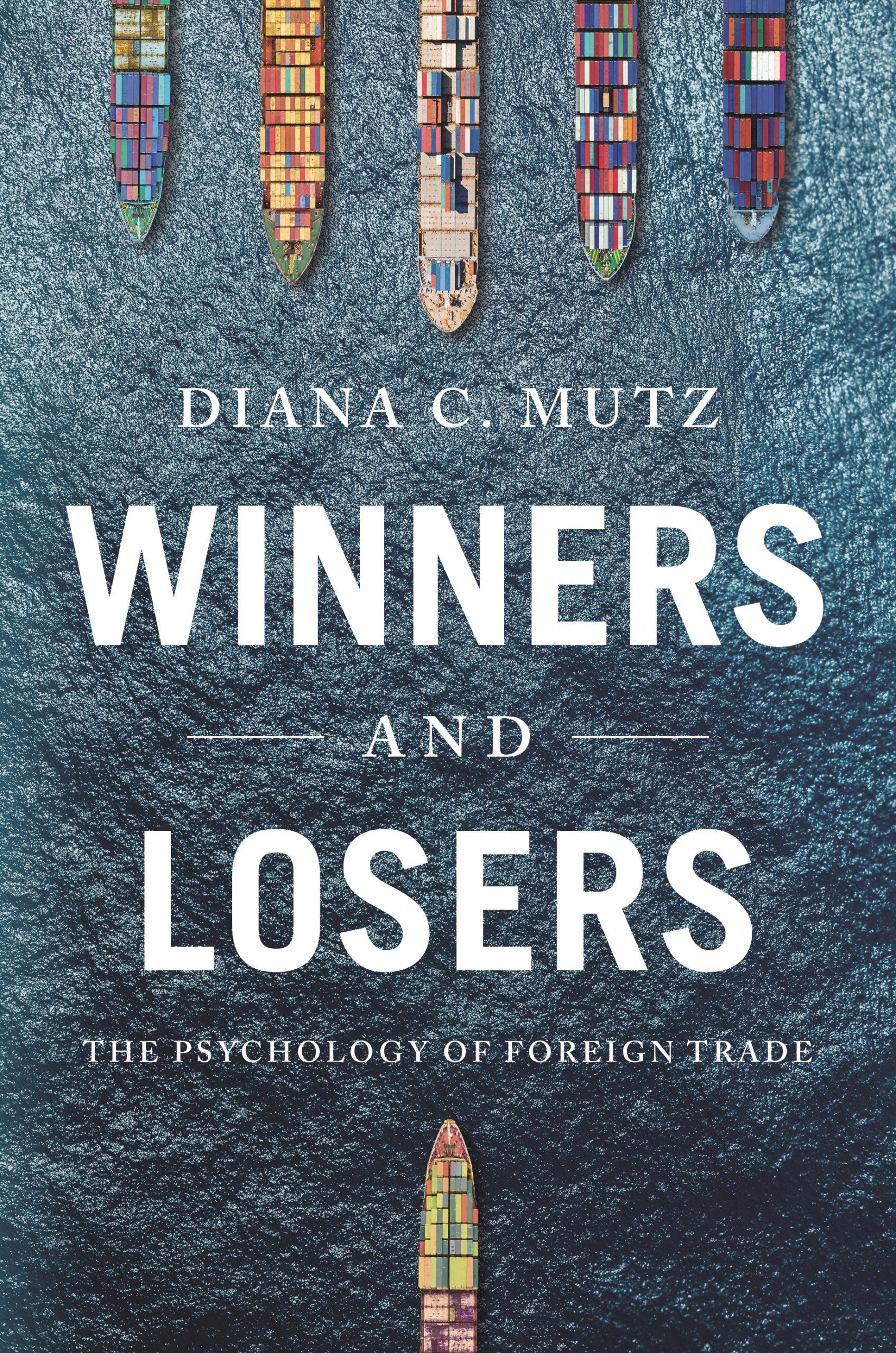
Thomas Macaulay observed that “Free trade, one of the greatest blessings which a government can confer on a people, is in almost every country unpopular.”. There is plenty of evidence to support this assertion but the reason for public hostility is less clear. What is it that impacts public opinion about trade and why is it not better liked?
Diana Mutz, Professor of Political Science and Communications at the University of Pennsylvania, has spent a number of years researching these questions in the United States and, in Winners and Losers: The psychology of foreign trade, she summarises the results of her research, considers the evidence of other researchers, draws conclusions and reflects upon their implications. She says that her “central purpose … is to bridge a gap in our understanding of the causes and consequences of American attitudes toward international trade” (page 15).
The result is both fascinating and important. All those who believe in the merits of free trade and wish to see it widely pursued by democratic countries should read what Mutz has to say.
She begins with three basic propositions, each of which she successfully justifies. First, “for most Americans, globalization is something happening ‘out there’, away from their everyday lives” (page 2). Secondly, unsurprisingly, most Americans are largely unaware of the economic arguments for and against free trade. As Mutz puts it, “few wax poetic about the wonders of the invisible hand, the efficiency of market specialization, or even the lower cost of consumer goods” (page 3). Thirdly, despite their profound ignorance, people do nonetheless hold opinions about international trade, holding “alternative, lay theories about how international trade works” (page 3).
Many economists have asserted that these home-spun theories are based on the self-interest and Milton Friedman asserted that “Complete free trade is not politically feasible … because it is only in the general interest and in no-one’s special interest”. Mutz’s research, however, provides little support for this. Instead, she suggests that public opinion is based upon sociotropic factors or what, more bluntly, might be called unsophisticated nationalism.
Mutz observes that trade is often seen in terms of competition rather than cooperation and American attitudes to trade are determined to a considerable extent by whether or not it is expected that America will be the “winner”. Furthermore, many people perceive trade as a zero sum game in relation to job gains and losses and, when coupled with uncertainty as to whether America will be the “winner”, this perception can produce highly negative attitudes to it.
Mutz suggests that people’s reasoning in relation to trade is similar to their reasoning in relation to human relationships at a personal level: “People trust people who look more like them” (page 101) and people are influenced by things as basic as who they like and who they do not like. Hence, in a survey conducted by Mutz, those who, in answer to a request to name the US’s three largest trading partners forgot Canada were less likely to support international trade than those who remembered Canada, whilst those who forgot China were more likely to support trade than those who remembered it.
Unfortunately, all of the attitudes that lead to a negative view of trade receive regular reinforcement. Mutz’s survey of references to trade in major US newspapers between 2000 and 2018 indicates that the vast majority of such references viewed trade as competition rather than cooperation; her survey of references to job losses in major US newspapers over the same period indicates that trade is frequently blamed for losses, whilst automation is very rarely blamed despite most economists believing that this is the primary cause of US manufacturing job loss; the idea of trade being a zero sum game is reinforced by concepts such as “trade deficits” and even “fair trade” (which sound, to the uninitiated, as though a fixed sized pie is being unevenly divided); and news stories reporting the benefits of free trade generally support their narrative with graphs and other impersonal material whilst those opposing it show pictures of forlorn American workers who have lost their jobs, which naturally have a bigger emotional impact. More fundamentally, Mutz points to the simplicity of the claims made by those who oppose free trade (primarily relating to job losses) in comparison to the complexity of the arguments in favour of free trade.
Mutz provides copious evidence that, overall, supports her theories. However, the book is not without flaw. Some of the numerous graphs and charts are not well labelled and space limitations have resulted in Mutz cross referring to a significant amount of online material. Readers also need to be on their guard since a number of the graphs are not based to zero, which results in differences being exaggerated (the graphs on page 127 relating to racial differences being particularly egregious examples of this). Furthermore, some of the research results, whilst statistically significant, do not suggest huge differences among different categories of people and Mutz may on occasions be guilty of over-interpreting them.
Mutz is clearly highly pro trade and moderately to the left of centre in her political views. She does not disguise her distaste for some of those who take a different view and, unfortunately, this may have distorted some of her conclusions. For example, she appears to believe that those who are pro trade are more rational than those who oppose it but this does not seem consistent with her own evidence. Thus, she comments that “protectionist attitudes in the US are driven largely by non-economic, symbolic beliefs” (page 241) apparently forgetting that the same appears to be true of attitudes that favour free trade. She also appears reluctant to acknowledge that some non-economic arguments relating to trade may be rational and reasonable. For example, no matter how pro free trade one might be, it is hard to disagree that there are downsides in trading with countries governed by authoritarian regimes and thus the apparent implication in Mutz’s comments that logical and reasonable people should favour trade with China as much as they favour trade with Canada is surely misplaced.
Mutz recognises that her findings are limited to the USA and her evidence from Canada suggests that they may not apply elsewhere. Nonetheless, the findings present those who favour free trade with a challenge: what are we to do about this? Mutz makes a number of reasonable suggestions: efforts should be made to make people realise that most job losses are not caused by trade but by automation; we need to make efforts to enable people to understand trade in terms of cooperation and to realise that it is not a zero sum game; and we need to build on the finding that the vast majority of Americans believe that trade is good for relationships with other countries. However, these suggestions are vague and do not relate closely to all of the issues that Mutz identifies.
In particular, she fails to focus adequately on her recognition that many influences on people’s attitude to free trade “pale in comparison to the impact of prospective financial concern” (page 225). The more insecure that people feel, the more they “hunker down” and one suspects that negative attitudes to trade in the USA are to a significant extent a reflection of a loss of national self-confidence and feelings of insecurity. In The Wolf at the Door, Michael Graetz and Ian Shapiro suggest that addressing this is the most important domestic challenge faced by America and it may be that, if it were adequately addressed, support for free trade would materially increase.
That said, Diana Mutz has done a great service to those who favour free trade by clarifying the causes of opposition to it. It is now up to others to work out how best to apply the implications of her research in influencing both politicians and public opinion.
“Winners and Losers” by Diana C. Mutz was published in 2021 by Princeton University Press (ISBN 978-0-691-20302-7). 275pp plus notes and bibliography.

Richard Godden is a Lawyer and has been a Partner with Linklaters for over 25 years during which time he has advised on a wide range of transactions and issues in various parts of the world.
Richard’s experience includes his time as Secretary at the UK Takeover Panel and a secondment to Linklaters’ Hong Kong office. He also served as Global Head of Client Sectors, responsible for Linklaters’ industry sector groups, and was a member of the Global Executive Committee.
The Wealth of Religions is an unusual book. It is subtitled, “The Political Economy of Believing and Belonging” and its authors, one an economist and the other a moral philosopher (who, as it happens, are married to one another), seek to present a multidisciplinary approach to issues at the interface between religion and economics. They say that they “are interested in the economic costs and benefits of holding certain religious beliefs and the influence of those beliefs on behavior” (page 4) and that their central approach “is the application of economic and political principles to the study of religions across countries and over time” (page 9).
The book is divided into two sections: the first looks at the interplay between religion and economic growth whilst the second deals with issues associated with the connection between religion and political economy. The first takes as its starting point Max Weber’s famous argument relating to the protestant work ethic, although the authors’ arguments are not by any means identical to those of Weber; the second is particularly indebted to what the authors regard as Adam Smith’s ingenuity in applying his market model to religious goods and services “as if they were analogous to brands of toothpaste” (page 106).
The book has severe limitations. It is based on short articles published over the past couple of decades and it fails to disguise this; despite only being a short book (172 pages), there is a significant amount of repetition and there is an element of miscellany about its contents, particularly in the second section. Some of the material is frustratingly general (e.g. the section relating to the impact of religion on economic growth) whilst some of it is so specific that it will not interest many readers (e.g. the 23 page chapter relating to beatifications and canonisations by the last three popes). The result is that the book lacks an overarching argument or sense of direction, and it is unlikely that many readers will be interested in all of it.
Nonetheless, the book addresses interesting and thought provoking questions and the diversity of its material has an upside: any reader who is interested in either the interaction between economics and religion or the way in which economic concepts may have an impact upon organised religion will find something engaging in it.
This mixture of the unsatisfactory and the engaging is exemplified by the second chapter, which explores how the economy and the regulatory system influence religion in society. John Wesley famously observed that, as people become richer, they become less devout and the authors wish to test this observation (the so-called “secularisation hypothesis”). Many readers will be impatient that it takes the authors 12 pages to come to what they will regard as a blindingly obvious conclusion: “we find a strong negative effect on all measures of religiosity from higher economic development” (page 28). However, the authors also discuss some less obvious issues and reach some interesting conclusions including, contrary to the views (and perhaps hopes) of some vociferous atheists, “there is no evidence in cross-country data that more years of education reduce religiosity” (page 31).
The third chapter (relating to the impact of religion upon economic growth) is likewise a mixture of the disappointingly superficial and the tantalisingly interesting. The Weber thesis is explained and various religious views of salvation surveyed in a mere eight pages, which include some highly contentious statements (e.g. the assertion that Calvin did not believe in the possibility of assurance of salvation, which is justified by a statement in his Institutes that is taken out of context and fails to notice that, in the very same section of the Institutes, Calvin states that faith is “a firm and sure knowledge of the divine favour toward us, founded on the truth of a free promising Christ, and revealed to our minds, and sealed on our hearts, by the Holy Spirit”). However, from this unpromising start, the authors go on to discuss their own analysis of detailed international data and come up with some interesting conclusions. For example, they show that this data suggests that belief in heaven and hell (and particularly the latter) is positively correlated to economic growth but belief in God or a general posture of being religious is not. Furthermore, for any given belief in hell, an increase in monthly church attendance appears to lead to a decline in economic growth and, to put the matter the other way up, for any given church attendance, an increase in belief in hell leads to an increase in economic growth. The authors also provide a brief survey of various pieces of academic research that suggest that the oft-repeated suggestions that the positive impact of Protestantism is either associated with “belonging” or to Protestantism’s promotion of human capital via education are misconceived.
Of course, Weber’s thesis related to the impact of Christianity and, specifically Protestantism, in Europe and any globally applicable theories relating to the impact of religion on economic growth (or vice versa) need to take account of the impact of other religions. The authors recognise this issue and, to some extent, seek to address it, particularly in chapter 4, which relates to Islam and economic growth. However, these parts of the book are again superficial. The entire sweep of Islamic economic history is dealt with in 10 pages and the authors fail to provide convincing evidence of the impact of Islam on the economy; other major religions are scarcely considered. The result is that a number of major questions of significant importance in the modern world are not addressed at all (e.g. the impact of Hinduism on the economic development of India).
More generally, the application of economic concepts to organised religion, whilst potentially thought provoking, is contentious and may even be offensive to some people. For example, one does not need to be a Roman Catholic to raise eyebrows at the statement that “our assessment is that the increased numbers and geographical spread of persons named as blessed and the targeting of popular ex-Popes are clever innovations aimed at raising the enthusiasm of Catholics” (page 154); and one does not need to be a Buddhist to feel somewhat uneasy when reading the title of chapter 6: “Religious Clubs, Terrorist Organisations, and Tibetan Buddhism”. Furthermore, many Christians will consider that the “supplier and consumer” model of religion presented by the authors is indicative of precisely what is wrong with much Christianity today rather than an indication of fundamental features of its success or failure.
That said, despite all of its inadequacies, and having regard to its relative brevity, The Wealth of Religions is worth reading and, having read it, some readers may well find that there is plenty to interest them in the bibliography, which reflects the cross disciplinary nature of the book itself.
“The Wealth of Religions” by Rachel M. McCleary and Robert J. Barro was published in 2019 by Princeton University Press (ISBN – 13:9780619217109). 172pp.
Richard Godden is a Lawyer and has been a Partner with Linklaters for over 25 years during which time he has advised on a wide range of transactions and issues in various parts of the world.
Richard’s experience includes his time as Secretary at the UK Takeover Panel and a secondment to Linklaters’ Hong Kong office. He also served as Global Head of Client Sectors, responsible for Linklaters’ industry sector groups, and was a member of the Global Executive Committee.

Charles Boix is Professor of Politics and Public Affairs at Princeton University. His primary research interests are in political economy and comparative politics, with a particular emphasis on empirical democratic theory. Previous notable publications include Political Parties, Growth and Equality (Cambridge University Press, 1998), Democracy and Redistribution (Cambridge University Press, 2003), and Political Order and Inequality (Cambridge University Press, 2015).
In Democratic Capitalism at a Crossroads Charles Boix seeks to explore both the historical chapters of democratic free-market tensions and current issues facing capitalism within western democracies. The author divides the narrative into three main eras: 19th century Manchester capitalism, 20th century Detroit capitalism, and the current 21st century Silicon Valley-based model of capitalism. The final chapters consider the implications of these forms of capitalism on the future workforce, in particular with respect to automation, the rate of technological change, income distribution and politics (or the role of government more broadly).
Charles Boix’s thesis is that, “the consequences of today’s technological changes […] are not set in stone. They will work their way into the economy through their direct (although, at this point, still uncertain) impact on the demand for different types of labour and on the cost and ownership of capital. Yet they will also depend on the institutional and political strategies we follow in response to those technological transformations” (page 3).
The book is well-written and comprehensively researched. The author does a commendable job of avoiding the clichés that often surround the topic of technology and maintains both nuance and a satisfactory degree of objectivity. We will touch upon some of the more intriguing points made throughout the book.
Chapters 1-3 explore the impact of technology on society and politics from a historical perspective. Chapter 2 dedicates a fair amount of attention (and rightly so), to the first industrial revolution. Boix points out that automatization brought by a new class of comparatively poorly skilled labour that replaced “…an old class of artisans and highly skilled operators” (page 57). In 20th Century capitalism however, the advent of technology (and automisation more specifically), led to a further replacement of low skilled workers with semi-skilled workers – albeit in much lower numbers. This new workforce of semi-skilled labour was needed to oversee, maintain, and repair the machinery in operation. Yet perhaps the most important consequence of the process of automisation was the arrival of “… new layers of white-collar, relatively well-paid jobs – from accounting departments to car dealerships” (page 59).
This in effect resulted in a new form of Corporatism whereby the relationship between employees, trade unions and the employers are far more interwoven than before. An interesting point is made in chapter 3 whereby the continual development of a company’s human capital became a vested interest for the company itself. Henry Ford for instance invested heavily in the education of his workforce. He established the Ford English School to teach English to recently arrived immigrants and he even established a “…Sociological Department, with about two hundred employees, to ensure that the family lives and overall behaviour of his factory workers did not deviate from a clear set of norms such as thriftiness, continence, and basic hygiene” (page 78).
Chapters 4-6 move the conversation to the contemporary debate around technology, artificial intelligence (AI), and its impact on the labour markets and consequently, on democracy itself. Charles Boix rightly points out the difference between simple AI and machine learning. The key form of impact here is that while computers/AI displaced routinable jobs at a large scale, they have “…hardly replaced nonroutine jobs” (page 103). Though this may be changing with machine learning.
Boix acknowledges in Chapter 6 that, ultimately, we cannot predict the impact of technological change or indeed “…depict the society it will give birth to…” (page 180). Therefore, any future policy responses must be made in a piecemeal fashion (ibid.). The chapter concludes the book with a few tentative proposals for reform. Rather unexpectedly, Universal Basic Income (UBI) is presented as one such proposal – yet the arguments made against UBI seem more convincing than those in favour. For instance, the author claims that UBI has two main advantages: “First, it may free individuals from routine, repetitive tasks, allowing them to engage in more creative and inventive professional paths. Second, it should reduce poverty and arguably, equalise conditions” (page 206). Perhaps the keywords here are ‘may’ and ‘should’ – one cannot help but feel that this is mere wishful thinking.
On the challenges of UBI, Boix acknowledges a rather lengthy list: UBI cannot be tailored to individual needs, it distorts the incentives that people have to work, it may keep the pre-existing structure of inequality in place, it reduces the need for schooling, it enables firms to offer lower wages, it affects the inner motivations and ambitions of youngsters, it can create antagonism between those that are earning against those that are not (pages 207-208). We don’t have space to go into further detail here, and surely each reader will make up their own mind – but it is a strange and slightly disappointing end to an otherwise interesting book.
In summary, Democratic Capitalism at a Crossroads is an engaging read about the impact of technological change on the transformation of labour markets, society and indeed, democratic systems themselves. It is accessible to the educated reader and while some might take issue with certain sections of the book, the author does a laudable job of curtailing his more subjective opinions by also presenting the counterarguments. One result is that some readers may find the counterarguments more compelling than the main arguments themselves (UBI is a case in point). This might not necessarily be a bad thing. The book is a recommended read to those looking to expand their knowledge of the intersection between technology, the economy, and democracy.
“Democratic Capitalism at the Crossroads” by Carles Boix was first published in 2021 by Princeton University Press, ISBN: 9780691216898, 272pp.

Andrei E. Rogobete is the Associate Director of the Centre for Enterprise, Markets & Ethics. For more information about Andrei please click here.

Is the delegation of monetary policy to independent central banks that are granted constrained discretion a good or a bad thing? Most non-specialists have probably never pondered this question and many that have done so have probably concluded that it is a good thing. But is it? Peter Boettke, Alexander Salter and Daniel Smith think not and in Money and the Rule of Law they argue their case.
Parts of the book are difficult for a non-specialist to evaluate and some readers will find its US centricity unhelpful. The endless citations of previous works within the text rather than footnotes and the existence of a significant amount of repetition is also irritating. However, none of these failings should put off potential readers whether specialist or not and whether American or not. The book raises issues that deserve to be debated far more widely than they are.
The authors’ starting point comprises two points: first, that good money is essential for human flourishing and that, consequently “monetary institutions are not peripheral, but central, to human betterment” (page xi); secondly, that as Adam Smith long ago pointed out, governments have an unfortunate habit of spending in excess of revenue, accumulating these deficits into long-standing public debt and paying off the debt through the debasement of their currency. This tension creates a problem that needs to be addressed by all modern societies.
To many, the solution lies in the existence of an independent central bank because it is seen as a way of transferring control over monetary policy into the hands of experts free from government interference. Furthermore, the conferring of discretion on these experts is considered necessary in view of the balance of policy considerations involved and in order to allow flexible responses designed to preserve macroeconomic stability, particularly in a crisis.
This solution superficially appears convincing but Boettke, Salter and Smith attack it head on. First, they challenge the notion that the US Fed has contributed to macroeconomic stability saying that “the Fed’s century-long experiment with discretionary central banking is at best inconclusive, and at worst a failure” (page 147). In particular, they argue that, far from discretion being essential in a crisis, it makes matters worse, asserting that the Fed contributed to the Great Depression of the 1930s and that its interventions may have made the recession resulting from the Global Financial Crisis worse than it would otherwise have been and, at the very least, have added to moral hazard in the financial sector. These claims may be surprising to some but they are by no means self-evidently wrong and, in relation to the Great Depression at least, the authors are able to point to the support of Ben Bernanke, the former Chair of the Fed, as well as Milton Friedman and others.
The failings of the Fed and other central banks might be accepted as unfortunate but inevitable stages in their learning process but Boettke, Salter and Smith suggest that the problem is far more fundamental than this would suggest. They point to the serious problems faced by central banks including technical problems (e.g. lack of clarity as to objectives), knowledge problems (uncertainty being, as Alan Greenspan put it, “not just a pervasive feature of the monetary policy landscape but the defining characteristic of that landscape”, page 23) and incentive problems (including the internal and external pressures brought to bear on central bankers, which the authors catalogue with some enthusiasm). They recognise that some of these problems are, at least in theory, soluble but they argue that “Knowledge problems render discretionary central banking not just difficult but impossible” (page 4). Discretionary central banking fails for exactly the same reason as other forms of central economic planning in that “monetary policymakers lack a feedback mechanism that generates the requisite knowledge to maintain, or even tend towards, monetary equilibrium” (page 37).
These are important points. It is odd that the West has largely rejected central economic planning on practical as well as philosophical grounds and yet appears to believe a planned monetary system is workable and it is even more odd that, despite evidence to the contrary, many continue to believe that it is possible for central banks to fine tune the system, turning the steering wheel to adjust to unexpected irregularities of the route, to use Friedman’s analogy. Consideration of the track record of central banks and appreciation of the problems that they face might thus of themselves be sufficient to cause us to doubt the merits of discretionary central banking.
That said, the failings and problems of central banks are not the primary reason why Boettke, Salter and Smith object to discretionary banking: their primary objection is that “discretion on the part of monetary policymakers is inconsistent with basic jurisprudential tenets of post-Enlightenment political thought” (page 13). In particular, it is “incompatible with the justificatory tenets of constitutional democracy” (page 15) and “fails to adhere to the rule of law in any meaningful sense” (page 146).
These claims may seem to be extreme but they deserve close attention. A proposal to transfer control over tax policy to an independent body of experts exercising “constrained discretion” based on vague and conflicting policy objectives would doubtless be greeted with incredulity. It would be regarded as incompatible with accepted principles of democratic control and the fundamental tenet of the rule of law that “questions of legal right and liability should ordinarily be resolved by application of the law and not the exercise of discretion” as well as the principle that “the law must be accessible and so far as possible intelligible, clear and predictable” (Bingham, The Rule of Law 2010). So why is the transfer of control over monetary policy viewed differently? It may be felt that control over monetary policy is very different from control over taxation, but is it? Monetary policy has a huge indirect impact upon property rights (e.g. it may result in an arbitrary redistribution of wealth and inflation results in a form of arbitrary taxation) and central banks now exercise discretionary power over the grant of liquidity that is opaque and unconstrained by anything other than very vague principles. Furthermore, the problem has become progressively more acute as central bankers (including even the European Central Bank) have interpreted their mandates widely and changed their views as to the way in which to balance various policy objectives and as they have engaged in increasingly novel activities (e.g. the Fed is now lending directly to US corporations which represents an extraordinary lurch away from free market principles).
So how should these concerns be addressed? Unfortunately, Boettke, Salter and Smith have no precise answer to this question. They argue that central banking should be rule-based rather than discretionary and, at one point, suggest that the answer may lie in the “Richmond Fed doctrine”, which “holds that the central bank should limit itself to the creation and supply of high-powered money to the market, even during financially turbulent times” (page 118). However, they clearly recognise that this could only ever be part of the solution and they describe the conflicting views of the three leading economists who have shared their concern about central banking (Hayek, Friedman and Buchanan) without clearly expressing their own views on the relevant issues. This is a significant failing but it is only fair to point out that the authors’ illustrious predecessors also struggled at this point and changed their views radically over the course of their careers. Perhaps the only viable and effective options (e.g. potentially, Hayek’s competing currencies or Friedman’s computer automated monetary policy) are so radical and so untried in a modern context that we all find them difficult to contemplate.
In any event, Money and the Rule of Law comprises a wake-up call: we need to ask ourselves whether we are sleep-walking into an economy governed by discretionary central planning that is both economically damaging and philosophically unacceptable. The book deserves to be widely read.
“Money and the Rule of Law: Generality and Predictability in Monetary Institutions” by Peter J. Boettke, Alexander William Salter and Daniel J. Smith was published in 2021 by Cambridge University Press (ISBN 978-1-108-79084-0). 184pp.
Richard Godden is a Lawyer and has been a Partner with Linklaters for over 25 years during which time he has advised on a wide range of transactions and issues in various parts of the world.
Richard’s experience includes his time as Secretary at the UK Takeover Panel and a secondment to Linklaters’ Hong Kong office. He also served as Global Head of Client Sectors, responsible for Linklaters’ industry sector groups, and was a member of the Global Executive Committee.

The sub-title of The World Made Otherwise is “Sustaining Humanity in a Threatened World” and climate change or other environmental issues form the book’s starting point and backdrop. Gorringe sees climate change as creating a burning platform that makes thorough-going political, economic and social change imperative.
His prognosis is dire. He opines that “civilisational collapse is likely” (page 19) and that, together, environmental issues and current socio-political trends “could suggest the ‘new dark ages’ of which MacIntyre spoke nearly 40 years ago” (page 153). He asserts that the resulting problems are primarily moral and political and that “neither technological fixes nor tweaking of the present economic system are sufficient to address them” (page 117). Instead, he thinks that the heart of the problem lies in false values.
Much of Gorringe’s discussion relating to values will be widely applauded: he rejects the post-modern relativism that reduces discussions of values to discussions of psychology or sociology, confusing values with either societal norms or preferences linked to self-realisation; he defends the idea of universal values against those who would deny their existence (including those on the left who suggest that the very idea of human rights is a form of Western cultural imperialism); he also rejects “the claim of the neoliberal market to provide the fundamental standard for everything whatsoever” (page 57) and instead seeks to establish a value system based on the ultimate end or object of human life, which he suggests is, in essence, the creative fulfilment of human potential, “a fulfilment that is both individual and social” (page 85).
His discussion of the problems within the existing political, economic and social order also contains much that will command wide acceptance, albeit not much that is new. In particular, the history of the twentieth century supports the wisdom of his call for “a critical watchfulness” with regards to our political practices and his warning that “all claims for absolute allegiance on the part of the state are idolatrous” (pages 133/134). Likewise, his warning about making an idol of the market will be accepted by all but the most extreme free marketeers and his criticisms of the workings of modern democracies (including the basis on which people cast their vote, the role of the media and lobbying) ring true.
Unfortunately, however, time and again Gorringe gravely overstates his case and, whilst some parts of the book are closely argued, much of what he asserts is not backed up by detailed analysis or engagement with different views. For example, he asserts that “equality must mean equality of outcome” (page 163) on the basis of five lines of argument and he makes no effort to comprehend the practical and moral arguments for the market economy or recognise the different conceptions of justice that underly much current socio-political debate (as to which, see Capitalism and Democracy by Thomas Spragens). Furthermore, the version of the market economy that he attacks is extreme and he fails to acknowledge that one can be in favour of a market economy yet at the same time recognise the need for guiding values outside it. Instead, he makes a number of unsupported ex cathedra assertions that, on occasions, descend into mere left-wing jibes (e.g. his side swipe at “austerity” measures, which he defines as “making sure the bankers do not have to pay for their mistakes”, page 198, and his distinction between “genuine science” and “the spurious corporate-financed variety”, page 290).
The least satisfactory part of the book is its suggestions for change: they are almost totally lacking in specificity and are absurdly Utopian. Gorringe says that he is putting forward what he calls “rights cosmopolitanism”, which he describes as “a vision of a cosmopolitan world of federated states where all people enjoy basic rights and freedoms simply in view of their humanity” (page 147). However, the vision is vague and Gorringe gives no clue as to how it might be realised. He envisages the break-up of current nation states and talks of “a world of small and devolved, but often federated states, where economic and environmental rules would be worked out together and held to be binding by the United Nations and its agencies” (page 152); he suggests that “local economies will have shorter supply chains and keep real wealth within the community” and that they “will not import products they can produce for themselves or export local products until local needs have been met”, citing apparently with approval, Molly Scott Cato’s suggestion that there might be perhaps 20 bioregions forming the basis for a reformed economy with each bioregion having “the task of provisioning its inhabitants” (pages 233/234); and he advocates monetary reform. Yet his political proposals amount to little more than a vague idea relating to the creation of local deliberative assemblies; leaving aside a few specific proposals (e.g. to mutualise utilities and provide a basic citizen’s income), his economic ideas are packed into a bewildering four page section in which he advocates the localisation of economic life; and, apart from discussing a few examples of what are, in essence, local or restricted use currencies, he gives us no clear idea of what monetary reforms he is seeking.
Gorringe defends himself against the charge of being Utopian by suggesting, first, “that nothing is so wildly Utopian as to try and build a sustainable world on the basis of greed and competition” and, secondly, that his proposals “are actually being modelled on the ground the world over” (page 236) but this defence fails. The first of these points has no bearing on the realism of his proposals and the second fails to recognise that the only examples he gives of anything remotely resembling the kind of localised system that he advocates are very small scale and, as he himself recognises, have many problems.
It is difficult to know precisely who the book is aimed at. It is not an academic work yet it is overloaded with quotations from and references to the views of different authors (e.g. the main text in the first five pages of the chapter relating to values includes references to the views of no less than 15 different authors). These come so thick and fast that parts of the book are heavy-going and they are likely to render it inaccessible to many potential readers. Furthermore, Gorringe is a liberal Christian who is heavily influenced by Marxist thinking and these starting points pervade The World Made Otherwise. Gorringe makes no attempt to justify them, with the result is that the book is unlikely to prove persuasive to those who do not share his assumptions. Thus, whilst most Christians will welcome his reminder that God ultimately owns all things (a fact which necessarily relativizes property rights), his approach to Scriptural interpretation will baffle and alarm many. For example, his suggestion that “The Eucharist (when not fetishized) adumbrates as a sign the view that the world is gifted to all creatures and is to be shared equally between them” (page 224) is, to put it mildly, difficult to extract from the biblical text, whilst his assertion that Hebrews 13:14 (“Here we have no abiding city”) “promises us that Rome (which for us is neoliberalism) will not last forever” (page 66) is extraordinary.
Gorringe has, for a long time, passionately believed in the need for radical, political, economic and social change and environmental issues have added to the imperative tone of his appeals for such change. However, passion and urgency do not of themselves make up a viable political programme. Gorringe’s theological villain is clearly St. Augustine of Hippo, who he feels is responsible for generations of Christians believing that “the possibility of a truly different society… belongs only to the next life” (page 67). On this basis, one might expect him to show us the way to an earthly paradise but, despite its title, The World Made Otherwise fails to provide one and, whatever one’s political views, Gorringe’s diagnosis and prognosis are simply depressing.
The World Made Otherwise by Timothy J. Gorringe was published in 2018 by Cascade Books (ISBN: 978-1-5326-4867-0). 348 pp
Richard Godden is a Lawyer and has been a Partner with Linklaters for over 25 years during which time he has advised on a wide range of transactions and issues in various parts of the world.
Richard’s experience includes his time as Secretary at the UK Takeover Panel and a secondment to Linklaters’ Hong Kong office. He also served as Global Head of Client Sectors, responsible for Linklaters’ industry sector groups, and was a member of the Global Executive Committee.
Capitalism and Democracy is a short book and, as Tomas Spragens admits, it does not contain “a great deal of cutting-edge scholarship” (page vii). Nonetheless, it deserves to be widely read.
It comprises an explanation and analysis of “the sharp disagreement encountered these days between advocates of laissez-faire and champions of a more expansive welfare state” (page 10). Spragens suggests that, properly analysed, this debate involves disagreements in relation to three different issues: whether markets maximise prosperity; the moral defensibility of the distributions of resources produced by the capitalist marketplace; and whether the kind of society that free markets and minimal government produces would be a good place in which to live. Spragens analyses each of these issues in turn before attempting to draw some conclusions reflecting his own opinions.
Spragens states that his “general conviction is that reliance upon robust free markets as the principal mechanism for the allocation of a society’s economic efforts and resources is wise and proper” but goes on to say “I also believe … that governments need to regulate and supplement the distributive consequences of markets in a number of significant ways” (page 191). This view is apparent throughout the book and some readers will wish to challenge it whilst others will inevitably feel that their particular views or arguments are not accurately reflected. Nonetheless, Spragens has made a great effort fairly to present the opposing arguments in relation to each issue. He expressly disclaims having definitive answers to the issues at hand and, before expressing his own conclusions, explains why “those conclusions – and any of yours as well – have to be acknowledged as vulnerable to reasonable disagreement” (page 164). He is thus not trying to argue a specific case but rather “to narrow the geography of debate to a place where reasonable people may differ” (page 10).
In an age of political polarisation, this approach is refreshing, as is Spragens’ blunt reminder that “We cannot have it all” (page 185). However, it only takes the discussion so far. In the modern western world, the key issue is not whether there should be regulation, distribution and intervention by governments but how much regulation, distribution and intervention is necessary or desirable and Spragens has little to say about this. This points to what the book is and what it is not: it is intended to provide a framework for thinking rather than an analysis of contemporary problems and their potential solutions.
Spragens helpfully discusses what may be considered to be appropriate functions of government and suggests that “Our democratic debates … need to center on what the improvement and perfection of the mixed economy look like in concrete terms” (page 229) but he does not advance these debates (and, in the context of what he has said earlier in the book, his use of the term “perfection” may seem surprising!). Indeed, one is left with the uneasy feeling that he is broadly justifying the current balance between the laissez-faire and interventionist approaches that exists within the United States, subject to a few tweaks here and there. Essentially, his position appears to be similar to that adopted by Michael Greatz and Ian Shapiro in The Wolf at the Door (reviewed on our website) without the commendably specific proposals contained in their work.
The book is US-centric, but this is an issue to be borne in mind rather than a fundamental defect. Spragens is writing to a US audience and the arguments that he outlines and the things that he assumes reflect this. In relation to economic matters, the centre of gravity of US political debates is to the right of that in Europe. Hence, Spragens asserts that “few would challenge” the assumption that “enhancing wealth production is a good thing to seek” (page 69) whereas a European author might feel a need to defend such a proposition. Conversely, Spragens finds it necessary to explain some versions of laissez-fair philosophies that will seem extreme to European audiences. However, whilst this may result in those from Europe feeling that the book does not deal with some things that they would like to deal with, and deals with some things that they don’t consider to be relevant, it does not prevent the vast bulk of what is said being relevant to them.
Of course, it is possible to find fault with a number of things that Spragens says or does not say. Most of the issues in this respect are relatively minor but a few are more significant. For example, the book fails to analyse the distinction between society and the state and, more seriously, its discussion of the concept of “justice” lacks the precision of other parts of the book and is unsatisfactory. Spragens recognises the slipperiness of the concept and the problems in using it within the context of the laissez-faire versus intervention debate. He also draws attention to the serious problems in John Rawls’ much discussed concept of justice. However, he fails to identify clearly the major competing concepts of justice and thus to draw attention to one of the reasons that those discussing “economic justice” or “social justice” often talk past one another. From a UK Christian perspective, this is a pity because, in the UK, the concept of “social justice” is much talked about at the moment and many Christians discuss it as if their understanding of it incontrovertibly emerges from the Bible (particularly the Old Testament) without reflecting on their assumptions that underly that understanding.
Spragens seems to have sensed that there is something not entirely satisfactory about his treatment of these concepts because he returns to the subject in a four page postscript tagged on to his final chapter, which defends his “reticence to invoke social justice as an independent major basis” for the judgments and recommendations he has offered (page 230). He argues that it is “Impossible for anyone to claim convincingly that some specific distribution of resources would be entirely fair and just” having regard to the differences in people’s abilities, characters, upbringing and circumstances (page 230). He recognises that this might be seen as a counsel of despair or reflective of a lack of concern about unfairness but suggests that, in practice, for other reasons, much can be done and, indeed, is done to mitigate inequalities both at the level of government intervention and at a personal and community level.
Spragens says that he has two principal target audiences: the educated public who would like to improve their understanding of the proper role of the capitalist market place within a democratic society and college level students seeking an overview of issues that they will likely confront in economics, political science, moral philosophy and public policy courses. He may, however, have understated the range of people who will find the book of interest. At the very least, theology students should be added to the list of those who should read it and many others, who have previously thought about the issues, will benefit from a succinct overview of them.
“Capitalism and Democracy: Prosperity, Justice, and the Good Society” by Thomas A. Spragens, Jr was published in 2021 by Notre Dame Press (ISBN 978-0-268-20014-5). 234pp.
Richard Godden is a Lawyer and has been a Partner with Linklaters for over 25 years during which time he has advised on a wide range of transactions and issues in various parts of the world.
Richard’s experience includes his time as Secretary at the UK Takeover Panel and a secondment to Linklaters’ Hong Kong office. He also served as Global Head of Client Sectors, responsible for Linklaters’ industry sector groups, and was a member of the Global Executive Committee.
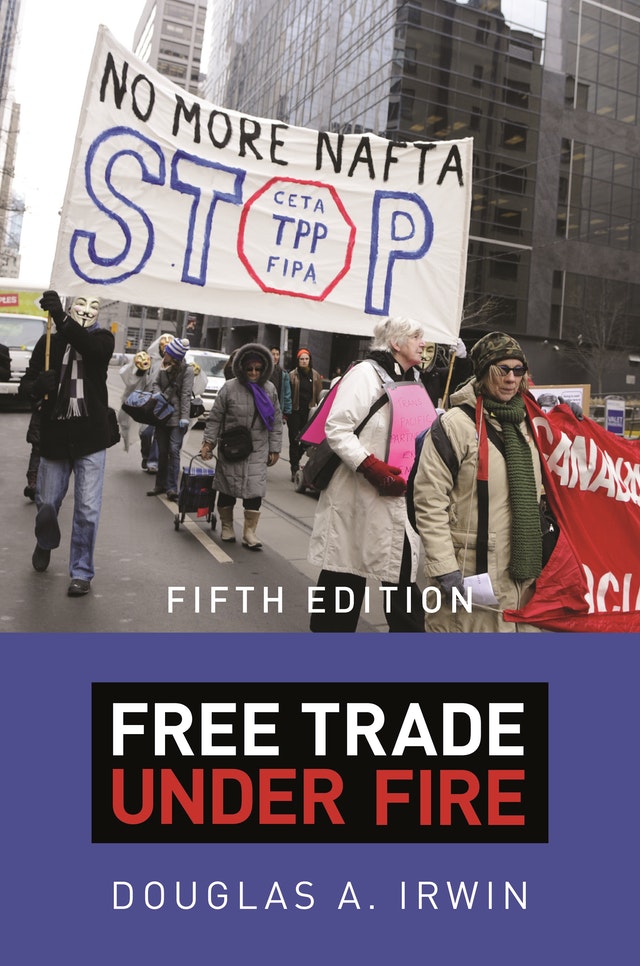
“Free Trade Under Fire” by Douglas A. Irwin is, as the title suggests, a book on the debate and defence of international trade. It covers a wide spectrum of (sometimes sensitive) issues on the subject. From national sovereignty and trade policies, to popular misconceptions about trade, the book tackles each argument with considerable depth and backed by evidence.
Douglas Irwin is John Sloan Dickey Third Century Professor in Social Sciences at Dartmouth College. He speaks regularly on trade policy (particularly U.S trade), and writes for various news outlets including the Wall Street Journal, New York Times, and Financial Times.
It perhaps comes as no surprise that the structure and language of the book is somewhat of a hybrid between the academic and ‘professional’ spheres. In parts it reads like a handbook for postgraduate students, while in others it is more opinionated and empirically driven. Regardless, each chapter is well written and considers the various angles of approaching the subject in question.
Therefore, one aim of the book is to “…introduce the reader to some basic economic principles and empirical evidence regarding international trade and trade policies” (page 8). It also seeks to address some of the misconceptions around trade in the “…modest hope that it may improve our understanding of the trade policy issues that confront us” (page 10).
The first and second chapters look at the position of the United States within international trade and evaluates the arguments for free trade. One of the first interesting points that the author makes is highlighting how the impact of international trade is rather blown out of proportion within US public discourse: over 85% of what is consumed in America is produced in America (page 26). Foreign imports therefore only account for less than 15%. Consumption spending is even higher with around 90% being spent on domestic goods (page 27).
A second interesting point emphasises how misguided our perception of the national economic impact of buying imported goods actually is, “…we sometimes exaggerate how much of the money goes to other countries. When you buy a $100 pair of Nike shoes, only $25 goes to the Asian factory that assembles them” (page 27). The rest of the $75 is spent in the US on design, shipping, insurance, and retail costs (ibid.).
Yet beyond these misconceptions surrounding international trade, the book’s most compelling argument in favour of trade liberalisation (based on Adam Smith’s Wealth of Nations), is the specialisation, division of labour and increased productivity that naturally occur under a free trade regime between nation-states. This results in economic gains for all parties involved.
The author uses individuals as an analogy to illustrate the benefits of trade, “Most people do not produce themselves even a fraction of the goods they consume. Rather, we earn an income by specialising in certain activities and then use our earnings to purchase various goods and services. […] Like individuals, countries benefit immensely from this division of labour and enjoy higher real incomes than they would by foregoing such trade” (page 36). This relatively simple but little-known fact is critical to understanding the benefits of free trade.
Chapters three and four turn the discussion to protectionism and the impact of free trade on jobs and wages. Here the book makes an important point that seeks to explain the paradox between the gains from free trade and the controversiality in the adoption and implementation of free trade policies.
The answer lies in successfully (if that is an adequate word here) managing the short- versus long-term beneficiaries of free trade. Not all industries are impacted the same, “…in the short-run, not everyone stands to benefit from the trade policy. […] Specific groups that benefit from protectionist barriers usually exert political influence beyond their numbers” (page 104). The bottom line is that protectionist measures “… provide large benefits to a small number of people and cause a very great number of consumers a slight loss” (ibid.). Reaping the benefits of free trade often requires time and this is perhaps one of the greatest challenges for set-term elected officials that often prefer policies with a much shorter time horizon.
The final chapters look at the international free-trade system itself and the current governing bodies (e.g. the World Trade Organisation). The book concludes with re-emphasising the importance of free trade and the economic benefit it bought to quite literally, billions of people around the world (page 322).
Yet free trade also remains a contentious issue because of partisan politics. Under President Trump, the US has in many ways inclined to a protectionist approach of trade that is more rooted in populism than theory. The danger is that, as the book points out, a weakened commitment from the US for free trade will lead other countries to follow suit, “…trade policy choices that the US makes have ramifications far beyond America’s shores…” (page 319).
In concluding, “Free Trade Under Fire” by Douglas A. Irwin is a well-written, well-researched, and timely piece of work. It is excellent reading for anyone with a remote interest in free trade. The book arises multiple remaining questions and challenges for the rest of us: How can the truth about free trade be presented in a so-called, “post-truth” society? How can our elected representatives be better equipped to argue in favour of free trade when the alternative is often simpler, clearer, and electorally more attractive? How do we explain to millions that feel left out of the system that they and their families only stand to gain from free trade in the long-run?
It seems therefore that free trade is currently facing a PR problem. It has been ousted in many places by seemingly sharper nationalist rhetoric. We need to be re-educated on the matter and “Free Trade Under Fire” by Douglas A. Irwin is an excellent step in that direction.
“Free Trade Under Fire – Fifth Edition” by Douglas A. Irwin was published in 2020 by Princeton University Press, (ISBN:9780691201009, 0691201005), 352pp.
Andrei E. Rogobete is the Associate Director of the Centre for Enterprise, Markets & Ethics. For more information about Andrei please click here.
Christianity and the New Spirit of Capitalism is, in one sense, inspired by Max Weber’s famous suggestion that Protestant Christian beliefs gave rise to a work ethic that provided the foundation of modern capitalism. Weber believed that the Protestant ethic produced what he called the “Spirit of Capitalism” and Kathryn Tanner agrees that “religious beliefs (Christian beliefs specifically) have the capacity to provide powerful psychological sanctions for economic behavior” (page 4). She also adopts the concept of the “Spirit of Capitalism” but her aim is far removed from that of Weber: she seeks “to show how Christian beliefs … might undermine rather than support the new spirit of capitalism” (page 7).
Tanner’s thesis is that capitalism is now finance-dominated and has cultural commitments that are at odds with Christianity. She thus wants “to provide a Protestant anti-work ethic” (page 30). With this objective in mind, each chapter of her book (other than the first) comprises a description of an aspect of what Tanner considers to be the spirit of “finance-dominated capitalism” followed by a contrasting description of what she considers to be the relevant Christian philosophy. She concludes by expressing the hope that she has “shown the coherence of a whole new world to be entertained as an imaginative counter to the whole world of capitalism as it presently exists” (page 219).
A number of Tanner’s criticisms of the extremes of some forms of capitalism would be widely accepted. For example, she criticises the demand for total commitment to paid work that leaves no time for reflection, the maximising of profit at the expense of everything else, the regarding of people as mere economic property, short termism in management and the devastating social consequences of personal debt among the poor. Furthermore, many Christians and other theists will agree with her starting point in relation to commitment, identity and value: “Commitment to God and the conversion that brings it about interfere with total commitment to anything else, thereby limiting the degree to which I could ever be completely personally invested in a company’s aims” (page 86); “the tasks one undertakes at work cannot be taken to exhaust one’s identity – and should not be pursued in any all-consuming fashion that would suggest as much” (page 98); and “What matters in the end is one’s relation with God, one’s value in God’s eyes and not one’s relative worth measured against others” (page 204). Put simply, capitalism cannot be accepted as an all embracing world view.
That said, however, Tanner’s thesis does not hold together. She states that her accounts of finance-dominated capitalism and its spirit “are offered as ideal types in a Weberian sense of that phrase: that is, they are analytical constructs that accentuate certain aspects of the messy reality of the current economic and cultural scene and show how they might be brought together into relationships with an internal consistency” (page 10). However, what she offers is a muddled caricature.
She fails to distinguish between situations that are fundamentally different: comments that could only relate to investment banks are mixed in with comments that appear to relate to industrial companies without the distinction being acknowledged; she fails to distinguish between the activities and motives of market-makers and other dealers, those of corporate users of the financial markets and those of long-term investors; and comments relating to people fail to identify the exact groups to which they relate, with the result that the problems faced by professionals, other white collar workers, skilled and unskilled workers are jumbled together as though they represented problems common to the mass of humanity exposed to modern capitalism.
Many of Tanner’s statements are absurdly extreme. She makes modern corporations sound like Maoist states, commenting that “Workers themselves are to want nothing more than what corporations ask of them; their own desires are to be brought into complete compliance with finance-dominated corporate interests” (page 64) and “Workers are to be encouraged to want for themselves what the company wants from them” (page 70). It seems that corporations can do nothing right in her eyes: she laments the pushing down of responsibility for decision making, continual assessment, the use of relative rather than absolute measures of performance, the need for workers to perform increasingly complex tasks and even multi-skilling!
Her criticisms of the financial markets are similarly exaggerated. She recognises that derivatives may be a form of insurance and, on occasions, makes comments that suggest that she may have an inkling that the reality is more complex than her thesis suggests. However, she spends many pages asserting, essentially, that the financial markets are divorced from underlying economic reality and that they offer “promises of a defanged future” that “turn out to be spurious” (page 156).
Tanner is also critical of governments suggesting that they too have become finance-dominated and are reneging on “previously accepted obligations to guarantee the welfare of the population, through medical or unemployment benefits, for instance” (page 22). However, the bogeymen in relation to this are clear: she says that “government policy can easily be taken hostage by foreign investors and the increasingly few rich among its own citizens with the ability to make significant purchases of government bonds” (page 23). Absurdly, she asserts that “Only efficiently run governments, which means governments run like finance-dominated corporations so as to cut costs to the bone, are deemed credit-worthy on the open market” (page 48). If this were true then the majority of governments around the world would find it impossible to secure finance!
Many Christians will take issue with Tanner’s theology. Some aspects of this are peripheral to her thesis. However, her theology of work is central to that thesis and is highly contentious. She asserts that “there is surprisingly little reason to think Christianity has a direct interest in developing a work ethic at all” (page 198) and she rejects the idea of secular vocation (i.e. the view that “one can serve God directly in economic pursuits because those are thought to be themselves divine vocations, part of God’s specific plans for one’s life”, page 200). Unfortunately, once again, she caricatures the view that she is criticising and never engages properly with the arguments in its favour. She asserts that “The problem with direct assignment of religious value to economic pursuits is that it provides religious sanction for whatever form of employment society happens to saddle one with, no matter how limiting or degrading” (page 201), which is blatantly untrue of most forms of the Protestant work ethic. She then justifies her “anti-work ethic” on the basis that one’s individual worth comes from God and not from comparison with other people, which is true but beside the point.
She never engages with the statements of Jesus and St. Paul and other biblical writers that appear to ascribe real value to secular work (e.g. “Whatever you do, work at it with all your heart, as working for the Lord, not human masters”, Colossians 3:23, NIV). She also asserts that “God…does not create and save people for the sake of some objective they are tasked with pursuing” (page 206) without engaging properly with parts of the Bible that appear to assert that part of the objective of creation and redemption is productive work. She says that “there was no need for extreme effort in Eden before the disordering of the world as God intended it” (page 207) and appears to believe that she has thereby demonstrated that those who appeal to the Genesis account in support of the Protestant work ethic are wrong. However, the inclusion of the word “extreme” results in her attacking an Aunt Sally. She does not deal with the fact that the Bible indicates that, prior to the Fall, God intended people to work (Genesis 2:16) or the fact that we live in a fallen world.
Even those who accept Tanner’s basic thesis are likely to find the book unsatisfactory since it lacks suggestions as to what Christians should do about the mismatch between the spirit of modern capitalism and that of Christianity. Bizarrely, the only specific practical suggestion in the whole book is that employers should make “no-interest advances on worker’s paychecks in a routine fashion … rather than leaving them with high-interest payday loans as their only option” (page 128), a suggestion that misses the point that such advances would simply bring forward the monthly payday without solving the financial problems of employees that result in the recourse to payday debt.
Tanner may object that her purpose is merely to encourage Christians (and, perhaps, others) to adopt an ethic that it is at odds with what she perceives to be the spirit of modern capitalism. She says that she is suggesting “that the financial approach to the future is part of the present world to be left behind, a world to be repudiated in all the very basic ways it counsels people to relate to themselves and others, in favour of a whole new world to come that will be as different from this world as possible” (page 166). This is fine sounding but it is hard to see how it will help anyone decide how to behave in relation to their everyday work. If one accepts her rejection of the view that secular work can be a calling, one has to determine the role that it should play in one’s life and the relationship between it and other aspects of life. Furthermore, if one wishes to have an influence on companies and governments, then one needs to have some specific policy suggestions to offer.
Those looking for help in relation to these things would be better off reading some of the other books reviewed in the section of this website entitled “The Business World” (see, in particular, those mentioned under “The Purpose of Business”).
“Christianity and the New Spirit of Capitalism” by Kathryn Tanner was published in 2019 by Yale University Press (ISBN 9780300219036). 219pp, plus notes.
Richard Godden is a Lawyer and has been a Partner with Linklaters for over 25 years during which time he has advised on a wide range of transactions and issues in various parts of the world.
Richard’s experience includes his time as Secretary at the UK Takeover Panel and a secondment to Linklaters’ Hong Kong office. He also served as Global Head of Client Sectors, responsible for Linklaters’ industry sector groups, and was a member of the Global Executive Committee.
In the aftermath of the Global Financial Crisis, Mark Carney, the former Governor of the Bank of England, coined the concept of a “social licence” for financial markets and, in the Forward to David Rouch’s book, he commends Rouch for the progress he has made in defining a framework for this social licence.
Rouch’s basic thesis is concisely summarised in a six-page overview at the start of the book. He acknowledges that “Capitalism in one form or another is the only realistic option for meeting a host of human needs” (page xx). However, he also recognises that there has been a breakdown of trust of the kind that Mark Carney has identified and that “the usual toolkit of laws and regulations has been powerless to heal the fracture between the financial sector and surrounding society” (page xx). He suggests that the view that financial markets are really only about money-making is wrong and that recognition of a social licence is “both an observation about the relationship between finance and society and an expression of aspiration about how it could be at its best” (page xxii). Rouch wants to ensure that this recognition becomes universal and argues that paying attention to it “has the potential to help reorientate the individual relationships that comprise the wider relationship between finance and society, by strengthening positive reciprocity” (page xxiii). This, in turn, leads to various policy proposals designed to bring an overarching “social licence” narrative to financial market practice and regulation.
The resulting book is not an easy read. Rouch expresses the hope that traders, directors, lawyers, campaigners, regulators, academics, politicians and policy makers will approach finance differently as a result of what they read in it but even many of them will find it heavy going. Some parts are highly specialist (the 22 page “Written Standards Map” at the end of Chapter 5 being an extreme example of this), the language throughout is complex and a lot of the book is devoted to discussions of psychological, sociological and philosophical issues (e.g. theories of group behaviour and human motivation and concepts of human dignity and justice).
Rouch appears to be conscious of this issue and provides what he describes as a “Fast Track” summary at the start of each chapter, which sets out the key messages of the chapter and its main implications. He also frequently reminds the reader of what has been said earlier in the book and points to the direction of travel of his argument. Unfortunately, however, these devices do not completely solve the problem and they result in both a significant amount of repetition and an over self-conscious stress on the structure of the book.
Those who persevere will, however, find much food for thought and, probably, plenty to applaud in what Rouch says. Most fundamentally, he is surely right in asserting that markets are in fact, and should be, about more than simply making money. The knee jerk reaction of people (including market participants) to the effect that they care about nothing other than money can be proved to be wrong not only by reference to modern behavioural psychology but very simply through questions and answers posed to market participants. Moreover, the suggestion that markets should have a broader purpose is consistent with most major ethical systems, whether religious or secular.
Rouch is also surely right in recognising the power of ideas, or “narratives” as he calls them. If people believe that they are operating in a dog-eats-dog world constrained only by a jumble of complex regulations, they will behave differently and they would if they believed that they were working in an environment having a broad social purpose in which the relevant rules are, however imperfectly, reflections of that purpose. Furthermore, market and corporate culture exerts its own pressure for good or for ill. In part, these things explain why good people do bad things or, conversely, why even bad people may be constrained by the culture in which they find themselves.
In this connection, it is good to see Rouch acknowledge “the idea that legally enforceable regulatory rules that overlap with aspirational standards may diminish the force of the latter” (page 189) as well as the fact that “you cannot ultimately legislate for a sense of urgency. Nor can you force people to have a healthy relationship or to be trustworthy” (page 9). It is also encouraging to see his repeated references to issues of trust, which recognise that market behaviour comes down to the actions of individuals and groups of people and that relationships are key to the achievement of desired outcomes.
That said, there is a serious problem at the heart of the book: Rouch’s definition of “the social licence for financial markets” is vague. Indeed, he himself recognises that “Defining the substance of the social licence is … challenging” (page 133). He frequently says what it is not: It is “not a ‘mere’ metaphor” (page 113), it is not a “social contract” (page 115) and it is not to be identified with the “social licence to operate” that has been perceived in relation to other industries, particularly extractive industries (page 117). Furthermore, it is not to be identified with the legal authorisations which are required in order to be a market participant. It is, on the contrary, something that is granted by society as a whole and it “can be treated as granted to the extent that those in society have given their justified trust to financial operators, trust based on solid reasons for believing that those in financial markets will carry on business in a way that is consistent with the licence” (page xxii). It comprises “a freedom to pursue just ends by just means in financial markets, where justice is a situation in which the human dignity of market participants and those affected by their activities can be experienced most fully” (page xxii, italics in the original).
Almost every element of these statements gives rise to serious issues. For example, since most members of society (including many who are well educated) will have little idea of what the financial markets do let alone how they operate, in what sense can they be said to give “their justified trust … based on solid reasons”? In any event, what society are we talking about? Rouch appears to be having regard to nation states (or, perhaps, some super-national entities like the European Union) but is that realistic in a modern globalised world? Equally seriously, since there is no common understanding of the concept of “just” behaviour in society (see, for example, “What is Economic Justice?” by Andrew Hartropp), how can this form the basis of an adequate definition of the social licence?
Rouch acknowledges some of these difficulties, including the lack of consensus in relation to some key concepts such as the nature of “justice”, (page 135) but he believes that there is sufficient high-level consensus to render the concept of the social licence itself viable. Unfortunately, however, one may legitimately doubt whether this is true and ask whether the vague language of “social licence” has the effect of generating the appearance of agreement among those who use the term, without its reality. For example, as Hartropp demonstrates, an approach to justice that is based upon rights or needs will necessarily arrive at completely different conclusions from an approach that is based on due rewards or deserts and concepts based on justice in production will talk of completely different things from a concept based on justice in distribution (which, incidentally, Rouch appears to adopt).
There also seem to be problems in evaluating the role of laws and regulations in relation to the “social licence”. Rouch regards these laws and regulations as both evidence for such a licence and, to some extent, indicative of the terms and conditions of the licence. However, it is surely arguable that ever increasing regulation is indicative of the withdrawal or, at least, restriction of the terms of the “licence” rather than evidence of its grant. Furthermore, Rouch relies heavily on written materials produced by a variety of sources as the evidence of the terms of the licence and one is left with the impression that he has simply included “soft law” and related matters within his concept without really altering the regulation-based framework which he has previously recognised to be inadequate.
Some other questionable aspects of Rouch’s underlying analysis are less fundamental but nonetheless important in relation to the impact of his proposals. In particular, he places great stress upon the need to promote “other regarding behaviour” in contrast to “self-interest”. This is obviously morally right but, as Adam Smith long ago famously demonstrated, the two categories are not completely discreet. The building of trust may involve “other regarding behaviour” but, as Rouch recognises, it is absolutely necessary in business relationships and even the most self-interested person will need to have regard to this in order to advance their own interests. Similarly, most people have a desire for the approbation of others and this too may involve behaviours that, from one perspective, are other regarding but, from another perspective, are self-interested. In places, Rouch appears to acknowledge this and he clearly does not believe that the pursuit of profit is wrong in itself but, if his goal of widespread recognition of the “social licence” is to be realised, it would be desirable to avoid an undue bifurcation of motivations and instead to ensure that the narrative recognises that self-interested and other regarding behaviour are not in opposition as often as may sometimes be thought.
As one reaches the end of the book, one is left with a nagging feeling that the concept of a “social licence” is too vague and hard to get hold of for it to be capable of comprising the compelling narrative that Rouch rightly believes to be necessary to replace the distorted narrative of unbridled self-interest that is often wheeled out even by those within the financial markets. Might it not be better to focus on a simpler narrative?
Such a narrative might commence by focussing (as the book does) on the clearly evidenced positive role of financial markets within society, thus addressing both self-esteem of those within the markets who desire to be doing something worthwhile and the misplaced hostility of some outside; it might demonstrate how the aspirations of organisations operating in the financial sector and the personal aspirations of those who work for them (including financial aspirations) are advanced rather than held back by “other regarding behaviour”, which (as Rouch also agrees) is thus not code for abandoning the pursuit of profit let alone a demand that financial institutions turn themselves into quasi-charities; and it might stress some simple ethical values that are neither obscure nor disputed among reasonable people.
In doing this, the narrative could build on concepts that are well understood, widely accepted and of proven worth such as the hard monetary value of trust and brand reputation, the role of client/customer focus in developing this, the need for long term business sustainability and the motivational impact on staff of being an organisation that is known for its high standards, including ethical standards.
Such an approach would focus on the culture of financial services organisations rather than metaphysical concepts. It would avoid the obscure language of the “social licence” with the negative over-tones of constraint and implicit threat that may be perceived in it and replace it with a simpler and more positive narrative which invites participants in the financial markets to take pride in what they are doing and recognise that they will best prosper, both financially and otherwise, in an environment that is ultimately beneficial to society as a whole.
“The Social Licence for Financial Markets” by David Rouch was published in 2020 by Palgrave Macmillan (ISBN 978-3-0-30-40219-8) 327pp excluding bibliography.
Richard Godden is a Lawyer and has been a Partner with Linklaters for over 25 years during which time he has advised on a wide range of transactions and issues in various parts of the world.
Richard’s experience includes his time as Secretary at the UK Takeover Panel and a secondment to Linklaters’ Hong Kong office. He also served as Global Head of Client Sectors, responsible for Linklaters’ industry sector groups, and was a member of the Global Executive Committee.
Optimist or pessimist?
We stand on the edge of a technological revolution which is proceeding at an exponential pace and which will impact and alter our work and indeed our way of life in ways we can hardly imagine. The paradox of technological advance and of artificial intelligence is well recognized. Do these developments enhance human well-being and welfare to the benefit of all or is the threat posed to employment so dramatic that the traditional responses of education, reskilling and training will be insufficient to protect us? Some commentators refer to the present period of technological change as ‘the fourth industrial revolution.’ The first represented the move to mechanisation, the second, the introduction of electrical power, the third, digitisation and automation. The change we are now experience is one of exponential speed in processing, the impact of connectivity and access to knowledge that is transformational.
In The Rise of the Robots, Martin Ford essentially argues we are ill-equipped and poorly prepared to face the onslaught heading our way. His two main arguments proceed as follows. First, a change in the types of job which will be affected. The advance of digitisation has alerted society to the possibilities of automating routine processes – hence the advent of robotic methods in production replacing the traditional methods of assembly-line production in, for example, the car industry. This is a familiar story and the usual response is to educate, train and reskill. Ford argues that the problem now is that “the machines are coming for the high-wage, high-skill jobs as well” (page 27). Higher education and knowledge skills which traditionally attracted a premium will no longer protect the worker, so much so, he argues that “the ongoing race between technology and education may well be approaching the endgame” (page 124). Indeed, many professions will find that increasingly capable machines will take on many of the tasks previously seen as exclusive to certain professions such as the law. This is then linked to his second argument, that the ability to replicate and scale machine intelligence will “create winner-take-all scenarios’ with ‘dramatic implications for both the economy and society” (page 82). One example here would be the dominance of a very small number of book distribution platforms effectively eliminating all competition. To return to the example of the law, it is not that the high-street lawyer has digitised conveyancing documents; rather it is the speed and extent of access of processing power that can identify cases and precedents in an instant previously requiring hours in a legal library.
Martin Ford, then, is a pessimist. He understands and appreciates that technological advance has largely driven a more prosperous society. However, on this occasion, he thinks it will be different.
Erik Brynjolfsson and Andrew McAfee are optimists. In The Second Machine Age they do not deny the challenges but establish a framework that argues that “the transformations brought about by digital technology will be profoundly beneficial ones” (page 9), adding that “innovation is also the most important force that makes our society wealthier” (page 72) and “technological progress typically helps even the poorest people around the world” (page 168). They recognise the challenge to employment but remain convinced that “acquiring an excellent education is the best way to not be left behind as technology races ahead” (page 199). Brynjolfsson and McAffee agree with Ford that there are few jobs which will be left untouched by the scaling of digital power. However, they have more confidence in the innovative elements of the human person and human adaptability and flexibility which will enable humanity to seize the opportunities. Importantly, they also point out that despite the rhetoric “digital labour is still far from a complete substitute for human labour. Robots and computers, as powerful and capable as they are, are not about to take all of our jobs” (page 206). They argue that the best way to tackle the labour force challenges is to grow the economy and to encourage entrepreneurship – “entrepreneurship is the best way to create jobs and opportunity” (page 214).
How are we to assess these two approaches?
First, we need to recognise, as the authors of both these books do, that the shift we are experiencing is profound and will have enormous implications for business, industry and society as a whole. We cannot bury our head in the sand.
Secondly, the impact on employment and how we have traditionally responded points up many of the inadequacies of our education systems. If the optimism of Brynjolfsson and McAfee is to be the prevailing argument then life-long education and technical education will need to come back to the fore. What about reducing college degrees to 2-years and allowing the ‘third year’ to be credited to a personal training account to be accessed and used over the course of a person’s working career?
Thirdly, the nature of the human person cannot be overlooked. Humanity is endowed, by God, with ingenuity and creativity which will find expression in innovation and entrepreneurship. These activities are part of the very expression of the human character.
The issues are real and serious. Both of these books, and I recommend reading both together as it were, represent serious thought and insight and present the challenges in a well-researched and thought-provoking manner. For a Christian believer, optimism must win the day because of the nature of God and of the human person. However, the road will be bumpy, and for that optimism to prevail requires a degree of self-awareness, policy changes and collaboration across disciplines which have not been the recent characteristics of our society. However, to allow Brynjolfsson and McAfee the last word, the progress of digital technologies remain “the best economic news on the planet” (page xiii).
The Second Machine Age by Erik Brynjolfsson & Andrew McAfee was published in 2014 by W.W. Norton (ISBN:978-0-393-35064-7), 306pp
The Rise of the Robots by Martin Ford was first published in 2015 by OneWorld (ISBN: 978-1-78074848-1), 334pp
 Dr Richard Turnbull is the Director of the Centre for Enterprise, Markets & Ethics (CEME). For more information about Richard please click here.
The Politics and Ethics of the Just Price is a collection of essays in economic anthropology. The volume, which is academic orientated, consists of an introduction to the theme and then eight case studies in different anthropological settings. The core issue at stake is the idea of what constitutes a just price, the relationship of price to value and hence to justice, the manner in which this then interacts with the market price and how this relates to real life activity in individual settings. Many of the individual stories and scenarios are fascinating and bring out some genuine tensions and complexities. Those anthropological settings ranger from waste pickers in Turkey, fruit growers in southern Spain, corn and bean trading in Nicaragua to small holders in Tuscany.
The first chapter is a scene-setting introduction. Four approaches to the idea of a just price are noted. The first of these is the classic model in which the interaction of supply and demand in a clearing market reflects consumer utility and hence represents a just price. The other approaches are labour value, the idea that commensuration – the comparison of use value and exchange value – is socially mediated in different historical and geographical circumstances (that is, social value) and, finally, a denial of the possibility of a just price or the possibility of reconciling exchange value and use value. The other key definition is that of “moral economy”, a term derived from the Marxist historian, E.P. Thompson. Unsurprisingly, the term is defined as “a critique of the laissez-faire economic model” (page 14), which really fails to give proper weight to the potential richness of the term, not least since the authors acknowledge that Adam Smith’s argument “resembles a notion of the just price” (page 8). More work is required in this area and the book is over-dependent on Thompson.
There are two aspects in particular that are worthy of further reflection in a review. The first is, notwithstanding the complexities and indeed alternative approaches, how many of the detailed anthropological settings which are analysed still give considerable, if not unlimited, weight to the classic determination of the just price. To give just one example from the volume. The actors in the Turkish scrap metal waste recycling industry include the waste-pickers who sell to warehouses and then sell on to recycling companies who in turn sell the recycled materials into the manufacturing process. Consequently, there are numerous opportunities for collusion, state intervention and global market dominance (London Metal Exchange) not to mention other contested areas. Perhaps surprisingly, or perhaps not, when “the state intervenes to alter the price at which waste-pickers and traders sell, either by direct imposition or through legal regulations, waste-pickers and traders perceive this as unfair and defend the average market price as the just price” (page 28). The study even concluded that “contestations over price in the Turkish recycling sector did not generate claims for justice against the abstract market price.” Adam Smith lives on.
The second area of fruitful reflection which is reflected in several of the studies is the relationship of exchange value and use value as mediated through social relationships. Thus, fruit and vegetable growers in southern Spain, small holders in Tuscany and corn traders in Nicaragua all proceed on the economic anthropological assumption that whilst accepting “important aspects of market exchanges, a substantive frame suggests a just price must also consider social and political relations” (page 92). These examples also proceed on emphasising the distinction between exchange value and use value. Hence, the vegetable growers will supply food to their own town at a different price at which surplus is sold into the market (page 95). The Tuscan small-holders hold to an ideal for a household “to own sufficient land to meet the bulk of their subsistence needs with a small surplus for sale” (page 141). Numerous familial and local exchanges would take place none of which were monetarised. In the Nicaraguan context the authors tells us that “peasants consciously oppose use values to exchange values through their moral ideologies” (page 116). Essentially all of these examples operate with two prices in two separate markets – a global, distant and anonymous exchange value based on supply and demand and a localised market based on face-to-face transactions grounded in personal and social relationships.
The strength of the volume is two-fold. First, that the role of a market price as a just price is recognised and accepted in a wide variety of anthropological settings. Secondly, that there are political, but in particular social factors that impact and form and shape prices in the local setting. In a sense this should be no surprise – differential pricing in different markets in accordance with then varying aims and objectives of sellers in alternative markets. There is nothing incompatible here with a market economy, but it is a valuable and helpful reminder as to how various communities respond locally in the context of wider and global markets.
The somewhat disappointing chapter was the essay on the compensation scheme following the Rana Plaza garment factory collapse. Although fascinating and incisive in its own right, and in a truly horrific context, the chapter seemed out of place in a discussion of just pricing.
Each individual chapter is self-contained and relatively concise and quite a fascinating read. Some real insights, extraordinary contexts, complex history and genuine engagement with the relationship of economic and social considerations in markets and pricing.
The weakness of the essays is that much of the language is simply turgid, and unnecessarily so. The academic foundations of the volume are both its strength and weakness; some interesting questions but shrouded in a mystical academic language of a rather obscure discipline. The book is very expensive and you would need a specific interest in the academic subject matter to justify purchase (at the market price one might add!).
The Politics and Ethics of the Just Price, edited by Peter Luetchford and Giovanni Orlando was published 2019 by Emerald Publishing (ISBN: 978-1-78743-574-2) as volume 39 in the series Research in Economic Anthropology. 245pp.
Dr Richard Turnbull is the Director of the Centre for Enterprise, Markets & Ethics (CEME). For more information about Richard please click here.