Plenty of people have probably inadvertently thanked a machine at some point in their lives, perhaps when taking a cup of coffee from the dispenser or before leaving a self-service checkout. Evidently, this is a momentary lapse of thought: offering thanks amounts to recognition of a service rendered, whether gratuitously or as part of an exchange, and where there exists only automation devoid of consciousness and therefore any intention to serve, thanks are out of place.
When this occurs, the individual has simply responded – a result of a childhood education or training – in a perfectly normal fashion to the experience of receiving something. He has merely overlooked, temporarily, the fact that he has received from something rather than someone. We might even say that his mistake demonstrates good manners, albeit in error, and a measure of decent character.
Duties to Machines?
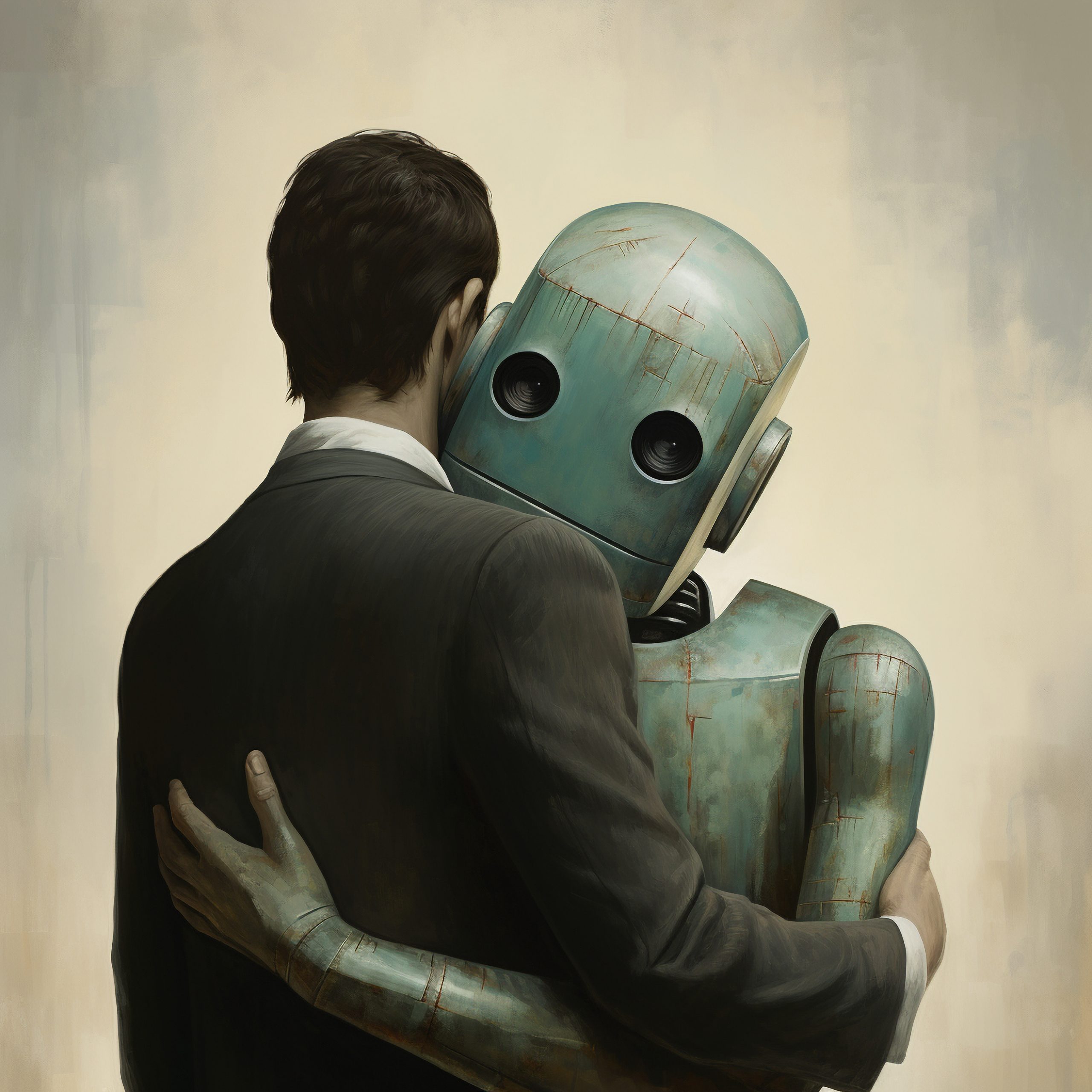
Clearly, no thanks are due to a coffee machine, but we might ask whether we have any moral duties to machines, particularly apparently intelligent ones, such as advanced artificial intelligence. On one level, it would appear not. We can no more be duty bound to treat an unthinking assemblage of silicon and plastic in a particular manner than we can have a moral obligation to our car or mobile phone. Would this remain the case if the technology were more advanced, however?
Imagine a situation in which artificial intelligence is so advanced as to enable humanoid robots to behave more or less exactly as human beings do. They are able to communicate, process information quickly and perform all manner of tasks just as well as human beings, or better – so much so that they begin to displace human beings from their places of work. Some are even programmed to respond to certain types of behaviour just as humans do, such that, while not conscious or possessed of feelings, they might cower and cry out if damaged, as though in pain and afraid. Suppose a worker who has lost her job to one such robot returns to her former place of work and, out of frustration and anger, attacks one of the machines that she believes has cost her her livelihood.
In these circumstances, what has the frustrated ex-employee done wrong? This question admits of different answers. One response would be to say that she has done no wrong to the robot at all. In spite of its apparent cries for help and ‘fear-behaviour’, as a non-conscious, unfeeling machine, without subjectivity, intentions, future-orientation or any conception of its own wellbeing, there is no real sense in which she can have wronged it. She might completely destroy it, but since the notion of ‘wronging’ another appears to depend on the presence of some level of personhood, and ‘harm’ to require at the very least life if not consciousness in the other, we would probably not say that she had ‘harmed’ it in the usual sense of the word – not as we would say that she had harmed or wronged her manager if she had turned upon him after destroying the robot.
Duties to Other People
Nevertheless, our neo-Luddite has clearly done something wrong. In the first instance, she has violated the property rights of the owners of the robot and, we might suggest, failed to accord respect to the work of its creators. In a sense, she is guilty of a similar kind of wrongdoing to that of a protester who enters a car showroom and damages one of the display vehicles. This perhaps provides a clue as to where our moral considerations in relation to artificial intelligence ought to be focused: not on the technology itself, but on other human beings according to their relationships with it. Perhaps there is a sense in which, by according a degree of respect to artificial intelligence, as with any product of human creation, we do right by according respect to those who create, own and make use of it.
Virtue: A Duty to Ourselves
By extension, our moral concerns might also focus on ourselves. That is to say, turning our attention from the act to the agent, we could go beyond the claim that in smashing the robot, the angry former-employee has wronged other people and ask ourselves what sort of person she is. At the very least, we might say that in acting in this fashion, she displays certain vices and in so doing harms her own character. Her actions show insufficient self-control and manifest vices such as irascibility and even spite or envy (as opposed to good-temper or righteous indignation, which, incidentally, does not preclude a measure of anger, properly manifested), along with impatience and foolhardiness (or a lack of fortitude).
Virtue-based approaches to morality, with their focus on the character of the moral agent, contend that in being taught to be good as we grow up and in seeking to practise the virtues, we cultivate our character in such a way that, as we acquire and develop certain excellences, good conduct becomes more natural to us. Where we neglect to do this or have never been taught, we fall into vice and good conduct is rendered difficult. Just as good conduct emanates from and reinforces virtuous dispositions, poor conduct encourages vice and itself flows from a vicious character. Thus, where the agent in our example gives in to rage and attacks a robot, we might identify not only failures of virtue but a corrupting influence on her own character.
The Human Focus
It is perhaps fair to say that we have no duties to machines. We cannot harm or wrong them in the way that we can harm or injure human beings – at least not in the current state of technological development. However, there are relevant moral considerations to reflect upon. Thanking a machine for dispensing a cup of coffee is clearly unnecessary, while vandalising a machine does no wrong to the machine. Each, perhaps, can be considered indicative of certain attitudes and character traits that are morally significant. If we look beyond the machines themselves as the objects of our conduct, it becomes clear that our interaction with and treatment of artificial intelligence is not morally neutral.
We have duties to other people and insofar as our interaction with artificial intelligence is germane to those, our treatment of technology matters. Similarly, our treatment of artificial intelligence is potentially significant for our own moral development. As such, while we owe nothing morally to machines in any direct sense, through our treatment of them we can meet certain moral obligations in relation to others and ourselves. Any duties we have to machines, therefore, might best be considered indirect duties to human beings.