

The (Pro)Vocation of the Business Leader
Fr. Francisco Mota S.J. on why business leadership is a true vocation—and why good goods, good work, and good wealth demand more than advocacy alone.
Continue Reading → Fr. Francisco Mota S.J. on why business leadership is a true vocation—and why good goods, good work, and good wealth demand more than advocacy alone.
Continue Reading →
An interesting example of market transformation can be seen in the growth of worldwide spending on beauty products, which reached $440bn in 2024. There are various trends (or pressures) at work, with men now feeling freer to spend on beauty products and demand growing among young people, who are purchasing (...)
Continue Reading →
In his Nobel Prize lecture, Ronald Coase said: ‘a large part of what we think of as economic activity is designed to accomplish what high transaction costs would otherwise prevent’. Think of the retail sector, for example. Its sole function is to reduce transactions costs – not to produce anything tangible. (...)
Continue Reading →
Anthropomorphising AI is rhetorically seductive but intellectually unsound. We must remember that the analogy between artificial intelligence and human intelligence is a distant one. Otherwise, we risk conflating computer systems with human-like agents and automation with autonomy. The anthropomorphisation of artificial intelligence – i.e. the attribution of human characteristics, intentions, (...)
Continue Reading →
Before the torrent of games available on your phone, a popular game in magazines was ‘spot the difference’. It’s amusing to play and realise that often we don’t immediately spot all the differences even when we stare at both pictures intently. But I wonder if the same issue arises in (...)
Continue Reading →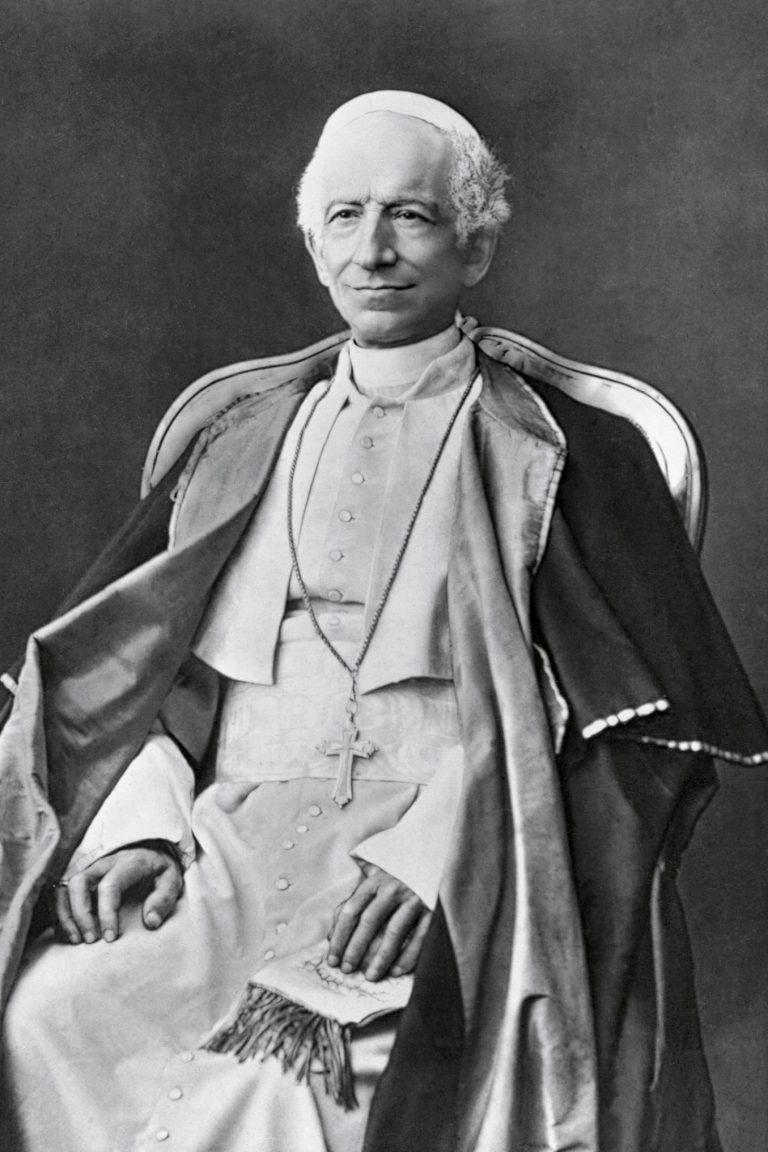
The Protection of Workers, Unions and the Duties of Employers This is a repost of an article originally published on the Catholic Social Teaching blog of St Mary’s University (https://catholicsocialthought.org.uk/). Part I, Part II In this final part of the encyclical, the treatment and protection of the working class is (...)
Continue Reading →
The Church, the Family, the State and the Use of Riches We ended Part One of this guide to Rerum novarum with the encyclical’s reminder to the rich that they would have to answer to God if they were not generous with their riches. The focus of that first part was (...)
Continue Reading →
Back to Budget Basics Providing Christian commentary on the recent budget is not especially easy. There was a measure to remove the two-child cap on Universal Credit payments that was welcomed by many Christians. But the rest of the budget was really a collection of bits and pieces with many (...)
Continue Reading → This is a repost of an article originally published on the Catholic Social Teaching blog of St Mary’s University (https://catholicsocialthought.org.uk/). Historical Context Upon his election, Pope Leo XIV said that he was inspired to take the name ‘Leo’ by Pope Leo XIII’s work on Catholic social teaching. The newly-elected pope (...)
Continue Reading →
Environmental sustainability is a central challenge for humanity. In areas of the United Kingdom water has been rationed in two of the last four years, partly because we have not managed to build a major reservoir for over 30 years. Not only greenfield, but also brownfield land on which housing (...)
Continue Reading →
It has been reported that executives within the motor industry have expressed frustration at the Chancellor’s intention to end the provision of luxury cars through the Motability scheme, which assists those in receipt of disability benefits with funding to lease a new vehicle. Motability itself is a private company and (...)
Continue Reading →