

Skip to content
Richard Turnbull

Richard Turnbull

Revd Dr. Richard Turnbull (1960-2025) was the Founding Director of the Centre for Enterprise, Markets & Ethics (CEME).

Richard Turnbull: We must be stewards of the environment

(This is an adaptation of a speech given at the Institute of Economic Affairs - For more information about the event please click here) Christianity, politics the poor and the planet - what should the Christian attitude and response to these issues be?  I want to reflect on two things; the Christian responsibility for the environment and the role of the market in proving a mechanism for an appropriate response. First, then, an appropriate Christian framework for dealing with environmental issues. It is an area where there is frequent muddled thinking.…


Continue Reading →

We need to talk about work

CEME will be publishing a ‘theology of work’ in late 2015 so it was particularly helpful to listen to Yves de Talhouet, senior Vice-President of Hewlett-Packard on the subject. Work is essential to human flourishing. All sorts of implications flow from that including for government welfare policies. However, work is not necessarily in the state it should be in. Gallup have shown that 16% of workers are actively disengaged from their work which has enormous cost in terms of productivity, community and the collective intelligence within a workplace. Yves described…

Continue Reading →

Profit and sustainability are compatible

The inspiring session of the day came from Daniel Servitje, Chairman and CEO of the Bimbo Group, Mexico. Bimbo is one of the world’s largest baking goods industry firms with a capitalisation of US$12bn and around 129,000 employees. The company was described as ‘rooted in long-standing values,’ shaped by strong corporate governance and a determination that businesses and society must work together for human dignity and the common good. The company, he said, was both highly productive and deeply humane. The aims of the company where shaped by a matrix:…

Continue Reading →

Capitalism must take poverty seriously

I am passing through Rio de Janeiro en route to Belo Horizonte to attend the XXV World Congress of UNIAPAC (The International Christian Union of Business Executives) on the theme of “Business, Government and civil society working together for the common good.” This is my first visit to South America and Rio has presented me with a capitalist conundrum. What a great city. The beach at Copacabana is wonderful (well, it looks marvellous, I have not yet had opportunity to explore!). The setting, the mountains, the water, the statue of…

Continue Reading →

VW makes the case for a moral capitalism

What a mess. Many of you won’t like my title – surely the catastrophic failures and deceits at VW make the case against rather than for capitalism? Not so and here is why. At the root of the problem with VW is dishonesty. Now, of course, that dishonesty might have been driven by sales targets, or a brand identity to be the ‘greenest’ car manufacturer, but the essence of the problem is that somewhere in the mix VW and its management engaged in deception, a deception which is, of course,…

Continue Reading →
Quaker Capitalism

Quaker Capitalism

Richard Turnbull examines the extraordinary business achievements of the Quaker entrepreneurs — Cadbury, Rowntree, Fry — and asks what lessons their integration of faith, enterprise, and social responsibility holds for today.

Continue Reading →

Tax and morality

Is the purpose of taxation payment for common services (defence, health, welfare) or a tool for the redistribution of wealth? That decision, and the balance between them, is a political one. However, there is nothing intrinsically moral about either high or progressive taxation. First, higher rates of taxation may not raise more revenue (the argument would be about the precise positioning on the Laffer Curve). Second, an extra pound raised for the government means a pound less at the disposal of individuals and families or for philanthropic activities. There is no greater morality attached to a government pound than a…

Continue Reading →

The market and morality

The market economy is not perfect. However, we do sometimes forget that it is the market that has delivered significant prosperity to the world and lifted millions of people out of poverty. Improvements in literacy and sanitation have contributed to a significant reduction in the number of people existing on the benchmark measurement of $1 a day. Enterprise, trade, micro-credit and social venture capital are, however, foundational to a global reduction in poverty. This reminds us that there is a moral case to be made for the market. Capitalism is built…

Continue Reading →

Quaker Capitalism and virtuous companies

I am fascinated that in the early years of the industrial revolution some of the great businesses were established by Quakers – not least the first iron foundry established by Abraham Darby. There were many others, Cadbury, Rowntree, Clarks’ Shoes, Barclays and Lloyds. Why was this so? The answer lies in some combination of moral integrity, culture, networks and spiritual commitment or purpose. I am not suggesting we all become Quakers but rather that there are lessons, both commercial and moral, which we could usefully learn. Too often in our debates about enterprise, ethics and society…

Continue Reading →

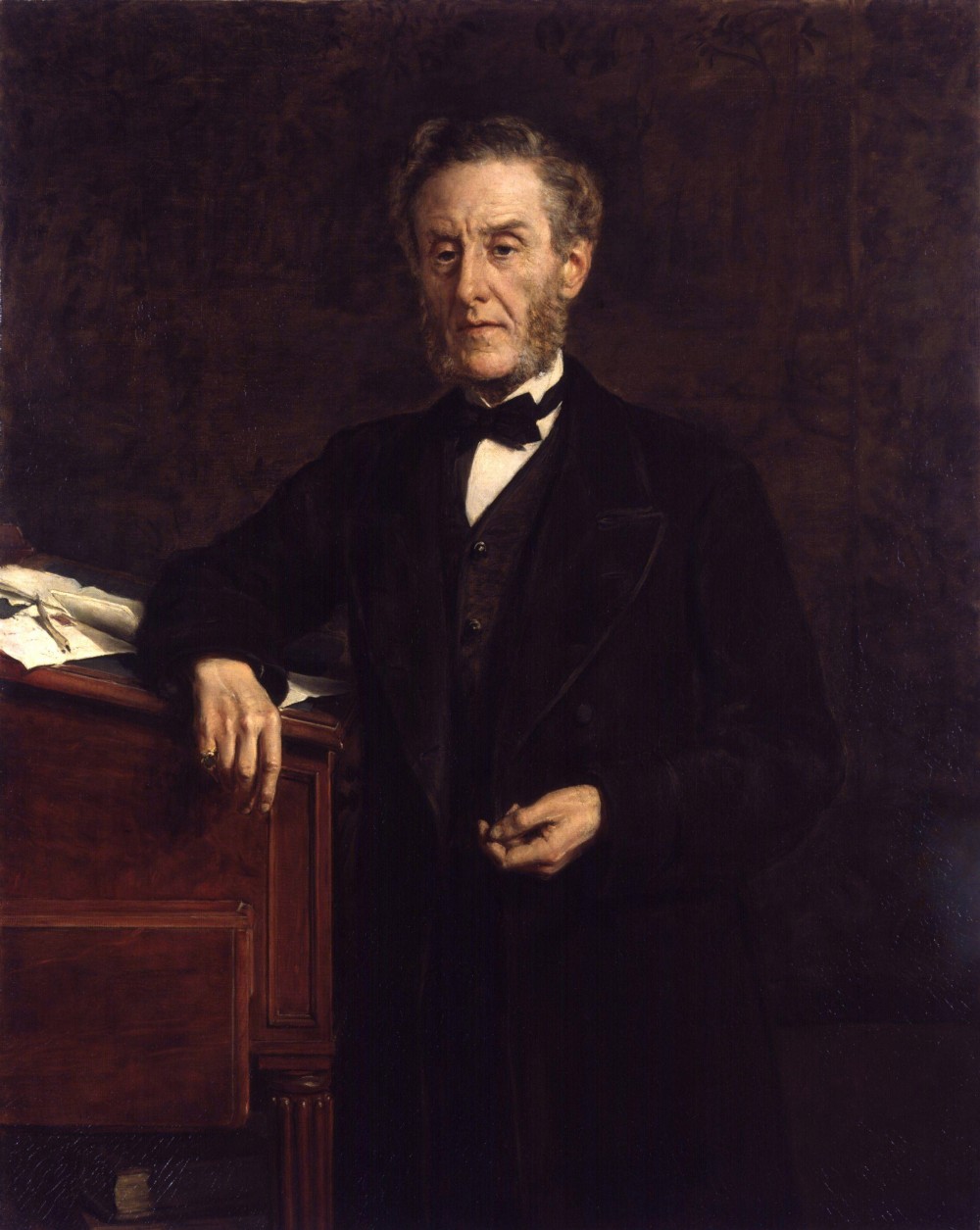
Lord Shaftesbury – Responsibility and the Welfare of Humanity

Dr Richard Turnbull, Director of CEME, presented a paper to invited guests at the CCLA in London on 24 September 2013. A copy of his paper can be found here.

Continue Reading →