

Margaret Thatcher – A Life & Legacy: Mrs Thatcher’s Economic Policy
Brian Griffiths outlines Thatcher’s three-part economic strategy — defeating inflation, reducing the state, and strengthening markets — and its Christian foundations.

Brian Griffiths outlines Thatcher’s three-part economic strategy — defeating inflation, reducing the state, and strengthening markets — and its Christian foundations.
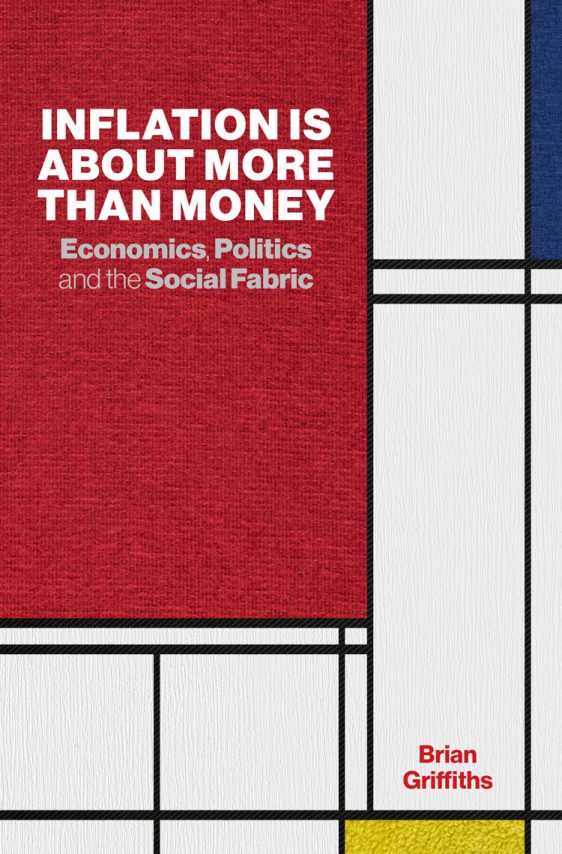
Brian Griffiths advocates pragmatic monetarism as both economic necessity and moral imperative. Drawing on his experience with Thatcher and the Bank of England, he argues that unchecked inflation breeds social distrust, fragments communities, and hits the poorest hardest—making the case for fiscal discipline and sound money as foundations of a stable society.

The meaning of Advent I must first make a confession. I love carol services. I love singing carols. I love the Christmas tree. I love Christmas decorations. I love the festivities of Christmas. They remind me of when I was very young singing carols from house to house in Fforestfach which was then a village. When it was suggested that CRPA (Christian Responsibility in Public Affairs) might hold an annual carol service I was wholly supportive. Christmas is a festive season and in the words of our carols a…

UK inflation is suddenly back with a vengeance. In an interview with the Financial Times, Huw Pill, the chief economist at the Bank of England (and my former colleague at Goldman Sachs) warns that the official rate of inflation may rise above five per cent early next year. This means that the retail price index could rise to seven or eight per cent. For three decades we have lived with stable inflation averaging two per cent. This is the official government target set by the Treasury for the Bank of England. Along…

The success of major advanced countries in dealing with Covid over the last twelve months has been remarkable. Scientists first discovered the vaccines. Then business accelerated their manufacture on an enormous scale. And as the vaccinations have been rolled out, the economic recovery has been dramatic. As new variants appear we are still not out of the woods, but as more people are vaccinated the greater the expectation of a continued and rapid economic recovery and a return to full employment. Last spring the challenge was the need to avoid mass…

Last August, in The Spectre of Inflation, I argued that the remarkable stability of prices in the past 25 years was due to central banks having operational independence and conducting monetary policy with a fixed inflation target of two per cent. While respondents and others put forward a variety of views, all recognised that a surprise increase in inflation would carry a real economic cost, create an arbitrary redistribution of income and be socially disruptive. In other words, inflation which takes off is bad and should be avoided. For the immediate…

This article was first published in The Article on August 5th 2020. The Great Moderation For the past 27 years UK governments of all political persuasions have targeted a rate of inflation of 2 per cent as the principal objective of monetary policy. The Bank of England is charged with the implementation of policy and to ensure its freedom to take tough decisions it was granted operational independence from the Treasury in 1997. The result has been the Great Moderation: low and stable inflation averaging 2.8 per cent annually, falling unemployment (with…
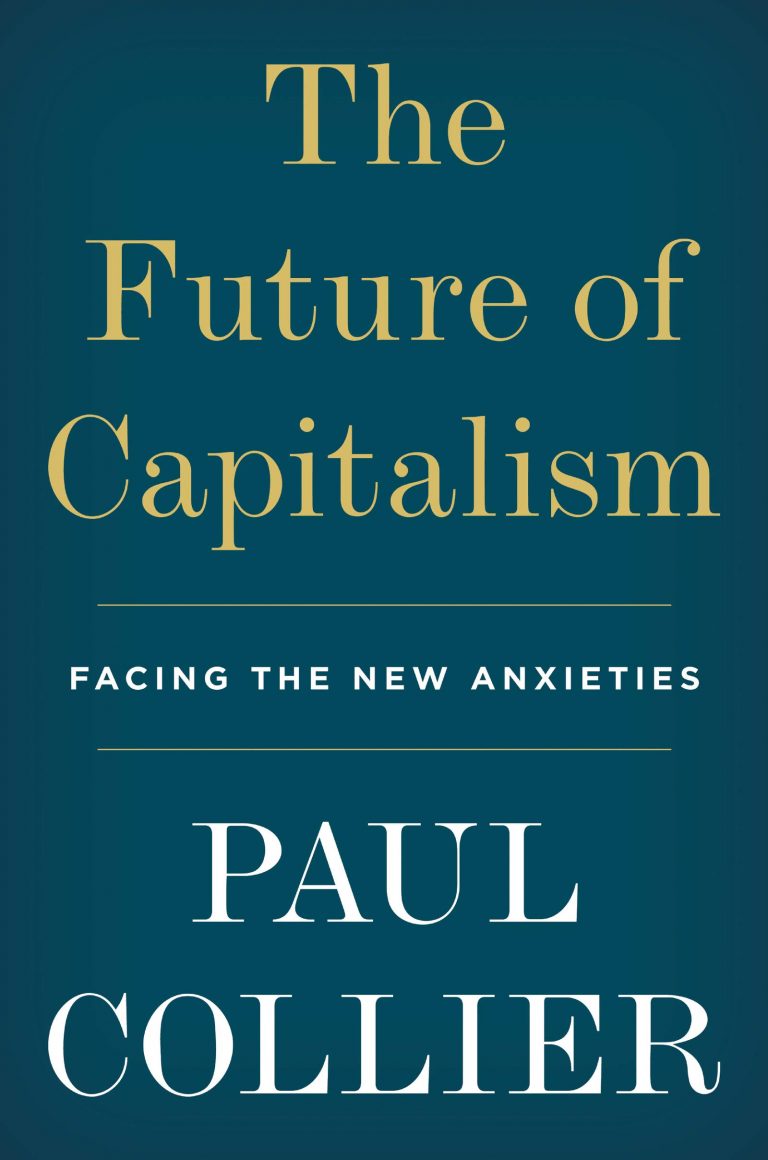
The Future of Capitalism by Paul Collier (published 2018) overtly builds on the philosophical foundations laid by David Hume and Adam Smith and nineteenth century American pragmatists. Collier believes that capitalism is the only economic system that can generate mass prosperity. He seeks to restore ethics with the state, firm, family and world and presents a plethora of idea for restoring an inclusive society.
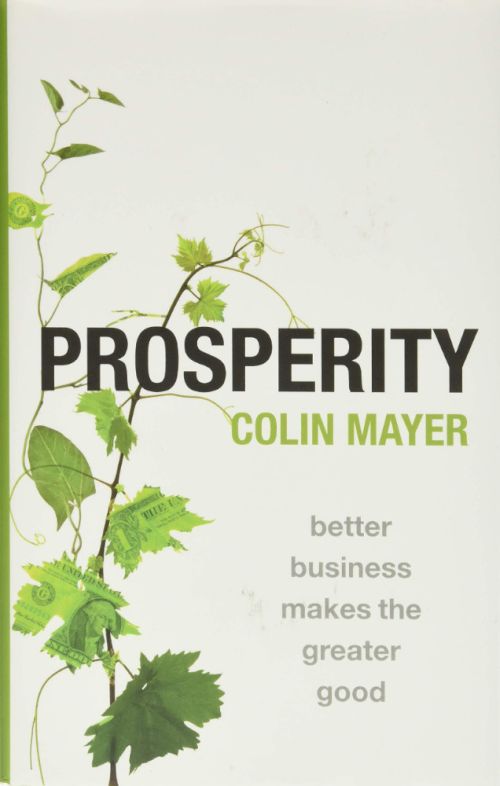
In Prosperity, Colin Mayer presents an ambitious case for redefining the corporation to focus on social purpose, yet his proposals risk undermining the property rights and market discipline essential to long-term economic success.

Things Fall Apart: The Centre Cannot Hold- The Basis of Christian Hope This is a transcript of a talk given at St Michaels Church, Chester Square, 23rd January 2019. Part I: Things Fall Apart The title I have chosen for this talk, “Things fall apart: the centre cannot hold”, is a line from a poem, the Second Coming, by the Irish poet W.B.Yeats which was published in 1919. It was written against the background of troubles in Ireland, the Russian Revolution (1917) and the devastation of the First World War (1914-018)…

This is a transcribed lecture given as the Morlan Pantyfedwen Annual Lecture 2018. I count it a great privilege to be invited to give this lecture not least because of the number of distinguished clergy, theologians and historians who have given it over the past half century. The idea for the subject of the lecture was the seeming incompatibility of being a Christian and for five and a half years the Head of Margaret Thatcher’s Policy Unit at 10 Downing Street, advising the Prime Minister on all domestic policy issues,…