
We were delighted to host a joint event on the 30th November 2023 between the Centre for Enterprise, Markets & Ethics (CEME) and the Las Casas Institute for Social Justice (Blackfriars Hall, University of Oxford), on the theme of “Finance for the Common Good”. Our speakers addressed a range of issues such as the interplay between finance, greed and morality, a history of local banking, the role of Catholic Social Teaching, and the relationship of the corn laws, Brexit and the Common Good.
Edward Hadas is Research Fellow at Blackfriars Hall, Oxford prior to which he spent 45 years in finance and financial journalism. He is the author of Money, Finance, Reality, Morality (2022).
Richard Turnbull is the Director of the Centre for Enterprise, Markets and Ethics, visiting Professor at St Mary’s University, Twickenham and author of numerous articles, papers and books relating to ethics and business in historical perspective.
Jean Pierre Casey is the convenor of the UK Chapter of the Centesimus Annus Foundation, a member of the investment committee of the Holy See and formerly head of investments for both J.P. Morgan and Edmond de Rothschild.
Cheryl Schonhardt-Bailey is Professor in Political Science and Fellow of the British Academy and was head of the department of government at the LSE from 2019-2022. Her research interests are in political economy, legislatures, deliberation and accountability and she is the author of several books.
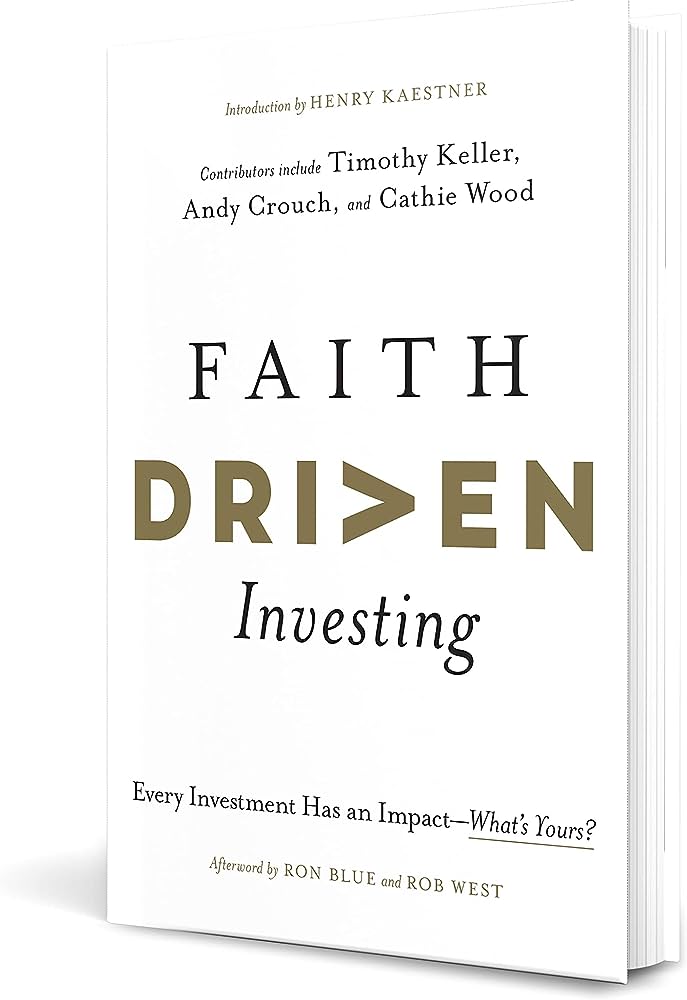
At first glance some readers (myself included), might be mistaken to assume that Faith Driven Investing is another “how to” guide on ethical investing – it is not. In fact, the book has very little to say about investing per say and rather focuses on the “faith driven” investors themselves and the wider role of the Christian faith: What makes a Christian investor? What drives them? How do they influence change? How should a Christian think about risk? How are Christians in the financial sector or in business called to engage with the capital markets and money more generally? (pages 3-4).
These broader questions are tackled in the book by a collection of authors (seventeen to be exact). The contributors are mostly prominent practitioners within the field such as Cathie Wood, Luke Rousch and Richard Okello, as well as those with more of a theological/pastoral background such as Timothy Keller and Andy Crouch.
The structure of the book therefore comprises fourteen chapters representing individual essays that are collated within two larger sections. The first is called “Faith Driven Investors are…” while the second is titled “Therefore, They…”, reflecting the overarching intention of exploring who faith driven investors are and what they are called to do. The main audience of the book is Christian investors and entrepreneurs but those with a wider general interest in business as a force for good will find it worthwhile. The various essays use minimal technical jargon (be that in respect to theology or finance), making the book accessible to the layperson and specialist alike.
Timothy Keller (1950-2023), the late pastor and theologian from New York opens up the discussion in Chapter 1 with an intriguing take on personal identity and what it means to have an identity that is rooted in Christ. Keller writes that “…an identity that flows from who he is and what he has done for us changes everything. It radically transforms the way we work, the way we invest, the way we view money, all of it” (page 14). He then goes on to list four different ways in which this happens. We won’t enumerate all here but the third makes an interesting and important point: God (being omnipotent) could provide for our material needs directly yet he chooses not to do so and instead uses human work as a means of provision (page 15). This raises profound implications for the nature and value of work which, according to Keller, means that: 1. All work carries great dignity, even the most menial; 2. Through work we are “…God’s hands and fingers, sustaining and caring for his world”; 3. One of the main ways of pleasing God is simply to do our work well (page 16). These assertions are consistent with the historic Protestant view of work of which Martin Luther was an early advocate. Those who wish to explore them further could read other books reviewed on our website such as Why Business Matters to God, Business for the Common Good and Tides of Life.
In Chapter 4 Luke Rousch, cofounder of Sovereign Capital brings a fresh challenge to some established normative positions that many Christian investors take. Rousch spent his entire career in large scale business commercialisation and development and argues that for too long faith driven investors have become known for what they are against, rather than what they are for (page 59). He rightly points out that this is a missed opportunity for Christian investors to become better known for what they stand for in the world and not merely for what they stand against. Part of the problem, Rousch argues, is “that it’s easier to avoid things than it is to engage with them. That’s also true in life, not just investing” (page 62). Avoiding “sinful” industries altogether such as tobacco, adult entertainment and so on is perhaps the most obvious example. The risk is that we end up steep in legalism and behaving like the Pharisees did. Sure, negative screening is important when it comes to constructing an investment portfolio but “…we are called to lean in, with truth shared in love, and celebrate the great things God is doing in and through the marketplace. We must seek out, embrace, and pour ourselves into the creation of new things” (page 62). Rousch thus argues for a more proactive approach where we should seek “…a balance between negative screens, positive screens and active engagement” (page 63).
Casey Crawford, CEO and founder of Movement Mortgage concludes the discussion with a reminder to seek God’s larger perspective rather than our own, “…are we working for our return of for God’s return?” (page 198). In the Parable of the Tenants we have the example of the tenant who did nothing with what was given to him, Crawford argues that we must maintain an attitude of expectancy of the coming new Kingdom. This doesn’t necessarily mean “…working harder so we’ll have more success to show God. It’s about seeking our work as an act of service to the Master” (page 199).
In summary, “Faith Driven Investing: Investment Has an Impact–What’s Yours?” is not a “how to” guide on ethical investing and those seeking investment strategies or advice should look elsewhere. It is however a compelling collection of essays that stand at the intersection of finance, theology, and the broader implications of truly living out the Christian faith. A thoroughly recommended read for all those with an interest in the subject.
“Faith Driven Investing – Every Investment Has an Impact–What’s Yours?” by Henry Kaestner, Timothy Keller et al. was published in 2022 by Tyndale House Publishers (ISBN 1496474481, 9781496474483), 240pp.

Andrei E. Rogobete is Associate Director at the Centre for Enterprise, Markets & Ethics. For more information about Andrei please click here.
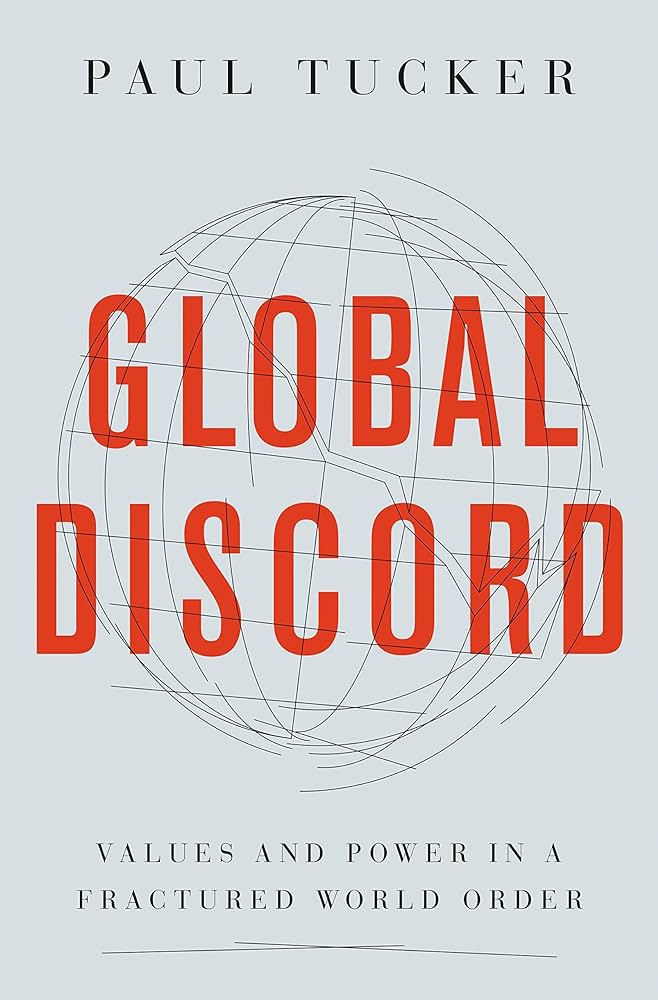
Global Discord does not fit neatly into any of the categories of book that are reviewed on this website. It is not primarily a book about business, capitalism or wealth and poverty. In fact, it is not primarily about economics. However, its focus is on something of crucial importance to all of these things: the global political order. Its author, Paul Tucker, the former Deputy Governor of the Bank of England, suggests that “the deep architecture of the international economy [is] influx for the first time in decades” (page 3) and he sets out to analyse both the causes of this and potential responses to it.
He never expressly identifies his intended audience. The primary audience is doubtless those responsible for formulating the policies of Western nations in relation to international affairs, including, in particular, international finance and trade. The issues that he discusses are, however, of crucial importance to a far wider audience. Unfortunately, the book is dense and heavy going in parts. This will limit its appeal but those who take the trouble to study it carefully will find it rewarding, particularly if they seek to reflect on how his suggested approaches to international engagement might be applied in their corner of the global political, financial or business world.
Tucker identifies three major differences between the kind of globalisation that we are now witnessing and that which existed in the past: first, derivative markets have separated cross-border flows of funds from flows of risk; secondly, after accumulating vast sovereign wealth funds, some states have acquired great influence in global capital allocation and, taken with state-owned enterprises, state-capitalist actors are operating on a scale that has not been seen “since Europe’s merchant companies traded and intervened around the planet half a millennium ago” (page 7); and, thirdly, today’s infrastructure for cross-border financial transactions create vulnerabilities that can be weaponised.
Tucker suggests that there is “a deep cleavage in modern international affairs” (page 78) and his overwhelming concern is China. He argues that the West needs to face up to the fact that, far from China moving in the direction of a liberal economic and political order, it is moving in precisely the opposite direction. Quoting the now well-known “Seven No’s” of the Chinese Central Committee, he points out that, “While Western states took different paths to [wielding power across their territories, the Rule of Law, and accountability], for China the destination is different” (page 220). Thus he argues, surely correctly, that “commentators in the West who insist current tensions are not ideological – and should not be allowed to become so – are deeply mistaken, while nevertheless pressing an important practical question: What to do?” (page 461).
He repeatedly accuses Western policy makers of wishful thinking in their dealings with authoritarian states and China in particular and he has many criticisms of current global institutions pointing to both specific design flaws and more general issues. Some of these criticisms relate to specific institutions: he describes the second Basel Capital Accord as “deeply flawed” (page 98) and suggests that the WTO is based on unrealistic universalistic rather than pluralistic concepts. Other criticisms are more general: he points to the hazards of delegation to international organisations, particularly in a world in which international treaties are what economists call “incomplete contracts”, and the dangers of what he refers to as “judicialization”.
His concern in relation to the latter is that international courts and tribunals are ruling on matters that ought to be left to political negotiation and are applying interpretations of treaties and even “natural law” concepts in a way that results in states being bound by things to which they do not believe they ever agreed. Some might argue that this is simply the concept of the Rule of Law applied in an international context but, as is the case in relation to some domestic systems (e.g. the role of the Supreme Court in the USA), it gives rise to a situation that is dangerously close to the Rule of Judges. In short, it is an example of judicial overreach and it has potentially serious political consequences for the perceived legitimacy of the world order, particularly when set against the context of the ideological divide to which Tucker draws attention.
Much of what Tucker says is thus critical of the existing order and those who have contributed to its creation. However, Global Discord is not a negative, destructive book. Tucker’s main aim is to assist in the building of a new global order that is based on coherence defensible principles whilst being capable of surviving in the real world. To this end he devotes a lot of space to analysing the theory of international relations and he suggests that we need to contemplate four broad scenarios for the next quarter to half century: “Lingering Status Quo (continuing US international leadership); Superpower Struggle (the scenario most resembling the long eighteenth century’s French-British contest); New Cold War (autarkic rival blocks); and Reshaped World Order (more Vienna 1815 than Washington 1990)” (page 115).
Against this background, he moves to more specific, concrete issues. The final part of the book includes chapters on the international economic system, the IMF and the international monetary order, the WTO and the system for international trade, preferential trade pacts and bilateral investment treaties and Basel and the international financial system, and the book concludes with an eight page appendix setting out, in numbered pithy points, Tucker’s suggested principles for constitutional democracies participating and delegating in an international system. No-one can accuse Tucker of merely dealing in abstract theory!
Tucker describes his approach as “realist” in the sense that it is “not a morality-first account deriving duties, rights, and legitimation principles from fundamental, externally given, universal principles, with some kind of morality system providing ultimate foundations” (page 268). However, he suggests that his approach does not “consign moral values to the side lines” since it requires “sociability with path-dependent, problem-solving norms, which leaves something to be said about the sources or mechanisms of normativity” (page 268).
Many will criticise this approach. Some will do so on the basis that it is insufficiently “realist”. Many others, especially Christians and others with strong moral compasses, will worry that morality plays an insufficient part in it and Tucker concedes that, in his view, the West has to adopt a “live and let live” policy and accept that engagement with illiberal regimes is necessary despite a possible desire to promote a universal morality-based international order.
Tucker is not a moral philosopher and he does not engage in detail with the moral issues. However, one does not have to accept moral relativism to conclude that there is a good moral case for his overall approach. A purist approach is highly unlikely to have the outcomes desired by its protagonists and could well result in outcomes that cause much suffering, whether by resulting in war or, more likely, by preventing co-operation over issues such as pandemics, mass-migration and climate change and by stifling international co-operation and trade, with the result that prosperity declines and poverty increases. Furthermore, Tucker bases his thesis on some fundamental tenets that are, at heart, moral: the desirability of peaceful co-existence; the idea that “order is not to be sniffed at: war and instability are quite a lot worse, as is fear of them” (page 323); the need to “stake out the ground that constitutional democracies should insist on to avoid sacrificing our deep domestic norms: to remain who we are” (page 356) whilst accepting that illiberal states will remain who they are; and the idea that perfection cannot be demanded, legitimacy is not binary and “Authority can be legitimate if it is the best realistically available” (page 287). Whilst this may not go far enough for some moral purists, there is, at least a strong argument to the effect that Tucker’s overall approach is likely to produce the best realistic outcome for the world political and economic order and is thus fundamentally ethically defensible.
The purists will also have difficulties with some of Tucker’s more specific statements. In particular, his suggestion that “We need to make judgements about the past only insofar as they materially affect the present (through institutions, norms, values, embedded habits, and so on)” (page 316) will not resonate well with those who are urging ever more delving into past wrongdoings. However, the purists have never explained how their approach leads to a world in which people are able to live together harmoniously and productively. Indeed, the proponents of the recent trend in legislation in the UK towards there being no time bar in relation to the raking up of the past should reflect on whether their proposals are as ethically pure as they like to believe. For example, Tucker suggests that “it is simply no good looking back to the Gulag” or various other dreadful episodes of the twentieth century (page 316) but this is precisely what the UK Prevention of Crime Act 2002 requires: it, unrealistically, regards an enterprise that has once been tainted by crime (e.g. those that benefitted from contracts with slave labour in the Gulags or those that assisted the Nazi regime) as forever tainted.
In developing his arguments, Tucker analyses in some detail different philosophical approaches to international affairs and different concepts and models of international co-operation (e.g. the nature of international law). He largely dismisses Thomas Hobbes’s extreme “realism” and criticises John Rawles’s demand for what he regards as an unrealistically “thick” and binary (“in or out”) international order, while acknowledging his debt to David Hume and Bernard Williams.
This analysis of the philosophical underpinning of Tucker’s concepts will enhance the attractiveness of Global Discord for some more academically minded readers. However, it is the primary reason why the book is dense and, in parts, heavy going. Tucker would doubtless argue that the analysis is essential to the development of his case and this is doubtless true. However, on occasions, the reader is left with the feeling that the analysis is a bit laboured and that the language could be simpler. This is a pity because it mars an otherwise excellent and important book that deserves to be widely read.
“Global Discord: values and power in a fractured world order” by Paul Tucker was published in 2022 by Princeton University Press (ISBN-13:9780691229317). 483pp.
 Richard Godden is a Lawyer and has been a Partner with Linklaters for over 30 years during which time he has advised on a wide range of transactions and issues in various parts of the world.
Richard’s experience includes his time as Secretary at the UK Takeover Panel and he is currently a member of the Panel. He also served as Global Head of Client Sectors, responsible for Linklaters’ industry sector groups, and was a member of the firm’s Executive Committee.

A recent report by McKinsey & Co. addresses the impact of generative AI on the future of business. It makes several startling predictions:
What are some of the moral and ethical considerations of these potential changes?
The first issue is fairness and transparency. How should we integrate generative AI solutions in a manner that is conductive to promoting healthy competition whilst safeguarding favourable outcomes for both internal and external stakeholders (i.e. employees and consumers)? The symbiotic nature of the relationship that generative AI entails also raises questions of authenticity: at what point does work created (or completed) with the assistance of AI tools become plagiarism? Within academia for instance the use of AI is considered plagiarism – though not in the traditional sense. AI-generated content is not ‘stolen’ from someone else, but it does represent work that an individual has not written or created themselves.
A second problem is the issue of privacy and data gathering. This also carries deep implications for the evaluation and monitoring of employee performance. Will the early adopters of AI tools (in areas such as decision-making or processes optimisation) gain an unethical competitive advantage? Companies need to think very carefully about striking the right balance between productivity increases, employee training and the use of private data. Indeed, determining what exactly constitutes private data is another problem in and of itself. Businesses need to develop an ethical, values-based approach to the handling of sensitive data that will invariably be generated by AI tools in the future. An approach like this takes heed of human dignity and individual freedom.
A third and final issue addresses a more subtle, yet equally profound question: will the synergy with conversational AI strengthen or diminish our humanity? Particularly when applying this thought within a business setting, we must think about ways in which new dimensions of work will impact interpersonal relationships. The involuntary and subconscious anthropomorphisation (“having human characteristics”) of many AI tools will undoubtedly carry some bearing on the changing cultural environment of a firm. Employee development in the long-run will be intrinsically linked to the use and reliance upon AI – particularly within data intensive fields.
A set of moral values should therefore be embedded within the AI programmes themselves. Philosopher Nick Bostrom argues that we need to make sure AI systems learn “what we value” and are “fundamentally on our side” (BBC News). It is also perhaps also not a bad idea to start distinguishing what is being created by AI and what is not. This applies to text, images, voice-overs and even video. Watermarking AI generated content is something that is currently being explored by OpenAI within ChatGPT – the success of which remains to be seen.
We are faced with distinct areas of enquiry that provide much food for thought yet remain largely unexplored – much work needs to be done by AI practitioners and those in the social sciences to address them. One of the most immediate challenges facing policymakers today is establishing a regulatory framework that is designed with a more dualistic goal of protecting users whilst also promoting innovation. More on this to come.
Andrei E. Rogobete is Associate Director at the Centre for Enterprise, Markets & Ethics. For more information about Andrei please click here.
Image used under CC Licence.

Michael Gove, the Secretary of State for Levelling Up, Housing and Communities, gave a speech on 24 July where he outlined a variety of policies that the government is pursuing to address the fact that too few homes are being built in the places that most need them. This problem impacts housing costs most directly, of course, but is also clearly related to more general problems in the UK. Supply restrictions are most binding in the most economically successful places. Unsurprisingly then, London receives the most attention in UK policy spheres, but right behind it are Oxford and Cambridge. The aspect of Gove’s speech that has (deservedly) received the most attention is his “Cambridge Quarter.”
It is clear that the highest productivity areas of the country offer the most economically important areas for reforms. It is also somewhat clear that these benefits are not geographically zero-sum (i.e. the marginal resident of Cambridge creates more value because they are in Cambridge) and can also benefit other regions through the tax system. But what I want to do in this blog post is suggest that by the very nature of how concentrated it is the “Cambridge Quarter” may also offer a successful strategy for delivering reforms going forward for both this government and the potential Labour government.
First, let me explain the basics of the idea to look to the past (something that may sound simply nostalgic). In his speech, the minister suggests that the urban extension will consist of 250,000 houses and be informed by architectural and urban history. The UK has a great history of urban expansion and densification. In the nineteenth century, the population of the industrial powerhouses in the Midlands and North grew dramatically. London was no small town in 1800 (it numbered 1 million); after a century of decades where the population grew around 20 percent per year, it grew to 6.5 million by 1900. In my own research on the great estates of London, I have looked at how the burgeoning middle class was accommodated in terraced houses and later in mansion blocks and midrise buildings with purpose-built flats.
In these parts of London as in other planned developments for the middle class in parts of Bath and New Town Edinburgh, simply looking at the relatively population density achieved by the builders gives a poor impression of the feel. Mid-rise terraces and later mansion blocks closely grouped together and punctuated by green spaces like squares and crescents do not feel like Kowloon Walled City. Rather, they are the green and welcoming urban environments that many tourists from across the world flock to explore and even aspire to live in. Beyond the UK, Gove mentions the planned parts of Paris and Barcelona in his speech, but even the more unimaginative urban extensions from cities across the world, from Chicago to Amsterdam to Melbourne, achieve dense and agreeable results (especially when renovated by residents with modern incomes and technology!).
Why didn’t this happen in Cambridge? Cambridge is an example of a place that would have expanded dramatically had the rules surrounding development been different in the last few decades. Research clusters in the sciences and related industries, in particular, have grown dramatically, but they are constrained by the inability to build both lab space and homes for researchers imposed by the political situation through the planning system. This limits the growth of the industry obviously, but it also drives the housing costs for all near these clusters ever higher as those with the best jobs compete for the scarce homes. It is not just the prospective workers who suffer, but also the children of local residents who seek to remain in the area.
For a number of reasons, in the last hundred years, the type of development and densification that Gove proposes has been much less likely to occur. Supply restrictions mean that fewer houses are built in general, and those that are built are often by large builders on the edge of a town (with the exception of a few high-profile urban regeneration projects like King’s Cross). Two of the most important factors were the growth of cars and the rise of the planning system. As a result of these factors and the (often warranted) backlash to the grand projects of the 1960s and 1970s, we have ended up in a situation full of often well-intentioned but ultimately harmful barriers to growth. Despite intense desire to reform the system (including by planners themselves) there have been many political failures.
Many reforms fail to seriously address the concerns of those most affected and furthermore there is clear evidence that the mechanisms by which development is stopped are imprecise. The result is that developments delivering net value are stopped. That is, even if you considered the added congestion or other concerns of existing residents, they would (or could) be more than offset by the value created. At the most basic level, think about the marginal addition of an additional story to a block of flats or the replacement of a small house by a midrise building. The increase in value in both scenarios in places like Cambridge or London far exceeds the cost of construction. This offers value that can be used to compensate affected parties.(See: Sharing the Benefits)
It is politically understandable and even defensible for the system to introduce protections from development that impose more costs on existing residents than they generate in value, but the status quo goes beyond that. And because of the difficulty of bargaining, it is difficult for developers to use potential profits to overcome resistance to an individual project or to reform the rules of the game.
To the latter point: the danger in these efforts announced by Gove—like past efforts to improve the situation—is that they can create political backlash. A good example of this is the effort from the conservative prime minister before last, which failed spectacularly in the by-elections in Chesham and Amersham in the leafy commuter belt.
Some positive signs of the political success of the effort can be seen in Theresa Villiers’s praise. Villiers, who represents Barnet, situated at the end of the Northern Line in outer London– famously spoke out about the stillborn algorithm proposed by the Johnson government. The political process and specifics of the Cambridge Plan will ultimately determine whether it succeeds. If so, the government may have managed to stumble upon a workable model: concentrating development in the areas that are most ripe for it and using the value generated by the development to pay for improvements that offset the reasonable concerns of the existing residents.
 John Kroencke is a Senior Research Fellow at the Centre for Enterprise, Markets and Ethics. For more information about John please click here.
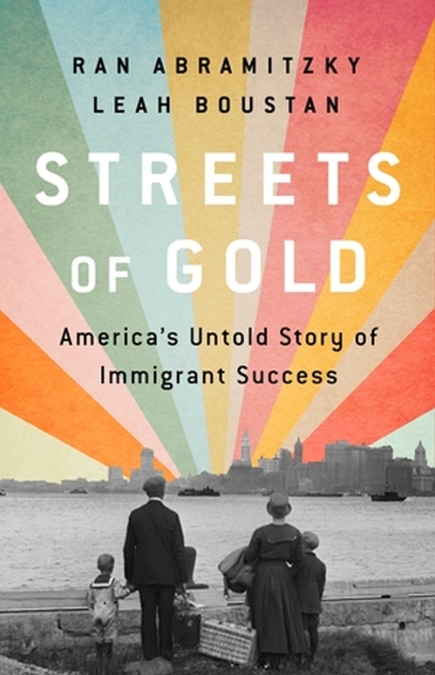
Ran Abramitzky and Leah Boustan provide a compelling, data-driven account of the multigenerational progress of immigrants to the United States in Streets of Gold: America’s Untold Story of Immigrant Success. This book is the result of years of research using ancestry.com data to provide clear evidence on a topic that is often spoken about with references to myths or ideological beliefs. This highly engaging and accessible book offers a blend of this pioneering original research (which yielded the two economic historians multiple articles published in leading economics journals) and the broader social science literature.
Throughout the book, the authors use their assembled data to check whether various widely held beliefs about immigration hold up. They look not just at economic success in the form of the incomes of immigrants and their descendants but also at social assimilation. Along the way, they introduce real immigrants as representative examples of their broader findings.
After an introductory chapter, a methodological chapter, and a brief history of immigration to the United States, the core findings of the researchers are presented in four middle chapters. In turn, they examine a) the economic outcomes for immigrants themselves, b) the economic outcomes for their children, c) cultural assimilation, and d) potential harms to native-born Americans. The final chapter looks at attitudes towards immigrants and uses the findings presented in the book to craft a new evidence-based, pro-immigrant narrative.
The findings of the book suggest that the success of immigrants is clear in the medium to long term. They argue that the rates of assimilation (established by analysing data from name choices, intermarriage, and language abilities) and economic mobility of the descendants of immigrants in the distant past are romanticised and that contemporary immigrants are often judged against these myths.
The scale of the data, new techniques, and the power of contemporary computing allow quantitative insights that were simply impossible before. The authors can follow immigrants across generations to see the path of not just immigrants but their descendants. They can compare the paths of families descended from immigrants from different countries and with different skill levels. The scale and specificity of the data collected and analysed allows nuance and specificity in a topic that often draws out more passion than intellect.
In addition to presenting the authors’ own findings, the book carries out a review of some of the existing economics literature across the relevant chapters. Taken together, the literature provides empirical tests to test theoretical predictions and economic theory to explain empirical findings. For the most part, it finds that many concerns about immigration are overblown (perhaps most notably the purported negative effect on native wages).
The second chapter helpfully summarises the history of immigration to the United States, explaining why immigrants from Europe (and increasingly Southern and Eastern Europe) came to the United States during the Age of Mass Migration, why fewer immigrants came during the early twentieth century, and why immigrants to the United States since the 1960s have mostly come from Asia and Latin America.
The authors manage to draw general conclusions while emphasising that immigrants are unsurprisingly heterogeneous. Some immigrants arrive in the United States with high skills (and determination), which allows them to outearn native-born Americans. On the other hand, those who arrive without skills valued in the marketplace are less able to earn close to the average American—though often far more than in their native country. While their incomes catch up as they gain skills (most notably language skills), they often fail to catch up over their lifetime.
In aggregate, the gap between immigrant earnings and native earnings nearly halves: “shrinking from 30 percent upon arrival to 16 percent twenty years later” (page 75). Furthermore, through pioneering data analysis, the book shows that the children and grandchildren of even the least well-off immigrants continue to converge with the rest of the population. In fact, “the children of first-generation immigrants growing up close to the bottom of the income distribution (at the 25th percentile) are more likely to reach the middle of the income distribution than are children of similarly poor US-born parents” (page 85).
The authors do not shy away from showing variation in the performance of the children of poor immigrants by country of origin or the lingering divergence across generations (though nearly all outperform children of similarly poor natives even if you restrict the comparison to white natives). On pages 94–95, the authors show that while most of the circa 1980 cohort of the children of immigrants who earned at the bottom of the income distribution earned more than similar natives, some do marginally better (e.g., France or Honduras) and some do dramatically better (e.g., India or China).
Basic facts about immigrants, both past and present, escape even high-ranking officials. For instance, two countries that stand out in the data both start with the same letter “N.” Immigrants from one country are “the most educated population in the United States, with 81 percent holding at least a college degree” (page 59), while immigrants from another, “…were among the lowest-paid immigrant groups in the early twentieth century, earning $4,000 less annually than US-born workers (in today’s dollars) and failing to make up much of this earnings gap even after thirty years in the country” (page 73). The first is Nigeria, and the second is Norway—the authors note that this is the opposite of President Trump’s infamous 2018 assessment of the two countries.
The authors argue that contemporary cultural compatibility assessments must prove they are different than past assessments of Catholics and other migrants (most notably East Asians), who have now clearly integrated into the mainstream of American culture.
One important reason why immigrants and their children succeed is that immigrants move to areas within the United States with greater opportunity. Unlike Americans, who are embedded (or stuck) in local communities that may offer fewer opportunities, immigrants can and often do choose to live in cities with strong labour markets that offer the best chance of success. In fact, while “children of immigrants outearn other children in a broad national comparison, “this can be explained in part by geographical opportunity as “they do not earn more than other children who grew up in the same area” (page 99). The separate question of what factors prevent economic mobility among natives is important, and government policy restricting housing supply clearly does not help.
In short, the authors deftly deal with the evidence and have written a book that is compelling and detailed but not too long. Some more academic readers may tire of the illustrative examples they use or the throat-clearing about anti-immigrant politicians (the former at least makes the book more compelling). The book ends on a more prescriptive note, which may be of less interest. However, the data presented makes a compelling case against standard worries about immigration. Interestingly, popular support for immigration is rising. Despite the huge number of immigrants already in the US and the degree to which it has become a political touchstone, immigration polls much better than it has in the past, with the percentage of Americans thinking that immigration is a “good thing” increasing from 52 percent in 2002 to 75 percent in 2021 (page 190).
Streets of Gold is an interesting and compelling work based on sound academic research. It will be of interest not just to historians, economists, and other social scientists but to a broad range of people. It should be read by anyone who wishes to make informed statements about this often contentious topic.
“Streets of Gold: America’s Untold Story of Immigrant Success“ by Ran Abramitzky and Leah Boustan was published in 2022 by Public Affairs (ISBN: 978-154179783). 256pp.
John Kroencke is a Senior Research Fellow at the Centre for Enterprise, Markets and Ethics. For more information about John please click here.

It is available in a web-friendly format (with clickable endnotes) separated by section:
(It has also been split into a Substack series)
A hardcopy of the publication can be ordered by contacting the CEME office (office@theceme.org)
A launch event was held in July 2023.

CEME was delighted to host an event on the theme of The Great London Estates – Lessons for Housing. The event took place on 18th July 2023 at CCLA Investment Management Limited, One Angel Lane, London, EC4R 3AB.
The meeting was chaired by Nicholas Boys Smith, founding Director of Create Streets which aims to help the housing crisis through researching the links between urban form, well-being, sustainability and prosperity.
The speakers were:
Dr John Kroencke, Senior Research Fellow, Centre for Enterprise, Markets and Ethics, and author of Private Planning and the Great Estates – Lessons from London.
Rt Revd Guli Francis-Dehqani, the Bishop of Chelmsford and the Church of England’s Bishop for Housing.
Dr. Samuel Hughes, Head of Housing, Centre for Policy Studies.

Numerous modern authors draw on biblical texts as support for economic rules in modern societies. Notably, contemporary writers often draw contradictory conclusions about the message and intent of the texts in their ancient settings, as well as about the rules that they derive for modern life. In this article, I show the methodological failures of a few exemplar authors: ignoring evidence, misunderstanding the ancient context, misreading narrative as ethical instruction, and errors in connecting the ancient texts and modern societies. We have much to learn about how we approach these matters.
In this article, I will outline three types of problems that often afflict attempts to synthesis contemporary economic ethics from the Hebrew Bible: interpretive diversity, antiquity, and lack of economic expertise.
Perhaps the most significant challenge to synthesising an ethical approach from the Hebrew Bible is that the same texts are taken to mean quite different things by different interpreters. The ethical positions which interpreters bring to the scriptural texts have a significant impact on how they read the texts. As Lester L. Grabbe astutely points out:
Unfortunately, for some biblical scholars, the entire issue of the ancient economy seems to be reduced to the “exploitation of the poor” … a proper economic discussion has to go beyond indignation over the oppression of the poor and seek to understand and describe. (A History of the Jews and Judaism in the Second Temple Period: The Coming of the Greeks: The Early Hellenistic Period (335–175 BCE), 208)
Grabbe’s excellent advice has been largely unheeded, leading to some wonderful examples of well-meaning attempts to draw on ancient texts for modern purposes. For example, the Jubilee 2000 debt campaign sought to persuade rich countries to forgive debt owed by poor countries, an effort helpfully assessed by Michael Long (Theological reflection on international debt: a critique of the Jubilee 2000 debt cancellation campaign). Long’s work shows that biblical language still has the power to persuade western societies to change, although he also points to both theological and economic weaknesses in the specifics of the campaign.
Some interpreters, such as Paul Mills, argue that all interest-bearing debt must be abandoned, and that relational connections between people are the essential basis for economic activity. This depends on a naïve understanding of texts which use family terminology (e.g. the word often glossed in English as ‘brother’) to suggest that the ideal setting for economic activity is in families, or at least within groups who have close relationships with each other. Many other interpreters would identify these terms as promoting the idea that you should treat people to whom you have no family relationship as if they were your kin — in other words, that these texts imagine ideal economic activity occurring between people who share no relational connection, but who behave with the highest ethical standards towards each other. The two interpretations are quite simply at odds with each other.
Other interpreters see complex issues as simple. For example, Timothy Gorringe states that:
The redemption of money will involve—as Deuteronomy, the medieval theologians, and Luther all insisted—the abolition of usury… [Charging interest] harms life. (Capital and the Kingdom: Theological Ethics and Economic Order, 167)
It is not as obvious to other interpreters that charging interest harms life, and in fact others are of the opinion that charging interest can be used to support and benefit life. For example, Richard Higginson argues that ‘…the charging of interest can represent a fair commercial arrangement from which both lender and borrower benefit.’ (Faith, Hope and the Global Economy, 109)
The book of Deuteronomy has proved particular open to differing interpretations, which is unfortunate because one of the few things interpreters agree on is that Deuteronomy is systemically important for the task of theological ethics for economics. So, on the one hand, Andrew Bradstock argues that Deuteronomy supports a broadly socialist system (Profits Without Honour? Economics, Theology and the Current Global Recession), while on the other hand, Andrew Schein argues that Deuteronomy supports a broadly capitalist system (The Vision of Deuteronomy 15 with Regard to Poverty, Socialism, and Capitalism). I will return to this in future articles, but for the moment I will foreshadow my argument by suggesting that in seeking a system, both interpretations make an error of method.
As Edward Norman rightly pointed out many years ago, part of the reason for this diversity of interpretation is that many people approach texts which use technical terms from antiquity and expect that those ancient technical terms have a straightforward correspondence in today’s economic world. But this is not a sensible approach:
…the vocabulary used is not merely a contemporary rendition of biblical meaning, as those who employ it like to suppose; in reality, … Their enthusiasm is such that they are unhesitatingly convinced of the inherent Christianity of any moral ideal which seems calculated to improve the lot of men. (Christianity and World Order)
Norman is quite right to attribute excellent motives to these various interpreters, include those who have continued to approach the scriptural texts in the years since his lecture. The error is neither attempting to improve the lot of humanity, nor having enthusiasm for doing so, but in attempting to co-opt texts which resist such a straightforward appropriation for the task. Indeed, the exegetical and hermeneutical gymnastics sometimes required mean that as John Barton points out, many interpreters, especially those reading scriptural texts with an ‘avowedly theological agenda,’ in doing so ‘detach the text wholly from its ancient moorings’ (Understanding Old Testament Ethics: Approaches and Explorations, 63).
On top of the challenge of words, it can be difficult for modern readers to know what is normal or unusual in the ideas represented in ancient texts, because we have no easy access to a sense of what was normal in ancient times. As Robert Carroll points out, Jeremiah 32 (and other texts about ‘redemption’) might simply be ‘reflecting a social practice of land-purchasing,’ rather than advocating for that practice (Textual Strategies and Ideology in the Second Temple Period, 108–24). Redemption is certainly not a usual economic practice today, so it naturally strikes modern readers as being unusual, but this is not necessarily a good assumption to bring to an ancient text. This is an extension of Norman’s point earlier about the meaning of words, and extents to the ideas and practices which the words of ancient texts attest to.
Often, the ancient evidence is complex or even apparently conflicting, and so the temptation for modern ethicists is to be selective about which evidence they attend to or give weight to, perhaps even preferring one type of evidence over another. As an example, when Boer states that ‘the self-sufficient subsistence of the village communes… comprised the bulk of all socioeconomic life’ (The Sacred Economy of Ancient Israel, 131), he is asserting this as part of an argument that subsistence communes are a normative ideal. In doing so he draws from one particular set of modern ideas about what is normal, saying that Vladimir Lenin’s view that the ‘state is the product of class conflict’ is an ‘uncontroversial’ statement (134). In fact, he is so willing to follow this line of thinking, despite ancient textual evidence to the contrary, that he claims that modern readers should guard themselves against the ‘seductions’ (126) of ancient written sources which do not fit this mould.
Others, by contrast, can be criticised for placing too much weight on the written sources. For example, Roger Nam states that Moshe Elat, who has written a major work on the ancient Israelite economy, ‘draws freely form [sic] the biblical narrative without much discussion over the archaeological evidence’ (Portrayals of Economic Exchange in the Book of Kings, 22). The point is not so much that Elat is wrong to give weight to the biblical narrative, nor that Boer is wrong to give weight to archaeological evidence, but that conclusions interpreters arrive at can often be determined by their methodological preferences for one type of evidence over another, or by the particular set of modern ideals they hold and are (no doubt unconsciously) projecting back into antiquity.
When faced with complex and sometimes not entirely coherent types and pieces of evidence from the ancient world, it can no doubt be very tempting to be selective. But selectivity can conceal the challenge of even understanding the individual pieces of evidence, or of knowing what is normal and what is unusual. In scriptural texts, many of which are undoubtedly read for their persuasive or ethically normative aspects, this problem is compounded in the case of economic matters as it can be exceptionally difficult to know if a particular economic matter (such as land redemption) is incidental or significant.
Lastly, it is an unfortunate reality that the specialisations required to interpret ancient texts on the one hand, and to engage with contemporary economics on the other, are not often found in the same person. As a result, people attempting to navigate the combination can run aground. I will give three examples of this.
First, consider María Eugenia Aubet’s pejorative association of disconnected ideas:
The idea of a market economy or ancient capitalism implies not only supply and demand but also the pillaging of resources, accumulation of capital, exploitation of one class by another and free trade, and certain practices of production and consumption dictated by the laws of supply and demand, behind which lie large-scale movements and interests associated with the structural fluctuation of prices. (Commerce and Colonization in the Ancient Near East, 369)
I cannot think of a reputable economic theorist who believes that all these negative consequences are tied to supply and demand: indeed, supply and demand are neutral in economic theory, and certainly have no requirement for pillaging attached to them in any major economic textbook. A more plausible argument might be that understanding supply and demand can even help prevent the kinds of social dislocations that might prompt pillaging!
Ancient historians can also on occasion display a lack of precision around matters of economics. For example, Roland Boer attempts to distinguish between ‘credit,’ which he sees as being part of a virtuous, trust-based economic system, and ‘debt,’ which he sees as ontologically different and describes as a means of gaining power over labour (The Sacred Economy of Ancient Israel, 157–8). The idea that debt and credit are two sides of the same coin does not seem to have occurred to him, or at least it’s absent from what Boer writes. Because he fails to distinguish the two, it is left entirely unclear how a person in need might obtain virtuous ‘credit’ without incurring odious ‘debt’ as a consequence, or how it can be virtuous to have access to ‘credit’ if the person extending that credit must by necessity be a power-hungry ‘debt’ merchant.
The same lack of subject expertise can be visible in modern economists who read ancient texts. For example, Edward Swan has claimed that derivatives have existed for millennia (Building the Global Market: a 4000 Year History of Derivatives), but in doing so I would argue that he projects modern ideas about finance onto ancient texts. For example, agreements to provide a certain quantity of goods in the future for a particular price have formal similarities to modern forward contracts. The intent of the ancient agreements, however, was often to gain control over a person’s labour, rather than to trade against variations in prices over time. Reading English translations of the texts without detailed knowledge of the ancient social and economic settings for the text risks serious misinterpretation.
It might seem that I am counselling despair for any attempt to connect the scriptural texts to modern economic life. As it happens, I would not want to go as far as Andrew Henley, when he states that, ‘…it is not appropriate to attempt to derive a set of rules or principles for economic life from the foundation of Old Testament economic law, as some recent attempts by economists try to achieve’ (Economics and Virtue Ethics: Reflections From a Christian Perspective, 109–28).
What I am suggesting is that to make constructive points from these texts, or from the non-legal scriptural texts, requires some careful preparatory work. First, we need to have an accurate description of the economic contexts from which the texts arose, including an awareness of the limits of our access to knowledge of ancient economies. Secondly, we need to be judicious and cautious in our assertions about the ethical arguments the scriptural texts are advancing.
Neither of these is impossible, but both are challenging and complex tasks. To me, that makes the tasks all the more enjoyable, and I hope to outline some ideas in subsequent posts which address some of these issues, starting with a new description of the ancient Israelite economy which forms the setting for any interpretation of the scriptural texts.
 Dr Lyndon Drake has recently completed a DPhil at Oxford on theology and economic capital in the Hebrew Bible/Old Testament. He also has degrees in science and commerce (Auckland), a PhD in computer science (York), and two prior degrees in theology (Oxford), along with a number of peer-reviewed academic publications in science and theology. From the Ngāi Tahu Māori tribal group, he currently serves as Archdeacon of Tāmaki Makaurau in the Māori Anglican bishopric of Te Tai Tokerau. Lyndon has written Capital Markets for the Common Good: A Christian Perspective (Oxford: 2017, Oxford Centre for Enterprise, Markets, and Ethics). He is married to Miriam with three children. Until 2010, Lyndon was a Vice President at Barclays Capital in London.

Deirdre McCloskey’s Bourgeois Era trilogy comprises a magisterial analysis of the causes of what McCloskey calls “The Great Enrichment” (i.e. the 30+ fold increase in human material wealth since 1800). All three volumes are well worth reading but they are long – 1,700 pages in all – and thus have limited reach. Art Carden has, therefore, tried to bring McCloskey’s arguments to a wider audience. He describes Leave Me Alone and I’ll Make You Rich as “a popular riff” on McCloskey’s trilogy written by him “with McCloskey’s more or less heavy editing”. He adds that, for McCloskey’s reliance on a large body of scientific and humanistic literature, he has substituted “brief examples and quickie arguments” (page xvi).
The book is essentially an appeal for economic and political “hands-off” liberalism, which Carden makes clear is very different not just from socialism or social democracy but also from any system that imposes material restrictions on economic freedom whether of the kind advocated by the Left or that advocated by the Right. Carden (and, through him, McCloskey) thus takes on not merely those on the Left who favour big government but those on the Right who are obsessed with immigration, favour restrictions on trade or dream of some form of autarky.
In doing this, the authors challenge well-entrenched political and economic narratives and slay some long-lived sacred cows: they challenge the view that countries need to be competitive in the international market; their response to the fear that European and American incomes will fall relative to other societies is “But so what? It’s good, not bad, that other societies are also becoming rich” (page 60); and Dickens’s famous attack on northern industrialism, in his 1854 novel Hard Times, is dismissed as “muddle headed in its understanding of industry” (page 57).
The authors also take issue with the pessimism that prevails across the political spectrum, which would have us believe that things are getting worse or, at least, that the rich are getting richer at the expense of the poor getting poorer. They produce copious evidence that this is not true and that, on the contrary, “By every measure, the lives of average people – and of the poorest, too – are better than they have ever been and are rapidly getting better still” (page 16). They also assert (certainly correctly) that “the poor have been the chief beneficiaries of the Great Enrichment” (page 38), pointing out that the developments of the last 200 years have consistently brought to the poor things that were previously the preserves of the rich and quoting with approval Schumpeter’s famous comment that “The capitalist achievement does not typically consist in providing more silk stockings for queens but in bringing them within the reach of factory girls in return for steadily decreasing amounts of effort” (page 49).
The book provides a good summary of McCloskey’s persuasive arguments relating to the causes of this Great Enrichment. Separate chapters are devoted to refuting explanations based upon the availability of resources or property rights, the growth in savings or capital, access to schooling or growth in scientific knowledge, imperialism and slavery. Instead, the authors argue that the key driver of enrichment has been “a tidal wave of ingenuity” and that “the British got rich – and then Westerners and then much of the world, and all humans in the next few generations – because of a change in ethics and rhetoric and ideology” (page 86).
The authors are not materialists. Indeed they state that “Materialism…is a danger to the soul” (page 75), they attack Jeremy Bentham’s “vulgar utilitarianism” (page 159) and they will have nothing to do with “greed is good” philosophy (which they rightly point out is a travesty of the careful moral position adopted by Adam Smith, page 176). They also recognise the reality of climate change and are contemptuous of attempts of some US states to manipulate teaching so as to belittle the problem. However, they balance this by pointing out that the response of governments to some environmental problems has been counterproductive and suggesting that the market has a role to play in the solutions.
All of these points are made in ways that are accessible to most educated readers and the authors use examples and illustrations that are engaging and memorable. For example, their arguments relating to the impact of the Great Enrichment on the poor take as their starting point a performance of “Les Misérables” in Birmingham, Alabama in 2014 that was used by the local Women’s Fund as the occasion for an exhortation to the audience to “Help Women Like Fantine in Birmingham” (the impoverished Fantine being one of the musical’s main characters). The exhortation noted that the median income for a single mother with two children was then US$29,390, which McCloskey and Carden point out is between four and five and a half times higher in real terms than the average income in France in 1832 and, probably, more like eight to ten times higher than the income which a real-life Fantine would then have received.
The book thus has great strengths. However, it also has weaknesses. In particular, its style will annoy some readers. In the Preface, Carden says that the book includes “a bit of corny clowning around, in which both authors idiotically delight” (page xvi) and this together with the conversational, almost light-hearted, tone that is frequently adopted, may grate. For example, having described some of the benefits of the Great Enrichment, the books goes on “’But it has come at the expense of the world’s poor,’ you say. Crucially, we repeat, and we will say to you again and again until you confess your deep error, and stop repeating it…, no, no, no” (page 38). This kind of thing is doubtless intended to be light-hearted but it may come across as arrogant condescension.
The authors occasionally take side swipes at particular people or views. The fact that Donald Trump is one of these will doubtless please many readers but they may feel somewhat less comfortable when the target is nearer to home (e.g. the statement that the Great Enrichment didn’t occur because of “a Christianity which for some reason waited nearly two thousand years to pay off in mundane equality”, page 171). Such comments don’t assist the book’s arguments and are more likely to alienate than to persuade the uncommitted reader.
Some regrettable exaggerations and mistakes may also undermine the confidence of such readers. For example, contrary to what is stated on page 127, John Newton was not a Quaker and the statement that “no one, from Aristotle to Daniel Defoe, regarded forced labour as an evil system” (page 124) is the kind of statement that might be forgivable in the course of ordinary conversation but is obviously an exaggeration.
More seriously, whilst the book points to good evidence to support its core arguments, many important points are less well-evidenced. Some of these points are peripheral to the main argument (e.g. that relating to the impact of Eudaimonism on economic growth, page 156) but others are of greater significance. In particular, readers who are supportive of extensive government intervention in the economy will doubtless note the lack of properly argued support for the authors’ dismissal of the efficacy of such intervention. This is a pity because, in recent years, many have asserted that the market is the cause of poverty or, at the very least, that the solution to poverty lies primarily in government action and it is important that this assertion be carefully analysed and its flaws exposed.
Criticism of the lack of supporting evidence may, however, be unfair. The objective of Leave Me Alone and I’ll Make You Rich is to present McCloskey’s basic theses in an accessible form and the authors’ response to this criticism would probably be to suggest that the critic read McCloskey’s underlying works.
For those who have time to do so, this would be a good suggestion. In particular, McCloskey’s Bourgeois Equality provides answers to many of the questions that Leave Me Alone And I’ll Make You Rich fails to answer. Readers who do not have the time or inclination to tackle Bourgeois Equality would, however, do well to read Leave Me Alone and I’ll Make You Rich.
“Leave Me Alone and I’ll Make You Rich” by Deirdre McCloskey and Art Carden was published in 2020 by The University of Chicago Press (ISBN-13:9780226739663). 189pp.
Richard Godden is a Lawyer and has been a Partner with Linklaters for over 30 years during which time he has advised on a wide range of transactions and issues in various parts of the world.
Richard’s experience includes his time as Secretary at the UK Takeover Panel and he is currently a member of the Panel. He also served as Global Head of Client Sectors, responsible for Linklaters’ industry sector groups, and was a member of the firm’s Executive Committee.
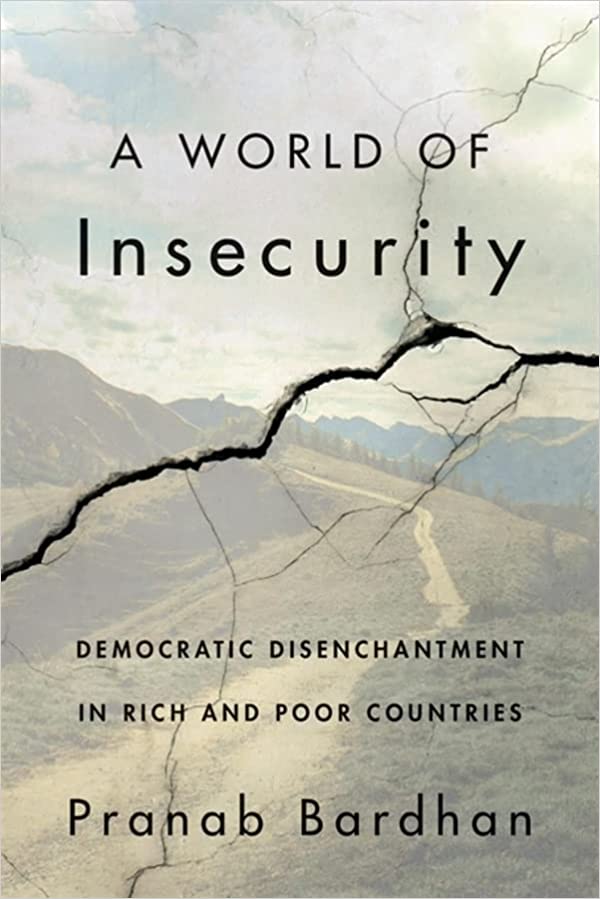
The starting point of a World of Insecurity is that democracy is under threat across the world and that this threat comes from the acts of elected governments themselves and, particularly, from the rise of populist governments. This is becoming a common theme (see, for example, The Economics of Belonging. Bardhan, however, suggests that his book is different in some major ways: first, his analysis seeks to combine “the perspectives of rich industrial countries and relatively poor developing countries” (page 3); secondly, he seeks to examine not only “the large rise in inequality” but also the “distinctive problems of insecurity, both economic and cultural” (page 3); and, thirdly, he assesses what he describes as “the alternative model of authoritarian capitalism” adopted in China (page 4).
Although Bardhan’s book is not as different from others as he may believe, he sometimes brings a different perspective to problems and there is much in his analysis that is interesting. It is refreshing to read a book that avoids treating the economic problems of the West (and, in particular, those of the USA) as if they were the problems of the world and both Bardhan’s frequent references to Indian issues and his chapter analysing the Chinese experience are valuable. Furthermore, his broader perspective enables him to adopt a more nuanced approach to some policy proposals that are frequently advanced. For example, his analysis of the idea of devolving more power to local communities draws heavily on the Indian experience to present challenges to those in the West who are guilty of “communitarian romantism” (page 39); his suggestion that universal basic income may be more affordable in some middle-income countries than it is in high-income countries is worthy of consideration; and his observation that “Support for globalisation is stronger in developing than developed countries” (page 18) should give food for thought to all those who see globalisation as one of the main causes of the world’s woes.
Bardhan rightly urges that we “move beyond the overly simple and amorphous Left versus Right distinction of common ideological parlance” on the basis that it “has become quite misleading, particularly in failing to capture the multidimensionality of ideological positions” (page 102). He recognises that many so-called “right-wing” populists advocate social policies that are more commonly associated with the Left and that there are considerable divisions within both those who would regard themselves on the Left of the political spectrum and those who would regard themselves as on the Right. He himself is not easily categorised since, although he advocates many policies associated with the Left, he broadly favours free trade.
He recognises both the need to bridge ideological and social divides and that, in the kind of democracy that he favours, there will always be significant differences of opinion and, therefore, a need to compromise. He also urges that Social Democrats keep in mind that “their strength ultimately lies not in fighting battles on new frontier of identity puritanism but in finding ways of transcending the divisions of society based on identity” (page 131).
All of this is valuable but, sadly, overall the book promises more than it delivers and, as it progresses, its defects come more and more to the fore.
Despite the reasonableness of some of his statements, in many places, he uses disrespectful and dismissive language in relation to people and ideas with whom or which he disagrees. Examples include his reference to “the bullying shambolic showman Boris Johnson” (page 27), his statement that the Republican Party in the USA is “serving the interests of the business elite, whilst stoking culture wars to consolidate party votes among socially conservative lower classes” (page 30), his division of “the Right” between “greed-is-good market fundamentalists, on the one hand, and conservatives on the other, who dread the encroachments of the market on traditional family values and community dislocations” (page 114) and his gratuitous reference to “Thatcherite depredations” (page 142). Whether or not one agrees with his underlying concerns (and some clearly have an element of truth in them), this kind of language is unhelpful.
Furthermore, despite his recognition of the inadequacy of the left-right distinction, Bardhan uses it himself and leaves us in no doubt as to where his sympathies lie. For example, his comments about “closed ideological echo chambers” are directed solely at “right-wing populists” (page 130) and, although he rightly points to the toxic role of social media, he wrongly reserves his denunciation for “the right-wing troll armies”, which he believes “have been much more effective in spreading their message than the Left has been in countering the damage and spreading its own message” (page 31). Those who have been the victims of trolling by reason of their views on transgender issues and other controversial subjects and others who have been “no platformed” on account of their rejection of left-wing shibboleths will doubtless beg to differ.
Bardhan never states clearly who his target audience is. Although frequent reference is made to the research and views of other academics, A World of Insecurity is not an academic work: it has no footnotes or endnotes and many of its arguments are lacking careful support. Yet it is not the kind of book that will attract casual readers, let alone one that is likely to persuade many people to change their basic political positions. One, therefore, gains the impression that Bardhan is writing primarily for those on the Left who are in search of a programme and this impression is enforced by his tendency, particularly in the second half of the book, to speak about what “Social Democrats” should and should not do.
Some of his comments read as though they were made by a political campaign manager seeking to establish a platform for an election (e.g. “in order to differentiate its products from those on the right, social democrats have to be innovative not just ‘redistribution’ but in the sphere of production or what is sometimes called predistribution”, page 122). Furthermore, despite the devotion of a full chapter to universal basic income and adequate discussion of some other policy matters, as the book progresses, Bardhan’s policy suggestions come thick and fast and he asserts things as if they were self-evidently true and thus not needing any supporting argument (e.g. “Of course, the need for redistribution will be pressing as the pandemic exacerbates the forces of inequality in manifold ways”, page 122). The reader may thus be left with the same kind of unsatisfactory feeling that accompanies the reading of a party’s election manifesto in which the list of vague and undeveloped policy commitments leaves more questions than answers.
Some of Bardhan’s statements are extraordinary. In a throw-away comment, he states that “high tax rates on capital have the additional benefit of discouraging investment in labour-displacing automation” (page 153). Presumably he would have supported such taxes to prevent the introduction of textile machinery at the end of the eighteenth and beginning of the nineteenth centuries! He also seems to regard China’s handling of the Covid pandemic as a success story (page 64) and his suggestion that “the duality of employment opportunities in the American economy gets layered into the history of racial politics to perpetuate the rich and poor class divide as the middle vanishes” is, at best, in need of substantial qualification. The latter statement is, in any event, surprising from someone who wishes to take a global perspective and who is presumably aware that, on a global level, inequality has diminished rapidly over the past generation primarily as a result of the poor moving into “the middle”.
The defects in A World of Insecurity are disappointing because, with a less ideologically partisan approach, it could have been very interesting. As it is, those looking for a left of centre political programme that focuses on the current feeling of economic insecurity (albeit from a purely US perspective) would be better off reading The Wolf at the Door.
“A World of Insecurity: Democratic Disenchantment in Rich and Poor Countries” by Pranab Bardhan was published in 2022 by Harvard University Press (ISBN-13:9780674259843). 206pp.
Richard Godden is a Lawyer and has been a Partner with Linklaters for over 30 years during which time he has advised on a wide range of transactions and issues in various parts of the world.
Richard’s experience includes his time as Secretary at the UK Takeover Panel and he is currently a member of the Panel. He also served as Global Head of Client Sectors, responsible for Linklaters’ industry sector groups, and was a member of the firm’s Executive Committee.