By Daniel Johnson
In British political debate, it has not been customary for the past century or so to cite scriptural texts, let alone embark on their exegesis, in order to clinch an argument. Any politician or journalist who tried to do so would quickly discover that such tactics were rhetorically ineffective. Even in a properly moral discussion, such as the present one about euthanasia, quoting the Bible is counterproductive: it enables the other side to dismiss the case being made as ‘prejudice’ or ‘bigotry’. A century ago, the speeches of Lloyd George were saturated in Biblical references, which his audiences would have grasped implicitly. Now, I doubt whether, for most people, our question would register as an allusion to scripture, even at a subliminal level. We have long since lost the world in which Christianity permeated every nook of our mental furniture.
Across the Atlantic it is a very different story. There, many politicians take a basic familiarity with the Bible for granted and an appeal to divine justification is a normal eristic strategy – even for political leaders of whom it might be said, with Oliver Cromwell, that they have no more religion than a horse. It is worth considering this scriptural approach, if only to reject it.
When Jesus taught his followers that the second great commandment was to ‘love thy neighbour as thyself’, he was in fact quoting Moses directly. In the Book of Leviticus 19:18, the people of Israel are enjoined: ‘Thou shalt not avenge, nor bear any grudge against the children of thy people, but thou shalt love thy neighbour as thyself: I am the Lord.’ Note that by ‘neighbour’, Moses here implies acquaintances and certainly fellow Jews. However, in verse 34 of the same chapter, the scope of ‘neighbour’ is expanded: ‘But the stranger that dwells with you shall be unto you as one born among you, and thou shalt love him as thyself; for ye were strangers in the land of Egypt: I am the LORD your God.’
For the Jews and Christians of biblical times, then, the meaning of ‘love thy neighbour’ was explicitly inclusive, not exclusive. In the commandment of Jesus, firmly based in Hebrew Scripture, there is no hierarchy of affinity, no ordo amoris – whatever the Vice President of the United States may say.
Yet there is a serious difference of interpretation about who counts as a neighbour and what our duties are to them. Pope Leo XIV has warned against the policies of the Trump administration, citing the parable of the sheep and the goats in Matthew 25: ‘For I was a stranger, and you did not invite me in.’ But of course there are always passages in the Bible that can be used to justify any cruelty or injustice. According to my fellow Catholic J.D. Vance, the actions of the ICE snatch squads are ‘humanitarian’, while my Evangelical namesake, Speaker Mike Johnson, has justified them as part of the ‘Christian case for border security and immigration enforcement’.
Both these Christian gentlemen are, in my view, being disingenuous. They must know that there is no Christian case for the violent and arbitrary overreaction to the presence of millions of undocumented immigrants that the world has witnessed in Minneapolis and other American cities. Why, then, does Johnson claim that he, and not Pope Leo, has the correct interpretation of Scripture?
In a written statement, Johnson insisted that the passages cited above from Leviticus 19 and Matthew 25 were addressed to individuals, specifically the disciples, while governments have completely different moral criteria. ‘Despite the unfounded claims of the Left, supporting a strong national border is a very Christian thing to do. The Bible tells us so.’
The Bible, in particular the Hebrew Bible, has indeed furnished powerful arguments for the idea of a nation state within clearly defined borders. But that is a very different thing from providing ammunition for the indiscriminate and generally unwarranted use of deadly armed force to carry out mass deportations of undocumented immigrants who in most cases had been living peacefully and productively in the US for many years.
So the introduction of religious texts into a political debate does not resolve our differences. Interpretations of such texts differ widely and no useful purpose is served by turning a moral question into one of theology or indeed hermeneutics. Let us return, then, to first principles and only then compare our conclusions with the relevant passages of scripture.
There are, of course, two separate issues here: immigration and integration. Immigration is primarily a question of numbers. Britain, with a long history of migration and globalisation, ought to be capable of absorbing at least half a million migrants a year – roughly equivalent to the numbers now emigrating. It may not be fashionable to say so, but with a falling birthrate and ageing population, we need to import more skilled workers than we lose if the British economy is not to continue languishing in stagflation and welfare dependency.
In the 19th century there was large-scale immigration to England from Ireland: most of the six million or so Catholics in the UK are descendants of that wave, though that figure includes up to a million people of Polish descent too. Incidentally, there are more Catholics than Muslims in the UK – they are our largest religious minority – and more people speak Polish than any of the languages of the Subcontinent, the Middle East or Africa. Though Catholics only acquired civil rights in 1829 and remain subject to legal discrimination to this day (no Catholic can inherit the throne), their integration into a country with a Protestant established Church has been an unqualified success – admittedly over nearly two centuries.
So the practical problem to be solved is the maintenance of a manageable proportion between the scale of immigration and the pace of integration. For most of our history, that task has been relatively straightforward. Even substantial numbers of non-Christian immigrants – Jews, Hindus and Sikhs, for example – could be integrated without serious difficulties. This was demonstrated by the failed attempt of Oswald Mosley’s Fascists to march through the East End of London, in order to intimidate the poorer and more vulnerable elements of the Jewish community. Indeed, Mosley’s British Union of Fascists never won a single seat in the Commons. Their only major impact was on the National Government, which panicked about anti-Semitism and excluded all but a few Jewish refugees from Nazi Germany and Austria. Fearing Arab riots, the British also prevented Jews from settling in Mandate Palestine throughout the period of Nazi persecution and genocide. Even after the Holocaust had ended, ships carrying Jewish survivors landing in Palestine were forced to sail back to a devastated, starving and hostile Europe. These boat people, remember, were classified as ‘illegal immigrants’.
For Christians, this episode ought to give us pause. One of our most ancient orisons, still prayed or sung in Greek, is the Kyrie Eleison – ‘Lord, have mercy’. To the people who taught us the meaning of mercy, however, we showed very little of it.
Of course, the moral choices we face today are very different. The Muslim population, for example, is much larger: a quarter of all primary school children in London are Muslim – a larger proportion in most boroughs than those who identify as white British. Under these circumstances, the question of integration changes: what exactly are minorities supposed to be integrating into? The popular panacea of the Danish Social Democrats – eliminating illegal immigration and preventing the formation of anything that resembles an ethnic ghetto – is incomparably less effective in Britain, given our burgeoning human rights industry and long-standing urban demography. ‘British values’ – tolerance of cultural and religious differences, fair play, ‘live and let live’ – are much more difficult to maintain once majorities are turned into minorities without their consent. Muslims are now the largest and most obviously sectarian bloc in British politics. Some of their self-proclaimed representatives having aggressively asserted themselves in public spaces – the prime example being the Gaza hate marches of the past three years – it is no surprise that other minorities feel threatened and organise themselves, too. The stage is set for civil unrest and sectarian polarisation, a scenario in which Christ’s commandment to love thy neighbour as thyself is all but forgotten.
An example of the mutual recrimination that has replaced reconciliation is the Reform UK policy on reparations for slavery. Last month the UN General Assembly passed a motion declaring that slavery, narrowly defined as ‘the transatlantic slave trade’, was ‘the gravest crime against humanity’, and urging member states to contribute to a reparations fund. Reform then announced punitive measures against any country that demanded reparations from the UK, starting with the denial of all visas to its citizens. They listed 13 states to be treated in this way, all of them Caribbean or African. Among them was Nigeria, some 300,000 of whose nationals live and work in the UK – one of the largest communities resident here and, perhaps not coincidentally, the country in which Kemi Badenoch spent most of her childhood and adolescence. In effect, Nigel Farage is threatening to penalise most of the nations from which black British citizens originated – including his most dangerous political rival. It is only one step from denying visas to forced deportations. Indeed, Reform has already pledged to carry out mass deportations. However we may interpret the biblical injunction to love our neighbour, it cannot possibly be justified to carry out the indiscriminate criminalisation of hundreds of thousands, perhaps millions, of people for no better reason than the actions of a government over which they have no control. If mass deportations were to take place in the UK, it would inevitably open the door to officially sanctioned racial and religious discrimination, potentially on a vast scale, and this country’s reputation for decency, compassion and equality before the law would be squandered.
Across the West, migration remains the most explosive issue in contemporary politics. The closely related questions of how far Islam should be expected to integrate into a predominantly Christian country, and what this means in practice, remain open. A lifetime has elapsed since Winston Churchill presented the site of the Regent’s Park Mosque to British Muslims in gratitude for their service in both world wars. Yet the Christian calling – what one might call the code of the Good Samaritan – remains imperative.
As I write, the case of the Southport killings has resurfaced, after a judge-led inquiry not only found all the responsible agencies to be culpable, but singled out the parents of the 17-year-old murderer for particular censure. Following this finding, parts of the media and some politicians have whipped up a hue and cry against the family, who have gone into hiding. Although there has been no repetition of the riots that erupted after the crime in 2024, the language deployed by Robert Jenrick, in particular, has been incendiary. He has demanded that the parents be deported to Rwanda, the place of the genocide from which they fled more than thirty years ago to seek asylum in Britain. Quite apart from the fact that they have not been convicted of any crime and are thought to have British citizenship, this family has already been punished for any failure to do their ‘moral duty’ with a life sentence of having to come to terms with the crime committed by their son.
Our moral duty as a society is to support the victims of his crime – but also to show compassion towards those who are also compelled to live with its consequences. Their reluctance to hand their disturbed son over to the authorities was a terrible mistake, but the fact that they must now live in secret for fear of violence does not speak well for our society either. And politicians who exploit hostility to migrants to gain popularity are certainly not acting in accordance with the teaching of Jesus Christ, whose name they often invoke. Not only are they disobeying the commandment to love our neighbours as ourselves, but also Jesus’s prior commandment to love God with all our heart, soul and mind. For that is incompatible with taking His name in vain, by weaponising it against the weak and defenceless. To put it bluntly: one cannot defend Christianity by speaking and acting in a tribal, that is an un-Christian, manner. The code of conduct embodied in the parable of the Good Samaritan requires us to treat strangers, immigrants and even (sometimes) enemies as neighbours — that is, to show them respect, dignity, mercy and even love. Such charity must, of course, be entirely voluntary: it cannot be coerced, not even in the name of human rights. Nor is it unconditional: there must be a degree of reciprocity. Kemi Badenoch is right that a privilege, such as indefinite leave to remain, must be earned; citizenship even more so. But once we have offered our neighbours kindness and hospitality, we cannot then withdraw it arbitrarily. As Jonathan Sacks used to say, a nation is not a hotel; it is our home. To make one’s home in a new land, to belong there, demands effort on both sides. Rights are not granted without evidence of commitment; they bring responsibilities and these are not to be taken lightly. But the Christian calling transcends rights, for love fulfils the law.
Back to the last days of Mandate Palestine, when Holocaust survivors were turned away from the promised land by soldiers who saw them simply as ‘illegal immigrants’. Michael Ivens, later founder of Aims of Industry and then serving in the British forces, captured this shameful betrayal in his poem ‘Haifa Bay in The Morning’. He describes his experience as a press officer as a shipload of Jewish refugees arrived, knowing that the British would send them away, yet hoping against hope that they would be rescued by the Haganah (the ‘defence’ militia of the Zionist Yishuv and precursor of today’s Israel Defence Forces). I happen to think that this is a great poem, but regardless of its literary merit, it has a message for us that is timely and perhaps even urgent.
I saw a ship come sailing in,

Sailing in, sailing in,

With a list like a Stormtrooper’s twisted grin

At Haifa Bay in the morning.


The Army boat was waiting there,

(Haganah flashes ‘Take care! Take care!’)

The amiable squaddies all a’stare

Just three miles out in the morning.


And I was there in my little press boat

With one stout Guardsman to keep it afloat

And a man from The Times to keep it afloat

And a blasé photographer yawning.


Their lousy ship they bought from a Greek,

That it ever arrived was a flaming freak

Considering the size of its list and leak

Off Palestine in the morning.


Through shortage of water two girls had died

(Gone their dreams of a Sabra’s bride),

But two young boys jumped over the side

As the troopship moved close in the morning.


They could see the coast of the Holy Land

And the beckoning gleam of Haifa’s sand

And hoped for Haganah to give them a hand

To lose themselves in the morning.


But I was there with my little press launch

Full of zeal with my Guardsman staunch,

And when the two Zionists ceased to float

We hauled them up in our little press boat

And tried to explain they’d come to no harm.

(Both had numbers tattooed on their arms

In a quaint old Belsen warning.)


My Guardsman, a reprobate Irish Mick,

Albeit a lapsed Catholick,

Said, ‘Give the poor buggers a chance to run

And then we’ll go back and face the fun,’

His Paddy’s face white in the morning.


But the immigrant ship was towed to the quay

And the two little Zionists brought in by me;

One old Jew jumped over the side

And kissed the ground and cried and cried;

Another leapt down and split his head

And bled an Hebraic script of red

On the Holy Quay in the morning.

An Army troopship took them away

With swift discretion the very next day

And Haifa wept as they sailed away

To a Cyprus camp in the morning.


Envoi

They all are back in Israel now

And the two young Zionists work at the plough,

And my stalwart drunken Irish Mick

Is a reformed much-married Catholick.

But my mind it goes back to Haifa Bay

And dwells on the words I dared not say

And the sorrowful ship that sailed away

From the Holy Land in the morning.
Daniel Johnson is a British journalist and author who was the founding editor of Standpoint magazine and a former senior editor, editorial writer and columnist for The Times and The Daily Telegraph. Since 2018, he has been founding editor of the online journalism platform TheArticle, as well as being an associate editor of The Critic magazine and commentator for The Daily Mail, The Mail on Sunday and The Daily Telegraph.
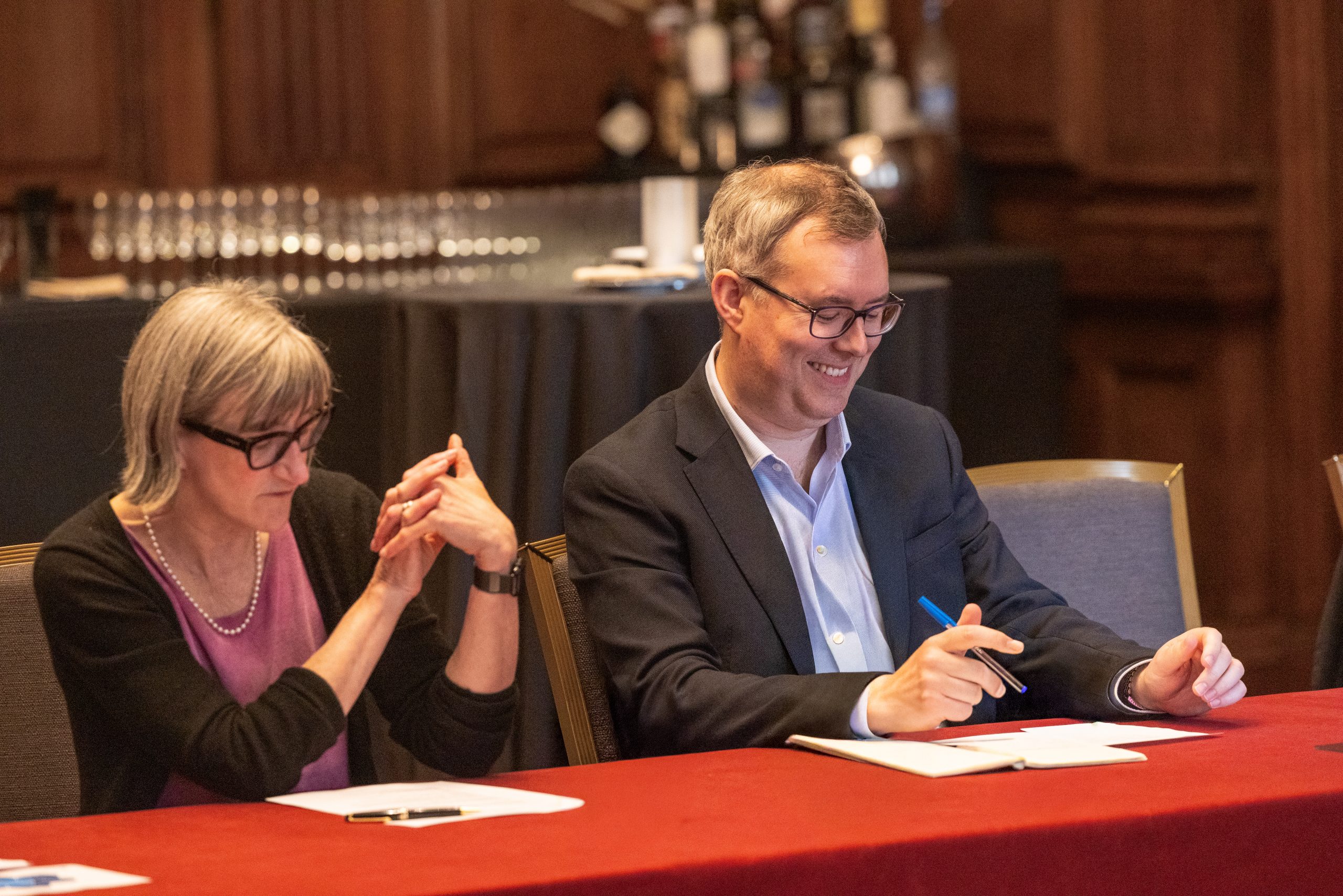
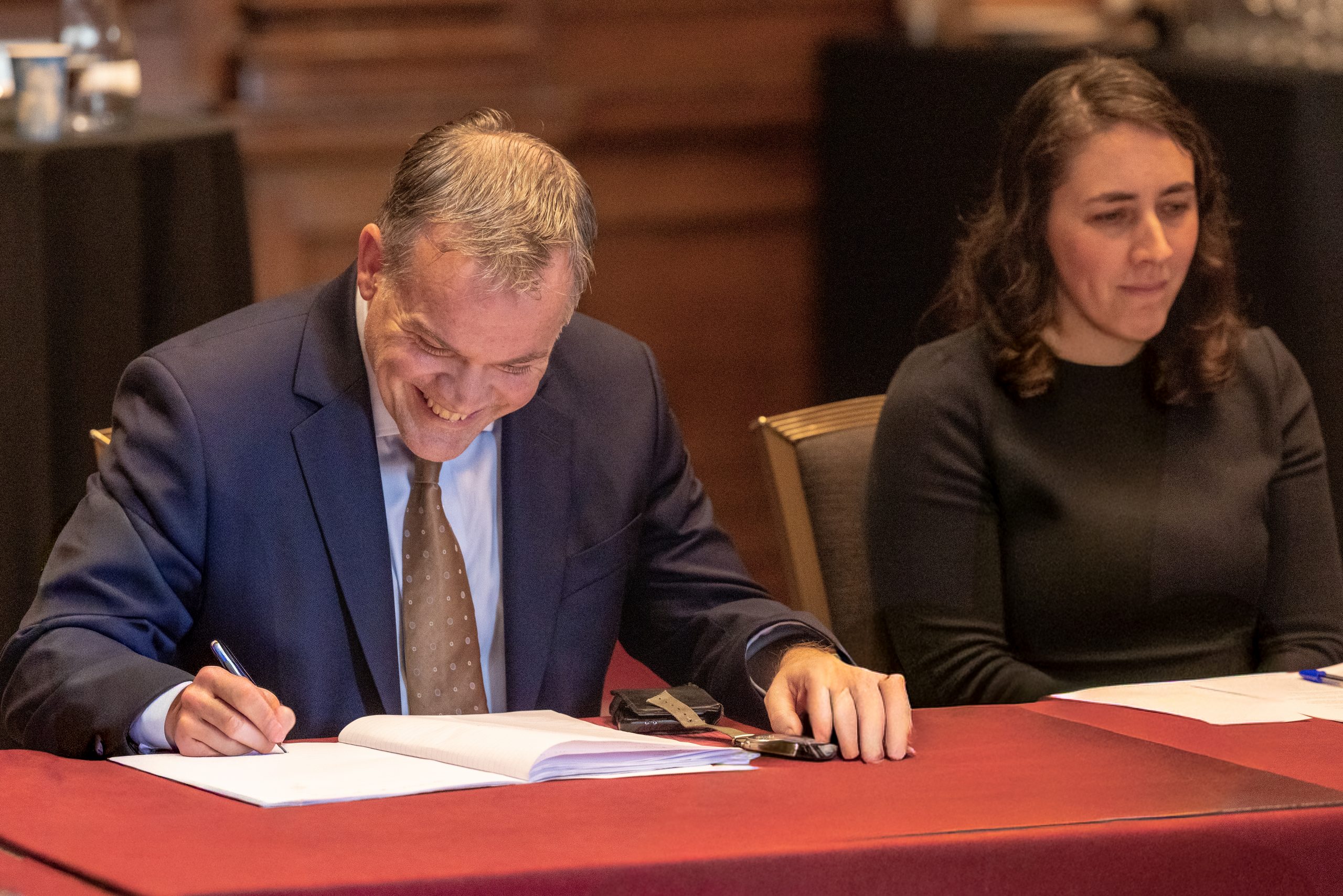
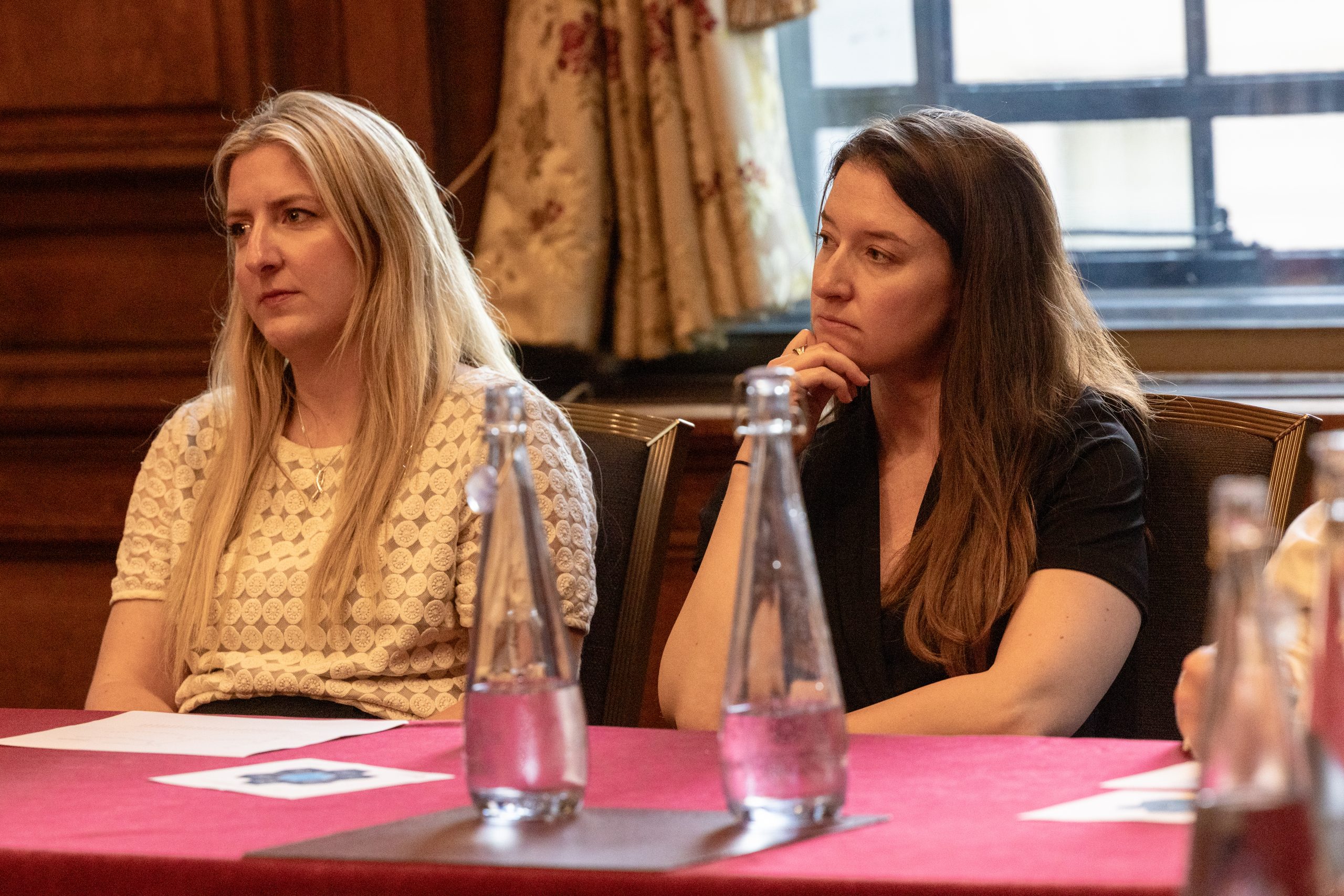
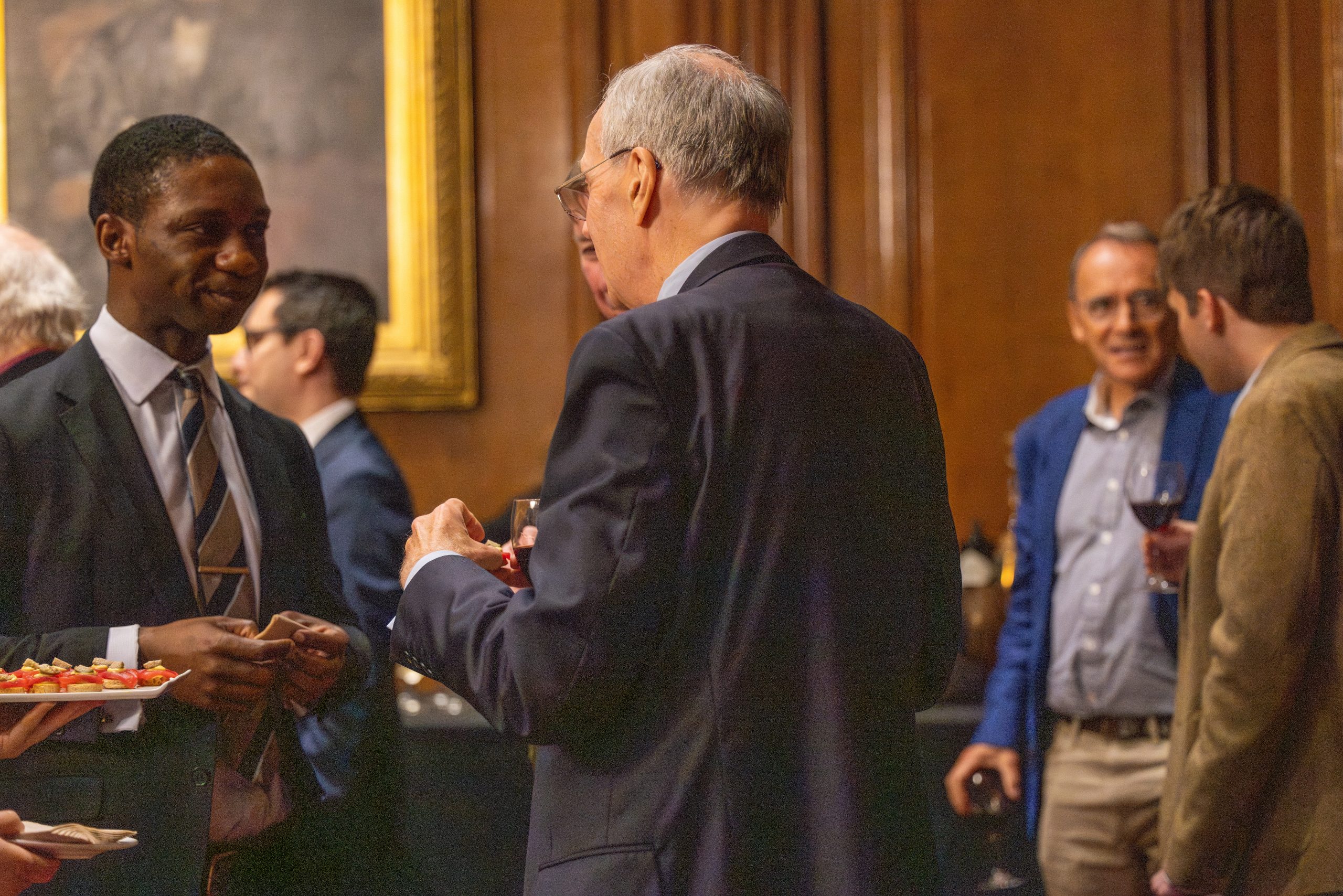
Last week we gathered people in policy, business, and public life together in Westminster to think about the current fiscal situation in the UK and specifically the relationship between taxation and enterprise.
We will be holding further events in the autumn. Please subscribe for details.
Tom Clougherty kicked us off by speaking about the rising level of tax needed to fund existing debt and continually increasing spending. For the purposes of this presentation he said he would take the required tax take as a given and focus instead on how it was raised. He pointed out that some taxes are much more efficient than others, because they raise revenue without impacting economic behaviour like investment in the future or decisions to take employment opportunities. He noted that the UK is ranked 32 out of 38 OECD members for tax competitiveness. He emphasised that the poor use of efficient taxes like VAT (where exceptions abound) and an almost uniquely poorly-designed property tax system mean than revenue comes from taxes that cause more economic damage.
Tom argued that while many experts disagree about the level and composition of government spending, they agree about improvements to the tax system and about the general design principles. Despite this, the practical politics is not clear cut and there are difficult questions about to how to get from the status quo to a better system.
Philip Krinks spoke about the broader determinants of a nation’s tax policy. He argued that there were at least six factors. The first was political vision and shared values, including the nation’s understanding of ‘fairness’ and of private property. The second factor was constitutional and legal, particularly which levels of government had tax-raising powers. The third was the chosen political economy, centring since the late 19th century in the UK on choices about state size, welfare provision and public ownership. The fourth was incentives for particular developments, such as the current focus on growth, where Philip agreed with Tom that the tax economics of growth enhancement are widely agreed, including predictability, low marginal rates, broad bases, neutrality, and favouring consumption taxes over levies on work, savings, and investment. A fifth issue, important to confront, was power dynamics, where certain constituencies are in a position to gain preferential treatment by forming electoral coalitions or otherwise influencing policy. The last was technical feasibility, since state capacity, while considerable in the UK, was still limited, not, for example, including a register of land values.
Philip concluded by suggesting a reset in the UK across all these dimensions: a political vision valuing work and enterprise over resentment, constitutional reforms restoring power to citizens and businesses over government bodies, a reduction in state size through welfare and pension reform, and tax reform to reward investment, innovation, and growth.
Naomi Wells spoke about the trends she was seeing in her work advising entrepreneurs impacted by UK taxes. These included those who had built up family businesses in the UK and were concerned by recent changes. In some cases, they were feeling compelled to leave the UK due to the liabilities which would be created when the business passed between generations, in addition to increasing payroll and other taxes and a worsening regulatory environment.
She also spoke about the successful entrepreneurs from overseas who had seriously considered relocating to the UK but been put off by a high and increasing tax burden. On a UK home, overseas buyers of premium property facing a 19 percent marginal stamp duty charge.
Taken together the risk is that policies discourage inbound entrepreneurs and encourage British entrepreneurs to move abroad weakening the economy and longer run fiscal situation.
The talks were followed by a lively group discussion, chaired by Joanna Moriarty, which continued over drinks.

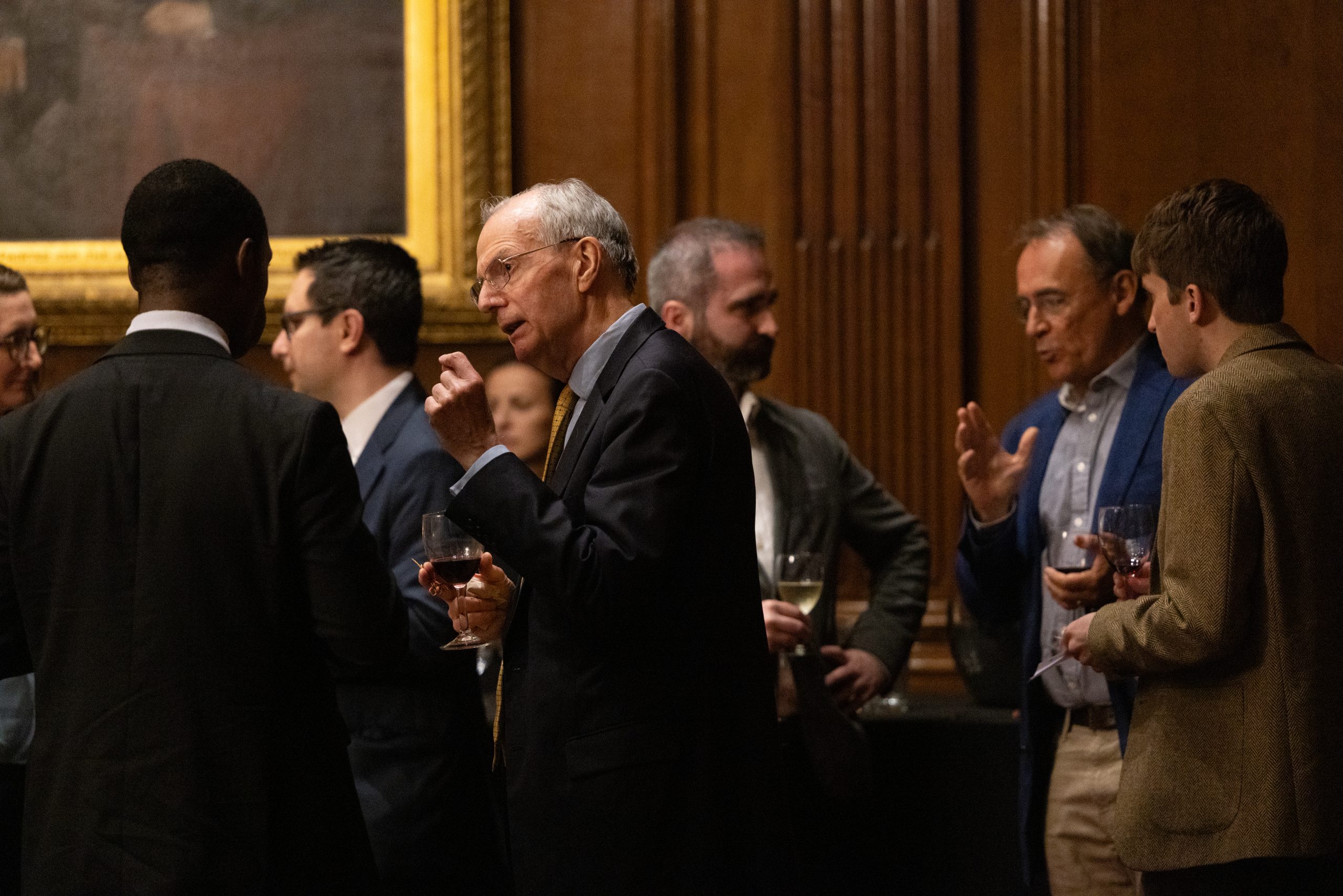
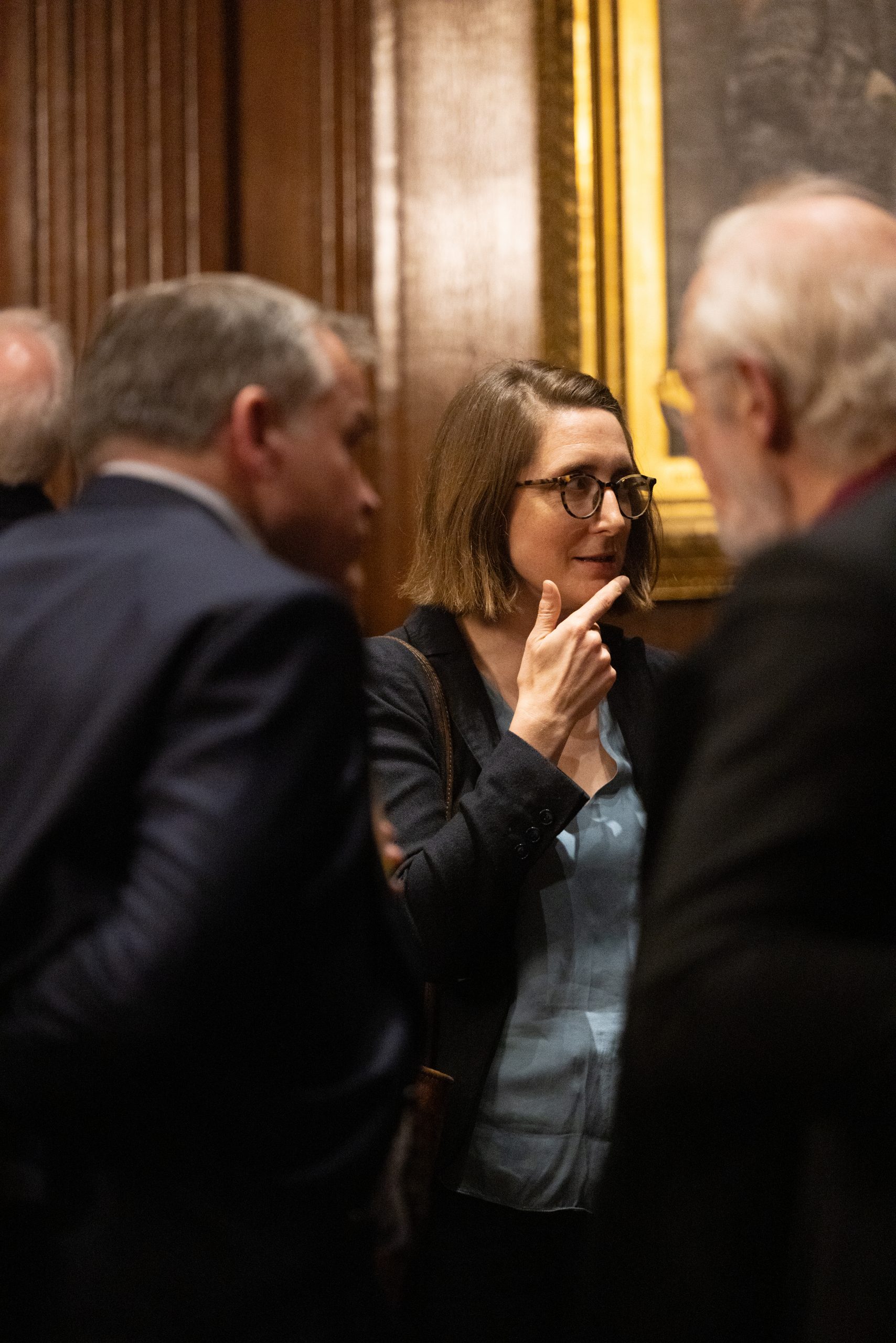
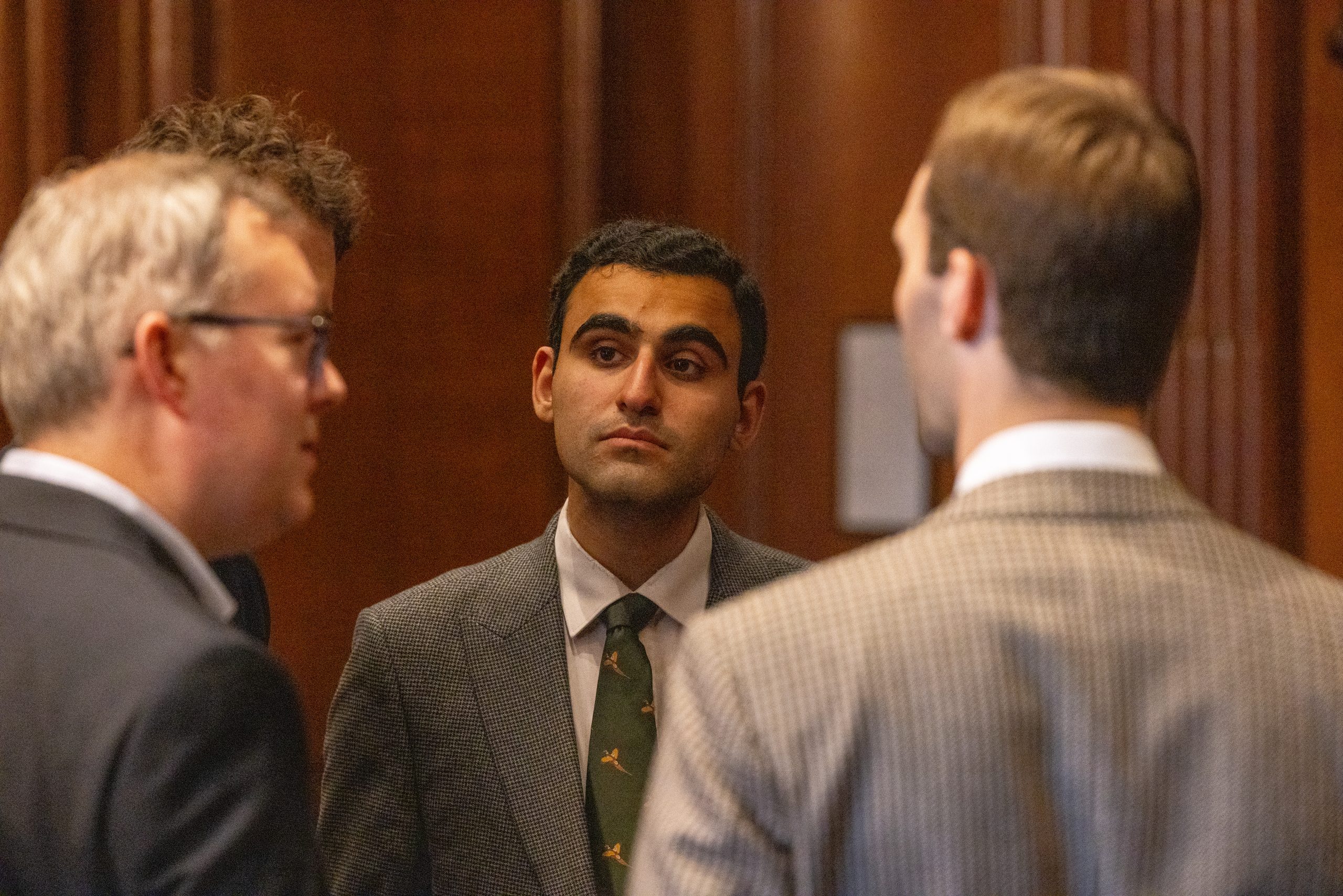

We will be holding further events in the autumn. Please subscribe for details.

Developers of artificial intelligence and tech futurists are prone to foretelling the devastation of the labour market at the hands of AI. Predictions regarding the extent and speed of the decline in the demand for human labour vary, with some suggesting that half of white collar jobs will be lost to automation in a painful readjustment and others contending that almost all human labour will be replaced by technology in the next 20 years. Whether one views such developments as catastrophic or the beginning of an era of efficiency and abundance, there are clearly implications for public policy, such as the effects on governments’ ability to secure tax revenues.
It seems unlikely that all human labour could be replaced by machines. It is hard to imagine having a robot plumber visit to repair a leak or cut one’s hair, and indeed in the short run greater use of AI appears to be driving a spike in demand for blue collar labour, but beyond this, there are good economic arguments for questioning the idea that the human being is bound to go the way of the horse, as this interesting article by Brian Albrecht argues.
However, if we take seriously the claim that all, or almost all, or even most human labour is likely to vanish, then some proposal is needed for addressing the issue of how, with the demise of wages, human beings are to secure the means of subsistence. One suggestion is that our needs will be met by some kind of universal basic income provided by the state, funded in part by levies on the profits of AI and tech companies.
There would be very real practical considerations to deal with under such an arrangement: How would UBI be adjusted to take account of changes in the price level or inflationary pressures? If a tech firm had a ‘bad year’, what would this mean for people’s income? How could one fairly take account of differing standards of living in the distribution of universal basic income? Some would doubtless be better off than they currently are but others would most likely see a significant decline in their standard of living. Would their higher living costs be borne by the state – and would this be just?
Questions of Value, Questions of Dignity
There are important moral questions or questions of value to consider, too – questions which perhaps need to be answered before the more practical considerations can be addressed. A world without work (or largely divested of many kinds of human work at least) bears some comparison with the Roman latifundia or the vast plantations of the American south prior to the civil war, where a small number of vastly wealthy individuals owned huge estates while others existed in poverty or servitude.
It might be thought that these historical analogies could be developed to suggest that AI is not to be feared, but welcomed. Analysed over time, they are examples which illustrate the dynamism of socio-economic development: those who worked on those estates were first liberated from slavery and the work done by waged employees who enjoyed a degree of economic freedom. With the advent of technological development much of that work was automated, but the result was not massive, permanent unemployment; rather, new jobs were created in its place. However it could be argued – and indeed is being argued – that this time the latter mechanism will not apply, given the broad applicability of AI technologies across the economy.
If this prediction is accepted, then in a future scenario in which human labour has all but vanished, there remains of course a further, important difference: instead of large sections of society being enslaved by an aristocratic class, it is machines that are exploited for broader societal gain (and the much greater wealth of a few). Nevertheless, under a system in which millions depend for their basic income on a class of extremely wealthy elites whose operations are taxed by the state, we are obliged to ask questions about human dignity.
While a life of leisure funded by the functioning of AI bots might be appealing, many are likely to experience such an existence as stultifying or lacking in purpose. Some need to work, to feel that they are making their way in life, to thrive in a particular setting involving dynamism and pressure. Some require competition and the many social and individual goods that it brings, such as improved performance and personal excellence (as discussed in a recent post here by Ernie Graham). Without such a spur to action, many individuals are likely to feel their sense of purpose waning.
This might not be a consequence for all but it is related to a much wider point about human dignity and certain moral concepts that we take for granted. Where so many people are simply provided with their means of existence without the spur of economic necessity, what becomes of entrepreneurship, innovation and creativity? More widely, even for those that work in jobs they find tedious purely to earn a living, there are questions about freedom and responsibility. Where the individual works to secure her living, there is a greater degree of freedom than otherwise. Each pound or dollar secured by the individual is a mark of independence, of personal sovereignty – as that which the individual has and may by right keep as her own, removes her from the power of the state and dependence on it. The independence – whether from a feudal baron or a tech baron – won by securing property by one’s own endeavours confers liberty and with this comes responsibility. Will both be eroded in a world of greater dependence on the activity of tech companies and the largesse of government?
Being engaged in gainful activity – earning a living and making one’s way in life – brings a form of dignity. This is reflected in social thought of various kinds. According to Christian teaching, part of humanity’s purpose is to work: man is made in God’s image (Genesis 1:27) and God himself undertakes the work of creation (Genesis 1:1). Moreover, God instructs man to work (Genesis 2:15) – and Jesus himself worked (Mark 6:3). The idea that work constitutes part of the dignity of humanity is reflected in the papal encyclical Laborem Exercens, in which Pope John Paul II writes, ‘man, created in the image of God, shares by his work in the activity of the Creator’ and ‘man’s life is built up every day from work, from work it derives its specific dignity’. And if, relatedly, as he continues, ‘at the same time work contains the unceasing measure of human toil and suffering’, that still leaves work as part of the definition of the human conditon. In Laudato Si’ Pope Francis states, ‘Work is a necessity, part of the meaning of life on this earth, a path to growth, human development and personal fulfilment.’ Beyond Christian thought, the perspective of virtue ethics also lends itself to the idea that work is ennobling. Where virtues are taken to be excellences internal to specific types of activity, as in the thought of Alasdair MacIntyre, it is clear that work is a site of human fulfilment and flourishing. Socialist thinking also recognises the dignity of work. Indeed, part of Marx’s critique of capitalism was that in its dehumanising and exploitation of the worker, it alienates him from what renders work meaningful and strips work of its dignity.
Perhaps lives of near universal leisure funded via the taxation of the activities of AI companies will be abundant, meaningful and purposeful. After all, there is more to life than work and the world abounds with enriching activities, meaningful relationships and worthwhile experiences. Where work vanishes, however, that which provides a spur to much that is best in us is also at risk. Where the meeting of our needs by our own efforts goes into decline, there are important questions about our independence, our liberty, our sense of desert and self-worth, and above all our dignity. When receiving our basic income, will we still refer to ourselves as ‘getting paid’?
Image: Designed by vectorpocket: www.magnific.com
The UK faces compounding fiscal pressures: a swelling adult social care budget, rising debt-servicing costs, and a persistent temptation to raise revenue in ways that erode the very economic activity on which public spending ultimately depends. How should the tax system be reformed to encourage enterprise rather than discourage it?
On 21 May, CEME welcomed Tom Clougherty — a leading authority on UK tax reform, formerly Executive Director of the Institute of Economic Affairs and Head of Tax at the Centre for Policy Studies — to Westminster to set out the case. Naomi Wells, Partner in the Tax practice at Azets, and CEME’s Director Philip Krinks responded.
Location: One Great George Street, Westminster, SW1P 3AA.
Time: The event begins at 6:45pm with the talks from 7:00pm, followed by a drinks reception.
Please RSVP to let us know whether you are able to join us by emailing office@theceme.org

Entrepreneurship is a calling or vocation. It is, though, quite different from management. All aspects of business, whether one is in management, employment or an investor should be conducted ethically, but the characteristics and virtues demanded of entrepreneurs are quite specific – and rarely discussed.
Entrepreneurship requires alertness to opportunities, but it also involves a leap in the dark: a leap into the genuinely unknowable. Entrepreneurship also often involves radical uncertainty where, however much analysis we do, we cannot predict the outcome – or even quantify the risks that are faced.
Jack Cohen, the founder of Tesco, started as a market stallholder and even invested his wedding present in his then-micro business. He was an entrepreneur, and his actions gave rise to huge consequences that he could not have predicted.
Entrepreneurs also have to be prepared for failure: most businesses do fail. This requires a certain strength of character and detachment from material things. As the economists Alchian and Allen note:
Fortune does not hand down information and guidance to discover improved techniques of production and distribution of better products. It’s obtained by investing in risky exploration and experimentation with one’s own wealth. Some experiments fail, perhaps most fail. The failures disappear with little publicity.
Entrepreneurs, therefore, need a certain detachment from material things if they are going to take risks. Entrepreneurs could choose to do nothing, and many could choose not to start a new venture whilst carrying on living a life of considerable material comfort. The act of entrepreneurship requires people to move away from the familiar and risk their secure life and their material comforts. Thomas Aquinas comments that people would not carry out what he describes as works of magnificence (which could include, but is certainly not limited to, establishing a business) if they had not moderated their love for money. Otherwise, they would not have undertaken the financial risk – they would just have accumulated interest on their fortune.
The first Pope to use the word ‘entrepreneur’ in a public statement was probably Pope Pius XII. He did not write a social encyclical, but he produced broadcasts and speeches which demonstrated an advanced understanding of economics, and which were often related to business practice, including entrepreneurship. For example, he said in an address to the First National Congress of Small Industry in January 1956: ‘Among the motives that justified the holding of your convention, you have given the first place to “a vindication of the indispensable functions of the private entrepreneur”.’
And, in an address to the Third International Congress on the Distribution of Food Products in June of the same year, he noted some of the attributes and virtues that entrepreneurs needed: ‘they should rid themselves of prejudices that hinder the establishment of more economical methods and be open-minded with a taste for the calculated risk.’
As well as mentioning the characteristics of entrepreneurs, as discussed above, Pope Pius XII also mentioned, in his address to the Third International Congress on the Distribution of Food Products in June 1956, some of the virtues that entrepreneurs needed:
Men must [have]…solicitude for the common good, even if individual interests must suffer a little at first, and perfect honesty: all these qualities of a good merchant have now, more than ever, a rightful claim on you, and are clearly prime factors of success.
Adam Smith made a similar point, in fact. You may be able to make some quick money if you are dishonest. But, in general, if you are to build a lasting business, you need to develop trusted relationships with employees, suppliers, financiers, and so on.
Pope John Paul II certainly had a good understanding of the distinct role of the entrepreneur. In his encyclical, Centesimus annus, he wrote about entrepreneurship and the values and virtues of the entrepreneur. He mentioned the need for co-operation; a common goal; the need to organise properly; the willingness to take risks; discipline; diligence; industriousness; prudence in ensuring that the risks are reasonable; reliability and fidelity in personal relationships; courage in taking difficult decisions.
The Vatican document ‘The Vocation of the Business Leader’ goes further and, quoting Pope Pius XI’s social encyclical, Quadragesimo Anno, it is argued that an entrepreneur’s first aim should be to produce a good product or service and only secondly consider gain: the entrepreneur should produce true goods by good means (44).
We can go still further than this. The role of the entrepreneur is to produce goods or services by good means whilst making a return for the investors – which will include the entrepreneur himself.
If the entrepreneur does not make a return, he is running a charity, not a business. It is not intrinsically problematic for a business to make a return – after all, the profits from businesses pay pensions, payouts on insurance policies, allow people to save, and so on. But a business should make a profit through moral means.
Radich (2024), in his article, ‘Toward a Thomistic Account of the Virtues of the Entrepreneur: Moral, Intellectual, and Theological Strengths for Flourishing’, Journal of Markets and Morality 27(1) has, perhaps, the most comprehensive account of the virtues of the entrepreneur. He breaks down the cardinal virtues into constituent parts. He suggests that particular aspects of prudence are important for the entrepreneur. Entrepreneurs need docility (the ability to learn from others, which helps them make fewer mistakes and make more rapid judgements); they need providentia, by which the entrepreneur can see ahead; and they need circumspection, which requires them to be attentive to their surroundings.
These are all sub virtues of the virtue of prudence, and they can easily be related to the economic analysis above which emphasised the importance of, for example, alertness and being able to envisage the future as shaped by entrepreneurial activity.
The sub virtues of the virtue of fortitude involve overcoming challenges through effort and by taking financial risks in order to do great things.
Temperance is also important. Entrepreneurs may come across challenges that might endure over long periods of time, so patience is necessary. Entrepreneurs are not rash gamblers. If they are to be successful, they must restrain their impulses.
Interestingly, Radich also cites a study by researchers at Baylor university which suggested that entrepreneurs prayed more than the average. Radich speculated that this might be because they are aware of their dependence on others and, hence, upon the divine, and also that they are aware of their inability to control the circumstances that surround them.
Indeed, Pope Francis referenced the virtue of courage in entrepreneurship in an address at an audience for the Italian Family Business Association:
In your case, you are characterized by the delicate balance between family and work, which is expressed in entrepreneurial courage and responsibility. It is good, it is constructive when courage and responsibility go together. Action that comes from the heart is bold, it does not retreat into itself, but knows how to look far ahead; and responsibility, then, is the secret of business….
Indeed, there was a ‘Jubilee for Entrepreneurs’ in the Catholic Church’s 2025 jubilee year.
The concept of entrepreneurship – or certainly, its attributes – should not be thought of as being limited to the field of business. The characteristics of entrepreneurship apply in many other human activities. For example, we could imagine doing the following in a Church, civil society or public service context:
All these require the characteristics of entrepreneurs that we have described above such as:
This link between entrepreneurship and the mission of the Church is part of a longer research project that I am pursuing with CEME over the coming months.
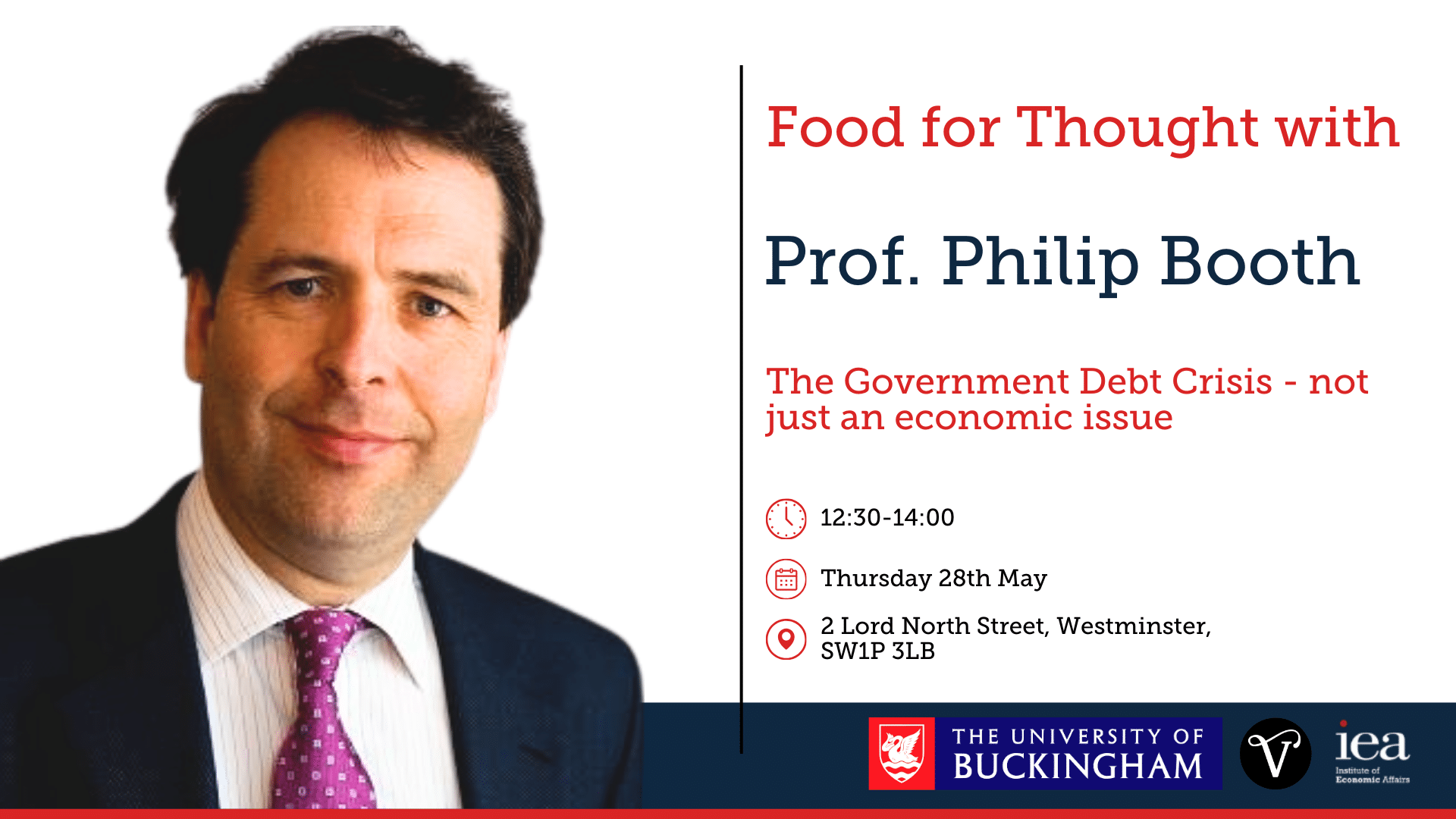
IEA Food for Thought with Prof. Philip Booth (RSVP with the IEA)
The Government Debt Crisis – not just an economic issue
12:30-13:00: Sandwich lunch
13:00-14:00: Presentation and Discussion
About the Discussion
Philip Booth will describe how government debt is creating a looming economic and social crisis. This is especially so when we also consider demographic developments in western and in Asian countries. Although it is sometimes suggested that we have had higher levels of debt before (for example after wartime), there were huge costs from reducing debt in those circumstances and the evidence suggests that managing government debt in future generations will be even more difficult. This is not just an economic problem. Historical experience suggests that high levels of government debt can lead to the breakdown of civil order, violence and even war as well as dissatisfaction with the process of government itself: perhaps we are already beginning to see those things happening today. Indeed, there are examples, including one close to home, where government debt has led to countries losing their sovereignty entirely.
About the Speaker
Philip Booth is Academic Advisor and Senior Research Fellow at the Centre for Enterprise, Markets and Ethics. He is also professor of Catholic Social Thought and Public Policy at St. Mary’s University, Twickenhamand Director of Policy and Research at the Catholic Bishops’ Conference of England and Wales.
Previously, Philip was academic and research director at the Institute of Economic Affairs from 2002 to 2016. He has worked for the Bank of England and as associate dean of Bayes (formerly Cass) Business School. He held the positions of Director of Research and Public Engagement; Dean of the Faculty of Education, Humanities and Social Sciences; and Director of Catholic Mission at St. Mary’s.
Philip has written widely on investment, finance, social insurance, and pensions, as well as on the relationship between Catholic social teaching and economics. He curates the website Catholic Social Thought.

Some years ago CEME published a fascinating report called God and Competition by Edward Carter. This notes that competition is often viewed with some suspicion in Christian thinking. It is typically treated as something to be restrained or carefully managed. While there is some truth in that, it does not go far enough. Competition is not merely permissible; when rightly ordered it is positively good and, in many areas of life, necessary for human flourishing.
At a basic level, competition reflects the reality that human abilities are not uniform. Across every sphere of life – intellectual, physical, creative, relational – people display different levels and types of ability. This is not simply the result of a fallen world but appears to be part of the intentional ordering of creation. Scripture itself assumes this pattern. In the Parable of the Talents, resources are given ‘each according to his ability’. Unequal gifts, therefore, are not a problem to be removed, but a reality to be recognised and worked with.
And here it is important to go a step deeper. If we are thinking in a properly Christian way, shaped by the doctrine of the Trinity, we should not confuse equality with uniformity. The Father, Son, and Spirit are fully equal in being, yet distinct in person. Equality does not mean sameness. In fact, the beauty of the Trinity lies precisely in unity without flattening difference.
That has profound implications for how we think about human life. The instinct to eliminate competition often comes from a deeper assumption – that fairness requires sameness, and that differences in ability are somehow problematic. But that instinct reflects a misunderstanding. A desire for uniformity may make sense in a worldview where persons are interchangeable, but it does not sit comfortably within a Trinitarian vision of reality. If difference is not only permitted but intrinsic to ultimate reality, then it should not surprise us that human life is marked by variety, distinction and differing levels of ability.
If that is right, then competition plays an important role in allowing those differences to be expressed and recognised. In any complex society, there needs to be a way of discovering who is best able to solve problems, lead organisations, innovate or create. Competition provides that framework. It allows people to strive for excellence and, in doing so, makes it clearer where real strengths lie.
This connects directly to stewardship. If individuals are entrusted with particular abilities, then they are called to develop and use them well. But stewardship is not just a private matter. Gifts need to be exercised in real situations, often alongside others pursuing similar goals. Competition creates the conditions in which those abilities are properly tested and sharpened. It pushes people beyond what they might otherwise settle for and helps prevent complacency.
You can see this very clearly in practice. In business, competition tends to lead to better products, better service and more innovation, because organisations are constantly being tested against one another. In the arts, whether music, writing or visual work, the presence of others producing high-quality work raises both ambition and output. And in sport, of course, without competition, performance simply would not reach the same level. In each case, the presence of others striving for the same goal raises the standard for everyone involved.
By contrast, attempts to minimise or remove competition often have unintended consequences. A system that tries to flatten differences or avoid comparison altogether can end up suppressing excellence rather than promoting fairness. When there is little incentive to strive, or when outstanding performance is neither recognised nor required, standards tend to drift downward. Exceptional ability can be discouraged, not deliberately, but because there is no clear place for it to be expressed.
Yet excellence, properly understood, is not just a private good; it benefits the wider community. When individuals or organisations perform at a high level, the effects extend well beyond themselves. In medicine, breakthroughs improve lives. In business, better services benefit customers. In the arts, exceptional creativity expands what others think is possible. And in sport, elite performance raises the standard for everyone coming through behind. Competition, by encouraging people to reach the limits of their ability, plays a key role in that process.
This also helps to reframe a common concern. The real moral danger here is not competition itself, but envy. Competition can expose unhealthy attitudes, but those attitudes are not caused by competition; they come from within. Envy resents the success of others and wants to diminish it. Healthy competition, by contrast, recognises and even delights in excellence. It allows one person’s success to become something that others can learn from and aspire to.
In that sense, competition can foster a culture of aspiration rather than rivalry in the negative sense. The success of others becomes something to build on rather than something to resist. Properly understood, competition does not undermine community; it can strengthen it, as each person’s contribution helps raise the level at which everyone operates.
Of course, competition does need to be rightly ordered. Like any powerful dynamic, it can be distorted. When detached from integrity, it can lead to dishonesty, exploitation, or an unhealthy focus on status. But these are not arguments against competition itself. They are arguments for ensuring that it operates within clear ethical boundaries – marked by fairness, honesty, and respect for others.
When those boundaries are in place, competition also plays a formative role in shaping character. It tests how people respond to success and failure, to pressure and comparison. It provides opportunities to grow in perseverance, humility, integrity and respect for others. In that sense, it contributes not just to what people achieve, but to who they become.
Competition, then, is not something to be apologised for or merely contained. When rightly understood and properly ordered, it reflects a deeper truth about reality itself: that difference is not a threat to equality, but part of its expression. And so, far from being a problem to solve, competition is one of the primary means by which human beings are stretched to use their gifts fully and through which both individual excellence and shared flourishing are brought into view.

This is a repost of an article originally published on the Catholic Social Teaching blog of St Mary’s University (https://catholicsocialthought.org.uk/).
Discussion of the term ‘social justice’ generates quite a bit of heat and some confusion. This probably arises because of the way in which, in secular circles, ‘social justice’ has become almost synonymous with justice in relation to how incomes and wealth are distributed. This particular concern in Catholic social teaching falls under the conceptually distinct (though not entirely practically distinct) domain of distributive justice – that is, the set of criteria by which we determine how the goods of this world should be distributed between people.
Social justice is about how our actions promote the conditions for the achievement of the common good. The object of social justice is society as a whole. The common good, in turn, represents ‘the sum of those conditions of the social life whereby men, families and associations more adequately and readily may attain their own perfection.’ Thus, we promote social justice when we promote the conditions necessary for all to reach perfection or fulfilment, and we promote injustice when we undermine these conditions for some or for all.
For the common good of the whole of society (such as the whole country) to be achieved, it must be achieved for communities within society. For example, there are particular features of the common good that relate to schools – such as not promoting an atmosphere of fear amongst children. While this is the responsibility of the school, the common good of the wider society depends on the promotion of the common good within these local environments, such as schools. Different associations within society have their own common good, and the common good of all associations within society contributes to the common good of the country as a whole.
Even if we struggle to define social justice, most Catholics know it when they see it. We correctly describe a whole range of activities as ‘social justice’ activities (such as the way we treat migrants and refugees, how we support those leaving prison and victims of crime, and how we treat those who have been trafficked).
It is also important to note that addressing offences against social justice is likely to affect the distribution of income and wealth, perhaps greatly (addressing corruption, for example) – social and distributive justice are related even if conceptually distinct.
Indeed, in the first papal encyclical to mention the idea of social justice by that name (Quadragesimo anno), a strong link was made between social justice and the material position of the working classes. Without distributive justice we will not have social justice. If some do not have the basic goods they need to flourish, society will be beset by misery, envy and conflict. In addition, some will lack the material things they need for a dignified life and, if some people lack these things, society as a whole is scarred.
In Catholic teaching, the advancement of both distributive justice and social justice is the responsibility of each and every member and institution in society, starting with the family, and we can illustrate this using the Parable of the Prodigal Son. While the deeper meaning of the parable concerns God’s justice and mercy and the requirement not to be self-righteous, the depiction of the social and economic relations between the family members offers an interesting perspective on distributive and social justice.
The parable begins with the younger son asking for his share of his father’s wealth. His father gave him that share. It would appear that distributive justice was achieved – the younger son got no more and no less than was due to him. However, he then went off and wasted it on a life of debauchery. Although he led a terrible life, there was no obvious offence against distributive justice: it was his inheritance to waste. He then suffered greatly, living amongst the dirtiest animals. It may seem harsh, but many people would think that his parlous situation also met the criteria for distributive justice. He had been a rich young man and wasted his money; did he deserve more than to live in poverty?
He then returned to the father, who welcomed him and held a party to celebrate his return. The dutiful elder son, who had never left home, was greatly upset at the apparent injustice of rewarding disobedience. The father took the trouble to explain that the elder son would get his half of the fortune too: ‘My son,’ the father said, ‘you are always with me, and everything I have is yours.’ In other words, the father is explaining that strict distributive justice has been achieved. As far as the father is concerned, the relationships between the individuals within the family, at least in relation to the distribution of property, were not damaged.
But what about the family as a miniature society? What about the common good of the family?
Importantly, the common good cannot be distributed – this alone suggests an important distinction between distributive and social justice. If a business partnership exists it will have assets in which partners have a share. Hopefully, the business will also thrive because of bonds of trust and other forms of goodwill between the partners; perhaps the partners will have a similar, praiseworthy moral outlook towards each other too – these are part of the conditions that promote the common good within the business. And maybe the business has excellent personal relationships of trust with other commercial partners. If the business is dissolved, distributive justice is done if each takes his or her share of the assets. However, the members cannot take away their share of the common bonds and moral outlook that have been necessary to create a thriving business: the common good cannot be distributed. However, I can act to promote, or destroy, the common good of the business. Interestingly, in accounting terms, the ‘goodwill’ of the business is that part of the value of the business over and above the value of the assets. However, the goodwill only exists if the business is maintained in some form. You could describe goodwill as the ‘common good premium’.
Returning to the parable, while distributive justice seems to be achieved, the common good and social justice within the family are not restored – though much would depend on the behaviour of the two sons as the story developed beyond the narrative in the Gospels.
Whilst the younger son was away, there were clearly rumours about his behaviour. The younger son promoted waste and debauchery in wider society. Within the family, he created fracture, disharmony and, no doubt, caused his parents to be greatly concerned in a way which could have eaten away at them, mentally and spiritually. The younger son destroyed the conditions necessary for the common good within the family as well as negatively impacting on the common good of society through his collusion in a culture of sin. His actions led the elder son to be resentful on his return. That resentment is, in itself, a problem and a barrier to restoring social justice and the common good within the family. Perhaps the younger son was in despair at the elder son’s resentment, as he had done what he could to make amends on his return. The behaviour of the elder son may have made the father despair too. The conditions necessary for the family to have harmonious relationships with each other and with God continued to be undermined. The family was potentially riven with disunity and, disharmony, leaving their relationships fractured and the conditions for the common good in their small family community, and by extension the wider community, sorely absent. Social justice and the common good were restored in this case by forgiveness, understanding, tolerance and a real desire for each family member to contribute to harmonious relationships within the family.
If the common good of society as a whole is to be achieved, then the common good of its constitutive elements must be achieved too – for example, in families, schools, communities, associations and business. We each have a responsibility to promote the common good and social justice in all the institutions with which we are connected – and we all belong to the nation as a whole, of course. Just as the common good of the country cannot be achieved without the common good of its elements being achieved, the government of the country has a responsibility to ensure that certain conditions exist that support the common good of families, schools and businesses. Distributive justice is important in any country, society or association. But, as we see from family relationships, work relationships and elsewhere, there is so much more that we need for a happy and fulfilled life: we also need social justice.
Image: The Prodigal’s Return by Edward Poynter

Adapted from a talk at the UNIAPAC Think Tank meeting, December 2025
People often look to priests to appear at the end of a conversation and offer a blessing as it concludes. However, I have always believed, following St. Ignatius of Loyola, that priests should not be the ones who close conversations, but the ones who ignite them. St. Ignatius once wrote to St. Francis Xavier as he sent him across the world to share a message of hope: Ite, inflammate omnia. Go, set everything on fire.
My own understanding of the relationship between faith and economic life has been significantly shaped by a document published by the Vatican in 2018: The Vocation of the Business Leader. One reason that it has been so influential is that it resists the simplifications which often dominate discussions on the role of ethical leadership in the business world. Instead of reducing business to technique, or spirituality to interior sentiment, it insists that business leadership is a genuine vocation. It is a calling rooted in human dignity and oriented towards the common good.
And yet, for all its depth, this document is not as widely read, discussed, or implemented as it deserves to be. If you have not read it, or not returned to it recently, I deeply encourage you to do so. For those interested in an ethical standpoint inspired by Christian, and especially Catholic thought, it offers a lens through which we can interpret the world of business. Its central triad offers a valuable and demanding framework: good goods, good work, good wealth. It reminds us that producing excellent goods, creating dignified jobs and distributing wealth in ways that strengthen society are not optional extras: they lie at the very heart of ethical leadership.
But this triad reveals something further. It exposes the moral depth of the economic sphere. It invites us to confront a dimension of human life that the modern business environment often avoids, and that even many faith-based organisations hesitate to name explicitly: the reality of sin. If we misunderstand this word, we will misunderstand our vocation.
When a writer in the Christian tradition, such as for example St. Augustine, speaks of human shortcomings, of sin, he does not begin by condemning behaviour. He begins by describing the human heart. He describes challenges which every human being is familiar with, whether they are Christians, or not. Sin, for St. Augustine, is fundamentally the disordering of desire. It is the restless, self-enclosed movement by which the human heart loses its orientation toward the good. Pride replaces humility; fear replaces freedom; control replaces trust. And whenever desire becomes disordered, human structures – including economic structures – reflect that disorder.
St. John Paul II extended this insight further by speaking of structures of sin. The economy is not a machine insulated from the moral life. It is shaped by the desires, choices, and relationships of human beings. If pride becomes the organising force of the heart, then inequality is not an accident; it is a structural expression of a spiritual wound. If fear governs decision-making, then precarious labour is not merely a technical outcome; it reveals something about our anthropology.
More recently another theologian, William Cavanaugh, reminded us that modern markets often present themselves as morally neutral mechanisms, but that this neutrality is an illusion. Markets shape desires, habits, and forms of belonging. They are not only systems but liturgies: they teach us how to imagine the good life. That is also what Alasdair MacIntyre warned. We live in a world where the meaning of virtue has been largely hollowed out. Institutions pursue efficiency without purpose; technique replaces teleology; moral language becomes decorative rather than operative.
This matters for business leaders concerned with ethics because, if we do not dare to speak in these categories – desire, virtue, sin, conversion – then we allow economic discourse to be dominated by a vocabulary too thin to sustain the hope we proclaim. We cannot speak of ‘vocation’ without speaking of moral anthropology. We cannot speak of ‘good wealth’ without recognising that both good and evil can structure the economic world.
And that is why advocacy, important as it is, will never be enough. Advocacy influences conversations. But the vocation to ethical leadership, certainly if it is Christian, must transform structures. Our mission is not merely to promote good causes but to implement an ethical approach in the concrete realities of business life. Christian business leadership is therefore not philanthropy, nor is it corporate social responsibility layered onto existing practices. It is the integration of Gospel principles into wages, taxation, governance, workplace culture, supply chains, investment decisions and distributive policies. It is an incarnational ethic. A former President of the UNIAPAC network, José Ignácio Mariscal, insisted on this time and time again, and we should not become numb to his warning.
Business leaders sometimes feel like this is all too hard, that it cannot be done. But there are many examples to inspire us and to provoke us. Consider the lives of three business leaders, which reveal what business leadership looks like when it becomes a form of ethical commitment, indeed of discipleship.
José María Arizmendiarrieta, the founder of the Mondragón movement, understood that economic structures could be shaped from within by the logic of cooperation. For him work was a participation in God’s creative action; economic organisation was an expression of fraternity; inequality was not destiny but the result of ethical failure. His vision demonstrates that solidarity is not sentiment; it is action – in a way which almost makes one wonder if he was a regular reader of Maurice Blondel. It is possible to create systems where the human person is not an instrument, but a co-creator.
Léon Harmel, whose spiritual and social intuition anticipated much of modern Catholic Social Teaching, insisted that justice must be woven into the fabric of industrial life. His factories pioneered fair wages, worker participation, social protection, and mutual aid. More radically, he believed that holiness and business leadership were not incompatible. Holiness was not reserved for monasteries; it was available, indeed demanded, in the factory, the workshop, the boardroom.
Finally, Enrique Ernesto Shaw, the Argentine businessman, offers a profoundly contemporary model of Christian economic leadership. His life embodied what Benedict XVI would later call an ‘economy of gratuity,’ in which business becomes not merely a space of efficiency and profit, but an arena of gift, responsibility, and communion. Shaw was known for treating workers not as human resources, but as human persons, investing in their families, their education, and their long-term well-being. He insisted that profit and care were not rivals but partners. His decisions were guided by a deep conviction that trust is a form of capital, and that a company prospers when its people flourish. Even during moments of economic difficulty, Shaw sought ways to protect employment rather than sacrificially reduce the workforce. In Shaw’s example therefore we see that a Christian leader does more than manage an organisation. He or she builds a moral ecosystem, a community where virtue becomes operative, where justice and charity shape strategy, and where the leader’s deepest identity is not proprietor but steward.
From these three lives I draw two specific provocations for leaders in 2026. The first concerns Artificial Intelligence. There is no need to talk about it for too long; we already hear enough about it. But we can at least say this: AI offers an opportunity to improve working conditions for those whose tasks are hardest and least recognised. Used ethically, it can free people from repetitive labour, open opportunities for education, and contribute to greater human dignity. The question is not simply how to mitigate risks, but how to orient AI toward justice. We tend to forget that in the 19th century all humanity dreamed of was the arrival of the machine, something particularly evident in Jules Verne’s novels, because automation would mean being freed from the manual and servile labour which was and still is demeaning to so many of our brothers and sisters around the world. So: can we use AI in a way that would be fitting to the lives of Arizmendiarrieta, Harmel, and Shaw? Can we use it to the benefit of the poorer, the frailer, the ones who suffer the most violence? Can we consider it not just from the point of view of the time it saves, but also from the point of view of the lives it saves?
A second provocation concerns peace. In a world increasingly shaped by polarisation, inequality, and conflict, business leadership can be either a source of peace or a source of fracture. Christian leaders are called to build peace through transparency, stability, inclusion, and the generation of trust. Peace is not only a political concept; it is a daily economic practice. Pope Francis was almost obsessed with the need for the Church to be the promoter of peace. Arizmendiarrieta, Harmel, and Shaw built peace around them in noticeable ways: by improving the quality of life of their employees, by bringing education to contexts that did not hope to get it, or just by being caring and gentle and warm-hearted in their interactions with people. How far can we go here? How much can we actually aspire to build a peace that is concrete through our business vocations?
Let me end where I began. As a priest, I hope not to offer closure, but to kindle desire. My hope is that these sparks might take hold in the business community, and especially among Christians; that our spaces for ethical reflection might become not just fora for ideas but laboratories of moral transformation; that The Vocation of the Business Leader may become not a beautiful text but a living guide; that we may learn to name both the sin and the grace at work in the economic world; and that the lives of Arizmendiarrieta, Harmel, and Shaw may continue to challenge us with missionary clarity.
St. Ignatius knew that some words belong not at the end, but at the beginning of mission. Ite, inflammate omnia. Go, set everything on fire – the economy, the world of business, and most of all, the hearts of those who you lead and who lead with you.
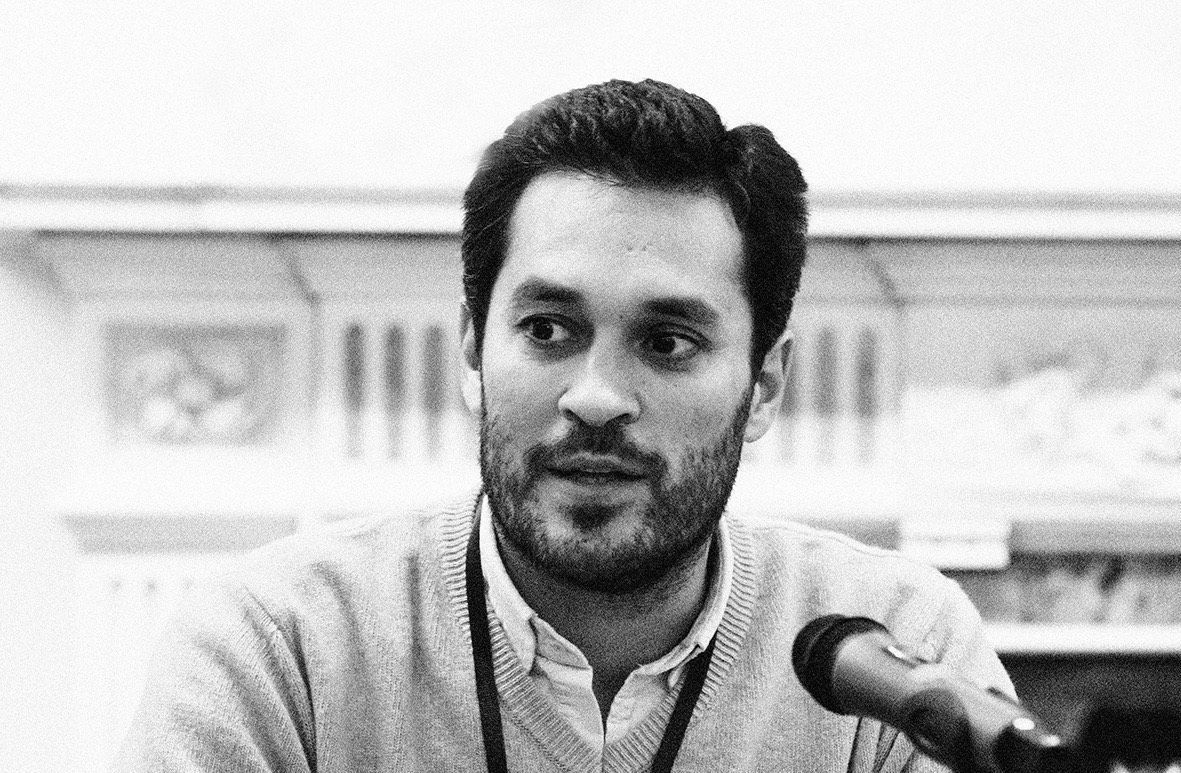
Francisco Mota S.J. is the Spiritual Advisor of UNIAPAC International, a global federation of Christian business organisations. He is a Portuguese Jesuit and was formerly Director of the Maputo campus of the Catholic University of Mozambique and Chairman and Executive Director of Brotéria. Fr. Mota currently serves as Province Treasurer for the Portuguese Jesuits.
Main photograph by Julen Iglesias, 2022, from Wikimedia Commons
Used in accordance with a Creative Commons Attribution-Share Alike 4.0 International licence

An interesting example of market transformation can be seen in the growth of worldwide spending on beauty products, which reached $440bn in 2024. There are various trends (or pressures) at work, with men now feeling freer to spend on beauty products and demand growing among young people, who are purchasing such products at much earlier ages than their grandparents. Social media has played a significant role: as influencers share their beauty regimes, the online space is becoming the biggest shop window for the beauty industry. Additionally, there has been a shift in the marketing and consumption of beauty products, as consumers have become increasingly interested in the ingredients of the products that they buy and their supposed effects. In consequence, packaging is now plainer and bears something of the ‘laboratory look’.
Naturally there are concerns about trends among young people. With reports that beauty products are now being bought by children as young as eight, there has been alarm at the loss or increasing sexualisation of childhood, as well as concern about the damage that certain products can do to children’s skin. In consequence, there have been calls for regulation. It is normal to seek restriction or regulation of products that are deemed harmful, as witnessed in relation to tobacco, for instance, and more recently in connection with tobacco alternatives, such as of vapes and nicotine pouches. In connection with the beauty industry, one might wonder whether (or hope that) a ban on social media accounts for under-sixteens, as implemented in Australia and currently under consideration in the UK, will have an effect. Regulation in one sphere might affect associated behaviour in another. If young children are heavily invested in ‘beauty’ in an unprecedented manner – to the point of talking about anti-ageing products before they reach their teens – and social media influencers are in part responsible for driving such an interest, then restrictions on social media access could go some way towards addressing the problem. However, it is important to consider whether regulation is the answer.
The thought of the sociologist Max Weber (1864-1920) perhaps offers one means of shedding light on the issue. Weber described the phenomenon of ‘disenchantment’ and its effects on society. With the advance of reason and scientific principles, it becomes increasingly difficult to believe in spirits, gods or supernatural forces, with the result that the influence of religion and superstition is diminished. As the world becomes demystified and science is able to explain everything in rational terms, the world loses its mystery and appears mechanised and predictable. However, science cannot adequately fill the void created by the ousting of religion and people are no longer able to find the kind of meaning once provided by the values grounded in traditional beliefs; moral questions can be articulated and analysed, but not satisfactorily answered.
Some have questioned Weber’s account of the disenchantment of society, while others have proposed the possibility of re-enchantment: meaning and value – if they have indeed been lost – can be restored to the disenchanted world, either by projecting subjective values onto it, or by locating value as objectively existing in nature itself.
One interpretation of a shift in the market for beauty products might employ these concepts. Is the move towards a greater interest in the active ingredients of cosmetics a sign of an increasingly ‘scientific’ mindset, as society becomes more rational? Or is this in fact a form of re-enchantment, whereby ‘science’ – however ‘science’ is understood – is elevated to the status of religion and becomes a new dogma or article of faith? Do those who seek to buy plainly packaged cosmetics that resemble medicines display a tendency to deify ‘science’, almost to the point of seeking purpose and meaning in it? If influencers with questionable credentials in dermatology are helping to drive sales, perhaps such an account is not so far-fetched.
Perhaps the disenchantment thesis is able to make some sense of the disproportionate interest in beauty among young people, with children buying – or being given – adult cosmetics. In a disenchanted society in which transcendent values and traditional notions of meaning are lacking, preferences are shaped by other forces – or themselves become the locus of value and meaning. In either case, they can become disordered and unrestrained. Might skewed and superficial notions of beauty, driven in part by the forces of consumerism and assisted by social media, be behind the behaviour of some children? Where certain values have lost their influence, it is possible that people no longer see anything wrong with eleven-year-olds using anti-ageing products. If that is what they want and their parents have no objection, the thought might run, then so be it.
It is no surprise that there are calls to regulate access to social media for children. Social media – or its excessive use – has been associated with all manner of ills. The question is whether restriction will solve the problem. Likewise, we might ask whether, should the trend towards childhood use of adult cosmetics reach a scale at which it is felt that something must be done to protect the physical and developmental health of children, regulation would prove effective.
Markets simply match vendors with buyers, and it is something of a truism that businesses, if they want to survive, adapt to markets – or seek to shape them – in order to be able to offer a product for which demand exists. In the sense that the demand side of the ‘supply and demand relationship’ characteristic of markets is shaped by societal values, it is clear that markets do not simply serve society; they reflect it, too. When we hear calls for regulation to address problems, it is important to consider whether regulation can achieve the desired outcome. For instance, what manner of legislation could ever prevent parents from buying anti-ageing or beauty products for their barely-teenage children? In the absence of parental oversight, can any regulation really prevent determined teenagers from accessing social media? Parents who buy £1,000 phones and let their children scroll through social media until the small hours, or buy expensive, adult cosmetics for their children because ‘this is what she wants’ or ‘these are what her friends have’ are arguably not matters for regulation. These are questions of values.
Markets can only serve a society because to some degree, they act as a mirror of that society. Where markets are an expression of who we are or what we have become, concerns ought perhaps to be directed not at the statute book with a view to controlling the market itself, but at our own values: the attitudes of the society that the market both reflects and serves.
Image by Freepik (www.freepik.com)

Neil Jordan brings to CEME seventeen years’ experience of academic publishing, having previously served as a senior commissioning editor for Ashgate and Routledge where he specialised in research level publications in the social sciences. His primary focus was on sociology and social theory. Neil has also been employed as a teacher of philosophy and religious studies. He holds bachelor’s and doctoral degrees in philosophy, both from the University of Southampton, and has published on the subject of ethics.
In his Nobel Prize lecture, Ronald Coase said: ‘a large part of what we think of as economic activity is designed to accomplish what high transaction costs would otherwise prevent’.
Think of the retail sector, for example. Its sole function is to reduce transactions costs – not to produce anything tangible. If you want a roast chicken dinner in the absence of retailers, you would go to a farm to buy a chicken; another farm to buy a cabbage; another to buy potatoes; and so on. The so-called transactions costs of collecting up the ingredients would be enormous, far greater than the actual costs of the ingredients themselves.
Of course, the internet has transformed retailing by finding a way to reduce transactions costs without the need for a visible retail store. Indeed, in general, changes in technology that change transactions costs can lead to radical changes in industrial structure.
The financial sector also exists to reduce transactions costs and the retail and financial sector between them are around one-sixth of the economy. It may seem a lot to spend on something as intangible as reducing transactions costs. But imagine the alternative.
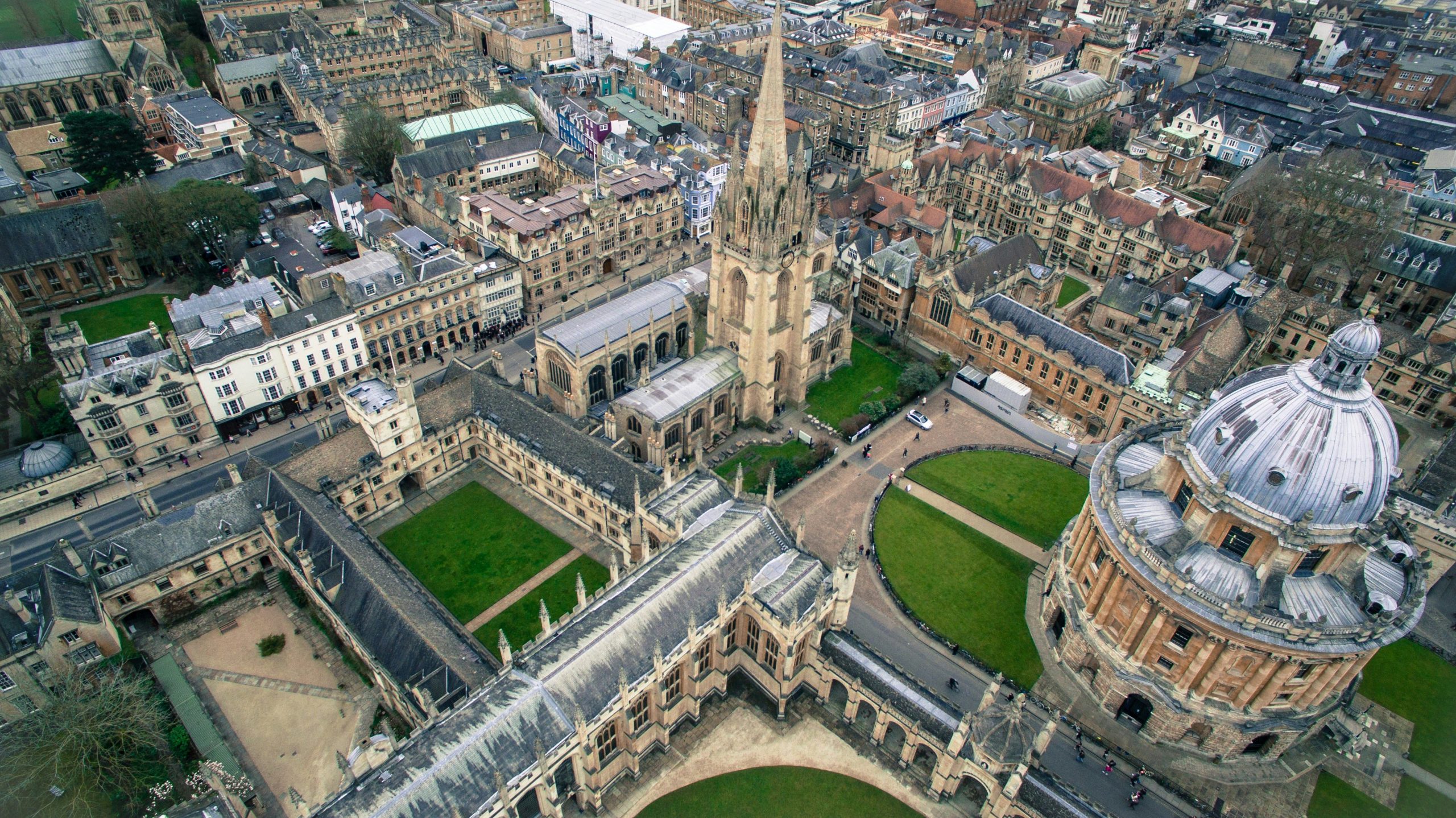
Universities also exist, though only in part, to reduce transactions costs. An individual who wants higher learning (whether for practical reasons or to expand his or her mind) could put together the elements without a university. In theory, we could have organisations that sold syllabuses and reading lists. You could sign up for lectures given by freelancers. You could get together with some people studying the same subject and a freelance professor and have some discussions. You could try to find a way to signal to employers that you have actually acquired some knowledge. But imagine the costs of doing this.
A university saves you the bother by bringing all this together: you pay the fee and hope to have a structured programme, appropriate reading lists, other students to talk to, competent professors, assessment and certification under one roof.
Our education sector used to be much more diverse. Elements of the above were available in a range of different institutions (professional bodies, correspondence course providers, teacher training colleges, worker educational associations, municipal training colleges, private training colleges, polytechnics, university colleges and, for just a few, universities).
Will AI radically change transactions costs and thus give rise to significant changes in the sector? The answer is probably ‘yes’. Almost certainly, AI will not just change how universities do what they already do. If universities simply plan on this assumption, the whole sector will be in trouble. As Fr. Stephen Wang suggested in another context, AI may find radical new ways to achieve intermediate (and, in this case, end) objectives. Perhaps there will be unbundling of what universities do. Perhaps we will go back to the diverse range of institutions that used to exist, albeit in a different form.
There may be some disciplines where the accumulation of technical knowledge is especially important and where a provider can use AI to provide excellent guided reading, syllabi, pedagogical materials, assessments, certifications, and so on, which can be supplemented by discussion groups, also organised by the provider, using AI to bring together the most appropriate people. These discussion groups may be based in the workplace, the local area, or be online. Subjects such as law and business may be especially appropriate for this approach. Professional bodies can do the certification. This does not mean that learning for its own sake, debate or discussion of higher-level principles, and so on, will not happen. They can happen in other forums, both to complement the technical education and assessment process and as a form of continuing professional development.
This leads to the question of where Cardinal John Henry Newman’s vision of the university fits in. Some would say that this has broken down over many decades and that the modern university looks nothing like Newman’s vision. I would argue, instead, that the university has expanded to take on many functions other than the provision of Newman-style education. It is not that the university has dropped Newman, it has acquired other functions. Perhaps the development of AI will lead those other functions to be done better in other learning contexts – or by universities using different models of provision.
St. John Henry Newman, declared by the Catholic Church as a co-patron saint of education recently, famously produced ‘The Idea of a University’. The key features of such an institution are as follows: the acquisition of knowledge for its own sake; a university that teaches all subjects and integrates theology as the lynchpin of all subjects; it cultivates the character of the student so that they develop a critical intellect not limited to a specialism; personal contact with tutors; and separation of teaching and research. As it happens, certification is not essential to any of this. Indeed, if education is for its own sake, certification might be regarded as redundant. In reality, many people combine many objectives of education when they undertake a degree.
It is easy to see that these characteristics of education necessitate genuine human interaction between students, and between students and teachers. However, they do not only have a place within a university, though the second of them is, perhaps, challenging for other institutions. Many of these Newman characteristics are, today, apparent in the programmes of organisations outside the university sector. Often, such programmes are, as in past times, financed philanthropically with professors giving their time for free – after all, the process is just as enriching for teachers as it is for students.
For example, we already see hints of this approach in think tanks and other organisations such as the Prosperity Institute, Alliance Defending Freedom, the Acton Institute, the Institute of Economic Affairs (working with the Vinson Centre at the University of Buckingham), the London Jesuit Centre, the Thomistic Institute and many other organisations. These programmes provide useful skills as well as intellectual enrichment without certification. They involve higher learning, discussion in peer groups and with mentors, all guided by university professors. The Centre for Enterprise, Markets and Ethics has a mini version of such programmes linking the study of economics to Christianity.
It is easy to see how think tanks, and Churches, might – indeed, perhaps should – develop such programmes further, always remembering that, in a Christian context, personal interaction is vital, and technology should be kept in its place.
But what about the future of universities? The different functions of universities could be undertaken in different institutions in an AI world. Businesses, such as BPP, are well placed to provide technical education very effectively across a number of fields.
But the multi-purpose university is not dead. However, reflection is needed. When a revolution such as AI happens, as Fr. Stephen Wang explained, we do not just need to look at AI-enhanced ways of doing what we are doing. The important questions are: ‘What are the intrinsic features of the service we are offering?’ and ‘How can these intrinsic features be best provided in an AI world in different fields – vocational, technical, teacher training, liberal arts, physical sciences, and so on?’
I suspect that, if the multi-purpose university is to survive, it will have to house different approaches to education and training under one roof (perhaps, a partly virtual roof). Diversified institutions exist in a number of sectors – think of banks, for example, with their wealth managers, traders, investment managers and banking service providers: these are all very different types of service. There will also be plenty of room for niche institutions in this new world. The development of AI should force universities, charitable education providers, business providers, professional bodies and think tanks to think about what the distinct essential elements in higher learning are and then consider the best ways to deliver them. Whether the regulators and funding framework will allow education to evolve in response to new technology is another question, of course. If they do not, they may find that the sector they are regulating and funding shrinks.
Philip Booth is professor of Catholic Social Thought and Public Policy at St. Mary’s University, Twickenham (the U.K.’s largest Catholic university) and Director of Policy and Research at the Catholic Bishops’ Conference of England and Wales. He is also Senior Research Fellow and Academic Advisor to the Centre for Enterprise, Markets and Ethics.