This book is a concise attempt to grapple with the subject of the global economy, especially in the light of events such as the Brexit decision and the election of Donald Trump. Written by two business practitioners, it has a clear and slightly breathless style – one might almost say, an executive summary stretched over 150 pages.
The book is set out in four parts: (1) The World Today; (2) The Changing Worldview; (3) The Tumultuous World; (4) The World Tomorrow. While there are connections and overlaps in terms of the content throughout, there is certainly not any sense of a carefully developing argument as one moves through the different chapters. Instead, stand-alone insights are offered in a descriptive rather than an analytical manner.
In the opening chapter, I particularly noted statements along the following lines, many of which did not seem to me to be especially startling or fresh, but which none-the-less were of interest and value:
The chapter ends by including this statement: “When politics becomes the dominant feature in an economic domain the situation quickly becomes dangerous.” For me, this betrayed the methodological core of the book as understanding economics in a technical way rather than as a question for public debate and reflection.
I was therefore not surprised that chapter 2, which addresses local business, did not seem to have a deep sense of geography or engage with the political and philosophical questions surrounding the relationships between people and places. Modern economic and business theory (if not practice) famously has a weak sense of place. Chapter 3, which addresses inclusive capitalism and social purpose, also takes a rather instrumental vision of society and business, rather than feeling for an organic relationship.
Chapter 4 looks at global finance, and rightly sees this as a critical element within the globalisation of the economy. There is some interesting analysis here, but stating that “money is a commodity” (page 27) is, in my mind, to miss the unique property of the financial sector. Chapter 5 has some rich and helpful thoughts about diversity and kinship, and brings out the importance leaders have in helping others find meaning. Chapter 6, on NGOs, seemed to me to underplay the differences between these organisations and businesses, but it was helpful to see them included.
Part 2 takes the reader through the oil and gas sector, the emerging economies, China, India, Africa, and finally Australia. There are some good historical vignettes here, although I suspect the history is at times fairly superficial, and my overall impression was that these chapters are very readable, full of common sense, but somewhat lightweight on any deep or critical thinking and interpretation.
Part 3 begins with a chapter focused specifically on Brexit and Trump. There is some good descriptive work here, and the reason why these two events happened is judged to have been some kind of failure of economic theory, the need for “more active states” (page 102), and a better ‘partnership of public and private finance’ (page 103).
The rest of Part 3 covers the important subjects of new and disruptive technologies, the “internet of things”, new and much more responsive production models, lifestyle innovations, big data and analytics. I found all of this very interesting, albeit descriptive rather than attempting any thoughtful or reflective interpretation of the modern global economy.
Part 4 sets out to look ahead into the future, and considers the themes of work, human workers (over and against robots and AI), entrepreneurship, and then finally the future of globalization. Again, there is much of interest here, but mainly in terms of a description of current trends with some extrapolation rather than any far-reaching or radical “future-thinking”. Many of the developments described resonated with my own experiences, and I was especially pleased and intrigued to read the following: “The need today… is for humans to be more human-like” (page 141). This would make a great theme for a follow-up book.
Having been published in 2018 there could not, of course, have been any descriptive reference in this book to the Covid-19 virus episode, which has arguably been responsible for a bigger shock to the global economy and the assumptions underlying it than any other occurrence within the past 50 years. A bigger weakness in my mind was the strange almost complete absence of any engagement with the eco-agenda, which asks huge questions of the global economy and has rapidly become mainstream. However, notwithstanding these lacunae this book sets out a great deal of material in a concise and readable way. Alongside other more evaluative and thoughtful discussions it makes for a potentially useful resource for theorists, policy-makers and practitioners as they wrestle with the puzzles of the global economy of today.
“Global Business” by Mahesh K Joshi and J R Klein was published in 2018 by Oxford University Press (ISBN 9780198827481 ). 158pp.
 Edward Carter is Vicar of St Peter Mancroft Church in Norwich, having previously been the Canon Theologian at Chelmsford Cathedral, a parish priest in Oxfordshire, a Minor Canon at St George’s Windsor and a curate in Norwich. Prior to ordination he worked for small companies and ran his own business.
He chairs the Church Investors Group, an ecumenical body that represents over £10bn of church money, and which engages with a wide range of publicly listed companies on ethical issues. His research interests include the theology of enterprise and of competition, and his hobbies include board-games, volleyball and film-making. He is married to Sarah and they have two adult sons.
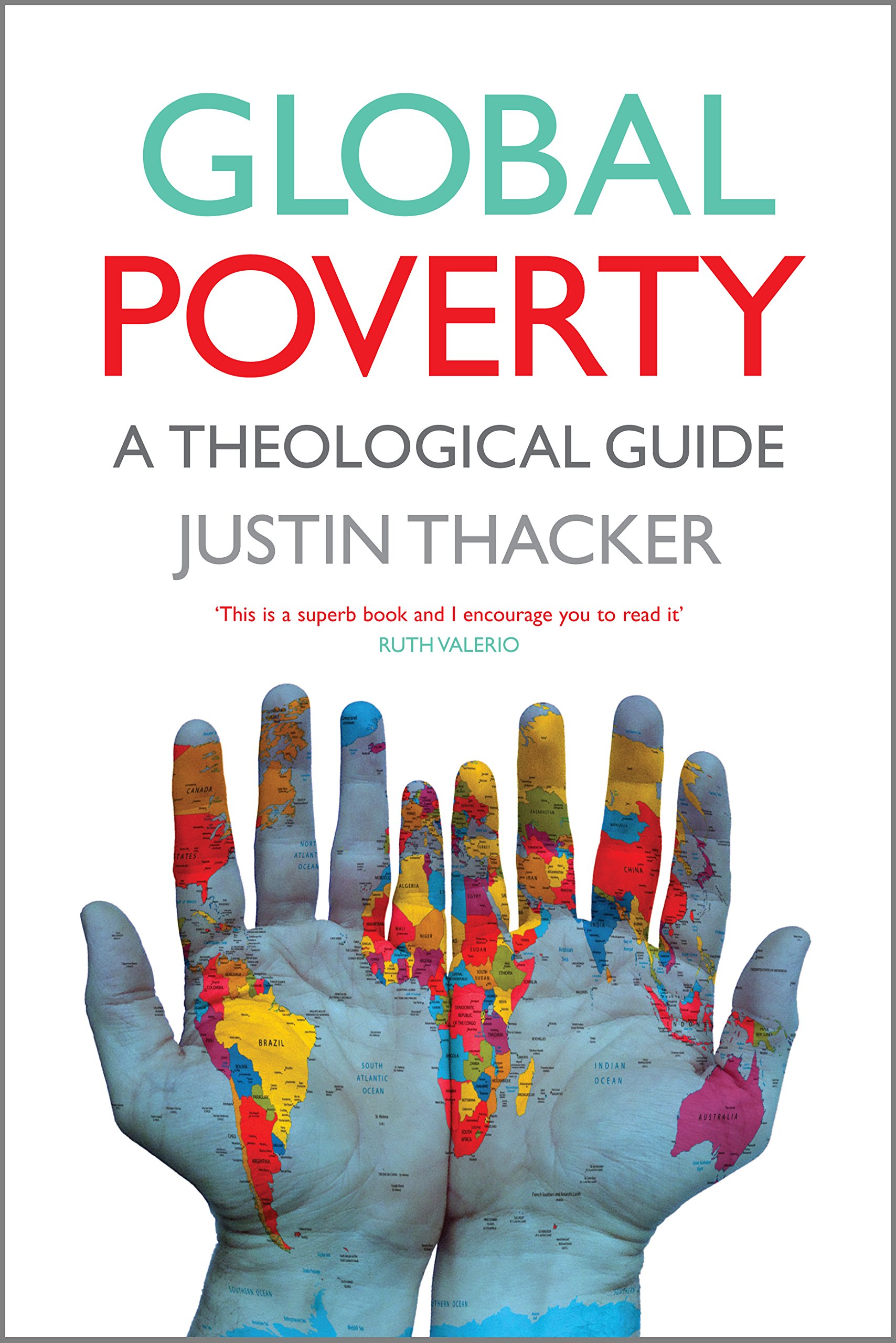
Dr Justin Thacker describes Global Poverty: A Theological Guide as “In essence … a systematic theology of global poverty” (page 2). He explains that, in terms of the public apologetic content of the book, he has two primary aims: first, to issue a “plea for a reformed capitalism” and, secondly, to suggest “on theological grounds” that aid is not a long-term solution and should rather be viewed as “an essential but temporary measure” (page 4). He states that global poverty is complex and that there are no quick fixes and, in the course of a wide ranging discussion of theological, ethical and economic issues, he endeavours to draw out the implications of the big themes of the Bible, critique the views of other writers, analyse different approaches to development and comment on practical matters. The result is a book that is deeper and more conceptual than many Christian books on poverty. Unfortunately, however, it does not live up to its promise.
The book is arranged around the Biblical themes of creation, fall, Israel and redemption (the inclusion of Israel reflecting Thacker’s adoption of Christopher Wright’s view of the paradigmatic role of ancient Israel and the Old Testament law). In relation to each of these, Thacker seeks to draw out the implications in relation to poverty and our response to it of core Biblical truths.
There is much in the theological analysis that is well founded and helpful but there is also much that is highly contentious. Some of the contentious statements are of little importance (e.g. the statement that the purpose of the Jubilee regulations in the Old Testament “is that the nation might be a holistic blessing to all the nations”, page 116) and some, while of greater theological importance, are not fundamental to Thacker’s argument (e.g. his adoption of the Christus Victor model of atonement, page 148). Others, however, are both important and fundamental (e.g. the statements that “spiritual liberation is one of the fruits of political liberation”, page 109, and that “perhaps sin is not an individual concept at all”, page 56). It is hard to see how such statements can be squared with the Bible. Indeed it is hard to square them with other things that Thacker says (e.g. his critique of liberation theology). The result is that the theological underpinning of his conclusions is shaky.
Thacker’s statements relating to economic issues are also confused. He accepts things that are often ignored by those in Church circles: he recognises that “this side of the new heaven and new earth, there is no perfect and just political and economic system” (page 180), the inherent dignity of work (page 25) and the fact that corruption has a devastating impact on many low income countries (page 89); he acknowledges that inequalities between countries are decreasing and that this decrease is not as a result of the giving of aid (page 240); and he warns against “a victim mentality that denies agency” (page 167). Yet he refers to “systemic issues that keep the poor, poor” (page 65), he appears to believe that the poverty in low income countries is linked to the consumer lifestyles of high income countries (page 83), he asserts that “The core, wealthier nations are not accidentally wealthy but wealthy precisely because the peripheral nations are poor” (page 165) and he devotes considerable space to the alleged impact of “the colonial legacy” (e.g. “at least part of the reason Britain is wealthy today is because we stole from India during the eighteenth and nineteenth centuries”, page 70, and “we enjoy the fruits of … slavery”, page 80). Hence, he comments “I wonder if Cynthia Moe-Lobeda actually speaks the truth when she says, ‘when I donate money to an agency working in Mozambique, dare I consider a gift what is frankly stolen goods?’” (page 76). It is hard to reconcile all these statements. Indeed, one gets the impression that Thacker has found himself compelled to accept some important economic truths yet cannot bring himself to accept their implications.
Despite Thacker’s acknowledgement of the complexity of his subject, much of his analysis is simplistic. He often asserts a particular view without adequately analysing the arguments for and against it, his comments relating to price controls being an obvious example of this (page 119). He also falls into the common trap of leaving people feeling guilty about their behaviour (e.g. for what they buy) on the basis of statements that fail to recognise the complexity of the situation or provide a practical and problem free alternative.
Thacker wants to present his analysis as a via media but it ends up well to the left of centre. He appears to have bought a lot of Thomas Piketty’s analysis and might do well to consider the fact that even left-leaning economists doubt much of what Piketty has said (see After Piketty, which is reviewed on this website). Conversely, he caricatures free market approaches, criticising extreme statements that few Christians would seriously believe (e.g. the suggestions that “individuals sin within a basic structure that is righteous”, page 62, and that it doesn’t matter that we engage in morally questionable behaviour since avoiding it “will make no difference because everyone else is engaging in it anyway”, page 103). He also appears to believe that the only Christian free market approach on offer is that advocated by Wayne Grudem and Barry Asmus in The Poverty of Nations, which he attacks obsessively throughout the book. As the review of The Poverty of Nations on this website makes clear, it is a flawed book and a number (but certainly not all) of Thacker’s criticisms of the views expressed in it are well deserved. However, attacking Grudem and Asmus, does not dispose of the arguments in favour of a free market approach and against some of the things that Thacker advocates.
It is one of his attacks that reveals most clearly Thacker’s defective economics. He summarily dismisses Grudem and Asmus’ view that enlarging a nation’s overall gross domestic product is ultimately the only way of eliminating poverty (page 120) and, later in the book, baldly asserts that “continual economic growth is simply not a sustainable solution for the whole planet; it is only a solution for the rich minority” (page 245). He presumably believes the earth’s resources to be limited and the environmental costs of their use to be unacceptable. What he appears not to have considered is the possibility that human ingenuity (and in particular, scientific and technological advances) will release more resources and satisfactorily mitigate the environmental costs of their use. To recognise this, one only needs to imagine the impact that the harnessing of nuclear fusion would have.
Of course, Thacker is right that there is much more to human flourishing than can be provided by economic growth but, as the past 200 years demonstrate, economic growth is an engine that drives, even a precondition for, many desirable human outcomes.
The above litany of criticisms may give the impression that there is nothing good about Global Poverty but this is not the case. It contains some worthwhile analysis of various issues, such as paternalism, the concept of a moral obligation existing when no moral responsibility for a particular situation exists and the manifestation of sin in societal structures. The final third of the book is also better argued and more insightful than what proceeds it.
Thacker’s critique of secular and theological theories of development is particularly worth reading. It includes a discussion of the theologies of Christian Aid and Tearfund, two high profile UK based Christian aid agencies. Thacker commends the practical work of both of them and has included them among the charities to which he is generously donating the royalties from his book. However, whilst he rightly commends the theological grounding of Tearfund, he is (again rightly) highly critical of that of Christian Aid. It is thus unsurprising that it is the Global Advocacy and Influencing Director of Tearfund, Ruth Valerio, who is quoted on Global Poverty’s cover, saying “This is a superb book and I encourage you to read it”.
It would be nice to be able to agree with Valerio or, at least, to say that the stronger parts of the book outweigh its defects. Sadly, however, this is not the case, those wishing to consider an economically and theologically sound approach to poverty would be well advised to look elsewhere, perhaps starting with some of the other books reviewed on this website.
“Global Poverty: A Theological Guide” by Justin Thacker, was published in 2017 by SCM Press (ISBN 978 0 334 05515 0). 257pp.

Richard Godden is a Lawyer and has been a Partner with Linklaters for over 25 years during which time he has advised on a wide range of transactions and issues in various parts of the world.
Richard’s experience includes his time as Secretary at the UK Takeover Panel and a secondment to Linklaters’ Hong Kong office. He also served as Global Head of Client Sectors, responsible for Linklaters’ industry sector groups, and was a member of the Global Executive Committee.

Thomas Piketty’s Capital in The Twenty-First Century, published in 2013 (English edition, 2014), is the economics equivalent of Stephen Hawking’s A Brief History of Time: it is a technical book that has secured mass sales, over two and a quarter million copies having been sold worldwide. One may wonder how many of the purchasers have read and properly understood it but there is no doubt that it has achieved almost cult status among those on the left of the political spectrum.
Its reception amongst economists has been mixed with divisions along predictable lines. Few, however, deny that its arguments, and the wealth of data underlying them, require critical evaluation and After Piketty, edited by Heather Boushey, J. Bradford DeLong and Marshall Steinbaum, is a significant academic contribution to this process. It focusses on the issue of economic inequality and comprises 21 essays framed by an introduction from the editors and a response to the essays from Piketty himself. Most of the contributors are economists, although some come from other disciplines (e.g. Daina Ramey Berry is Professor of History and African Diaspora Studies at the University of Texas and Gareth Jones is Professor of Urban Geography at the London School of Economics).
It is not a book to be read quickly and non-economists will find some parts heavy going, especially those littered with mathematical formulae. However, most of the book is accessible to any intelligent reader and, since Piketty’s key arguments are clearly set out, a prior knowledge of these arguments is not essential.
Most of the contributors are left-leaning and share significant parts of Piketty’s political outlook and the editors pin their colours to the mast in their introduction: they ask whether Piketty’s arguments are right or, at least, if they are not definitely right, whether his “disturbing scenario” is plausible and state that “the answer strongly appears to us to be: yes” (page 9). However, the book as a whole is by no means uncritical of Piketty. In fact, parts of it attack the foundations of his arguments and leave his edifice tottering.
Some of the essays are poor. In particular, a few descend into tedious left-wing rants (e.g. the section of Suresh Naidu’s essay entitled “Spheres of Wealth-Dictated Injustice”) and a number contain flashes of imprecise polemic, of which the reference to “proto-fascist populism” in the editors’ introduction is the first example (page 4).
Sadly, the essays of two of the editors (Heather Boushey and Marshall Steinbaum) are among the weakest in the book: Heather Boushey’s “A Feminist Interpretation of Patrimonial Capitalism” contains a few important points but ultimately adds little to the debate whilst Marshall Steinbaum’s “Inequality and the Rise of Social Democracy: an Ideological History” comprises a whistle-stop 30 page economic history of the USA, UK, France and Germany which is packed with contentious and unsupported assertions (of which perhaps the most extraordinary is the statement that the American entry into the First World War “had the flavour of a fanciful, elite foreign adventure”, page 448) and simple factual inaccuracies (such as the assertion that the UK government ministers during the Second World War “were for the most part the Labourites who had long advocated for a planned economy”, page 456). Gareth Jones’s essay (subtitled “Inequality, Political Economy, and Space”) is likewise short on careful logic and long on aggressive attacks on standard left-wing targets.
Parts of the book focus on issues that most people would regard as peripheral to its main subject (e.g. the two chapters that focus on historic – not modern – slavery) and there are a number of points that are assumed rather than argued (e.g. the Fabian sounding belief, expressed by several of the authors, that education is a key to overcoming the equality gap, which needs to be examined in the light of the growing evidence of the existence in a number of countries of a significant number of university educated people who are unable to secure anything other than low paid jobs). Furthermore, there are significant omissions. In particular, despite the commendable desire of the editors to integrate economics and other social sciences, there is no discussion of the impact of the conclusions and policy prescriptions on individual freedom, an omission that is most notable in David Singh Grewal’s essay, “The Legal Constitution of Capitalism”, which chillingly attacks the rule of law on the basis that it upholds capitalism.
These failings unquestionably mar the book but it remains well worth reading. It contains a number of high quality essays and much that should be thought provoking for all readers, whatever their political persuasions. The high points include Devesh Raval’s essay critiquing Piketty’s model, Eric Nielsen’s essay on human capital and wealth, Laura Tyson and Michael Spence’s essay on the effects of technology on income and wealth inequality and Mark Zandi’s essay on the macro-economic implications of rising inequality. Christoph Lakner’s essay regarding the global perspective is also an important correction corrective to the unduly western (or US) perspectives of some of the other essays.
Devesh Raval attacks Piketty’s famous assertion that inequality will continue to rise because r > g (the rate of return on capital is greater than the rate of economic growth). He points out that Piketty’s estimates of the elasticity of capital-labour substitution are out of line with the available literature and suggests that, in fact, capital and labour are not substitutable enough to sustain Piketty’s argument. He goes on to put forward two other explanations for the rise in the capital share of the economy: globalisation and labour saving technical change. These themes are then developed in subsequent essays, notably by Tyson and Spence and by Lakner. The conclusion of the former is that, “Inequality in market-based wealth and incomes is likely to increase over the next several decades, not because of features inherent in the capitalist system, but because of the effects of the digital revolution …” (page 203).
Neilsen questions Piketty’s focus on capital as the market value of tradeable goods. He cogently argues that “the omission of human capital is a serious weakness for both the data and the theory presented by Piketty” (page 151). In particular, he points out that inherited endowments include not merely the financial endowments considered by Piketty but also “social networks, cultural attitudes, and much else” (page 165). He rightly suggests that the inclusion in human capital in the mix is likely to result in policy proposals dramatically different from those put forward by Piketty. Indeed, he is bold enough to point out that, “A possible effect of Piketty’s plan … would be the immiseration of everyone to achieve a reduction in inequality”.
Some of the other contributors are likewise willing to draw conclusions that are unlikely to be welcome to many of Piketty’s supporters. In particular, coming from a global perspective, Lakner asserts that “The available evidence suggests that the Gini index of the global distribution of income has fallen for the first time since the Industrial Revolution, a development that is likely to continue” (page 261) and Zandi suggests that the “hand wringing over the prospects of a further erosion in income and wealth inequality the implications for the economy’s performance”, although reasonable, is likely to be misplaced since “prospects are good that inequality has peaked” (pages 406/7).
Such comments and conclusions demonstrate that, taken as a whole, After Piketty is by no means a simple contribution to the left wing scriptures: it is a serious exploration of the issues raised by Piketty. In fact, perhaps its most valuable contribution to the ongoing debate about inequality is the honest admission in a number of the essays that, despite the wealth of data that is now available and despite Piketty’s analysis, there remains much that we don’t know or don’t understand. Zandi points to numerous methodological and modelling problems that limit our understanding and several of the other authors point to deficiencies in the available data. The result is that, as Mariacristina De Nardi, Giulio Fella and Fang Yang point out in their essay, “Macro Economic Models of Wealth Inequality”, the mechanisms that cause both overall wealth inequality and individual outcomes within that distribution of wealth remain uncertain. Zandi thus wisely concludes, “Macro-economists should … not be comfortable that they have a good grip on what inequality means for our economic prospects” (page 411).
“After Piketty”, edited by Heather Boushey, J. Bradford DeLong and Marshall Steinbaum, was published in 2017 by Harvard University Press (ISBN 9780674504776). 565pp, plus notes.
Richard Godden is a Lawyer and has been a Partner with Linklaters for over 25 years during which time he has advised on a wide range of transactions and issues in various parts of the world.
Richard’s experience includes his time as Secretary at the UK Takeover Panel and a secondment to Linklaters’ Hong Kong office. He also served as Global Head of Client Sectors, responsible for Linklaters’ industry sector groups, and was a member of the Global Executive Committee.
As an economic system, unfettered capitalism in the post-recession era has come under considerable scrutiny. Reports of business scandals and misdealings, as well as serious social inequalities, are but a few of the most cited examples. In the face of these criticisms, proponents of capitalism have come to its defence. In “The Ethical Capitalist”, entrepreneur Julian Richer joins these proponents, arguing not only that capitalism is the only viable option but also that, when pursued responsibly, it is a force for good.
The founder and owner of the remarkably successful home entertainment retailer Richer Sounds, the author is five times winner of the Which? ‘retailer of the year’ award. He has been an active supporter of the National Living Wage and has taken up the mantel against tax avoidance and in relation to the housing crisis but he maintains that capitalism can be practiced ethically.
Building on over forty years of business experience, Richer begins his book by setting out his understanding of ‘ethics.’ At this point, the reader might be forgiven for any scepticism towards his somewhat simplistic definitions which often revert to rather superficial ideas of what it means to be ethical – as well as quoting mantras such as ‘what goes around comes around’ and you ‘get nowt for nowt’ (page 29).
However, as Richer really gets going with his practical applications, we start to realise that he may just have some valid points. In the first part of the book, he explains how the ethical business should treat its key players – employees, customers and suppliers. Chapter 1 draws into focus the importance of company culture, revealing how costly practices such as employee fraud, theft and absenteeism are often learnt behaviours from management. Being ethical, therefore, involves actively pursuing a positive work culture, starting at the beginning of the hiring process with honest job adverts, which attract the right candidates. Imploring businesses to follow through with prioritising internal promotions, paying a Living Wage and providing ongoing training opportunities, he makes it clear that this is not simply an optimistic vison for business altruism. By changing the way in which a business relates to its employees, it will minimise the cost of high staff turnover and this can only be positive for profitable success.
Chapters 2 and 3 make a similar case for a more ethical approach towards customers, suppliers and supporters. The overall message is that reputation is critical, in so much as it encourages repeat custom and builds crucial relationships. At times, the examples Richer includes from his own business can almost appear too saccharine, such as the time he delivered flowers to the home of a woman after a poor customer service experience.
Some may also challenge his assumption that customers are always concerned about a company’s conduct, more so than lower prices. Could it be that consumer consciousness of certain issues is only significant in periods of high media attention? Nevertheless, businesses are indeed playing a very short-sighted game when they prioritise crisis management over risk management, in a world of increasing consumer savviness and a ruthless social media scene.
In the second part of the book, Richer goes on to tackle capitalism itself, recommending points of reform and highlighting areas where limitation is both intentional and desirable. In chapter four he demonstrates the compatibility of capitalism and the principle of a National Living Wage. Using both national and international examples, Richer argues that higher wages have not automatically equated to fewer jobs. Instead, they improve a company’s reputation, which in turn boosts profitability. The wage-profitability relationship will no doubt be a contentious issue for many readers.
Richer further argues that we need to name and shame those companies which continue to resist it. Again, the assumption that reputation is a make or break factor in consumer decisions underpins his arguments, but he does provide empirical evidence to support his view.
In chapter 5, Richer critiques Thatcherite individualism, arguing that society is very much a reality. Often conveniently forgotten is that government is essential for business, not least because it provides the very environment required for it to thrive. He argues that nobody is entirely ‘self-made’ and we’re called to consider, who runs the banking system necessary for transactions, creates the laws under which businesses operate and maintains the infrastructure which holds everything together? Here too it is suggested that naming and shaming those who purposefully avoid paying their taxes would be effective, drawing on the Scandinavian model as an example. What exactly Richer views as ‘purposefully avoiding taxes’ could benefit from a more detailed discussion.
Taken from a simple game theory perspective, one might reason that it would require more than this to produce change. Businesses may very well take the view that they can ride out an unpopular image if their product or service is valued highly enough and therefore refuse to be the first in their industry to reform. Nevertheless, if we accept that consumers are becoming ever-more discerning, Richer is right to assert that capitalism doesn’t have to equal the eradication of civil society.
Finally, in chapter 6, we are cautioned that the principles of the free market cannot and should not be applied everywhere. Using privately run prisons as a key example, Richer instead focuses on the separation between ownership and management. Whilst this is perhaps the hardest of his arguments to follow, as it is unclear where exactly we should draw the line, separating complex social needs from simplistic market equations is a refreshing message from a believer in capitalism, who recognises that it need not be all or nothing.
Richer leaves business owners with the charge to get started somewhere in making a difference – and he’s provided plenty of examples and inspiration throughout his book to get them going. Despite possible criticism that his ideas rest upon certain assumptions about motivation for human behaviour, his argument that treating people well is not only admirable but also good for business, is compelling, well-evidenced and convincingly nuanced.
“The Ethical Capitalist” by Julian Richer was published in 2018 by Random House (ISBN-13: 978-1847942197). 192pp.
 Georgina Bishop is Senior Editorial Assistant within the Social Sciences at Routledge. She obtained her BA in History and Politics from the University of Nottingham in 2016.
Theology for Changing Times is a diverse collection of essays by different authors, all responding to a greater or lesser extent to the work of John Atherton, who died in 2016. Atherton was one of the leading practitioners of his generation when it came to Anglican ‘public theology’, part of a tradition that included William Temple and Ronald Preston, and is now represented by Malcolm Brown and others.
It is rather a piece-meal book and, for me, it did not really in the end describe a coherent or systematic Anglican method for doing public theology, or for engaging theologically with themes such as the economy and enterprise – perhaps this is impossible or even undesirable. However, it conveys in a hopeful and optimistic way the challenge of the task, and illustrates convincingly the kinds of ways in which the Church (perhaps especially the Church of England) might continue to engage in this ministry. Taken as a whole, it captures well the importance of the Anglican “public theology” tradition, as well as the sense that the Church of England increasingly has other preoccupations, perhaps more focused on the perceived need to attend to internal, rather than ‘public square’, matters. It also contains a good number of valuable nuggets.
There are twelve chapters, the first and last being provided by the editors, Christopher Baker and Elaine Graham, in traditional festschrift style. These set out a clear description of Atherton’s programme, using summary statements such as this 1992 description of Christian social thought: ‘A dynamic interaction between the understanding of God’s purposes mediated through Christian tradition, but equally through the secular realities of life’ (page 7). Such an approach allows for collaboration with people of all faiths and none, and sketches out a ‘big picture’ way of doing public theology which takes seriously inter-disciplinary studies. Atherton was deeply familiar with the study of economics, history and politics, as well as theology.
For those interested in the work of the Centre for Enterprise, Markets and Ethics, the section in Chapter One on the Morality of the Market (pages 10-14) will be of particular interest. This covers themes such as human flourishing, the problem of scarcity, the role for the market, questions of interconnection and integration, as well as Atherton’s attempt to use the language of transfiguration when it comes to describing Christianity’s potential effect on the market. Although Atherton strained some of his personal friendships with his increasingly broadly sympathetic stance towards the market economy, I found myself wondering at one or two points whether he was really willing to work with the raw competitive power within it. In more general terms, the well-made point in the Chapter Twelve ‘Afterword’, that the Holy Spirit is bigger than the Church, even while the Church is a necessary part of the picture, serves as a kind of framework or backdrop for the entire Athertonian approach.
Chapter Two is a revised version of an Atherton article published in Sweden in 2017, being one of the last things he wrote. It contains some fascinating economic history, and espouses a desire to develop a theological methodology that can be fit for purpose in the face of ever-increasing economic change. I was struck by how ‘secular’ this chapter was; the themes of change and progress were presented through the lens of economic history, which raised questions for me about other ways of describing growth and ‘pilgrim’s progress’, which seemed to be missing.
Chapter Three, by Hilary Russell, offers a warm appreciation of Atherton’s method and how it evolved over time. Complementing this is Peter Sedgwick’s piece (Chapter Four) on the ‘Manchester School’ of public theology, which involves the University, the Cathedral, and the William Temple Foundation. John Atherton embodied all of these aspects, and without him this ‘School’, or ‘story and a place’ (page 57) as Sedgwick prefers, might not have gained such prominence. Of interest here are the attacks on the ‘Manchester School’ approach by theologians such as the late John Hughes, springing out of the Hauerwas tradition which places more emphasis on ecclesial ethics.
Chapter Five, by Carl-Henric Grenholm (Atherton had strong links to academia in Sweden), addresses the question of globalization. It was pleasing to find Brian Griffiths, the Chairman of the CEME, mentioned as part of the discussion. Then Chapter Six, by Malcolm Brown, turns to the subject of Industrial Mission. Brown always writes clearly and engagingly, and his survey of the history of Industrial Mission in England is informative and set well within the bigger context of theological shifts.
Chapter Seven, from Ian Steedman, comes from a rather different perspective. Steedman is an economist, and as such is happy to argue for a place for efficiency – and to suggest that Atherton could accept this. However, the heart of Steedman’s discussion focuses on the role of advertising, and the way in which ‘wants’ are generated in the economy. I feel sure Steedman’s themes could be productively engaged with in a more theological way, exploring the place for persuasion and education within human interactions and the forming of societal norms.
In Chapter Eight, John Reader makes an attempt at wrestling with the consequences of the digital revolution, which he describes as ‘blurring the boundaries between the physical, digital and biological spheres.’ (page 110) I was pleased to find a section of this kind in the book, as otherwise it might have felt slightly behind the curve in terms of the impact of social media and other recent developments. Reader’s best elucidated comments connect to the significance of speed in economic life, and the loss of space for critical reflection and even silence.
William Storrar, in Chapter Nine, addresses the current ‘angry’ nature of public discourse. I learnt a great deal about Kant and his theories of ‘publicity’ and ‘transition’, by which a steady but slow formation of opinion and of the public view can come about. The need for a richer and more nuanced political discourse is argued for eloquently by Storrar, and his connection to the Manchester School’s ‘middle axioms’ is intriguing.
Chapter Ten, by Anna Ruddick, is focused on urban mission, and she draws approvingly on the Sam Wells ‘being with’ theme. Her definition of human flourishing stood out for me: ‘…a stronger love of self, a more positive approach to life choices, an increased ability to act, increasing awareness of a good God, and mutuality.’ (page143) Finally, Chapter Eleven, by Maria Power, concerns the need for a Roman Catholic public theology for Northern Ireland, and looks to resources within Atherton’s incarnational and practical methodologies.
My sense is that the ever-increasing pace of change within the economy and within politics will be a challenge for the kind of Public Theology done by the William Temple Foundation. The recent emergence of the HeartEdge network, led by St Martin-in-the-Fields, and which my own church is a member of, perhaps points to another model which is both theologically rich but also potentially more nimble and responsive. It would have been fascinating to ask John Atherton for his view on this initiative, which has only emerged since his death.
“Theology for Changing Times – John Atherton and the Future of Public Theology”, edited by Christopher R Baker & Elaine Graham was published in 2018 by SCM Press (ISBN-13: 978-0334056959). 192 pp.
Edward Carter is Vicar of St Peter Mancroft Church in Norwich, having previously been the Canon Theologian at Chelmsford Cathedral, a parish priest in Oxfordshire, a Minor Canon at St George’s Windsor and a curate in Norwich. Prior to ordination he worked for small companies and ran his own business.
He chairs the Church Investors Group, an ecumenical body that represents over £10bn of church money, and which engages with a wide range of publicly listed companies on ethical issues. His research interests include the theology of enterprise and of competition, and his hobbies include board-games, volleyball and film-making. He is married to Sarah and they have two adult sons.
The Centre for Enterprise, Markets and Ethics (CEME) is delighted to announce the publication of Corporate Executive Remuneration: An Assessment by Dr. Andrew Hartropp.
A PDF copy can be found here here. A hardcopy can also be purchased by contacting CEME’s offices at: office@theceme.org
Andrew Hartropp is an economist, theologian and Anglican church minister. He holds PhDs in economics (University of Southampton) and Christian ethics (Kings College London). Andrew has published widely on topics in Christianity and economics, including his books What is Economic Justice? Biblical and Secular Perspectives Contrasted (Paternoster, 2007) and God’s Good Economy: Doing Economic Justice in Today’s World (InterVarsity Press, 2019). He is a Fellow of the Centre for Enterprise, Markets and Ethics.

The Centre for Enterprise, Markets, and Ethics (CEME) was pleased to co-host a roundtable discussion with St. Mary’s University on the 31st October 2019. The event took place at the London Stock Exchange and focused on the issue of Corporate Executive Remuneration.
Dr Andrew Hartropp presented his latest publication on the subject, followed by a debate that challenged the varied approaches to this contentious issue – a copy of the publication can be found here.
Notable participants included:

The Centre for Enterprise, Markets and Ethics (CEME) is pleased to announce the publication of Lessons from Family Business: Perspectives from Faith by Steven Morris.
A PDF copy can be found here. Alternatively, a hardcopy can be purchased by contacting CEME’s offices via email at: office@theceme.org
Some of the most important conversations in Christianity today involve questions of justice and how Christians should not only respond as individuals and as members of the “holy catholic church” to injustice, but also be positive catalyst of just societies and social institutions. It is heartbreaking for those of us within the camp of Christianity to look into the past and see ways in which those who have come before in our tradition have sometimes actively contributed to injustice due to cultural blinders, a lack of familiarity with social or technological developments, or any number of other factors. Economic issues are no exception to this and in an age of unparalleled prosperity among some, there is no doubt that questions of justice as they relate to economics is a necessary part of this conversation. Barram is to be applauded for engaging in such a worthy dialogue.
In this work Barram begins by describing an emerging field in biblical studies that takes the name “missional hermeneutics.” Given that I am not a scholar in the field, I can attest that his discussion is helpful for the non-specialist and there are some aspects of this approach for which I have great enthusiasm. This approach recognizes that the church has a “calling as a community sent into the world to bear witness to God’s holistic purposes.” (page 25). Such a corrective is needed in all traditions as Christians often become narrowly focused on particular aspects of our mission to the detriment of others. It is also laudable that he turns to Scripture as a primary source of Christian formation. (page 12).
But not all that the author lays out is helpful in the analysis. Primarily I am referring to his advocacy for “the contemporary Christian community as the locus of biblical interpretation.” (page 33). I am always cautious to read such claims because, as Barram concedes, such claims often accompany a “loss of objectivity.” (page 34). It is not possible, as the author argues, to approach hermeneutics without bias influenced by time and space, but the solution is not to understand questions posed to Scripture as novel and therefore demanding a “new” interpretation. This approach seems to understand the Christian tradition as a strand of discreet epochs defined by the culture in which the church is immersed rather than an organic and interconnected flow of generations of the faithful in different times and places, which is inherent in the concept of catholicity. Making this assumption leaves open the grave possibility of introducing contemporary biases without any external referent to provide a corrective.
Serious moral reflection guided by biblical considerations is vitally important for Christians if the church is to be a vehicle for accomplishing God’s mission in the world. But the proper definition of the problems about which we reflect is the starting point for this reflection, and it appears in places that Barram makes assumptions that reveal a bias. In fact, his conclusion to the book states it clearly. He asserts that our “contemporary economic environment…encourage[s]” us to “choose death,” followed by a litany of caricatures of the positions held by proponents of free market capitalism. (page 241). At one point he even suggests that the biblical ideal is a communal Christian socialism, an idea that has been addressed and rebutted by a number of authors (page 165). The author also often uses terms critical to his arguments that are never clearly defined such as “justice” and “injustice” (page 120).
There is no doubt that there are excesses in our society that require moral and ethical correction, and for the Christian that correction should be rooted in Scripture. Barram makes these points well, but this project reads very much like a thinly veiled critique of market economics that never directly engages the field in an honest and fair way. As stated above, Barram does makes some accurate and important observations, but does not do quite as well in attempting to diagnose the root causes. But there are other sources from those within theological studies and the social sciences alike that more honestly and fairly examine the application of the biblical text to real and pressing social and economic problems.
Missional Economics: Biblical Justice and Christian Formation by Michael Barram was published in 2018 by Wm. B. Eerdmans (ISBN-13: 978-0802875075). 232pp.

Trey currently works for the First Liberty Institute, one of the the largest public interest law firms in the United States. He holds degrees in law, theology, and ethics and has worked as an attorney, educator, non-profit administrator, and pastor. He is the co-editor of Work in Christian Perspective (SCM, 2018), and the author of several articles, essays, and editorials on a wide range of topics. He has spoken around the world on issues as diverse as housing policy, philosophy of law, and religious freedom.
Many books about business management or corporate responsibility use historical situations to illustrate or, at least to the satisfaction of their authors, prove their theories. Quakers, Business and Corporate Responsibility adopts the opposite approach: it examines a particular historical model of business management and corporate responsibility (that of the Quakers) and seeks to draw conclusions and raise questions that are of wider relevance.
It comprises a collection of essays relating to Quaker business practices and their economic and social views, which cover “topics that encompass both a historical and contemporary perspective” (page 1). In particular, as its sub-title (“Lessons and Cases for Responsible Management”) implies, it seeks to address the question, “What are the insights for responsible business practice that may interest contemporary scholars and practitioners?” (page 1).
This may suggest that the book will not interest less specialist readers. However, any such impression would be misleading. There is plenty in the book to engage any intelligent reader who is interested in business and social issues. Several of the essays deal with narrow subject areas (e.g. Karen Tibbals’s essay on the Quaker Employer Conference of 1918, Sue Kozel’s essay on Thomas Jefferson and Paul Anderson’s essay on John Bellers) but all of the essays, even those of limited scope, raise important issues of continuing relevance and most reward careful reading and thought. For example, Anderson provides fascinating insights into the origins of Karl Marx’s views (which may be of greater relevance today than most people would have expected or desired a few years ago).
Many of the authors are Quakers and, in a few places, one may question whether they have been sufficiently critical of the group to which they belong. However, overall the book succeeds in its aim of presenting “a sympathetic, but not uncritical view” (page 2) and, by admitting the difficulties experienced by Quaker businessmen and politicians, assisting in consideration of the problems that face business and society as a whole today.
Books comprising collections of essays by different authors are almost always of uneven quality and this one is no exception. It has obvious weaknesses. There are some simple inaccuracies, such as the statement by Donncha Kavanagh and Martin Brigham that the business innovations pioneered by Quakers include bills of exchange (page 113): medieval Italian bankers would disagree! There are also some overstatements, such as the assertion that the Quakers held “the pre-eminent position” in the commercial world for much of the eighteenth and nineteenth centuries (again in Kavanagh and Brigham’s essay, page 125) and the assertion that “Friends were far-sighted…. in anticipating centuries ago the importance of spirituality to every human being in all aspects of life including corporate life” (in Georgeanne Lamont’s essay, page 18): the pre-eminence of Quakers, whilst highly impressive, was in fact limited to certain business areas, such as banking and confectionary, and the application of spirituality to all areas of life was by no means a discovery of the last few centuries or one to which the Quakers can lay exclusive claim.
More seriously, whilst most of the essays proceed in a cautious and scholarly manner, carefully extracting tentative conclusions from their analysis, some appear to be squeezing the facts into a theory (e.g. Andrew Fincham’s competing values model, page 44) or drawing conclusions that relate only loosely to their analysis (e.g. Tibbals’s “Lessons for the Future”, page 75).
Some of the individual essays suffer from particular defects. In places, Lamont’s essay reads like an advertisement for her consultancy business, whilst Mike King, in his essay about the role of the state (“Honey I Shrunk the State”), self consciously presents his views as a middle course between extremes but defines those extremes (the views of Karl Marx and Milton Friedman, respectively) in such a way as to pre-determine a soft-left landing. He also fails to examine his unspoken assumption that the state can in fact deliver the benefits demanded of it (which history suggests it often cannot) and is prone to ex cathedra statements of a contentious nature (e.g. the statement that “The far-right libertarian assumes that the means of production can be conjured into existence by anyone if given sufficient freedom”, page 83; and his similarly unsupported statement that “the passage of time [has] endorsed the logic of Cadbury [i.e. an interventionist model] rather than Bright [i.e. a more free market approach]”, page 91).
Several of the essays also, rather irritatingly, assume that everyone agrees that “paternalism” (never defined) is a very bad thing without ever considering fairly the possibility that it was the right response to the conditions of the time. Fortunately, in his essay, Richard Turnbull spots this point and, in the context of his comments on voluntary societies, suggests that scholarly criticism of the power relationships, the paternalism and the guilt complexes of the middle class is unfair “not only because of a reading back of contemporary social values but also because it fails to recognise the real impact that such societies had” (page 106). As he then recognises, the spirit of this comment applies more generally to some of the criticism of Quaker businessmen.
Inevitably, the defects take some of the gloss off the book. However, it contains a considerable amount of fascinating and thought-provoking material. John Kimberley pithily and successfully rebuts the suggestion of Hobsbawm and Ranger that Quakerism is an ‘invented tradition’ and this paves the way for the essays that follow. Kavanagh and Brigham’s essay on “The Quakers and the Joint Stock Company”, despite the defects mentioned above, is particularly interesting. It provides a brief but fascinating overview of both Quaker contribution to business from the late seventeenth to the early twentieth centuries and of the history of the modern limited liability company. It should be of interest to anyone who would like to know a little more about these matters and to apply an historical perspective to challenge modern presuppositions about business organisation.
As might be expected of an essay from the Director of the Centre for Enterprise, Markets and Ethics, Turnbull’s essay, “Quakers, Free Trade and Social Responsibility”, performs a similar role. It begins by pointing out that there is “a conundrum” to be solved: Quaker businessmen “were compassionate employers with a genuine concern for their workforce” (page 106) yet Quakers opposed social legislation. For example, Joseph Pease and John Bright were among the leaders of the opposition to Ashley’s 1844 Factories Bill and (as King points out, page 82) Bright opposed legislation to combat food adulteration. Turnbull examines the beliefs and experiences of the Quakers, showing how these things may have led to the combination of paternalist concern and extreme libertarianism that was characteristic of Quaker thinking prior to the late nineteenth century. This leads to a conclusion that would have been suitable as a conclusion for the whole book: the Quaker businessman had many strengths; they “may not have been unique in [regard to their social concern], but that does not make them any less genuine” (page 106); some Quaker employers were more pioneering than others but, as a whole, they were among the pioneers of good employment practices; yet there were failures and blind spots of which “the most important one is the use of child labour in at least some Quaker factories against the increasingly prevailing national opinion” (page 107); more work needs to be done on specific companies but, overall, “We should neither condemn or whitewash” (page 107). We should learn!
“Quakers Business and Corporate Responsibility” edited by Nicholas Burton and Richard Turnbull was published in 2019 by Springer Nature Switzerland AG (ISBN – 13:978-3030-04033-8). 181pp.
Richard Godden is a Lawyer and has been a Partner with Linklaters for over 25 years during which time he has advised on a wide range of transactions and issues in various parts of the world.
Richard’s experience includes his time as Secretary at the UK Takeover Panel and a secondment to Linklaters’ Hong Kong office. He also served as Global Head of Client Sectors, responsible for Linklaters’ industry sector groups, and was a member of the Global Executive Committee.
Colin Mayer is a distinguished professor at the University of Oxford, former dean of the Said Business School and a Fellow of the British Academy . Throughout his career one of his fields of interests has been the business corporation and at present he is director of the Academy’s research programme into the Future of the Corporation.
However neither the title nor sub-title of the book do justice to its contents. The book is nothing if not ambitious. In examining the business corporation the claim is that “it will take you across history, around the world, through philosophy and biology to business, law and economics, and finance to arrive at an understanding of where we have gone wrong, why, how we can put it right and what specifically we need to do about it”.
The remarkable fact is that I believe he has achieved his aim. The book is wide in scope, has considerable depth and is not superficial. It is well written, interesting to read and draws on a lifetime of research into different aspects of the business organisation.
The book is first a sustained and vigorous attack on Milton Friedman’s claim that the sole social responsibility of business is to increase its profits, subject however to doing so in open and free competitive markets, without deception or fraud, while conforming to the basic rules of the society embodied in law and custom. For Mayer the public have lost trust in business precisely because business has followed Friedman’s advice and put the interests of shareholders above other stakeholders.
In its place he proposes a total reinvention of the corporation. Corporate law should be changed so that each company is required to state its ultimate purpose over and above profit, redefine the responsibilities of directors to deliver these new objectives, develop new measures by which they can be judged and introduce incentives to deliver them.
In exploring the purpose of business Mayer distinguishes between ‘making good’ (such as manufacturing cars, or electrical products) and ‘doing good’ (treating employees well, cleaning up the environment, enhancing the well-bring of communities). The latter has a social public-service element which goes beyond the private interests of the firm’s customers and investors, and even beyond section 172 of the 2006 UK companies Act, which already imposes duties on directors to take into account the interests of stakeholders other than shareholders. As examples of successful and enlightened corporations he mentions with approval “industrial foundations” companies such as Bertelsmann, Bosch, Carlsberg, Tata and John Lewis which are set up as foundations or trusts.
While I admire his ability to explore different dimensions of the business in one book, I have serious problems with his argument.
First, the pursuit of long term profitability is essential if a company wishes to prosper in the long term. Long term profit is a great discipline. This applies not just to publicly quoted companies; it applies equally to private companies, B-corps, partnerships, foundations and trusts. If companies of any kind make losses, capital will drain away and either they get taken over or go bust. This applies to all companies even those which are foundations and trusts. Not only that but long term profitability is a pre-condition of companies doing good: being able to reward employees well, help communities, develop new products and services for customers and invest to protect the natural environment. In this context it is important to distinguish between long term profitability and short term profitability.
The pursuit of short term profitability is bad business. Just recall the financial derivative products created by banks in the feverish boom years leading up to the 2008 crisis which ultimately led to some banks going bust and others being bailed out by governments. This was bad business. British Home Stores was a classic example of short term profit maximization with inadequate investment in the business itself or the pension fund. Again short termism leading to bad business.
Pursuing long term profitability is not just a matter of management getting numbers right. Before they can do that it requires them to set out a vision which makes the firm “a great place to work”, ensures customers recognize value for money in what they buy, becomes known as an ethical organization by the way they conduct business and admired by shareholders for earning a superior long term return to capital.
A second problem with Mayer’s proposals is the sheer complexity of managing the diverse and frequently opposing interests of stakeholders. It is logically impossible to maximize in more than one dimension. If managers have to manage the interests of all stakeholders they need to be able to make meaningful tradeoffs between competing interests. Profit or change in long-term market value is a way of keeping score in the game of business. Michael Jensen and others have shown that in the long term prospective profit maximization and shareholder maximization amount to the same thing. The use by management of a balance scorecard is no better as it ultimately gives no objective way in which to weigh all of the elements in the scorecard to arrive at a single figure.
A third problem with Mayer’s argument is accountability. “Accountability to everyone means accountability to no one”. The author’s proposal is a revolutionary re-definition of property rights within a modern corporation to make it “trustworthy” but to whom is the board of this new “trustworthy” corporation responsible? And what are the rights of ownership over the funds invested in the business? Already in the US the number of publicly traded companies quoted on exchanges has roughly halved over the past 25 years. One reason is the increasing cost of regulation: another is the availability of private equity finance. If Mayer’s proposals were ever to be implemented they would constitute a major disincentive for companies to raise capital through the public markets and only accelerate the decline in stock market listings.
In Mayer’s proposal shareholders would become providers of capital to business rather than owners of the business. The general public have never had a great trust in business which is why ever since the Industrial Revolution governments have stepped in to control business through laws passed by parliament, regulation, mutualisation, nationalization and state ownership. Mayer’s proposals will downgrade the existing well defined ownership rights which exist in publicly traded companies and replace them with a form of ‘social’ decision making in which the leadership of the company is answerable to trustees but shielded from competition in the market place through take over bids. A sure way to create inefficiency.
In this respect these proposals are a far cry from an exercise in academic research, more a political statement. Far from having no objection to the existence of ‘trustworthy’ corporations as one of many different forms of corporate ownership, I welcome them. In terms of corporate structures let a hundred flowers bloom. If the author was making a case for the idea of ‘Industrial corporation’, fine. However he is doing more than that. He is making the case for eroding private property rights and restricting what companies can do, which is as much a political statement as one based on objective analysis.
“Prosperity: better business makes the greater good” by Colin Mayer was published in 2018 by Oxford University Press (ISBN: 978-0-1988240-08). 288pp.

Brian Griffiths is the Chairman of CEME. For more information please click here.