Skip to content

Andrei Rogobete: Britain faces a savings crisis — what can be done?

This was first published in The Article.

Brian Griffiths’s recent article The Spectre of Inflation examined the nation’s record on controlling inflation, and also the dangers of returning inflation. This is, at least in part, driven by the staggering increase in public spending as well as the UK’s money supply growth since lockdown. While most analysts do not see the return of inflation as an immediate threat, there is a risk that it may develop in the medium to long-term.

The figures on individual and household savings in the UK are bleak. The ill effects of that may not appear imminent. Low rates of saving impede economic growth and social stability in the medium term. This is particularly true when a large section of the population has very little to no financial reserves.

Research by Legal & General estimates that over one third of people in Britain have less than £1,500 in savings, and 15 per cent have no savings at all. The Office for National Statistics (ONS) found that young people are the worst affected group with an estimated 53 per cent of 22-29 year olds having zero savings.

Alistair McQueen, Head of Savings and Retirement at Aviva recently said “We entered the pandemic with household saving at a near 50-year low, at 5 per cent. Consumption was king. Saving was a very distant second”.

The lockdown forced a change. On one hand, it blocked a significant chunk of discretionary spending which led to a kind of “forced” saving. On the other, it placed significant pressure on households and individuals that, for various reasons, have seen their incomes dwindle. The key differentiating factor is between those that managed to maintain a steady supply of income throughout lockdown and those that have not.

It is the latter that will bear the economic brunt. The latest data from the ONS points to over 700,000 jobs losses since lockdown began in March. A report by the Resolution Foundation found that low income households are twice as likely to fund the lockdown with debt as higher income households. The average savings for those in shut down parts of the economy are £1,900 compared to £4,700 for those that can work from home.

One of the main problems facing government and the Bank of England at a macro level is an overreliance on Quantitative Easing (QE). It is simply unsustainable in the long run. Former Governor Mervyn King recently said “The argument for any quantitative easing is: do we need to expand the money supply in order to boost economic recovery?… At this stage, I still think it’s premature to argue that a big monetary stimulus is appropriate.” In other words, the Bank of England should drop QE.

The business community also views QE with a certain degree of scepticism, knowing very well that it does not represent a sustainable solution. This means that the rock bottom interest rates we see on savings accounts will probably be with us for some time to come. This is bad news for those trying to save. Government needs to recognise that, firstly, QE might cause as much social concern as it does economic relief and, secondly, there will never be a favourable economic environment for savings as long as interest rates remain abysmally low.

Yet beyond the macro picture, incentive schemes have been unattractive to a large section of the public. Savings broadly fall into three main categories: emergency savings, retirement savings, and savings to buy a first home. From Lifetime ISAs to Help to Buy schemes, none stands out as a resounding success. Each incentive shows its limitations and shortcomings when placed under scrutiny.

Let’s take Help to Buy for instance. Home ownership in the UK has been on a downward trend since the early 2000s. It reached a peak in 2002 with 58 per cent of all homes being occupied by their owners — by 2017 this figure would drop to 51 per cent (with or without mortgages).

However, the more pertinent statistic is trends in home-ownership among different age groups, with the youngest group (25-34 year olds) being the worst hit. In 1990 around 50.5 per cent of all 25-34 year olds were homeowners, by 2016 this number dropped to a record low of 24.5 per cent.

Research also suggests that Help to Buy has mostly helped those who do not really need the help in the first place. In some regions it has pushed housing prices up to the benefit of estate agents and developers rather than buyers. A Commons report found that while the scheme has encouraged the construction of new homes, only 37 per cent of all Help to Buy applicants needed the financial assistance. This implies that over 60 per cent of Help to Buy applicants could have afforded a property without the scheme. Another problem arises with the government’s right to change interest rates after five years. Meg Hillier MP, chair of the Public Accounts Committee said that “The scheme exposes both the government and consumers to significant financial risks were house prices or interest rates to change… It does not help make homes more affordable nor address other pressing housing problems in the sector”.

On a more positive note, housebuilding in the UK has been on the rise. In 2018-2019 new builds peaked at just over 240,000, the highest number in over 30 years. The Home Builder’s Federation estimates that over 380,000 are already in the pipeline but more political and legislative support is needed to reach the government target of 300,000 new builds per year by the mid 2020s. This will of course depend on further reforms to the restrictive planning system as well as broader economic growth.

The solution to a complex problem like savings begins with economics and ends with culture and society. We need an economic environment where it pays to have savings and where the activity of saving is rewarded. This stresses the importance of preventing a return to the high inflation of the 1970s. As Brian Griffiths remarked in his article, “Inflation seems a more abstract concept than unemployment, but it can have just as devastating an impact. Living through that period and witnessing at first hand the corrosive effects it had… Carefully managed savings were eroded; reckless borrowing was rewarded”. It is also worth pointing out that savings and spending are not mutually exclusive: one does not necessarily come at the cost of the other. In fact, the presence of savings contributes to a longer-term stable level of spending for households and individuals.

Finally, we need to foster a culture of saving. We need to make savings an attractive option again. This goes beyond economics and into civil society where the practice of saving should once again, be seen as a commendable virtue. A virtue where individual morality and prudent behaviour is manifested in the management of financial affairs.

Britain has done this is the past: The National Savings Movement that operated for most of the 20th century is an intriguing case of mass mobilisation to promote savings across Britain. Now, this is not necessarily a call to re-establish the Savings Movement in a historical sense, but to re-establish the ethos behind it.

What could a Savings Movement for today look like? Perhaps it is a question that requires greater attention from those in public office. When Chancellor Rishi Sunak presents his autumn budget (which he should certainly deliver despite the uncertainties of a second wave), he should outline a positive strategy for the medium term to encourage greater saving.

We must grasp the notion that savings (and saving) are essential to the wellbeing of society. With greater public recognition of that fact, generations to come will be that one step closer to financial security and British life will have a greater chance of flourishing.


Andrei Rogobete

Andrei E. Rogobete is the Associate Director of  the Centre for Enterprise, Markets & Ethics. For more information about Andrei please click here.


Richard Turnbull: Is the concept of Employment an anathema in the new, plural working environment?

This was first published for Tectona on .

For decades UK governments have sought to impose a fixed employment status on as many in the workforce as possible. If Rishi Sunak (UK Chancellor of the Exchequer) wants to be remembered as a great, reforming Chancellor he should abolish the concept of employment and make all workers independent contractors.

Too radical? Let’s dig a bit deeper…

The history of IR35, which originated as a Revenue press release in 1999 before becoming law in 2000, is a case in point. The Inland Revenue argued that contractors were using the fiction of a corporate structure to avail themselves of more generous tax allowable expenses and paying themselves by way of dividends, thus avoiding national insurance contributions.

In reality, the Revenue argued, they were employees.

Over the last 20-years despite numerous reviews, amendments and additions to the regime (most recently aiming at personal service companies in the public sector), the provisions remain in place. Private sector off-payroll workers will likely soon come into the scope of the anti-avoidance measures too.

Whilst HMRC has a point about certain aspects of the existing provisions, we have a couple of concerns:

  • – What if, in this drive towards a centralised one-size-fits-all employment status, the IR35-dragnet completely misses the long-term trajectory of the future shape of the work environment?
  • – What if someone who provides services to a range of businesses ends up in a really messy tax situation? They will be forced to become an employee of each of them as the current PAYE system cannot cope with multiple employments. The result – individuals will face tax demands as part of year end self-assessment as they will have had the wrong tax codes.
  • – What if the demand to classify as many as possible as employees actually exposes the inadequacy of the current taxation system as being barely fit for purpose for the new order?

In short, IR35 is a mess and inconsistently applied. The proposed changes will only make it worse and likely force everyone to become “employees” when in reality they aren’t, thereby causing increased needless bureaucracy.

The future of work is greater flexibility, independence and training

The robots are coming! We stand on the edge of a technological revolution which is proceeding at an exponential pace and will transform our society and our way of life.

What is different now is not the digitisation of processing, but its speed together with the impact of connectivity. This will transform our access to knowledge and how we consume it.

The pessimistic view is that this will sweep away both low-skilled and more highly skilled jobs and the traditional approach of education and reskilling will not work.

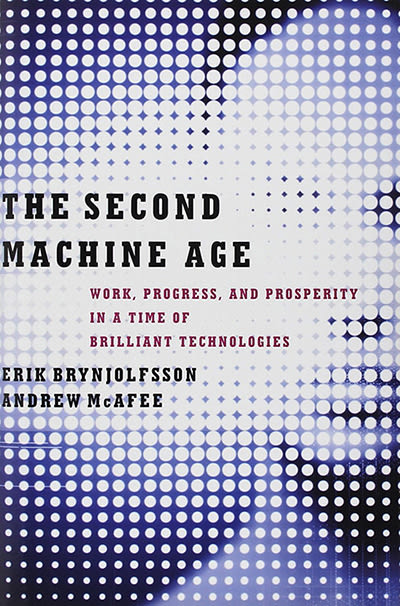
However, there is a more optimistic view as well. In their book, The Second Machine Age, Erik Brynjolfsson and Andrew McAfee emphasise that despite the challenge of the robots, the demand for human labour will not disappear. What is more, although few jobs will remain untouched, the best response is education, innovation and entrepreneurship. They have more confidence in the innovative elements of the human person and human adaptability and flexibility and it is this that will enable humanity to seize the opportunities.

The implications are deeply significant. If the optimism of Brynjolfsson and McAfee is to be the prevailing argument then there will be a pattern of:

Work – Training – Work – Retraining – Work…

This will be underpinned by adaptability and flexibility which will be the watchwords of a successful career.

If the trend towards imposing employment status on the many continues, the current education and tax systems will prove to be barriers and not enablers in this innovative future.

Transforming education

Life-long education and technical education have been mantras for decades with little real action. If the pattern of work is going to be more flexible, adaptive and innovative then both technical education and training need to match these characteristics.

A few of thoughts:

  1. – Perhaps there should be a ‘technical skills (here think STEM) and financial education certificate’ taught in all schools; dare one suggest, instead of the useless Citizenship Studies?
  2. – Perhaps there should be move back to valuing apprenticeships outside the traditional ones of engineering etc – areas such as the law, accountancy (like articled clerks) – instead of pushing the route of university thereby bringing the benefit of less debt for students and career focused training whilst being paid.
  3. – What about reducing college degrees to 2-years and allowing the ‘third year’ to be credited to a personal training account to be accessed and used over the course of a person’s working career (an education credit, if you will)?
  4. – The State doesn’t have to pay upfront for full time education and perhaps employers should get some form of tax break.

Transforming employment and taxation

At the heart of this debate is the recognition – and it is hard to see it as otherwise – that the current system of employment and taxation in the UK is not fit for purpose.

Why continue to insist on employment status for all when work will become more portfolio based, more flexible and more adaptable? The very fact of permanent employment status simply reinforces the idea that we will remain in one job for the long-term – an increasingly unlikely scenario.

The inconsistency of the national insurance system also reinforces this problem. This was brought in to stark focus during the 2020 Covid-19 pandemic some businesses were able to access government assistance and others were not. National insurance is now, effectively, no more than general taxation to which certain social security rights are attached. The employers’ portion of national insurance, currently 13.8%, is seen by many as an outright tax on jobs.

What might this new world look like? Some thoughts:

  • – End the whole idea of employment status and make every individual worker an independent contractor.
  • – Abolish national insurance as a separate tax (and merge into income tax and/or corporation tax).
  • – Set up a portable tax and benefits account for each individual; irrespective of whether a person works for a particular company for one week or ten years, this account can accrue state pension entitlement, a basket of protections against discrimination or unfair dismissal, the education credit mentioned earlier and the ability to manage self-assessment, expense claims and so on.
  • – Develop a system which can accommodate “negative income tax” so that over the course of a working life any necessary benefits could be applied through the same mechanism.

The outcome would be consistency, a more efficient management of the tax and benefits system and an approach to work and ‘employment’ status more in line with the direction of travel in the new, more digital, workplace. Increased home-working merely increases the need for changes.

There would also be a transformational impact on how an individual would view their own ‘employment’ career; accepting responsibility, recognising the need for adaptability and flexibility and encouraging entrepreneurship and innovation.

Will Rishi Sunak grasp this opportunity to change and equip our workforce and nation for the challenges ahead? Or is this too radical and will it yet again be kicked into the long grass?


Richard%20Turnbullweb#1# (2)Dr Richard Turnbull is the Director of the Centre for Enterprise, Markets & Ethics (CEME). For more information about Richard please click here.


Brian Griffiths: The Spectre of Inflation

This article was first published in The Article on August 5th 2020.            

The Great Moderation

For the past 27 years UK governments of all political persuasions have targeted a rate of inflation of 2 per cent as the principal objective of monetary policy. The Bank of England is charged with the implementation of policy and to ensure its freedom to take tough decisions it was granted operational independence from the Treasury in 1997. The result has been the Great Moderation: low and stable inflation averaging 2.8 per cent annually, falling unemployment (with the exception of a few years after the 2008 financial crisis) which has recently been at 4 per cent (effectively full employment) and a growth of those employed in the working population from 69 to 75 per cent. Alan Blinder, a Princeton economist, described price stability as “when ordinary people stop talking about and worrying about inflation”. This is precisely what happened.

Inflation targeting was introduced in the early 1990s, after the experience of living through two decades of high and volatile inflation. Throughout the 1970s and early 80s, inflation averaged 15 per cent annually. However, it was not just inflation that was a problem. Inflation was accompanied by rising unemployment, so-called “stagflation”, labour disputes, strikes and relatively low productivity growth, which became known internationally as “the British disease”.

The success of inflation targeting has been due to the freedom of the Bank of England to raise or lower interest rates without political interference, so controlling the growth of monetary aggregates and consequently anchoring expectations of future inflation at 2 per cent.  Similar success in controlling inflation has occurred in the US, Japan and the Euro zone. In each case their central banks have enjoyed operational independence.


The Sudden Return of Inflation

Recently inflation, however, has once again become a topic of conversation. The combination of the global pandemic, lockdowns in one country after another and a more troubled global economy will, according to the Chancellor of the Exchequer, land the UK in a recession “the likes of which we have not seen”. The OECD and the Office of Budget Responsibility estimate that the crisis will lead to a UK unemployment rate of 11.7 per cent, or 4 million people. If a second wave of Covid-19 were to occur, this rate could rise to 15 per cent, or nearly 5 million. The response of economists, commentators, central bankers and politicians has been that extraordinary times demand extraordinary measures. Hence the staggering increase in public spending and the monetary authorities’ rapid credit expansion have both met with general approval as an appropriate response to the crisis. The question is: might these measures not lead to inflation?

The UK money supply (M4) has been growing at an annualised rate of 20 per cent since February. Last year it was closer to 4 per cent. In addition, the Bank of England has reduced the amount of capital that banks and building societies need to set against their lending. Some commentators have weighed in recommending that printing money is a valid response to the crisis because “deflation is a bigger fear than hyperinflation” (FT, 28 April). This has been the view of reputable US economists, such as Olivier Blanchard and Lawrence Summers, who fear we face secular deflation. They propose doubling the current inflation target to 4 per cent. Others have suggested that inflation should be allowed to rise to a “moderate rate”, which can only imply a higher rate (New Statesman, 26 June). Adam Tooze, the Princeton historian, who is British,  has argued that in times of crisis the rate of inflation should be allowed to rise — even, if necessary, to levels last seen in the UK in the 1970s (BBC News, 28 June).

Meanwhile, the former Chancellor Sajid Javid, plus the economists Gerard Lyons and Jim O’Neill, have proposed the more radical option of dropping inflation as a target. They would replace it by a money income growth target, an aggregation  of real income growth and the rate of inflation, which would mean that inflation could rise significantly. “Growth must be the target, not inflation.” (O’Neill). 

The actions of the Bank and the Treasury and the views of the commentariat have not been lost on investors. The demand for government securities (gilts) index-linked to inflation has been increasing, even when they offer negative yields.  The prices of gold and silver are at their highest for nine years. The increase in global trade has resulted in price rises of industrial metals and oil. Auction prices for such diverse items as Michael Jordan’s old shoes, fine wines and contemporary art are soaring.

Against this background we must take the prospect of inflation seriously. I say this, not because I am unconcerned about the costs and pain of rising unemployment. The inability to find paid employment after repeated attempts to do so is depressing, demoralising and spiritually impoverishing. As the 1930s and early 1980s showed, unemployment is indeed a “social evil”. The 1970s also demonstrated, however, that this is true of high and volatile inflation. 

At that time, I was a member of the economics department of the London School of Economics, teaching and conducting research in the field of monetary economics. That inflation reached 25 per cent in 1975 is a matter of record. Inflation seems a more abstract concept than unemployment, but it can have just as devastating an impact. Living through that period and witnessing at first hand  the corrosive effects it had on economic life and the life of society I saw another aspect of the story and one which I would never wish to see repeated. Carefully managed savings were eroded; reckless borrowing was rewarded. It is interesting that most members of the present Cabinet had not reached their teens when inflation took off in the 1970s and so have little experience of living with it.


Lessons of the 1970s and 1980s

The immediate priority for the Government must be to tackle rising unemployment, but not at the risk of letting inflation take off again. To allow inflation to rise would be a failure to learn the lessons of history.

One lesson is that inflation is ultimately and invariably a monetary phenomenon, something recognised by great British economic thinkers such as Hume, Smith, Ricardo, Mill, Marshall and Keynes. It is typically slow to take off, volatile when it does and extremely costly to root out. When the monetary taps are turned on, the immediate impact is on rising asset prices, then increasing aggregate demand, a short term boost to output and finally rising prices of goods and services. This was true of the early 70s, the “Barber boom” (Tony Barber was Chancellor of the Exchequer 1970-74), and the late 80s following the then Chancellor Nigel Lawson’s instructions to the Bank of England to shadow the Deutschmark, with the result that the money supply grew more rapidly. Over these years the change in the rate of inflation from year to year was high at times, with large annual increases of 3 to 8.5 per cent, but low at others, with equally significant decreases of 3 to 9 per cent.

Controlling inflation is painful.  It requires the central bank to raise interest rates. In the mid-1970s Bank rate was raised to 15 per cent, in 1979 under the new Thatcher government to 17 per cent and again in the late 1980s to 15 per cent. Each time interest rates have been raised, inflation has been brought down, but only at the cost of increased unemployment.

The evidence since the 1960s suggests that it is an illusion to think that there is a trade-off between inflation and unemployment or between inflation and the rate of economic growth, other than in the very short term. The factors which make for growth are the skills of the labour force and the productivity of capital investment, which cannot easily be changed in the short term.  Increased growth resulting from a sudden rise in public expenditure will prove unsustainable in the longer term.

While historically inflation is a monetary phenomenon, it would be wrong to be dogmatic and argue that on each occasion when monetary growth accelerates, inflation will necessarily follow. The 2008 financial crisis was followed by a huge increase in bank reserves due to Quantitative Easing (QE). Inflation did not take off, but that was because bank lending was constrained by the inadequacy of bank capital and banking regulations. The difference between then and now is that banks are well capitalised and encouraged by central banks to lend freely.

A second lesson is that inflation has a real cost to the economy which many economists have been slow to recognise. Hyperinflation is recognised as a disaster, but it is thought that lesser inflation can somehow be managed.  The Nobel Prize-winner James Tobin of Yale famously caricatured the cost of inflation as the lost time and worn shoe leather in making extra trips between savings banks and commercial banks in order to earn a return on deposits. If only it were true.

Inflation is costly because it diverts real resources from productive to unproductive use, the full impact of which is only captured when we recognise, with Frank Knight, Mervyn King and John Kay, that the world in which we live is characterised by radical uncertainty. When the monetary taps are turned on, we know that inflation will rise in the foreseeable future, but we do not know enough about its likely course to act with confidence. This creates uncertainty for business and households as to when to invest, the need to hedge decisions, anticipate what actions government might take, negotiate wage increases and decide when and by how much to mark up prices. If all contracts could be index-linked to inflation its cost would be reduced, but the insight of radical uncertainty is that this is precisely what we cannot expect to know..

A third lesson is that inflation undermines the legitimacy of a capitalist economy and a parliamentary democracy. Keynes saw this very clearly.

“Lenin is said to have declared that the way to destroy the capitalist system was to debauch the currency…..Lenin was certainly right. There is no subtler, no surer means of overturning the existing basis of society than to debauch the currency. The process engages all the hidden forces of economic law on the side of destruction and does it in a manner which not one man in a million is able to diagnose.”

(J.M. Keynes: The Economic Consequences of the Peace, 1919)

Keynes is right to emphasise the importance of subtlety and certainty. Inflation results in a capricious redistribution of income and wealth. Those on fixed incomes (pensioners or families receiving welfare benefits not adjusted for inflation) lose out, those with incomes indexed to inflation (e.g. civil servants’ pensions) gain, those borrowing money are subsidised, those holding money and conventional gilt edged securities (e.g. pension funds) are penalised. This redistribution bears no relation to extra work, greater risk or increased saving. It is totally arbitrary, the equivalent of a random wealth tax, with an outcome little different from a lottery. It is a tax which no specialist in taxation would ever advocate.

As inflation rises, a witch hunt begins to find the guilty parties: speculators, trade unions, foreigners, estate agents, merchants, bankers, traders. Effect becomes mistaken for cause as higher wages, increased rents, rising commodity prices and remarkably high interest rates are seen, not as the result, but the cause of inflation. Typically governments respond by imposing price and wage controls, which never succeed but make matters worse by creating conflict between labour and management.

Inflation as a form of concealed taxation has a further and important  dimension. When during a period of inflation the Bank of England issues a new £20 note with the words printed on its face: “I promise to pay the bearer on demand the sum of £20,” signed by the Chief Cashier for the Governor and Company of the Bank of England, it does so recognising that in all likelihood inflation will continue. If inflation is expected to be, say, 20 per cent, the Bank acts in the knowledge that the purchasing power of the note will only be worth £16 one year later. This is a form of deception enshrined at the very heart of the financial system. It creates a corrupting influence, prompting others to abuse their potential monopoly powers, evade taxes and practise other forms of dishonesty, such as creative accounting.


Taxing Matters

In the very short term, a matter of months, prices may rise for all sorts of reasons: a bad harvest, an oil price hike, panic buying, higher import prices, a rise in VAT or even social distancing in restaurants. In the longer term inflation is invariably associated with the increasing growth of monetary aggregates, as governments find themselves under pressure to finance budget deficits.

The common cause of all hyperinflations is the inability of governments to finance excessive spending. This was true of Germany in 1923, Hungary in 1946, Chile in 1973 and Zimbabwe today, where the annual rate of inflation is 785 per cent. At present there is no reason to think that hyperinflation is a threat in the UK. Yet the staggering increase in government spending and borrowing, not just at present but for some time to come, will need to be financed.

The only way a government can finance deficit spending, without defaulting on its debt or reducing existing expenditure, is through taxation. It can raise existing tax rates, introduce new taxes, defer taxes through borrowing or permit inflation to tax those holding the monetary liabilities of government. It can hope for increased  economic growth which will increase tax revenue. It can rely on “fiscal drag” through inflation and real economic growth as individuals pay proportionately greater tax through moving to higher tax brackets.


The important point is that if the government increases expenditure and does not cut existing programmes it can only finance the expenditure through increasing taxation. All taxes raise issues regarding incentives and fairness which doubtless will be debated at length over coming months.

At present the UK government is relying on borrowing to finance extra spending. The official interest rate, Bank rate, is at an all time low of 0.1 per cent, which means that the cost of borrowing is exceptionally cheap. However, market sentiment is fickle, nowhere more so than in financial markets. If investors feel that the cost of financing the government’s programme is not credible without accompanying tax increases, they will sell gilts, bond prices will fall and interest rates will rise, with all their damaging effects.


Bank of England Independence

The independence granted to the Bank of England by Parliament (Bank of England Act 1998) set out a new regime for controlling inflation. The Act states that  “the objectives of the Bank of England shall be to target price stability.” The 1970’s and 1980’s demonstrated that inflation could not be brought under control without control of the monetary aggregates. But what should the Bank target? From that period the Bank has unsuccessfully targeted narrow money (the monetary base), broad money (M4) and finally the exchange rate, all without success. The demand for money (velocity) was unpredictable and the chosen exchange rate never got it right. In the end the Bank and Treasury agreed that the objective for price stability should be a 2 per cent rise in the price level subject, but importantly subject to the Bank supporting the government’s economic policy and its objectives for growth and employment.

The new regime, introduced by Norman Lamont, has advantages. It is clear and easily understood. It is operationally independent of political interference, while supporting overall government economic policy. It involves expert outsiders, the members of the Monetary Policy Committee, offering independent advice. It is transparent, publishing transcripts and reports of Committee meetings. It is accountable to Parliament, as the Governor is invited to give evidence to Select Committees of the House of Commons and the House of Lords. It is flexible:  the 2 per cent target has permitted inflation to range from  4 per cent to just below 0 per cent but, crucially, without changing  expectations of longer term inflation of 2 per cent. Its one weakness is that because monetary policy has become so entwined with QE, banking regulation and macro-prudential policies, the relationship between changes in interest rates and the monetary aggregates is much more diffuse and complex.

Replacing the 2 per cent target by a money income growth target not only risks inflation rising, but also risks expectations of inflation being  cut free from the anchor which has proved invaluable over recent decades. A short term boost to output and jobs, like a sudden sugar rush, will feel good — only to be dashed by rising inflation followed by higher unemployment. For the general public, replacing the 2 per cent target invites mistrust as to the government’s intentions. Including real GDP in a forecast of money income growth adds uncertainty because real GDP is frequently subject to revisions. This may improve over time as real time data gives more accurate forecasts of GDP. However, we are not there yet. So at a time when the indices of inflation are already being distorted by food subsidies and reductions in VAT, a change now will simply lead to arcane disputes among economists, raising the public’s distrust even more.

Perhaps most significant of all is that the present regime mandates the Bank of England to take into account the government’s policy on economic growth and unemployment as well as inflation and provides it with more than sufficient  tools to do its job. It has discretion over the sales and purchases of government debt and foreign currency, the level of bank reserves, the liquid assets banks should hold and the level of Bank rate, even possibly setting negative rates.

However, even with this caveat the Bank’s independence is far from absolute. The 1998 Act gives the Treasury reserve powers: “The Treasury after consultation with the Governor may by order give the Bank directions with respect to monetary policy if they are satisfied that the directions are required in the public interest and by extreme economic circumstances.” If there was ever a candidate for “extreme economic circumstances”, the present is it. For the independence of the Bank to be a reality requires the commitment of the Treasury to abide by the convention of allowing the Bank operational independence and in particular specifically targeting low inflation as at present.


Priorities for the Recovery

For the past three decades inflation has been under control. With the prospect of a serious recession the only option for any government was to spend money. The UK and the US took different approaches to dealing with the problem. However, both approaches have resulted in staggeringly large public sector deficits. With the probability of large job losses in the autumn and winter as well as a possible second wave of the virus, inflation, were it to rise, would erode people’s savings and pensions and drive small businesses and possibly larger ones into bankruptcy. Now is not therefore the time for the government to take risks with inflation.

Rather, the Treasury should confirm its commitment to the 2 per cent inflation target, publicly endorse the operational independence of the Bank of England, and produce a convincing plan to show how the deficit can be financed without excessive money creation.

We must hope that the government will avoid a repeat of the post-2008 programme of austerity. But if the public are to have confidence in the recovery and the currency, what the government cannot avoid is setting down certain fiscal and monetary rules, targets or guidelines to which it will adhere. In the October Budget it should set out a medium term plan which brings together expenditure, taxation and inflation targets, along with an open-mindedness on the most effective vehicles to deliver public infrastructure investment and support for business.

Finally, with the prospect of large numbers of jobs being lost, there needs to be a comprehensive strategy for more apprenticeships, training and retraining programmes and further education for people of all ages. What matters most is that these are quality initiatives, set out in a medium term framework and not simply a short term cash handout.


This article was first published in The Article on August 5th 2020.            


Brian Griffiths (Color)

Lord Griffiths is the Chairman Emeritus of CEME.

Brian has a background in academia, politics and business. He taught at the London School of Economics, was Professor of Banking and International Finance at the City University and Dean of the City University Business School. He was a member of the Court of Directors of the Bank of England from 1983-85. He left the Bank of England early to serve at No. 10 Downing Street as Head of the Prime Minister’s Policy Unit from 1985 to 1990. As special advisor to Margaret Thatcher, he was responsible for domestic policy-making and was a chief architect of the government’s privatisation and deregulation programmes.

For more information please click here.

Richard Godden: “Divested: Inequality in the Age of Finance”, by Ken-Hou Lin and Megan Tobias Neely

Ken-Hou Lin is an Associate Professor of Sociology at the University of Texas at Austin and Megan Tobias Neely is a Post-Doctoral Researcher at Stanford University, studying gender, race and social class inequality. They are alarmed by the growth of inequality in the United States of America over the past generation and blame this on the “financialisaton” of the US economy, which they define as “The wide-ranging reversal of the role of finance from a secondary, supportive activity to a principal driver of the economy” (page 10, italics original). They assert that “To understand contemporary finance is to understand contemporary inequality” (page 2)  and that previous studies often touch only on fragments of the connection between finance and inequality. Hence, they set out to “provide a more comprehensive synthetic account of how financialisaton has led to greater inequality in the United States” (page 4).

The analysis which follows includes a whistle stop review of the world economic system since the Second World War and a closer examination of many trends over recent decades. Building on the work of others, they bring together copious statistics, particularly in the form of dozens of graphs indicating economic trends. Absorbing the statistics and considering their implications takes time, so this is not a book to be read fast. However it is not a heavy read and does not require a great amount of prior knowledge.

Lin and Neely make a number of interesting observations that deserve careful consideration. These relate to subjects as diverse as the implications of outsourcing, the reluctance of employers to provide on the job training and the risk implications of the modern dislike of investment managers for conglomerates. There is thus much in the book that is worthy of consideration.

Unfortunately, however, the analysis that the authors provide, which purports to bring the wealth of statistical information together, is most unsatisfactory. In particular, the analysis of causation is poor and unpersuasive even in relation to the core thesis of the book. Although Lin and Neely acknowledge the role of globalisation and the growth of IT in increasing inequality (at one point saying that former “is a broadly convincing explanation of rising inequality”, page 38), they dismiss these things as primary factors, regarding them as essentially background circumstances against which other things have resulted in growing inequality. Yet there is no satisfactory analysis to back up this position and their blaming of many US specific factors is somewhat undermined by their frank admission towards the end of the book that “similar trends have unfolded in Europe, Asia, and other countries” (page 181).

The book contains many statements designed to demonstrate that the authors recognise fundamental economic realities and do not wish to deal in caricatures: early in the book, they recognise that finance is indispensable for a prosperous society and dismiss populist claims that financial professionals are evil; they acknowledge that deregulation could be beneficial (citing evidence that suggests that relaxing the US intrastate bank branch restrictions in the 1980s was associated with local economic growth); they draw attention to the problems with Keynesian economics that emerged in the 1960s and 1970s; and they accept the value of many financial products, including derivatives. However, these promising statements are outnumbered by less balanced comments and, at times, careful analysis is replaced by extreme assertions, such as the statement that the profitability of financial ventures “depends on the harm they bring” (page 60, emphasis original) and that finance “has morphed into a snake ruthlessly devouring its own tail” (page 83).

On a number of occasions, the authors come close to Luddism. The statement that the Industrial Revolution “created … massive poverty” (page 29) is extraordinary but irrelevant to the argument of the book. However, other statements are less easily ignored. For example, it is clearly arguable that some of the cost cutting and other actions taken by the management of numerous companies over the past generation has been unduly influenced by short-termism (particularly short-term stock market considerations) and on occasion has been carried out in a way that many would consider reprehensible. If Lin and Neely had confined their comments regarding cost cutting to this then there would have been little to object to in what they say about it. However, they do not: they lump together all cost saving measures and thus fail to recognise the long-term economic benefits of continually increasing efficiency. Thus they comment adversely on those managers who had “a deep conviction that a firm’s performance could be optimised with sophisticated cost-benefit analysis” and that parts of companies should “be evaluated, eliminated, or expanded according to their profitability” (page 87). They also lament the fact that “new technologies have been adopted to replace unionised work forces” (page 110) and the fact that “To maximise returns for shareholders, firms have cut costs by automating and downsizing jobs, moving factories oversees, outsourcing entire production units, and channelling resources into financial ventures” (page 118).

Although in places, the authors acknowledge that things were not perfect in the past and they warn about romanticising it, there is a definite note of nostalgia in the book. On several occasions, they contrast current management attitudes unfavourably with what they perceive to be the objective of US industrialists in past years, namely “to broaden their market share – the prior gold standard for corporate management” (page 180). They also talk fondly of the historic “capital-labor accord” (e.g. page 45) and suggest that there was once “a fair-wage model” that sustained long-term employment relationships (page 47), seemingly blind to the confrontations that dogged industrial relations in the USA and elsewhere through much of the twentieth century. One wonders whether, deep down, they are nostalgic for the days of US economic hegemony and the prosperity that it bought in the generation following the Second World War.

Whatever the deficiencies in the book’s analysis one would have expected it to contain clear policy suggestions but it does not. Lin and Neely urge us to “scrutinise the rules of the game” (page 177) and call for “inventive and carefully considered policies” (page 184) but what follows is little more than a series of vague general comments and micro proposals. It is hard to understand what the authors are advocating. For example, in the introduction, they indicate that they believe that policies targeting high-earners, such as earnings caps and progressive taxes, are necessary but they never explain what kind of earnings caps they have in mind and, in their conclusion, appear to suggest that increasing tax may not be practicable or even the best approach. Likewise, having suggested on various occasions that the repeal of the Glass-Steagall Act (the US Banking Act of 1933) has caused many problems, the authors declare that “The Glass-Steagall era has passed and its restrictions are no longer sensible a century later” (page 184).

The book concludes in an anti-climax: “We suspect that there are many answers to the social question through which economic institutions could be organised and conducted so that all members of society more justly share their benefits. These answers must be imagined” (sic, page 190). Indeed they must, because there is little in the book to tell us what they might be.


“Divested: Inequality in the Age of Finance”, by Ken-Hou Lin and Megan Tobias Neely, was published in 2020 by Oxford University Press (ISBN 978-0-19-0638313). 190pp.


Richard Godden is a Lawyer and has been a Partner with Linklaters for over 25 years during which time he has advised on a wide range of transactions and issues in various parts of the world. 

Richard’s experience includes his time as Secretary at the UK Takeover Panel and a secondment to Linklaters’ Hong Kong office. He also served as Global Head of Client Sectors, responsible for Linklaters’ industry sector groups, and was a member of the Global Executive Committee.

Richard Turnbull: Is There A Divinely Ordained Economic System?

Graeme Leach, formerly the chief economist at the Institute of Directors, has done us a great service with his expositions on ‘Thoughts on a biblical economic worldview or Godonomics.

Graeme is clear. The free market economy is ordained by God for our economic prosperity.

This is a point of view of some importance and which is rarely given the ‘airtime’ it deserves. One consequence of this is what one can only call an extreme laziness in economic pronouncements from denominational leaders. It is worth reflecting further on the debate.

– The essence of the argument is built around the creation narratives in Genesis 1 and 2. Creation principles are foundational for understanding much of God’s purposes for the world. The idea is that in these creation mandates God ordains principles applicable for all people for all time.

– In these chapters we find the mandate to work, to create, to combine raw materials.

– From Genesis 4 we see the principles of specialisation and the development of commerce.

– These concepts are built upon in Exodus with the production of goods, development of artisan skills and indeed the principle of human capital and education.

As a consequence of all of this, it is very difficult to conclude anything other than that God has ordained and provided the market economy to enable humanity to prosper, to trade, to develop skills, to manufacture and so on. What is more we see that God has endowed the human person with creative skill and ingenuity; since God is creative (in the creation itself par excellence), and humanity is created in the image of God, then humanity itself is creative from which flows the idea that innovation, enterprise and entrepreneurship are also essential elements of the divine economy.

The importance of this starting point cannot be underestimated. Of course, as we will see shortly, it is not the end of the story, the last word, but it is the first word. In other words if we approach the challenges and complexities, the problems and the distortions of the market from the point of view that the market is the basic divine building block then our conclusions might look very different than if we assume that the market itself is the problem, rather than the behaviours of the actors within the economy.

Indeed, that is the basis of Graeme’s warning of the dangers of an elevated view of the role of the state. The problem of sin and the fall means that the divine purposes are distorted, perverted though the sinful behaviour of fallen humanity. The point is that biblical Christians should surely be looking for solutions to the problems from within the divine economy rather than external to that which God has provided. Christians will, of course, debate the precise role and boundaries of the actions of the state but in relation to welfare provision and the solution to economic problems, we need to be aware of a number of dangers.

– There is a danger that voluntary welfare provision is squeezed out. Historically, the Christian church has been the main provider of health, welfare and education services. Clearly the need for scale and universality will require a positive role for state provision (indeed, even Calvin’s Geneva had a degree of centralised welfare provision through the ‘hospital’). Voluntary welfare provision has a number of advantages, primarily that it is local and relational and hence encourages personal responsibility. Lower levels of taxation encourage philanthropic giving and local social welfare provisions.

– We should be equally wary of the role of the state in regulation. An economy in a fallen world will need some degree of regulation. Some acts will be illegal and these should warrant appropriate legal actions. The assumption, however, that the state is capable of regulating industry, price, wages, production simply goes against the idea of God’s provision through the market. And regulation inevitably leads to the exponential growth and reach of the state, always adding another carriage, another layer. This is not to say there is no need for any regulation; rather a warning about assumptions and presumptions.

– Our economic policies should be shaped by the encouragement of enterprise and entrepreneurship. Indeed, this is part of the appropriate response to the point about regulation. Why not encourage freedom, liberty, competition, enterprise zones, new businesses, self-employment? Why not relax some of the excess of planning policies and constraints? Why not reform and indeed lower levels of taxation? None of this is incompatible with appropriate protections for people, the environment and the welfare of society.

Christians will, of course, debate economic and social matters, and rightly so. Not all will come to the same conclusions. The market economy, though, is good news, part of God’s provision for the world to grow and to prosper. We would do well to honour that provision.


Richard%20Turnbullweb#1# (2)Dr Richard Turnbull is the Director of the Centre for Enterprise, Markets & Ethics (CEME). For more information about Richard please click here.

Richard Turnbull: The Rise of the Robots & The Second Machine Age


Optimist or pessimist?

We stand on the edge of a technological revolution which is proceeding at an exponential pace and which will impact and alter our work and indeed our way of life in ways we can hardly imagine. The paradox of technological advance and of artificial intelligence is well recognized. Do these developments enhance human well-being and welfare to the benefit of all or is the threat posed to employment so dramatic that the traditional responses of education, reskilling and training will be insufficient to protect us? Some commentators refer to the present period of technological change as ‘the fourth industrial revolution.’ The first represented the move to mechanisation, the second, the introduction of electrical power, the third, digitisation and automation. The change we are now experience is one of exponential speed in processing, the impact of connectivity and access to knowledge that is transformational.

In The Rise of the Robots, Martin Ford essentially argues we are ill-equipped and poorly prepared to face the onslaught heading our way. His two main arguments proceed as follows. First, a change in the types of job which will be affected. The advance of digitisation has alerted society to the possibilities of automating routine processes – hence the advent of robotic methods in production replacing the traditional methods of assembly-line production in, for example, the car industry. This is a familiar story and the usual response is to educate, train and reskill. Ford argues that the problem now is that “the machines are coming for the high-wage, high-skill jobs as well” (page 27). Higher education and knowledge skills which traditionally attracted a premium will no longer protect the worker, so much so, he argues that “the ongoing race between technology and education may well be approaching the endgame” (page 124). Indeed, many professions will find that increasingly capable machines will take on many of the tasks previously seen as exclusive to certain professions such as the law. This is then linked to his second argument, that the ability to replicate and scale machine intelligence will “create winner-take-all scenarios’ with ‘dramatic implications for both the economy and society” (page 82). One example here would be the dominance of a very small number of book distribution platforms effectively eliminating all competition. To return to the example of the law, it is not that the high-street lawyer has digitised conveyancing documents; rather it is the speed and extent of access of processing power that can identify cases and precedents in an instant previously requiring hours in a legal library.

Martin Ford, then, is a pessimist. He understands and appreciates that technological advance has largely driven a more prosperous society. However, on this occasion, he thinks it will be different.

Erik Brynjolfsson and Andrew McAfee are optimists. In The Second Machine Age they do not deny the challenges but establish a framework that argues that “the transformations brought about by digital technology will be profoundly beneficial ones” (page 9), adding that “innovation is also the most important force that makes our society wealthier” (page 72) and “technological progress typically helps even the poorest people around the world” (page 168). They recognise the challenge to employment but remain convinced that “acquiring an excellent education is the best way to not be left behind as technology races ahead” (page 199). Brynjolfsson and McAffee agree with Ford that there are few jobs which will be left untouched by the scaling of digital power. However, they have more confidence in the innovative elements of the human person and human adaptability and flexibility which will enable humanity to seize the opportunities. Importantly, they also point out that despite the rhetoric “digital labour is still far from a complete substitute for human labour. Robots and computers, as powerful and capable as they are, are not about to take all of our jobs” (page 206). They argue that the best way to tackle the labour force challenges is to grow the economy and to encourage entrepreneurship – “entrepreneurship is the best way to create jobs and opportunity” (page 214).

How are we to assess these two approaches?

First, we need to recognise, as the authors of both these books do, that the shift we are experiencing is profound and will have enormous implications for business, industry and society as a whole. We cannot bury our head in the sand.

Secondly, the impact on employment and how we have traditionally responded points up many of the inadequacies of our education systems. If the optimism of Brynjolfsson and McAfee is to be the prevailing argument then life-long education and technical education will need to come back to the fore. What about reducing college degrees to 2-years and allowing the ‘third year’ to be credited to a personal training account to be accessed and used over the course of a person’s working career?

Thirdly, the nature of the human person cannot be overlooked. Humanity is endowed, by God, with ingenuity and creativity which will find expression in innovation and entrepreneurship. These activities are part of the very expression of the human character.

The issues are real and serious. Both of these books, and I recommend reading both together as it were, represent serious thought and insight and present the challenges in a well-researched and thought-provoking manner. For a Christian believer, optimism must win the day because of the nature of God and of the human person. However, the road will be bumpy, and for that optimism to prevail requires a degree of self-awareness, policy changes and collaboration across disciplines which have not been the recent characteristics of our society. However, to allow Brynjolfsson and McAfee the last word, the progress of digital technologies remain “the best economic news on the planet” (page xiii).


The Second Machine Age by Erik Brynjolfsson & Andrew McAfee was published in 2014 by W.W. Norton (ISBN:978-0-393-35064-7), 306pp

The Rise of the Robots by Martin Ford was first published in 2015 by OneWorld (ISBN: 978-1-78074848-1), 334pp


Richard%20Turnbullweb#1# (2)Dr Richard Turnbull is the Director of the Centre for Enterprise, Markets & Ethics (CEME). For more information about Richard please click here.


Andrei Rogobete: “The Ethical Algorithm” by Michael Kearns & Aaron Roth

The Royal Academy of Engineering predicts that algorithms or Artificial Intelligence (AI), will become prevalent in “…most, if not all, aspects of decision-making” (April 2017). Algorithms benefit from a growing presence in key areas such as government, healthcare, education, financial industries, and of course, technology. Yet this is for good reason: they are highly efficient and effective, certainly far more than the average person. This is particularly true when dealing with large amounts of data where algorithms simplify complexities and present them in a more digestible, applicable form. In sectors such healthcare, algorithms quite literally save lives.

However, increasingly complex and penetrative algorithms can lead to some less desirable outcomes. They may lack nuance to changing scenarios, they may be unable to deal with subjectivity, or in certain cases their output may appear brutish.

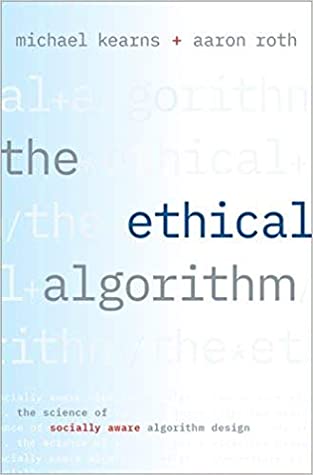
This raises serious ethical and moral questions: can a degree of morality or ethical values be implemented within algorithms? Can they be made to reflect societal views and norms?  Can we even agree on any particular set of ‘common values’?  If so, how or to what degree might they be implemented within the structure of algorithms? These are just a few of the broader questions raised by “The Ethical Algorithm: the science of socially aware algorithm design” by Michael Kearns and Aaron Roth.

The authors bring together a comprehensive list of credentials. Dr Kearns has spent his career in the field of computer science and worked with AT&T Bell Labs where he was appointed head of the AI department. Dr Kearns is currently a Professor at the University of Pennsylvania and Chair of the National Center within the Department of Computer and Information Sciences. Dr Routh also has a background in computer science and is currently Associate Professor at the University of Pennsylvania. His research interests include Data Privacy, Game Theory, Machine Learning, and Algorithms.

The aim of the book is to dive “…headfirst into the emerging science of designing social constraints directly into algorithms, and the consequences and trade-offs that emerge” (page 16). More specifically, the book argues that in order to, “…make informed decisions we need to be able to understand the consequences of deploying certain kinds of algorithms and the costs associated with constraining them in various ways” – whilst acknowledging that technology alone may not be able to “…solve complicated social problems” (ibid).

An intriguing truth is that we are the data (page 2). We are not just users of data but through our activity we become creators of data. More importantly, the data in turn is being used to make decisions about us and sometimes, as the book points out, these can be very “consequential” decisions.

The structure of the book is devised in six chapters and the language is aimed at a non-specialist audience. However, there some “technical “parts that may require more of the reader’s attention and time. This will likely cause prospective readers to go through certain sections or chapters at a differing pace.

Chapters I and II look at issues surrounding privacy and the concept of ‘fairness’ within algorithmic design. There is an interesting reflection on how Netflix has used movie preferences of users to potentially reveal highly sensitive information such as sexual orientation, political affiliation and personal interests (pages 24-26). It demonstrates how an initial privacy agreement can rather quickly escalate into a much greater issue with significant consequences.

Chapters III and IV further the discussion by attempting to analyse various social outcomes of algorithmic design. This section also considers some of the shortcomings of the scientific data on algorithms. The internal structures of common navigation apps such as Google Maps and Waze are discussed and it becomes quite intriguing to discover how they can coordinate traffic around congested areas to yield the best possible outcomes in terms of time and distance of travel. For instance, the ‘Maxwell Solution’ (page 105) poses an algorithmic conundrum: the quickest route of each individual driver is not congruent with the quickest route for all drivers collectively.

Chapter V and the Conclusions reflect on the societal and ethical implications. The authors themselves recognise that algorithms are playing an increasing role in people’s lives. In new technologies such as autonomous transportation, healthcare, or defence, there may be decisions that “…we never want algorithms to make, period – even if they make them ‘better’ than humans” (page 176). It is argued for instance that the decision to kill another human being should never be taken solely by an algorithm (page 178).

“The Ethical Algorithm” by Michael Kearns & Aaron Roth is recommended for anyone with an interest in technology and the ethical implications of our increasing use of algorithms. That is not to say that it is flawless – one can sense that at various points throughout the book the authors become overly zealous in viewing the world exclusively through a computer science lens. Everything becomes a problem that computer science can fix (or at least try).

We must be realistic that there is a fine line between automation and human input. Managed poorly, it can result in catastrophes like the crash of two brand new Boeing 737-Max 8 jets. We all want to increase efficiency but what is the exact cost of losing the ‘human touch’?  Indeed, can we even agree on exact “societal norms” and “values”? Not only are they constantly evolving concepts, but they are also highly subjective in parts. Does this mean that certain algorithms would have to be continuously updated to “reflect” society’s shared values? And who is to determine what these values are? These are questions that require careful consideration and thorough answers. It is for our benefit because one thing is for sure: algorithms will play an increasing role in the public and private spheres.


“The Ethical Algorithm” by Michael Kearns & Aaron Roth was published in 2019 by Oxford University Press, (ISBN 0190948205, 9780190948207), 232 pp.


Andrei Rogobete

Andrei E. Rogobete is the Associate Director of  the Centre for Enterprise, Markets & Ethics. For more information about Andrei please click here.


Richard Turnbull: Moral Questions for the Government


I want to think about the future.

As we emerge from this Covid-19 crisis we will not be short of pundits advising us of the absolute necessity of things that are on their agenda but don’t really have anything to do with our economic, moral or other response to the pandemic. The sound of the hooves of the hobby horses cantering out of the stables and clattering over the cobbles is deafening!

I have some questions of policy all of which carry a moral dimension. These are matters for discussion and reflection; you may agree or disagree!


Enterprise and Innovation

What policies will we adopt to ensure that enterprise and innovation remain at the heart of our economy?

We know the businesses that have innovated during the Covid-19 crisis will be the ones which will survive and flourish. If we are also to seek to ‘rebalance’ the regional economies of the UK we are more likely to achieve this through encouraging enterprising small business in the regional economy than by centralised government spending.

Policy suggestion: 25 targeted regional economic development zones with reduced employers’ NI for new employees and 50% grants for business rate relief.

Moral perspective: targeted, focused approach rather than giving universal benefits


Centralisation and Decentralisation

To what extent should we decentralise aspects of our national health service?

I do not want to get into the politics of Covid-19 management. However, one aspect I have noticed is the potential weakness of the response with management through the centralised systems of the health service. So Public Health England, at least on the face of it, appeared incapable of increasing testing capacity until they had built another centralised lab and of delivering personal protective equipment until imports were quality approved centrally. One hospital in the south of England was so frustrated they approached local businesses and secured a supply. Then there was the app fiasco. The centralised approach was exemplified by our own National Health Service thinking that the only way forward on tracing was if they developed their own app, rather than use the private sector version seemingly used by much of the rest of the world. Not just British exceptionalism, but NHS exceptionalism!

Policy suggestion: as a minimum instil a policy presumption into Public Health England of local and decentralised decision-making at the lowest possible levels (e.g. hospitals, surgeries) for both supply and quality control.

Moral perspective: localised decisions encouraging responsibility


Tax, Spending and Intergenerational Debt

Are we able to have a rational discussion about the balance of tax and spending in our fiscal policies? How do we achieve the balance between this and future generations in the carrying of a significant amount of sovereign debt as a proportion of GDP?

The cry goes up, ‘there must be no return to austerity’ or ‘there must be no tax increases’, both of which, it seems to me, are unrealistic. We cannot simply spend without the income or growth to support the expenditure. To do so transfers the burden of debt servicing to future generations, which is, morally, at least, questionable. Clearly in the short-term, to deal with the immediate crisis, funds can be borrowed at very low rates of interest. However, economically those interest rates are unsustainable low more than in the very short-term. Similarly, the size of the rescue package makes it inevitable there will need to be an increase in tax in the short-term. My natural inclination is to cut tax in order to stimulate. I think the size of both the deficit and the debt are probably too high to achieve that. We could, though, adopt some measures on a strictly temporary basis.

Policy suggestion: we bite the bullet and increase all rates of income tax by 5% (that is, 5 percentage points) for a strictly, time limited 3 years, after which they revert automatically to current rates and there is, alongside that, a 3-year public sector pay freeze and no overall increase in government expenditure in cash terms. Probably too controversial!

Moral perspective: responsibility cannot simply be shifted to future generations.


Care Homes

Can we seek to find a resolution to the questions of financing social care?

One of the more difficult and painful aspects of the Covid-19 pandemic has been the impact on the care home sector. The mighty, centralised, NHS pushed vulnerable patients out to the care homes which clearly then enabled the disease to spread. This simply brings back to the fore the responsibility to seek to solve (and it must be admitted the solution has evaded successive governments) the financing of social care. We forget, of course, that this is linked to family policy. The first step is to target support to those who are willing and able to care for those in need of social care within the family setting thus relieving pressure on the wider sector.

Policy prescription: inheritance tax incentives for care provided within the family. For example, a property in which a vulnerable person is cared for within a family could be made 100% free of IHT. I recognise that there is also a funding system needed for the wider sector.

Moral perspective: we need to incentivise family-based solutions as much as we can


Education and Poverty

What lessons can we learn about the priority of education in reducing poverty?

I will here be blunt. The education unions were shocking during this crisis. Not a single effort to say ‘what can we actually do in the circumstances we are in to maximise the number of children in schools’ simply, ‘it is not safe to go back’ – despite much evidence to the contrary. I was genuinely angry about the hypocrisy of those who (rightly) complained about lost opportunity, increased inequalities, impact of loss of education on the poorest and did absolutely nothing to help get the system back up and running. More problems here with centralised decision-making and politicised local education authorities. The academy trusts seemed to have responded better.

Policy prescription: increase the level of local decision-making at academy and local school levels

Moral perspective: again, locality and the big picture of the central importance of education not least in reducing poverty and inequalities


Readers may not agree with any of what I have suggested!

What I am really trying to do is say, let’s try to be objective about the challenges and trade-offs, and let’s debate and reflect on how we might respond going forward. We have moral responsibilities in economics about the management of spending and debt, in the relationship of centralised bureaucracies to localised decision-making and in seeking family and indeed local solutions wherever possible. I am sure that is not the end of the story, but at least let’s have the discussion.


Richard%20Turnbullweb#1# (2)Dr Richard Turnbull is the Director of the Centre for Enterprise, Markets & Ethics (CEME). For more information about Richard please click here.


Online Event: Brave New World ‘Business Post Covid’ – July, 2020


CEME participated in an online event organised by James Cowper Kreston entitled, “Brave New World: Business Post Covid.” CEME Director, Richard Turnbull was part of a panel of speakers that shared their thoughts on this topic.

Event Brief:

As the immediate impact of the coronavirus shock becomes clear, we turn to the question: what long-term changes will this bring about —and how will we be affected? As we take our first steps into a brave new world post Covid, we take an in depth look at the future of business.

Event Details:

Date: Thursday 2nd July

Timings: 2pm – 3.30pm


Guest Speakers:

James Kynge 
Global China Editor at Financial Times and Editor “Tech Scroll Asia” newsletter Based in Hong Kong, I write about China and its interactions with the world. I also edit the “Tech Scroll Asia” newsletter, which provides ahead-of-the-curve news and analysis on Asian tech.

Gemma Milne 
Science & Technology Writer covering all things deep tech, including biotech, advanced computing, space, energy and innovation in academia, for titles such as Forbes, the BBC, CNBC, the Guardian, and Quartz. Author of ‘Smoke & Mirrors: How Hype Obscures the Future and How to See Past it’ (published by Little, Brown April 2020). Co-Host of Science: Disrupt – a podcast interviewing the innovators, iconoclasts & entrepreneurs creating change in science. Expert Advisor for the European Commission and Innovate UK, and a Venture Scout for Backed VC. Innovation Jury Member for SXSW and World Economic Forum Global Shaper. Ex- Innovation Strategist at Ogilvy, Maths Student, Investment Banker, Door-to-door Fundraiser and Chef.

Dr John Harris 
Dr John Harris, CEO of OBN, the UK’s leading and most innovative national Life Sciences R&D Membership organisation (400+ companies) with the aim of servicing the needs & interests of our Members, Supporters, and Sponsors by creating opportunity & enhancing an environment supporting the development & growth of the sector.

Revd Dr Richard Turnbull 
Richard Turnbull is the Director of the Centre for Enterprise, Markets and Ethics which seeks to promote thought and debate around the ideas of an enterprise economy built on ethical foundations. He is a Chartered Accountant, an ordained minister of the Church of England, and previously led a permanent private hall in Oxford University. He is the author of numerous books and articles and visiting Professor at St Mary’s University, Twickenham.


Graeme Leach: Godonomics – Thoughts on a Biblical Economic Worldview


A New Online CEME Publication

Professor Graeme Leach is Chief Executive of Macronomics, a macroeconomic, geopolitical and future megatrends research consultancy. He is also a visiting professor of economic policy, a senior fellow of the Legatum Institute and a member of the IEA Shadow Monetary Policy Committee. Between 1997 and 2013 he was Chief Economist, Director of Economic Policy and Main Board Director at the Institute of Directors. Previously he has been Chief UK Economist and Chief International Economist at The Henley Centre, and Economic Adviser to the Scottish Provident Investment Group.

In order to promote some debate Graeme has written for us an articulate and thoughtful publication ‘Thoughts on a biblical economic worldview – or Godonomics’ in which he challenges many of the prevailing assumptions about how Christians approach economics and argues that the market economy and minimal government represents the economic system which God provides.

We will publish Graeme’s work on this page regularly over the next several weeks. Commencing Wednesday 29th April, you’ll be able to find the relevant links in the ‘Table of Contents’ below.

We don’t debate these things enough and that means we often fall into lazy assumptions, whichever side of the argument you come down on. One of CEME’s purposes is to promote intelligent argument and debate around key issues. Let’s be challenged by Graeme’s analysis but feel free to contest his conclusions if you so wish. I am happy to publish alternative opinions!

We encourage thought-provoking and respectful debate. You can directly share your thoughts and opinions in the comments section below or by engaging with our social media platforms on Twitter, Facebook, and LinkedIn.


Richard Turnbull

CEME Director


Table of Contents:

Summary & Introduction

Thoughts I and II

Thoughts III and IV

Thoughts V, VI & VII

Thoughts VIII

Thoughts IX and X

Fallen Minds and the Spiritual Dimension (1)

Fallen Minds and the Spiritual Dimension (2)

The Christian Case for Capitalism

Conclusions

Frank Field: “Remaking One Nation” by Nick Timothy

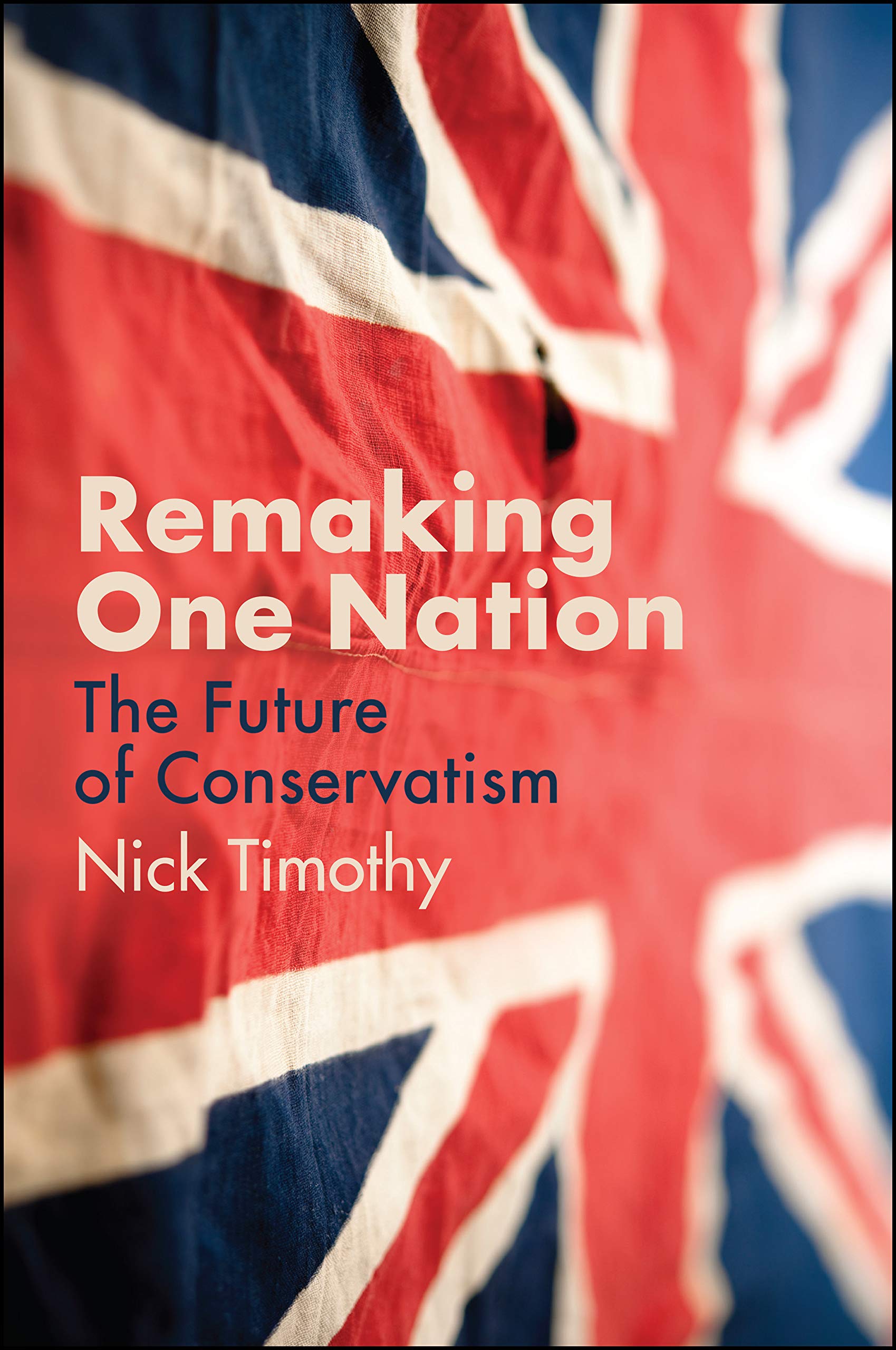
Most books that change the political weather are aimed at a centre-left audience. Remaking One Nation is unashamedly addressed from the right but not exclusively to the right. The book could not be better timed and I will argue that the majority of commentators who say the 2019 Conservative election manifesto is now dead in the water are wrong.

I don’t believe that this hideous virus is going to make it impossible for the Government to begin implementing its election manifesto. Rather, I believe that implementing the programme becomes an even more serious objective. Two political forces are crucially at work that not only open the opportunity to the Government to follow its manifesto, but make its implementation ever more important to repair the damage to the social and economic framework to this country that has resulted from this Chinese virus. Indeed, the Government’s overall election manifesto objective, of raising areas where large numbers of people have lost out, will become an integral part of the Government winning public approval that its strategy to exit the lockdown is not only workable, but intrinsically fair.

The ideas underpinning Remaking One Nation, subtitled The Future of Conservatism, could become a leading political force in the Boris era. Boris has a political record of being a One Nation Tory long before he went quietly to St Thomas’s Hospital to begin his fightback against Covid-19. A part of today’s commentariat’s daily diet is whether Boris will have experienced a Pauline conversion as he fought for his life in St Thomas’s Hospital. I doubt whether this is so, which is good news for all of us citizens who sense that he is a One Nation-builder – i.e. a Tory whose policies are essentially about building bridges rather than dividing the nation along class lines. Boris has a programme of achievements as twice-elected Mayor of London and I don’t see why we should expect any difference to his politics now he is in Downing St. If anything, his recent brush with death will reinforce his basic instincts, not change them. Boris’s record in power is, of course, different from the politics he operated to gain the premiership.

Nick Timothy’s book begins by describing the scene in the May camp just before Nick was given early news of the exit poll which showed that the 2017 election gamble had badly misfired. The Tory majority in parliament, instead of being increased, was cut so that no one party had an overall majority to work the Commons. It does not take many pages for Nick to recall the phone call he immediately had with Theresa May to tell her the news, her weeping during this conversation, and Fiona Hill, who jointly ran with Nick the No 10 operation, being quickly dispensed to Maidenhead for the Prime Minister’s local result. Not to be in Maidenhead already showed the extent to which the electorate had hidden from Tory chiefs their real intent, during the wearisome long election campaign. There is precious little written about the devastating impact that this election failure had on Nick. He merely hints at how serious he found it to cope with the post-2017 election period. He tells us, in a throwaway line, that he did not once think of suicide. This statement tells us all we need to know about how serious a blow this was to the person who had the intellectual nous and the position to draft the Tory election manifesto. The whole book is well written, but these events are recalled both beautifully and with much grace.

Nick then goes on to a discursive discussion on liberalism. I recommend that readers leave this section to the end. The book’s long-term importance, and political impact, is to be found elsewhere. In Remaking One Nation, Nick sets out in some detail what is wrong with Britain as it currently stands and what his election manifesto was attempting to achieve. What Nick writes about the underlying diseased nature of British society, and how his drafted election manifesto was intended to play out. This section has near-universal appeal. There is much consensus in our political society that survived Mrs T’s great onslaught. One of Nick’s political gifts is to write a programme that was not determined by historic party divides. And here is an attractively crafted critique to which all too many of us would willingly sign up. From this critique, Nick moves into policy and here is a political strategy that just failed in 2017. The 2017 results showed Tories nationally winning the popular vote in all classes except for the poorest. Two years later, the same strategy saw a final scaling of many of the ‘red walls’ defending so many Labour seats in the north and midlands.

Let me concentrate on one failure in the book which for me, becomes apparent when the book moves from criticism to policy. Here is my only criticism of the book, which is of the link between a pretty tough inditement of a Britain where rewards are so clearly delivered along class and party lines – and the politics of reform. Political strategists have a duty to seek those proposals which are the lynchpin in driving fundamental change. In this analysis Nick reports, that for most children, life chances are determined before the first day at school. And worse: that the following 14 years at school does not lessen overall the outcome of pupils analysed by class and income. If anything, class differences widen over the school life of pupils. It is in education that we are offered the once in a generation chance fundamentally to change the country in which we live.

The foundation years are key for children, both in what they learned at home and what that home is like. During my 40 years as an MP, for largely the same geographical area called the Birkenhead parliamentary constituency, I witnessed one change of such magnitude that is all too difficult to appear as a balanced commentator bearing witness to the truth. That objective of truth is one to which I am still committed.

During the Thatcher governments, and those of Tony Blair and Gordon Brown, Britain was opened up to globalisation and its impact was beginning to be felt quite early on. We witnessed such a mass slaughter of semi-skilled and unskilled jobs paying decent wages that, in comparison, makes Herod’s slaughter of the firstborn look like a tea party. Since the advent of globalisation, the role of males, as breadwinners, has simply been eliminated for much of the semi- and unskilled world of the male labourer. A world of too little or no work paying family wages disenfranchised males from their hunting and gathering role.

A previous social security reform paid single mothers more proportionally than two parent families claiming benefits. This well-intentioned act, plus the wipe-out of family wage jobs, is very largely responsible, I believe, for a significant rise in the numbers of children being raised in single-parent households rise out of all expectation. The changes we have witnessed were originally economically driven. Later, but not much later, this revolution in caring for children became one that was culturally driven: young women could see that there were plenty of other young women with children, ostensibly without partners or husbands, and who were making a go of it with a combination of social security payments and a wage packet.

If we are to break this cycle of intergenerational poverty with too many poor children facing make or break disadvantages that effect poor children with a lack of life chances, I believe it is actually crucial to go back to Nick’s analysis which hints at why the foundation years strategy of previous Tory, coalition and Labour governments failed. A strategy that intervenes to strengthen families must be immediate i.e. wherever possible when the baby is the womb. A strategy operated from schools of midwives and health visitors making this first link with mothers who have had a grim experience at school is, I believe, vital for any social revolution. Mothers need to be supported, and fathers when they are present, to be their child’s first teacher. Once the link has been made by such a team working from primary schools over the first two years of a child’s life, the need would then be to bring those mothers and their children into school for art, music, movement and lessons of this kind. Action to counter families not forming is crucial to the next leap forward in increasing life chances, and such a strategy must be seen as fundamental to a repositioning of education’s role in this country.


“Remaking One Nation: The Future of Conservatism” by Nick Timothy was published in 2019 by Polity Press (ISBN-13: 9781509539178). 224pp.


Frank Field was Member of Parliament (MP) for Birkenhead from 1979 to 2019.