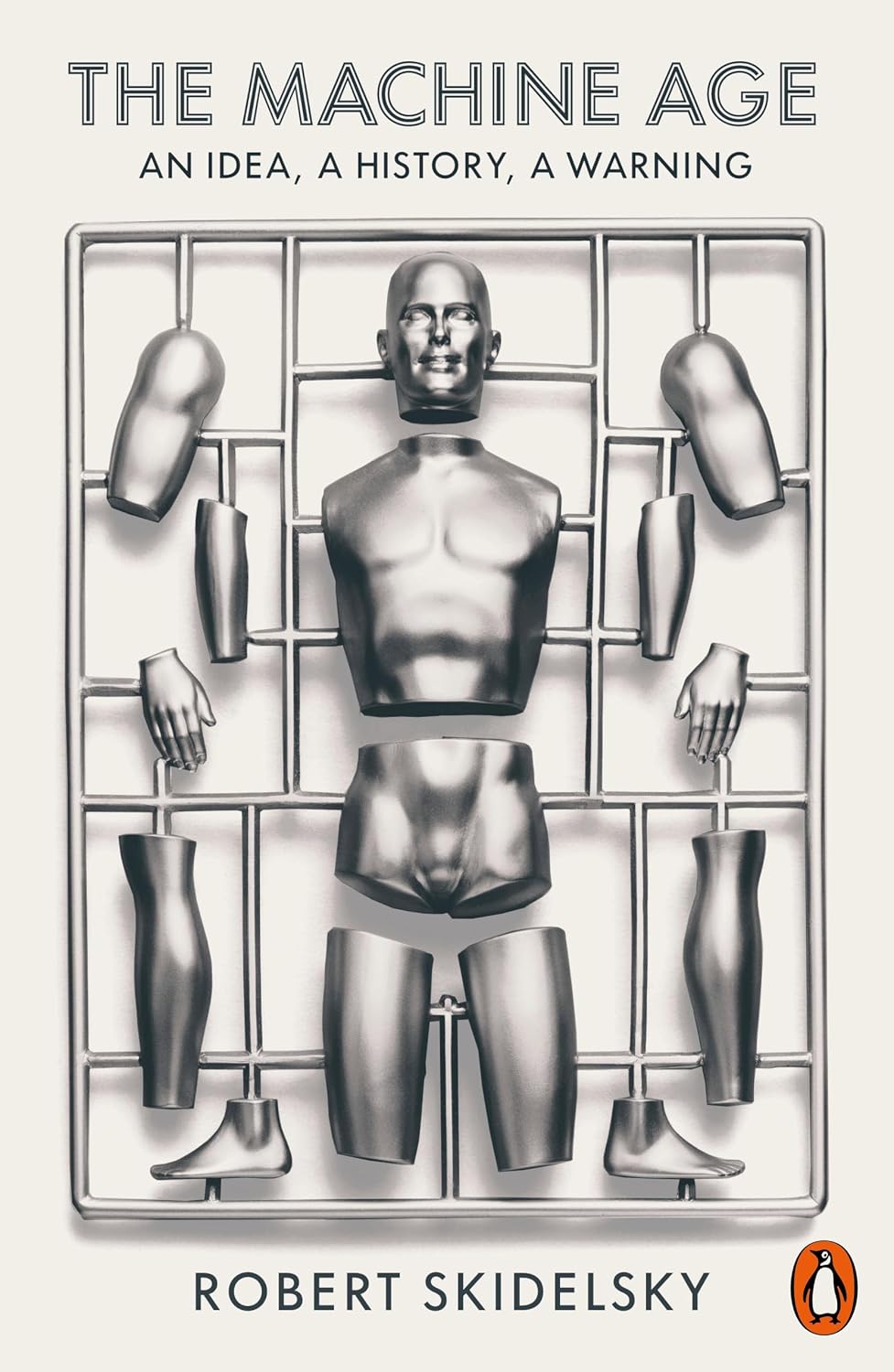
Robert Skidelsky, Baron Skidelsky, was Emeritus Professor of Political Economy at the University of Warwick. He is most well-known for his award-winning three-volume biography of John Maynard Keynes. The Machine Age: An Idea, a History, a Warning marks a departure from Skidelsky’s home domain of Keynesian macroeconomic thought into a comprehensive, interdisciplinary interrogation of humanity’s relationship with technology. The book is an ambitious, almost encyclopaedic project that touches upon everything from history and economics, to theology, philosophy and technological futurism. The core thesis serves as a cautionary call against the misguided overreliance on technology and indeed, the blindsighted surrender of human will in a technologically deterministic future.
Skidelsky’s prose is clear and the book is thoroughly researched, with a comprehensive bibliography for readers wishing to explore the subject further. Specialised terminology is used sparingly, making the text accessible to a broad audience of inquisitive readers. Yet the breadth and density of the material make it a demanding read, requiring sustained and uninterrupted attention. This challenge is heightened by the book’s frequent and sometimes abrupt shifts between disciplines.
The contents are comprised of three distinct thematic parts which chart the progressive encroachment of mechanisation from the Industrial Revolution to the contemporary frontier of artificial intelligence. Skidelsky notes at the outset, the text ‘tells three stories about the impact of machines on the human condition: on the way we work, on the way we live and on our possible future’ (page 1).
Chapters 1–7 consider ‘The Mechanisation of Work’ and establish the economic and historical foundations of technological proliferation. Skidelsky examines the onset of machines, the natural obstacles to early innovation and the structural alignment between technological progress and the rise of capitalism. In analysing modern labour dynamics Skidelsky offers a rather bleak outlook that dismisses the conventional economic reassurance that ‘with suitable education and training workers will be able to take on higher-level… tasks’ (page 94), landing instead on a systemic bifurcation of employment into ‘lovely and lousy’ jobs and increasing structural pressures towards downskilling (Chapter 6).
Chapters 8–13 look at ‘The Quest for Perfection’. Here, the text shifts from economic history to an intellectual and cultural critique. Skidelsky explores the Enlightenment ambition to ‘straighten the crooked timber’ of humanity through rationality and mechanisation. He investigates the cultural anxieties surrounding the ‘Devil in the Machine’ (Chapter 10) and the philosophical evolution of technology from a utopian vision of human liberation to a dystopian framework of surveillance and control (Chapter 13). Drawing a parallel with Jeremy Bentham’s Panopticon, Skidelsky warns that ‘we enter Bentham’s prison voluntarily, oblivious to its snares. But once inside, it is increasingly difficult to escape’ (page 184).
The third and final section, ‘Towards Apocalypse’, is covered in chapters 14–17 and as the title suggests, is mostly dedicated to confronting contemporary risks. It traces the advent of modern computation and AI from the 1950s, critically interrogates some of the salvific rhetoric surrounding AI and explores the clash between digital liberation and technological entrapment. An important and interesting discussion on conscience can be found in Chapter 15 where Skidelsky points out that AI succeeds in syntax but falters at semantics and experience: ‘Take for example, the tree outside my window […] I not only see the tree but I am aware that I am seeing it, and have beliefs and feelings about the tree; they signify an intentional relationship between the subject (me) and the object (the tree). A purely material account of the world runs into problems trying to explain this relationship’ (page 220). The book concludes in a sober evaluation of potential hazards of human obsolescence, where ‘the continuing threat of technological innovation is to rob ever-larger fractions of people of their employment, livelihood, status, skills, usefulness, and identity, and finally make them redundant’ (page 269).
Although historically a champion of the Keynesian macroeconomics, Skidelsky utilises Marxian concepts of alienation (Entfremdung) and the subordination of living labour to ‘dead capital’ to explain the trajectory of automation. He conceptualises technological advancement not as an autonomous, neutral byproduct of human curiosity and ingenuity, but as an instrument weaponised by capital to extract surplus value, control the workforce and lower production costs. Readers looking for an appreciation the free innovative and entrepreneurial spirit will not find it here – for Skidelsky capitalism is fuelling technological entrapment. Crucial to this dynamic is his critique of consumer capitalism’s manufactured needs, where he notes that ‘it is insatiability, natural and deliberately created, which keeps machines in business, by ensuring that the material requisites of happiness remain permanently scarce’ (page 112).
No doubt some readers will take issue with this approach. By framing the evolution of technology almost exclusively as a vector of capitalist exploitation and class subjection, Skidelsky underemphasises the adjacent positive outcomes such as market innovations, improvements in working conditions due to technology and even state-directed geopolitical initiatives (such as military R&D during the Cold War). All of these have historically led to technological advancements that do not fit neatly into a binary class-struggle paradigm.
Compounding this challenge is the immense, near encyclopaedic scope of the book. While the polymathic breadth is intellectually stimulating, it is likely to leave some readers overwhelmed and, at times, confused. The book functions more as a history of ideas about machines rather than a history of technology itself (which is what many might expect from the cover).
However, that is not to say there isn’t much to commend – there is. The Machine Age deserves significant praise because stands as a vital and sophisticated counterweight to the uncritical ‘techno-hype’ and hubristic boosterism propagated by many Silicon Valley CEOs with utopic promises or apocalyptic threats. Skidelsky’s triumphs in his ability to de-naturalise technology as foreign and offer a defence of human distinctiveness which is profoundly articulate and compelling. He ably reminds readers that economic efficiency and technological change should remain subordinate to human well-being and democratic values.
The Machine Age provides a sweeping and erudite critique of modern technological society. While the volume’s expansive breadth brings challenges and its rather unduly negative assessment of technology may alienate some readers, its foundational thesis remains robust. The book is best viewed as large warning sign held up against humanity’s somnambulation into a techno future driven primarily by the needs of software and hardware. It is a timely and valuable contribution to developing a contemporary philosophy of technology and serves as a powerful reminder that machines must ultimately serve human purposes – not dictate them.
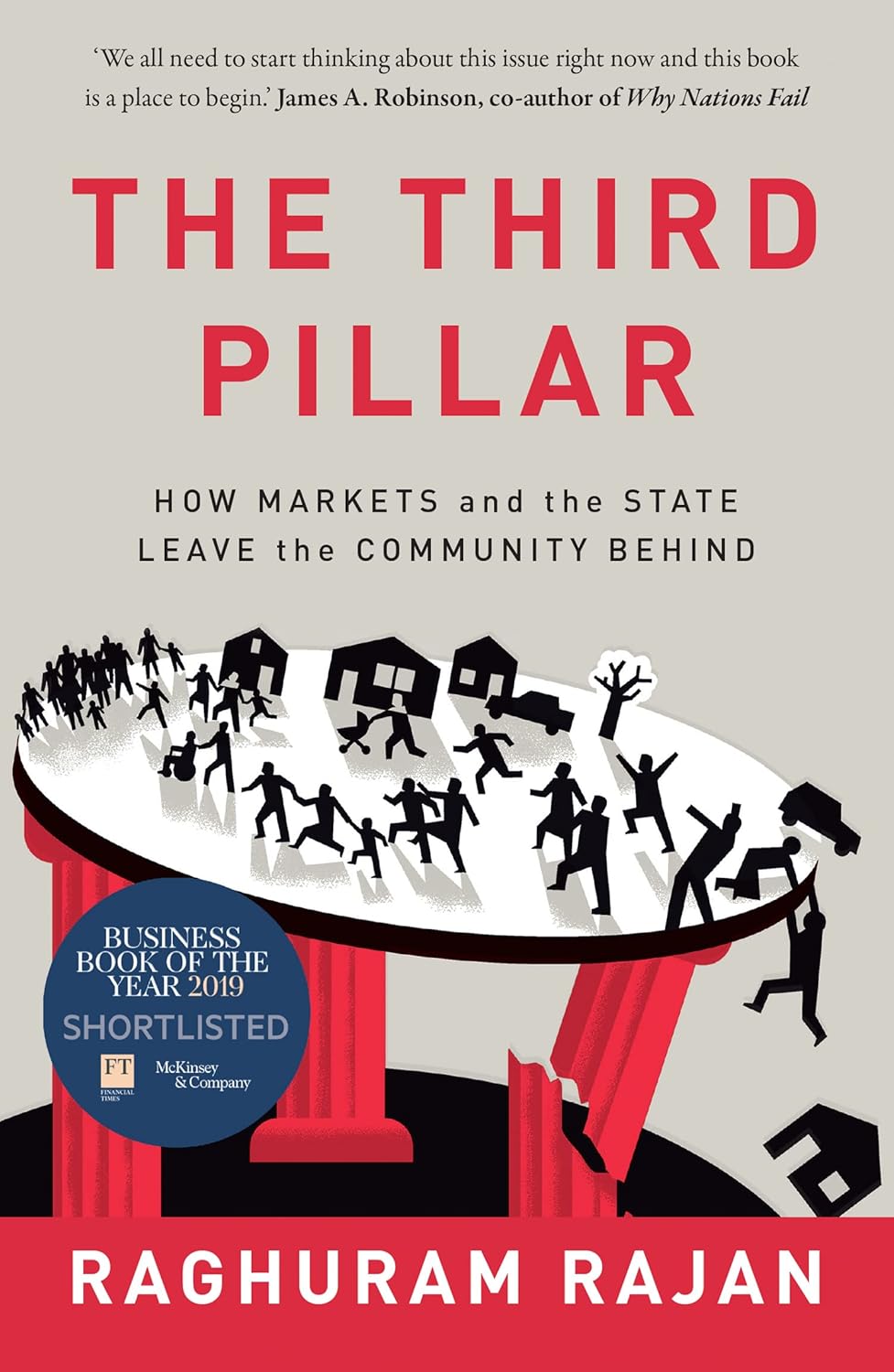
Raghuram Rajan’s central claim in his book The Third Pillar is that modern societies have allowed markets to globalize and states to centralize while neglecting what he calls the third pillar: community. The result of this neglect is economic imbalance, social and political fragmentation, loss of belonging and shared purpose, and a decline in social trust. The Third Pillar makes a thorough inventory of the decline of community. It documents the widespread dissatisfaction with institutions in the Western world and some of its unfortunate consequences, like the deaths of despair cataloged by Anne Case and Angus Deaton (Case and Deaton 2020). Rajan offers a strong diagnosis, but the strength of his diagnosis also exposes the limits of his framework. The book gestures towards a richer understanding of community, but never fully delivers on developing the conceptual or institutional foundations necessary to sustain it. As a result, Rajan’s proposal for a cure to the illness he identifies also falls short. He relies on state incentive programs to try to reinvigorate community and constraints imposed by the state on communities to keep them from becoming too exclusive.
One of the most valuable contributions of Rajan’s book is its insistence that community is more than a residual category. He goes to great lengths to retell the story of industrialization and globalization over the course of the 20th century as well as the Information and Communication Technology (ICT) revolution, but while his retelling gestures at the decline of community, the substance of his argument is limited to cataloguing the effects of these changes on the other two pillars: economy and government.
The examples of communal actions he does offer are only marginally communal: take for example the Indian city Indore, which went from one of the dirtiest towns in India to being celebrated as a zero-litter city. Rajan ostensibly tells the story of Indore to offer an example of a community that self-organized to solve a problem. But even in his account of the example, it becomes clear quickly that the city’s government was crucial in achieving the desired outcome. Just like in his description of the larger 20th century industrialization and communication trends, it is unclear that the example really speaks to the lack of community, because the central player in the clean-up effort seems to have been Indore’s city government. This is where Elinor and Vincent Ostrom’s work on self-governance could have been a natural complement to Rajan’s ideas. Over the course of their careers, the Ostroms accumulated empirical evidence as well as theoretical frameworks that can explain authentic communal self-governance ‘without the sword’ of state coercion in the background (E. Ostrom, Walker, and Gardner 1992).
This lack of a substantive discussion of community pervades Rajan’s entire book. He stops short of offering a more profound explanation of how community performs important functions in every chapter of the book. To make sense of his work, one must supply a conceptual framework that the book itself only hints at. The absence of an explanation haunts the book from beginning to end and leaves this reader chasing from chapter to chapter, hoping that what comes next may fill the void, only to be disappointed again. One example of this lack of explanation can be found in chapter 6, which discusses the information and communication technology (ICT) revolution. Rajan carefully analyzes its effects on production, inequality, employment, and educational stratification, but he doesn’t explain why stratification is a problem or exactly what it is about community that is weakened by the ICT revolution. While the weakening of community is central to Rajan’s argument, the mechanism remains underdeveloped. Without a better understanding of what exactly community does to provide meaning and belonging, it is impossible to tell what the cure may be.
The lack of a clear mechanism is also the missing element in Rajan’s proposed solution: inclusive localism. Rajan argues for greater communal autonomy to rebalance the pillars, insisting that this greater autonomy cannot come at the expense of inclusiveness. While his proposal is attractive in principle, it also reveals a deeper tension in Rajan’s thought. On the one hand, he recognizes that community must be thick enough to provide identity, belonging, and shared purpose. On the other hand, he insists that communities must not become exclusionary or restrict individual mobility. While he celebrates diversity among individuals, he views differentiation among communities with suspicion. The question of how communities can be thick enough to provide meaning yet not so thick as to exclude is left unanswered but is arguably the crux of the problem. Rajan argues for national governments to prevent the exclusionary tendencies of communities by requiring inclusiveness, but he does not explain how those same national governments refrain from crowding out community in the process, as his own account of the 20th century has shown they did. The Ostroms’ work could have again been helpful here. Throughout his work, Vincent Ostrom, in particular, emphasized the importance of overlapping and competing jurisdictions (V. Ostrom, Tiebout, and Warren 1961), which allow for both a strengthened community with shared meaning and a systemic check on exclusionary tendencies through competition among self-governing communities. Importantly, however, as Elinor Ostrom shows (E. Ostrom 1990), clearly defined boundaries between groups or effective exclusion of outsiders, are essential for self-governance communities to function.
On the whole, Rajan’s book diagnoses an important problem: community has been hollowed out as states and markets have expanded in scope and scale. His diagnosis is begging for a deeper assessment of the effects of the imbalance he diagnoses and the likely channels by which they affect individual feelings of belonging and meaning. In the end, The Third Pillar offers us an important diagnosis but only the beginning of a theory. What remains is to develop a theory that offers a more complete account of why community matters and how it can be sustained realistically in a complex, modern society.
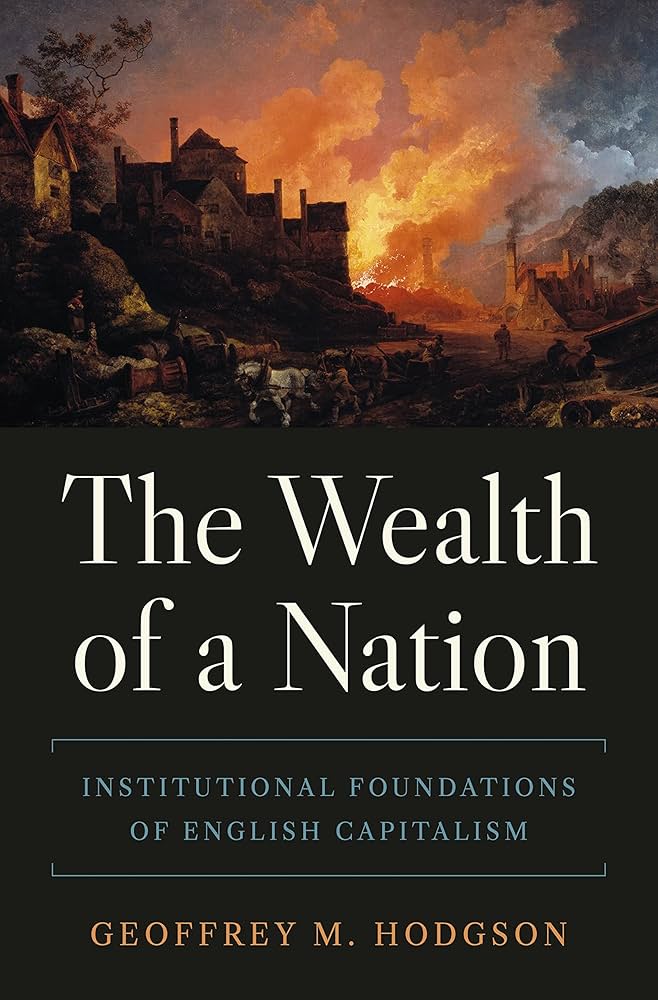
In this impressive work, Geoffrey Hodgson, a leading scholar in evolutionary and institutional economics, presents an interdisciplinary approach, including anthropology and neuropsychology, to demonstrate the fundamental importance of legal and financial institutions in the development of capitalism in England between 1300 and 1820. Determining the foundations of the ‘First Industrial Nation’ has long been a staple of economic history, often laden with a tendency to focus on quantifiable factors of production and resources, what Hodgson terms the ‘physicalist perspective in economics’ (page 182).
The notion of English exceptionalism has often informed historical accounts in this area, from self-congratulatory and often chauvinistic narratives of earlier centuries, which stressed nationalistic and religious attributes of ‘free-born Englishmen’, anti-Catholicism, and the virtuous worldliness of Protestantism, to those documenting the carefully-crafted application of hegemonic domestic and imperial economic policies. More recently, the cultural and intellectual dimensions of Enlightenment culture have been identified, especially by Joel Mokyr, as components of emergent capitalism.
While promoting a ‘legal institutionalist’ interpretation, Hodgson concedes that ‘multiple dimensions’ informed capitalist development (page 228). Yet, he seeks to revise an outlook whereby the apparatus of property rights, legal structures, and financial institutions have been understated in the historical literature. Thus, a ‘hidden wiring’ metaphor is appropriate, with the primacy of institutions representing a less fashionable, less heroic, and less visible element than the content of pre-existing interpretations.
The book is divided into three parts. Part I examines explanatory frameworks of capitalist development, including Marxist historical theory, as well as the role of technology, religion, and ideology. Part II, comprising over 50% of the book’s content, explains England’s economic development by reference to land, law, war, and finance. Part III narrows the focus by assessing institutions as drivers of economic transformation, while providing international comparative analysis.
The introduction presents the conceptual approach of ‘legal institutionalism’ with Thorstein Veblen and Joseph Schumpeter referred to as core influences. In Schumpeterian fashion, finance is held to have preceded enterprise, with rules-based institutions and organisations projected as the foundations and facilitators of transformation. A welcome semantic precision is employed in defining terms like ‘capital’ and in attempting to establish a sequential timeline of causal factors. Resisting Whiggish conceptions of linear progress, Hodgson argues for uneven development, especially of financial institutions and instruments, instancing that mortgaging rules were not established in England before 1670, and debt markets fully emerged only in the later eighteenth century (page 12 note 24).
Unpicking Marxist historical theory is a significant element of Part I. For Marx, law was not part of the economic base but rather the superstructure, yet Marx had to reference property since the social classes of capitalism were defined according to ‘specific institutional relations of property and power’ (page 47). Indeed, the very claim for an English bourgeois revolution is problematic, as the aristocracy retained enormous political and economic power, status, wealth, and privilege well into the twentieth century. With law considered constitutive of social relations, rather than simply an epiphenomenon, Hodgson allows himself the aphorism: ‘The history of all existing society is the history of institutional change’ (page 48).
Similarly, technology, religion, ideology, and culture are framed as limited explanations. China’s institutional failures in sustaining its earlier technological advances are taken as indicative of why technology alone is an insufficient explanation for capitalist development. Equally, while Calvinism, famously termed the parent of capitalism by Max Weber, ‘impelled a capitalist mentality’ of hard work, diligence, and literacy, it cannot explain the capitalist structures and institutions of non-Calvinist territories such as the Italian city-states (pages 55-56). Nonetheless, adjudging the different contours and outcomes might have been worth pursuing further.
Similarly, the presence of liberal ideas did not necessarily translate into policies or a particular policy agenda. The impact of Enlightenment networks, the ‘Republic of Letters’, and transmission of ‘Useful Knowledge’, even the influence of the great ‘Cultural Entrepreneurs’, Newton and Bacon, is taken as overstated, with too much weight ‘placed on too few extraordinary people’ (page 65). In sum, property rights, the rule of law, and financial institutions were more vital foundational factors, with transmission and circulation of knowledge depending on ‘higher-level evolution of organized authority’ (page 67). Hodgson viably suggests that the covert nature of evidence surrounding institutions, rules, and regulations often leads to historical understatement or neglect of these factors. The persistence of instincts and habits are also intriguingly referenced in the same sense.
Part II contains extended, and at times breathless, historical analysis. Thematically, the focus is on the transformative effects of landownership and warfare. The survival of feudal property laws are considered in terms of the limitations of capital formation and investment, with Entails and Strict Settlements reducing availability of marketable land, while also buttressing Primogeniture, meaning estates couldn’t be sold, divided, or collateralised (page 81). Land was an intergenerational trust rather than a marketable, collateralised asset, and across the centuries, landowners successfully prevented freer trade in land, while extensive enclosures facilitated greater concentration of landownership (pages 96-101). Not for nothing have historians adopted the term ‘Territorial Constitution’.
Socially, these events are correctly identified as misaligned with the Marxian ‘rise of the bourgeoisie’ with ‘capitalist’ landowners dismantling feudalism. Such a tidy pattern of development in social relations and economic policy seems too reductionist. An economic mosaic appears more accurate, with the Aristotelian legacy via Aquinas, natural law ideas of ‘just price’, and residual anti-usury sentiment vying uneasily with foreign trade monopolies and restrictive customary practices, into a period of supposed economic modernity and individual freedom. In fact, as Anthony Howe, Miles Taylor and others have described, many bourgeois were willingly coopted by the aristocracy, to the fury of Radicals like Cobden and Bright. Conversely, aristocratic attitudes towards commerce remained ambiguous. Despite the presence of many landowners in commercial ventures, it could take generations before, as Sir Lewis Namier famously related, ‘the stain of trade’ was eradicated.
In England, no government department was exclusively concerned with land, nor was there a Land Registry. The absence of the latter meant land sales and mortgaging were further inhibited (page 108). Moreover, with no English equivalent to the French Notaires, mortgaging was mostly conducted on an ad hoc basis by attorneys and scriveners acting as financial intermediaries. As transactions were likely widely-dispersed and with many as yet undiscovered in private archives, the importance of mortgaging may be understated. Nonetheless, the book intermittently details the vibrancy of local credit mechanisms and networks, with the Manchester cotton merchant Samuel Greg mortgaging land, and mortgaging also applied to lenders receiving toll revenues generated by investment in canal, river, and turnpike infrastructure. Country banks were also important to development, with Adam Smith arguing that the ‘most judicious operations of banking can increase the industry of the country’, but even by 1776 this remained as much an aspiration as a reality.
The orthodox view of early industrial finance was that it was largely self-generated (pages 158-159). Family firms and partnerships were based on trust and honesty in periods where limited liability was not yet legislated, and joint-stock status was reserved for highly-capitalised ventures, like Chartered Companies. Though start-up costs varied, capital formation was not always easy, and even Boulton and Watt had difficulties securing reliable sources of capital (pages 175-180). Nonetheless, England found a way.
Warfare in the form of the ‘Military Revolution’, consisting of more powerful firearms, stronger fortifications, and larger standing armies, features as a vital catalyst for State-based institutional development. The author adopts a traditional interpretation of the emergent Fiscal-Military State, with war the forcing-house for the creation of financial institutions, as previously noted by John Brewer, Werner Sombart, and Francis Fukuyama (page 155). Though not purely an English phenomenon, England was the primus inter pares whose State-building and institutional development advanced after the 1688 Glorious Revolution, aided by the sophisticated apparatus of ‘Dutch finance’ which ultimately created a pathway to industrial growth (pages 164-165). Despite indications that the process began earlier, under the Protectorate, the paradigm shift whereby England, as a Dutch ally, engaged in European and colonial conflict throughout the ‘long’ eighteenth century is fairly established. The contrast with Japan, South Korea, and Taiwan demonstrates similarities and differences in path dependency, but the notion that there exists a template for understanding economic development remains elusive.
Ultimately, Hodgson presents an interpretation of the imperatives of war finance overcoming the structural limitations of using collateralisable assets, especially land, for capital investment. Yet, despite any perceived shortcomings, perhaps Entails, Strict Settlements, and Primogeniture actually promoted the essential systemic stability for economic growth. The ‘Territorial Constitution’ was the institutional articulation of the permanence of land, and the political authority of the landed classes, and capitalism could only evolve and thrive if widespread confidence existed in the legitimacy of financial and political authorities and institutions. Additionally, the role of the State as a more interventionist economic actor is perhaps understated. The expansive protectionism of earlier centuries, including Navigation Acts and sector-specific tariff schedules, were influential in industrial growth, with the cotton industry a notable beneficiary of a deliberate ‘infant industry’ tariff strategy. Equally, the institutional maturity of England can be questioned. A considerable raft of commercial legislation, providing codification and legitimacy, had to wait until the nineteenth century, with repeal of the Bubble Act (1825), Bank Act (1844), Joint Stock Act and Limited Liability Acts of the 1850s and 1860s creating a more identifiable and self-conscious commercial society.
Hodgson has produced an interesting and thoughtful book which, perhaps inevitably in such a wide-ranging and ambitious work, underplays some features. Occasionally, the prose is a little staccato, but mostly it is measured and even, and the pace neither leisurely nor hurried. The book is recommended as a valuable addition to the fields of legal institutionalism, economic history, and development studies.
There is a sense that histories which ‘discover’ new features or relate understated factors often meet a receptive audience, as they can appear to validate historical study, and by extension, the historical profession. Hodgson’s book fits that category but more granular research needs to be conducted before the institutionalist theory can be more fully validated and readily accepted.
In his new book, Shared Prosperity in a Fractured World: A New Economics for the Middle Class, the Global Poor and Our Climate, Dani Rodrik of the Harvard Kennedy School argues that the three biggest challenges as we continue to march through the 21st century are mitigating climate change, saving democracy, and alleviating poverty. The good news is that we have made remarkable progress on these fronts; the bad news is that there is much left to accomplish. On this, there is much to agree with Rodrik, yet his proposed solutions, while eschewing technocracy and autocracy, almost necessitate those outcomes.
Rodrik is a renowned political economist. Yet, his book lacks clarity on the political economy of rent-seeking and cronyism that will emerge from subsidies and government-controlled international rules. It’s as if the government can be not only a referee of the rules of the game but also an active player, rearranging pieces on a chessboard to achieve its desired outcomes. He fails to bring in the essential public choice critique to his proposed solutions to understand if they can both achieve their goals and remain resilient to rent-seeking and perverse unintended consequences.
Rodrik sees our current series of problems stemming from the rapid acceleration of globalization and economic integration that began in the 1990s. In his view, global anarchy and the pursuit of a borderless global economy have undermined not only the American economy but also economies worldwide. He suggests that this exacerbates inequalities, has led to global populist politics and the rise of the Trump administration, whom he rightly chastises for his tariff policies, which not only hurt the US economy but also the world.
Hyperglobalization steered us in the wrong direction and is ultimately unsustainable, according to Rodrik, because it led to distributional struggles (page 33) and to the rise of geopolitical competition between the US and China. He is right to urge us not to see geopolitics as a zero-sum game. Yet he sees this as the case because of the ‘excesses of neoliberalism,’ which he uses interchangeably with ‘market fundamentalism.’ He goes so far as to suggest that the American left has failed the working and middle classes because it capitulated to hyperglobalization, which he argues generated the crisis. In other words, the left failed because they embraced a version of market liberalism.
The only bright light for Rodrik was the Biden Administration’s industrial policy. He, in part, blames the educated elite for progressives losing their way. No argument here. Yet, shockingly, he argues that it is because the progressive left moved from a ‘Keynesian, social democratic worldview to a more market-friendly, government-skeptic one’ (page 213). We would be hard-pressed to find evidence that Paul Krugman, Ezra Klein, or Elizabeth Warren have embraced market-friendly policies over the past quarter-century – quite the contrary. Paul Krugman calls for universal healthcare and Warren wants government ownership of private companies.
Rodrik is correct in his arguments that we do not need to overemphasize manufacturing jobs as a mechanism for income mobility and productivity enhancement. The focus is now on the service sector. In the first wave of the industrial revolution, manufacturing and industry were the path to success. Workers have always adapted to technological transformation, from farm to factory to cubicle, and artificial intelligence is simply the latest chapter in that story. The question is not whether that transformation will happen, but whether government intervention or market dynamism is better equipped to manage it. After all, today, the United States is an economic powerhouse precisely because it is engaged quite productively in all three sectors; agriculture and manufacturing continue to produce more with less. This is the source of economic progress, and it’s brought to us by open and free markets, the rule of law, and entrepreneurship. Rodrik is right to worry about how low-skilled workers will adapt to that transformation so that they do not get left behind. But he argues that the government can step in to help these workers, thereby strengthening economic dynamism and safeguarding the middle class.
To achieve what he calls shared prosperity, Rodrik focuses on second-best solutions, a framework premised on the idea that when markets are imperfect or distorted, targeted government intervention can improve on market outcomes. It is a seductive premise that, in practice, opens the door to almost unlimited intervention. He, for instance, argues that some subsidies are justified because they address climate externalities. In contrast, others are harmful because they entrench market failures, but this distinction assumes policymakers can reliably tell the difference. Both the public choice framework and the Hayekian knowledge problem are essential here: not only will self-interested actors inevitably capture subsidy programs for their own ends, but policymakers also cannot know which interventions to implement, when, or at what scale. The information required to make such judgments well does not exist at the central level, and the incentives to make them honestly rarely do either.
He recognizes self-interest as a problem in theory while counting on enlightened policymakers to transcend it in practice. Rodrik argues that we should focus on the service sector and enhancing worker productivity. Agree. He sees the world as if we could somehow sit above it, observe what is happening, and then use incentives, rules, and altered norms to achieve different outcomes.
To realize this vision of managed growth, he calls for a new progressivism in which the left connects with the middle and working classes to ‘convince them that it offers a path to middle-class prosperity’ (page 215). He suggests that we create good jobs through micro-interventions targeting structural change and macroeconomic management to ensure full employment, thereby necessitating an industrial policy.
Contrary to this pessimistic view, the middle class has achieved enormous success since the 1990s, and that success is due to market liberalism both at home and abroad. The data bears this out in ways that cut directly against Rodrik’s narrative. Economist Jeremy Horpedahl has shown that both Gen Z and Millennials are doing better financially than Boomers and Gen X were at the same stage of life, when adjusted for inflation. To the extent that the middle class is not gaining as we might hope, it is precisely because government has grown in both size and scope.
Rodrik’s understanding of what is broken in the American economy is misdiagnosed. He is correct that the Trump administration’s aggressive tariffs harm economic growth and development. But this raises the question of why that is the case. Free trade is not zero-sum. The author spends a great deal of time deriding market fundamentalism and neo-liberalism, which are terms tossed around jubilantly by both the progressive left and the progressive right. Yet market trade is, by its nature, voluntary and thus win-win. This is not to say there are no costs to a global free-trade regime under global anarchy. Creative destruction not only reigns, but no one can know what technologies will emerge and how they will destroy the old way of doing things. Free markets buttressed by the institutions of economic freedom, which include low levels of regulation, free international trade, limited government, private property rights, sound money, and the rule of law, spur the very economic growth Rodrik is rightly after.
Both Rodrik and the current Trump administration miss the point that the abundance we have is due precisely to the institutional environment the United States has long experienced. This is true across the world; in any country with greater economic freedom, there is growing income mobility and a robust middle class that often becomes part of high-income groups. Market abundance isn’t trickle down, beggar thy neighbor, or zero-sum. The best thing we can do is to remove artificial barriers and allow the progress to continue.
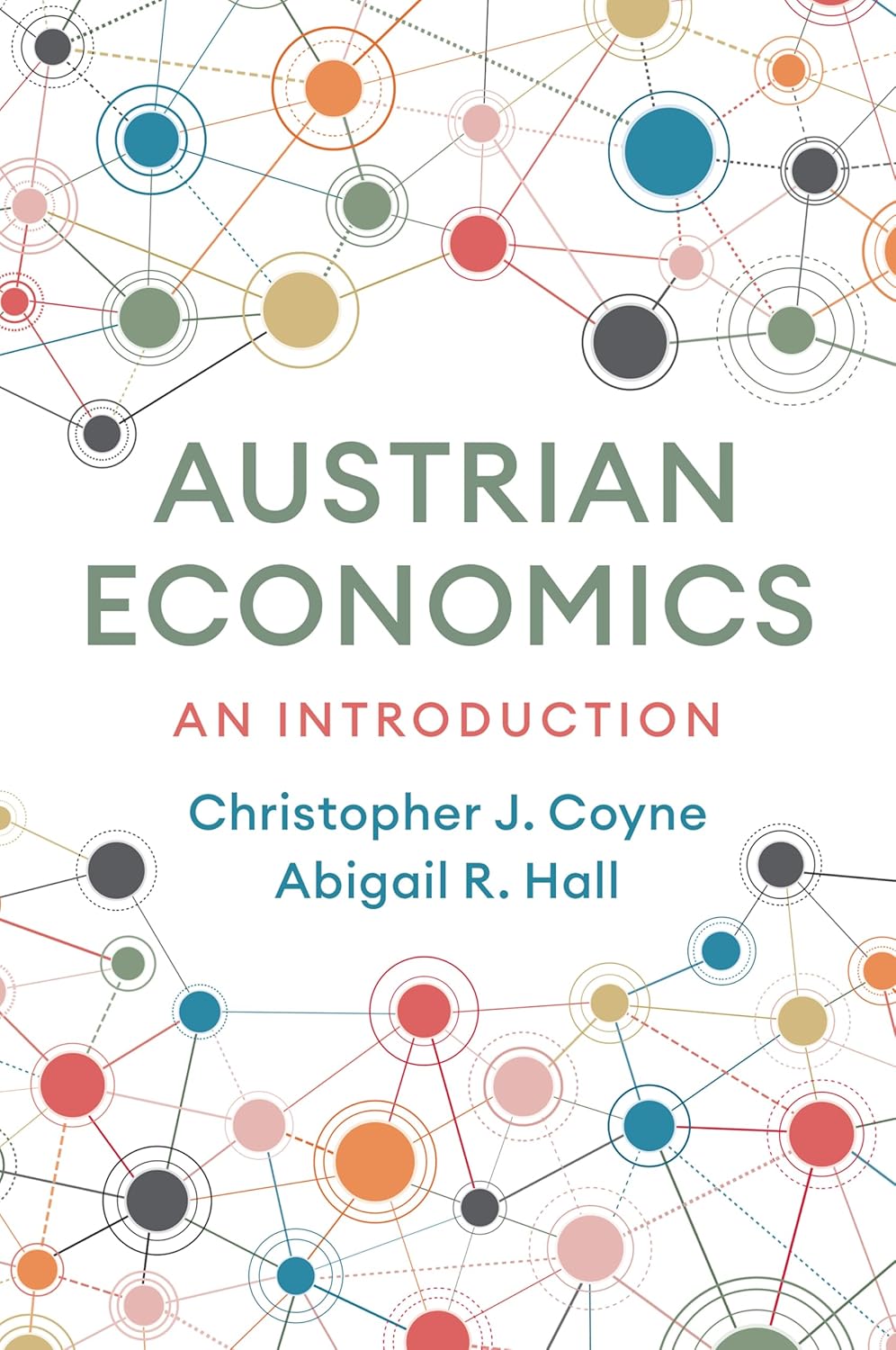
Christopher J. Coyne (George Mason University) and Abigail R. Hall (University of Tampa) have published an elegant book introducing readers to Austrian economics.
I propose a brief – though far from comprehensive – list of Weberian ideal types who would benefit from reading it. Anyone who:
(Note: Any resemblance to actual people is completely intentional).
How Austrian economics found itself in need of expositors to dispel such notions is a story for another time. But after this book, no one has an excuse for clinging to these caricatures. In Austrian Economics: An Introduction, readers will learn quickly that Austrian economics studies how people cooperate to improve their lives. They will also learn what stymies such cooperation and how government efforts to override peaceful choices often produce unintended consequences.
Chapter one describes the main themes of Austrian economics and how those emphases distinguish the tradition from prevailing frameworks today. It does so by weaving these ideas through the biographies of key Austrian figures, beginning with founder Carl Menger and extending through Böhm-Bawerk, Wieser, Mises, Hayek, Lachmann, Rothbard, and Kirzner. The authors place Austrian economics within the broader marginalist tradition. At the same time, strong commitments to methodological individualism, subjectivism, time, institutions, and resource heterogeneity differentiate Austrian economists from their neoclassical cousins.
The payoff of these Austrian hallmarks is a distinctive approach to prices, capital, money, business cycles, and social order more broadly. Austrian theory is more concerned with realism than most standard neoclassical models, but realism is not valuable for its own sake. Coyne and Hall show that Austrian theorizing aims at something deeper: insight into social processes, the kind that enables ‘pattern predictions’ – directional claims about the tendencies of an economic system (chapter two).
Chapter eight puts this pattern prediction capacity on the fullest display. Here, Coyne and Hall walk through the Austrian business cycle theory (ABCT), the Mises-Hayek account of why modern economies exhibit economic booms followed by busts. In the ABCT, the Austrian tradition’s signature insights converge. By integrating the Austrian analysis of prices (chapter four), entrepreneurship (chapter five), interventionism (chapter six), money (chapter seven), and capital theory (chapters one and eight) into a single framework, the ABCT illuminates social phenomena other approaches struggle to explain. Why, for example, do economic booms see entrepreneurs pouring resources into ‘higher-order goods’ (say, mining) even as final buyers go on a consumption spree? ABCT explains.
Much of the core Austrian material will be familiar to readers already steeped in classic Austrian works. But seasoned lay readers of Austrian economics, and even professional Austrian economists, will benefit from two chapters that set Coyne and Hall’s book apart from the competition. Chapter three – ‘Catallaxy: The Study of Coordination and Exchange’ – situates Austrian economics within a broader intellectual tradition Coyne and Hall call ‘the exchange paradigm.’ The term, borrowed from Dartmouth economist Meir Kohn, refers to a broad umbrella that includes several fellow-traveler traditions in public choice, law and economics, and the new institutional economics. Unlike the Hicks-Samuelson ‘allocation paradigm,’ the ‘exchange paradigm’ emphasizes price formation (rather than optimization against exogenously given prices), imperfect information, constant change, open-ended choice, and the specific knowledge of time and place. Because such knowledge is tacit and thus inarticulable, it resists the dominant ‘measure-and-model’ approach.
As with chapter three, seasoned scholars will find much to learn from chapter nine: ‘Austrian Economics: Yesterday, Today, and Tomorrow.’ In it, Coyne and Hall survey contemporary Austrian research – much of it from the last decade – spanning a host of domains: political economy, macroeconomics and monetary theory, entrepreneurship, development, behavioral economics, self-governance, culture and civil society, and the economics of disasters, diseases, and war. This chapter highlights the profoundly empirical nature of modern Austrian scholarship. Austrian economists want to understand how the world works and why things are the way they are.
The book repeatedly revisits economic calculation and the coordinating role of market prices. This repetition is a feature rather than a bug. Consider interventionism. The Austrians note that intervention alters prices, the distorted prices change behavior, and the new behavior often undermines the very goals the intervener pursued. Coyne and Hall rightly highlight how the rest of Austrian economics builds on the central contribution of economic calculation.
Given their mastery of the literature, I’d hoped Coyne and Hall would include chapters on other areas of economics where Austrians have been pioneers. The book might have explored Austrians’ substantial contributions to law and economics beginning with Menger’s discussion of property rights and followed by Hayek’s distinction between ‘law’ and ‘legislation.’ It could have also fruitfully featured an industrial organization chapter to highlight how Austrian market process insights (chapter four) provide a distinct lens on public policies such as antitrust. Though these chapters do not appear, I hope that means Coyne and Hall have a sequel in the works.
The quality of the book’s prose is a credit to the important ideas it contains. If Austrian economics has been on the cutting edge of many important intellectual contests – the 19th century Methodenstreit (the ‘battle of methods’), the 19th century Marginal Revolution, the 20th century socialist calculation debate, the 20th century contests over business fluctuations, and contemporary debates about everything from foreign aid to reinvigorated industrial planning – it deserves an accessible treatment that simplifies these Big Ideas without being simplistic. Chris Coyne and Abby Hall have delivered. Faculty now have a great option for courses on Austrian economics, public policy, political economy, economic history, and the history of economic thought.
One final note. Coyne and Hall’s endnotes and bibliography are worth the price of admission. Anyone hungry to learn more – and many will be after this appetizer – will find an intellectual feast awaiting them in the References. When it comes to the human sciences, there is enough here to occupy one’s mind for a lifetime. With so much to read and too little time, it’s good we have prices to guide us. At least when it comes to this new book, I think readers will conclude the marginal benefit exceeds the marginal cost.
‘Austrian Economics: An Introduction’ by Christopher J. Coyne and Abigail R. Hall was published in 2026 by Polity (978-1-509-54706-7). 222pp.

Last week we gathered people in policy, business, and public life together in Westminster to think about the current fiscal situation in the UK and specifically the relationship between taxation and enterprise.
We will be holding further events in the autumn. Please subscribe for details.
Tom Clougherty kicked us off by speaking about the rising level of tax needed to fund existing debt and continually increasing spending. For the purposes of this presentation he said he would take the required tax take as a given and focus instead on how it was raised. He pointed out that some taxes are much more efficient than others, because they raise revenue without impacting economic behaviour like investment in the future or decisions to take employment opportunities. He noted that the UK is ranked 32 out of 38 OECD members for tax competitiveness. He emphasised that the poor use of efficient taxes like VAT (where exceptions abound) and an almost uniquely poorly-designed property tax system mean than revenue comes from taxes that cause more economic damage.
Tom argued that while many experts disagree about the level and composition of government spending, they agree about improvements to the tax system and about the general design principles. Despite this, the practical politics is not clear cut and there are difficult questions about to how to get from the status quo to a better system.
Philip Krinks spoke about the broader determinants of a nation’s tax policy. He argued that there were at least six factors. The first was political vision and shared values, including the nation’s understanding of ‘fairness’ and of private property. The second factor was constitutional and legal, particularly which levels of government had tax-raising powers. The third was the chosen political economy, centring since the late 19th century in the UK on choices about state size, welfare provision and public ownership. The fourth was incentives for particular developments, such as the current focus on growth, where Philip agreed with Tom that the tax economics of growth enhancement are widely agreed, including predictability, low marginal rates, broad bases, neutrality, and favouring consumption taxes over levies on work, savings, and investment. A fifth issue, important to confront, was power dynamics, where certain constituencies are in a position to gain preferential treatment by forming electoral coalitions or otherwise influencing policy. The last was technical feasibility, since state capacity, while considerable in the UK, was still limited, not, for example, including a register of land values.
Philip concluded by suggesting a reset in the UK across all these dimensions: a political vision valuing work and enterprise over resentment, constitutional reforms restoring power to citizens and businesses over government bodies, a reduction in state size through welfare and pension reform, and tax reform to reward investment, innovation, and growth.
Naomi Wells spoke about the trends she was seeing in her work advising entrepreneurs impacted by UK taxes. These included those who had built up family businesses in the UK and were concerned by recent changes. In some cases, they were feeling compelled to leave the UK due to the liabilities which would be created when the business passed between generations, in addition to increasing payroll and other taxes and a worsening regulatory environment.
She also spoke about the successful entrepreneurs from overseas who had seriously considered relocating to the UK but been put off by a high and increasing tax burden. On a UK home, overseas buyers of premium property facing a 19 percent marginal stamp duty charge.
Taken together the risk is that policies discourage inbound entrepreneurs and encourage British entrepreneurs to move abroad weakening the economy and longer run fiscal situation.
The talks were followed by a lively group discussion, chaired by Joanna Moriarty, which continued over drinks.







We will be holding further events in the autumn. Please subscribe for details.
The UK faces compounding fiscal pressures: a swelling adult social care budget, rising debt-servicing costs, and a persistent temptation to raise revenue in ways that erode the very economic activity on which public spending ultimately depends. How should the tax system be reformed to encourage enterprise rather than discourage it?
On 21 May, CEME welcomed Tom Clougherty — a leading authority on UK tax reform, formerly Executive Director of the Institute of Economic Affairs and Head of Tax at the Centre for Policy Studies — to Westminster to set out the case. Naomi Wells, Partner in the Tax practice at Azets, and CEME’s Director Philip Krinks responded.
Location: One Great George Street, Westminster, SW1P 3AA.
Time: The event begins at 6:45pm with the talks from 7:00pm, followed by a drinks reception.
Please RSVP to let us know whether you are able to join us by emailing office@theceme.org


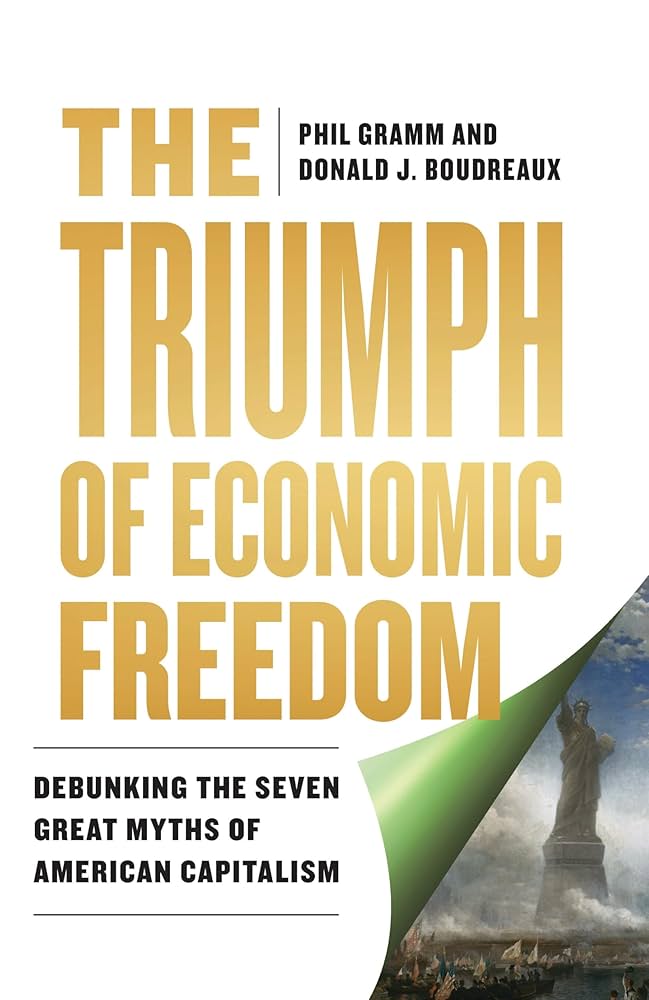
This fascinating book is well worth a read by anyone interested in economic history or contemporary policy debates. In it, Gramm (a former senator well-known as the moving force behind a number of important policies) and Boudreaux (an economist) take us through seven of what they call ‘myths’ about capitalism. These are five historical myths: that the industrial revolution impoverished workers; that in the decades after the American industrial revolution there was a strong tendency towards monopoly, only eventually limited and disciplined by regulation; that the Great Depression was a failure of Capitalism; that trade hollowed out American manufacturing; that deregulation caused the Global Financial Crisis; plus two myths about modern American inequality and poverty.
For each myth, the authors start off by setting out the case for the myth, drawing on certain key supporting statistics, academic commentary in favour and broader literature (frequently finding highly evocative quotes painting grim pictures embodying or expressing the myth). The authors state that their intention is to give each myth as fair and complete an airing as they can. And in most cases they have a decent shot at this, allowing the reader to understand what the myth is, why people believe it, and why it seems emotionally as well as intellectually attractive. I wasn’t wholly convinced they had summarised all the most important reasons to support the idea of the early industrial period’s tendency towards monopoly or the Great Depression’s natural resulting from Capitalism. But that is largely a matter of taste, for in all cases (including these) their painting of the case was vivid and should be seen as fair if not always complete.
With the myth and its basis painted, they move on to consider the facts in more detail, explaining why the idea in question is a myth. To a high degree, their case would have been made simply by the splendid additional facts they set out. But they go on to explain in detail why the facts that appear to the support the myth are as they are and to explain (frequently very interestingly and compellingly) the political context or motivations for the literature and commentary references that support the myth as well. At the end of each section, the myths lie in intellectual tatters, so savaged by Gramm and Boudreaux’s polite but forceful prose that one almost feels sorry for the battered victim.
Our courteous pitbulls begin with the industrial revolution and the notion that workers initially lost out because of it. Here perhaps the most decisive arguments offered were simply that purveyors of the myth had totally failed to understand the lot of the rural poor prior to industrialization, imagining that they lived a pleasant and comfortable life of high leisure in bounteous rural idylls. By contrast, Gramm and Boudreaux tell us a much more convincing tale of disease and accidents, early mortality, poor infrastructure, few if any available and accessible services, hunger or bland and monotonous diet, and living together in multi-family long-houses where a dozen slept together on a lice-ridden straw mattress and sexual relations were watched by skin-sores-ridden bedmates and rodents alike. In one fascinating section, the authors take us through nineteenth century interviews and autobiographical statements of the urban poor mocking and dismissing the ignorance and naivete of rich people expressing outrage at the lot of low-income urban living, whose only knowledge of the countryside came from their own or their rich friends’ stately homes.
Another interesting section in this opening myth concerned the motivation and timing of some of the key literature and commentary on bad conditions in factories. In the run-up to the abolition of the Corn Laws in 1846, opponents of free trade sought to paint manufacturers, who wanted tariffs taken off imported raw materials, as wicked bosses who harmed their workers by contrast with the pleasant lot workers had in the agricultural communities that food tariffs supposedly protected.
The chapter on the early industrial tendency towards monopoly told us of Standard Oil, as one would expect, but its longest section was about the Chicago meat-packers. Some of the most interesting material here was about how the key objections to alleged monopoly in this era were not, as one might suppose, that it resulted in prices that were too high – the authors offer extensive statistical evidence against that idea – but it appears that was not even claimed as a key concern at the time. Rather, opponents of monopoly worried that the power of large ‘trusts’ enabled them to secure prices that were too low, from their own suppliers (particularly of transport services) – and then pass these on to consumers.
This is also where we first encounter a recurring bipartisan theme – perhaps not unrelated to the fact that Gramm himself was first elected as a Democrat and then switched to the Republican Party. Time after time, through the economic history they set out, we see Republicans first to pursue foolish anti-market policies and rhetoric, followed by Democrats who push the anti-market agenda even further, before other Democrats finally see the light and set things in motion back along a pro-market line, in due course followed by the Republicans. As regards anti-trust rules, we are told that it is under President Carter that the key reversals of ‘Progressive era’ regulation start to be reversed, and Reagan carries forward Carter’s agenda. This pattern is repeated in other sections: Hoover starts the epic spending rises and deficits of the 1930s, and Hoover forbids firms from reducing wages despite 25 percent unemployment. Roosevelt carries that agenda forwards. Clinton enacts key (beneficial) financial deregulation measures and the most successful anti-poverty programmes (based on encouraging work). Trump impedes free trade and harms the WTO’s enforcement system, with Biden carrying forward Trump’s agenda. The authors clearly want readers to get the message that being pro-market is not a naturally Republican position and being anti-market not naturally Democrat.
Much of the material relating to the Great Depression will be familiar to students of the topic – the role of Britain’s rejoining of the Gold Standard leading to excessive US monetary growth in the 1920s and the failures of the Federal Reserve to prevent contraction of the money supply from the late 1920s onwards have been well-known since at least the work of Milton Friedman. Perhaps more novel is Gramm and Boudreaux’s analysis of the 1937-38 recession, along with their discussion of Roosevelt’s quasi-fascist anti-business rhetoric and how that was seen by investors aware of the international political context at the time. They present some interesting indicative statistics on how much more short-termist investment became as financiers worried that they might need to liquidate investments rapidly if the political situation turned further against them.
The section on trade and manufacturing is robust and persuasive, covering most of the bases one could want, explaining how US manufacturing dominated in the post-war period because much of the rest of the industrialised world lay in the ruins of war, but that that could not last indefinitely as other countries recovered. The authors cover the interesting question of whether software programming (which today constitutes up to half the value added of significant manufactured products such as cars) should be classified as ‘manufacturing’ in employment statistics. There was also a good discussion of the relationship between capital account inflows, as investors put money into America and then later invested into the rest of the world, and their natural counterpart in current account outflows (via trade deficits). The one thing I though could have been covered better here was the deeply erroneous arguments of Trump that the presence of a US trade deficit with a country shows that that countries must have been placing non-tariff barriers in the way of US exports.
The two final sections, on inequality and poverty, included material familiar to readers of Gramm’s 2022 book (along with Ekelund and Early) on The Myth of American Inequality (which I have reviewed here previously). These sections once again appeal extensively to the very strange situation created by US statistical authorities not deeming two thirds of the transfer payments made to lower-income American households as income (because they take non-cash forms such as food stamps) and how, once one corrects for this anomaly, the US actually has one of the highest proportions of GDP in the world transferred between income groups, very low poverty and very typical inequality by developed economy standards.
The one ‘myth’ topic about which I might claim to know more than the authors was the Global Financial Crisis. Here I found their discussion interesting and familiar, but incomplete in important ways that, though it did not threaten their key conclusion that the crisis was not a result of deregulation, it did mean their own alternative narrative was much less supported than they claimed. I found their discussion of financial diversification instruments (such as CDOs) a little too shallow, not really exploring whether these diversified away or added to systematic risk. I didn’t think they considered enough the role of an innovation boom-bust cycle in financial markets as a contributor to either the Great Depression or Global Financial Crisis. I also regretted their failure to discuss the way government bailouts of major banks since the mid-1980s had created implicit expectations of future bailouts, and how that encouraged banks to expand their balance sheets in multiple developed countries. I don’t dispute their criticisms of Clinton-era housing policies or of the failings of Fannie Mae and Freddy Mac. But I found their suggestion that flawed US housing policies by themselves caused a financial and sovereign debt crisis spanning the globe to be incomplete at best.
This is a small cavil regarding a book I enjoyed reading, found highly informative and whose overall message I both strongly endorse and believe this to be a robust ally in promoting. I liked it, and if this is your thing then you’ll like it too.
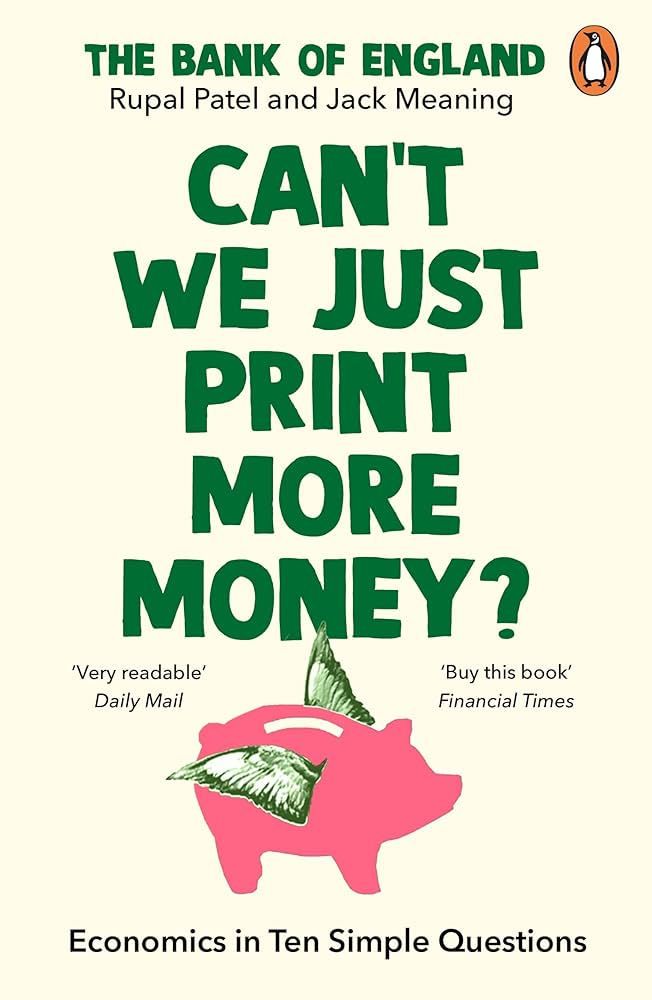
Written by economists at the Bank of England with a view to helping the public understand economics and economic matters, Can’t We Just Print More Money? represents an engaging and accessible contribution to the Bank’s purpose of contributing to the public good. As an exercise in explanation, there is no sustained argument to follow (or for a review to critique), which means that each chapter could be read in isolation – but considering how readable the prose is, there is no need to take such an approach.
Following an account of the reasons for writing the book, the introduction offers a series of illustrations to show the centrality of economics – as that which is concerned with decisions about how to use (scarce) resources – to many of our everyday experiences. The authors provide a brief history of the discipline and the tension between more ‘social scientific’ approaches and those more concerned to treat economics as a hard or mathematical science, and then explain the structure of the book: through a series of chapters, each raising one straightforward question, it will explore major issues of both micro- and macro-economics.
The first three chapters explore markets, with Chapter 1 focusing on the functioning of markets and discussing certain foundational concepts, such as ‘utility maximisation’, ‘monetary costs’, ‘opportunity costs’ and ‘marginal revenue’. In connection with these, it covers the importance of supply and demand and the factors that can influence each (such as pricing). The central point is that markets exist as the places where supply and demand (sellers and buyers) meet and prices are determined as the two are brought into equilibrium, with prices acting as signals to producers. In doing so, markets coordinate decisions made by countless individuals and bring about various outcomes that we find beneficial, without anyone managing the process or even in many cases directly intending those specific outcomes. Several useful examples illustrate these points perfectly, particularly in relation to pricing.
Subsequent chapters follow a similar pattern, the second covering the idea of market failure and the problems of externalities, imperfect knowledge and imperfect competition. These notions are brought to bear on the problem of climate change (or environmental damage more broadly) to illustrate not only the problems with markets, but also the reasons why some do not believe that market mechanisms can be employed to address the problem. Nevertheless, the authors consider the ways in which economic thinking can inform the alternatives and do discuss possible market solutions, such as carbon trading schemes. Chapter 3 turns to labour markets, framed in terms of the question of how to secure a pay rise.
From here, the book begins to shift towards macro-economic issues, considering (in Chapter 4) the question of growth by way of the question: Why am I richer than my great-great grandma? The authors discuss the concept of GDP and the ways in which it is measured, along with the factors affecting growth, its advantages and the negative outcomes of certain types of growth. Asking why so many clothes are made abroad, Chapter 5 focuses on trade, offering an explanation in terms of the specialisation brought about by the division of labour and the comparative advantage to each region or country of producing particular types of goods, components or services. The impact on trade of lower wage costs in some regions is considered, and the authors offer an interesting discussion of the controversies that arise from protectionist measures and competing interests – and the ways in which these can be (and have been addressed), reminding us that trade, and countries’ specialisms, are always shifting.
Chapter 6 addresses the issue of inflation, examining the factors that contribute to it and explaining the indices by which it is measured and the difficulties of doing so. The authors illustrate well the significance of the fact that inflation, by eroding the purchasing power of money, constitutes a major influence on our economic wellbeing. They also explain clearly why inflation constitutes a tax on savings and the reasons for which debt-laden governments are tempted to stoke inflation. This chapter also notes that moderate, controlled inflation tends to be favoured by economists as protection against the dangers of sustained deflation, and closes with a brief look at some of the major schools of thought on the causes of inflation. The discussion of a complex phenomenon that has been one of the major economic issues of recent years is very accessible. Opened (and closed) with the question of what was happening with the price of a Cadbury’s Freddo, it invites readers to look at the major causes of inflation, the reasons for which inflation is encouraged both responsibly and perhaps sometimes recklessly, who it tends to harm or benefit and its relationship with money. Missing perhaps, alongside the recognition that heavily indebted governments can be tempted to encourage inflation, is a short discussion of how the amassing of public debt can itself be inflationary.
Chapters 7 and 8 are also interesting and clear, focusing on the origin and functions of money and the role played by the banking system. With the recurring themes of the creation, storing, lending and circulation of money, these chapters cohere well and the authors emphasise the centrality of trust and confidence – though perhaps an opportunity was missed here to refer back to the discussion of inflation specifically in this regard.
The two final chapters look at economic crises. Chapter 9 addresses the question of why nobody saw the crisis of 2008 coming and considers the kinds of crisis that can occur, their causes and effects and the difficulties faced by economists in trying to foresee them. Chapter 10 raises the titular question of the book: Can’t we just print more money? It examines the measures that policy-makers can adopt to manage the economy. Some fairly difficult mechanisms connected with interest rates and their effects are handled well and there is a detailed discussion of how quantitative easing functions to affect the money supply and the reasons for which it affects rates of inflation. In addition to monetary policy, the chapter also looks at fiscal policy and the levers that governments have at their disposal in the form of taxation and spending to affect economic activity, closing with a discussion of government debt in relation to GDP and the debates surrounding the need to balance the books.
Following a summary conclusion that reiterates the importance and relevance of economics to our daily lives, a short appendix offers page references for answers to even simpler questions addressed in the course of responding to the major questions that form the basis of each chapter.
This is a lively volume that is richly illustrated with examples throughout, whether imagined for the purposes of explanation, or taken from history or current affairs. In consequence, it is easy to follow and material that could become abstruse is presented with clarity. The book’s stated aim is to enable readers to make more sense of the economic world they inhabit and in this, it is surely successful: all readers, including those with no grounding whatsoever in economics, ought to be able to understand the book without difficulty (and without becoming bored). It should therefore be read by anyone looking for an orientation in the major issues central to economics and clarity on the fundamental ideas and mechanisms that arise in public discourse on economic affairs.

The central thesis of The Permanent Problem, by Brink Lindsey, is that we are living through an historic transition in which capitalism has delivered mass prosperity but has not yet worked out how to deliver mass flourishing (providing meaning, purpose, belonging, fulfilment). In addition, the author argues that the very forces that created mass abundance, are now undermining the social and cultural foundations that are required for a fulfilling life. So, in Lindsey’s view, capitalism has largely solved the problem of material scarcity, but it has not yet solved – and may be making harder – the deeper problem of human flourishing. In so doing, Lindsey sets out a series of epochs and epic transitions, from a world of scarcity to a modern world of mass abundance and a future world of mass flourishing. But Lindsey is not certain, or indeed confident, that the world of mass flourishing will be attained.
Throughout, Lindsey emphasises that capitalism has succeeded on multiple fronts historically, delivering unprecedented affluence, together with freedom, health, longevity and education. He readily acknowledges the extraordinary achievements of capitalism. But he then fears we have hit a wall, because he asserts that capitalism is not well designed to deliver meaning, status, identity and relationships. He argues that prosperity itself creates destabilising effects in the form of consumerism weakening deep relationships, individualism undermining social bonds, collapsing fertility, a deterioration in mental health and the fragmentation of communities.
In his view, this creates a mismatch between rising expectations and actual lived experience, as we move up the hierarchy of needs from material provision to deeper psychological desires. The knock-on effect of this mismatch is, according to Lindsey, essentially a triple crisis: (1) a crisis of dynamism – with slower productivity growth, innovation bottlenecks and regulatory and institutional drag; (2) a crisis of inclusion – a widening class divide, especially by education, entailing a breakdown of family, community and social cohesion; (3) a crisis of politics – falling trust in democracy, rising populism and institutional paralysis.
The problem becomes permanent in the sense that there will be no return to scarcity, but affluence continually generates new expectations, frustrations and forms of dissatisfaction. Lindsey argues that solving the material problem does not eliminate human problems, it merely transforms them. His broad conclusion is that we need to refocus (to restore dynamism and innovation and remove barriers to growth such as rent seeking and regulation) and restore (strengthen communities and shift some functions away from markets and the state, towards civil society and personal relationships) capitalism in order to translate material abundance into meaningful lives. Essentially, he is arguing that economic systems are good at producing means (wealth, goods and services) but human beings ultimately care about ends (purpose, belonging, identity, love).
This is a rich, and indeed powerful thesis, taking a broad conceptual sweep of history. But is it true, and how should one approach it from a Christian perspective? Lindsey acknowledges that he is not a believer. But his thesis might appeal to many Christians due to it: (a) placing deeper psychological and spiritual needs above material considerations; (b) asserting that materialism has undermined more important values; (c) focussing on inclusion and the fragmentation of society.
However, whilst recognising the many fascinating insights contained in the book, I’m deeply sceptical of the thesis of The Permanent Problem for a number of reasons:
First, because from the perspective of Christianity – and of other faiths too – the root problem is not material but spiritual. The challenges of the human condition were never primarily about prosperity and so that was never going to solve them. The Bible teaches us that human striving and achievement in the material world will fail to satisfy. That failure to satisfy is attributable to a God-shaped hole in people’s lives, and whilst it cannot be filled by material abundance, neither can it be filled by flourishing either, if that excludes God. Mass flourishing ultimately requires a great awakening. Secular flourishing will never be enough. In economic terms, there is an omitted variable in the permanent problem model, namely God.
Secondly, there is a need to focus on the ethical formation of individuals. Christians for example would express this by saying that human nature is distorted by the Fall. The problem therefore is not just a matter of institutions, such as capitalism. Instead of blaming the sinner, fallen man repeatedly blames the system. Whilst Lindsey clearly recognises capitalism’s role in prosperity, he ultimately still blames the system. But capitalism alone was never meant to deliver the flourishing that he seeks. That flourishing comes from placing wealth creation in its rightful context, seeking first His kingdom and His righteousness. That is the route to meaning, purpose, identity and fulfilment.
Thirdly, the problems it attributes to capitalism are more likely the fault of the state. The 1980s saw the Gordon Gecko ‘greed is good narrative’ take root in the media. But the idea that capitalism as a system is based on greed and rampant individualism is erroneous. Capitalism is a system of voluntary exchange to meet the need for goods and services. Without doubt, to the extent that the Judaeo-Christian ethic and worldview have been withdrawn from the public square, capitalism has become an uglier process, but the problem is surely too little God, not too much capitalism. Less inclusion and more fragmentation are more a consequence of secularisation, as the Leviathan state forces the good Samaritan off the road, and in so doing has undermined social capital.
Fourthly, the state is undermining the very prosperity Lindsey takes for granted. The idea that prosperity is done and dusted, and we can take it for granted, may prove a triumph of hope over experience. The economics literature clearly sets out negative trade-offs between the size of the state (measured in terms of tax and spend, regulation and public debt) and economic growth. Trend output growth – based on supply-side potential – in many of the advanced economies is around 1% less than that of only a few decades ago. Statism and an ageing population promise to reduce this growth rate even further over the coming decades, with the mother of all fiscal crises potentially waiting for us at the end. Lindsey correctly identifies, and argues well, the need for far greater dynamism. But I fear he understates the significance and scale of the required reduction in the size of the state in order to facilitate this dynamism.
The Permanent Problem is an excellent book. It is thought provoking and challenging throughout, but its fundamental flaw is the same for all such works – in attempting to represent reality without reference to God, it seeks an external solution to an internal problem. Lindsey recognises that secularisation has been part of the problem, but he seeks to find meaning and community within a secular society. He sees the problem as social and institutional, not spiritual, so his solution is worldly and pluralistic. Those of us who are committed to the Judaeo-Christian ethic will respond that it is the solution to the problem he identifies.
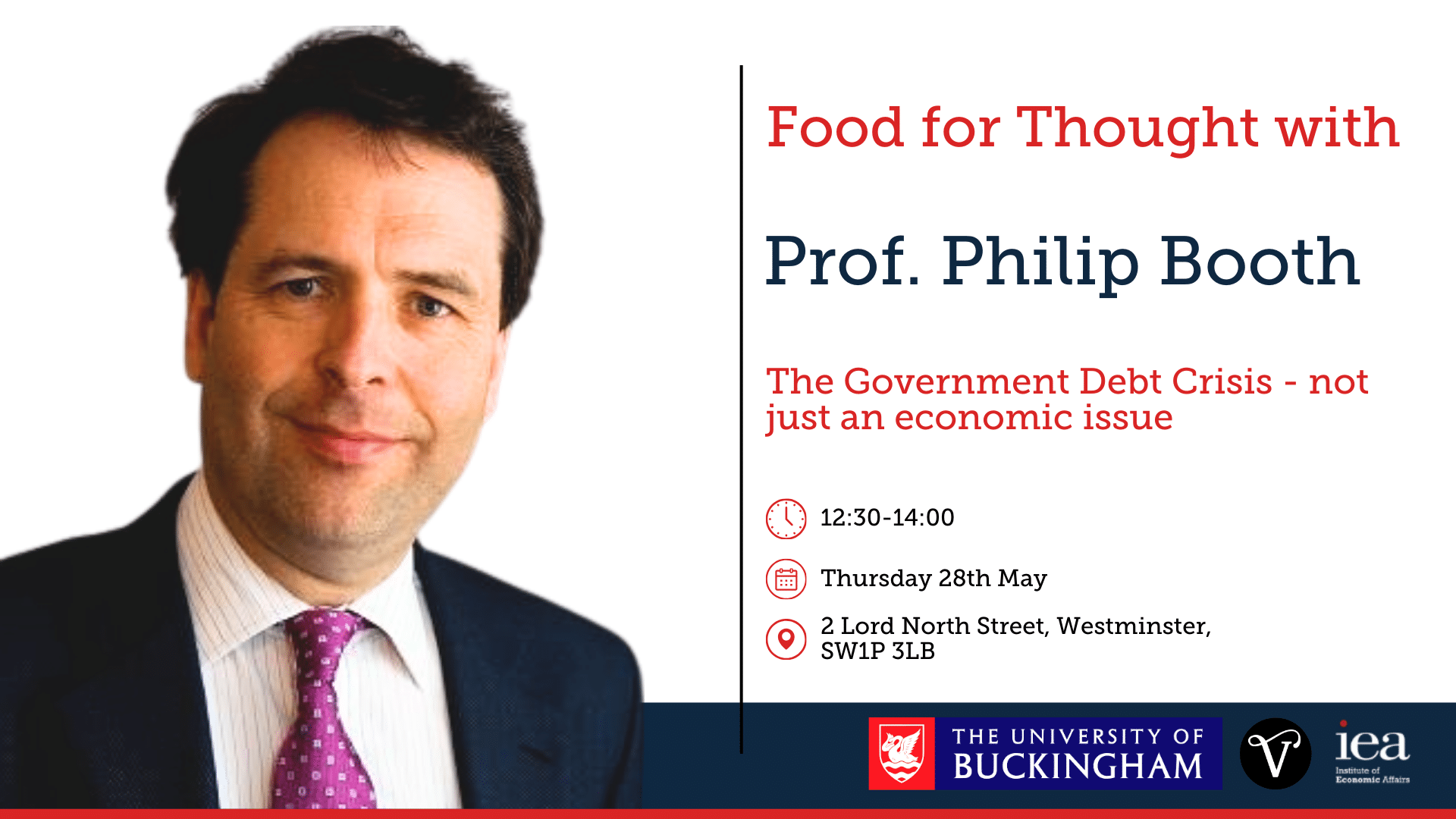
IEA Food for Thought with Prof. Philip Booth (RSVP with the IEA)
The Government Debt Crisis – not just an economic issue
12:30-13:00: Sandwich lunch
13:00-14:00: Presentation and Discussion
About the Discussion
Philip Booth will describe how government debt is creating a looming economic and social crisis. This is especially so when we also consider demographic developments in western and in Asian countries. Although it is sometimes suggested that we have had higher levels of debt before (for example after wartime), there were huge costs from reducing debt in those circumstances and the evidence suggests that managing government debt in future generations will be even more difficult. This is not just an economic problem. Historical experience suggests that high levels of government debt can lead to the breakdown of civil order, violence and even war as well as dissatisfaction with the process of government itself: perhaps we are already beginning to see those things happening today. Indeed, there are examples, including one close to home, where government debt has led to countries losing their sovereignty entirely.
About the Speaker
Philip Booth is Academic Advisor and Senior Research Fellow at the Centre for Enterprise, Markets and Ethics. He is also professor of Catholic Social Thought and Public Policy at St. Mary’s University, Twickenhamand Director of Policy and Research at the Catholic Bishops’ Conference of England and Wales.
Previously, Philip was academic and research director at the Institute of Economic Affairs from 2002 to 2016. He has worked for the Bank of England and as associate dean of Bayes (formerly Cass) Business School. He held the positions of Director of Research and Public Engagement; Dean of the Faculty of Education, Humanities and Social Sciences; and Director of Catholic Mission at St. Mary’s.
Philip has written widely on investment, finance, social insurance, and pensions, as well as on the relationship between Catholic social teaching and economics. He curates the website Catholic Social Thought.