
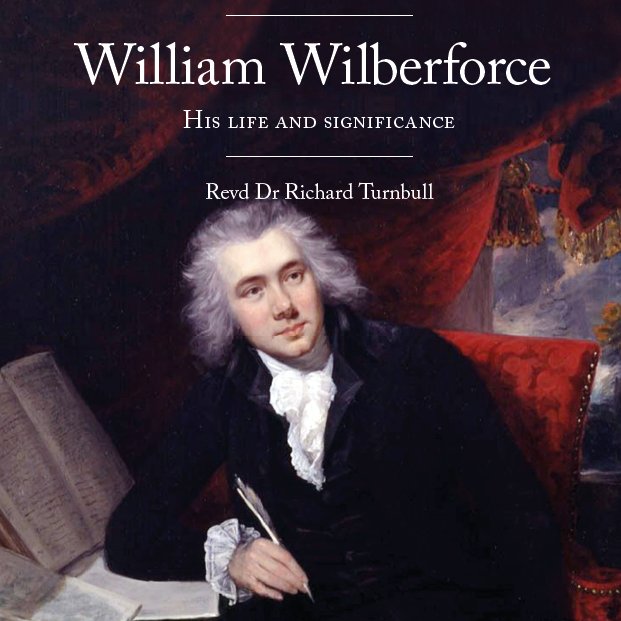
William Wilberforce: His Life and Significance
On the 24 February 1807, the House of Commons voted by 283 votes to 16 to end the trade in human slaves in all British territory. The principal opponent of the slave trade within Parliament and a leading figure in the diverse coalition of campaigners against the evil trade was a man named William Wilberforce. He worked closely with others building a broad coalition for the common good.
Wilberforce’s faith led him to campaign not only against slavery but also for wider moral reform of society and to his involvement in a range of organisations that are still going today.
In this publication (written for an April event with CCLA) Richard Turnbull introduces William Wilberforce.
A PDF is available here and the full text is below.
Contents
- Introduction
- Chapter 1: Early Life
- Chapter 2: Call to Public Life and Conversion to Evangelical Christianity
- Chapter 3: The Clapham Sect and A Practical View
- Chapter 4: The Campaign Against the Slave Trade
- Chapter 5: Wilberforce’s Later Life and an Assessment of His Work
- About the Author
Introduction
William Wilberforce is an iconic figure. He was the principal opponent of the slave trade within the British Parliament and a leading figure in the diverse coalition of campaigners against the evil trade in the country. Who was William Wilberforce and what lessons can we learn from him?
On 24 February 1807, the House of Commons voted by 283 votes to 16 to end the trade in enslaved people in all British territory. The slave trade had been in existence for around 300 years. Even when Parliamentary action commenced in 1789 there was still a long road of nearly 20 years before abolition. Why had it taken so long to achieve such a majority? Wilberforce first introduced an abolition Bill in 1789. For years he was blocked by vested interests, parliamentary procedures, the House of Lords, and varying degrees of both support and prevarication by the prime minister, William Pitt the Younger (1759–1806). The tide finally turned in 1806 under a new government.
Wilberforce was not perfect but he was a man of great character, resilience and faith. He suffered from ill-health for much of his life, not least very poor eyesight. He worked with others for the achievement of the greater good, forming coalitions that went beyond his own position of faith. He was described in the final debate prior to the vote for abolition as a man of ‘unwearied industry’, ‘indefatigable zeal’ and ‘impressive eloquence’.[1]
Wilberforce campaigned on this issue – and indeed many others – from the position of an explicit Christian commitment. He was perhaps the most prominent example of an evangelical Christian in Parliament at the end of the eighteenth century. He had converted to this form of Christianity in 1785 in the aftermath of a great revival or awakening which had swept Great Britain and North America in the middle decades of the century. Wilberforce believed that society needed this passionate love for Jesus and commitment to the teaching of the Bible, and nowhere more so than in the campaign against the slave trade.
Wilberforce’s faith led him to campaign not only against slavery but also for wider moral reform in society. He was involved in key evangelical organisations and a project to establish an evangelical newspaper, the Christian Observer. He also published a widely popular theological tract, known as A Practical View.
His evangelicalism was a distinctly moderate version which placed him at some odds with the wider movement, especially as time went on. He was a Member of Parliament (MP) from 1780 to 1826, representing three different seats in that time. In a period when politics and personalities were more fluid, he clearly associated with Tory groups and personalities, but always sought election as an independent. He remained a backbencher, never seeking or being offered high office. He was a significantly more complex character than is often appreciated.
Notes to Introduction
[1] Sir John Doyle, Slave Trade Abolition Bill, Hansard, col 977 (23 February 1807). Note that the sitting is recorded as having taken place on 23 February but the vote actually took place at around 4am on 24 February.
Chapter 1: Early Life
Wilberforce was born in Hull in 1759, to Robert and Elizabeth Wilberforce. The family were prominent merchants in the city. With Hull being on the east coast rather than west, the city’s wealth derived primarily from trade with the Baltic countries rather than the slave trade.
Wilberforce’s childhood brought him at various points into contact with Christians of the more evangelical sort, which his mother did not appreciate. At Hull Grammar School, he came under the influence of the Milner family, later a significant evangelical family. However, in 1768, after his father’s untimely death at the age of 39, his mother, unable to cope sufficiently well, sent him to an uncle in Wimbledon and he attended a boarding school in Putney. His aunt belonged to the evangelical banking family of the Thorntons, and it was partially their influence that led William’s uncle and aunt (William and Hannah Wilberforce) to embrace the evangelical faith. This influence included taking William, at the age of 11, in early summer 1771, to meet John Newton (1725–1807) in his rectory at Olney, Buckinghamshire. Newton also became a prominent anti-slavery campaigner, and years later Wilberforce would seek counsel from him. Both Wilberforce’s mother and his grandfather were unhappy at these influences and Elizabeth removed her son from Wimbledon amid family disagreements.
Back in Hull, all was not straightforward – Joseph Milner (1744–1797), the school head, had turned ‘methodist’.[2] Wilberforce would, naturally, not be able to return to the school. So, he was despatched to Pocklington, near York, to board. The attractions of Hull during the school vacation – theatre, balls, cards, gaming, concerts and plays – all proved increasingly attractive to Wilberforce. Any early religious influence was pushed out of him. He entered the University of Cambridge in 1776 but there, in essence, he wasted his time. It was, however, while at Cambridge that Wilberforce first met and formed a friendship with William Pitt, the future prime minister, and he resolved to become an MP.
Notes to Chapter 1
[2] The term ‘methodist’ was generally used at this time to describe any adherent of evangelical faith rather than the specific denomination, which emerged later in the century.
Chapter 2: Call to Public Life and Conversion to Evangelical Christianity
Election to Parliament
Wilberforce, finding no real reason to remain in Cambridge for the purposes of studying, began to travel to London and attend the visitors’ gallery at the House of Commons, along with William Pitt, who was also seeking a political career. The two developed a lifelong friendship that would at times be strained by the slavery question but that, nevertheless, endured.
In 1780, an election was looming. Elections prior to the Reform Act of 1832 were very different affairs from what we are used to now. Hull, with 1,500 electors made up of the town’s freemen, was not a pocket borough (an electoral district under the control of one person or a family) – though the freedom of the town was a piece of hereditary property! With his family connections, Wilberforce’s home town offered a viable seat.
There were two seats, one occupied by the Tories and the other by the Whigs. Wilberforce stood as an independent. The costs of running in an election anywhere could be high. The electorate almost demanded entertainment, and beer was a prerequisite. Moreover, to run in Hull with its 1,500 electors would incur additional expense. Several hundred of the electors lived in London. Not only did they need to be entertained but also, if they were to cast their votes in Hull, provision would be needed for their travel and lodging expenses, not to mention a going rate to cast their vote for the right candidate. The one thing the freemen feared most was an uncontested election!
Wilberforce’s preparation and work paid off with a dramatic result: he topped the poll. On 31 October 1780, at the tender age of 21, he took his oath as an MP. We must remember that while parties did exist, much politics at this time was heavily influenced by factions (groups of interest formed around powerful people). Wilberforce remained an independent but was gradually drawn into a revived form of Toryism around Pitt. In 1784 he was elected for the county seat of Yorkshire (with an electorate of 20,000), again as an independent but unopposed by the Tories. Wilberforce remained close to Pitt but was not invited to take office, then or subsequently.
Conversion to Evangelical Christianity
Let us turn then to Wilberforce’s conversion and his adoption of the Christian faith as a living, vibrant, personal faith as understood by evangelicals at the time.
With the county election out of the way, in late 1784, Wilberforce set off on the traditional European tour for young men of his age with either an aristocratic family or a degree of status and wealth. The idea was to introduce the ambitious rising talent of the nation to the sights, the experiences and the encounters with art, philosophy, religion and culture that would come from being immersed in the daily life of Europe. These tours could last several months and were usually undertaken in the company of others. Wilberforce was accompanied on his tour by his mother, his sister and some female cousins. However, for male company he chose Isaac Milner (1750–1820), the younger brother of Joseph. Isaac was ordained, a mathematician, and a fellow and later president of Queen’s College, Cambridge. He was also an evangelical, the only downside from Wilberforce’s family’s perspective.
It was, in fact, one of his travelling cousins who gave Wilberforce a book written by one of the leading Protestant dissenting ministers of the time of the revival: Philip Doddridge’s The Rise and Progress of Religion in the Soul. Wilberforce needed to be back in Parliament and he and Milner left Nice on 5 February 1785. Wilberforce asked Milner whether the book was worth reading. Milner replied, ‘It is one of the best books ever written. Let us take it with us and read it on the journey.’[3]
In this way, Wilberforce began to be introduced to Christianity as a living, vibrant personal faith, as it was understood by evangelicals. The book covered the classic themes of evangelical faith, often known at this time as ‘vital religion’: self-examination, prayer, devotions, diligence and prudence, divine providence, and the certainty of death and judgement. Milner challenged Wilberforce to examine the scriptures themselves to see whether he found the same themes.
There is some evidence in Wilberforce’s diary he now felt a degree of disdain towards his own moral failings as well as those manifest more broadly in society. By June 1785, he and Milner had returned to Europe, meeting up with the women of the party in Switzerland. He objected to attending a play, refused to travel on a Sunday, and complained about the corruption and profligacy of the times. Significantly, he was also, by now, studying the Greek New Testament with Milner. By autumn 1785, his conversion was complete. He wrote:
I hope as long as I live to be the better for the meditation of this evening; it was on the sinfulness of my own heart, and its blindness and weakness. True, Lord, I am wretched, and miserable, and blind, and naked. What infinite love, that Christ should die to save such a sinner and how necessary is it he should save us altogether, that we may appear before God with nothing of our own! God grant I may not deceive myself, in thinking I feel the beginnings of gospel comfort. Began this night constant family prayer, and resolved to have it every morning and evening, and to read a chapter when time.[4]
In brief, the evangelicalism Wilberforce embraced gave weight to the scriptures and to justification (being declared righteous by God), conversion, preaching, the Christian life and divine providence. As Hannah More (1745–1833), another early pioneer, put it, this version of faith was not merely an opinion or sentiment, but a disposition – a turning of the whole mind to God.
Call to Public Life
In a letter to Pitt, Wilberforce mentioned the temptation to turn away from society and the world – perhaps to pursue ordination but certainly to withdraw from politics. The prime minister’s friendship with Wilberforce was deep and meaningful. He affirmed this friendship in responding to Wilberforce, referring to ‘the appearance of a new era in your life’.[5] Pitt urged Wilberforce to remain in public life:
If a Christian may act in the several relations in life, must he seclude himself from them all to become so? Surely the principles as well as the practice of Christianity are simple, and lead not to meditation only but to action.[6]
Pitt and Wilberforce met for two hours to discuss Wilberforce’s future on 2 December 1785. We do not know the direct outcome, but within days Wilberforce had sought a meeting with John Newton, now rector of St Mary Woolnoth in the centre of the city of London – the same John Newton that he had met as a child. Newton counselled Wilberforce to remain in public life. Nearly three years later, he wrote to Wilberforce, ‘It is hoped and believed that the Lord has raised you up for the good of his Church, and for the good of the nation.’[7]
Wilberforce was now ready to turn to new causes, purposes and actions in order to serve both God and the nation.
The Proclamation Society
Wilberforce returned to the public political arena in 1786. He was a changed man. The following year he declared, ‘God Almighty has set before me two great objects … the suppression of the slave trade and the reformation of manners.’[8]
Wilberforce now got involved in a wide range of campaigns, activities and projects. In 1787 King George III, under the influence of evangelicals, issued a proclamation for the encouragement of piety and virtue. Evangelicals were always against sin, but particularly the sin of others. Wilberforce gathered the great and good together to form the Society for Giving Effect to His Majesty’s Proclamation against Vice and Immorality, including Members of Parliament, peers, bishops and, of course, the prime minister himself, William Pitt.
The Proclamation Society was born. Drunkenness, gambling, prostitution and public decency were all areas of concern. The non-evangelical commentator Sydney Smith snorted that the concern was only with reforming the morals of the poor. Hannah More complained of the hypocrisy of imposing restrictions on the common people concerning pleasures happily continued in the houses of the nobility. In 1802 the Proclamation Society became the Society for the Suppression of Vice, and it remained the evangelical vanguard for campaigns on matters of indecency and obscene articles and publications.
Notes to Chapter 2
[3] Robin Furneaux, William Wilberforce (London: Hamish Hamilton, 1974), pp. 33–34.
[4] Diary, 28 November 1785, quoted in Michael D. McMullen (ed.), William Wilberforce: His Unpublished Spiritual Journals (Fearn: Christian Focus, 2021), p. 58.
[5] Pitt to Wilberforce, 1785, private papers, quoted in William Hague, William Wilberforce: The Life of the Great Anti-Slave Trade Campaigner (London: Harper Press, 2007), p. 85.
[6] Ibid.
[7] Newton to Wilberforce, 12 September 1788, quoted in Hague, Wilberforce, p. 88.
[8] Diary, 28 October 1787, quoted in McMullen, Wilberforce, p. 83.
Chapter 3: The Clapham Sect and A Practical View
Wilberforce gathered around himself a wide group of evangelicals who supported and campaigned with him. This group of Christians prayed together, lived in the same immediate vicinity and worshipped together in the local church. Evangelicals in Parliament at this time were generally known as ‘saints’; the term ‘Clapham Sect’ actually derives from an article by Sir James Stephen (1789–1859) – son of the lawyer James Stephen (1758–1832), who was one of their number – in 1844. This group has a significant place in history and represents a central plank in not only the abolitionist campaigns but also those for moral improvement, philanthropy and the wider role of Christians in public life.
The origins of the group really lie with the Thornton family. John Thornton (1720–1790) was a wealthy merchant who converted to evangelicalism and inherited an estate on the southern side of Clapham Common. After his death, his youngest son – the convinced evangelical Henry Thornton (1760–1815) – purchased Battersea Rise House, on the western side of Clapham Common, while his brothers inherited the original nearby estate.
Henry Thornton consciously set out to provide the setting for a group of lay evangelical leaders for mutual encouragement and support in the aim of transforming society. He added two wings to the house (giving it a total of 34 bedrooms) and built a magnificent oval library as a meeting place for the Clapham group. He built more property on the site: houses which he let out to evangelical Members of Parliament. He secured the services of an evangelical cleric, John Venn, as the incumbent of Clapham Parish Church. Wilberforce moved into Battersea Rise House in 1792, and he remained there until his marriage to Barbara Spooner (1771–1847) in 1797, when they moved into another house on the estate. Other notable figures moved into Clapham as well: in 1797, the lawyer James Stephen (1758–1832), and in 1802, Lord Teignmouth (1751–1834) and Zachary Macaulay (1768–1838). Charles Grant (1746–1823), chairman of the East India Company, lived nearby. Others visited: Granville Sharp (1735–1813), Isaac Milner (1750–1820), Charles Simeon (1759–1836), and the above-mentioned Hannah More and John Newton. The core residents worshipped together in the parish church and were in daily contact.
They were primarily a lay group. They all brought a variety of gifts, skills and commitments to the table. Stephen was a lawyer, Grant an administrator, Thornton a banker and Wilberforce an eloquent speaker. All these skills would be brought to the fore as the campaign against the slave trade developed. Thornton gave away in the region of 90% of his income while single and 33% even when he had a family to support. Grant, Stephen, Thornton, Wilberforce and Thomas Babington (1758–1837), among others, were all Members of Parliament.
Significantly, they also worked with others, especially in relation to abolition, and several had close ties to the Quakers, who were leaders and early pioneers in the abolitionist movement. Members of the group were also the instigators of a wider variety of Christian voluntary societies and other initiatives, including the Church Missionary Society, founded in 1799, and a newspaper, the Christian Observer, first published in 1802.
Clapham was an evangelical centre. However, from around 1808 the residents, Wilberforce included, began to move elsewhere. Rather than a model to be copied, Clapham represented an important landmark, gathering point and support network for the early evangelicals in Parliament, giving birth to societies, campaigns and a newspaper – and, of course, forming the centre of the campaign against the slave trade.
A Practical View
Wilberforce was not a great intellectual, but he was a persuasive speaker and communicator. He wanted to set out his Christian beliefs and he did so in an extraordinarily influential treatise, first published in 1797. The book is generally known as A Practical View, which is unsurprising given the full title: A Practical View of the Prevailing Religious System of Professed Christians in the Higher and Middle Classes in this Country Contrasted with Real Christianity. The book is, as the full title reveals, something of a child of its age and in places is turgid and repetitive. The publisher was cautious: religious books seldom sold well, some of Wilberforce’s own friends advised against publishing, and little demand was anticipated. Wilberforce, though, did have national standing and the publisher risked 500 copies on the first run. They sold out within five days. Within six months, 7,500 copies had been sold; the book was a sensation and went through 15 editions in Britain during Wilberforce’s lifetime, becoming a bestseller.
Wilberforce made clear in the introduction that the book was not aimed at the sceptic but the nominal Christian. He argued that Christianity had become a faith of a vague assent to certain beliefs and generally moderate behaviour compared to others. Nothing he argued could be further from the particulars and specifics of what he termed ‘real Christianity’. He complained, for example, that many Christians saw vice as accidental rather than habitual – temporary rather than constitutionally engrained. To Wilberforce, the Christian faith had to be an all-consuming passion, dictating the whole of life and not restricted to either good works or Sunday duty. Consider just one illustrative quote:
How dexterously do they avail themselves of any plausible plea for introducing some week-day employment into the Sunday, whilst they have not the same propensity to introduce any of the Sunday’s peculiar employment into the rest of the week.[9]
His book was received with acclaim by his friends, the Christian public and, indeed, wider society.
Notes to Chapter 3
[9] William Wilberforce, A Practical View (London: Cadell & Davies, 1798), Chapter IV, section II, p. 207.
Chapter 4: The Campaign Against the Slave Trade
The question of the slave trade and its abolition is a fascinating aspect of English history and one particular place where the general history of the nation intersects directly with the history of Christianity. We must ask honest questions. Opinion was divided.
Did the slave trade fail because of economic necessity or moral and ideological conviction? If the latter, were evangelicals at the heart of the matter or simply one part of a complex mosaic of religion and enlightenment rationality? There was also the issue of whether the conversion of slaves was more important to evangelicals than the abolition of slavery, though that may be a red herring.
There was undoubtedly a range of pressures upon slavery. However, central among these were the activities of the Clapham Sect, gathered around Wilberforce, who was the leading parliamentary agitator. Evangelicals were neither the first nor the only participants in the abolitionist movement, but they were central in this campaign to change public opinion, through petitions, publications and meetings in chapels. The evil trade was seen increasingly as a moral affront to God. Pragmatically, the campaigners aimed in the first instance at the trade in slaves rather than the institution itself – that came later.
The Trade in Slaves
The trade in slaves, long established, was regarded by the few who troubled to think about such things, as an unavoidable evil. This changed towards the end of the eighteenth century, for a variety of reasons, as, encouraged by the abolitionist campaign, the sense of revulsion grew. The slave trade had developed from the middle of the fifteenth century. After the first Europeans reached the Americas, vast agricultural and commercial opportunities were opened up and these led to the development of the triangular slave trade, which satisfied a craving for cheap labour in order to secure commercial advantage. The Old World and the New World became inextricably linked via Africa. In Britain it was the ports on the Atlantic west coast which were the focus of the slave trade, principally Bristol and Liverpool, which became heavily dependent on these activities. In the 1740s some 200,000 slaves were transported on British ships; at least double that number in the 1780s.
Some 85% of British textiles were exported to Africa as a crucial component of the slave trade. In 1783 Pitt estimated that 80% of British overseas income derived from the trade. Because it was triangular and hence (at least to an extent) largely hidden, few slaves ever appeared in Bristol or Liverpool. Rather, goods such as textiles and rum were taken by ship from those cities to West Africa, where they were traded in exchange for slaves, who were then transported in horrendous conditions on the Middle Passage to the West Indies and the southern part of North America. Here they were sold to work on the plantations, and raw materials and other goods, such as sugar, cotton and tobacco, were purchased and brought back to Britain.
To begin with, the captains of the slaving ships would sail along the West African coast for several weeks acquiring their human cargo as they went. However, this ad hoc approach to obtaining slaves was inefficient and was soon replaced by systems of agents and factories, where slaves could be gathered together in one place awaiting the arrival of a ship.
It was primarily the conditions of the Middle Passage, rather than those on the plantations themselves, which provided the fuel for the abolitionist campaign. When the human cargo was loaded, the slaves were often hysterical with terror. They were subjected to medical examination, and the old, the sickly and those with deformities were discarded and often killed.
Those who survived this process were branded with the owner’s mark and often flogged to force them onto the ship. They were crammed into the hold and kept chained in a space smaller than a coffin. Somewhere between 350 and 600 slaves were carried per ship. The more tightly packed, the greater the opportunity for profit even if there were losses, and considerable losses there were indeed. Foul conditions meant slaves often lay in their own filth for weeks on end. The mentally unwell and the dead were thrown overboard for the sharks. Disease was rife: smallpox, malaria, yellow fever. The average length of the journey on the Middle Passage was around 100 days. Sexual exploitation was also the norm, the crew taking their pick of the enslaved women. One slaver wrote, ‘Once off the coast the ship became half bedlam and half brothel.’[10] Olaudah Equiano (c. 1745–1797), one of the few slaves who ended up in Europe, became a free man in around 1766. In 1789 he wrote his autobiographical An Interesting Narrative of the Life of Olaudah Equiano, or Gustavus Vassa, African. In it he noted:
The stench of the hold, while we were on the coast, was so intolerably loathsome, that it was dangerous to remain there for any time … now that the whole ship’s cargo were confined together, it became absolutely pestilential … the air soon became unfit for respiration, from a variety of loathsome smells, and brought on a sickness among the slaves, of which many died … The shrieks of the women, and the groans of the dying, rendered it a scene of horror almost inconceivable.[11]
Before sale, the enslaved were fed quantities of food to ‘fatten’ them and had oil applied to their bodies. Once sold, they were ‘seasoned’ for up to a year to prepare them for a life of subjection and loss of liberty.
The Founding of the Abolition Society
In terms of the abolitionist campaign, there were intellectual objections to slavery, but these did not originate with evangelicals. Instead they came from philosophers reflecting on ‘the rights of man’ in the light of the American and French revolutions – essentially, the philosophers of the Enlightenment. Others objected from a more Christian perspective. The moral philosopher Adam Smith (1723–1790) and the theologian William Paley (1743–1805) were among those who opposed slavery. By 1774, John Wesley (1703–1791) was railing against the trade in human beings:
Liberty is the right of every human creature, as soon as he breathes the vital air. And no human law can deprive him of that right, which he derives from the law of nature.[12]
Here, Wesley appeals to an innate dignity based on natural law – the natural law of God.
It was, however, the Quakers who led the way in setting out the Christian case against slavery and the slave trade, bringing to bear an influence far beyond their numbers. This was partly because they had among them highly active and respected individuals and partly because they were a well-connected transatlantic community. The Quakers as a body included many influential traders and merchants. George Fox (1624–1691), the Quaker founder, had spoken against slavery as early as 1671. In 1754, the Society of Friends in Philadelphia concluded that:
to live in ease and plenty by the toil of those who violence and cruelty have put in our power is neither consistent with Christianity or common justice.[13]
The Philadelphia Quaker Anthony Benezet (1713–1784) published an anti-slavery tract in 1760 titled Observations on the Inslaving, Importing, and Purchasing of Negroes. The London Society of Friends purchased 1,500 copies and distributed them to every member of both Houses of Parliament. The London Yearly Meeting (a Quaker group) in 1761 passed a resolution declaring the slave trade repugnant to Christianity.
In 1783 the Quakers formed a committee of six members, including two well-known banking names – Samuel Hoare (1751–1825) and John Lloyd (1775–1854) – ‘for the relief and liberation of the negro slaves in the West Indies and for the discouragement of the Slave Trade on the coast of Africa’.[14]
Very quickly indeed there was collaboration with Granville Sharp (1735–1813) and Thomas Clarkson (1760–1846), the former very close to the Clapham evangelicals, while the latter became a key ally of Wilberforce and was closely linked to both the Quakers and the Anglican evangelicals. The consequence was a coming together in May 1787 to form a Society for Effecting the Abolition of the Slave Trade – the Abolition Society – under the chairmanship of Sharp, with Clarkson as secretary and nine of the twelve founders being Quakers. All that was needed was a parliamentary champion.
Evangelical Writings and Campaigns
Before considering both the popular and Wilberforce’s parliamentary campaign, it is useful to reflect a little further on the manner and nature of the evangelical campaign now that the ‘saints’ were moving centre stage.
The above-mentioned John Newton, a former captain of slave-trading ships, became a public campaigner for the abolitionist movement when, in January 1788, he published his sensational and highly influential pamphlet Thoughts upon the African Slave Trade. There is no question that remorse was one of the motives behind the publication:
I hope it will always be a subject of humiliating reflection to me that I was once an active instrument in a business at which my heart now shudders.[15]
Newton’s testimony was vitally important in converting public opinion to the abolitionist cause. With his old shipboard diaries for the years 1750–1754 beside him, he described in horrendous detail the brutalising treatment and torture meted out to the hundreds of thousands or more slaves who were transported each year in English vessels, including the ones he captained: the Brownlow, the Duke of Argyle and the Africa.
In his autobiographical Authentic Narrative of Some Remarkable and Interesting Particulars, published in 1764, Newton had lamented the sins of his youth but not mentioned the slave trade. Many at this time, evangelicals included, had not considered the slave trade wrong. It was viewed by the faithful and wider society alike as morally unexceptional. In addition, Christians paid little attention to the matter. It was also profitable. However, some 25 years later, in his Thoughts upon the African Slave Trade, Newton described the trade as ‘a commerce, so iniquitous, so cruel, so oppressive, so destructive’.[16] In this work, published less than two months after Wilberforce’s announcement that he would take up the parliamentary mantel, Newton caught a moment. The Abolition Society purchased some 3,500 copies, distributing them to the members of both Houses of Parliament.
Hannah More (1745–1833) was born near Bristol and hence will have observed the British end of the slave trade and indeed the prosperity which it brought. Motivated also by her faith and links to the Clapham evangelicals, like Newton she was moved to campaign against the human evil of slavery. She too later regretted that she had not acted sooner. However, hot on the heels of Newton’s Thoughts upon the African Slave Trade, in 1788 she published Slavery: A Poem. In it she uses the techniques of poetry, rhyme and alliteration to convey her anti-slavery message. Here is one example:
Does then th’ immortal principle within
Change with the casual colour of a skin?[17]
William Cowper (1731–1800), friend of Newton, poet and hymn writer, also wrote against the slave trade. His poems were widely read. This literature was instrumental in mobilising evangelical opinion.
The Popular Campaign
The close collaboration between religious groups around abolition was not restricted to the Anglican evangelicals and the Quakers. Baptists and Methodists were also heavily involved in the assault on the slave trade. The General Baptists were first out of the blocks, after the Quakers, and declared their support for abolition in 1787. The Calvinistic Baptists had preachers in Bristol – Caleb Evans (1737–1791) and Robert Hall (1764–1831) – writing to the press and raising funds for the abolitionist campaign. Other influential Baptist ministers in London and Cambridge also preached against the trade. Wesley, too, in 1788, preached an abolitionist sermon in Bristol. In Manchester, hundreds of Methodists signed the city’s great abolitionist petition ‘in the Chapel at the Communion Table, on the Lord’s Day’.[18] Samuel Bradburn (1751–1816), a Methodist preacher, exhorted his readers in a powerful address on the slave trade to petition Parliament, pray for abolition and boycott West Indian sugar.
The movement was a popular one, bringing evangelicals, other Christians and a wider moral concern together. The above-mentioned Thomas Clarkson travelled 35,000 miles between 1787 and 1794, setting up branches of the Abolition Society, orchestrating petitions, gathering evidence and publishing testimony. In 1789 over 100 petitions were sent to Parliament; in 1792 over 500. By this time at least 300,000 Britons had stopped consuming sugar and rum. The churches were central. Petitions, meetings, sermons and boycotts: these were the staple diet of the popular campaign. There was also a medallion, produced by the potter Josiah Wedgwood (1730–1795), with a kneeling slave in chains and the inscription ‘Am I not a man and a brother’. Wedgewood was a member of the Abolition Society, though a Unitarian.
The Campaign in Parliament
From the foundation of the Abolition Society in 1787, things began to move quickly. The publications of Cowper, Equiano, More, Newton and others were making a real impact. In the three years prior to October 1787, only four items appeared in The Times relating to abolition. In the 15 months following, 136 such items appeared. With the popular campaign gaining strength, what was now needed was a worthy advocate in Parliament.
In autumn 1786, Wilberforce had been urged during a stay with Sir Charles Middleton (1726–1813) – a Tory MP, admired naval commander and abolitionist – to take up the mantle. By late 1786, Wilberforce was seeking to educate himself around the issues of slavery. Then, early in 1787, Clarkson called on Wilberforce in the first meeting between the two men. The final piece in this bit of the jigsaw was when, at a dinner in March 1787, Clarkson, Middleton and others formally asked Wilberforce to act and, in the absence of any better alternatives, Wilberforce agreed.
Wilberforce could not have known at this point of the years of toil ahead; indeed, he seems to have thought a quick success likely. An early decision was that the parliamentary campaign would seek the abolition of the trade in slaves rather than slavery itself, as a more achievable objective.
The Gathering of Evidence
On 11 February 1788 the king directed that a Committee of the Privy Council should investigate the African slave trade. Wilberforce summoned Clarkson to London to help prepare the abolitionists’ case. It was soon clear that many vested interests were arranged against them and there was a dearth of witnesses willing to testify in the cause of abolition. Rather, witnesses claimed that the trade was a blessing, and that those slaves who ended up in the West Indies were doubly fortunate in being alive and removed to a better life. Some denied outright that kidnappings took place, claiming there was great happiness on the journey which constituted the Middle Passage. It was clear, even at this early stage in the inquiry, that the matter would need Parliament’s direct attention. Pitt announced in May 1788 that there would be a debate in the following session of Parliament, and subsequently set a date of 12 May 1789.
Prior to that debate, a Bill limiting the number of slaves that could be carried was successfully moved in the Commons but heavily amended in the Lords. It was simply an early skirmish. In the first months of 1789, Wilberforce, now assisted by the lawyer James Stephen, continued to amass evidence.
The Committee of the Privy Council which was commissioned to investigate the slave trade presented its report shortly before the 12 May debate. The arguments of the proponents of the trade were essentially, first, that life in Africa was terrible and slaves were grateful to be rescued; second, that slaves were well treated on the Middle Passage; and third, that the loss of labour without slavery would destroy the commercial position of the colonies and the nation as a whole. To give just one example from the evidence to the committee, Vice-Admiral Edwards, a former naval commander, gave evidence that
he knows of no instance of the slaves being ill-treated on Board … [and] the Negroes usually appeared cheerful and singing.[19]
In many ways, bringing the evidence together in one place helped the overall cause of abolition, although Clarkson had to work hard to put witnesses and evidence together. Despite everything, the report did leave the general impression that there were vile conditions on many, even if not all, slave-trading ships, and that there was extensive use of kidnapping and warfare as methods of securing slaves.
John Newton was, of course, a key witness before this committee – and, indeed, at roughly the same time as his Thoughts upon the African Slave Trade was published and circulated. Newton affirmed that kidnapping and warfare between tribes and nations were key means of securing slaves for onward sale to the traders. Clarkson brought other witnesses before the committee too.
Clarkson himself also gave evidence. He had spent at least two months in Liverpool and a further two in Bristol investigating the slave trade. He concentrated on two things: first, the quality of the produce available from Africa itself, which rendered the use of slaves to produce the same in the West Indies unnecessary, and second, the conditions faced by the crews of the slave-trading ships. He reported findings from investigating 88 ships which had returned to Liverpool and around 24 ships to Bristol in 1786 and 1787. It was a subtle approach. Direct trade with Africa would improve conditions on the African coast and it was not only slaves who suffered but also the crews. Clarkson was playing the long game.
Wilberforce’s First Speech Against the Slave Trade
On the day of the debate, 12 May 1789, the well-organised opponents of abolition delivered petitions from Bristol and Liverpool warning of the ruin of thousands and the loss of employment. Petitioners from Birmingham joined in as manufacturers of the goods exported to Africa; thousands were employed in these industries, other markets were not available, and the abolition of the trade would hand these markets over to the Dutch, French and Spanish.
Wilberforce had been unwell. He said that he had not prepared his speech, or even gone over all aspects of the matter, though he was well acquainted with the subject. Yet, with divine grace as he saw it, he was able to speak to the House of Commons for three and a half hours – a length neither unusual nor considered inappropriate at the time. Wilberforce was a natural, fluent and eloquent speaker. He had assiduously worked the committees and procedures of Parliament and was at ease with both the processes and the use of oratory. He relied primarily upon the testimony of others and, he argued, if this case was not fully presented and fully explained upon the floor of the House, many members would never hear the case; they would not read the material from either side.
Modern writer William Hague summarises Wilberforce’s impact:
Wilberforce would cast off his physical fragility that afternoon to deliver a speech which, even set against the centuries of debates in the House of Commons, stands out as one of the true masterpieces of parliamentary oratory.[20]
Appeals to Christian morality were very unlikely to work. Rather, Wilberforce needed to persuade the House that the abolition of the slave trade was not merely desirable but consistent with the interests of a commercial, trading, seafaring nation and empire.
His opening was disarming, referring to the magnitude of the task and his own inadequacy. He asked only for cool and impartial reason to be displayed, promising in a rather powerful paragraph that he would resist accusing others of guilt:
I mean not to accuse any one, but to take the shame upon myself, in common, indeed, with the whole parliament of Great Britain, for having suffered this horrid trade to be carried on under their authority. We are all guilty – we ought all to plead guilty, and not to exculpate ourselves by throwing the blame on others.[21]
He went through the leading features of the slave trade: in Africa many innocents were condemned into slavery, and wars were instigated and fought in order to gain slaves to sell to the traders. He deferred to the authoritative judgement of his fellow MPs and then turned to describe the Middle Passage:
This I confess, in my opinion, is the most wretched part of the whole subject. So much misery condensed in so little room, is more than the human imagination had ever before conceived.[22]
As to the singing and dancing of the slaves referred to by some witnesses to the committee, this, said Wilberforce, was only under the threat or actual use of the whip. He also added some explicitly Christian observations:
How strange it was that providence, however mysterious in its ways should so have constituted the world, as to make one part of it depend for its existence on the depopulation and devastation of another. I could not therefore, help distrusting the arguments of those, who insisted that the plundering of Africa was necessary for the cultivation of the West-Indies. I could not believe that the same Being who forbids rapine and bloodshed, had made rapine and bloodshed necessary to the well-being of any part of his universe.[23]
He sought to reassure the planters: they had nothing to fear from abolition as the population in North America was now growing and further importation of slaves was not necessary. He referred to Clarkson’s statistics on the losses among the crew, and appealed to the ideal of an honourable trade in natural products replacing the slave trade. He also appealed to justice, to international leadership and to the idea of free trade upon true commercial principles. He presented a choice to the House:
The nature and all the circumstances of this trade are now laid open to us; we can no longer plead ignorance, we cannot evade it, it is now an object placed before us, we cannot pass it; we may spurn it, we may kick it out of our way, but we cannot turn aside so as to avoid seeing it; for it is brought now so directly before our eyes, that this House must decide.[24]
Wilberforce then set out 12 statements to the House concerning the slave trade and invited the MPs to agree. These resolutions described the kidnappings, war and deaths that were occurring; the evils of transportation; and the possibility of honourable alternative trades. He avowed his end to be the total abolition of the slave trade. He was followed immediately after his speech by the two members for Liverpool, who forecast ruin and destruction. The battle was just beginning.
Biographer Robin Furneaux describes Wilberforce’s speech as ‘a rousing patriotic oration’ and ‘a polished and masterful performance’.[25] Hague describes it as ‘a comprehensive statement of the arguments’.[26] At the time, statesman Edmund Burke (1729–1797) praised the speech as ‘masterly, impressive and eloquent’,[27] and declared that it contained principles so admirable that he had never heard the like in modern oratory. The Speaker of the House praised Wilberforce, as did Pitt.
The pro-slavery forces had been thrown off balance by the tone of the Privy Council report and by Wilberforce’s speech. Now, late into the evening, the House adjourned debate until 21 May. Wilberforce’s opponents took the opportunity to regroup, realising that they would not be able to defeat his motions in a straight vote. On the resumption on 21 May, member after member rose to argue that the Privy Council report was inadequate and the House must hear its own evidence. Pitt was frustrated and Wilberforce agreed to a delay (potentially misplaying his hand). And so the long journey through Parliament began. Even if he had won the vote, Wilberforce himself subsequently pointed out that abolition would still have required an Act of Parliament. In reality, abolition was not going to happen quickly.
The Long Journey
Parliament resumed hearing evidence later in 1789 and the process continued until April 1790. Wilberforce remained ever vigilant during this period, with his life full of political activity. Clarkson was constantly alongside him, analysing, checking and exposing their opponents’ evidence. Sometimes Clarkson was despatched on long journeys to investigate or clear up a particular piece of vital evidence. In one instance he boarded 320 ships and interviewed 3,000 seamen in order to track down a single witness. Wilberforce described his own house – in Palace Yard, Westminster (he had not yet moved to Clapham at this point) – as a hotel.[28] Pitt dined there regularly; the Abolition Society, Clarkson and others worked on the campaign; and constituents, petitioners, missionaries and preachers all crowded into his house from early morning onwards. The presentation of more evidence, the continuing distribution of pamphlets and poems across the country, and the impact of Clarkson’s circulation of a drawing of the slave ship Brookes all led the abolitionists to think that, once again, the tide was turning their way.
On 18 April 1791, Wilberforce moved in the House of Commons a motion for the abolition of the slave trade. This time he spoke for four hours. He sought to show how the evidence presented to Parliament supported the claims he had been making. Of course, even more evidence had now been amassed. The anti-abolitionists largely dropped their claims that the trade was humane and argued instead for its expediency. Wilberforce dealt with the arguments of commercial ruin faced by the planters and the ‘nursery for seamen’ argument (that the trade trained up seamen for war), as well as presenting the moral arguments for abolition. Pitt and the Whig statesman Charles James Fox (1749–1806) both spoke in support. However, as Furneaux comments:
Wilberforce’s speech was a powerful indictment of the Trade and many of his arguments were unanswerable; this did not, of course, prevent them from being answered.[29]
The opponents rehearsed their arguments. Delay had given them momentum. The new MP for Liverpool, Colonel Banastre Tarleton (1754–1833), claimed that at least 5,500 seamen depended on the trade. Other speakers, while accepting that the trade had undesirable aspects, asserted that abolition was not in the national interest. Wilberforce, deep down, knew he would not carry the day. He closed his speech with:
Never, never, will we desist till we have wiped away this scandal from the Christian name, released ourselves from the load of guilt, under which we at present labour, and extinguished every trace of this bloody traffic, of which our prosperity, looking back to the history of these enlightened times, will scarce believe that it has been suffered to exist so long a disgrace and dishonour to this country.[30]
The House was divided. Wilberforce was defeated by nearly two to one: 88 votes for abolition, 163 against.
Wilberforce reiterated that he would never abandon his work and that he was confident the slave trade would ultimately be abolished by the people of Great Britain. He cannot have known that abolition still lay some 16 years ahead.
The Road to Abolition
The defenders of the slave trade celebrated Wilberforce’s defeat. In Bristol church bells were rung, bonfires lit and a half-day holiday declared. It seemed like four years of toil for nothing. Yet, this was not the case. The marshalling of the evidence, the changing moral mood in the nation and the increasing strength of the campaign across the country all played to the strengths of the abolitionists. The argument from the pro-slave-trade side was now increasingly reliant on the claim that the time was not right for abolition, rather than the idea that the trade was moral and humane. This probably meant that the moral arguments of the abolitionists would eventually win the day.
Petitions began to flow in. Some 500,000 people signed one petition or another out of a population of some 8 million, meaning that one in sixteen appended their signature. There was renewed hope. William Grenville (1759–1834), a noted abolitionist, became Pitt’s foreign secretary in 1791.
There was now pressure on Wilberforce not to bring forward his motion again. Pitt himself thought it could not proceed. But Wilberforce pressed on with his abolition motion, on 2 April 1792. Here he linked faith and liberty, the latter springing from the divine essence. It was, once again, a masterful speech. In the early hours of 3 April, Pitt rose in support of Wilberforce. In a marvellous piece of oratory, Pitt set forth a vision of a free, prosperous and trading Africa, arguing that Britain had a responsibility to ensure the continent could enjoy the same freedoms and opportunities that Britons did.
Tactics set in again. Pitt’s tacticians moved an amendment to insert the word ‘gradually’ into Wilberforce’s abolition motion. The amended motion passed the Commons by 230 votes to 85 – the Commons for the first time voting for abolition – but it was bittersweet, and Wilberforce described himself as hurt and humiliated while being congratulated from all sides of the House.[31] He resolved that ‘gradual’ must be as quick as possible, but in the event ‘gradual’ was to mean ‘very gradual’. He later described this word as a cloak under which the defenders of the trade hid.[32] The government proposed abolition of the slave trade from 1 January 1800. Wilberforce opposed this and managed to get the date changed to 1 January 1796, which he thought a good achievement, though one of his bishop supporters did not as he feared it would lead to the loss of the entire Bill. There was a further problem: the House of Lords, which forced a delay by demanding that they hear evidence directly at the bar of their own House.
It was around now that the Clapham group came together. In 1793, Wilberforce’s motion to effectively renew the 1796 abolition date was defeated in the Commons by 61 votes to 53. He tried to bring in alternative Bills but was defeated either in the Commons or in the Lords. His motion for abolition in 1795 also failed. Pitt was distracted by war with France.
Thomas Clarkson, exhausted by the campaign, retired from public life. The ‘saints’ gathering at Clapham now brought some resilience to the campaign. As modern writer John Wolffe has noted, their campaign against the slave trade ‘exploited their respective talents: Wilberforce’s parliamentary eloquence, Stephen’s legal acumen, Thornton’s business skill, and Macaulay’s capacity for gathering and ordering evidence’.[33]
Yet they had to be patient and tenacious. Wilberforce brought abolition Bills to Parliament year after year between 1794 and 1799 only to see them rejected. The Lords remained opposed and now Pitt and his administration had become somewhat less sympathetic. Wilberforce did not bring abolition Bills between 1800 and 1803 and the Abolition Society ceased to meet.
The Great Achievement
The ‘saints’ had not given up. In May 1804, the Abolition Society met for the first time since 1797. The attendees consisted of Wilberforce and Sharp with eight other evangelicals and Quakers, including Stephen and Macaulay, and Clarkson (who emerged from retirement). The Anglican evangelicals assumed a more dominant role and, in truth, they were probably better placed than the Quakers to drive abolition through Parliament. The addition of Irish members to the Commons was helpful to Wilberforce. These members helped a Bill through in 1804, but it lapsed before it could reach the Lords, who remained unlikely to pass it in any event. Appeals were made again to the public. Clarkson set off on the road once more in search of evidence, and in 1805 Macaulay issued a pamphlet, The Horrors of Slavery. However, Wilberforce and Clarkson were both pragmatists and wanted to keep the focus on the slave trade, rather than slavery itself, as a more achievable target.
Stephen came up with a new tactic: the ingenious idea of introducing abolition by stealth and perhaps gaining government support. His plan was to move against foreign ships which sailed under neutral flags, arguing that the flags of neutral nations lent support to Britain’s enemies in the Napoleonic Wars, especially France and Spain. The hidden genius in the scheme was that it would also debilitate much of the trade in slaves. If Britain’s navy moved against French, Spanish and neutral shipping, then a significant proportion of the slave trade would be disrupted as all three of these methods were used to transport slaves, including some British slaves. With Pitt’s death in 1806, there was a new ministry, known as the ‘Ministry of All the Talents’, under Grenville and Fox, both committed abolitionists. The government agreed to introduce the Slave Importation Bill. The abolitionists simply treated the Bill as a piece of ordinary government business. In May 1806 it passed into law, removing up to 75% of the slave trade.
The abolitionists now resurfaced and went for the kill. The tide was turning. They announced their intention of introducing an abolition Bill. Pamphlets flowed again from the pens of evangelical abolitionists, who now sounded ever more loudly the idea of divine judgement upon the nation. Sharp referred to hurricanes over the Caribbean plantations as judgements from God. Stephen, too, referred to the threat from France as a sign of divine anger against Britain for its involvement in the slave trade. France’s own punishment had been the revolution. A government motion in the remaining days of the 1806 session – which stated, ‘This House … will, with all practical expedition, proceed to take effectual measures for abolishing the said trade’ – passed 114 votes to 15 in the Commons and 41 votes to 21 in the Lords. Wilberforce put forward an address to the king calling for general abolition, which was carried without a division.
In 1807 Wilberforce published his Letter on the Slave Trade, summarising his arguments of 20 years:
Providence governs the world. But if we are not blind to the course of human events, as well as utterly deaf to the plain instructions of Revelation, we must believe that a continued course of wickedness, oppression, and cruelty, obstinately maintained in spite of the fullest knowledge and the loudest warnings, must infallibly bring down upon us the heaviest judgements of the Almighty.[34]
Grenville himself introduced the abolition Bill in the Lords. Wilberforce listened in the gallery. Grenville paid effusive tribute to Wilberforce:
I cannot conceive any consciousness more truly gratifying than must be enjoyed by that person, on finding a measure to which he has devoted the colour of his life, carried into effect – a measure so truly benevolent, so admirably conducive to the virtuous prosperity of his country, and the welfare of mankind – a measure which will diffuse happiness amongst millions, now in existence and for which his memory will be blessed by millions as yet unborn.[35]
The die was cast. The last bastion would fall. Grenville thought he had enough votes: 56 he reckoned, or perhaps 70, and in the event the Lords carried the abolition Bill by 100 votes to 34. In the Commons, there was now a sense of inevitability. At one point the solicitor general, Sir Samuel Romilly (1757–1818), contrasted Napoleon and his responsibility for so much bloodshed with Wilberforce, responsible for the continued life of so many of his fellow beings. The House erupted in applause and cheering while Wilberforce sat, head in his hands, tears streaming down his face.
Wilberforce summed up in debate, closing with the plea that Parliament
must shew to the people, that their legislators … were forward to assert the rights of the weak against the strong; to vindicate the cause of the oppressed; and that where a practice was found to prevail, inconsistent with humanity and justice, no consideration of profit could reconcile them to its continuance.[36]
The triumph was overwhelming. The vote passed by 283 to 16.
They were nearly there but not quite. Some sought to move rapidly against slavery itself, but Wilberforce counselled caution. The abolition Bill still faced amendments to iron out inconsistencies, and there was a potentially dangerous moment when the government fell from power over Catholic emancipation, which was supported by Grenville but not the king. But there was no going back for any reason and no real threat from the new administration. On 24 March 1807, William Grenville, on his last day as prime minister, obtained the consent of George III for the abolition Bill. At noon on Wednesday 25 March 1807, the Speaker of the House of Commons announced the enactment of the Act for the Abolition of the Slave Trade. From 1 May that year, its provisions would take effect. The trade which had taken millions of Africans to the colonies of the British Empire was now outside the law.
The 1807 Act was a stunning achievement for the abolitionists, but it was, of course, far from the end of the story. Illegal slave trading and enduring exploitation of slaves continued apace. It was not until 1833 that Parliament legislated to emancipate 800,000 slaves. This was just three days after Wilberforce’s death, but he had lived to hear of the likely passage of the Bill.
Notes to Chapter 4
[10] Captain Drake of the Gloria, quoted in Furneaux, Wilberforce, p. 62.
[11] Olaudah Equiano, An Interesting Narrative, quoted in Hague, Wilberforce, p. 125.
[12] John Wesley, Thoughts upon Slavery, quoted in Hague, Wilberforce, p. 131.
[13] Philadelphia Yearly Meeting of the Religious Society of Friends, Philadelphia Yearly Meeting Epistle of Caution and Advice (1754). Online at https://digitalcollections.tricolib.brynmawr.edu/object/hc135442
[14] Furneaux, Wilberforce, p. 69.
[15] John Newton, Thoughts upon the African Slave Trade (London: Buckland & Johnson, 1788), p. 2.
[16] Newton, Thoughts, p. 41.
[17] Hannah More, Slavery: A Poem (London: Cadell, 1788), lines 63–64.
[18] Samuel Bradburn, quoted in John Coffey, ‘Evangelicals, Slavery & the Slave Trade: From Whitefield to Wilberforce’, in Anvil, vol 24, number 2 (2007), p. 109.
[19] Report of the Lords of the Committee of Council Appointed for the Consideration of All Matters Relating to Trade and Foreign Plantations (London, 1789), part II.
[20] Hague, Wilberforce, p. 178.
[21] Wilberforce, speech, 12 May 1789, quoted in Hague, Wilberforce, p. 179.
[22] Ibid.
[23] Wilberforce, speech, 12 May 1789, quoted in Hague, Wilberforce, p. 181.
[24] Ibid., p. 183.
[25] Furneaux, Wilberforce, p. 88.
[26] Hague, Wilberforce, p. 184.
[27] Quoted in Furneaux, Wilberforce, p. 90.
[28] Furneaux, p. 94.
[29] Furneaux, Wilberforce, p. 101.
[30] Wilberforce, speech, 18 April 1791, quoted in Hague, Wilberforce, p. 198.
[31] Quoted in Hague, Wilberforce, p. 235.
[32] Ibid.
[33] John Wolffe, quoted in Coffey, ‘Evangelicals, Slavery & the Slave Trade’, p. 113.
[34] Quoted in Hague, Wilberforce, p. 352.
[35] Lord Grenville, Slave Trade Abolition Bill, Hansard, col 664 (5 February 1807).
[36] William Wilberforce, Slave Trade Abolition Bill, Hansard, col. 994 (23 February 1807).
Chapter 5: Wilberforce’s Later Life and an Assessment of His Work
Wilberforce was never very healthy. He married Barbara Spooner in May 1797 after a whirlwind romance. His friends were alarmed but the couple had 35 years of deeply happy marriage and six children. The Clapham group largely disbanded in the period after 1807 and in 1813 Sharp died, followed two years later by Thornton. Wilberforce handed over the leadership of the anti-slavery movement to the evangelical Quaker and MP Thomas Fowell Buxton (1786–1845). He retired from Parliament in 1825 and died on 29 July 1833.
How might we assess Wilberforce, his work and his faith? He was a man of real depth of Christian faith and character, with a broad range of public, moral and Christian concerns. He was tenacious in his campaigning, his painstaking gathering of evidence and his parliamentary tactics. He deployed secular and Christian arguments and collaborated across many divides.
William Wilberforce was a giant on the British public stage without whom the slave trade would not have been abolished when it was. He was, under God, a great statesman.