The Poverty of Nations comes with enthusiastic endorsements: Robert Sirico says that “The table of contents alone provides clearer instruction than many graduate students get in economics courses” and Rick Warren asserts that “It should be required reading in every Christian college and seminary, by every relief and mission organisation, and by every local church pastor”. The authors have high ambitions: they state that their goal “Is to provide a sustainable solution to poverty in the poor nations of the world” (page 25) and that their “primary audience” is Christian leaders in poor nations (page 31), and they hope that Christians in more prosperous nations will also read the book. Readers, therefore, start with great expectations. Unfortunately, however, many will end up disappointed. Although the underlying thesis is sound and the book contains sensible analysis, it suffers from serious deficiencies.
Wayne Grudem is a well known theologian and Barry Asmus an equally well known economist. Both are committed Christians and are at pains to stress that financial well-being is not the ultimate goal in life. Indeed, this may be the only economics book that contains a call to trust in Jesus Christ (page 41). Nonetheless, the book’s subject is material well-being. The authors suggest that, once the fundamentals are understood, “it becomes evident that if we want to solve poverty, the correct goal is that a nation continually produces more goods and services per person each year” (page 45). They passionately believe that the best (perhaps, only) mechanism for achieving this is the free market but they also emphasise that “the right kind of economic system does not by itself bring a nation out of poverty” (page 107). They discuss the importance of political and legal systems (especially the rule of law, property rights, the absence of corruption and the provision of adequate education and healthcare), various different kinds of freedom (including freedom of movement and of establishment and freedom from excessive regulation) and core political values (i.e. cultural attitudes and norms).
The authors place the responsibility for pulling a nation out of poverty firmly with the nation’s own leaders. They recognise that wealthy nations have a part to play (e.g. by lowering trade barriers and stopping “commodity dumping”); they accept that limited, targeted use of foreign aid may be appropriate (although they repeat the well rehearsed arguments against its widespread use); and they recognise that some of the blame for Third World poverty rests with more wealthy nations. However, they conclude that “even if external factors or entities have had some negative effect in poor nations, they are still secondary causes of poverty today, not primary causes” (page 83). The poor are not poor because the rich are rich.
The authors recognise that what they are saying is not new. In particular, they owe a huge debt to David Landes, quoting “The Wealth and Poverty of Nations” several dozen times (perhaps, excessively). Nonetheless, it is good to see the core arguments for a free market system clearly re-asserted and the chapter on its moral advantages is particularly welcome. The authors defend the system against all comers and suggest that, even in relation to the evils of selfishness and materialism, it is better than the other options. Conversely, they attack these other options, quoting with approval Claire Berlinski’s summary of Margaret Thatcher’s view that “socialism was not a fine idea that had been misapplied, it was an inherently wicked idea” (page 198).
There are also shorter but nonetheless interesting discussions of the dangers of governments becoming monopoly purchasers and the moral issues associated with “wants” (i.e. desires), which the authors suggest should not be equated with greed but rather regarded as “a good thing, part of God’s original creation” (page 218). This leads to the conclusion that “it is important for people to think of an “ideal” life as one of joyful production that benefits both themselves and others” (page 345).
So what is wrong with the book? First, it tries to deal with too many different issues. It contains no less than 79 different recommendations and the result is that the second half of the book at times feels like a list. Many of the points overlap (which results in repetition) and some are not properly argued or developed. For example, the brief discussion of need for religious freedom fails to show how it connects with economic growth, whilst the discussion relating to the family (including sexuality in general) is shallow.
In principle, the idea of bringing together a theologian and economist is a good one, allowing the economic analysis to be firmly grounded in theological and ethical considerations. However, in practice, the result is that neither the economic nor the theological arguments are properly developed. In particular, some of the biblical analysis is disappointingly superficial and contentious. For example, Grudem argues that the Bible sees the role of government as being essentially limited but fails to explain why it is that the authors favour universal compulsory government provided education (which many Christians until the 20th century would have strongly opposed).
The authors place great weight on the Biblical command to “Be fruitful and multiply and fill the earth and subdue it” (Genesis 1:28, which they quote a dozen times). This is a good starting point for a Christian view of economics but the authors place a weight on it that it cannot bear. In particular, it underlies their comments relating to the need to secure “freedom to utilise energy resources” (page 283) and other comments relating to the environment, some of which are highly contentious yet asserted in strident terms. This is a pity because (as Landes has pointed out), the Judeo-Christian subordination of nature to man has been important to economic development and there is a dangerous element of pagan animism underlying parts of the ecological movement today.
The statement that society needs to believe “that the earth’s resources will never be exhausted” (page 339) is another example of the same issue. There is a respectable case for this belief and it is important to challenge at the doom mongers who for two centuries have been constantly warning of catastrophe caused by excessive resource utilisation. However, the single page that the authors devote to this subject results in their claim appearing as an a priori belief rather than a carefully thought through conclusion.
More generally, despite the acknowledgement that the free market system is not perfect (page 207), the book contains little in the way of balanced critique of it and it is disappointing that, after some very good analysis and foundation laying in the first two-thirds of the book, the final third leaves one with the impression that the authors are inviting poorer countries to adopt the U.S. system wholesale, including things such as the right to bear arms (page 232) and the U.S. concept of patriotism (page 359), which do not appear to have much to do with economic development.
These are serious defects. They are likely to alienate many readers and fail to persuade others who might be open in principle to persuasion, including the Third World leaders who the authors claim are their target audience. Furthermore, those wanting detailed historic economic analysis would be better off with The Wealth and Poverty of Nations. Nonetheless, there is enough that is good within the book to make it worth reading and it might also be useful as a book to be critically discussed in the Christian colleges, seminaries, relief and mission organisations and churches to whom Rick Warren has recommended it.
“The Poverty of Nations: A Sustainable Solution” was published in 2013 by Crossway (ISBN: 978-1-4335-3911-4). 373pp (excluding bibliography).
 Richard Godden is a Lawyer and has been a Partner with Linklaters for over 25 years during which time he has advised on a wide range of transactions and issues in various parts of the world.
Richard’s experience includes his time as Secretary at the UK Takeover Panel and a secondment to Linklaters’ Hong Kong office. He also served as Global Head of Client Sectors, responsible for Linklaters’ industry sector groups, and was a member of the Global Executive Committee.

In this book, Yanis Varoufakis (Professor of Economics at the University of Athens) gives a highly informative and very well-informed account of the austerity measures enforced by the institutions of the European Union (EU) since the financial crisis which began in 2007-2008. He also sets these events and policies in the wider context and history of the EU, and especially of the economic relationship between the EU and the USA. As the title shows, Professor Varoufakis is deeply concerned about the impact of these policy measures on the people who are weakest in a society: most plainly, the weak in Greece (his own country), but also in other EU countries. This is a concern which Christians must of course share, given the many biblical injunctions to uphold the cause of the poor and needy.
Varoufakis’ account is especially well-informed because of his (short-lived) role as Greece’s Finance Minister between January and July 2015: he was directly involved in many lengthy meetings between the Greek government and the major EU bodies. These negotiations were focused on the debt crisis which hit the Eurozone in 2010 (a direct consequence of the 2007-8 crisis in London and Wall Street), and in which the desperate finances of the Greek banks were a central part. Prof Varoufakis was already well underway with writing this book when he chose to stand for election in Greece – motivated by precisely the concerns and arguments about which he was already writing.
More than half of the book is taken up with an account of the economic relationship between the USA and the EU and its predecessors: the European Coal and Steel Community, which evolved into the European Economic Community [Common Market]. The key aspects here centre on macroeconomic policy and the nature of global capitalism: and these are, as Varoufakis shows, central to the contemporary challenges for policymakers, for capitalism and indeed for democracy.
This material (chapters 1 to 5) often takes a fair amount of wading through (although it is thoroughly researched). But the case he presents is a strong one. In his own words (pp137-8): ‘The reason Europe seemed to be prospering in the late 1990s and until 2008, despite having introduced an unsustainable gold standard [i.e. permanent monetary union in the form of the Euro], had little if anything to do with the design of its single currency and everything to do with the fact that there was no need for political surplus recycling [emphasis added], as the world of private finance was doing plenty of fair-weather recycling’. What Varoufakis means here by ‘recycling’ is nothing to do households with putting plastics and paper into bins of various colours (!). Instead he is talking about macroeconomic and monetary flows between and within countries. In essence, during the 1950s and 1960s, the ‘Bretton Woods’ economic institutions helped to ensure that no developed economy slumped into permanent recession or depression; and, even after the collapse of those arrangements in 1971, the large and growing ‘twin deficits’ of the USA (i.e. both a Balance of Payments current account deficit, with imports exceeding exports, and a public sector deficit, with government expenditure exceeding tax receipts) helped to enable economic growth to continue in the EU and the Eurozone. There was no need for the countervailing current account surplus in countries such as Germany to be recycled by the hand of politicians, since the macroeconomic ‘weather’ continued to be fair – until 2008. However, the 2007-8 crisis brought all of this crashing down; and the poor design of the Euro, Varoufakis argues, meant that the Eurozone countries had no defence against the ensuing crisis.
Varoufakis also makes a strong argument for what is many ways is a very depressing proposition. The argument is that – in the light of the above history – the EU’s political, economic and monetary institutions do not have it in their DNA to provide a suitably flexible response to a crisis such as that of 2007-8 and its aftermath. In essence the EU’s structures centralize power (e.g. in the hands of ‘bureaucrats’) and are incapable of being made democratically accountable.
On that basis, in the remaining chapters Varoufakis proceeds to explain the interconnections between the post-2008 debts of private (commercial) banks, the perceived need to bail out these banks, and the EU’s requirement that governments must introduce austerity measures as the price for the EU agreeing to complex packages to try to resolve the severe difficulties. Crucially, argues Varoufakis, the ‘no bailouts of EU countries’ rule was at the heart of why the follies of bankers led to the price being paid by the weakest citizens (in the form of austerity measures), most especially in Greece. ‘A clueless political elite, in denial of the nature and history of a crisis whose roots go back to at least 1971, is pursuing policies akin to carpet-bombing the economies of proud European nations in order to save them’ (p192).
Varoufakis makes no secret of his left-wing convictions, and his atheism is also evident. He writes with passion and intelligence about some very serious challenges facing European and global capitalism, and the book is well worth reading.
Let me conclude with some questions that are raised by this book, especially from a Christian perspective. First, are we sufficiently concerned for how macroeconomic and political forces impact on the weakest in our societies? The title of the book, as Varoufakis explains on p19, is drawn from Thucydides’ Peloponnesian War: at one point the powerful Athenian generals explained to the helpless Melians that ‘the strong actually do what they can and the weak suffer what they must’ [translation by Varoufakis]. Substitute ‘politicians and bankers’ in place of ‘the strong’, and it is hard not to find this very chilling.
Secondly, what is the future for the EU? This is evidently a question not only for the UK (whatever one’s views about Brexit). Varoufakis is an internationalist, and sees nationalism as a great problem; yet he is deeply pessimistic about the EU.
Thirdly, how can global capitalism be better managed, so that the power of money and finance (we might even say ‘Mammon’) is circumscribed and a more truly democratic political economy is shaped?
“And the Weak Suffer What They Must? Europe, Austerity and the Threat to Global Stability” was published in 2016 by Nation Books (ISBN – 10: 1568585047), 368pp.
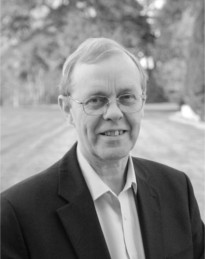 Revd Dr Andy Hartropp is an economist, theologian and church minister. He has two PhDs, one in Economics and one in Christian Ethics. He lectured in financial economics for 5 years at Brunel University, west London. He also worked for a year with the Jubilee Centre in Cambridge, primarily leading a team doing research on families in debt. He trained at Oak Hill College, London, for ordained ministry in the Church of England. His (second) PhD was published as: What is Economic Justice? Biblical and secular perspectives contrasted (Carlisle: Paternoster, 2007). He has spent 13 years in parish ministry. He worked for eight years with the Oxford Centre for Mission Studies, where he was the Sundo Kim Research Tutor in Mission and Economics. In March 2016 he joined Waverley Abbey College as Director of Higher Education. He chairs the Ethics and Social Theology Group of the Tyndale Fellowship. He is married to Claire, and they live in Bicester, near Oxford.

How much of modern Western social and economic policy is based on properly interpreted factual evidence and how much on unexamined assumptions and ideology? In Wealth, Poverty and Politics, Thomas Sowell, the venerable Senior Fellow at the Hoover Institution at Stanford University, sets out to demonstrate that rather more than is healthy is based on the latter.
Sowell divides opinion. He shuns labels but he is a hero of those on the right who favour small government and free market policies. Conversely, he is castigated as a villain by those on the left, although since he is black and was brought up in poverty in North Carolina in the days of segregation, he is a rather unusual villain!
Wealth, Poverty and Politics is unlikely to lessen this division of opinion. It largely repeats things that Sowell has been saying for decades and sets out to slay a number of liberal sacred cows, ranging from affirmative action, through the welfare state to foreign aid.
Sowell’s starting proposition is that, because the humanitarian goals underlying many policy proposals are important, “it is crucial that these proposals be based on an understanding of the actual facts about the causes and consequences of economic inequalities” (page v). He then considers the role of geography, cultural factors, social factors and political factors, recognising that they overlap and interact with one another .
At a high level of generality, all of this is unexceptional. It is when Sowell begins to consider its implications that the radical nature of what he is saying becomes clear. He takes issue with those who start with the premise that “the poor are poor because they are exploited by the rich” (page 257), a view that he demonstrates failed to die when Communism collapsed a generation ago. He takes issue with those, such as Professor Angus Deaton and the late Professor John Rawls, who equate equal prospects of success with equal opportunity, suggesting that Angus Deaton’s statement that there would be no correlation between the earnings of parents and their children in a society with perfect equality of opportunity “is in defiance of both heredity and environment” (page 180). He points out that, even in a society with perfect equality of opportunity, the factors that he identifies are likely to prevent an equality of outcomes.
Specifically, he points out that all cultures are not of equal economic value: “different groups living in the same external environment can have very different productivity if their internal cultural values produce very different priorities as to what they want to do, and at what sacrifices of other things” (page 97). He draws attention to differences in attitudes to learning (provocatively noting that, in the USA black parents in the highest socio-economic quintile have slightly fewer books in their homes than white parents in the lowest socio-economic quintile), differences in attitudes to work (noting that whole societies, such as Spain in the 16th to 18th centuries and the Southern States of the USA until recent times, have regarded work as degrading) and differences in ambition (noting that some social groups, including some white groups in the UK, lack ambition). Perhaps most controversially of all, he suggests that some groups have greater mental capacity than others, although he is careful to stress that the evidence suggests that this is not to do with genetic pre-conditioning but cultural and social factors.
Sowell suggests that “the ultimate wealth of a society does not consist of its tangible output, as such, but the ability – the human capital – to produce that tangible output” (page 413) and that the failure to recognise this leads policy in the wrong direction: efforts to advance economically lagging groups should be directed not so much at correcting society and its institutions as “getting members of lagging groups to reorientate themselves towards acquiring more human capital” (page 181). This is perhaps best summed up in Henry Hazlitt’s statement that “The real problem of poverty is not a problem of distribution but of production” (page 8).
On this basis, Sowell attacks modern liberal economic and social policy. He lays into US welfare policy, suggesting that it produces counter-productive lifestyles that reduce the need to develop essential human capital and that “having promised progress towards ‘social justice’” it has “delivered instead retrogressions towards barbarism” (page 305). Foreign aid, affirmative action and identity politics are dealt with in a similarly robust manner (e.g. he suggests that multi-culturalism “has often been carried to the point of encouraging lagging groups to proudly cling to their own culture, or even resurrect it in some cases, with little concern that these groups’ economic and educational lacks might be – at least in part – a result of the cultures that they were being encouraged to cling to”, page 166).
Wealth, Poverty and Politics has significant defects. Its argument does not develop in a clear linear manner and it would benefit from severe editing, since many points are made on more than one occasion and some on multiple occasions (e.g. Sowell’s point regarding the lower I.Q.’s of mountain based people). It would also benefit from the inclusion of positive suggestions for policy that interact with the moral issues raised by poverty.
These issues are annoying but Sowell writes in an engaging manner. He has a penchant for quotable quotes and, more importantly, an ability to provide thought provoking illustrations of the points that he is making drawn from a variety of different places around the world and a variety of different periods and contexts in the past 1000 years. This results in interesting comparisons (e.g. between some black communities in the USA and low-income white communities in the UK and between early modern Spain and the contemporary Middle East). Furthermore, his use of statistics is sufficient to back up his arguments without overwhelming the reader and the addition of a number of personal anecdotes adds a human dimension.
The result is a readable book aimed at the intelligent non-specialist that raises issues of critical importance in the West today. Many on the left will want to take issue with what Sowell says but they will need to demonstrate why he is wrong. Many on the right will agree with much of what is said but even they will need to ask themselves whether their policy prescriptions might be counter-productive.
The revised and expanded edition of “Wealth, Poverty and Politics” was published in 2016 by Basic Books (ISBN-10:0465096763). 565 pp.
Richard Godden is a Lawyer and has been a Partner with Linklaters for over 25 years during which time he has advised on a wide range of transactions and issues in various parts of the world.
Richard’s experience includes his time as Secretary at the UK Takeover Panel and a secondment to Linklaters’ Hong Kong office. He also served as Global Head of Client Sectors, responsible for Linklaters’ industry sector groups, and was a member of the Global Executive Committee.