Charles Boix is Professor of Politics and Public Affairs at Princeton University. His primary research interests are in political economy and comparative politics, with a particular emphasis on empirical democratic theory. Previous notable publications include Political Parties, Growth and Equality (Cambridge University Press, 1998), Democracy and Redistribution (Cambridge University Press, 2003), and Political Order and Inequality (Cambridge University Press, 2015).
In Democratic Capitalism at a Crossroads Charles Boix seeks to explore both the historical chapters of democratic free-market tensions and current issues facing capitalism within western democracies. The author divides the narrative into three main eras: 19th century Manchester capitalism, 20th century Detroit capitalism, and the current 21st century Silicon Valley-based model of capitalism. The final chapters consider the implications of these forms of capitalism on the future workforce, in particular with respect to automation, the rate of technological change, income distribution and politics (or the role of government more broadly).
Charles Boix’s thesis is that, “the consequences of today’s technological changes […] are not set in stone. They will work their way into the economy through their direct (although, at this point, still uncertain) impact on the demand for different types of labour and on the cost and ownership of capital. Yet they will also depend on the institutional and political strategies we follow in response to those technological transformations” (page 3).
The book is well-written and comprehensively researched. The author does a commendable job of avoiding the clichés that often surround the topic of technology and maintains both nuance and a satisfactory degree of objectivity. We will touch upon some of the more intriguing points made throughout the book.
Chapters 1-3 explore the impact of technology on society and politics from a historical perspective. Chapter 2 dedicates a fair amount of attention (and rightly so), to the first industrial revolution. Boix points out that automatization brought by a new class of comparatively poorly skilled labour that replaced “…an old class of artisans and highly skilled operators” (page 57). In 20th Century capitalism however, the advent of technology (and automisation more specifically), led to a further replacement of low skilled workers with semi-skilled workers – albeit in much lower numbers. This new workforce of semi-skilled labour was needed to oversee, maintain, and repair the machinery in operation. Yet perhaps the most important consequence of the process of automisation was the arrival of “… new layers of white-collar, relatively well-paid jobs – from accounting departments to car dealerships” (page 59).
This in effect resulted in a new form of Corporatism whereby the relationship between employees, trade unions and the employers are far more interwoven than before. An interesting point is made in chapter 3 whereby the continual development of a company’s human capital became a vested interest for the company itself. Henry Ford for instance invested heavily in the education of his workforce. He established the Ford English School to teach English to recently arrived immigrants and he even established a “…Sociological Department, with about two hundred employees, to ensure that the family lives and overall behaviour of his factory workers did not deviate from a clear set of norms such as thriftiness, continence, and basic hygiene” (page 78).
Chapters 4-6 move the conversation to the contemporary debate around technology, artificial intelligence (AI), and its impact on the labour markets and consequently, on democracy itself. Charles Boix rightly points out the difference between simple AI and machine learning. The key form of impact here is that while computers/AI displaced routinable jobs at a large scale, they have “…hardly replaced nonroutine jobs” (page 103). Though this may be changing with machine learning.
Boix acknowledges in Chapter 6 that, ultimately, we cannot predict the impact of technological change or indeed “…depict the society it will give birth to…” (page 180). Therefore, any future policy responses must be made in a piecemeal fashion (ibid.). The chapter concludes the book with a few tentative proposals for reform. Rather unexpectedly, Universal Basic Income (UBI) is presented as one such proposal – yet the arguments made against UBI seem more convincing than those in favour. For instance, the author claims that UBI has two main advantages: “First, it may free individuals from routine, repetitive tasks, allowing them to engage in more creative and inventive professional paths. Second, it should reduce poverty and arguably, equalise conditions” (page 206). Perhaps the keywords here are ‘may’ and ‘should’ – one cannot help but feel that this is mere wishful thinking.
On the challenges of UBI, Boix acknowledges a rather lengthy list: UBI cannot be tailored to individual needs, it distorts the incentives that people have to work, it may keep the pre-existing structure of inequality in place, it reduces the need for schooling, it enables firms to offer lower wages, it affects the inner motivations and ambitions of youngsters, it can create antagonism between those that are earning against those that are not (pages 207-208). We don’t have space to go into further detail here, and surely each reader will make up their own mind – but it is a strange and slightly disappointing end to an otherwise interesting book.
In summary, Democratic Capitalism at a Crossroads is an engaging read about the impact of technological change on the transformation of labour markets, society and indeed, democratic systems themselves. It is accessible to the educated reader and while some might take issue with certain sections of the book, the author does a laudable job of curtailing his more subjective opinions by also presenting the counterarguments. One result is that some readers may find the counterarguments more compelling than the main arguments themselves (UBI is a case in point). This might not necessarily be a bad thing. The book is a recommended read to those looking to expand their knowledge of the intersection between technology, the economy, and democracy.
“Democratic Capitalism at the Crossroads” by Carles Boix was first published in 2021 by Princeton University Press, ISBN: 9780691216898, 272pp.

Andrei E. Rogobete is the Associate Director of the Centre for Enterprise, Markets & Ethics. For more information about Andrei please click here.
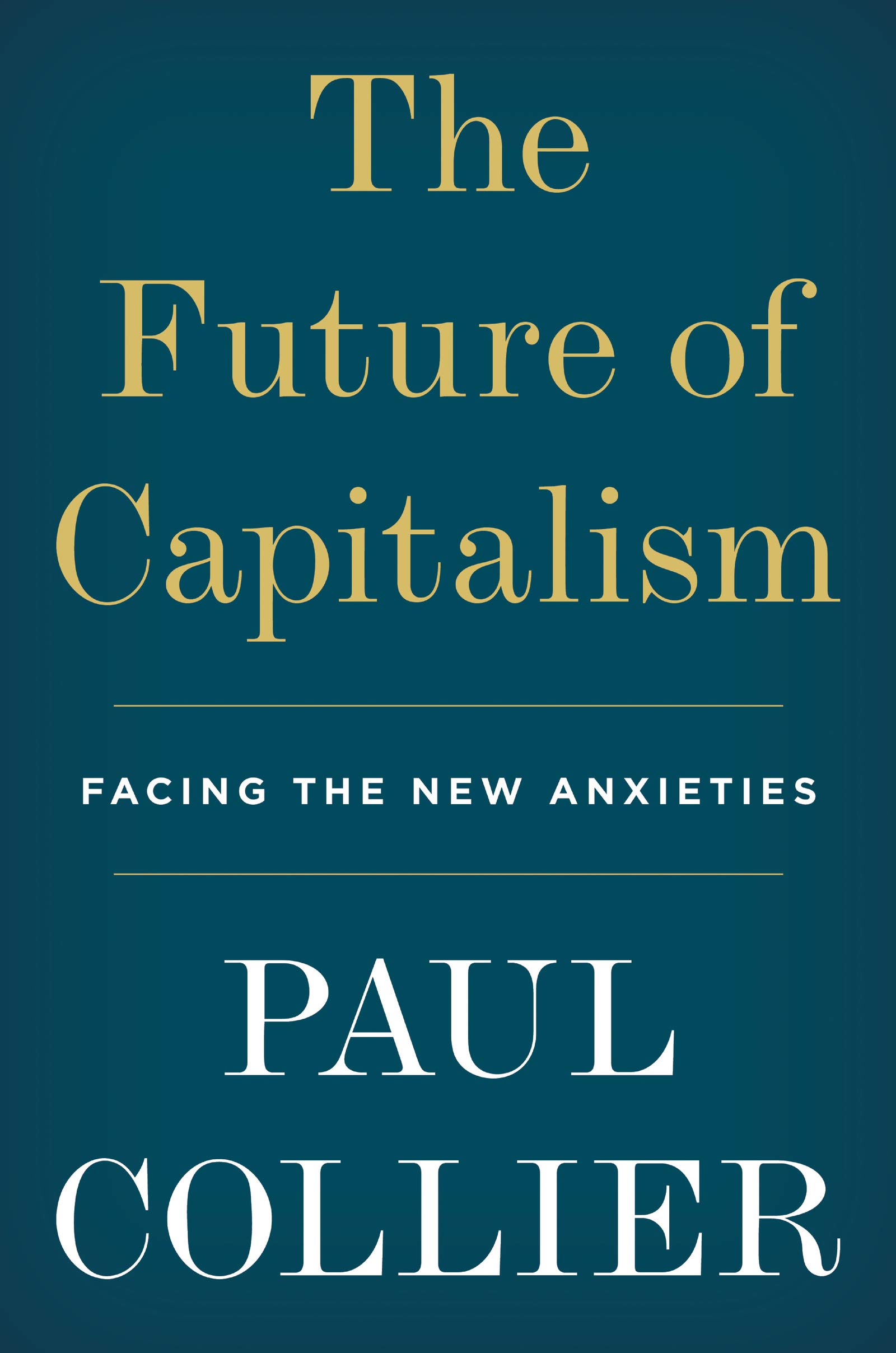
The Future of Capitalism tackles one of the big issues of our time. Its impressive author, Sir Paul Collier, CBE, FBA is a distinguished member of the Blavatnik School of Government at the University of Oxford and a seasoned practitioner in development economics for which he received a knighthood. He is convinced that capitalism is the only economic system which can generate mass prosperity. Regrettably it has also divided societies, created dysfunctional democracies and posed risks to the planet. More than that he claims it is morally bankrupt. The challenge he set himself in this book is how to restore ethics within capitalism to prevent it drifting into either a totalitarian state (China) or populist nationalism (East European countries). In doing so, he eschews ideology claiming that all his policy prescriptions are based on evidence, analysis and pragmatism.
The inspiration for the book was Anthony Crosland’s The Future of Socialism, published in the 1950s, which set an agenda for the social democracy of the post war years in the UK. (To some readers Anthony Crosland might seem a minor figure out of a history book, but in his heyday he was the leading UK intellectual of the centre left and a Cabinet minister in the Wilson and Callaghan Labour Governments attempting to put his ideas into practice). Collier claims that the Crosland agenda worked well between 1945-70, even at one point describing it as the “miracle period”. It failed however because it neglected its roots in the ethical foundations of the nineteenth century cooperative movement.
It was replaced by a combination of Utilitarian technocrats (mainly economists) intent on redistributing income to those below the poverty line (however defined) and lawyers committed to John Rawls philosophy which promoted the rights of disadvantaged groups based on race, gender, sexual preference and so on, which has become the basis for identity politics.
Both of these philosophical approaches emphasise the individual not the collective and differences between groups based on either income or disadvantage rather than the needs of persons and families. Each elevates a single moral prescription, “the greatest happiness of the greatest number” and “laws in a society must be designed for the most disadvantaged groups”. However, they neglect the normal moral instincts and values of people such as loyalty, fairness, obligation and desert which were central to the cooperative movement.
The philosophical foundation which Collier builds on is found in the writings of David Hume and Adam Smith (especially The Theory of Modern Sentiments) and the Pragmatism of nineteenth century American philosophers such as William James and Charles Peirce. After laying this down he devotes four chapters to restoring ethics within the state, firm, family and world. Then, in the final section he presents a plethora of ideas for restoring an inclusive society.
To tackle the geographical divide, he proposes taxing the metropolis and regenerating broken cities and regions through establishing local banks, local universities and business zones. Families can be strengthened by preventing them from falling apart in the first place, supporting children in the early years, from pregnancy to the first day of school, raising standards of teaching in schools, offering improved post-school vocational education and extending home ownership. Tackling the negative effects of globalisation requires redistribution of resources to those areas which have lost out through free trade and technology.
In putting forward all these proposals he is not afraid to be controversial. He is scathing about the greed of investment banks. He argues for taxes on financial transactions and raise taxes on the incomes of highly skilled workers especially in finance and law. He wishes to see a new criminal law comparable to manslaughter which he calls bankslaughter. He backs immigration controls, strengthening traditional two parent families from whom they are genetically descended and having less state intervention through social policy dealing with the needs of children.
Although it is not fundamental to the main theme of the book I question Collier’s judgement that the period 1945-70 was as successful as he claims. It is certainly true that the new social contract devised by Beveridge, Temple and others which produced the post war Welfare State and mixed economy lasted the course. However, by the 1960s inflation was back accompanied by rising unemployment, prices and incomes policy were a failure and the nationalised industries were mired in the red, while by the end of the 50s the social infrastructure began to show signs of fraying through increased violent crime, illegitimacy and addiction. Meanwhile, some of Crosland’s policies were proving destructive; “If it’s the last thing I do, I’m going destroy every fucking grammar school in England. And Wales. And Northern Ireland”. By the time of his early death (58 years old) he became so disillusioned with the crisis of capitalism that he thought the creation of a ‘serious revolutionary socialist party’ was worth thinking about.
One question which needs to be asked is whether he has succeeded in the task he set himself, namely restoring ethics to firms, families and states. In the case of firms he devotes an interesting chapter to the way in which ethical firms of the past which he mentions – Imperial Chemical Industries (ICI), Cadbury, The Halifax Building Society – have given way to the vampire squids of today which are held in contempt as greedy, selfish and corrupt.
In order to achieve change he believes competition is an important discipline on business but increasingly limited because of the power of networks (electricity, water, railways) and the role of technology in creating unregulated natural private monopolies (Facebook, Amazon, Google, eBay and Uber). The conventional responses to these problems are regulation and public ownership, but both have severe limitations. As an alternative he suggests taxing economic rent, which by definition does not discourage productive activity or risk taking; reforming corporate law so that concern for the public interest should be mandatory for all board members, such as Public Interest Companies in the US; and introducing the new criminal offence of bankslaughter.
The problem with all these, which he recognises is that regulations can be got around by talented management, taxes reduced by clever accounting and laws fudged by legal argument. After acknowledging that the cupboard is fairly bare he puts forward the novel suggestion that society needs to build a critical mass of ethical citizens who can judge the behaviour of companies, favourably or not. This is less than a specialised sub-police force and more a form of neighbourhood watch strengthened to have teeth. This may seem fanciful but the achievement of the women’s movement and climate change protests, based on evidence of discrimination or degradation show that great oaks grow from acorns. Post COVID-19 many questions will be asked about the future of our society, so his proposals may not be so fanciful.
To restore ethics to the state he rejects ethnicity, religion and shared values as a way to create shared identity because they are incompatible with modernity, despite the showing of how popular Judeo-Christian based ethics still remain. He plumps for a sense of belonging to place, something which is hard-wired in our psyche, especially the place in which we grew up and which we call home. Unlike Nationalism, Patriotism is an inspiring concept and he claims a good example of it is found in the politics of President Macron. A major raison d’etre of politicians should be to create narratives of shared belonging. To restore the ethical family, he suggests a greater acceptance of mutual obligations by parents in raising children rather than one focused on their own individual, personal success in work.
The one surprising weakness of the book is its treatment of religion. The book contains four references to religion and six to religious fundamentalism. All are wholly negative: religion leads to cultural separation, marriage is tainted by its religious association, it is the basis of a new nationalism, heir to fascism. Religion is almost always qualified by the adjective “extreme”. Jihad pogroms and other cultic, barbaric practices deserve the treatment he delivers and the Christian religion has many shameful episodes in its history. However, if restoring ethical behaviour in business, politics and society requires ethical citizens, ethical politicians and ethical family members, a rejection of self-aggrandisement, ‘freedom is not bound in servitude to the self but in escape from the self’ (p. 108), and strengthening a sense of obligation, surely a religion based on transcendence and true humanism must be a help to the cause.
On the evidence of nineteenth century history in the work of Gertrude Himmelfarb and Christie Davies, the irony is that ICI, Cadbury and The Halifax Building Society were deeply rooted in a late nineteenth century Christian culture, especially non-conformist, which was also an inspiration for the cooperative movement, friendly societies and the social reforms of the period. Non-conformity would also at this time have been a major force in Collier’s beloved Sheffield.
I enjoyed book but at the end it left me with a nagging question. It certainly respects the evidence, applies analysis to good effect and makes a number of interesting practical proposals. However, its conclusion is that religion has no place in the future of capitalism. In its neglect of the positive contribution of the Christian faith on British life and culture I fear it has strayed across the boundary of social science into ideology.
“The Future of Capitalism: Facing the New Anxieties” by Sir Paul Collier was published in 2018 by Harper Collins (ISBN 978-0062748652). 256pp.

Lord Griffiths is the Founding Chairman of CEME. For more information please click here.
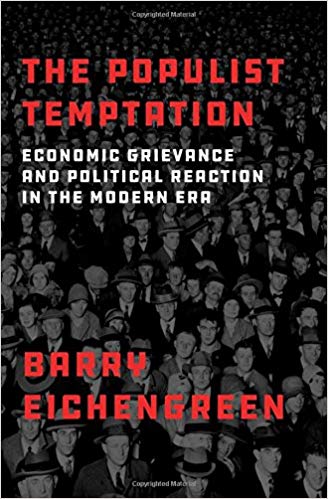
Populism seems to have taken centre stage in today’s public discourse. Whether it’s the election of Donald Trump or Brexit, media outlets, academics, and indeed, the politicians themselves seem to be pointing the finger towards populism. Yet what exactly is populism? Which social and/or economic conditions might give rise to populism? Can populism be countered and if so, how? These are a few of the timely questions that Barry Eichengreen attempts to explore in his book, “The Populist Temptation: Economic Grievance and Political Reaction in the Modern Era”.
Barry Eichengreen is an American economist and Professor of Economics and Political Science at the University of California, Berkeley. An economic historian by background, Barry’s previous notable publications include, “Golden Fetters: The Gold Standard and the Great Depression”, “The European Economy since 1945”, and “Globalizing Capital: A History of the International Monetary System”.
Throughout his works Barry Eichengreen displays a strong command of global economic history and his latest work The Populist Temptation is no exception to the rule. Divided into twelve chapters, the structure is more akin to a collection of essays than the traditional narrative format. Paradoxically, the book is both straightforward yet dense, making the reader take far more time on any given chapter than he or she would have done so otherwise. It reads like a history book with a particular emphasis on economics and while many of the historical remarks are factual, much of the interpretation is subjective. Here it is worth touching upon some of the more contentious issues that can be found:
The author sets out the aim of the book from the onset, that is, to look back at Western history and attempt to identify under which “economic, social, and political” circumstances populism tends to take hold and what are the most effective policies to combat it (page ix). In this pursuit, Barry Eichengreen argues that “populism is activated by a combination of economic insecurity, threats to national identity and an unresponsive political system” – but can be “quelled by economic and political reforms that address the concerns of the disaffected” (page x). We will touch upon some of these reforms shortly.
Chapters 1-3 therefore open up with a conceptual discussion on populism and a historical account of populism in the United States and the United Kingdom. Barry Eichengreen defines populism as, “a political movement with anti-elite, authoritarian, and nativist tendencies” (page 1). He rightly points out that both left and right-wing populism can take on these characteristics – albeit the former focuses hostility toward the so-called ‘elites’, while the latter towards minorities and immigration (ibid).
Another interesting point made is that populism is also a political style. Populist politicians portray themselves as ‘no-nonsense’ leaders, ready to listen and speak directly to the people (page 4). They also make highly effective use of social media by undercutting the traditional media outlets. Most importantly however, populist leaders are able to capitalise on economic uncertainty coupled with a ‘low-trust’ society where significant demographic groups feel that the system is rigged against them (page 10).
Chapters 4-6 turn the attention toward Germany and the socio-economic reforms of Otto von Bismark in the late 19th century but also the American ‘associationalist way’ in the first half of the 20th century. The chapter highlights the positive role of government welfare measures in combating economic uncertainty. This included a combination of the social insurance state and tariff protection for both agriculture and industry that led to an effective suppression of anxiety about economic change on both the “left and the right” (page 57).
Chapters 7-9 bring the historical narrative to the post-war era. The so-called ‘baby boomer’ generation benefited from a period of relative stability and moderation where most of the economic growth was more widely shared (page 102). The problems started from the economic slowdown of the 1970s and exacerbated by the OPEC oil shocks of 1973 and 1979 (page 104).
Barry Eichengreen argues in chapters 9 and 10 that the rise of Trump in the US and Brexit in the UK built against more than just economic insecurity (post the 2008 financial crisis). Trump’s election reflected deep national, social, and personal insecurities that were only exacerbated by economic insecurity – conditions which in turn fed opposition to immigration (page 117). Similar things can be said about Nigel Farage and Brexit in the UK which the author discusses in Chapter 10.
Therefore, what are the solutions to rising populism? Chapters 11-13 explore several possibilities. A return to economic growth and rising wages would perhaps be the first and most important change (page 146). Others include investment in education and skills, and a more inclusive economy where firms could be given “tax incentives to adopt employee stock option plans. […] and a curbing of [corporate] excesses” (page 148). Reforming the immigration system could also be effective in combating populism yet the author acknowledges the deep disagreements in the best way to go about it (page 158-159). The EU could also take more steps to being more democratically accountable and closer to the people, such as nominating the president of the Commission by popular vote (page 176). However, the book acknowledges in its ending that both the US and the Europe will remain susceptible to populism and that neither “admit to easy solutions” (page 187), yet understanding the underlying problems is a starting point.
In concluding The Populist Temptation by Barry Eichengreen is a worthy addition on a topic that seemingly engulfs our time. The book is dense which makes it informative but may prove to be a rather slow read for some. No doubt the reader will walk away with a greater perspective and sense of understanding of populism. The problem however remains on the author’s subjective interpretation of government initiatives and their direct impact on controlling populism. Provided that the reader views the ‘government and/or regulation is the solution’ dogma through a critical lens, The Populist Temptation is certainly a worthwhile read.
“The Populist Temptation: Economic Grievance and Political Reaction in the Modern Era” by Barry Eichengreen was first published in 2018 by Oxford University Press (ISBN-9780190866280), 244 pp.

Andrei Rogobete is the Associate Director of the Centre for Enterprise, Markets & Ethics. For more information about Andrei please click here.
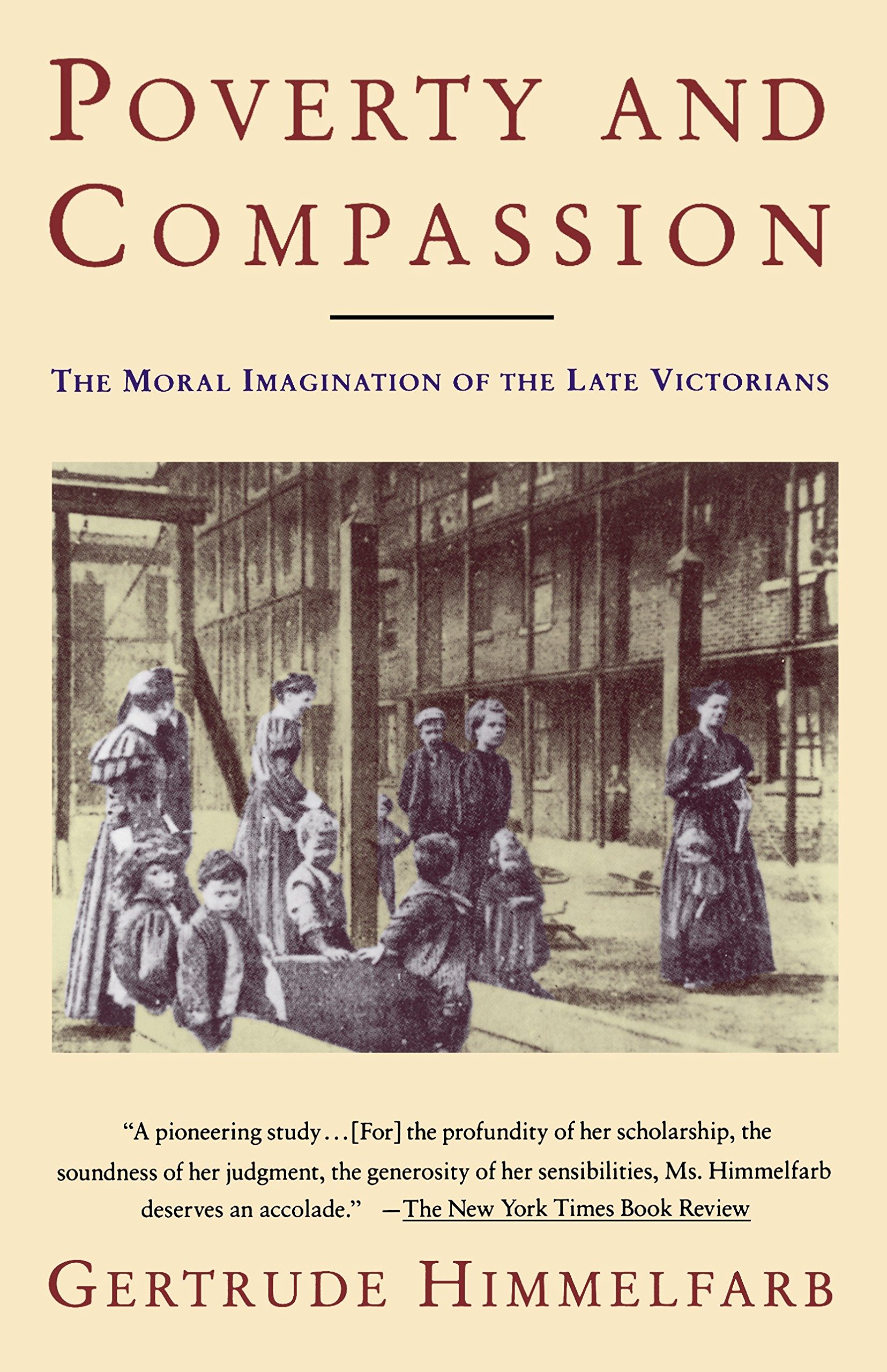
Gertrude Himmelfarb was married to the late Irving Kristol and together they formed a formidable intellectual partnership in the reassertion of conservative ideas. Himmelfarb, a historian, in this book, brings to the table the debate around poverty in Victorian England. The book was first published in 1991, but represents an important strand of thinking and, indeed, of methodology.
One of the many complexities in the polarisation of political and public discourse is that it becomes impossible to have a rational discussion or debate without being compartmentalised into one position or another. We seem to have lost the ability to debate ‘ideas’. Gertrude Himmelfarb’s intellectual history of the ideas, notions and responses to poverty in the Victorian era is broad-reaching, incisive and gripping in both scope and content. The reassertion of the history of ideas – from all parts of the spectrum – would be a great service in our public life.
The great strength of the book is in its breadth. Himmelfarb’s twenty-three chapters range from the work of the social statistician, Charles Booth, to the Salvation Army’s, William Booth, from the rather worthy Charity Organisation Society, to Toynbee Hall and the settlement movement. Himmelfarb comes into her own in dealing with the moral ideas of poverty and compassion and how the Victorian era understood these concepts and responded to them both practically and intellectually. So, her assessment of, and interpretation of, the statistics of poverty and what that meant, the literature, the personalities, religious and moralistic responses and the impact of the rise of socialism in various guises are all central features of her exposition of the idea of poverty.
Himmelfarb puts this Victorian world under a microscope. A key building block is that “the moral imagination of the late Victorians…was neither sentimental nor utopian” (page 4). This is rather startling as many might think that the very epitome of Victorian ideas was indeed sentimentality. True compassion, she argues, is actually doing good rather than feeling good. The true Victorian philanthropist was moral and humane, interested in the good, not only of the self, but of society, and was shaped by ends that were realistic rather than utopian. This principle allows Himmelfarb to appreciate the extensive variety and range of responses to poverty in Victorian England, and we should thank her for that.
The book is divided into five parts, each with a number of chapters.
Part 1, “The Arithmetic of Woe”, is a fascinating introduction to the social statistics of the age, the complexity of poverty in late Victorian London, and the particular issues of housing and employment. Conditions had unquestionably improved from the mid-Victorian period and in the discussions around the Bitter Cry of Outcast London, Himmelfarb makes the point that the debate is not whether the ‘abject poor’ had dreadful housing conditions but whether this was generally true of the working classes; indeed, as Lord Shaftesbury’s evidence to the Royal Commission of 1884 suggests, this may indeed not have been the case. Himmelfarb suggests that the Royal Commission failed because it did not deal with this distinction and hence, she argues the question of housing became a social rather than a moral problem and, hence, “a legitimate subject for state intervention” (page 67).
Part 2, “Life and Labour of the People in London” develops these themes further including consideration of the work of the social scientist, Charles Booth. In this section Himmelfarb also reflects on some the religious influences upon the debate as well as dealing with what she refers to as “special subjects”, including women and children.
Part 3, “The ‘Time-Spirit’: Charity and Philanthropy”, introduces the Charity Organisation Society and the development of benevolence into a science of charity, or at least, as the name implies, its systematic organisation. In this part we also see some of Himmelfarb’s breadth with reflections as diverse as upon the Salvation Army and Toynbee Hall. Himmelfarb argues that if “the mission of the Charity Organisation Society was to organize and professionalize philanthropy, that of Toynbee Hall was to humanize and ‘civilize’ it” (page 243). All of this reflects Himmelfarb’s neo-conservative interests in practical outcomes alongside the debate of ideas.
Parts 4 (“Social Philosophy and Social Reform”) and 5 (“’We Are All Socialists Now’”) returns us to the nature of social, economic and philosophical debate at the end of the Victorian era.
Essentially, Himmelfarb’s argument is that a proper response to poverty is to recognise that it is a moral question. By moving away from dealing with abject need to the more general situation of the working class, the question of poverty is removed from being a moral problem to a social or political issue. Consequently, the real questions are frequently not dealt with. She argues (capitals in original), that “the ‘DE-MORALIZATION’, as it were, of the problem of poverty was accompanied by a ‘relativization’ of the problem” (page 384).
The book cannot be described as an easy read but it is an engaging and wide-ranging one. Indeed, the book makes you think and I had to stop at several places to do just that, think about what I had just read and its implications. My only criticism is that she does not really deal to any extent with Evangelical Christian responses to poverty concentrating more on the development of Christian socialism, which is rather odd given that Himmelfarb was concerned with practical responses as well as theoretical ones. The Victorians are not presented as a solution to today’s problems, but on their own terms, speaking for themselves, in ways we may not have really appreciated because we read back our own presuppositions. She reminds us that poverty “is as protean and diverse as the remedies proposed for it” (page 388).
This is a fascinating book which I recommend. Our contemporary discourse would be much improved if we could debate these ideas, their breadth, diversity and their implications, across the traditional political divides, restoring the debate to its proper moral basis.
“Poverty and Compassion: The Moral Imagination of the Late Victorians” by Gertrude Himmelfarb was published in 1991 by Vintage Books, New York (ISBN-13:978-0-67-974173-2). 475 pp.
 Dr Richard Turnbull is the Director of the Centre for Enterprise, Markets & Ethics (CEME). For more information about Richard please click here.
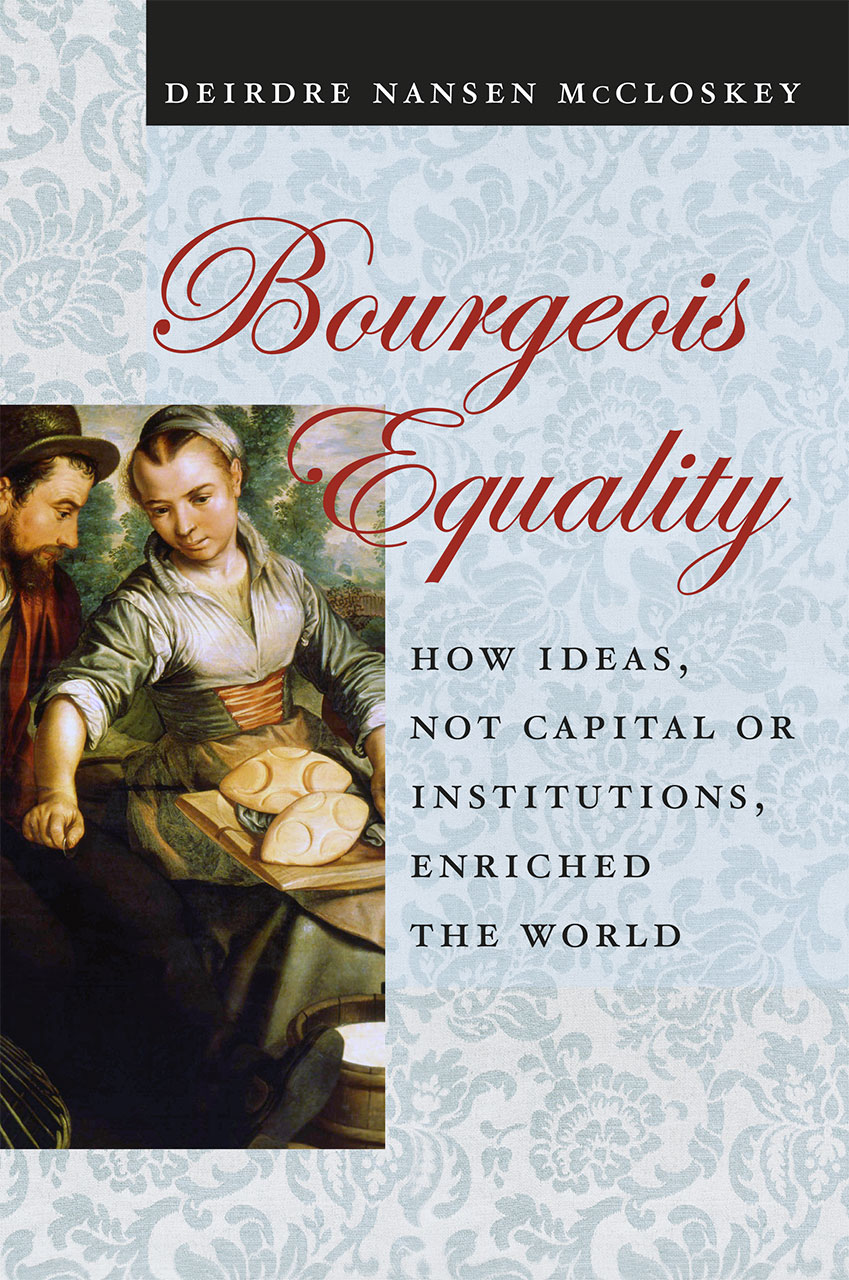
The past 200 years have seen a huge increase in aggregate global wealth, which has benefited the vast majority of people around the world. Conservative estimates suggest that average real wages have increased ten-fold and the increase in wealth has probably been considerably greater than this (perhaps thirty-fold or even a hundred-fold). Why has this happened? Why are we now so rich? This is the fundamental question that Deirdre McCloskey seeks to address in Bourgeois Equality, the final volume in her trilogy relating to bourgeois values.
Those who have not read it may doubt that we needed yet another book about “the causes of the Industrial Revolution”. Those who have read it will disagree. Its scope is breath-taking: in which other book about economic development would you find 20 pages of analysis of the novels of Jane Austen, two chapters relating to the historical change in the meaning of the word “honest” and its equivalents in other languages, a discussion of the economic impact of post-millennialism and comments on subjects as diverse as the philosophy of the mind and the economics of the temple systems of the Ancient Middle East? McCloskey is Distinguished Professor of Economics, History, English and Communications at the University of Illinois in Chicago and her inter-disciplinary approach to her subject is anything but conventional.
She begins by attacking almost all of the widely accepted explanations of what she calls “The Great Enrichment”: trade and export lead growth (whether or not accompanied by political domination); the accumulation of capital; consumer lead demand; the scientific revolution; the growth in modern institutions; and much else. The role of some of these things is dismissed in summary terms, often with a quotable quote. Other factors (such as property rights, the accumulation of capital and trade) are recognised as being, to some extent at least, necessary for economic growth but dismissed on the ground that they are historically commonplace. As McCloskey puts it, “Oxygen is necessary for a fire but it would be at least unhelpful to explain the Chicago Fire of October 8-10, 1871 by the presence of oxygen in the earth’s atmosphere” (page (xiii)).
In place of the normal list of explanatory factors, McCloskey puts “ideas”. The book is subtitled, “How ideas, not capital or institutions enriched the world” and McCloskey asserts that the key thing that changed in the period leading up to the start of The Great Enrichment was “ideology” (page xxii). Her claim is “that the initiating change leading The Great Enrichment was in words” (page 235) and she spends hundreds of pages defending this thesis. She argues that aristocratic values were replaced by bourgeois values (“The new ethic was of betterment, novelty, risk taking, creativity, democracy, equality, liberty, dignity”, page 279) and this led to the wave of innovation that she calls, “trade-tested betterment”, which directly resulted in The Great Enrichment, first in the UK and then elsewhere.
So is McCloskey’s theory simply Max Weber revisited? Although, unsurprisingly, McCloskey dismisses Webber’s view of the role of anxiety caused by the doctrine of predestination, her approach is clearly related to that of Weber, probably more closely than she would admit. It is based on ideas rather than material causes and recognises the profound role of religion in the creation of the relevant ideas. However, there are important differences between Weber’s and McCloskey’s approaches including their opinions as to precisely which religious beliefs gave rise to the key ideas and the relationship between, on the one hand, these ideas and, on the other, psychology and sociology.
Speaking generally, it would be reasonable to assert that McCloskey believes that the crucial change between 1600 and 1800 was a cultural change. However, she vigorously objects to this characterisation of her view, saying that calling ideas “culture” is “the vague way people talk when they have not actually taken on board the exact and gigantic literature about ideas, rhetoric, ideology, ceremonies, metaphors, stories and the like since the Greeks or the Talmudists or the Sanskrit grammarians” (page 122). She also, and perhaps with more justification, is at pains to point out that she is not asserting that there was a psychological change but rather that there was a sociological change.
McCloskey writes passionately and this passion points to a key issue: deep down, this book is not about the causes of Industrial Revolution but about how we should behave today in order to ensure that The Great Enrichment does not stall. McCloskey says that she is an optimist but she is clearly worried that things could go badly wrong. As she puts it, “Modern politics is a four-way tug of war between liberalism in the sensible part of the elite, socialism in the rest of the elite, traditionalism in the peasantry, and populism in the proletariat” (page 136). She turns aside from her central thesis to attack the left’s focus on equality of outcomes (and specifically the Gini coefficient), the power of the state to secure economic betterment (which she contemptuously dismisses), the idea that mechanisation and betterment causes poverty rather than wealth, regulation in general and what she refers to as “well-intentioned but erroneous policies that make us feel helpful even when they in fact damage the people we intend to help” (page 73).
She reserves her most savage comments for what she calls “the clerisy”, a term that she uses to refer to academics and intellectuals who sneer at Bourgeois values and promote either socialism or, on the other side of the political spectrum, nostalgic paternalism or worse: “The liberty of the bourgeoisie to venture was matched by the liberty of the workers, when they got the vote, to adopt growth-killing regulations, with a socialist clerisy cheering them on. And the dignity of workers was overmatched by an arrogance amongst successful entrepreneurs and wealthy rentiers, with a fascist clerisy cheering them on. Such are the usual tensions of liberal democracy. And such are the often mischievous dogmas of the clerisy” (page 404).
A book written with such passion and having such a broad scope inevitably has its defects. McCloskey has a tendency to overstate things (e.g. her assertions regarding the ubiquity of the rule of law including, surprisingly, in the empire of Genghis Khan, page 111, cannot go unchallenged); many other academics could legitimately feel bruised by the strength of the language with which she attacks them; and the book is too long, the final 150 pages in particular containing much material that repeats earlier points. There are also less important issues: errors of fact (e.g. Rev John Newton was not a Quaker as it stated on page 306); ex-cathedra statements that many will dispute (e.g. “Ordinary Europeans in the Middle Ages were barely Christian”, page 333); and statements that will only be comprehensible to a minority of readers (e.g. the reference to Ian Botham hitting a six, page 126).
However, these defects should not put anyone off. The book is essential reading for those who want to broaden their perspective on the causes of our current prosperity and to consider possible solutions to current economic and societal issues in the light of the lessons of the past. McCloskey’s passion is justified by the importance for her subject for the modern world. The onus is now on those who disagree with her arguments to answer them and on those who agree with these arguments to refine them.
“Bourgeois Equality” by Deirdre McCloskey was published in 2016 by The University of Chicago Press (ISBN-13:978-0-26-52793-2). 650 pp.
 Richard Godden is a Lawyer and has been a Partner with Linklaters for over 25 years during which time he has advised on a wide range of transactions and issues in various parts of the world.
Richard’s experience includes his time as Secretary at the UK Takeover Panel and a secondment to Linklaters’ Hong Kong office. He also served as Global Head of Client Sectors, responsible for Linklaters’ industry sector groups, and was a member of the Global Executive Committee.
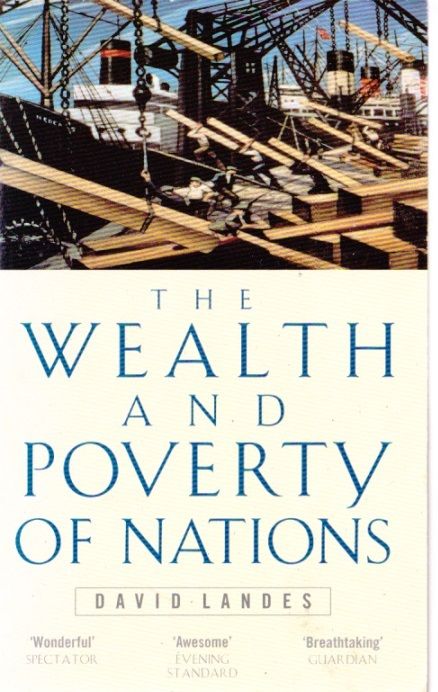
American essayist and novelist William Styron once said that “A great book should leave you with many experiences, and slightly exhausted at the end.” If we judge the late David Landes’ ‘Wealth and Poverty of Nations’ by this criterion, it most certainly fits the bill of a ‘great book’. It is a majestic display of his deep insight and vast knowledge of global economic history. It comes as no surprise, therefore, that the book has been all but universally acclaimed by literary critics.
David Landes was Professor of History and Emeritus Professor of Economics at Harvard University. His other works include Bankers and Pashas, Revolution in Time, The Unbound Prometheus and Dynasties. As one might expect, therefore, ‘Wealth and Poverty of Nations’ is no short and easy read: half a millennia of global economic history are covered in over 600 pages and 29 chapters.
Landes’ primary aim in the book is to better understand how nations have evolved to reach their current state. Landes’ main thesis of the book is that cultural traits and cultural values play a key role in determining whether a country fails or succeeds economically. As he points out in the Preface, the analysis is not one of a “multicultural, anthropological sense of intrinsic parity: all peoples are equal and the historian tries to attend to them all. Rather, [to]…understand how we have come to where we are, …[through] making, getting, and spending” (page xi).
In this sense, ‘The Wealth and Poverty of Nations’ provides a fascinating and distinctive historical angle that considers the cultural circumstances, as well as the economic trends of the time – thus, viewing economic history through a cultural lens.
Landes opens up the discussion with the premise that the old dichotomy of the West vs. the East, or better said, West vs. the ‘Rest’ has largely dissolved (page xx). The more pertinent split in today’s ‘globalised’ world is between ‘Rich’ vs ‘Poor’ countries. The common thread of questioning that is present throughout the entirety of the book is this: why have some countries come to be so poor and some so rich?
In the opening chapters Landes presses the idea that the technological and cultural advancements enabled the (relatively small) nations of western Europe to significantly punch above their weight (page 137). The Industrial Revolution in Europe brought technological innovations that had tremendous long-term impact on economic development. Basic advancements cotton manufacturing for instance, enabled the creation ‘washable’ clothes. This in turn led to better personal hygiene and therefore, better health and an increase in life expectancy. The technological advancements improved all areas of life in the Continent
Landes also points out that throughout the late 17th Century and 18th Century, England’s relative open society enabled it to flourish at a faster pace than its European counterparts, many of whom were deeply embattled with religious persecution (page 223). As a result, England managed to ‘profit from other nation’s self-inflicted wounds’ (ibid).
Yet arguably one of the most powerful and convincing arguments of the book is raised in Chapter 12 (page 175 – 181). Here David Landes reinstates Max Weber’s thesis on the Protestant work ethic. The core argument here is that the Protestant revolution in Europe brought with in a change in the role and responsibility of work. The influence of Protestant thinking encouraged people to value, creativity, hard work, timeliness, and free-thinking. This in turn acted as a catalyst for economic growth not only in Europe, but also in the early development of America (CEME’s Director, Richard Turnbull, wrote on the impact of Quakers in Quaker Capitalsim: Lessons for Today)
The latter half of the book bring the discussion back to the impact of culture on economic performance and how the two are intrinsically linked. In Thailand for example, young men are encouraged to spend a few years in religious (Buddhist) monasteries before entering the world of work. Landes argues that this sets their priorities right – and makes them more effective once the do enter the ‘materialistic’ world of work, where money plays a major role (page 517).
Landes concludes the book with a discussion on the current tensions between globalisation and the nation-state, but also the merits of free-trade and some of the benefits and dangers of international aid (Page 519-521). In a nutshell (and without giving too much away), the book argues that free trade between nations is disproportionately beneficial and foreign aid can do as much damage as it does good. Landes overarching conclusion is that the adoption of a free market economy (especially by poor countries) is the surest and safest way to long-term economic development and wealth creation.
‘The Wealth and Poverty of Nations’ leaves its reader with a completely new, and unique understanding of the role that culture plays in the historic economic development of countries. Finding criticism for this book is a challenge in itself, I have found myself nit-picking at best. One possible observation is that, even in 600+ pages, it remains difficult to comprehensively capture half a millennia of world history.
Some may say that it is too Eurocentric. Yet the book’s apparent Eurocentrism is part of the presentation and hypothesis that is put fourth – it is the angle that the author adopts rather than an inherit bias. In response to this perceived ‘Eurocentrism’ and being a ‘Westerner’, Landes himself acknowledges that, “I feel surer of my ground” (page xxi). Nonetheless, one could argue that the cultural intricacies of each geographical region can, and deserve to be explored in greater depth.
‘The Wealth and Poverty of Nations’ has become a staple in the field of economic history.
A definite read.
“The Wealth and Poverty of Nations” was published in 1999 by Abacus, ISBN-10: 0349111669, 672pp.
Andrei Rogobete is a Research Fellow with the Centre for Enterprise, Markets & Ethics. For more information about Andrei please click here.