In his Nobel Prize lecture, Ronald Coase said: ‘a large part of what we think of as economic activity is designed to accomplish what high transaction costs would otherwise prevent’.
Think of the retail sector, for example. Its sole function is to reduce transactions costs – not to produce anything tangible. If you want a roast chicken dinner in the absence of retailers, you would go to a farm to buy a chicken; another farm to buy a cabbage; another to buy potatoes; and so on. The so-called transactions costs of collecting up the ingredients would be enormous, far greater than the actual costs of the ingredients themselves.
Of course, the internet has transformed retailing by finding a way to reduce transactions costs without the need for a visible retail store. Indeed, in general, changes in technology that change transactions costs can lead to radical changes in industrial structure.
The financial sector also exists to reduce transactions costs and the retail and financial sector between them are around one-sixth of the economy. It may seem a lot to spend on something as intangible as reducing transactions costs. But imagine the alternative.
Universities also exist, though only in part, to reduce transactions costs. An individual who wants higher learning (whether for practical reasons or to expand his or her mind) could put together the elements without a university. In theory, we could have organisations that sold syllabuses and reading lists. You could sign up for lectures given by freelancers. You could get together with some people studying the same subject and a freelance professor and have some discussions. You could try to find a way to signal to employers that you have actually acquired some knowledge. But imagine the costs of doing this.
AI and the Future of Higher Learning
A university saves you the bother by bringing all this together: you pay the fee and hope to have a structured programme, appropriate reading lists, other students to talk to, competent professors, assessment and certification under one roof.
Our education sector used to be much more diverse. Elements of the above were available in a range of different institutions (professional bodies, correspondence course providers, teacher training colleges, worker educational associations, municipal training colleges, private training colleges, polytechnics, university colleges and, for just a few, universities).
Will AI radically change transactions costs and thus give rise to significant changes in the sector? The answer is probably ‘yes’. Almost certainly, AI will not just change how universities do what they already do. If universities simply plan on this assumption, the whole sector will be in trouble. As Fr. Stephen Wang suggested in another context, AI may find radical new ways to achieve intermediate (and, in this case, end) objectives. Perhaps there will be unbundling of what universities do. Perhaps we will go back to the diverse range of institutions that used to exist, albeit in a different form.
There may be some disciplines where the accumulation of technical knowledge is especially important and where a provider can use AI to provide excellent guided reading, syllabi, pedagogical materials, assessments, certifications, and so on, which can be supplemented by discussion groups, also organised by the provider, using AI to bring together the most appropriate people. These discussion groups may be based in the workplace, the local area, or be online. Subjects such as law and business may be especially appropriate for this approach. Professional bodies can do the certification. This does not mean that learning for its own sake, debate or discussion of higher-level principles, and so on, will not happen. They can happen in other forums, both to complement the technical education and assessment process and as a form of continuing professional development.
Newman’s Vision of the University
This leads to the question of where Cardinal John Henry Newman’s vision of the university fits in. Some would say that this has broken down over many decades and that the modern university looks nothing like Newman’s vision. I would argue, instead, that the university has expanded to take on many functions other than the provision of Newman-style education. It is not that the university has dropped Newman, it has acquired other functions. Perhaps the development of AI will lead those other functions to be done better in other learning contexts – or by universities using different models of provision.
St. John Henry Newman, declared by the Catholic Church as a co-patron saint of education recently, famously produced ‘The Idea of a University’. The key features of such an institution are as follows: the acquisition of knowledge for its own sake; a university that teaches all subjects and integrates theology as the lynchpin of all subjects; it cultivates the character of the student so that they develop a critical intellect not limited to a specialism; personal contact with tutors; and separation of teaching and research. As it happens, certification is not essential to any of this. Indeed, if education is for its own sake, certification might be regarded as redundant. In reality, many people combine many objectives of education when they undertake a degree.
It is easy to see that these characteristics of education necessitate genuine human interaction between students, and between students and teachers. However, they do not only have a place within a university, though the second of them is, perhaps, challenging for other institutions. Many of these Newman characteristics are, today, apparent in the programmes of organisations outside the university sector. Often, such programmes are, as in past times, financed philanthropically with professors giving their time for free – after all, the process is just as enriching for teachers as it is for students.
Think Tanks and Education without Certification
For example, we already see hints of this approach in think tanks and other organisations such as the Prosperity Institute, Alliance Defending Freedom, the Acton Institute, the Institute of Economic Affairs (working with the Vinson Centre at the University of Buckingham), the London Jesuit Centre, the Thomistic Institute and many other organisations. These programmes provide useful skills as well as intellectual enrichment without certification. They involve higher learning, discussion in peer groups and with mentors, all guided by university professors. The Centre for Enterprise, Markets and Ethics has a mini version of such programmes linking the study of economics to Christianity.
It is easy to see how think tanks, and Churches, might – indeed, perhaps should – develop such programmes further, always remembering that, in a Christian context, personal interaction is vital, and technology should be kept in its place.
The Future of Universities
But what about the future of universities? The different functions of universities could be undertaken in different institutions in an AI world. Businesses, such as BPP, are well placed to provide technical education very effectively across a number of fields.
But the multi-purpose university is not dead. However, reflection is needed. When a revolution such as AI happens, as Fr. Stephen Wang explained, we do not just need to look at AI-enhanced ways of doing what we are doing. The important questions are: ‘What are the intrinsic features of the service we are offering?’ and ‘How can these intrinsic features be best provided in an AI world in different fields – vocational, technical, teacher training, liberal arts, physical sciences, and so on?’
I suspect that, if the multi-purpose university is to survive, it will have to house different approaches to education and training under one roof (perhaps, a partly virtual roof). Diversified institutions exist in a number of sectors – think of banks, for example, with their wealth managers, traders, investment managers and banking service providers: these are all very different types of service. There will also be plenty of room for niche institutions in this new world. The development of AI should force universities, charitable education providers, business providers, professional bodies and think tanks to think about what the distinct essential elements in higher learning are and then consider the best ways to deliver them. Whether the regulators and funding framework will allow education to evolve in response to new technology is another question, of course. If they do not, they may find that the sector they are regulating and funding shrinks.
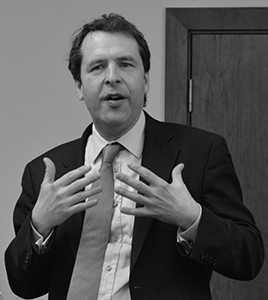
Philip Booth is professor of Catholic Social Thought and Public Policy at St. Mary’s University, Twickenham (the U.K.’s largest Catholic university) and Director of Policy and Research at the Catholic Bishops’ Conference of England and Wales. He is also Senior Research Fellow and Academic Advisor to the Centre for Enterprise, Markets and Ethics.