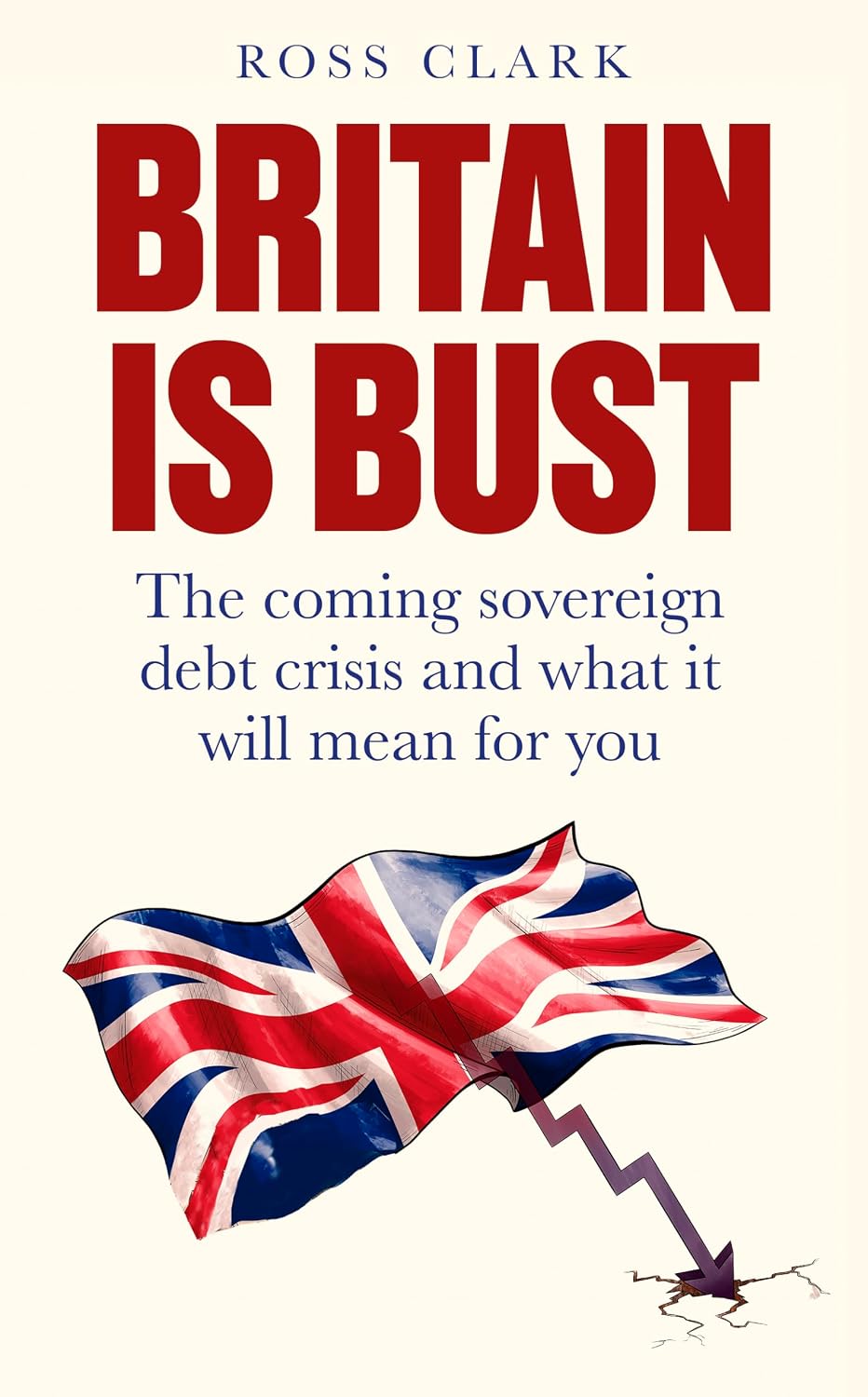
It would be hard to better the timing. As Britain is Bust by the financial writer Ross Clark hit the shelves in September, gilt yields were already soaring, interest rates were rising, and the government, even though it had promised lots of extra spending, was starting to run out of money. There could be few better moments to examine what should be the three central questions of British politics: How can the state pay its way? Will there be a crash? And if there is, how will the system cope?
The British debt crisis, if that is what it turns into, has been in the making for a long time. Clark forensically lays out how spending rose relentlessly, even as the economy, which ultimately has to pay for it all, started to stagnate. The coalition government led by David Cameron, with George Osborne as his Chancellor, made a brave attempt to cut public spending, but never really managed to do anything more than control its relentless rise. By the time Theresa May took over all attempts at control had been abandoned, it got worse under Boris Johnson, and during the Covid pandemic the state started spending money as if it was going out of fashion. By 2024, Britain needed a government that was ready to make serious cuts. Instead, Sir Keir Starmer and Rachel Reeves gambled – extraordinarily in retrospect – that what was really needed was yet higher taxes, especially on business, as well as more borrowing to fund an even larger state. The result? The British government has taken spending and borrowing to an all-time high, at least for peace time, and shows little appetite to bring it down any time soon.
Of course plenty of governments have debts that are too high. But Clark describes how ‘a gathering fiscal crisis’ could very easily come to a head. A downturn in the economy leads to higher welfare spending, while tax receipts fall, sending the deficit out of control, and gilt yields get pushed sharply upwards. ‘We are now in a deadly feedback loop where higher spending leads to higher interest rates which in turn leads to higher spending,’ warns Clark. The Chancellor could try to raise taxes, but that would only push the economy deeper into recession. The Bank of England could cut interest rates, but investors might carry on pushing real rates back up. It could re-start quantitative easing, but that is an old trick now, and might not work a second time around. ‘The Chancellor and the Governor of the Bank of England are now at the wheel of a runaway bus,’ he writes. ‘They try everything to try and slow it but nothing works, and some of what they do makes it worse.’ In the end, there is only one real solution. The Chancellor has to go ‘before the International Monetary Fund and beg for a bailout.’
Of course, it may not happen. Britain collects about 38% of GDP in tax, but countries such as France are at least ten percentage points ahead of us. People will moan, and a few very rich people will leave, but it quite possible that the government can keep on squeezing extra cash out of the economy to pay the debt interest and keep the spending juggernaut going. A sovereign debt crisis is not quite as inevitable as Clark maintains. Even so, one point comes out very clearly from his analysis. Britain is just one policy mistake away from a collapse in confidence. It could happen at any time.
If it does, it is going to be very nasty. Clark delves into the scale of the spending cuts that would be necessary if Britain does have to be bailed out. It is not going to be a lot of fun for anyone. ‘To get the public finances back in order will require an all-round trim of budgets which will inevitably cause a lot of pain for a lot of people, but that is the reality of life in a country that has been living beyond its means for years.’ What would have to go? In perhaps the most useful section of the book, and one that could serve as a manual for the politicians who may one day soon have to deal with a full-blown financial collapse, Clark lays out the ways in which public spending could be dramatically reduced. We could start significantly cutting the number of public sector workers, and the amount they are paid, as Ireland did a decade ago. The triple lock on pensions will have to be abolished, while the rules for sickness and disability benefits will have to be far tougher. We will have to introduce a £20 charge for visiting a GP, perhaps with a reduction to £5 for people on benefits. We will have to cut back the number of university courses. The list goes on and on. None of these are easy choices, and all of them will create a lot of pain. But they are not impossible. Countries such as Greece made huge cuts to spending after their bond markets collapsed, and there is no reason why Britain should be any different.
Britain is Bust is a timely reminder of how precarious Britain’s finances have become. The country has been spending way more than it can afford, the growth that would be required to sustain it has not materialized, and the cash is now starting to run out. A crisis could be avoided if we had a government that was willing to take the tough decisions to trim spending now, and, perhaps more importantly, an electorate that was willing to support it through the inevitable pain. Unfortunately, there is not much sign of that. The result, as Clark warns, is that it may well take a rescue from the IMF to finally force the country into action – and that will be very unpleasant when it happens.
‘Britain Is Bust: The Coming Sovereign Debt Crisis and What it Will Mean For You’ by Ross Clark was published in 2026 by Swift Press (978-1-800-75664-9) 288pp.