

Skip to content
Lyndon Drake

Lyndon Drake

The Task of Modern Economic Ethics

As I suggested in my previous article, my preferred way to read the biblical texts is to identify in them a particular kind of method, rather than precise prescriptions. In this article, I will suggest some specific aspects of method in modern, theologically-informed economic ethics. Above all, I suggest that we give attention to human persons and to the institutions they construct, not just to systems. If it is at all legitimate to identify a common thread in scriptural texts, it seems to me that there is an idea of…

Continue Reading →

Types of Creativity in Biblical Texts

One way to approach biblical texts is to read them as if they prescribe economic medicine for modern social maladies. For example, Paul Mills argues that an appropriate and devout appreciation of the Jubilee of Leviticus 25 will result in the construction of an economic system where no interest is charged on debts. This has a venerable pedigree: for much of the Christian church’s life, it held a similar view. A similar approach takes the Jubilee as symbolic of an ideal of social order with economic consequences, as in Michael…

Continue Reading →

Approaching a Biblical Economic Ethic – The Sins of Biblical Economists

Numerous modern authors draw on biblical texts as support for economic rules in modern societies. Notably, contemporary writers often draw contradictory conclusions about the message and intent of the texts in their ancient settings, as well as about the rules that they derive for modern life. In this article, I show the methodological failures of a few exemplar authors: ignoring evidence, misunderstanding the ancient context, misreading narrative as ethical instruction, and errors in connecting the ancient texts and modern societies. We have much to learn about how we approach these…

Continue Reading →
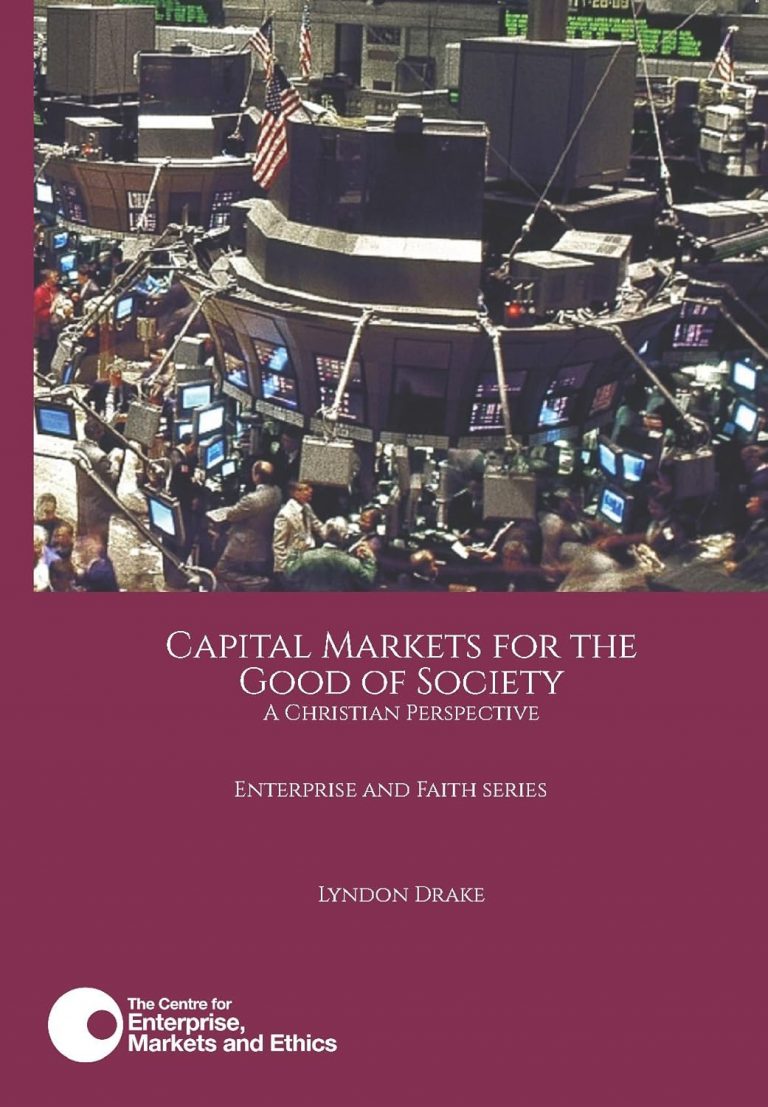
Capital Markets for the Good of Society

Capital Markets for the Good of Society

Capital Markets for the Good of Society discusses the ethical foundations and societal benefits of capital markets from a Christian perspective, emphasizing their role in promoting human flourishing and economic fairness.

Continue Reading →