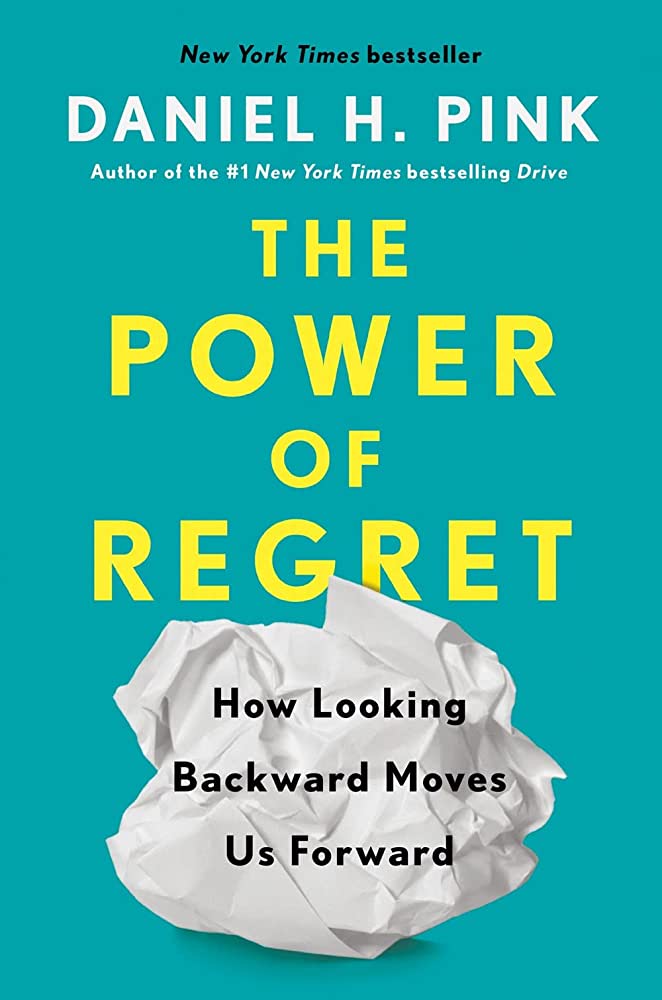
The American social psychology author, Daniel Pink, has written a number of best-selling books concerning human motivation, performance and innovation. The Power of Regret- How looking Backward Moves Us Forward continues the genre and, filled as it is with both anecdote and analysis, is an engaging and enjoyable read. A wide range of people will benefit from reading it, not just those who have to deal with regret on the part of both themselves and those for whom they are responsible in a business context.
Noting that there are over 50 books in the US Library of Congress with the title, No Regrets, Pink aims to challenge the US obsession with positivity and reclaim regret not just as an unavoidable part of mature human living but also as a means of improving decision making and performance.
The book draws on Pink’s own work with the American Regret Project and the World Regret Survey, which between them have collected and examined more than 20,000 regrets from around the world.
Pink identifies Four Core Regrets:
Foundation regrets stem from our failure to build a stable platform for our lives; the schoolwork we shirked, the debt we accrued, the drinks we enjoyed. Excess, too much or too little, often features. A simple summary of a Foundation regret is If only I had done the work.
Boldness regrets, as the name suggests, concern the chances we didn’t take, the courage we lacked. Evidence suggests that past inactions that can haunt us rather more than a past action – If only I had taken the risk.
The third category, Moral regrets, are those times when we know we have behaved badly – deceiving a spouse, cheating in a test. At the time of the act, we may convince ourselves it wasn’t so bad, but over the passage of time, we see that this is not the case. In this category (the smallest of the four) it is a past action rather than inaction that troubles us – if only I had done the right thing.
The final category (the largest of the four) is Connection regrets, which “arise from relationships that have come undone or remain incomplete” (page133). What Pink has in mind here are friendships allowed to wither, kindnesses that were not shown or interest in other people that was not expressed – If only I had reached out.
Looking further at the four regrets, Pink suggests that each of them “reveal a need and yield a lesson” (page 96). Foundation regrets, he argues reveal the need for stability whilst the lesson they yield is “Think ahead. Do the work. Start now” (page 96). Boldness regrets reveal the human need for growth and the lesson they yield “Speak up. Ask him out. Take that trip. Start that business” (page 111). Moral regrets reveal the need for goodness, the lesson is “when in doubt do the right thing” (page 129). Finally, Connection regrets reveal the need for love and the lesson they yield is “to do better next time … and (if the door is open) do something now” (page146)
Having analysed regret in this way, the final section of the book, Regret Remade “describes how to turn the negative emotion of regret into a positive instrument for improving your life”. (page 15)
The advice here consists of taking steps to undo a particular action, for example by making an apology, and where this isn’t possible to seek a silver lining to the regret. This entails being grateful that the mistake wasn’t worse and saying to ourselves “At least…” That way, writes Pink, “At Leasts can turn regret into relief” (page 165).
When regrets do threaten to become overwhelming, Pink suggests that talking about what is on our mind, not being too harsh on ourselves and putting the anxieties in perspective, through imagining others confronted with the same challenge, can be beneficial. “Looking backward can move us forward, but only if we do it right. The sequence of self-disclosure, self-compassion and self-distancing offers a simple yet systematic way to transform regret into a powerful force for stability, achievement and purpose” (page 182)
Whilst regret is a retrospective emotion, Pink describes the way in which by anticipating regret most effectively, what he calls optimizing regret, we can improve our decision making and hone our strategy for pursuing the good life.
As this outline of the book suggests, there are plenty of instances when it seems to be telling us things we already know. In some ways this is its strength. For it is a book about human behaviour and we recognize ourselves in it. Accordingly, the selected survey samples and different stories that Pink uses as illustrations are satisfying to read because we feel we know in advance what they will tell us. We find ourselves in the story.
At the same time, some of the analysis of the regrets and the responses to them can seem rather laboured. Mistakes are an everyday part of life, and we learn from them with varying degrees of effectiveness. Sometimes we will never do such a thing again whilst at other times we find ourselves being repeat offenders.
Some readers will warm to the systematic approach that Pink outlines and may change their behaviour accordingly. Others will recognize themselves in the illustrations he offers and carry on as before.
Pink focusses on the positive power of regret and, although he is aware of regret’s negative power, the book could have benefitted from further exploration of this. A sermon in which the preacher said, “To regret something is to lose the battle a second time” comes to mind. What lies behind this claim is not a refusal to learn from mistakes so much as an acceptance of who we are and where we find ourselves.
The four core regrets that Pink outlines all express themselves through “if only” and the danger of this is that it could lead to someone saying “if only I were someone else”. For there lies behind Pink’s writing an unspoken assumption that we all desire effective, high achieving and purposeful lives which are to be achieved through a combination of self-will and self-discipline. There must surely come a time when, for example, the person who has failed to be as bold as they might have been needs not just to accept that this is who they are but delight in it. In other words, their value and distinctiveness lie outside the parameters which are so often laid down by others.
Perhaps as a priest, I was bound to find this a short-coming of a book which does indeed reclaim regret and seeks to improve human living but does so from a secular perspective.
“The Power of Regret” by Daniel Pink was published in Great Britain in 2022 by Cannongate Books (ISBN-13: 978 1 83885 706 6), 240pp.
 Revd Canon Andrew Studdert-Kennedy is Team Rector & Vicar of St Andrew’s, Uxbridge.
The Centre for Enterprise, Markets and Ethics (CEME) is pleased to announce the publication of What is the Value of Business? by Richard Turnbull.
The report can be downloaded here.
A hardcopy can be purchased by contacting CEME’s offices at office@theceme.org
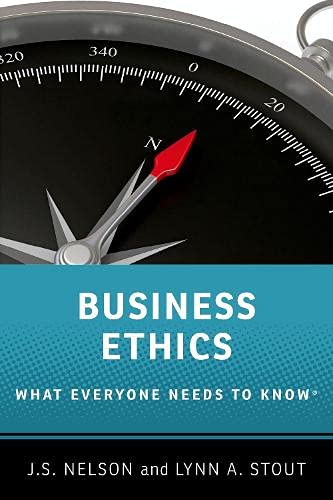
Business Ethics: what everyone needs to know by Josephine Nelson and Lynn Stout brings a distinctive angle to the discussion by interweaving the field of business ethics with components of law and legal practice. It also branches out into wider peripheral subjects such as philosophy, psychology, and organisational management. Josephine Nelson is Professor of Law at the Charles Widger School of Law at Villanova University, she specialises in how legal frameworks affect individual behaviour within organizations. The late Lynn Stout was Distinguished Professor of Corporate & Business Law at Cornell Law School. Her previous book, The Shareholder Value Myth was also reviewed on this website and proved to be a popular choice amongst our readers.
The ambition of the book is laid out from the onset – that is, to survey “not only moral philosophy, behavioural science, economic principles, and other contributions, but to make business-law concepts accessible and understandable to businesspeople and students of law, business, and ethics” (page xi). Fortunately, the language of the book fulfils this aim. It is clearly written and accessible to the layperson and makes only limited use of technical jargon. In instances where more specialised terms are indeed discussed (particularly in chapters referring to legal concepts), ample explanation is usually provided to assist the reader.
The book is comprised of 15 chapters and whilst at first glance may appear to be long, one third of its contents (168 pages of 513) are dedicated to an appendix of “Additional Resources and People You Can Reach Out To” (including notes). As the title suggests, the appendix offers additional resources and information for those wishing to delve deeper in the subject – some readers will certainly find this useful.
Chapters 1 through 4 open the discussion by focusing on the broader field of business ethics itself, which is defined as a “…set of moral principles that govern behaviour in a specific sphere of life: the world of business” (page 1). The authors dismiss the popularised idea that business is a cut-throat environment where individuals seek their self-advancement at the expense of others. They view this as “…misleading and inaccurate” whilst acknowledging that “…there are instances of bad behaviour” (ibid). Yet these instances are not dissimilar to other areas of life but just happen to also be occurring in the world of business. The majority of people in the private sector “…will tell you that sound ethics are integral to a successful business career” (Ibid). The book goes on to elaborate why it might be beneficial for a business to think and act ethically. The premise here is the ethics within an organisation not only benefit the organisation itself and its employees but the wider array of stakeholders and indeed society itself – ethics has a multiplier effect.
Chapters 5 through 10 bring in elements of law and legal practice and take a more practical approach to applying them in specific business scenarios. For instance, Chapter 5 addresses questions such as: “What does it mean to owe a legal duty to a partner or other natural person?” (page 61), “When do I have a duty of obedience?” (page 68), “What are duties of confidentiality?” (page 79), “What are disclosure duties?” (page 83). Perhaps more interestingly, the last question asked is “Why should businesspeople act more ethically than the law requires? Isn’t the law enough?” (page 85). The response here is that the law is simply not sufficient to promote and ensure a positive ethical business culture. In some situations it can even be the case that, “legal requirements are not ethically correct” and that “ethically correct decisions are not legally required” (pages 85-86). So there is a lot of material and food for thought in these chapters – readers who are interested in legal matters will find them particularly useful.
Chapters 11 to 15 conclude with a discussion on “How to institute best practices” (chapter 13) and “Designing an ethical culture” (chapter 14). The book emphasises the need for and importance of robust “compliance and ethics programmes” and argues that most effective ones are driven by five key principles: strategy, risk management, culture, speaking up and accountability (page 281). The importance of a “speaking up” culture is stressed in arguing that it is the key indicator of an organisation’s moral environment because it reveals, “…what it feels like to work within the company, and what employees truly understand their organisation’s expectations to be” (page 291).
The book achieves a great deal: First, it provides a comprehensive and for the most part, compelling insight into how legal matters affect ethics in business. Second, it offers practical advice on what can be done to institute an ethical culture and prevent companies from falling into organisational malaise. Third, it succeeds at remaining accessible to both the practitioner and layperson alike. However, the book is not immune from weak points. Perhaps the most evident of these is found in Chapter 3 where the aim is overly ambitious and misses the mark. In under 12 pages, the chapter attempts to integrate major philosophical schools of thought and their relation to business ethics – these include, Aristotle’s virtue ethics, Kant’s categorical imperative, Rawls principles, communitarianism and utilitarianism. The result is an inevitably shallow account that is peppered with overgeneralisations. The book’s account of Kant’s categorical imperative is perhaps the most acute example of this which will no doubt leave some readers disappointed, and others rather perplexed.
Despite these shortcomings, Business Ethics: what everyone needs to know is a worthwhile read for those with an interest in business ethics, legal matters, and the interplay between the two. While it is predominantly aimed at business and legal practitioners, those outside the field will find it thought-provoking and worthwhile.
“Business ethics: what everyone needs to know” by J. S. Nelson and Lynn A. Stout was published in 2022 by Oxford University Press (ISBN: 9780190610289, 019061028X). 513pp.

Andrei E. Rogobete is the Associate Director of the Centre for Enterprise, Markets & Ethics. For more information about Andrei please click here.
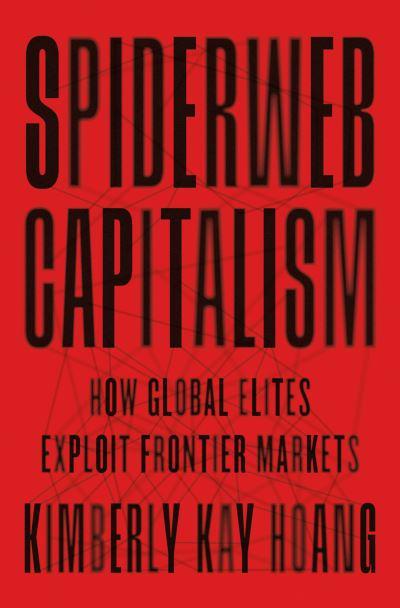
Kimberly Kay Hoang is an Associate Professor of Sociology at the University of Chicago. In Spiderweb Capitalism, she both describes and draws conclusions from her research into the way in which business is conducted in Vietnam and Myanmar. Some of her conclusions do not follow from her findings, her terminology and analysis is laden with ideology and the metaphor of a spider’s web that she uses throughout the book is ear-tingling but misleading. Nonetheless, the book should be read by everyone who wishes to be aware of the problems associated with business in emerging markets, especially those who are involved in making decisions as to what business they should conduct in such markets.
Hoang poses the question “How do global elites capitalise on risky frontier markets?” and says that her goal is “to uncover the structure of the networks… to examine the people who make and move the money around the world through offshore vehicles, and… to reveal how elites finesse the gray space between legal and illegal practices to establish significant social and political connections that allow them to exploit new frontiers” (page 2).
To this end, Hoang spent several years seeking to get under the skin of business in Vietnam and Myanmar, primarily by means of a large number of discussions (sometimes lasting many hours) with founders of businesses, investors, managers, fixers and various types of professional advisers, including people based both on-shore and off-shore. She provides interesting descriptions of her methodology, the challenges that she faced in conducting research without herself becoming implicated in illegal activity and the limitations that she laboured under. The limitations were significant but it is astonishing how much Hoang managed to persuade people to discuss with her. She ponders on the reasons why they were prepared to do this and recognises the possibility that it was of some assistance that she is a woman and may, perhaps, have been less threatening to some interviewees than a man might have been. She also notes that her University of Chicago connection may have helped since “The dominant reputation of [the University] often clouded my status as a ‘leftie sociologist’ critical of elites” (page 231).
The majority of the book comprises of descriptions she was told and otherwise found out during her research. These are grouped broadly around various topics (e.g. how deals are set up, types of corruption and bribery, and tax strategies). Hoang’s style is, at times, journalistic (e.g. “It was 5:00p.m., the sun was setting…”, page (xi)) and she tells her stories well. She also seeks to set the context of her various interviews and give insights into the life and character of the various people she encountered. This both makes her accounts more interesting and provides helpful context.
One of the strengths of her accounts is that she does not deal in caricatures. She comments that she “came to understand that [the individuals involved in emerging market business] were complex, multi-dimensional people” and that “Caricatures of them that I had read both in books and in the public media did not quite resonate with my experience spending hours talking to people” (page 169). It is in this spirit that Hoang seeks to understand how the various actors rationalise their activities and even, in some cases, compartmentalise their lives so as to keep a distance between their “playing in the gray” (as she calls their activities) and their home or other private lives. She also recognises a spectrum of willingness to play in the gray: “anti-corrupters”, “greasers” and “bribers” being among the possibilities.
Likewise, Hoang acknowledges that business activities in emerging markets are themselves legally and morally more complex than is sometimes suggested. For example, it is good to see her recognising that some complex structures serve “pragmatic functions beyond secrecy and evasion… [which] include privacy, tax concerns, finessing weak local banking institutions, off-shore arbitration, access to a wider pool of global investors, asset protection from law suits, easier off-shore exits, and the ability to send and receive payment in private through designated nominees”. She also appears to accept the difference between the ensuring of secrecy (because there is something nefarious to hide) and a desire for privacy.
Readers need to be on their guard in relation to Hoang’s use of terminology, which in some cases does not correspond to normal business usage. For example, she describes transfer pricing as an accounting practice designed “to legally write off parts of the costs of the business”, (page 126). She also quotes one of her contacts as saying that “a special purpose vehicle is a paper company set up off-shore” (page 4) and appears to have adopted this definition, which may be useful in the context in which she was operating but is a very narrow conception of a special purpose vehicle.
More seriously, Hoang sometimes fails adequately to distinguish legal from illegal activities and she has a tendency to overstatement. For example, although in one place she recognises that the limited partners of an investment entity may comprise pension funds and other institutions, she focuses on individuals who are limited partners, stating that “they are all global citizens who claim citizenship in one or two countries but regularly travel all around the world” (page 28), which is unhelpful since it does not reflect the reality of many investment funds or their investors. She also states that “the world is now divided between [High Net Wealth Individuals] and poor people across developed, emerging, and frontier markets around the world” (page 19), which is an extraordinary statement bearing in mind that the growth of the middle class has been one of the most notable features of economic development in South, South East and East Asia over the past generation.
Statements such as this point to the more fundamental problems with Hoang’s book. She has conducted research into a particular type of business in two emerging markets but she wants to draw conclusions of much broader applicability. Some of her conclusions may be correct but her evidence does not demonstrate this. Myanmar is by no means a typical emerging market and, although Vietnam may be regarded as more typical, it has a particular history. It is probable that some practices in these countries are replicated in other places (e.g. Sub-Saharan Africa), but it is dangerous to make assumptions in relation to this. Hoang makes clear that cultural factors play an important part in the way in which business is conducted and one should not automatically assume that business practices are the same in places where the cultures are radically different.
Furthermore, one should not assume that the practices that are prevalent in relation to business start-ups and early-stage external investment in businesses prevail in relation to more mature businesses, particularly those which have major international funds and corporations among their investors. Hoang at times appears to recognise this (e.g. she notes that the people she was dealing with were involved in business ventures that were too small generally to hit the headlines and that businesses tend to spend time cleaning up their practices and accounting prior to moving on to the later stages of their development). However, this does not prevent her making sweeping contentious generalisations.
She says that her goal is to “give global capital a face” (page 9, emphasis original) and she seems to believe, without supporting evidence, that what she has found is representative of global capitalism as a whole. For example, she states that frontier markets “illustrate how most capital accumulation takes off through a set of transactions that are often considered corrupt and dirty” (page 10), which is a grave exaggeration. Likewise, she constantly refers to “global elites” as if they comprise the people she is studying whereas, in fact, many of these people could not by any stretch of the imagination be described as “elite” and the majority of those who may properly be regarded as the “elites” have very little to do with the kinds of investments that Hoang has studied.
All of this seems to be associated with Hoang’s ideological commitments. These are manifest in her use of loaded language, of which the metaphor of “spiderweb capitalism” is the most obvious example. She presses this analogy, suggesting that there are both “dominant spiders” and “subordinate spiders” and that “Some spiders build and repair the web, some subdue and organise the prey, still others work to keep the place clean” (page 22). Even more memorably, she asserts that “the ‘prey’ in spiderweb capitalism encompasses the public and all those who are snared in these capital webs” (page 24). This type of language may be picturesque but it is not what one would expect in an academic work and it obscures rather than illuminates the complexity of the relationships and activities that Hoang is analysing.
Much of what Hoang has uncovered is blatantly illegal or, at the very least, highly morally dubious and it undermines economies and healthy social structures. Many people will doubtless say that she merely confirms what they already knew or suspected but her findings nonetheless deserve to be studied carefully, particularly by western investors and professionals, some of whom may be tempted either to close their eyes to what is going on or naively to assume that all is well when it is not. Ultimately, however, Hoang appears to get carried away by her own metaphor and exaggerations.
Her ten page conclusion builds up to a crescendo that bears little connection to the preceding research. She asserts that “One consequence of these massive webs is the growing economic inequality between the rich and poor globally” (page 220), which accords far too much importance to the types of business that she has examined; she adds “These structural webs produce intersecting consequences, including poverty, climate change and environmental damage, and the out-migration of people” (page 221), assertions for which she has presented no evidence. She concludes: “Future generations must have the creative will to build a society with policies and protections in place to save our planet, reduce inequality, and prevent most people from becoming trapped, drained, and lost in these massive spider webs” (page 221), which is a disappointingly polemical ending to some interesting and thought provoking research.
“Spiderweb Capitalism” by Kimberly K Hoang was published in 2022 by Princeton University Press (ISBN: 978-0-691-22911-9). 240pp, plus notes.
 Richard Godden is a Lawyer and has been a Partner with Linklaters for over 30 years during which time he has advised on a wide range of transactions and issues in various parts of the world.
Richard’s experience includes his time as Secretary at the UK Takeover Panel and he is currently a member of the Panel. He also served as Global Head of Client Sectors, responsible for Linklaters’ industry sector groups, and was a member of the firm’s Executive Committee.

In this latest episode of the CEME Podcast, Revd. Dr. Richard Turnbull (Director, CEME) interviews Dr Graeme Leach on the topic of God and Economics.
Graeme Leach is a professor of economic policy and a member of the Shadow Monetary Policy Committee (SMPC) of high profile UK macroeconomists. He has written numerous articles for The Times and The Daily Telegraph and had a weekly column in the City AM newspaper of London. He is widely recognised in the media, having participated in more than 150 live TV and radio interviews for BBC News, Sky News, CNBC, CNN, the BBC Radio 4 Today Programme, BBC Radio 4 World at One and many others.
Between 1997 and 2014 he worked as Chief Economist and Director of Policy at the Institute of Directors (IoD), which represented more than 30,000 company directors in the UK. He represented the IoD in talks with the Chancellor of the Exchequer and 10 Downing Street. In 2014 Graeme became Director of Economics at The Legatum Institute, a global think-tank focussed on identifying the sources of economic prosperity across the globe.
He is currently CEO & Chief Economist of macronomics, a macroeconomic, geopolitical and future megatrends research consultancy. He is also Director of Economic Futures at Global Futures & Foresight, a Senior Fellow of the Legatum Institute and a Life Fellow of the Institute of Directors.
Full video available below:
Daniel Finn holds chairs in both Economics and Theology at St John’s University and the College of St Benedict in Minnesota. He is, therefore, both a representative and exponent of the intellectual tradition within Roman Catholic thought that seeks to apply Christian thinking to economics and business.
Finn has brought together 12 authors to contribute, singly or jointly, to this volume of essays which seeks to explore the moral assessment of business from a Catholic perspective and to do so in a deeper way than the more usual debates around personal integrity or assessments of capitalism and socialism. He argues that such an approach leaves fundamental questions unanswered, although the actual content of those questions is not entirely clear. Nevertheless, this volume presents a series of essays which seeks to address the morality of business within the tradition of Catholic social thought.
The book is divided into three parts. Part one consists of two useful chapters on the perspectives of CEOs and then a reflection on the history of commerce and communion in the history of Christian thought. Part two discusses the internal dynamics of business with three chapters dealing with matters such as agency and the technocratic paradigm. Part three looks at the wider responsibilities of business including approaches to business ethics, the idea of “good goods”, the moral ecology of business and the moral legitimacy of market decisions.
The first chapter gives fascinating insights into the perspectives of three CEOs of companies ranging from a family-owned manufacturing company to a more widely held investment and banking company, one of whom spent many years as a senior executive of a large public company.
These insights are wise, incisive and illuminating. The purpose of business lies at the heart of these senior leaders’ perspectives. Business is intended to meet real needs, profit is essential. However, trust, integrity and quality products are not by-products but central to the mission of their companies. Thomas Holloran noted that during his time with a large public company the shareholders all did very well and yet the company’s mission was not about maximising shareholder wealth. Unsurprisingly, all three opt for a stakeholder model. Although I largely agree with this approach one wonders whether we may have so caricatured the idea of profit maximization that we are in danger of missing some important aspects of the purpose of business. Mary Hirschfield, in chapter 5, dealing with the technocratic paradigm, undertakes a useful exercise in setting out the main arguments in defence of profit maximization as producing socially optimal outcomes in a logical and balanced way (pp95-98). We need more of this honest debate.
All three of the CEOs also emphasised personal responsibility, culture, virtues and the moral qualities of goods and services. Thomas Holloran points out that it is a misconception that most business people are greedy or dishonest. On the contrary, he argues, most are deeply moral (pp22-23). This is an important corrective to the notion that all business is exploitative and business executives are only interested in their own success and profits.
The remaining chapters are somewhat more of a mix tackling important individual subjects but it is not always clear how they relate to the wider picture. Too many of the chapters are stand-alone narratives (albeit with attempts to cross-refer). I would have preferred a more clearly articulated overall vision rather than Daniel Finn’s very brief introduction. However, this is a relatively minor quibble and does not take away from the importance of the collection as a whole.
The strongest chapters are those that reach out further into wider debate.
One example of this is Martin Schlag’s chapter on the responsibility of business for the moral ecology in which they operate (chapter 8). Professor Schlag engages critically with two recent critics of the market, Michael Sandel and Jean Tirole. Schlag rejects the presumption that markets and morals are in opposition to each other, noting that for Thomas Aquinas, ‘it would be inconceivable to affirm that markets are amoral in their operations’ (p165). Schlag, then, is determined to make us work hard through involvement in the market rather than separation from the market. This is an important theological corrective to the points of view either that business is evil and to be avoided, or that our real calling is to Christianise business. Rather we should view business as part of God’s provision for humanity and a place to exercise Christian character and responsibility. Schlag also builds on Aquinas to remind us that private ownership entails obligations and this includes the owners and ownership of business. In this way business is an integral part of the wider ecology of economic life encouraging the flourishing of all.
Chapter 7, by Daniel Cloutier, dealing with “good goods” is a useful and interesting discussion around the nature of goods. The author identifies three categories of questionable goods, those that are defective, harmful or futile. However, these criteria are negative and not always straightforward (for example, in the case of weaponry). The criteria adopted for futile goods are more instructive. We might purchase futile goods for three reasons, according to the author, the pursuit of luxury, our own self-identification, or consumption as an end itself. The point is that they suggest, “an implied reversal about what is important in life” (page 151). This chapter also discusses the gig economy which sets up some interesting questions. Unfortunately, these are then not pursued leaving the reader feeling rather let down that the analysis had not been extended to a central feature of the modern economy.
One helpful feature of the book is the manner in which the authors of many of the chapters refer back to and locate their observations in the comments of the CEOs in chapter 1. This is a useful link of theory and practice.
I enjoyed this book and recommend it. The chapters were somewhat more disparate than I expected; all were interesting, some were outstanding. We can also give thanks that a group of theologically informed writers are both willing and able to engage with economics and business. Most of what was discussed was relevant to our common Christian tradition.
Daniel Finn asks an appropriate question in his opening sentence, ‘Can a religion whose founder taught love of neighbour as the most fundamental moral principle give moral approval to profit-seeking business firms in a global economy?’ (page 1). As James Heft noted in his Afterword, the CEO interviews reveal that all business leaders “face decisions that are often not black and white and who have to make practical judgments that involve inescapable trade-offs, situations where hard decisions have to be made” (page 222).
Elusive though the answers may remain we should be thankful for this group of scholars exploring these questions and dilemmas. We leave the last word to Professor Schlag:
‘The task of Catholic social thought is neither to be irenic nor cynical but realistic, with a realism that presents constructive, practical solutions not for the righteous but for reasonable people’ (page 174).
“Business Ethics and Catholic Social Thought,” edited by Daniel K Finn was published in 2021 by Georgetown University Press (ISBN: 978-1-64712-074-0). 245pp.
 Dr Richard Turnbull is the Director of the Centre for Enterprise, Markets & Ethics (CEME). For more information about Richard please click here.

A recent report by the Resolution Foundation entitled “ISA ISA Baby” proposes that the UK’s low levels of household savings be remedied by revising and expanding the Help to Save government scheme. The authors argue that this could be funded by capping ISAs at £100k which, in their eyes, “largely benefit the already wealthy”. While the report’s diagnosis of the problem is broadly correct (low levels of savings, poor take up of Help to Save, etc.), the capping of ISAs is ill advised.
A few brief observations:
When looking at ISAs we must ask ourselves what exactly constitutes ‘rich’ or ‘wealthy’? Does an earner in the top 10th percentile of the income distribution automatically qualify as ‘rich’? What about dependants or family members who rely on them for financial support? Some of them may indeed find themselves in difficult situations such as poor health or personal loss – does this so-called ‘high earner’ sound like someone likely to be splurging money? What about a family of four that after years of hard work managed to save £100k in ISA savings – does this qualify them as ‘rich’?
The reality is that the top 10th percentile of earners are not the rich or wealthy but are the very drivers of middle-class Britain. They are the small and medium business owners, the managers, the directors, the forward-thinking entrepreneurs, the doctors, the lawyers, the university professors, the scientists, and so on. They represent a key part of the fabric of society and cumulatively form the central force that moves our economy forward. Penalising them for hard work and demonstrating financial prudence sends all the wrong messages about what Britain values as a nation. We should rather be encouraging the aspirations of all to save.
Let’s not forget that for many ISAs are not extra pots of disposable cash but often represent entire lifetime savings. ISAs are used by many as an informal private pension – should a couple approaching retirement with £100k saved throughout their working lives be considered ‘wealthy’ and in need of extra taxation? This equates to a supplement of roughly £4,000 per annum which by any estimation, is hardly ‘rich’. In addition, the cap can be seen as a form of double taxation since funds placed in ISAs largely come from earnings where tax has already been paid. Then of course you have to account for the inevitable unintended consequence that those with £100k+ in ISAs will simply move their money elsewhere (the pensions – buy to let debacle springs to mind).
A comprehensive picture behind ISAs is therefore complex and intricate. With living costs at the highest level in half a century, families with life savings of £100k are not rich but very much middle-class. They have some limited financial buffer for life’s unforeseen eventualities and targeting ISAs would compromise this much-needed savings vehicle. The truly wealthy are more likely to have a Swiss bank account or trust fund – they do not rely on ISAs. A recent article in The Times reported that even among the ‘super-rich’, the UK’s appeal is unfortunately diminishing with over 1,400 millionaires having left the country in 2022 alone.
In The UK Savings Crisis: Rediscovering the Principle and Practice of Saving, I spoke about the need of promoting key societal virtues such as prudence and cultivating a broader culture of saving. This starts with early education and continues well into working adulthood. Unfortunately, our educational system does virtually nothing with regard to equipping students in basic financial budgeting and planning. It should therefore come as no surprise that government schemes such as Help to Save suffer from poor adoption rates – less than 1 in 10 eligible have signed up to the scheme. The wider picture, of course, points to a combination of associated factors: a lack of awareness and understanding of the scheme, burdensome red tape and bureaucracy and long wait times for the funds to be released (two tax-free bonuses of up to £600 each over 4 years with the initial bonus to be received only after the first 2 years have elapsed). All these make for a rather unappealing proposition for struggling families that are more focused on paying the bills at the end of each month than waiting two years for a maximum £600 government bonus. So schemes that encourage savings do indeed need to be reformed and made more accessible. However, these changes needn’t come at the expense of restricting or capping ISAs.
Policies in the sphere of savings have the dual challenge of not only assisting those on low income but also promoting a wider environment where hard work and prudent financial behaviour is rewarded and encouraged. People’s innovative spirit, determination, resilience, and discipline should not be penalised through additional thresholds of taxation.
Capping ISAs at £100k certainly generates headlines (and entertaining reactions on YouTube), but what is the real cost if it leads to lousy policy? Those of us in the think tank world need to step back for a moment, look beyond the mere numbers and ask ourselves: what are the wider societal implications of our proposals and what specific moral virtues are we trying to encourage in the long run?
Andrei E. Rogobete is Associate Director at the Centre for Enterprise, Markets & Ethics. For more information about Andrei please click here.
Barry Eichengreen is Professor of Economics and Political Science at the University of California, Berkeley. His economic and economic history research focuses on monetary and financial systems, and he is an author of over 20 books, among them Golden Fetters: The Gold Standard and the Great Depression, 1919–1939, Globalizing Capital: A History of the International Monetary System, and The European Economy since 1945: Coordinated Capitalism and Beyond.
Eichengreen’s and his co-authors’ In Defense of Public Debt is organised into 14 chapters, tracing the history of public debt from its earliest origins in the Greek city–states and the Roman Republic, and arriving at the Covid economic scene (the book was published in September 2021). Each chapter focuses on a specific time period with its particular theme and relevant cases studies. For example, Chapter 3 “States and the Limits of Borrowing” recounts the fiscal and political developments primarily in the European states in the sixteenth–eighteenth centuries that augmented commitment to repay debts and enabled more borrowing; it also identifies certain ‘impediments’ (such as fiscal decentralization and competition) that limited states’ abilities to borrow more.
The book reads like a history of public debt, and in that respect, it presents a thorough historical account of the topic. In addition to analysing the overall levels of public debt, the authors also examine the development of the actual methods of public borrowing, creditors’ rights and representation, and the role of banks and various intermediaries. Readers may be pleased to find that the history of taxation and monetary systems are interwoven into this historical narrative of public debt.
In the introduction chapter, the authors promised to give a “balanced account” of public debt; curiously, “balanced” was meant as “placing more weight on the positive aspects than is typical of the literature” (page 5). Even so, the positive aspects put forward in this book are often vague. There is surprisingly little discussion of the use and efficiency of public debt, beyond the general recognition that states have historically relied on borrowing to fund wars, invest in infrastructure, social services, and, more recently, to bail out the financial sector and bankroll public services during a pandemic. The readers are expected to take it for granted that debt is used to fund vital causes. Yet are all uses of debt equally sound and defensible? This question is mostly ignored, except for some hints that spending on general consumption would not be as desirable as spending on investment. It admits that even though budget surpluses should be pursued to reduce debt when the economy is growing, this is difficult to achieve in practice. When it comes to generating primary surpluses, the book’s proposed answer is always higher tax, rather than spending cuts.
Eichengreen’s book leaves one with an impression that there is economic evidence of a positive relationship between public debt and economic growth. This relationship is meant to act as a “positive feedback” in the economic growth models, whereby “The link from public debt and its role in financial development to faster growth, and from faster growth back to financial deepening and economic development, is just such a feedback” (page 212). Among other things, we learn that with respect to foreign borrowing in the nineteenth century, “Countries that borrowed more invested more and grew faster on average, suggesting that issuing sovereign debt paid” (page 7), with a concession in the Notes section that evidence of a positive link “is weaker for the twentieth century” (page 228). However, a more balanced account of public debt would have had to mention the ample economic evidence of a negative relationship between high levels of public debt and economic performance. For example, most recent economic studies on this subject identified a negative link between high public debt and economic growth; there is also a tipping point threshold (in the range of 70% to 100% of GDP) when debt begins to have a significantly detrimental effect on growth (see, for example, De Rugy, V. and Salmon, J. Debt and Growth: A Decade of Studies).
This is not to say that Eichengreen’s book does not mention any negative aspects of public debt, as it does recount examples of heavy interest payments, defaults, and, in worst cases, loss of sovereignty. Yet even though the various debt default episodes make for interesting reading, they ignore the subsequent harm caused to society, and do not show the full extent of the social and economic miseries experienced during such episodes. Moreover, the negative aspects are often presented as examples of debt mismanagement or perils of public debt, even though they could in fact point to more systemic issues.
The question of morality of accumulating public debt does appear towards the end of this book, yet the moral arguments against public debt, as well as those making these arguments, are presented here in a dismissive tone: “They fret”, “worry”, “complain” (page 181). Readers appreciating the vital link between market and ethics may find it strange to see moral objections to public debt being dismissed outright as not belonging to the economic realm, with the authors suggesting that “there was also another view, in which debt was viewed in economic rather than moralistic terms, and where its issuance was seen as a solution to problems, not as their source” (page 182). Yet as already noted above, plenty of recent economic evidence shows high levels of public debt having a detrimental effect on economic performance; thus, even when analysed in economic terms, debt is hardly a solution. Meanwhile, moral issues stemming from public debt, such as the distributional and intergenerational justice issues, raise serious dilemmas that deserve to be answered.
The lack of a response to these moral arguments is but one of the questions left unanswered. Another one, just as problematic, relates to how to deal with rising debt in the future. This book does not engage with the alarming long–term projections of public debt. For example, the UK public sector net debt as a share of GDP is forecast to quadruple by 2070 to 418% of GDP (Office for Budget Responsibility Fiscal Sustainability Report – July 2020). Developed countries will be faced with growing social security and healthcare costs (which have not been pre–funded and are further hampered by unfavourable demographic circumstances), raising more issues for the policymakers. Even with respect to the immediate public debt situation, Eichengreen’s book concedes “there are no simple solutions” (page 223), noting the possibility of runaway inflation (even though the book was sceptical about such a development), the dangers of higher interest rates, and the limited prospects of economic growth or budget surpluses.
Unfortunately, the fears of sharp inflation and rising interest rates have already materialised by mid–2022. This brings us back to the moral issues with debt, namely, to the responsibility of architects of fiscal and monetary policy for the economic pain presently being inflicted upon the wider society. Eichengreen’s book referred to debt as a temptation to which politicians may succumb to. This demonstrates that there is more to public debt than pure economics, and that those seeking a way out of the looming debt crisis should not dismiss the ethical arguments against public debt after all.
Those looking for a truly balanced account of public debt will need to look elsewhere but there is much of value in this book for those interested in economic history.
“In Defense of Public Debt” by Barry Eichengreen, Asmaa El–Ganainy, Rui Esteves and Kris James Mitchener was published in 2021 by Oxford University Press (ISBN-13: 9780197577899). 320pp.
 Kaetana Numa, PhD is Research Fellow at the Centre for the Study of Governance and Society, King’s College London.
Martin Sandbu’s basic thesis in The Economics of Belonging is simple: Western liberal democracy (essentially, the post Second World War socio-economic model) is under threat from within, owing to a significant proportion of western electors losing confidence in it; this loss of confidence is caused by the erosion of a sense of economic belonging, which is the result of decades of economic mis-management by Western governments; and, if the threat is to be dealt with, these governments need to adopt a package of policies radically different from those that have been adopted to date.
The book is sub-titled “A radical plan to win back the left behind and achieve prosperity for all” and, having spent five chapters setting out and defending his view of what has gone wrong, in the remainder of the book, Sandbu sets out a long list of ideas for dealing with the issue he has identified: the establishment of what he calls a “high pressure economy” (involving fiscal and monetary policy designed to keep demand pressure high and other policies to secure high minimum wages); the introduction of universal basic income (UBI); the introduction of a meaningful wealth tax; the removal of tax relief for debt; the strengthening of collective bargaining (including giving unions bargaining rights on behalf of non-members); the provision of significant subsidies to disadvantaged regions; and a host of other, less dramatic, initiatives. He commends governments which, during the Covid pandemic, pursued policies “bolder than anything ever seen in peacetime” (page xii) and his only criticism of the asset purchase programme of the past decade is that it has not gone far enough. He wants more of the same sorts of economic stimuli and much more besides.
Sandbu is a Financial Times journalist and, although the book does not indicate its target audience, it gives the impression that it is aimed at the kind of people who might read the FT. They are certainly the kind of people who are likely to enjoy, and potentially benefit, from reading it. Economists will not find much new in it and, conversely, those who are not used to thinking about socio-economic matters may struggle with some of the analysis. However, non-specialists who are used to thinking about such matters should find it a worthwhile read especially since it deals with an issue that should be a great concern to anyone who values Western liberal democracy: the concern that Western electorates might become so discontented that they themselves destroy it.
This is not to say that the book can be given an unequivocal recommendation. It needs to come with a health warning: Sandbu writes well and with great conviction and there is a danger that readers will fail to notice leaps of logic and inadequately supported assertions that litter the book. Paradoxically, this danger is particularly acute because Sandbu commendably frequently mentions at least some of the main concerns about his proposed policies. The problem is that it is easy to miss the fact that, having raised some concerns, he often does not deal with them adequately or does not mention other material concerns. For example, although he acknowledges that there is risk associated with his proposed “high pressure economy”, he does not properly examine the nature and extent of this risk (e.g. the serious role of inflation and its consequences) let alone discuss how it can be mitigated. Furthermore, he never considers the issues associated with the transition from existing policies to those proposed by him. Those in the UK who remember Chancellor Anthony Barber’s “dash for growth” in the early 1970s or who have reflected on the impact of Kwasi Kwarteng’s disastrous recent budget will recognise that these are serious omissions.
In some cases, the absence of adequate analysis of potential issues results in Sandbu’s proposals seeming to be surprisingly naïve. For example, his arguments for the UBI are interesting and worth considering. However, his defence against the counter-argument that its cost would be exorbitant is that previous calculations have shown that a basic income of £6,700 for a couple with two children could be provided by abolishing tax-free income tax allowance (page 120). This may be true but Sandbu fails to explain how a basic income of this amount would provide the economic security that he is seeking.
Another example of apparent naivety is provided by his suggestions relating to collective bargaining and the role of trade unions. He acknowledges that the role of trade unions has not always been beneficial and that they can be a barrier to change and he recognises that what is needed is unions that “function well” (page 122). However, he fails to explain how it is that this can be secured. Once again, those with long memories will wonder how his proposals would avoid a return to the industrial paralysis of the 1970s in the UK.
On occasions, the book contains hints of romanticism or, at least, rose tinted spectacles. President Roosevelt and the post-war politico-economic consensus are its particular heroes. In fact, a reader who is unaware of post war history could be forgiven for believing that the period from the end of the Second World War down to the last 20 or 30 years was one of universal contentment and satisfaction. Unfortunately, the social tensions, economic problems and, in particular, industrial relations chaos of the 1960s to 1980s, tell a different story. Furthermore, some of Sandbu’s proposals seem worthy rather than realistic and world changing. Among these are his proposal for community banks (page 163), which are surely never going to have more than a marginal role in the economy, and his extoling of the merits of libraries and arts institutions (page 200), which one suspects are rather too middle class to deal with the problem of belonging which Sandbu is addressing.
Perhaps the reality is that Sandbu has tried to cram too much into 239 pages, with the result that his has been guilty of superficiality and a lack of convincing analysis. This is frustrating because he commendably takes issue with those who, simplistically, see globalisation or immigration as the cause of our current problems and, taken individually, a number of his points are interesting. For example, his defence of a net wealth tax as an alternative to other taxes is worthy of consideration and Switzerland provides an example supporting Sandhu contention that his proposal is not necessarily about high taxes. Likewise, his arguments in relation to the removal of tax relief for debt are powerful are supported by a number of respected economists.
These are, however, points of detail and Sandbu is not inviting us to tinker with the detail of our existing economy but adopt his radical package of change. He is clearly convinced that he is right in advocating it but one needs to ask whether all Western governments over the past general have really been quite as stupid as he believes. It is at least worth considering whether there might be a reason why his policy prescriptions have nowhere been implemented. He admits that the problem of belonging exists in almost all Western countries (pages 58-62) despite them having pursued very different policies over the years (e.g. contrast the USA, France and Sweden). Furthermore, although Sandbu is surely right that there is a problem relating to people feeling alienated (i.e. having lost their sense of belonging) and that economic factors have played a large part in the creation of this problem, his dismissal of cultural issues as a material contributor to the problem and his assertion that, despite globalisation, the solution largely lies in the hands of national governments (page 181) may justifiably be challenged.
That said, Sandbu rightly sounds a warning siren and those who cannot accept his prescription for dealing with the current Western malaise need to ask themselves what their solution to the problem is.
“The Economics of Belonging” by Martin Sandbu was published in 2020 (the paperback edition being published with a new preface in 2022) by Princeton University Press (ISBN-13:9780691228907). 239pp.
Richard Godden is a Lawyer and has been a Partner with Linklaters for over 25 years during which time he has advised on a wide range of transactions and issues in various parts of the world.
Richard’s experience includes his time as Secretary at the UK Takeover Panel and a secondment to Linklaters’ Hong Kong office. He also served as Global Head of Client Sectors, responsible for Linklaters’ industry sector groups, and was a member of the Global Executive Committee.
Join us in our latest video podcast where Graeme Leach, CEO & Chief Economist of Macronomics Consulting interviews Dr Peter Warburton on the topic of Biblical Economics: Freedom & Fruitfulness.
Dr Warburton has worked as an applied economist in London since 1975, graduating from Warwick University with a Masters degree and gaining a doctorate from City University in 1988. He has worked in the academic and financial sectors in a variety of roles and is a frequent guest on radio and television programmes discussing the state of the UK economy. He founded Economic Perspectives in 1996.
Full video available below:
Faith, Finance, and Economy is a collection of essays broadly related to the relationship between faith and financial or economic matters. The editors state that their overall aim “is to convince the reader that faith and finance are not disjoint entities” (page 3). They do this by serving up a collection of essays that provide different examples of the connection between faith and finance rather than by developing a single theme.
The result is a fascinating miscellany containing material that should engage, and probably challenge, most people who are interested in considering the way in which faith does, or may, or should impact financial and economic and, hence, political, matters. Inevitably, however, different readers will be interested in different essays and, although the book includes chapters on some of Gandhi’s philosophical ideas, on attitudes to consumerism in Communist China, on Islamic finance and on the accommodation of faith of all kinds in the workplace, approximately half of it relates to the issue from a specifically Christian perspective, which readers may or may not find helpful.
The essays that focus on Christianity are diverse. The first two (by Ronald Sider and Anne Bradley, respectively) describe how a biblical world view can provide a framework for economic thought. Their views differ materially but both express these views in careful moderate terms and readers who are only familiar with Sider’s famous “Rich Christians in an Age of Hunger” and Bradley’s strong free market views may be surprised by the degree of convergence in what they say. For example Sider concedes basic merits of the free market, commenting that “The market mechanism of supply and demand simply works better” (page 23), adding that “always, government activity must be shaped in a way that nurtures self-sufficiency, not dependency” (page 27). Conversely, Bradley stresses inter-dependency and the dangers of greed, commenting that “The word that best describes God’s creation is inter-dependence” (page 34) and asserting that “We need a society where greed is mitigated (not fuelled by a system of incentives)” (page 44).
The essays thus help to clarify the issues on which bible-believing Christians disagree. Furthermore, all type of Christians would do well to listen to Sider’s warning that the mere fact that they seek to ground their agenda in a normative biblical framework does not guarantee that their concrete proposals will be wise and effective (page 28).
Some of the themes identified by Sider and Bradley are relevant to Heath Carter’s essay entitled “Christianity and Inequality in the Modern United States”, which describes itself as “a concise introduction to the history of social Christianity” (page 175). Unfortunately, however, despite the author’s claim to be writing history, he has produced something akin to a polemical tract, concluding “American Christians played pivotal roles in getting us into this New Gilded Age and we are in urgent need of a renewal of Christian economic thought and practices today if we are to have any hope of finding out way out” (page 192). The essay has heroes and villains, the latter comprising Christians who do not share Carter’s left-wing social gospel views. It is unlikely that it will assist readers understanding the views of those with whom they disagree or perceiving potential weaknesses in their own views.
In contrast, Michael Naughton’s essay, which brings the book to a conclusion, is balanced and carefully argued. It discusses what comprises “good wealth” from within the tradition of Catholic social teaching. Naughton separately analyses the issues of wealth creation, wealth distribution and wealth dispersion (i.e. charity) but recognises that, as he puts it, “The principal challenge is not dividing these three areas…but providing a social vision of how they are related” (page 232). Some readers may legitimately object that his essay does not advance the debate but it is nonetheless a useful reminder of the component parts of the issues involved.
Salim Rashid’s essay is the most specialist of those relating to Christian perspectives. It considers the contribution of Anglican clergy to economic thought in the 18th century. It is probably because this subject might sound dry that Rashid and his co-editor decided not to place it first in the collection but it serves well as an illustration of the book’s primary thesis and, indeed, of Rashid’s contention that “Christianity is the backbone of European economic growth” (page 108).
Rashid particularly focuses on three Anglican clergymen: George Berkeley (whose economic insights included the observation that national debt can stabilise the entire monetary system), Jonathan Swift (who established what may have been the world’s first micro credit facility) and Josiah Tucker (who raged against the economic absurdity of 18th century mercantilism and, consequently, favoured US independence at a time when many feared that it would be economically disastrous).
The essays dealing with issues unconnected with Christianity are even more diverse. Bearing in mind the importance of China and Muslim countries in the world economy today, Karl Gerth’s essay “Consumerism in Contemporary China” and Faisal Kutty’s essay “Islamic Finance, Consumer Protection and Public Policy” are well worth reading. The former comprises an interesting description of the changing policies and attitudes (official and unofficial) to consumer goods over the past 70 years of Communist rule in China; the latter explains the theological issues underlying Islamic finance and discusses some of the issues that such finance faces. Each contains surprises for those unfamiliar with the relevant subject. For example, Gerth suggests that the Mao era promoted rather than quelled consumerism and Kutty gets beyond the common view that Islamic finance is solely about dressing up interest as something else.
Akeel Bilgrami’s essay is the most philosophical of the collection. It considers the relevance of Gandhi’s thinking to the apparent conflict between equality and liberty. Bilgrami suggests that Gandhi’s conception of individual liberty as a form of self-governance and his desire to make overcoming “alienation” the chief goal of politics and social life could provide the key to resolving this conflict. He analyses Locke’s concept of liberty and the “Tragedy of the Commons” and suggests that the pursuit of an un-alienated life undermines the former and renders the latter irrelevant, claiming that even to raise the question “would my efforts and contributions to the collective cultivation (or restraint from over-cultivation) be wasted if others don’t also contribute?” is already to be thoroughly alienated (page 69).
The bringing of an Indian perspective to a debate is interesting but Bilgrami’s style is dense in places and his thesis is ultimately unconvincing. Indeed, it is legitimate, if unpopular, to ask whether Gandhi’s economic thought was ultimately damaging to the alleviation of poverty in India.
The book’s final author, David Miller, addresses a radically different subject. His essay seeks to make the case for employers embracing faith in the workplace: being, as he puts it, “faith-friendly” rather than “faith-avoiding”, “faith-tolerant” or “faith-based”. Although Miller’s contribution is in places shallow and perhaps naïve, it contains a lot of worthwhile analysis and suggestions and deserves to be considered by employers. It may be that the current catchphrase “Bring your whole self to work” may make it easier than has historically been the case for those of strong faith to be open about this (and its consequences) even if their views may not be popular.
Overall, the essays more than adequately demonstrate the relevance of faith, and more broadly, a person’s world view, to finance and economics. Politicians and economists ignore this at their – and our – peril.
“Faith, Finance, and Economy” edited by Tanweer Akram and Salim Rashid was published in 2020 by Palgrave Macmillan (Springer Nature Switzerland) (ISBN-13:9783030387860). 232pp.
Richard Godden is a Lawyer and has been a Partner with Linklaters for over 30 years during which time he has advised on a wide range of transactions and issues in various parts of the world.
Richard’s experience includes his time as Secretary at the UK Takeover Panel and a secondment to Linklaters’ Hong Kong office. He also served as Global Head of Client Sectors, responsible for Linklaters’ industry sector groups, and was a member of the Global Executive Committee.