
This is a transcript of a talk given at St Michaels Church, Chester Square, 23rd January 2019.
The title I have chosen for this talk, “Things fall apart: the centre cannot hold”, is a line from a poem, the Second Coming, by the Irish poet W.B.Yeats which was published in 1919. It was written against the background of troubles in Ireland, the Russian Revolution (1917) and the devastation of the First World War (1914-018) in which over 20 million soldiers died. Yeats was subsequently awarded the Nobel Prize for Literature in and appointed to serve two terms as a senator of the Irish Free State.
The poem uses a metaphor of falconry- the hunting of wild animals by a trained bird of prey- to illuminate the uncertain future of the state of the world. In the poem the falcon has become separated from the falconer and is rising higher and higher, spiralling around in ever widening gyrations. Things fall apart because the relationship between falcon and falconer has broken. Anarchy, violence and bloodshed seemed to be everywhere. The forces which bring order have collapsed and so there is a terrifying sense of disintegration and chaos. Meanwhile, “the best lack all conviction, while the worst are full of passionate intensity”.
Then the poet imagines the second coming; a vast image of a creature emerges, part lion, part man, the collective soul of mankind, Spiritus Mundi, appearing from a wasteland of sand and desert, slouching towards Bethlehem to be born. Unlike the first advent of the Christian faith this is a harbinger not of peace and goodwill but darkness and terror.
The reason I chose this title is because of the number of times in the past twelve months I have heard or read this line quoted as a comment on the current state of the world. It seems to me that at present pessimism exists in three different overlapping ways:
In the UK Brexit has revealed deep divisions in our society, while the political crisis we now face over the way forward has only emphasised and exacerbated the divisions and led to a greater bitterness and lack of civility in Westminster than I have known over the past three.
In France the ‘gilets jaunes’ grassroots political protest grew spontaneously, rapidly and violently, without leaders and has been about far more than a change in the tax on fuel.
In Germany, the far right Alternative for Germany (AFD) has now won seats in the Bundestag, the first time since the end of the Second World War and in all provincial governments (the Länder), reflecting “the fragility of the whole society” (The New Yorker, Jan 28 2019).
Throughout the European Union there is a breakdown in trust between the centre and the periphery, and there are deep fault lines between those who wish to see future integration based on liberal, democratic, internationalist principles and those who wish to see no further powers transferred to Brussels or even to exit altogether.
In the US President Trump, with his slogan ‘America First’, ‘Making America Great Again’, has proved more divisive than any other president in my lifetime and his trade war with China is undermining the multi- lateral international economic order which has developed since 1945.
It might be argued that we have survived crises before: Suez in 1956, the student protests of 1968, the miners’ strike of 1982. There is however a difference.
What is happening now is against a background of disturbing long-term trends which is different from the past:
In the US this has been well documented by Charles Murray in his book, Coming Apart: The State of White America 1960-2010 (2013) and Our Kids: The American Dream in Crisis by Robert Putnam (2015). In the UK the nature of the deep divisions in our society which we saw in the 2016 referendum are set out very clearly in The Road to Somewhere by David Goodhart (2017).
Third and most disturbing of all, however, is third cause of pessimism is, a feeling that liberalism as a world view is in crisis; some would even suggest meta-crisis. Back in October The Economist celebrated its 175th birthday. It was set up in 1843 to campaign for the repeal of the Corn Laws and economic liberalism. These were laws which taxed imports of grain into Britain in order to protect the incomes of wealthy gentry, at a time when 20% of the income of factory workers was spent on bread. As part of its anniversary edition The Economist issued “A manifesto” which began:
“Liberalism made the modern world, but the modern world is turning against it…..Europe and America are in the throes of a popular rebellion against liberal elites…..elsewhere a 25 year shift towards freedom and open markets has gone into reverse”
It is not just The Economist which is pessimistic. A number of books have been published in 2018 with titles such as Why Liberalism Failed, (Patrick J. Deneen, Yale University Press 2018), The Suicide of the West (Jonah Goldberg, Crown Forum 2018) The Retreat of Liberalism (Edward Luce, Abacus 2018), The Future of Capitalism: Facing the New Anxieties (Sir Paul Collier, Allen lame 2018), The Death of Truth (Michiko Kakutani, William Collins, 2018) and How Democracy Ends (Profile Books 2018), the last by David Runciman, head of the Politics department at Cambridge University. The previous year John Milbank and Adrian Pabst published The Politics of Virtue: Post-Liberalism and the Human Future arguing that liberalism was in meta- crisis and putting forward the case for a new centre left agenda in the tradition of ethical socialism.
Our natural instinct is to break down the proximate causes of pessimism into separate boxes and analyse each separately:
However within each of these boxes there is a common thread- namely the question of the culture, values and ideology necessary for liberal societies to flourish.
Democratic institutions assume certain shared values and shared understandings: a common purpose, obligations, trust. In economic life a market economy assumes honesty, a sense of fairness and fair play, ideals greater than the interests of just myself. Our societies function because of the enormous reserves of goodwill which exists within families, within communities, in religious congregations, in voluntary and charitable activities. Without these values and common understanding politics, economic life and society becomes dysfunctional.
Only 14 per cent of the British people questioned in Edelman’s annual trust barometer believed the country worked for them. This view was held by rich, poor, old, young, metropolitan, rural. Divisions are about more than Brexit. A majority from across the spectrum believe that the institution of government is broken. It fails to listen to “people like me”.
In the Yeats poem the centre could not hold because the falcon and the falconer had become separated? Has the creation became separated from the Creator? Have we collectively and individually become separated from God? Is our future the second coming of a terrifying monster?
Things fall apart, the centre cannot hold.
But where do the shared values and understanding come from? Do they have their roots in tradition or history or ethical reason? Do they have any relationship to our religious heritage? Is the current wave of pessimism in the West linked to the fact that we are rejecting the ‘givenness’ of our condition. Have we embraced a vision of unrestricted freedom? What is the source of our anthropology?
The crisis of liberalism can be traced to the two great liberalisms of the past fifty years: the social liberalism of the 1960’s – sexual freedom, rejection of traditional values, experimentation – and the economic liberalism of the nineteen seventies and eighties, popularly associated with President Reagan and Prime Minister Thatcher; free markets, freedom of choice, extending the market economy into areas previously dominated by the state and reducing regulatory burdens on business.
Underlying both these liberalisms is a philosophy associated with Hobbes, Locke, Rousseau, Kant, Mill, Ayn Rand, John Rawls . It is that people are born free.
According to Locke all persons are born in “perfect freedom” and “perfect equality”. For Rousseau ‘man is born free but everywhere in chains’. For Mill each person should be free to pursue their own interests, subject only to not harming others.
Traditionally liberalism meant the rule of law, the freedom of the person, equality before the law, private property rights, freedom of speech. However in the last fifty years liberalism has morphed into libertarianism so that each individual is free to abandon traditional institutions and practices and to decide for oneself, the meaning of what is truth, what is goodness and what is beauty. Restoring the past is impossible and in any case there was never some ideal world. But is there no hope anywhere?
I chose the title for this talk – “things fall apart: the centre cannot hold” to recognise the pessimism of our time.
I chose the subtitle to state, that despite the pessimism of our time, the Christian story is the basis of hope for the whole world and for each person. It is the hope of every Christian and it is my hope.
Christian hope is founded on two things: First, the promises of Jesus and his trustworthiness as a person and second the evidence for the resurrection.
Jesus’ promises are many and explicit:
His promises have weight because in his life he was the true human being.
The evidence for the Resurrection was well expressed in a low key way by Charles J. Caput, the Catholic Archbishop of Philadelphia in his book ‘Strangers in a Strange Land’ (Henry Hold and Company, New York 2017). Christian hope he says:
“springs from a simple historical fact. On a quiet Sunday morning two thousand years ago God (Yahweh, the God of Abraham) raised Jesus of Nazareth (a historic person and a Jew) from the dead. This small moment, unseen by the human eye, turned the world upside down and changed history forever. It confirmed Jesus’ victory over death and evil”.
The Apostle Paul argued that the resurrection was the key to his faith: “If Christ was not raised, then all our preaching is useless and your trust in God is useless” (1 Cor: 15v14)
The resurrection is a non-repeatable event and because of that some people automatically rule it out. The classic study of the evidence for the resurrection remains a book “Who Moved the Stone?” by Frank Morrison published by Faber and Faber in 1920. It has been repeatedly reprinted and translated into several languages. In it the author examines in great detail the evidence for the death and burial of Jesus, the empty tomb, the post-resurrection appearances, as well as three theories which have been advanced to explain the event. Morrison was sceptical about the evidence and set out to write a book to show that in all probability the resurrection was a myth. T.S.Eliot was on the editorial board of Faber at the time, read the manuscript and recommended publication. G.K Chesterton said that he initially thought the book was a detective story but in his review described how the case for the resurrection was “treated in such a logical and even legal manner”.
Anyone who has read it will certainly agree with that. It’s hard work.
Christian hope is something real not just wishful thinking. It is not simply a feeling. It is not optimism. Optimism is seeing what we want to see and not seeing what we don’t want to see. Hope can look at the future with eyes wide open to everything which might frustrate hope- failure, rejection, fear, exclusion even death itself.
The experience of Christians throughout the ages, the church Fathers, Augustine, the Saints of Middle Ages, Luther, Calvin, John Wesley, Dietrich Bonhoeffer, Mother Teresa is that hope becomes real through a personal encounter with the risen Jesus. The Christian faith is not simply recognition of an historical fact or membership of a particular church or intellectual assent to a creed. It is a personal experience.
Earlier this year my wife and I were invited to a conference in Rome, one of the highlights of which was a visit to the Pope’s personal residence in the Vatican and to meet Archbishop George Gänswein, who is Prefect of the Papal Household, Pope Francis and personal secretary to Pope Emeritus Benedict XVI. Incidentally his nickname is ‘Bel Georgio’, Gorgeous George, for his film star looks. Each morning he works for Pope Francis, then has lunch with Pope Benedict for whom he works in the afternoon. After the tour of the residence we sat down in one of the state rooms with the Archbishop, who talked about his work. I think we were the only non-Catholics in the group. The discussion lasted the best part of one and a half hours and twice in the discussion Archbishop Gänswein said “Pope Francis stresses the point that you cannot be a Catholic Christian without a personal relationship with Jesus Christ”. In the context of St. Michaels such a way of expressing the Christian faith might be normal. But for the Pope to use that form of words was as the Archbishop hinted somewhat unusual, but he drew our attention to it because for Pope Francis this is the heart of the Christian message. It is something he clearly expressed in his book Evangeli Gaudium, 2013,
“I never tire of repeating those words of Benedict XVI which take us to the very heart of his Gospel. Being a Christian is not the result of an ethical choice or lofty idea but the encounter with an event, a person which gives life a new horizon and a decisive direction”
(Evangeli Gaudium, para 7)
Jesus promised that those who committed to following him would experience a new kind of life, eternal life.Simply extending the longevity of this life could become tedious. This new life is the promise of life after death but also the promise of a new life here and now: a new intensity in the experience of living, a new vitality, a fullness in life, a new view of relationships, a new meaning of love and a new hope for the future. It gives us in the present something of the reality we are waiting for.
In this way, faith draws the future into the present so the fact that the future exists changes the present. As a consequence our present life is not just the departure lounge for eternity.
Frequently in the New Testament, faith and hope are used almost interchangeably. The apostle Paul in his letter to Christians in Ephesus reminds them that in their previous life they were “without hope and without God in the world” (Eph 2 v 18). There were many gods being worshipped in Ephesian temples but they did not worship the true creator God. He says that as a result their thinking was “futile” (Eph 3:17) and their understanding was “darkened” (Eph 4:18).
The Christian faith is a destinctive world view. It is presented to us in the Bible as a meta-narrative: creation, the fall, redemption, restoration, a new heavens and a new earth.
It can never be proved using the methodology of science but it is not contrary to reason and is based supremely on the historical record of the life, death and resurrection of Jesus. We are part of a moral universe of right and wrong, good and evil. The brokenness and suffering of our world is our rejection of God and of our decision to pursue an independent path, which theologians term “the fall”. The pinnacle of creation is the human person possessed of a god-like quality and infinite dignity. This world view has profound implications for politics, economics and society. Within the Christian Church it is set out most clearly in Roman Catholic social teaching and in the Reformed tradition following Calvin can be found in the writing of Abraham Kuyper, who was Prime Minister of the Netherlands (1901-4).
Some years ago I met one of the great theologians of the twentieth century, Jurgen Moltman. We had a lively discussion on the ethics of capitalism, following which he sent me a copy of his autobiography. In it he wrote:
“In God we trust, In us God trusts”
He had a tortured early life. He was seventeen in 1943 and describes vividly the experience of living in Hamburg and witnessing it being bombed in Operation Gomorrah by the British and allied forces in which 40,000 people died. The following year he was recruited into the German army and subsequently captured by the British, spending three years in a prisoner of war camp in Scotland. They were for him the dark night of the soul but it was in Britain through that experience that he became a Christian and subsequently wrote three books on the theology and ethics of Christian hope.
Throughout his distinguished career he had a long term friend, Johannes Rau, who became a social democrat politician and in 1999 the President of the German Federal Republic. Moltman devoted one of his books to Rau, who was a strong Christian.
Because of his faith he was mocked by his friends as “Brother John”. In the year he died Rau’s sermons and addresses were published under the title The One Who Hopes Can Act.
I believe that title contains great insight. St. Paul says that “if anyone is in Christ, he is a new creature. Behold everything has become new” (2 Cor5:17). It is because the Christian has a new view of the created order, of the physical world, of each human person created in the image of God, of our political and economic life together that Christian hope is the spur to fight economic injustice, political oppression, religious persecution.
C.S.Lewis suggests that if you read history you will find that those who did most for this world were those who thought most of the next. The Apostles of the early church set out to evangelise the Roman Empire. In the early nineteenth century.
Anglican Evangelicals such as William Wilberforce led the campaign to abolish slavery. Lord Shaftesbury reformed working practices in factories, Harold Wilson said that the British Labour movement owed more to Methodism than it did to Marx.
Today Christians are active in the UK Parliament tackling modern slavery, low paid work, the preservation of rain forests and many other injustices.
I have had the privilege of being involved in the establishment of a Christian University in Romania and with four micro-finance organisations to help the poor, especially women, in Africa. It has been Christians who because of their faith, have initiated these ventures.
Only this afternoon I spoke to Frank Field, a member of the House of Commons who has been active throughout his 38 years in Parliament in fighting the cause of the poor, supporting initiatives to help parents in the early years, campaigning with practical policies to support the rain forests and many initiatives in his own constituency of Birkenhead, who said ‘The Holy Spirit cannot operate unless we work’, in which he included prayer as work.
I need hardly say that Christians are not the only people who have fought injustice, taken up the cause of the poor, set up schools, hospitals, night shelters. People of other faiths, no faiths and even those hostile to faith have also shown true compassion and set up initiatives. The point I simply wish to make is that Christian hope is an inspiration to action. Pessimism must not become fatalism.
In conclusion Christian hope is something real, based on history, in no-way contrary to reason, adding a vitality and fullness to life here and now and providing an inspiration despite the pessimism to pursue peace and serve others in the name of Jesus. It deserves to be explored.
The Second Coming
W.B.Yeats
Turning and turning in the widening gyre
The falcon cannot hear the falconer;
Things fall apart: the centre cannot hold;
Mere anarchy is loosed upon the world,
The blood-dimmed tide is loosed and everywhere
The ceremony of innocence is dawned;
The best lack all conviction, while the worst
Are full of passionate intensity.
Surely some revelation is at hand
Surely the second coming is at hand
The second coming! Hardly are those words out
When a vast image out of Spiritus Mundi
Troubles My Sight: a waste of desert and sand;
A shape with lion body and the head of a man,
A gaze blank and pitiless as the sun,
In moving its slow thighs, while all about it
Wind shadows of the indignant birds.
The darkness drops again but now I know
That twenty centuries of stony sleep
Were vexed to nightmare by a rocking cradle,
And what rough beast, its hour comes around at last,
Slouches towards Bethlehem to be born?
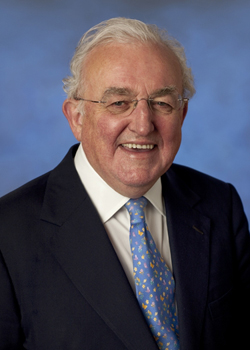
Lord Griffiths is the Chairman of CEME. For more information please click here.
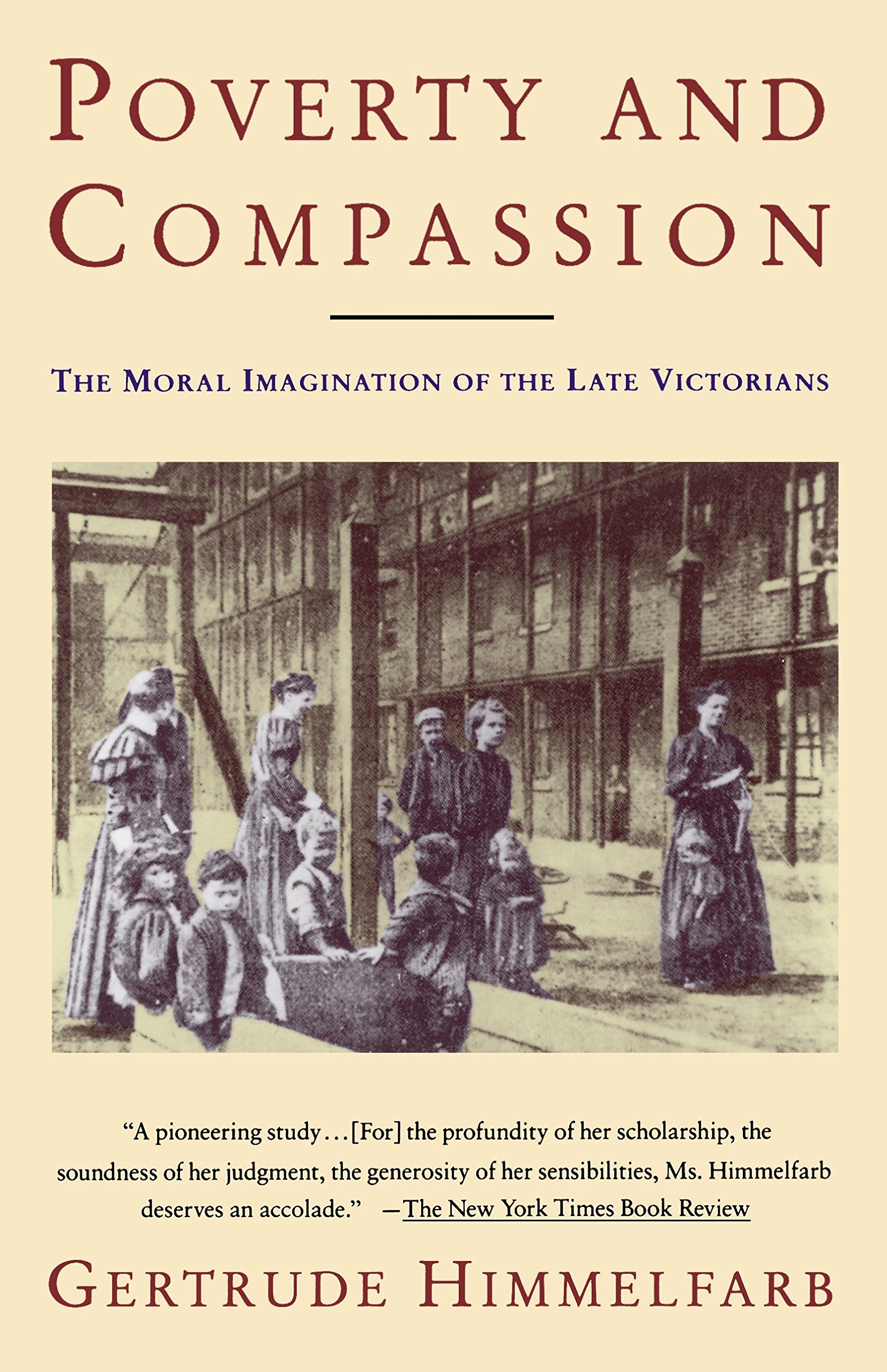
Gertrude Himmelfarb was married to the late Irving Kristol and together they formed a formidable intellectual partnership in the reassertion of conservative ideas. Himmelfarb, a historian, in this book, brings to the table the debate around poverty in Victorian England. The book was first published in 1991, but represents an important strand of thinking and, indeed, of methodology.
One of the many complexities in the polarisation of political and public discourse is that it becomes impossible to have a rational discussion or debate without being compartmentalised into one position or another. We seem to have lost the ability to debate ‘ideas’. Gertrude Himmelfarb’s intellectual history of the ideas, notions and responses to poverty in the Victorian era is broad-reaching, incisive and gripping in both scope and content. The reassertion of the history of ideas – from all parts of the spectrum – would be a great service in our public life.
The great strength of the book is in its breadth. Himmelfarb’s twenty-three chapters range from the work of the social statistician, Charles Booth, to the Salvation Army’s, William Booth, from the rather worthy Charity Organisation Society, to Toynbee Hall and the settlement movement. Himmelfarb comes into her own in dealing with the moral ideas of poverty and compassion and how the Victorian era understood these concepts and responded to them both practically and intellectually. So, her assessment of, and interpretation of, the statistics of poverty and what that meant, the literature, the personalities, religious and moralistic responses and the impact of the rise of socialism in various guises are all central features of her exposition of the idea of poverty.
Himmelfarb puts this Victorian world under a microscope. A key building block is that “the moral imagination of the late Victorians…was neither sentimental nor utopian” (page 4). This is rather startling as many might think that the very epitome of Victorian ideas was indeed sentimentality. True compassion, she argues, is actually doing good rather than feeling good. The true Victorian philanthropist was moral and humane, interested in the good, not only of the self, but of society, and was shaped by ends that were realistic rather than utopian. This principle allows Himmelfarb to appreciate the extensive variety and range of responses to poverty in Victorian England, and we should thank her for that.
The book is divided into five parts, each with a number of chapters.
Part 1, “The Arithmetic of Woe”, is a fascinating introduction to the social statistics of the age, the complexity of poverty in late Victorian London, and the particular issues of housing and employment. Conditions had unquestionably improved from the mid-Victorian period and in the discussions around the Bitter Cry of Outcast London, Himmelfarb makes the point that the debate is not whether the ‘abject poor’ had dreadful housing conditions but whether this was generally true of the working classes; indeed, as Lord Shaftesbury’s evidence to the Royal Commission of 1884 suggests, this may indeed not have been the case. Himmelfarb suggests that the Royal Commission failed because it did not deal with this distinction and hence, she argues the question of housing became a social rather than a moral problem and, hence, “a legitimate subject for state intervention” (page 67).
Part 2, “Life and Labour of the People in London” develops these themes further including consideration of the work of the social scientist, Charles Booth. In this section Himmelfarb also reflects on some the religious influences upon the debate as well as dealing with what she refers to as “special subjects”, including women and children.
Part 3, “The ‘Time-Spirit’: Charity and Philanthropy”, introduces the Charity Organisation Society and the development of benevolence into a science of charity, or at least, as the name implies, its systematic organisation. In this part we also see some of Himmelfarb’s breadth with reflections as diverse as upon the Salvation Army and Toynbee Hall. Himmelfarb argues that if “the mission of the Charity Organisation Society was to organize and professionalize philanthropy, that of Toynbee Hall was to humanize and ‘civilize’ it” (page 243). All of this reflects Himmelfarb’s neo-conservative interests in practical outcomes alongside the debate of ideas.
Parts 4 (“Social Philosophy and Social Reform”) and 5 (“’We Are All Socialists Now’”) returns us to the nature of social, economic and philosophical debate at the end of the Victorian era.
Essentially, Himmelfarb’s argument is that a proper response to poverty is to recognise that it is a moral question. By moving away from dealing with abject need to the more general situation of the working class, the question of poverty is removed from being a moral problem to a social or political issue. Consequently, the real questions are frequently not dealt with. She argues (capitals in original), that “the ‘DE-MORALIZATION’, as it were, of the problem of poverty was accompanied by a ‘relativization’ of the problem” (page 384).
The book cannot be described as an easy read but it is an engaging and wide-ranging one. Indeed, the book makes you think and I had to stop at several places to do just that, think about what I had just read and its implications. My only criticism is that she does not really deal to any extent with Evangelical Christian responses to poverty concentrating more on the development of Christian socialism, which is rather odd given that Himmelfarb was concerned with practical responses as well as theoretical ones. The Victorians are not presented as a solution to today’s problems, but on their own terms, speaking for themselves, in ways we may not have really appreciated because we read back our own presuppositions. She reminds us that poverty “is as protean and diverse as the remedies proposed for it” (page 388).
This is a fascinating book which I recommend. Our contemporary discourse would be much improved if we could debate these ideas, their breadth, diversity and their implications, across the traditional political divides, restoring the debate to its proper moral basis.
“Poverty and Compassion” by Gertrude Himmelfarb was published in 1991 by Vintage Books, New York (ISBN-13:978-0-67-974173-2). 475 pp.
 Dr Richard Turnbull is the Director of the Centre for Enterprise, Markets & Ethics (CEME). For more information about Richard please click here.
The Centre for Enterprise, Markets and Ethics (CEME) is pleased to announce the publication of Work as Enterprise: Recovering a Theology of Work by Richard Turnbull.
A PDF copy can be found here. Alternatively, the hardcopy version of the publication can be purchased by contacting CEME’s offices via email at: office@theceme.org
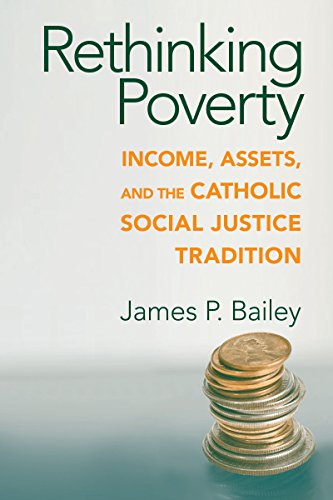
James P. Bailey is Associate Professor of Theology at Duquesne University. In his book entitled, “Rethinking Poverty: Income, Assets, and the Catholic Social Justice Tradition”, James Bailey explores the political, social, and economic reforms that are needed to promote the alleviation of poverty. As the title may suggest, the book also incorporates Catholic social teaching on this issue.
Although the book shares the same title as Barry Knight’s Rethinking Poverty, Bailey’s argument takes a markedly different approach. He starts from the premise that the role of assets and asset-building has been vastly undervalued in the development of public policy on poverty and addressing the needs of the most vulnerable in society. His central argument therefore is that poverty “must be conceived more broadly in terms of both insufficient income and deficient assets. A robust, effective, and morally adequate response to poverty must go beyond traditional income-enhancement strategies to include complementary efforts aimed at enabling asset development in the poor” (pages 1-2). The book is structured in five chapters and it would be useful to touch upon some of the main points in each.
The first chapter lays out the broader contextual framework for the lack and necessity of asset-building for the poor. Bailey presents two main paradigms: the asset and the income paradigm. He rightly argues that for too long the welfare state and poverty alleviation initiatives have been defined in terms of income – i.e. what ‘goes in’ to a household, and too little emphasis has been placed on what remains in the household – i.e. assets and savings. Bailey argues that the goal therefore, is “developing a more permanent and enduring remedy to poverty, […] distinguishing asset-building approaches from other policy initiatives over the last thirty or forty years” (page 13).
The second chapter looks at asset-building for the poor in light of Catholic Social Thought. Catholic teaching benefits from a rich tradition of thought and discussions on public issues and this shows throughout the chapter. For instance, Catholic teaching stresses the importance and virtues of ownership. From Pope Leo XIII to John Paul II there has always been an explicit defence of the right to private property and the expansion of private ownership across the social classes (page 27). Bailey also touches upon several key concepts in Catholic thought such as, human dignity (page 44), the social nature of the person (page 46), the common good (page 49), and human freedom (page 50).
The third chapter provides an interesting discussion on the relationship between assets and human capabilities. It starts from the Church’s premise that the dignity of the human being starts from a universal threshold of minimum material well-being – one that includes not only income, but also savings and assets (page 61). Here Bailey rightly points out that public policy that is asset driven is less about addressing short-term needs and more about developing an ability to withstand economic shocks in the long-term. This in turn enables households to “…secure adequate housing, to provide a stable household environment for one’s children, to benefit from educational attainment, to be able to devote one’s time and energy to a chosen vocation or speciality, to have the security take risks for those things which one values” (page 83), and the list goes on.
Chapter four looks at historical narratives of ‘asset discrimination’. From the onset Bailey affirms that “…the Church’s social teachings have rejected the idea that optimal economic conditions will be obtained so long as the market is left to its own devices; economies are not governed by impersonal and unalterable laws but are, rather, human institutions which need to be subordinated for the good of all” (page 85). This will no doubt prove to be a highly contentious issue for many readers. The remainder of the chapter builds upon the historical narrative of asset discrimination driven by race and class segregation in the US.
The fifth and final chapter concludes with strengthening the case for asset-driven public policy in combating poverty. Asset building should be a shared goal throughout society and not just reserved for the middle and upper classes. Bailey’s final two chapters are rather US-centric. He addresses US initiatives such as the Individual Development Account (IDA) and explores steps toward passing asset-driven policy through Congress.
To conclude: James Bailey’s Rethinking Poverty is a welcome addition to the body of literature that promotes the alleviation of poverty. It is clear and for the most part, well-researched. But its true strength lies in the rarity of its thesis – there has not been much literature that so clearly and explicitly argues for asset building as a means to fighting poverty. No doubt readers may take issue with some of Bailey’s more ideologically inclined statements (mostly found in chapters four and five), but for its larger message alone, the book is certainly a worthwhile read.
“Rethinking Poverty: Income, Assets, and the Catholic Social Justice Tradition” by James P. Bailey was first published in 2010 by the University of Notre Dame Press (ISBN-13: 9780268022235), 192 pp.
 Andrei Rogobete is a Research Fellow with the Centre for Enterprise, Markets & Ethics. For more information about Andrei please click here.
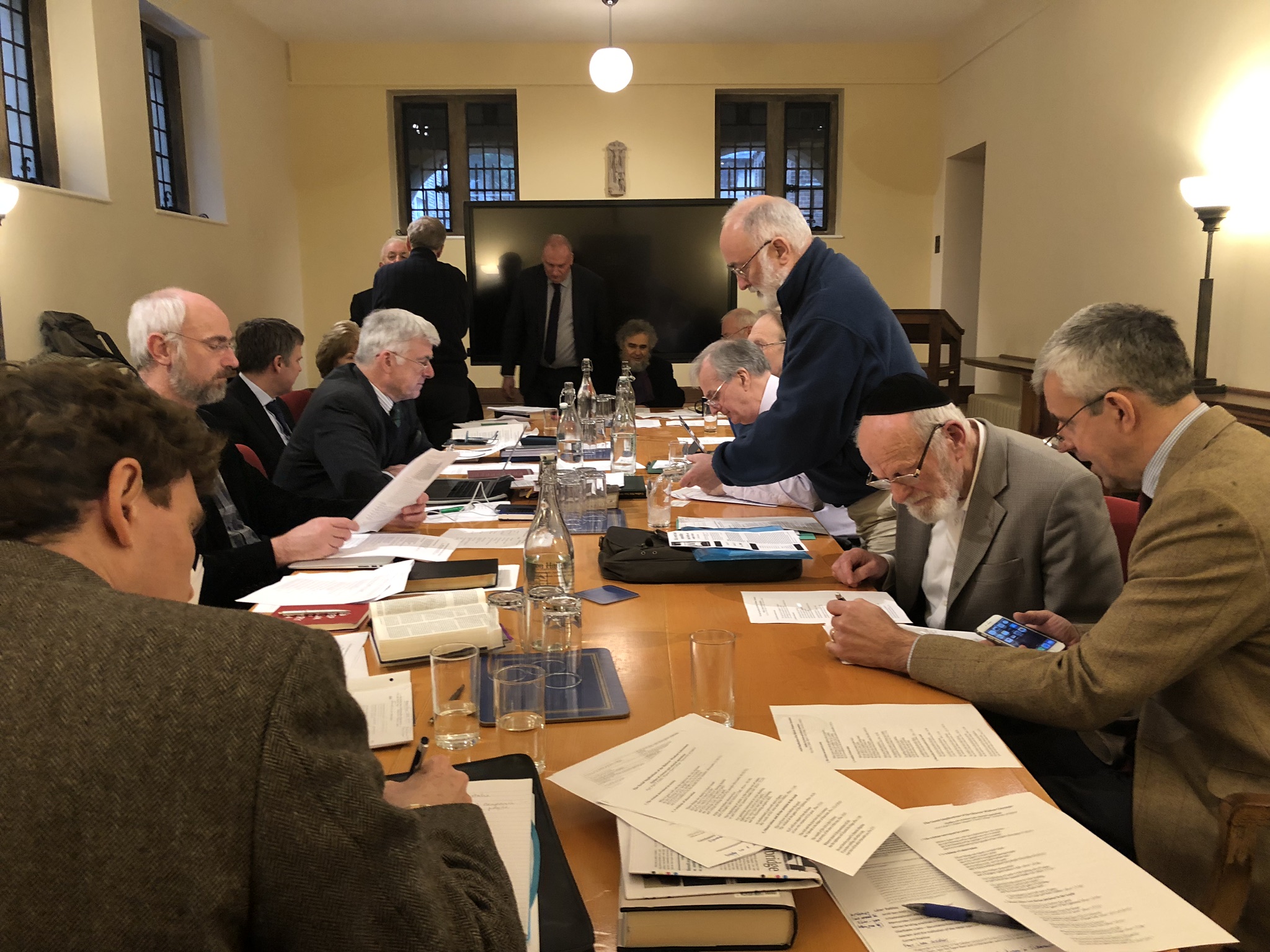
The Centre for Enterprise, Markets, and Ethics (CEME) was pleased to host a roundtable discussion on the 16th January 2019 on “The Social and Economic Teaching of the Hebrew Scriptures“, held at Campion Hall (University of Oxford).
Speakers included, among others, Professor Paul Fiddes, Revd Professor John Barton, Rabbi Dr Norman Solomon, and Revd Dr Ben Cooper.
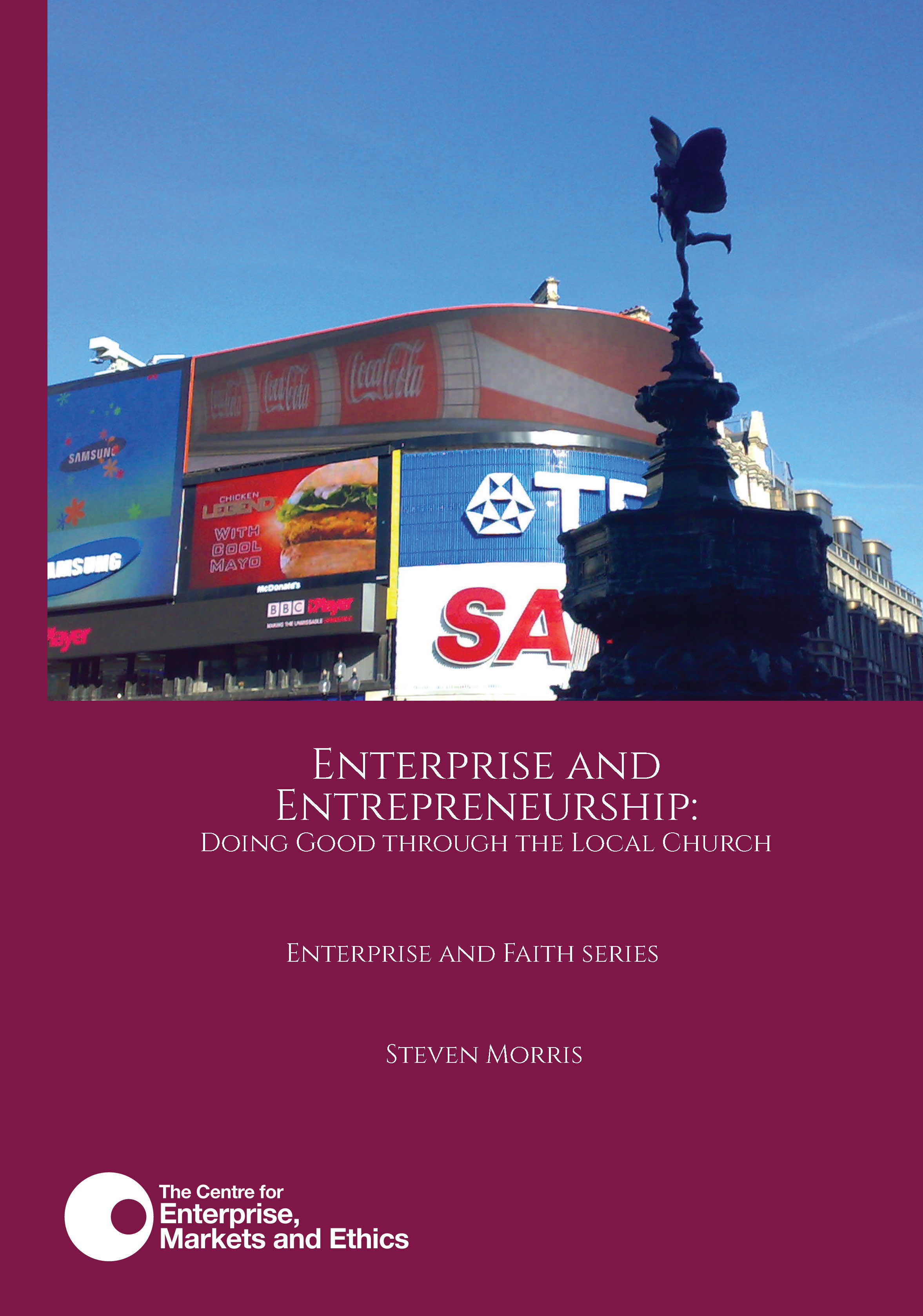
The Centre for Enterprise, Markets and Ethics (CEME) is pleased to announce the publication of Enterprise and Entrepreneurship: Doing Good Through The Local Church by Steven Morris.
The publication can be downloaded here. Alternatively, a paperback copy can be ordered by contacting CEME’s offices via email at: office@theceme.org
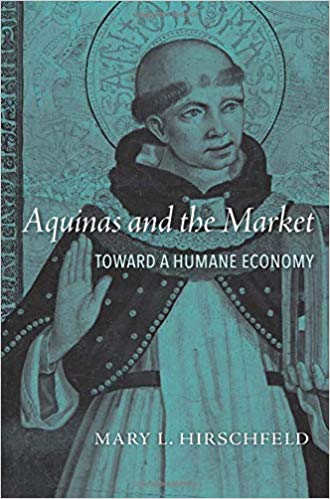
Aquinas and the Market: Toward A Humane Economy is a pleasant surprise because it takes both economics and theology very seriously. There are probably not many scholars who have doctorates in economics (Harvard) and theology (Notre Dame) and even fewer who can write an academic book that is almost entirely free of academic jargon. It is readable without oversimplifying the subject matter. Sensible and profound at the same time, Mary Hirschfeld’s work may be in a class of its own.
Even more surprising is that she began her career interested in feminist economics, admits to having learned “the wisdom of conservative and libertarian thought even though [she] never fully embraced it” and eventually converted to Roman Catholicism. Her dissertation director at Notre Dame, Jean Porter, steered her away from “pure theology” and towards theological, specifically Thomistic, economics.
Most theologians and philosophers tend to look down upon economics, but not Hirschfeld. She attempts to create a dialogue between theology and economics, something many religious leaders say is necessary but are themselves incapable of doing. How many of them would be able to see the economic downsides of rent control and the minimum wage as Hirschfeld does? The trick is in taking into account the objective reality of God and the subjective preferences of human beings expressed in the everyday operations of the marketplace.
Hirschfeld’s interest in feminist economics and especially theories of household consumption may have helped her bridge this divide. It is somewhat of an intellectual mystery how the ancient and medieval study of household management become the dominant, mathematical-laden social science of the modern age. While Christian concern for the human person and individual conscience had much to do with it, it is not a sufficient explanation.
If there is one shortcoming of this work, it is a neglect of the mediating ground between theology and economics, i.e. politics. Neither religion nor business is a completely private or individual affair; each takes place within a social context that at least implicitly aims towards some sort of common good. Hirschfeld is well aware of the need for a hierarchical ordering of goods in any kind of Thomistic economics. It seems unlikely that such an ordering can take place without some kind of authority behind it. Who this authority would be and how it would govern are matters of politics rather than economics.
While theologians such as Thomas emphasized the need for order, modern political philosophers such as Machiavelli, Hobbes and Locke blamed them for its opposite and failing to deliver earthly peace and prosperity. Adam Smith described feudalism harshly in order to promote what he called the commercial society based on some combination of self-interest and sympathy. The Reformation and Counter-Reformation led to religious-political conflicts that eventually created the conditions for modern pluralism and tolerance.
Absent political mediation, the theological order of Thomas cannot coexist with the spontaneous order of the marketplace. Liberal democracy offers such one such form of mediation but, as our contemporary populist movements reveal, functions in an increasingly unsatisfactory way. As an economist, Hirschfeld knows the problems of command-and-control economies; as a feminist, she is a proponent of liberty and equality. One may ask if she does not also harbour a certain longing for a more aristocratic society that would be in tension with her liberal democratic preferences.
Like all modern rationalists, the economist tends to aim for mathematical precision precisely because theology and philosophy are so disputatious and politically utopian; the economist favours the practical over the theoretical. Modern economics has done much to raise material living standards all over the world, failing only where it has not yet been implemented. Such progress is real and ought to be celebrated, as Hirschfeld does.
Economists, however, cannot avoid theorizing in order to be able to predict human behaviour and influence public policy. They start to create “rational choice” models that are as abstract as those developed by the Scholastics minus the metaphysics. These models neglect virtue ethics as unrealistic if not hypocritical, never asking if some good did not come from at least pretending to be good. We are materially well-off but spiritually destitute. The result is what Leo Strauss called retail sanity and wholesale madness.
Hirschfeld the economist is aware of the costs as well as the benefits of modernity. Her theological training has given her the language and concepts to address these concerns. A convert’s faith makes her realistic about what may be possible here on earth and what is not. It is very rare to see such common sense and deep learning in one place.
“Aquinas and the Market: Toward A Humane Economy” by Mary L. Hirschfeld was published in 2018 by Harvard University Press (ISBN-10: 0674986407). 288pp.
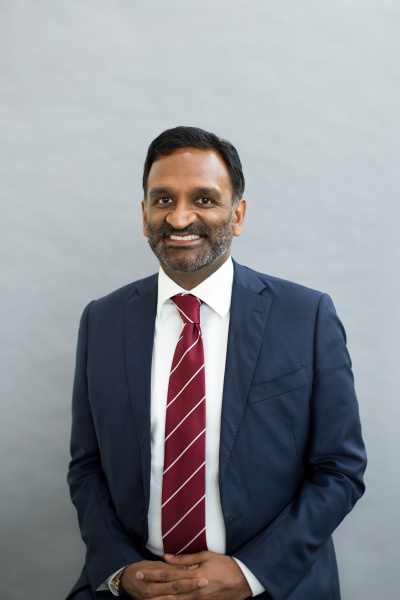 Kishore Jayabalan is Director of Istituto Acton, the Acton Institute’s Rome office. For more information about Kishore please click here.

This is a transcribed lecture given as the Morlan Pantyfedwen Annual Lecture 2018.
I count it a great privilege to be invited to give this lecture not least because of the number of distinguished clergy, theologians and historians who have given it over the past half century. The idea for the subject of the lecture was the seeming incompatibility of being a Christian and for five and a half years the Head of Margaret Thatcher’s Policy Unit at 10 Downing Street, advising the Prime Minister on all domestic policy issues, including those associated with the advocacy of a market economy. The original suggested title was ‘Mrs Thatcher, Zacchaeus and Me’. I tried it out on two undergraduates here at Aberystwyth University but neither of them knew who Zacchaeus was! Hence the current title.
Before tackling the subject however I feel I owe it to you to provide some personal background.
While at Dynevor Grammar School in 1959 I stood as the Labour candidate in the schools mock election. As the school motto was ‘nihil sine labore’, mine was “nothing without Labour!” I went to the London School of Economics primarily because of its political left-leaning reputation and after graduating joined the staff and specialised in monetary economics and competition and regulation in banking. In my twenties I voted twice for Harold Wilson, the Labour Prime Minister.
Throughout the nineteen sixties I became disillusioned with the Labour government: first because of the failure of its economic policies, the devaluation of sterling, the national plan, neglect of monetary policy, failure of incomes policies, nationalised industries poor performance and high taxation, and second, because of the cavalier way in which the Home Secretary, Roy Jenkins, radically reformed social policies with seemingly scant regard to their unintended consequences.
The momentum driving change in the late 1960’s seemed to me to be thoroughly secular. Economic issues were increasingly couched in Marxist categories of class conflict, exploitation and state control in which the performance of the economy was perceived as a zero sum game. If some benefited it was of the expense of others. By the late sixties I had become an unofficial adviser to Harold Lever, a member of Wilsons Cabinet. One day I put the question to him “If you were a young man entering politics today which party would you join”, to which he replied with remarkable candour, “probably the Conservative”. I then fought the two general elections in 1974 as a Conservative candidate and informally advised Margaret Thatcher, Geoffrey Howe and Keith Joseph in the years before joining the No.10 Policy Unit in 1985.
Over this time and as a result of teaching and research in the field of economics I became convinced of the value of a competitive market economy in which prices and wages were free to move, of private enterprise rather than state enterprise and of a strong but limited regulatory framework for business. I came to realise that a Keynesian prescription of deficit spending was relevant to an economy suffering a great depression or a severe deflationary shock, but that a medium term financial plan, involving control of the money supply along with rules for fiscal policy, was crucial to ensuring a low rate of inflation and full-employment in more normal circumstances. Given the serious inflation the UK faced in the mid-1970’s (an annual rate of 27% in 1974) it was refreshing to find Margaret Thatcher, Keith Joseph and Geoffrey Howe prepared to break out of the post-war consensus of a mixed economy and propose a serious alternative agenda.
It took me longer however to realise that among some of those championing freedom of choice and free enterprise were libertarians who were just as secular and ideological as those on the Left of politics. This particularly struck me at a meeting of the Mount Pelerin Society in the early 1970’s in a fierce debate between Milton Friedman, Friedrich von Hayek and Irving Kristol on the difference between a free society and a just society. Friedman and Hayek argued that we knew what a free society was but we did not know what a just society was, while Kristol claimed that a free society was not sustainable unless underpinned by some conception of social justice.
This form of economics was extended by Gary Becker from the University of Chicago. One day he was running late for a departmental meeting and desperate to find a parking space. He took a chance, weighed up the economic costs and benefits – the probability of being caught, fined and towed away – and decided to park illegally. Reflecting later on what he had done he realised he had made a perfectly rational cost-benefit calculation without any reference to a concept of morality. The decision to be honest or not was based purely on economic considerations. Morality was irrelevant.
He then extended this approach to explore the impact of economic incentives in areas such as crime, divorce, fertility, family, migration and discrimination. The role of values and social custom in economic life were impounded under ceteris paribus (other things being equal). In other words ignored. Once more morality was irrelevant.
The point I wish to make is that my disillusion with libertarianism and a reductionist economic approach to analysing social problems was because of their incompatibility with the Christian faith. As a result I found myself drawn increasingly to distinguished American academics and commentators such as Peter Berger, Irving Kristol, Michael Novak and Richard John Neuhaus, all of whom were convinced of the merits of a market economy but made the case within the framework of a traditional Judaeo-Christian approach.
Today the issues facing us are different from what they were in the 1970’s.
There is an increasing sense that liberalism and with it economic liberalism is in crisis, if not meta-crisis. We are still living in the shadow of the 2008 financial crisis and the public have not forgiven banks for privatising the huge profits made in the boom years but socialising the losses when they failed and had to be bailed out by tax payers. Ever since the industrial revolution there have been business cycles, trade cycles, stop-go cycles and financial crises. They were painful but nothing like the financial crisis of 2008 which nearly led to global banks closing their doors as happened in the US in the early 1930’s.
After ten years of austerity speculation is now rife as to when the next crisis might occur, with no shortages of possible catalysts, such as the faulty structure of the Euro, (the result of creating a monetary union without a fiscal union), the Italian budget deficit, the scale of global debt, the huge deterioration in the standards of corporate lending and the escalating trade war between China and the US.
Subsequent to the crisis global banks have been fined more than $250 billion for wrongdoing but few bankers have ended up in jail. Even after the crisis there have been new scandals involving interest rate fixing in Libor markets, price fixing in foreign exchange markets, the widespread abuse of selling payment protection insurance (PPI), (which has cost the four leading UK banks fines of £37.5 billion), and the scandal in the US of the opening of 3.5 million ‘fake accounts’ by staff at Wells Fargo bank.
Another issue facing liberalism is growing inequality in the distribution of income and wealth.
In the UK:
More generally:
A further challenge in modern capitalism is the pace of technological change. Whether through automation, robotics or artificial intelligence, technology is driving innovation and change in all sectors of Western economies. This creates new products and has potential to raise productivity more generally. However, it also leads to what Joseph Schumpeter described as a process of “creative destruction” which has potentially huge implications for existing jobs. Technology will create new jobs but destroy others. On present evidence it is difficult to predict its net ultimate impact but whatever its final impact it creates great uncertainty over future employment. Large technology companies such as the FAANGs – Facebook, Apple, Amazon, Netflix and Google – have raised a number of public policy issues: potential monopoly power, failure to pay fair taxes, loss of privacy, risks of data mis-management and given the amount of time children spend using machines, the impact of technology on society,
A further concern underlying the crisis is the charge that as a result of Reagan and Thatcher’s economic policies there has been a fundamental change in our culture. Michael Sandel a Harvard academic has expressed it as a move “from having a market economy to being a market society” (p.17). Over these years the concepts used in the market place such as revenue, cost, profit, return, productivity and bonus have been extended into areas such as health, education, the police, the provision of blood, family life, art and so on.
The change is that in the process of commercialising a service there has been a greater emphasis on audits, targets and league tables which has led to a change in the nature of the services themselves: a loss of informal conversation between parents and teachers, between doctors and patients, between police and the public, a decline in altruism, mutual obligation and trust and of great importance a devaluation prestige of public service. The greater emphasis placed on financial incentives the greater the danger that they crowd out moral concerns.
In political terms liberalism and the international rules based order which has existed since 1945 has been threatened by the rise in populism in Europe and the US, the Brexit vote, the growth of the extreme alt-right, the growing conflict between China and the US and the disregard for the trading rules of the World Trade Organisation: all of which only add to a sense of crisis.
Against the background is there anything distinctive that the Christian faith can provide?
At a personal level I should declare an interest. While I was brought up in a religious family, it was not until I reached my teenage years that I made a decision to affirm the Christin faith for myself. This is something which has only grown stronger over the years and has been the major reason for my interest in the relationship between the Judaeo-Christian faith and economics, politics and society. The home in which I grew up was shaped by a pietistic evangelical tradition and because of its geographical proximity to the source of the 1904 religious revival in Wales was strongly influenced by the revival itself. This meant that when I started my professional career I lived in two separate worlds – the world of academic economics, social science and the London School of Economics and the world of the church and para-church organisations.
The key point I wish to make is that I had not attempted to integrate my faith with my approach to my academic discipline of economics. They ran on parallel lines. Without appreciating it I had been heavily influenced by eighteenth century deism (Adam Smith), nineteenth century utilitarianism (John Stuart Mill) and twentieth century philosophy of science (Karl Popper) but without ever really trying to work out how they related to my faith.
A crucial meeting for me was attending a dinner party hosted by the Chancellor of the University of Rochester, Allen Wallis, in the early nineteen seventies in which the key guests were Jacob Javits, Senator for New York and Milton Friedman, Nobel Prize winner from the University of Chicago. Towards the end of the evening Friedman challenged me with the question “with your interest in religion you remind me so much of Frank Knight (who had been the founder of the Chicago School and Friedman’s mentor, but brought up in a deeply religious family). How is it that you as a Christian can support the market economy when Jesus said it was easier for a camel (the largest animal) to go through the eye of a needle (the smallest aperture) than for a rich man to enter the Kingdom of God”. I mumbled some reply but his question challenged me and sent me on a long search into the text of scripture and theology, in which I am actively still involved.
In this search the first thing I discovered was that the Christian faith is a world view.
It is not just about Jesus and me. Or doing good deeds. Or regularly receiving the sacrament of holy communion. Or just attending church or chapel in the way one’s parents and grandparents did. It is about seeking to answer the most basic but difficult questions of life, Who are we? Why are we here? What is the purpose of life? The Christian answer to these questions is provided for us in the context of a story which Leslie Newbiggin captured well by stating that: “the way we understand human life depends on what conception we have of the human story. What is the real story of which my life is a part?”. The biblical story is a meta-narrative. It deals with origins and destinies. It encompasses creation, fall, redemption and restitution. It involves real people, in known geographies and at specific times in history. It is a story with a beginning and an end. The story helps us understand the way the world is, who we are and what is our place in it. It is a unique story and crucially different from other world views.
The next thing I discovered was that although the Christian faith is a world view it is not a blueprint for a modern economy or political system.
It does not provide a detailed plan for the policies that a Prime Minister, Chancellor of the Exchequer or a Secretary of State for Work and Pensions should pursue and it is certainly not about building a utopia through political action. However it does provide insights into many of the different perspectives of capitalism and socialism which deal with the nature of work, fairness and social justice, the purpose of economic life, the temptation of money, the responsibilities of ownership, the priority of helping the poor to name but some. And it offers a direction of travel.
For example, to my surprise I found that the Hebrew Scriptures contained a wealth of material on these subjects. I suppose it is natural that our primary focus as Christians is on the life and teaching of Jesus in the gospels. In doing so however we frequently fail to take into account the Jewishness of Jesus himself. He was born into an orthodox Jewish family, circumcised on the eighth day, presented in the Temple, taught the Hebrew scriptures in the synagogue and attended congregational worship. He had a complete grasp of the Old Testament and summed up Old Testament teaching in two precepts: first and greatest, love the Lord your God with all your heart, soul and mind and second, love your neighbour as yourself (Matt 22:37-39). In his greatest address, the Sermon on the Mount, he stated categorically “Do not think that I have come to abolish the Law and the Prophets (that is Old Testament teaching). I have come not to abolish them but to fulfil them”.
The Genesis narrative of creation offers us a profound understanding of the nature of our world and ourselves; the meaning of work, creation of wealth, stewardship of planet earth, as well as the source of our failure to live up to our ideals. The Mosaic law sets out Gods intention for how his chosen people were to live and organise their political and economic life. Although the establishment of the law is located in the specific history and geography of the period, the political economy of Israel contains statements of moral principles of much wider relevance: the equitable allocation of land to each family as they entered the Promised Land, the prohibition of usury (Deut: 23:19,20), the gleaning laws which prohibited harvesting the edges of fields to allow those without access to property to benefit, (Deut: 24:19-21), the Sabbath as a day of rest, the obligation as a matter of justice to meet the needs of the widow, the orphan, the stranger, the fatherless and the poor and in the year of Jubilee, the freeing of slaves, the forgiveness of debt and the redistribution of land to its original owners. (Lev.25:9,10). It is interesting to reflect how much of this we have taken on board in our society through imposing price caps on payday loans, Sunday trading laws, the protection of property rights and the welfare model in the Pentateuch as an inspiration for the modern welfare state.
By contrast the Wisdom literature of the Old Testament and the Apocrypha offer us practical wisdom on how to manage the challenges of daily life: who to do business with and who not to do business with, the consequences of recklessness, pride and laziness, the virtues of honesty, diligence and hard work, the secret to successful relationships and the source of wisdom itself – “the fear of the Lord is the beginning of knowledge” (Prov 1:7). The most remarkable insight of the prophets is the way at different times in history and in different circumstances they nevertheless trace the root cause of economic and social crises to moral decline and the abandonment of religious faith.
In the gospels Jesus announces that he has come to establish a Kingdom, the Kingdom of God. This is God’s new society, which was wholly different in character to the kingdoms of his day, in which kings lived in wealthy places. In his parables he sets out the danger of materialism. By naming money as Mammon he elevated it to the status of a deity whom people worshipped. In the Acts of the Apostles and the Letters written to individual churches, the early Christian church is portrayed as a charismatic community serving the poor but at the same time suffering from all of the frustrations which characterise our fallen world. In the Revelation to John, the final grand denouement of the human story is set out in graphic terms in which the new Kingdom Jesus established finally realises its fulfilment.
I also discovered a third thing. There was no point in trying to re-invent the wheel. The challenge was how to use it.
Over the last two millennia Christians have wrestled with these issues: the early church fathers, Augustine, Thomas Aquinas, Luther, Calvin and the reformers, John Wesley and Methodists. In the late nineteenth and first half of the twentieth century Anglican social thought associated with Scott-Holland, R.H.Tawney (who incidentally taught at the London School of Economics) and Archbishop William Temple among others, had a major influence on economic issues. Temple’s short book Christianity and Social Order, published in 1942, and interestingly with an acknowledgment in the preface to Mr.J.M.Keynes, was a statement that the whole of economic and social policy should be founded on the Christian faith. The book was hugely influential and a major inspiration for the post-1945 welfare state. More recently Anglican social thought has languished even though Professors Millbank and Pabst in their book The Politics of Virtue have made a major contribution in setting out the contemporary case for ethical socialism.
However today I believe there are two leading approaches to a Christian world view.
One is in the tradition of the Reformation, of Luther but especially Calvin, and more recently of Abraham Kuyper. He was a pastor in the Dutch Reformed Church, experienced a remarkable spiritual experience, left the ministry, entered politics and became Prime Minister of the Netherlands from 1901-1905. He established the Free University of Amsterdam and outlined his approach to political economy in the Stone Lectures given at Princeton Theological Seminary in 1898. His influence has continued in the twentieth century through the writings of Francis Schaeffer, Cornelius van Til, Alvin Plantinga, Nicholas Woltersdorf, Charles Colson, Timothy Keller and the Welsh Nationalist historian, R.Tudor Jones.
The alternative approach is Catholic social teaching which in its modern form stems from the encyclical Rerum Novarum 1891 issued by Pope Leo XIII, which addressed itself to the “new things” which had emerged from nine-teenth century industrialisation and in particular “the misery and wretchedness pressing so unjustly on the majority of the working class”. Since then there have been numerous encyclicals dealing with economic and social issues, three of the most recent and influential being Centesimus Annus (1991) following the downfall of Communism by John Paul II, Caritas in Vertitate (2009) commenting on the financial crisis 2008 by Benedict XVI and Laudato Si’ (2015) dealing with the environment by Pope Francis.
Both these approaches have profoundly influenced my thinking and I believe that over the last few decades there has been something of a convergence between them even though significant differences remain. Based on biblical teaching, theological reflection and my own experience in academia, banking, business and government I believe there are certain principles which are at the heart of a Christian world view and of great relevance to current political, social and economic issues, even for those who may not share our religious beliefs.
In the poetic narrative of creation in Genesis, there is the ringing declaration,
“God created individual mankind in his own image, in the image of God he created him; male and female he created them” (Gen 1:27)
Unlike the rest of the created order human beings have a transcendent dignity because they alone are created with a divine likeness, imago dei. The biblical text does not define the nature and extent of God’s image but the context shows God as purposeful, holy, rational, creative and loving. This God-like image is true not just of some individuals, the wealthy, the talented, the powerful, the glamorous, celebrities. It is equally true of the poor, the homeless, drug addicts, the abused. It includes each individual regardless of race, gender, ability, wealth, lifestyle or background. Because each human being is a child of God, a person loved by God and someone for whom Christ died, then each person has infinite dignity regardless of their economic contribution to society.
The Hebrew Scriptures stress the notion of human flourishing, a life of happiness and contentment, a full life, a life lived well. The wisdom literature which we referred to earlier explores this in some detail. Incidentally a similar idea is found in Aristotle’s Nichomachean Ethics when he uses the word eudaimonia.
It is because of the importance which scripture attaches to human flourishing that it must be a yardstick by which to judge economic life. The Christian faith is not about the integrity of a spontaneous order or an idealised market economy. An economic system should be judged pragmatically by whether it serves people and not by whether people are being made to serve the economic system: in this context particular concerns for me are the increase in stress and mental illness in work, the contractual status of employment in the gig and sharing economy, gender imbalance in the work place and work-life issues.
This understanding of the person is unique. It is the basis for human dignity and human freedom, religious, political and economic. It is the foundation of religious liberty, parliamentary democracy and the market economy. The God who created us endowed us with the freedom to choose and as a consequence accept responsibility for the choices we make.
One aspect of human flourishing is the creation of wealth. The natural world with its wealth of resources, diversity and beauty is God’s gift to human kind. For the people of Israel this meant,
“a good land – a land with streams and pools of water, with springs flowing in the valleys and hills; a land with wheat and barley, vines and fig trees, pomegranates, olive oil and honey: a land where bread will not be scarce and you will lack nothing; a land where the rocks are iron and you can dig copper out of the hills” (Deut. 8:-79).
Wealth was something intrinsically good not bad. We were not created to live in poverty, eking out a meagre existence and living off bare necessities. We have been delegated to have both dominion over God’s creation as well as stewardship for its sustainability. Mrs Thatcher used to remind those of us who worked for her that we were tenants of God’s creation with a full repairing lease. We are leaseholders but we are not owners.
It is important in this context to recognise that Jesus never condemned wealth as such. He was born into a household which had a small family business. He himself identified with wealth creation through work. He dignified manual labour as a carpenter, a word translated from the Greek tekton which could also mean mason, cartwright and joiner all rolled into one. He enjoyed the hospitality of friends and mixed with all classes of people including the wealthy.
When He taught “you cannot serve God and Mammon” he was not condemning wealth as such but warning that money had the power to crowd out the spiritual life by elevating it to the status of a god. For an attractive wealthy young politician he met, the demand to sell all his possessions before following Jesus was more than he could take.
The reason I stress a market economy is because I believe it is more compatible with Judaeo-Christian teaching than the only serious alternative on offer, namely an economy in which the state is the engine driving economic activity. In the eighteenth century this took the form of Mercantilism. In the nineteenth century it produced the Communist Manifesto and Marxist economics. In the twentieth century it resulted in the wholesale nationalisation of companies and indicative planning by governments. In the twenty first century the danger is that it will take the form of vastly greater government regulation of private business and markets which will blunt incentives and place a mortmain on enterprise.
One element of compatibility between a market economy and Christian faith is that it offers the greatest scope for each person to make their own decisions regarding what job to aim for, where to live, how much training to undertake, how hard to work, how much risk to take on with a mortgage and family and so on. In other words it offers great personal freedom as well as the responsibility which accompanies it.
Next, markets cannot exist without well defined property rights and a rule of law which enables contracts to be made and enforced within a legal system which is independent of politicians. The rule of law protects individual’s liberty against the arbitrary power of the state. Well defined property rights mean that individuals and families are able to prosper by retaining the rewards they earn from work and risk taking.
Third, markets work with the grain of human nature. Every economic system, feudalism, slavery or communism, has had at its core an implicit anthropology. It makes assumptions regarding human motivation, the nature of a human being, the place of the individual in society. Feudalism, slavery and communism were all command and control systems. Their basic assumption was that people needed to be coerced into working, disliked taking responsibility and longed for security. By contrast, one reason markets are successful is that they enable the creativity, and enterprise of individuals from all kinds of backgrounds and abilities to flourish.
Adam Smith is widely considered the father of the modern market economy. In making the case for a market economy Smith postulated a certain view of the human person. In his early work, he stressed that each person was endowed with “certain moral sentiments” such as prudence, sympathy, benevolence, self-control, charity, friendship, generosity, and gratitude. However, when it came to explaining the growth in the wealth of nations he mentioned two further characteristics: “the propensity to truck, barter and exchange one thing for another”, so that “every man…lives by exchanging, or becomes in some measure a merchant”; and the “desire of bettering our condition”, which “comes with us from the womb and never leaves us till we go into the grave”.
If there is a case to be made for a market economy it must be made in the world as we find it, warts and all, a world inhabited by sinners not saints, rather than in an ideal world of our imagination. The Christian faith stands outside of every economic system and is a benchmark by which to judge each. In the same way that there is a Judaeo-Christian basis for the rule of law and the institution of government, even when in practice it may be far from ideal, as was true of the Roman Empire in New Testament times, there is also a Judaeo-Christian basis for an economy based on the freedom to exchange and trade, to own property, to save and invest, and to set up new businesses, even when such an economy may be far from the ideal.
Let me stress that I am not blind to the fact that market economies have faults. They are prone to cycles in which downturns involve costs and distress. They can permit cartels, oligopolies and monopolies to flourish. They can create unacceptable inequality in the distribution of income and wealth. They can focus on the short term and neglect the long term. They can under provide “public goods” such as basic scientific research and public health. Harmful environment practices may not be properly restrained. Because of this a market economy needs the framework of an effective government, an independent judiciary and regulation of markets and companies which protect consumers and workers.
Finally if people are serious about creating prosperity as a way to lift people out of poverty, the market economy is the only economic system we know in history which has produced mass flourishing. No other system comes anywhere close to it.
When I first started studying economics in the early 1960’s the prevailing consensus was the mixed economy: markets were fine for items such as food, clothes, household necessities and luxury products but not for important things such as coal, steel, ship-building, gas, water, electricity, railways, airlines, all of which were in state ownership. There was no great enthusiasm for markets. Hayek, Friedman and the Institute of Economic Affairs were curiosities. The perception that markets were more effective than state ownership grew over time because of the contrast between the success and failure of East and West Germany, that of Hong Kong and China, that of North and South Korea, countries with similar populations and cultures but different economic systems. There was also the rapid take-off of the Asian tigers (Hong Kong, South Korea, Singapore and Taiwan), the dead hand of regulation in India and the poor performance of the public sector in the UK.
More recently in the last 40 years China has witnessed a staggering reduction in poverty and growth in prosperity, probably greater for one country than at any time in history. Most important of all is the record of market economies since the beginning of the Industrial Revolution in the late eighteenth century in raising the standard of living of their populations, accompanied by remarkable developments in education, health and life expectancy.
The Christian faith starts with the individual but it is not an ethic of individualism. It is about the flourishing of all individuals and the way we live as communities, whether in families, villages, towns, cities, work places nations. Catholic social teaching has expressed this as the pursuit of the common good and defined it as:
“the sum total of social conditions which allow people, either as groups or as individuals, to reach their fulfilment more fully and more easily”.
This is not simply the sum total of the good of each person, but viewed as a whole the good of all people and for each person the good of the whole person. Being fulfilled as a person means being in a relationship with others and doing things for others. The common good as the mutual flourishing of the whole involves economics, politics and society. It also involves a spiritual dimension as each person is constituted body and soul. Pope John Paul II emphasized the moral features of the common good as self-control, personal sacrifice, solidarity and the promotion of the common good itself. The common good is about inclusion – an inclusive economy, an inclusive society and an inclusive political system. It is never about exclusion.
Ever since Rerum Novarum (1891), the concept of the common good has made a priority of improving the condition of the poor. Most recently Pope Francis has stressed,
“We have to state without mincing words, that there is an inseparable bond between our faith and the poor. (48)…Each individual Christian and every community are called to be an instrument of God for the liberation and promotion of the poor, and for enabling them to be fully a part of society: this demands that we be attentive to the cry of the poor and come to their aid (187)”
Evangelii Gaudium (2013)
Kuyper was like Leo XIII passionate about tackling the condition of the poor. Their oppression angered him as he was convinced that God was on their side. “You do not honour God’s word, if you ever forget how the Christ (just as his prophets before him and his apostles after him) invariably took sides against those who were powerful and living in luxury and for the suffering and oppressed” (Markets and Morality, Vol 5. No.1, pg38) or again, “How entirely different things would be in Christendom if the preaching of Jesus were also our preaching and if the basic principles of his kingdom had not been cut off and cast away from our social life by virtue of over-spiritualisation” (pg. 38)
By drawing attention to hunger in modern Britain, the suffering caused by the transition to universal credit and the extent of modern slavery the common good lays down a standard. My own reservation is the extent to which it weakens individual responsibility. The modern concept of the common good, emphasising different interest groups, grew out of the corporatist movement of the nineteenth century with its roots in an idealised view of Medieval society. The result is that we think of society as made of distinct corporate identities – business, the city, trade unions, universities, the military and so on – rather than the individuals within the categories; and end up paying more attention to the views of the leaders of these entities than their members.
The way Kuyper thought about society was in terms of its different spheres: family life, fine arts, the university, science, trade unions, guilds, the church. Each sphere had its own place, its own identity and its own unique tasks. These organic spheres have autonomy or “sphere sovereignty” as he phrased it and needed to be kept separate and protected from excessive government interference: “The state must never become an octopus, which stifles the whole of life” (Stone Lectures). In this he was concerned because of the centralisation and consolidation of state power which was taking place in the unification of Germany under Bismark.
By cautioning the role of the state Kuyper still maintained that the state had responsibilities with respect to these spheres, to protect the boundary limits when spheres clashed, to defend individuals from the abuse of power and to levy taxes to maintain the unity of the state. In the regulation of business today government has a most definite role to play, but in other areas and especially the family, the extent and intrusiveness of government intervention, which has grown enormously over the past half century needs to be critically challenged.
Alongside the importance of sphere sovereignty is the Catholic emphasis on subsidiarity so that “higher” structures should not direct, control or take over “lower” structures. Subsidiarity is important because by preserving the dignity of individuals and communities it strengthens institutions of civil society. I believe that the devolution of government to Northern Ireland, Scotland and Wales within the UK, as well as further devolution of central government to local government, are successful examples of the principle of subsidiarity.
A market economy and a democratic political system cannot exist without a culture built around certain values. A market economy requires honesty, self-discipline, a sense of adventure, personal responsibility, prudence, hard work, saving for a rainy day. Without these values there will be less trust in economic life and markets will be derided as “crony capitalism”. These values will not be generated within the market economy. They may be reinforced in markets but their source lies outside of markets.
In the political sphere, political involvement and debate requires respect, civility and decency. Representative democracy must be seen to respect the decisions of the electorate. Politics must attract people of character concerned with the public interest. Politicians themselves, by their behaviour and the way they speak in public provide examples of leadership in public life. When this is debased, public life is coarsened, the political community fractures, people lose trust in political leadership and ultimately political life becomes a war of all against all. In the process public service is devalued. As in a market economy the values which enhance political life have their origin outside of politics.
What is the source of these values in business and public life? Mary Ann Glendon, a professor of law at Harvard Law School has described the institutions which generate these values as “seedbeds of virtue”. She identified among others, the family, school, community, religious congregations. I would add voluntary organisation. The growth of secularism and the “adversary culture” of the nineteen sixties have had positive benefits: the enhanced role of women, concern for the environment, challenges to hypocrisy, standards and stuffiness. Today, however, we are reaching a point of crisis through the rise in dysfunctional families, the growing prison population, and the inability of the school system to cope with the demands being made on it. Reversing the trend by strengthening the traditional family and the teaching of moral values in schools and churches, synagogues and temples will not be easy, but is an important challenge.
Let me now conclude.
I have tried to argue that the Christian faith is a world view which encompasses politics, economics and society. It is not a detailed blueprint for economic and political structures, but it provides us with principles which underline policies and a direction of travel.
One of the major lessons to emerge from the political economy of ancient Israel for me is the need for every family to have a stake in economic life. When people have a stake in society they feel enfranchised and take greater interest in its public life and its future. If capitalism is to survive it must be an inclusive capitalism which offers opportunities, an increasing standard of living for everyone and prosperity, but widely shared. At present this is not the case.
Jobs matter to people and provide a stake in a society. In the UK business has been successful in creating jobs with record highs for employment and lows for unemployment. By contrast, housing is a glaring problem. A generation of discontented renters is a recipe for social conflict. Many detailed proposals for building more houses and helping first time buyers exist, some of which were put forward in a House of Lords Select Committee on Economic Affairs Report last year, on which I sat. It is for decision makers to choose the way forward but for me the Christian imperative in this area is the need to take action now and create wider ownership.
Alongside wider ownership is the challenge of strengthening those institutions which are the seedbeds of virtue in our society. The family can be strengthened by empowering parents during pre-school years, creating a level playing field in taxation between mothers who do paid work outside the home and mothers who stay at home and are not paid and by supporting initiatives to increase social mobility.
Finally, the Christian faith is a living reality, not just a cultural heritage. Jesus promised that those who follow him would discover a new kind of life. When challenging his followers two of his most engaging metaphors were those of salt and light.
“You are the salt of the earth…you are the light of the world. A city on a hill cannot be hidden. Neither do people light a lamp and put it under a bowl. Instead they put it on a stand and it gives light to everyone in the house. In the same way let your light shine before men, that they may see your good deeds and praise your Father in heaven” (Matt 5:13-16)
I believe strongly that the renewal of political life and the raising of standards in business is intimately bound up with the renewal of the church. In view of the scandals of the Christian church and the increasingly secular nature of the world in which we live, people resent being preached at. They want first to see the deeds done by Christian people. By being salt and light in a thousand small ways Christians can earn the right to be heard by showing something of the vitality of a living Christian faith. This for me is the real alternative to both Capitalism and socialism.
Brian Griffiths (Lord Griffiths of Fforestfach) is the Founding Chairman of CEME. For more information please click here.
The past 200 years have seen a huge increase in aggregate global wealth, which has benefited the vast majority of people around the world. Conservative estimates suggest that average real wages have increased ten-fold and the increase in wealth has probably been considerably greater than this (perhaps thirty-fold or even a hundred-fold). Why has this happened? Why are we now so rich? This is the fundamental question that Deirdre McCloskey seeks to address in Bourgeois Equality, the final volume in her trilogy relating to bourgeois values.
Those who have not read it may doubt that we needed yet another book about “the causes of the Industrial Revolution”. Those who have read it will disagree. Its scope is breath-taking: in which other book about economic development would you find 20 pages of analysis of the novels of Jane Austen, two chapters relating to the historical change in the meaning of the word “honest” and its equivalents in other languages, a discussion of the economic impact of post-millennialism and comments on subjects as diverse as the philosophy of the mind and the economics of the temple systems of the Ancient Middle East? McCloskey is Distinguished Professor of Economics, History, English and Communications at the University of Illinois in Chicago and her inter-disciplinary approach to her subject is anything but conventional.
She begins by attacking almost all of the widely accepted explanations of what she calls “The Great Enrichment”: trade and export lead growth (whether or not accompanied by political domination); the accumulation of capital; consumer lead demand; the scientific revolution; the growth in modern institutions; and much else. The role of some of these things is dismissed in summary terms, often with a quotable quote. Other factors (such as property rights, the accumulation of capital and trade) are recognised as being, to some extent at least, necessary for economic growth but dismissed on the ground that they are historically commonplace. As McCloskey puts it, “Oxygen is necessary for a fire but it would be at least unhelpful to explain the Chicago Fire of October 8-10, 1871 by the presence of oxygen in the earth’s atmosphere” (page (xiii)).
In place of the normal list of explanatory factors, McCloskey puts “ideas”. The book is subtitled, “How ideas, not capital or institutions enriched the world” and McCloskey asserts that the key thing that changed in the period leading up to the start of The Great Enrichment was “ideology” (page xxii). Her claim is “that the initiating change leading The Great Enrichment was in words” (page 235) and she spends hundreds of pages defending this thesis. She argues that aristocratic values were replaced by bourgeois values (“The new ethic was of betterment, novelty, risk taking, creativity, democracy, equality, liberty, dignity”, page 279) and this led to the wave of innovation that she calls, “trade-tested betterment”, which directly resulted in The Great Enrichment, first in the UK and then elsewhere.
So is McCloskey’s theory simply Max Weber revisited? Although, unsurprisingly, McCloskey dismisses Webber’s view of the role of anxiety caused by the doctrine of predestination, her approach is clearly related to that of Weber, probably more closely than she would admit. It is based on ideas rather than material causes and recognises the profound role of religion in the creation of the relevant ideas. However, there are important differences between Weber’s and McCloskey’s approaches including their opinions as to precisely which religious beliefs gave rise to the key ideas and the relationship between, on the one hand, these ideas and, on the other, psychology and sociology.
Speaking generally, it would be reasonable to assert that McCloskey believes that the crucial change between 1600 and 1800 was a cultural change. However, she vigorously objects to this characterisation of her view, saying that calling ideas “culture” is “the vague way people talk when they have not actually taken on board the exact and gigantic literature about ideas, rhetoric, ideology, ceremonies, metaphors, stories and the like since the Greeks or the Talmudists or the Sanskrit grammarians” (page 122). She also, and perhaps with more justification, is at pains to point out that she is not asserting that there was a psychological change but rather that there was a sociological change.
McCloskey writes passionately and this passion points to a key issue: deep down, this book is not about the causes of Industrial Revolution but about how we should behave today in order to ensure that The Great Enrichment does not stall. McCloskey says that she is an optimist but she is clearly worried that things could go badly wrong. As she puts it, “Modern politics is a four-way tug of war between liberalism in the sensible part of the elite, socialism in the rest of the elite, traditionalism in the peasantry, and populism in the proletariat” (page 136). She turns aside from her central thesis to attack the left’s focus on equality of outcomes (and specifically the Gini coefficient), the power of the state to secure economic betterment (which she contemptuously dismisses), the idea that mechanisation and betterment causes poverty rather than wealth, regulation in general and what she refers to as “well-intentioned but erroneous policies that make us feel helpful even when they in fact damage the people we intend to help” (page 73).
She reserves her most savage comments for what she calls “the clerisy”, a term that she uses to refer to academics and intellectuals who sneer at Bourgeois values and promote either socialism or, on the other side of the political spectrum, nostalgic paternalism or worse: “The liberty of the bourgeoisie to venture was matched by the liberty of the workers, when they got the vote, to adopt growth-killing regulations, with a socialist clerisy cheering them on. And the dignity of workers was overmatched by an arrogance amongst successful entrepreneurs and wealthy rentiers, with a fascist clerisy cheering them on. Such are the usual tensions of liberal democracy. And such are the often mischievous dogmas of the clerisy” (page 404).
A book written with such passion and having such a broad scope inevitably has its defects. McCloskey has a tendency to overstate things (e.g. her assertions regarding the ubiquity of the rule of law including, surprisingly, in the empire of Genghis Khan, page 111, cannot go unchallenged); many other academics could legitimately feel bruised by the strength of the language with which she attacks them; and the book is too long, the final 150 pages in particular containing much material that repeats earlier points. There are also less important issues: errors of fact (e.g. Rev John Newton was not a Quaker as it stated on page 306); ex-cathedra statements that many will dispute (e.g. “Ordinary Europeans in the Middle Ages were barely Christian”, page 333); and statements that will only be comprehensible to a minority of readers (e.g. the reference to Ian Botham hitting a six, page 126).
However, these defects should not put anyone off. The book is essential reading for those who want to broaden their perspective on the causes of our current prosperity and to consider possible solutions to current economic and societal issues in the light of the lessons of the past. McCloskey’s passion is justified by the importance for her subject for the modern world. The onus is now on those who disagree with her arguments to answer them and on those who agree with these arguments to refine them.
“Bourgeois Equality” by Deirdre McCloskey was published in 2016 by The University of Chicago Press (ISBN-13:978-0-26-52793-2). 650 pp.
 Richard Godden is a Lawyer and has been a Partner with Linklaters for over 25 years during which time he has advised on a wide range of transactions and issues in various parts of the world.
Richard’s experience includes his time as Secretary at the UK Takeover Panel and a secondment to Linklaters’ Hong Kong office. He also served as Global Head of Client Sectors, responsible for Linklaters’ industry sector groups, and was a member of the Global Executive Committee.
The Centre for Enterprise, Markets, and Ethics (CEME) was pleased to co-host an event on the 22nd November 2018 entitled “The Future of Capitalism – Making Capitalism Work for Everyone“, held at CCLA Investment Management (London). Speakers included, among others, Sacha Romanovitch (CEO, Grant Thornton) & Jonathan Davidson (Director, FCA).

The Centre for Enterprise, Markets & Ethics (CEME) was delighted to co-host an event with CCLA Investment Management on “The Future of Work – Promoting Good Work for the Benefit of All.”
The event took place on the 22nd October 2018.