
Web-friendly and divided into sections (clickable endnotes):

Environmental sustainability is a central challenge for humanity. In areas of the United Kingdom water has been rationed in two of the last four years, partly because we have not managed to build a major reservoir for over 30 years. Not only greenfield, but also brownfield land on which housing could be built to ease our chronic shortage lies undeveloped. Fish stocks in some important species have dropped to dangerously low levels with high government-set catch levels aiming partly to preserve the UK’s fishing fleet. The carbon emissions strategy pursued by all recent governments has put the goal of achieving net zero by 2050 within reach, albeit at considerable, but perhaps now reducing, cost.
The first fruits of CEME’s programme on the economics and ethics of the sustainability challenge are published today. Markets and the Environment, by our Senior Research Fellow, Dr John Kroencke, considers what economic theory and the history of environmental policy tell us.
If we accurately grasp the scale of the challenge, we will immediately have strong feelings. One reason is that, once the fragility of the ecosystems in which we live is exposed, we see how precious they are. In Christian ethics we express this by saying that humankind and the world in which we live our earthly lives is part of a single created order, which the Creator lovingly holds in being. In the poetry of Genesis 1, God saw all that he had made, and it was very good.
A second reason is that sustainability challenges give us an insight into our own mortality and limitedness. In the earthier imagery of Genesis 2, our earthly bodies are of the same stuff as the dust of the earth. In that sense dust we are, and to dust we shall return.
A third reason is that we see stark trade-offs. The goods of conserving or regenerating ecosystems appear to conflict with other social goods. That is certainly a feature of all the UK challenges mentioned above. In these trade-offs we seem to face a certain loss, either of one kind of good, or of the other. We fear these losses in prospect. When they happen, they grieve us.
These strong feelings can lead us into one of two unhelpful responses. The first could be called environmental absolutism. We all feel that sometimes. Looking at some part of the planet, which particularly strikes us at that moment in all its preciousness and fragility, we have what seems like a moment of moral clarity. We can make no trade-offs. The very idea of cost-benefit analysis seems out of place. ‘Conserve or regenerate this at all costs,’ we feel, ‘and let the heavens fall.’
Yet we do have to make trade-offs, not only between environmental and other social goals, but even between different environmental goals. So we need not only moments of moral clarity, but also a worked through ethics and theology which is integrated with, not insulated from, economic thought.
Another unhelpful response is at the other extreme: what could be called laissez-faire fatalism. I suspect we all have moments of that too. It’s just too difficult, we feel, to work out these difficult trade-offs. If we try, there will be too much conflict, too much ‘politics’. Or, in a different version, the costs of environmental protection seem just too vast to contemplate: intuitively ‘it is just not worth it’. Surely ‘the market’, if left to itself, can work it out. Or can’t the economists just make the problem go away?
But that response will not work either. When we talk to economists about ‘leaving it to the market’, or indeed to them, they will first tell us that the losses in value caused by environmental harm will be in many cases far higher than the potential gains from the activities that cause it. They will tell us also about externalities and market failures. They will be disinclined to tell us what our environmental goals should be, and instead offer us efficient ways to achieve goals which we put to them.
They will also tell us that this kind of fatalism risks legitimising positions which have nothing to do with economics at all, but are rather forms of political posturing and the instrumentalisation of environmental policy for a broader ‘culture war’. This is one way one could see the 2024 manifesto pledge of the Reform Party to axe the UK’s Net Zero target, or the pause on renewable energy projects on federal land in the US. Economists can help us to get the economics right, but only if the politics and ethics of the debate permit that.
Once we accept that we need to think both economically and ethically, we then need to avoid two mistakes in how we do so. The first could be described as market-phobic. It is markets, some might say, which have created these problems. Do we not all agree that environmental goods are often public goods? Do they not often function as externalities to markets in other goods, which therefore inevitably fail to value them? Should we not then use market mechanisms as little as possible in addressing them? Should we not look instead to decisions by politicians and government officials to design the necessary actions, such as reductions in pollutants or emissions, and command and enforce them through the coercive power of the state?
The problem with this response is that it both exaggerates the ability of the state to do this with any efficiency, and overlooks the potential gains from well-shaped markets. A well-shaped market will harness large amounts of real-time information, even as that remains decentralised. It will summarise this in the rich, responsive information of price signals. These will enable diverse and dispersed individuals and groups to align their voluntary actions. By preserving existing property rights, or generating new ones, it will provide incentives for enterprise and innovation.
This type of potential has often been lost due to crude regulation, such as: opposition to zonal pricing for energy; regulated prices for water use; and the failure to develop more than an embryonic market in credits for nutrient run-off caused by much-needed house building. On the other hand the extraordinary growth of solar energy generation in Texas, stereotypically a place of ‘cowboy’ spirit and free-market principles, illustrates the power of a well-shaped market.
A second mistaken response could be described as market-fundamentalist. Have we not learned from other sectors of the economy, others might say, of the perils of government control of economic activities? Do we not know the challenges of intermittent, centralised decision-making, and the likelihood of political capture of the process? Therefore a market solution is always to be favoured. The role of government should be as limited as possible, shaping a market with the largest possible scope, and leaving it to run.
The problem with this response is that it confuses a general, ideological claim with a specific, empirical one. Ideologically one can believe that markets generally have great benefits, while at the same time insisting on the need to consider what institutional arrangements will in fact best address each specific environmental challenge.
A better way than these is suggested by the insights which won Ronald Coase a Nobel Prize in Economics. These are considered by John in Chapter 2 of his report. If we consider the relative merits of addressing an environmental challenge through governmental command and control, or through community-based self-governance, or through a market system, this should be seen as a choice between institutional arrangements.
The relative efficiency of these depends in large part on what economists call transaction costs. Coase’s contribution was to emphasise their significance. They include costs: to gather information about needs, counterparties, costs and prices; to establish property rights, whether over fish or water; to draw up, negotiate, monitor and enforce agreements; and to resolve disputes. These costs exist in all kinds of institutional arrangements, but in different patterns.
In Chapter 3 John develops Coase’s insight and applies it to environmental regulation. Since the pattern of transaction costs differs in each context, different institutional arrangements will be superior in different contexts. The arrangement selected can best be seen as an emergent solution to a specific environmental problem.
This has implications for business-people. Sometimes they fear they will be perceived as complicating political solutions designed to cut-through and connect with the strong feelings mentioned at the outset. But John’s report implies that a more complex and nuanced debate is likely to be in the public interest. There is no substitute for close, comparative analysis. We need to relinquish the doctrinaire stances through which someone might try to short-circuit decision-making by, for example, putting trust always in the state, or always in an impersonally and abstractly conceived market.
At other times business-people fear that policy-makers or the public will see them as advocating for market solutions only because they suit them. Coase’s thought yields a framework for policymakers and citizens to distinguish proposals which offer efficient solutions, from narrowly self-interested arguments. This enables the formation of the durable coalitions needed to support long term investments. For example, on nutrient neutrality a well-designed market overcoming barriers to win-win trades between existing polluters and homebuilders could attract broad support.
The need is for a real-world approach which keeps initial assumptions down, takes the trouble to understand the context without pre-emptively ruling anything in or out, and prioritises arrangements which best promote flourishing and welfare.
That allows the re-integration of economics with ethics. It certainly introduces an ‘anthropological’ element. In choosing between state, community or market solutions we will need to attend to what kind of state, community or market will in practice exist. That will depend in part on what kind of people are making decisions in the state, community or market, and how they relate to one another.
As Christians we have particular insights to offer. The impossibility of outsourcing our personal ethical responsibilities wholly to state or market arises from the irreducibly personal call God makes on our lives. Each of us must respond to the call to follow the way of Christ. We have each been given a will and a mind. With these comes the ability to make our own decisions – and an accountability for them.
The primary commitment to the welfare of our neighbours, rather than to any form of ideology, including economic ideology, is seen in the command to God’s exiled people to attend to their context and to work to improve it: to ‘seek the welfare of the city where I have sent you… and pray to the Lord on its behalf’ (Jeremiah 29.7). Indeed our cities in all their diversity do need our prayers – as does the City and its economic and commercial institutions – as well as our government and other communities.
We know that markets work, but also that they work in different ways in different contexts. Perhaps it’s time for some of us to stand up as ‘Christian Coaseans’, committed to tackling environmental challenges, and committed also to the hard work of comparing solutions and championing the most effective.

Revd. Dr. Philip Krinks is the Director of CEME.
This is a spectacular book whose title only hints at its true ambition. Economist Richard Langlois brings depth to both the overarching framework and to finely crafted historical details. The book’s broad scope and rigorous analysis across 816 pages (a mere 550 pages of main text with extensive endnotes) can only be hinted at in a review.
At heart, Langlois offers a retelling of the conventional view of the rise of the managerial corporation that Alfred Chandler wrote on nearly fifty years ago in The Visible Hand. Chandler’s triumphalist account of the large, multidivisional, vertically integrated corporation was published in 1977, ironically just as the shifting economic sands and corporate raiders were already beginning to transform corporate life. Until that decade, the story seemed one of linear progress away from personal, entrepreneurial capitalism and toward managerial experts. This theme of a competent managerial elite replacing the messiness of the invisible hand of the market extended beyond the business world to policy and politics more broadly. This context is not lost in the book, and Langlois evokes the broader zeitgeist, drawing on the words of figures such as Herbert Croly and John Kenneth Galbraith.
Langlois’s core task is to explain the rise of managerial corporations in the late 19th and early 20th centuries in light of the fact that market forces later dismantled these same large corporations in the late 20th and early 21st centuries. He does this with a deceptively simple theoretical argument and detailed economic history to substantiate his claims. I’ll examine these dimensions in turn.
The theoretical argument is straightforward. Building on the foundational work of Ronald Coase, we know that economic activities are organized within firms when the cost of achieving them via market transactions would be higher than organizing within the firm. That is, the visible hand of an integrated firm replaces the invisible hand of market relations when it is profitable for it to do so.
Langlois argues that large corporations proliferated in the late nineteenth and early twentieth centuries not because they were a permanently superior institutional form, but because they filled a temporary institutional gap. Rapid technological change outpaced the development of market-supporting institutions—the legal frameworks, financial markets, and infrastructure that enable decentralized coordination. In this environment, integrated firms could organize complex production more efficiently than fragmented markets could. These corporations weren’t naturally better at resource allocation; they were simply the best available solution given the institutional constraints of their era. By the late twentieth century, as market-supporting institutions matured, the advantage of large integrated firms diminished, and many were dismantled or reorganized.
After an introductory chapter introducing the main concepts and the nuanced argument of the book in précis, the eight additional chapters and the long epilogue are arranged chronologically. The author deftly weaves a narrative that combines corporate, intellectual, and political history all analyzed through the mind of an economist who has read the empirical economic literature on relevant topics. At various stages, Langlois explains the role of these different forces on the organizational form of the corporation. The result is a synthesis—patchwork in parts—of the various threads needed for this multifaceted undertaking. Readers may get mired in the detail at times, but the amazing thing about Langlois’ enterprise is that he pulls it off and the result is a magisterial book that deserves to be read widely.
These varied threads are necessary because Langlois argues for the role of contingent history in the rise of the Chandlerian corporation. The role of government misapprehensions about business practices played a serious part in the tendency towards certain types of structures. Technological change and economies of scale can explain some industries, but the phenomenon was much broader. Furthermore, the continued dominance of the Chandlerian corporations is explained by the absence of sophisticated decentralized markets the development of which was hampered by antitrust efforts and shocks. There was a reason the market forces which rose at the end of the 20th century did not emerge in midcentury: the chaos of economic turbulence, world war and cold war. The space for an efficient make-or-buy decision was necessarily closed down when, as was often the case, the courts decided that contracts necessary for external contracting decisions are anticompetitive, or the empowered regulator like the Interstate Commerce Commission or Federal Communications Commission intervenes.
In the nineteenth century, commentators increasingly distinguished between closely held businesses and large businesses. Any history stresses the role of the railroad in the rise of professional management, but Langlois brings to life the economics of the business and the politics surrounding it. Through antitrust and regulations like those on the railroads, government changed the optimal institutional structure. Work in economic theory and history has helped explain the practices of businesses that contemporary legislators and regulators dismissed as anti-competitive.
Langlois’s argument is in summary that the business practices which led to government intervention were often efficiency-enhancing and the policy response was often harmful. When this included things like banning contracting practices this led to more business being done within the firm. This rather bold argument is aided by copious references to work in economics on 19th and 20th century business practices and the implications of government policy, making scholarship on this available to the general readers for the first time.
Perhaps most important for understanding the middle of the 20th century is the string of shocks, namely the two wars with unprecedented levels of war planning and the Great Depression that happened in the first half of the century. In general, these contingencies shifted the decision to bring elements within the firm instead of purchasing on the market. The years between 1914 and 1973 can in fact be viewed as the high watermark of state planning. As more time separates this period from the present, a conception of the degree of state planning and the worldview of the managerial elite in politics, economics, and business is lost.
Among the many terrible events, Langlois calls the Great Depression, the signal catastrophe and ‘a worldwide cataclysm that would alter the history of the century in the US more fundamentally and profoundly than even its two brutal wars’ (page 186). He argues, with supporting evidence, that for the United States the century’s worst year was 1933—the second dip in the Great Depression. Between the peak in 1929 and the low point in 1933 the Dow Jones dropped some 86 percent. Over this same time unemployment rose from 4 percent to 25 percent and estimates suggest that real per capita output dropped by 29 percent to a level not seen since 1901.
Drawing on the consensus in the literature, Langlois argues that this catastrophe was not caused by inherent features of capitalism that make it prone to break down or particular features of the 1929 crash itself but was the fallout from bad policy ideas which he dissects in detail. The crucial set of facts is that the Federal Reserve failed to act appropriately when it allowed the money supply to shrink and thereby unleashed the horrors of debt deflation. Beyond this central problem, the government attempted (among other things) to keep wages from falling in a delusional idea that high wages would allow the surplus of goods to clear. Many of the most egregious attempts of the New Deal were stopped by the courts, but there was a more general attempt to control markets.
In a key summarizing passage Langlois says of the Depression and war years:
The Second World War placed resource allocation even more firmly in the hands of the government and ushered in far more comprehensive nonmarket controls. Between fall 1929 and the end of World War II, prices in the United States often transmitted either false information or no information at all about relative scarcities, and many of the institutions upon which market exchange depended were hampered or destroyed. It is against this background, and not against a counterfactual backdrop of thick and well-functioning markets, that we must explain and appraise the rise of the large American corporation in the middle years of the twentieth century.
In a very interesting chapter, Langlois shows how dynamic market forces similar to those of the 1970s and beyond were already emerging in the 1920s but were diminished by the crisis. Across different industries innovative entrepreneurs were able to access capital and generate complex contracting networks solving assorted economic issues. General Motors and other companies (unlike Ford which because of its eccentric founder was steadfast in remaining optimized for the previous environment) would take advantage of responsive, modular supply chains. Even companies like DuPont sourced their patents not in the famous research labs of the midcentury but from acquisition. Much of this energy would become concentrated in the large corporations not because of their superiority as Chandler claimed, but because they were the only ones to survive the Depression. New restrictions on banking and forms of contracting limited new entrants and startups. Furthermore, the capacity of large firms to internally finance led to the growth of R&D departments at DuPont, GM, GE and others.
As Langlois writes:
The Depression and the policy responses to it had decisive consequences for the American corporation…. The dramatic monetary contraction, along with the failure of the Fed to act as an adequate lender of last resort, led to an amplifying cascade of bankruptcies and bank failures… this had the effect of destroying much of the capacity of the banking system, and of the financial system more generally, to supply financial intermediation. Small firms, which needed to rely on external capital markets, felt the effects far more than large firms, which could rely on internal financing and had close ties to large banks. Thus the Depression initiated or accelerated shakeouts in many industries. In some industries the process was Darwinian, with the most productive firms surviving; in others, survival depended simply on access to capital. At the same time, the New Deal instituted an unprecedented regime of price supports and entry restriction in financial, labor, and product markets. (187-88)
Absent these events one wonders how different the corporate world would have looked in the 1950s and 1960s.
Another merit of the book is the way it reflects on the way antitrust regulation, industrial policy and scientific and technological progress interacted and on the ideological and political context for them. Odd Progressive ideas underlay aspects of antitrust legislation and decisions of the FTC; odd monetary ideas underlay the decisions of the Fed. The science of industrial practices, whether in steel production or electronics, developed rapidly. Government and industry were closely intertwined in both world wars, and he discusses industrial policy at length in an even-handed but negative way. Another component of many chapters is Langlois’s focus on the role of finance, whether J.P. Morgan through the House of Morgan in earlier chapters or leveraged buyouts in the later chapters. Langlois also examines the form of pyramidal holding companies which was viewed as suspect by Progressives and partially banned in the New Deal. The demise of that form (unlike in the rest of the world) plays some role in explaining the American integrated firm and later conglomerates.
This level of historical detail and context makes the past come alive. Its coverage of the more recent past stands out as well. While the first 400 pages of the main text take readers from Standard Oil to Mad Men, the last 150 pages cover deregulation, disintermediation, and the rise of VC-backed startups. In the past decades, numerous books have been written about the revival of liberal thinking in the 1970s. Until that decade, for a variety of reasons, the story seemed one of linear progress away from personal, entrepreneurial capitalism and toward managerial experts. Many of these works suffer from depicting the changes as merely the actions of a few choice actors rather than a more widespread and diverse set of changes rooted in a disillusionment with the status quo. One illustrative example that Langlois discusses is the role of Ted Kennedy, no market fundamentalist, in the deregulation of trucking, rail, and air travel.
One of many dimensions to the book is that Langlois is seeking to undermine what he sees as a broader Progressive vision of society (he explains American Progressivism in detail and contrasts different varieties) that runs up to the present. The introduction and epilogue contain some understandably pointed remarks about the contemporary efforts by those on the right and left who have sought a more muscular state to regulate businesses. Many of these figures make explicit historical claims and hearken back to Progressive efforts to restrain the dominance of big business via antitrust and regulations banning practices like self-preferencing by Amazon. Building on the work of others, Langlois shows many ways in which past attempts failed to understand the efficiency of practices they villainized and how state regulation often empowered big business against markets and consumers. In doing so, he illuminates both past failures and the risks of repeating them. General readers may disagree with the broader view and specialists might have issues with one of the many episodes he covers, but The Corporation and the Twentieth Century is a tour de force.
‘The Corporation and the Twentieth Century: The History of American Business Enterprise’ by Richard N. Langlois was published by Princeton University Press in 2023 and came out in paperback in 2025 (978-0-691-24753-3). 816pp.

John Kroencke is a Senior Research Fellow at the Centre for Enterprise, Markets and Ethics. For more information about John please click here.

The Centre for Enterprise, Markets and Ethics was pleased to hold an event on 13 November 2025
Bishop of Oxford’s Office and the Church of England’s specialist on AI and tech within the Faith and Public Life Team
Tech Entrepreneur

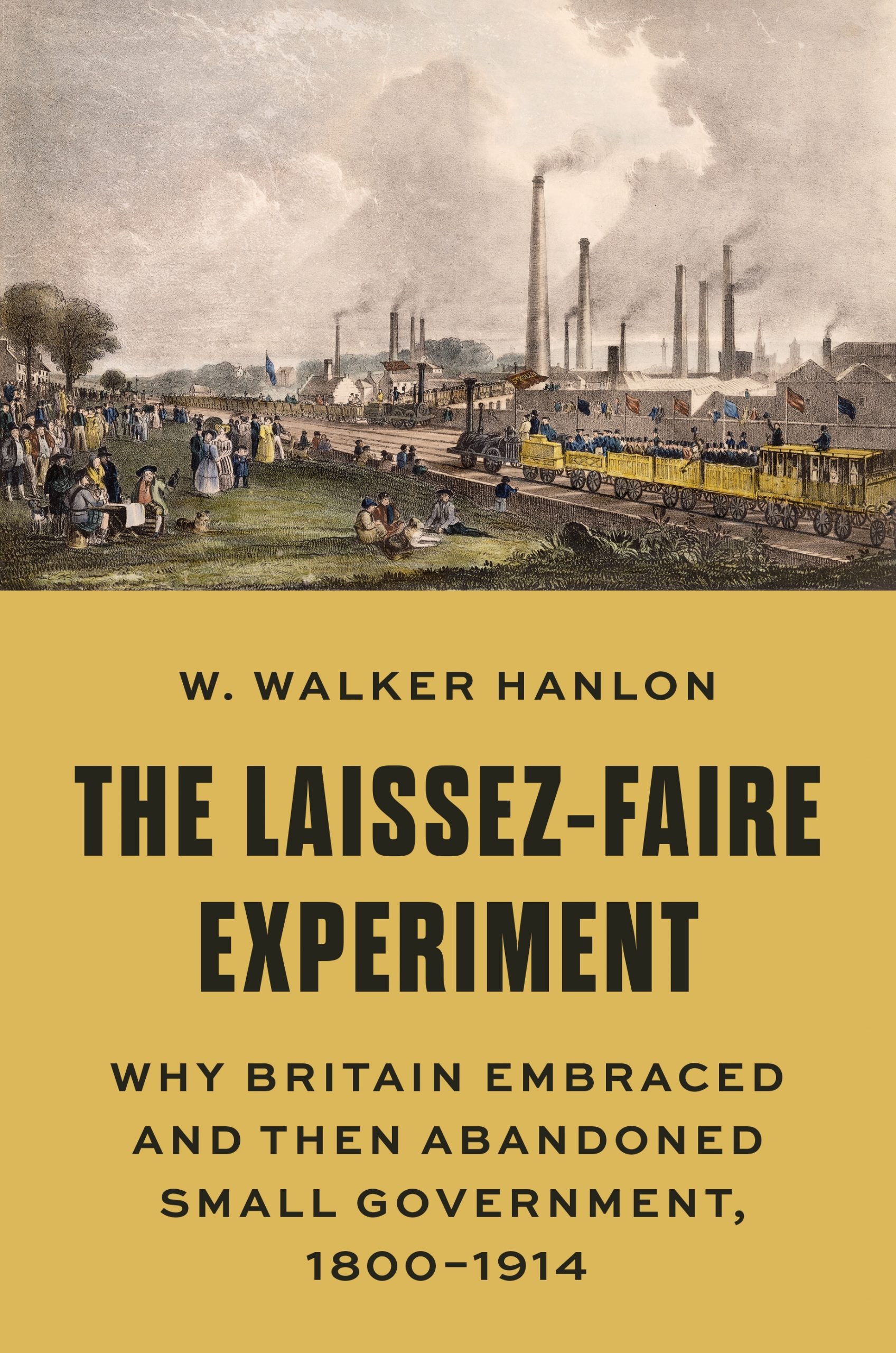
Economic historians have a growth preoccupation. The Industrial Revolution and its causes play the leading role in most prominent books in the field. And there are many other works that seek to explain the absence of an industrial revolution elsewhere in the world.
It is refreshing therefore to read a book that is not about the causes of industrialization but its consequences. If we reach back to the past, say, 200 or more years ago, two dramatic transformations are visible: one is the abundance of material goods and transformative technologies due to industrialization; the second transformation is the rise of large, modern, welfare states.
Walker Hanlon’s book The Laissez-Faire Experiment addresses this second transformation. He asks two fundamental questions: ‘First, how well did limited government in mid-19th century Britain work? Second, why was limited government abandoned in favor of the more interventionist government found in the U.K., and essentially all other developed countries, today?’
Hanlon’s argument is elegant and simple and it is grounded in standard economic theory.
The main problem facing the British economy in the early 19th century was dismantling the inefficient policies of the pre-Napoleonic war era, i.e., the fiscal-military state of the 18th century which protected large land-owners and relied on local and ad hoc institutions. Hanlon suggests that laissez-faire was an appropriate economic philosophy in this context: ‘across the first half of the nineteenth century, Britain’s laissez-faire system was successful. Economic growth was booming, and the benefits were accruing not only for the rich but also for average workers. Technological progress continued at a rapid pace. As a global power, Britain was unmatched.’
But, as the Industrial Revolution unfolded, the costs associated with this policy of non-interference mounted. For example, rapid urbanization brought new problems of overcrowding, sanitation, disease control, and pollution. There was a large health penalty to urban living in the 19th century.
Hanlon provides a compelling empirical assessment of the economic problems that led British policymakers to adopt a more interventionist series of policies. Increasingly severe market failures in the form of externalities from pollution, or asymmetric information in a range of markets, made government intervention potentially welfare enhancing.
The book is admirably clearly written. First, Hanlon presents the relevant economic analysis, which will be familiar to those who have taken Intermediate Micro or Public Economics, outlining the main explanations for market failure: information problems, monopolies, credit constraints, public goods, and coordination problems. Each chapter then considers different applications of the general principles, and provides a survey of relevant literatures in economic history, for example the literature on child labor regulations or urban public health.
The chapter on unemployment insurance, for example, condenses a tremendous amount of information and evidence into just a few pages. One charge that classical liberals have made against the modern state is that unemployment benefits and insurance crowded out the many forms of charity and private insurance that were commonplace prior to the welfare state.
Indeed, Hanlon discusses the wide array of traditional and occupation-based non-government forms of insurance available prior to 1850. He then, however, explains how the rise of large, geographically concentrated industrial agglomerations based on a single industry, such as cotton textiles in Lancashire, changed the problem of insuring workers. Neither family, locality-based, nor occupation-based forms of unemployment insurance, could deal with a general downturn in cotton textiles.
Overall, the book offers an exemplar of how to write a modern work of economic history. I wouldn’t hesitate in recommending this book. Beyond an economic history audience, it is an important book for anyone interested in understanding the rise of the modern state in the 19th and 20th centuries.
Nonetheless, as I discuss below, I want to push the implications of the book’s arguments a little further and explore some aspects of the debate which Hanlon perhaps neglects.
Having lavishly praised The Laissez-Faire Experiment as a work of economic history, my more critical comments will focus on the implicit political economy of the book and its treatment of economic ideas.
First, and I think intentionally, Hanlon’s treatment of what he calls ‘a laissez-faire philosophy’ is remarkably flat. I say intentionally as Hanlon clearly wants to focus on the economic history. From this perspective, too much engagement with the literature on the history of ideas would be distracting. So, he uses laissez-faire as a short-hand to refer to what is often called classical liberalism, essentially the idea of limited government and a general presumption of liberty.
This is entirely understandable and indeed defensible. Nonetheless, there is a price to taking this approach, which I will attempt to cash out below.
First, there is the use of the term laissez-faire as a shorthand. Classical liberalism has never been identical to laissez-faire because classical liberal thinkers have always recognized areas where government intervention is required.
Hanlon doesn’t really defend his use of laissez-faire as shorthand. But this approach overstates the degree of elite consensus and underestimates the extent to which there were competing intellectual traditions in 19th century Britain.
It is true that many of these positions came together in favoring a limited state in the mid-19th century, but it is precisely by recognizing that they were not a coherent ‘philosophy’ that we can appreciate why some of the leading figures also came to push for more technocratic interventions in society. A case in point would be Edward Chadwick. Chadwick was both a utilitarian follower of John Stuart Mill and a founder of modern public health and policing and he was more than willing to abrogate private property rights to achieve an improved societal outcome.
Hanlon’s narrative is of liberal, laissez-faire inclined policymakers and thinkers confronting the reality of widespread market failure and externalities and gradually adapting their policies and intellectual principles. He writes that ‘government intervention during the nineteenth century was not the work of a group of ideological collectivists. Rather, many interventions were the work of laissez-faire adherents who nevertheless believed that intolerable or inefficient conditions exist and were open to the possibility of experimenting with various forms of government intervention’. My feeling is that a deeper investigation of the ideas and writings of the classical economists and associates like Chadwick will reveal a more forthright commitment to policies of amelioration and improvement, rather than what is conventionally meant by the term laissez-faire.
Moreover, as Colin Holmes documented more than 50 years ago, something recognizable as a doctrine of laissez-faire did exist in the mid-19th century but it was never the animating principle of the British elite or government. Opposition to great government involvement in society could be animated by traditional ‘small c’ conservative principles. We don’t get a sense of this opposition (no John Ruskin or Thomas Carlyle, for example) in The Laissez-Faire Experiment.
Acknowledging this does not weaken Hanlon’s argument, but it would strengthen our understanding of the issues at hand in 19th century Britain.
My second comment concerns the treatment of political economy in the rise and fall of laissez-faire.
In general, Hanlon’s treatment is broadminded. He doesn’t assume that the existence of widespread market failures automatically translated into policies that could by assumption correct for those failures. Aware of the role played by both ideology and interests, he rather argues that the market failures that were exacerbated by industrialization ‘created opportunities for efficiency-enhancing government intervention’. Many factors would be critical in determining the extent to which these opportunities were realized.
Hanlon provides a similarly nuanced discussion of the shift towards more government activism at the end of the 19th century. He draws on recent historical scholarship to discuss the extent to which the example of the German welfare reforms and the pressures of war and imperial competition pushed policymakers away from laissez-faire.
Nonetheless, this part of the argument was less compelling than the first part of the book where Hanlon provides a systematic account how the new industrial economy generated all kinds of new externalities.
There is a reason for this. The type of evidence that Hanlon does a great job of assembling is very convincing in demonstrating the existence of market failures. He combines rigorous evidence with economic theory. But he doesn’t have an equivalently powerful framework for discussing how and why certain policy decisions were made.
In his conclusion, Hanlon tackles some of the big questions raised by his account: ‘is there evidence that the expansion of British government intervention . . . was misguided?’. Hanlon provides evidence that this was not so. He contends that policymakers followed experience and were not led by public opinion.
There is a risk here that the political economy of the 19th century does not get the full attention it deserves. Political economy is about heterogenous preferences and Hanlon’s framing in terms of an unmet nascent demand for education or for regulations abstracts from these conflicting preferences. Hanlon appreciates that government policies do not always achieve their aims. But political economy considerations are only occasionally mentioned, for example in explaining the failure to tackle coal pollution.
In contrast, conflicting political interest groups were prominent in earlier accounts of the rise of the state in late 19th century England. Holmes noted that what was traditionally seen as the high-point of laissez-faire ideology, the mid-19th century, was in fact a period of centralization and increased regulation, a point that Hanlon’s narrative and data in fact substantiate. But the role of conflict between different interest groups is not a major theme in The Laissez-Faire Experiment. And this also limits the ability of Hanlon to speak to developments in the 20th century, when much larger and more interventionist states emerged.
None of these comments take away from the fact that The Laissez-Faire Experiment is a great work of economic history and a major achievement. All subsequent scholarship will have to engage with it and will no doubt build upon its findings.
‘The Laissez-Faire Experiment: Why Britain Embraced and Then Abandoned Small Government, 1800-1914’ by W. Walker Hanlon was published in 2024 by Princeton University Press (978-0-691-21341-5). 504 pp.

Mark Koyama is Professor of Economics at George Mason University. He writes extensively about economic growth and institutions.
If one wanted to run a political campaign as an idealist left-leaning technocrat, this would be the book to write or use as manifesto. A Brief History of Equality is Thomas Piketty’s attempt to synthesize multiple years of research into a manifesto (albeit one published by Harvard University Press) that a politician could pick up to showcase not only a consistent vision of the world but also the remedies and solutions to make a better one.
Piketty argues there have been strong egalitarian forces—generated via political action leading to institutional and social change—that have worked to moderate the natural forces of capitalism that increase inequality (the argument for this natural tendency is the subject of his famous Capital in the Twenty-First Century). It was the twentieth century—particularly the period from 1914 to 1980—that generated a long egalitarian trend because this is when the egalitarian counterforces gathered momentum: progressive taxation, expansion of public education, greater regulation and social welfare program policies. Ultimately, the proposal is to continue and expand these policies.
Beyond this, any reviewer faces a struggle after reading the book. How should it be reviewed? As political manifestos go, this is outstanding work. There is substance and coherence. At the same time, however, I doubt how much a politician can win on such a manifesto because the remedies offered are also accelerants to the forces of populism and illiberalism. The politics of redistribution can lead to tensions between those who pay and those who receive. This is why numerous economists point out that policies reducing the size of the state (in both scale and scope) are associated with less populism.
For example, when using ‘economic freedom’ indices—which weigh components such as property rights protections, free trade, business regulation, monetary policy, and the size of government—in conjunction with measures of political populism (both right and left), one finds that ‘economic freedom’ depresses populism. In other studies, what some call ‘welfare chauvinism’ is what drives anti-immigrant feelings (nativism). As Krishna Vadlamannati and Indra de Soysa summarized, the ‘positive effect of a bigger immigrant share of the population on support for nativist populism is conditional upon higher degrees of social welfare’ spending. In other words, the book proposes remedies that have fueled the rise of the populist right and left.
It is not surprising, then, that in Piketty’s home country of France, the Rassemblement National of Marine Le Pen and Jordan Bardella (which seems poised to win in 2027) has been a confused mix of left-wing economic policies and right-wing identitarian ones. France, with its sprawling welfare state that goes well beyond what the near-totality of economists would call the optimally sized state, has already implemented most of what Piketty recommends—and it is precisely there that liberal democracy appears most threatened, both from the left and the right.
So, what if the book was reviewed on deeper grounds—that of the deeper scholarly arguments embedded in it? There, I feel I am hardly more positively inclined. This is because the book relies on research that has been heavily criticized in top journals and in ways that dramatically alter the interpretation of the evolution of inequality in western countries.
Consider chapters 6 and 7 where Piketty discusses the fall of income and wealth inequality from 1914 to 1980 and its partial reversal thereafter. Considerable (though not exclusive) attention is devoted to America in these chapters. The decline is causally assigned to the rise of the welfare state and higher tax rates on the rich. However, this ignores multiple works showing that inequality started to decline before 1914—an age tied to ‘laissez faire’ and free markets. The decline has recently been noticed when some researchers (including myself) pointed out that the prices of goods and services consumed by the poor fell faster than those consumed by the rich. This means there was ‘declining’ inequality in the cost of living. This most egalitarian force essentially reverses any increase in inequality between 1870 and 1914 between the top 10% and the bottom 90% and eliminates half of the measured increase in inequality between the top 1% and the bottom 90%. At the same time, there were massive improvements in living standards which means the poor were getting richer nearly as fast as the wealthy.
Then, when one accounts for spatial differences in price levels within the country (suggesting that real incomes differed less than nominal incomes), one further reduces the level of inequality. Because of internal migration, one also reduces the trend of inequality. Extending both adjustments from 1914 to 1941 shows that inequality did not behave at all as depicted. It either stagnated or declined between 1870 and 1941.
But this is not all. The tax data used has many known flaws that historians have long documented (and that contemporaries themselves knew about), but that Piketty has ignored even after their importance was pointed out to him. For example, it is well established that unlike today, tax evasion in America was the ‘poor man’s business’ prior to the introduction of tax withholding in 1943. This is because the IRS had too few resources to investigate anyone but the very rich, and it even advertised that it never really investigated tax returns below $5,000—essentially applying to everyone below the top 1%. The result was widespread evasion below the top 1%. This evasion affects both the estimate of income of the ‘higher income groups’ and the total income of society (because tax evasion also depressed the source materials downward). The result is that we know tax evasion leads to an overestimation of inequality before 1943. By how much? Take any estimate pre-1943 and cut one fifth of it—that is the effect of tax evasion below the top 1% on the estimates of inequality.
Probably most egregiously, Piketty, alongside his co-authors Emmanuel Saez and Gabriel Zucman, was shown to have misused and misunderstood the tax data they employed while making crude assumptions to estimate inequality—even though data that would have avoided these assumptions existed in an easily available form. Correcting these errors (which I documented here before), I have shown that the level of inequality prior to 1943 is overestimated by roughly one fifth of what is reported. Combining this with the effect of evasion mentioned above is difficult because the corrections for the multiple errors of Piketty and Saez overlap with some of those to correct for evasion. However, all the clearly independent corrections suggest that a quarter of pre-1943 inequality is ‘artificial’.
Moreover, most of the decline in inequality did not happen in 1943 with the advent of a more robust tax administration, higher tax rates, and a more generous welfare state. Most of it occurred between 1929 and 1935—during the Great Depression, when virtually everyone was getting poorer. Separate independent works have pushed in exactly the same direction. A large share of the decline is due to the errors but it is computed by the use of a far-less than ideal statistical method. When we shift to a method that is more data-driven and give far fewer degrees of freedom to researchers, we see that the level of inequality is further overestimated by a bit less than one twenty-fifth of the level. Moreover, the errors induced by Piketty and Saez’s choice of method are mostly concentrated in the 1940s in ways that artificially enhance their story. With the superior data method, the majority of the decline occurred during the Depression as a result of collapsing incomes (and notably capital gains income, which is to say the income of the rich).
The overall level and movements of inequality are so massively changed—something which is also confirmed in multiple other pieces of research showing the poor understanding and shoddy treatment of the data by Piketty and his acolytes—that it leads one to accept to a more familiar claim that the only forces that can massively reduce inequality in a short period of time are wars and other catastrophes (e.g., the Great Depression). The tax policies and welfare state praised by Mr. Piketty played a minor support role.
Things only get worse from there since the argument is that the reversal of the golden age of egalitarianism from 1914 to 1980 is due to a reversal of social-democratic policies (and a turn to far more ‘liberal’ policies). In recent years, a great deal of attention has been dedicated to the estimates of inequality after the 1960s. They all show the same thing. For example, Gerald Auten and David Splinter show that the ‘golden age’ of equality was overstated. Once correcting for tax policies that altered how income was reported, they find inequality rose far more modestly. Whereas Piketty estimates the top 1% share of income rising from between 12% and 14% in the 1960 to 1980 period to 20% today, Auten and Splinter place it at between 8% and 10% in the 1960 to 1980 period with a rise to 14% today. Those results are confirmed in separate works using different methods.
Auten and Splinter also reveal that after taxes and redistribution, inequality has not risen since 1960—despite smaller government and lower tax rates—undercutting Piketty’s case for high taxation and expansive welfare states. That finding is echoed in the work of Sylvain Catherine, Max Miller and Natasha Sarin, who showed that once the valuation of social security (National Insurance in Britain) is accounted for, there are no wealth inequality changes between 1960 and today. The welfare state, despite claims to it being slashed, did what it aimed to do—redistribute and moderate inequality. Given that social security is only a part of the welfare state, this also indicts the broader claims that massive expansions of the welfare state generated the golden age.
Other parts of the book are even more problematic than this. Chapter 8 is one of the lesser offenders in that matter. There, Piketty speaks of educational equality. This is in line with a standard view in economics that human capital is important to growth and that inequality affects the capacity to make human capital investments for poor people. Nothing controversial there even if there are quibbles on details. In any case, the importance of human capital to growth and development (especially of the poor) is empirically well documented. When discussing the leveling of 1914 to 1980 and then when discussing what would be needed to generate further leveling in the future, the answer is ‘more education’ and ‘more educational access’. The problem is that there is an implicit assumption that all of the gains in human capital can be attributed to the state’s efforts to provide schooling. Ergo, since schooling reduced inequality and schooling is state-provided, more state-provided schooling is needed. There is a vast literature showing that state provision of education is often of low-quality in developing countries and that a sizable chunk of improvements in human capital (which then contributed to reductions in global economic inequality) actually comes from the market–based provision of schooling. Moreover, empirical studies of ‘educational mobility’—which compare the educational attainment of parents with that of their children—as well as studies of educational achievements over time (without comparing children and parents) consistently indicate that regions characterized by lower tax burdens and greater economic freedom exhibit higher levels of upward mobility in education and higher levels of educational achievements.
In other words, the very institutional arrangements and policy frameworks that Piketty criticizes as obstacles to equality appear, in practice, to foster intergenerational progress in educational achievement. Far from hindering mobility, economic freedom and moderate taxation seem to create an environment in which children are more likely to surpass the educational outcomes of their parents. What this chapter amounts to is a complaint about ‘not enough’ (an arguably fair complaint) and then a series of rehashed clichés about solutions for which there are good reasons (not discussed and ignored) to believe would make things worse.
The most important criticism, however, concerns something barely mentioned in the book—social mobility. The word mobility itself appears only once (page 121). There is a well-documented link between inequality and social mobility, with the logical connection being that inequality limits the ability of the poor, all else equal, to seize opportunities for upward advancement relative to the rich. This is why some speak of the ‘social reproduction of inequality,’ often with tedious distinctions that are without real differences. Yet, that argument has merit. Yet another, equally (and maybe even superior) meritorious argument exists: market–based economies systematically display higher intergenerational and intra-generational income and social mobility.
Using economic freedom indices (notably the Fraser Institute’s Economic Freedom of the World), one can assume that higher scores correspond to more capitalist economies with more liberal policies—precisely less of what Piketty prescribes. Evidence shows that ‘big liberalizations’ not only raise average incomes but also lift those in the bottom deciles along with the top, leaving inequality relatively unchanged. Conceptually similar results apply to economically disadvantaged groups such as women who gain noticeably from liberalizations (there is evidence that this applies to minority groups as well). Crucially, such liberalizations also generate large increases in income mobility. These causal results align with a growing body of associational studies linking economic freedom to greater upward mobility—relationships consistently stronger than those between inequality and mobility.
The reason for this connection is that the welfare state advocated by Piketty does have some potential for uplifting. However, through taxation, it can also discourage effort and innovation, thereby pushing people down. A modest welfare state—designed to target help while minimizing these downsides—is possible. Such a welfare state can be found in the visions of Milton Friedman and Charles Murray (libertarians), Marcel Boyer and Peter Lindert (social democrats), and Arthur Brooks (a conservative). Yet the key ingredient accompanying it must be open markets, minimal regulation, a limited state, and secure property rights (another term that appears only rarely in the book, and when it does, it carries a soupçon of disdain). Ignoring this point—as I was compelled to emphasize earlier in a symposium in Analysis & Kritik (in which Piketty participated, alongside my coauthor Nick Cowen of the University of Lincoln, to discuss another book which is a longer pre-iteration of this book)—is essential for Piketty. After all, the book is a political manifesto. It is not meant to engage with academic or scholarly arguments.
Indeed, to paraphrase Percy Shelley’s Ozymandias, little beside remains of A Brief History of Equality. Round the decay of its pretensions to scholarly output, the only monument left standing is a political manifesto. If the mighty seek to run for office, they may find some use in these pages; so too might Piketty himself, should ambition turn him toward politics. But manifestos are poor substitutes for analysis. They bend to fashion and fleeting desires for fame and popularity, drift with the winds of ideology, and mistake slogans for substance. What endures is not truth, but rhetoric. And, as with so many manifestos before, the time will come when even this too will be forgotten—leaving nothing besides.
‘A Brief History of Equality’ by Thomas Piketty was published in 2022 by Harvard University Press (ISBN: 978-0-674-27355-9. 288pp.

Vincent Geloso is assistant professor of economics at George Mason University and fellow at the Centre interuniversitaire de recherche en analyse des organisations (CIRANO). He has published multiple articles on estimating historical income inequality in multiple journals such Economic Journal, Economic Inquiry, Cliometrica and Southern Economic Journal. He is also senior economist for the Institut économique de Montréal.

In March this year, I raised the question of whether the council tax premium on second homes constituted a solution to difficult problems – namely shortages of housing in some areas and straitened local authority finances – or was in effect a sumptuary law of sorts.
The Moral Issue
An important question was whether there was any ethical justification for the premium. One justification might be that investing earnings in a second home is in effect acting against the public interest, such that councils use the premium to discourage ‘hoarding’ of a scarce resource (housing). In response, however, some argue that such an outlook is naïve: second homes are often unsuitable for local residents, particularly first-time buyers, usually because of their age or character and cost, while in other cases, owners who renovate very old properties, far from diminishing the stock of habitable homes, actually add to it in the long run.
A further justification would be that the council tax premium helps to fund local services, yet critics argue that second home owners are thereby charged disproportionately for services – services that they do not even use all year round. As such, the rate charged appears to constitute supranormal taxation, legitimated by the additional wealth represented by possession of a second home. The suggestion here is that there is an ethical justification for taxation at a higher rate, as though wealth (or certain ‘lavish’ uses of it) is somehow immoral – a notion which historically lay behind certain sumptuary laws and which appears to be finding support at present. Recent discourse has suggested growing interest in new wealth taxes and there has been discussion of tax rises to target the wealthy in the forthcoming budget.
Interestingly, the government has not so far taken the view that wealth is unethical, the Chancellor having stated in the past that hers was now the party of wealth creation and written that wealth creation would be the defining mission of the government. While this was questioned from both sides of the political divide, as to whether it the proper role of government or even a desirable objective in itself (when perhaps wealth distribution might be considered a more pressing issue), there was clearly no suggestion on the Chancellor’s part that wealth was ‘unethical’.
The Economic Issue
On the economic aspects of the premium, I suggested that these would need to be observed before any conclusions could be drawn about their success as policy measures, and noted that historically, sumptuary laws, in addition to being difficult to assess, tend to have unintended consequences. The results of any council tax premium are likely to differ according to the area in which they take effect, as well as the manner in which they are implemented – and it is probably too early to make any kind of general judgement regarding their success or otherwise – but developments in one council are interesting.
A Local Case
It has been reported that Pembrokeshire County Council, which has the second highest number of second homes in Wales, has reduced its council tax premium on second homes twice in the space of 12 months. Having been increased to 50 per cent in 2017 and then 100 per cent in 2022, the rate has been reduced from a high of 200 per cent in 2024, to 150% and in recent weeks, to 125%.
It would appear that hundreds of second homes have been offered for sale in recent months, which would suggest that as a measure designed purely to increase housing stock, the premium could be considered successful. However, such properties have been slow to sell because prices are too high for local residents to afford. To date, therefore, the measure could not be said to address the lack of suitable available housing in the area, though there remains the question of market dynamics will lead to a longer term ‘correction’ of prices.
Unintended Consequences
It is evident that the premium as implemented has had unintended consequences. There is anecdotal evidence that the reduced number of holiday homes is having a negative impact on tourism in the area, Pembrokeshire being home to popular holiday destinations such as Tenby. Those in favour of the premium question its effects on tourism but any such decline in economic activity is likely to result in reduced tax revenues. It is of interest that a public consultation revealed a majority of non-second home owners (64 per cent) preferring a reduction in the premium on second homes.
Furthermore, the latest reduction in the council tax premium, effective from April 2026, will cost the council £1.4 million in potential income next year, which makes higher council tax increases for permanent residents more likely.
Conclusion
There are indeed serious challenges to be addressed by local authorities. Suitable, affordable housing is often in short supply and many are facing serious budgetary difficulties. A higher charge on second homes suggests itself as an obvious measure for addressing both but it is possible that the effects will not be as anticipated. A final assessment of the council tax premium would need to consider both broader moral questions and whether it accomplishes its economic aims. In areas where there is no strong tourist industry, perhaps a premium will have a minimal effect on local economic activity, or second homes offered for sale will not be out of reach of local buyers. Even where the policy shows signs of success, however, it is likely that other measures will be needed to address problems with housing supply. Where the desired outcomes fail to materialise, there remains the question of what grounds exist for a second home premium, beyond disapproval.


Talk given at the Danube Institute’s Conference, Budapest, 2nd October 2025. Brian also gave an interview about related topics.
Mrs Thatcher became Prime Minister in May 1979 at a time when the UK economy was suffering from ‘the British disease’ and known as ‘the sick man of Europe’.
We had just emerged from the ‘Winter of Discontent’, during which there had been constant industrial disputes and strikes, many unofficial, uncoordinated and local. Some years earlier inflation had reached 27%. The Chancellor of the Exchequer Denis Healey had been forced to go, cap in hand to the IMF to avoid defaulting on our debts; no one would lend us money. We were bust. Inflation was still 13% in 1979 rising to 18% in 1980. Over the decade mismanagement of the economy and trade union militancy had led to the downfall of three governments: those of Wilson in 1970, Heath in 1974 and Callaghan in 1979. There was in British society a sense of helplessness, a feeling that the country had lost its way.
Mrs Thatcher set out to find practical remedies for the problems facing the British economy. She realised that not all could be achieved at once and I believe she thought of the response to the challenge in terms of three major steps.
First inflation must be defeated.
Second the size of the state in the economy must be reduced.
Third the market economy must be strengthened.
To start with it would be impossible to improve the standard of living without bringing inflation under control and establishing financial stability.
Inflation had been accompanied by rising unemployment which was not the Keynesian expectation. Inflation created uncertainty. It deterred business investment. It was hated by the public. Unexpected rises in the cost of living led to hardship with consequences such as higher interest rates which continued long after inflation had come down.
Although she was a practical politician, Mrs Thatcher was always interested in ideas. She was genuinely intellectually curious. She invited people into Number 10 from all sorts of different fields in order to explore ideas: historians, environmentalists, educationalists, theologians, architects and so on. And the field of economics was no exception. She valued meeting economists from abroad such as Milton Friedman, Fredrick von Hayek, Karl Brunner, Allan Meltzer as well as central bankers such as Otmar Emminger, and Karl Otto Pöhl (Bundesbank Presidents) and Fritz Leutwiler (Chairman of the Swiss National Bank).
Unlike many economists in the UK and senior officials at the Bank of England, these academic economists and practical central bankers saw inflation as a monetary phenomenon. They claimed they had achieved price stability in their countries because they had successfully controlled money supply growth, not because they had introduced prices and income policies. (Incidentally, money growth had been the traditional explanation for inflation in the writings of David Hume, Adam Smith, and Alfred Marshal – and even Keynes had spent six years in the 1920’s producing two large volumes entitled A Treatise on Money (1930), analysing the Quantity Theory of Money). This approach was also that of a small number of contemporary British economists such as Professor Alan Walters, whom she appointed as a special adviser based in No10, and Professor Harry Johnson, who held a joint chair of economics at the London School of Economics and the University of Chicago. By contrast these were not the views of the Bank of England or the UK Treasury which were still strongly influenced by Keynesian thought.
However, recognising that inflation was a monetary issue proved to be far easier than controlling the growth of money itself. How was it to be measured? How easily was it to control in the short term? How stable was the demand for money? How might it change when there were changes in the regulatory structure of the banking system, such as Competition and Credit Control 1971? Or external shocks to the system such as the Great Financial Crisis in 2008-9? These were difficult existential challenges for the Bank of England tasked with controlling money supply growth and financial stability. Controlling money supply growth however ensured that by 1986 retail price inflation had fallen to 3.4%.
Mrs Thatcher recognised that for the monetary policy to be successful, fiscal policy should accommodate monetary tightening and not work against it. This it did through the creation of a Medium Term Financial Strategy (the first ever for the UK Treasury) which linked targets for money supply growth to public sector deficits, public sector borrowing and the annual Budget. Alan Walters claimed that
It is difficult to exaggerate the importance of the commitment to the MTFS. It provided a frame of reference for all financial and economic policy. Never in the post-war history of Britain had the spending programs and the revenue and taxation consequences been so closely associated at the highest level of government decision making.
(p.83, Britain’s Economic Renaissance, OUP, 1986)
This framework provided effective fiscal discipline and led to the notorious 1981 budget. This was condemned by 364 UK academic economists in a letter The Times following a ‘round robin’ initiated by two Cambridge University professors, Frank Hahn and Robert Neild. For them, the uncomfortable fact was that this budget proved to be the turning point for Britain’s economic renaissance.
After having set out on a policy to introduce monetary discipline the second element in her policy was to reduce the scale of the state.
The case she made was that the state took too great a share national income, so government spending as a proportion of GDP needed to be reduced. The public sector borrowing requirement was crowding out private sector borrowing, so it, too, needed to be cut. In addition, state owned industries would be much better managed as commercial entities rather than being answerable to elected politicians in parliament.
This led to the policy of privatisation – steel, airlines, telecommunication, cars (Jaguar), gas, electricity, aerospace, petroleum, coal and so on. What was remarkable about privatisation was the way in which the policy, once shown to work in the UK, was adopted in the following two decades by so many countries throughout the world.
The scale of the state was also reduced by a housing policy which allowed the sale of council houses by local authorities to their tenants at considerable discounts, ranging from 33-50%, depending on their tenure. This meant a highly significant transfer of wealth and the ability of new house owners to pass their property on to their children.
The third element of Mrs Thatcher’s economic policy focused on strengthening the market economy.
In 1974 Mrs Thatcher and Keith Joseph had set up the Centre for Policy Studies to make the case for a market economy. By enabling prices to change and firms to enter or exit markets, they believed a market economy could achieve a more efficient allocation of resources than state planning, public ownership or government bureaucracy ever could.
They were also convinced that markets should be placed in the broader context of social responsibility. Many of the criticisms of the market economy were that it produced a culture of greed, individualism, and ‘dog-eat-dog’. They thought the creation of greater wealth through the market economy must be achieved alongside greater resources being available for those in need, whether due to ill-health, advanced age or deprivation.
Strengthening the market economy involved the abolition of rent controls, the abolition of foreign exchange controls, the removal of constraints on competition in banking and the London Stock Exchange – permitting foreign companies to enter London’s financial market – the removal of general controls over prices and wage growth and an almighty battle against trade unions to allow management to manage their firms without constant interruption from militant unions. This last required bitter battles in parliament and confrontations between police and protesters.
Her economic policy focused on wealth creation was part of a wider policy framework which increased parental choice and standards in education and training and increased expenditure in health and welfare. The social market economy provided the safety net for those unable to benefit directly from greater wealth. Standards in schools were improved. Scientific research dealing with technology and radical innovation was supported.
Thatcher’s economic policy had a coherence to it. It set out to achieve stable prices, reduce the size of the state and create a vibrant but socially responsible market economy. She succeeded in some areas: the importance of monetary policy in defeating inflation, reducing the size of government spending in GDP from 43% to 35%, strengthening an enterprise culture, extending home ownership and privatising state-owned industries. In others she did not succeed: the privatisation of water and railways, the imposition of the community charge for local services (the ‘poll’ tax) and increasing charitable giving.
There is one final point I would like to make.
While Mrs Thatcher engaged with the specific details of monetary policy or trade union legislation, this was in the service of an underlying moral world view. However, the idea that she had an ‘unidentified morality’, as Shirley Letwin has suggested, is somewhat misleading.
What she had was more than an intellectual framework or worldview. It is perhaps better understood by the German word Weltanschauung, which means not just an intellectual framework, but a driving force animating one’s being and generating a purpose for life’s work.
This for Mrs Thatcher was undoubtedly her Christian faith, something she made very clear in her speech to the General Assembly of the Church in Scotland on May 21st, 1988, in which she identified ‘three beliefs’ of the Christian faith.
First, that from the beginning man has been endowed by God with the fundamental right to choose between good and evil. Second, that we are made in God’s image and therefore we are expected to use all our own power of thought and judgment in exercising that choice; and further, if we open our hearts to God, he has promised to work within us. And third, that our Lord Jesus Christ the Son of God when faced with his terrible choice and lonely vigil chose to lay down his life that our sins may be forgiven. (Christianity and Conservatism, edited by The Rt Hon Michael Alison MP and David L. Edwards, Hodder & Stoughton, 1990, p.334)
She also spoke of ‘my personal belief in the relevance of Christianity to public policy’, recognising both the importance of the teaching of the Old and New Testaments and especially the importance of the family, on which ‘we in government base our policies for welfare, education and care’. (Speech by Mrs Thatcher to the opening of the General Assembly of the Church in Scotland, 21st May 1988, Christianity and Conservatism)
I believe you will never really understand Mrs Thatcher’s economics or politics unless you grasp her Judaeo-Christian worldview.
In conclusion, I believe this is ultimately the greatest legacy which Mrs Thatcher gives us today on the Centenary of her birth.

Brian Griffiths (Lord Griffiths of Fforestfach) is a Senior Research Fellow at Centre for Enterprise, Markets and Ethics (CEME) and Founding Chair of CEME (serving as Chair until 2023). Among other things he served at No. 10 Downing Street as head of the Prime Minister’s Policy Unit from 1985 to 1990 and Chair of the Centre for Policy Studies (CPS) from 1991 to 2001.
In the popular imagination, the US economy is certainly rich in total. But most people who think about the matter probably assume the US partly secures those overall riches by tolerating much higher inequality than is normal elsewhere in the developed world (certainly than in Europe). They assume the US has much higher income and wealth inequality than is allowed in other developed countries, with that occurring partly because transfers to those lower down in the income distribution are much more restricted than those in Europe and partly because those at the very top of the income distribution are allowed to pay lower taxes than is permitted in other countries — indeed, those at the very top paying lower tax rates than those in the middle. They probably also think that inequality in the US is rising over time.
Some people (e.g. myself) might say inequality is of no moral importance. Others may even see the US as an example to follow — if one wants a prosperous society one ought not to try hard to limit inequality. Others may feel high American inequality is a moral and social indictment of capitalism. But whichever of these responses one picks, at least there is agreement that US economic inequality is high and rising.
However, in their book, The Myth of American Inequality, Phil Gramm, Robert Ekelund, and John Early argue that this picture is wrong in almost every respect. Crucially, the vast majority of their case is not about alternative judgements or complex additional factors the standard analysis does not take into consideration. Rather, they argue that the picture is wrong because obvious and in many cases officially acknowledged statistical or methodological errors are not reflected in the relevant official statistics that academic or popular analyses of US inequality rely upon.
A case in point is the income of the poor. US official income statistics simply exclude a large portion of the monies those on lower incomes receive as government transfers. Monies given to those on lower income in the form of food stamps, Medicare, Medicaid, and the reimbursable Earned Income Tax Credit and Child Tax Credit are not counted. That means that only 32 per cent of transfers appear as income. For poor families only 12 per cent of transfers are counted.
Adjusting for this, the authors argue that the top 20% of households have an income only four times that of the bottom 20% (not 16.7 times as per the official statistics). This ratio has declined over time (not risen) – e.g. it was 5.6 to 1 in 1947. Instead of 12.3% of the population meeting the official US poverty definition, only 2.5% do. Perhaps most strikingly, once the effects of taxes are included, the authors argue that the bottom 60% of the population all have essentially the same income.
The authors frequently appeal to independent ways to think about the factors they are considering. For example, when thinking about how poor low-income US households really are they note that the average ‘poor’ American family lives in a house larger than the average middle-income French, German or British family do.
Some of the factors they highlight are extraordinary. The US census-based measure of inequality changed its basis between 1992 and 1993 by increasing the maximum level of income considered (from just under $250k to just under $1m), then in 1999 removed it. That factor alone greatly increased the aggregate measured income at the top even though it involved no actual increase in inequality. Similarly, in 2013 additional categories of income were asked about, again boosting the total without any actual change in inequality. Yet there was no adjustment to the back-series, so official measures of inequality proceed as if the extra income ‘discovered’ by these methodological changes were actual extra income, creating a completely artificial impression of increasing inequality driven by rapid rises at the top.
These two factors alone boosted official statistics on a rise in inequality by 42.1%. The authors argue that income inequality after taxes and transfers actually fell. They find that as of 2017 inequality in disposable income is less in the United States than in the UK or Japan, only slightly above Australia and Canada, and slightly more above that in France and Germany.
Even in terms of taxes, the authors argue that the US imposes the most ‘progressive’ top-end taxes amongst developed countries. The top 10% of US households each 33.5% of income and pay 45.1% of taxes – a ratio of 1.35. The ratio in Germany is 1.07 and in France 1.1.
Tax changes also changed the definition of personal income versus company income, because a 1986 law tax-favoured income over company profits. This led to wholesale corporate structure change, with a flourishing of partnerships and other corporate forms tending to make income more personal. This again boosted measured income at the top without changing actual income.
Academic studies and books such as those of Thomas Piketty that claim the very rich pay lower taxes than average income or low income Americans embody the above errors, but perhaps even more significantly they don’t measure incomes at all. Instead they take the appreciation of asset wealth of the rich and treat it, quite erroneously, as if it were income. Think about that. If you do a degree then your human capital increases — you have some extra skills that you could one day turn into money. But you haven’t done so yet. Your degree cost you money. You didn’t make money by studying because your (human capital) assets had appreciated! If and when the rich spend the increased value attributable to their assets they will pay taxes on that.
Earned income inequality in the US has indeed risen, but that is heavily driven by a large rise in another form of inequality: working hours inequality. The average working hours of the bottom 20% of US households have risen by much less than those in higher quartiles. The authors argue that the reason is that large transfer payments, along with increased ease of receiving them and of receiving them indefinitely (rather than using them for a short period before becoming self-supporting), have reduced the incentives for those at the bottom end of the income distribution to work. Other factors explaining increasing earned income inequality include education and female labour force participation. As the authors put it: ‘Not surprisingly, increased equality of opportunity and the attendant expansion of effort to succeed often generates more earned-income inequality.’
This is not a book for the faint-hearted. It contains extensive statistics and involved reasoning. Some of the points it makes are quite well-known — e.g. the incomplete reflection of increased welfare in income statistics because the value to consumers (what economists call ‘consumer surplus’) of consumer products has greatly increased over time; or the fact that some inflation measures don’t take account of the way consumers can substitute away from products that rise more rapidly in price to slower price-rising products. Some points are contentious — e.g. it is not so obviously a mistake for the benefits paid to those on low incomes to rise in line with inflation metrics that do not assume substitution, because those consuming only necessities may not easily be able to substitute for them.
Overall, though, this is a book that may make you think differently about the inequality (or otherwise) of the American economy — which is exactly what the authors hoped to achieve.
‘The Myth of American Inequality: How Government Biases Policy Debate’ by Phil Gramm, Robert Ekelund and John Early was published with a new preface in 2024 by Lexington Books / Bloomsbury (ISBN: 978-1-538-19013-5). 274pp.

Andrew Lilico is an economist and a writer on politics and philosophy. As managing director of an economics consultancy firm he works extensively with governments and bodies such as the European Commission, especially on technical matters relating to price caps for utilities, auction design and economic analysis of emissions trading systems, and on competition cases (especially cartels). His doctorate is in Game Theory.
Nearly a century later, the Great Depression still shapes how we think about the government’s role in America’s free enterprise system. That lasting influence is no surprise: the Depression remains the most severe economic contraction in U.S. history. Between 1929 and 1933, per capita GDP fell by roughly 30 percent, industrial production by nearly 50 percent, unemployment soared to almost 25 percent, and close to a third of the nation’s banks failed. Just as important, however, the Depression triggered a fundamental shift in how the government responds to recessions—a transformation that continues to shape policy today.
At the center of that shift was Franklin Delano Roosevelt’s New Deal, a set of policies aimed at promoting recovery, providing relief, and laying the groundwork for long-term reform. Yet despite decades of scholarship, two central questions remain: What ended the Depression—and what role, if any, did the New Deal play? In False Dawn: The New Deal and the Promise of Recovery, George Selgin takes up these questions directly. Drawing on contemporary accounts of the Depression and the New Deal, retrospective assessments from the decades that followed, and modern scholarship, Selgin makes a compelling case that the New Deal not only failed to promote recovery but likely delayed it.
By the numbers, the New Deal’s record on recovery is hard to defend. Although the economy improved markedly during FDR’s first term, by 1939—a year after the New Deal had effectively ended as a legislative program—it remained in poor shape despite the administration’s recovery efforts. Roughly 17 percent of the labor force was still either unemployed or on work relief—which, as Selgin notes, even New Dealers regarded as a poor substitute for real employment. Industrial production had barely edged above its level from a decade earlier, and per capita GDP was still below its 1929 peak.
One major reason, Selgin maintains, is that the New Deal’s signature legislative achievements—such as the Agricultural Adjustment Act (AAA) and the National Industrial Recovery Act (NIRA)—facilitated the cartelization of agriculture, industry, and labor—hardly a recipe for recovery. The AAA sought to raise farm prices by restricting output; the NIRA aimed to achieve the same for industrial prices, while also raising wages through higher minimums and enhanced union power. In both cases, the New Dealers mistook a symptom of the Depression—falling prices and wages—for its cause. The result was sadly predictable: prices and wages rose, but output and employment fell.
As misguided as the AAA and NIRA were, Selgin argues, the deeper problem lay not in any single intervention, but in the uncertainty created by the administration’s constant policy experimentation—and Roosevelt’s unwillingness to change course once it became clear those policies weren’t working. This regime uncertainty depressed business confidence and stalled the rebound in private investment that was crucial for recovery—a point emphasized by none other than John Maynard Keynes in his correspondence with the president. Yet Roosevelt ignored Keynes’s advice. As a result, private investment remained depressed throughout his presidency.
Making matters worse, Selgin stresses, was FDR’s skepticism toward the two tools most economists today consider essential for boosting aggregate demand: deficit spending and monetary expansion. As Selgin demonstrates, Roosevelt remained firmly committed to balancing the federal budget—a pledge he had made during his 1932 campaign. As a result, much of the spending that occurred during FDR’s first term was offset by new taxes, reflecting Roosevelt’s fiscal conservatism. Indeed, throughout the New Deal era, the federal deficit remained below the peak reached under the Hoover administration and did not surpass it until the onset of World War II.
To be sure, not everything Roosevelt did hampered recovery. As Selgin acknowledges, several of FDR’s early decisions involving the banking system and the gold standard helped end the Great Contraction that had begun in 1929 and gave a much-needed boost to demand. Chief among them was the declaration of a national bank holiday shortly after his inauguration—a move Selgin regards as perhaps the single greatest achievement of Roosevelt’s first term. While FDR deserves credit for declaring the bank holiday, much of the groundwork had already been laid by the Hoover administration, making it less a New Deal innovation than a continuation of earlier efforts.
The bank holiday by itself, however, was not enough to restore public confidence in the banking system. That required convincing depositors their funds were safe. This was accomplished, in part, through the creation of federal deposit insurance. Interestingly, as Selgin explains, Roosevelt opposed deposit insurance on the grounds that it would encourage banks to behave imprudently—a concern many economists share today. In fact, FDR threatened to veto the Banking Act of 1933 specifically because of its inclusion of deposit insurance. He signed it only when it became clear that Congress would override his veto. Although Roosevelt would later claim credit for creating deposit insurance, associating it with the New Deal would be misleading.
Also crucial to the recovery was Roosevelt’s decision to devalue the dollar. During the Great Contraction, gold had flowed out of the U.S., shrinking the monetary base. Devaluation reversed this dynamic by encouraging gold inflows, which expanded the money supply and supported recovery. Yet because FDR remained wary of monetary expansion, the Federal Reserve sterilized many of these inflows, limiting their stimulative effect. Even setting aside the Fed’s response, however, devaluation could provide only a one-time boost: once international monetary equilibrium was restored, the gold inflows would stop. If monetary expansion were to continue, it would have to be fueled by a different source.
That source, as it turned out, was an unlikely one. Fearing war in Europe after Adolf Hitler’s rise to power, many Europeans transferred their gold to the United States, expanding the U.S. monetary base. At the same time, rising gold prices prompted Joseph Stalin to ramp up Soviet gold production—much of it produced by forced labor in gulag-run mines. Together, these inflows significantly increased the U.S. money supply. Combined with renewed confidence in the banking system, they helped fuel a 60 percent rise in nominal spending between 1933 and 1937—an increase that, Selgin contends, accounts for most of the economic improvements during FDR’s first term. Yet here too, Roosevelt’s persistent skepticism toward monetary expansion and fear of inflation led the Federal Reserve to partially sterilize the inflows, muting their full potential effect.
The massive increase in government spending during World War II certainly contributed to the recovery. But as Selgin observes, if wartime spending were solely responsible, the economy should have collapsed when the war ended. Indeed, many prominent economists at the time predicted as much. Yet when government spending fell sharply after the war, the expected downturn never materialized. Instead, the economy boomed. These forecasts, Selgin argues, proved wrong because support for the kinds of New Deal interventions FDR had pursued before the war had waned. As a result, the regime uncertainty that had depressed business confidence receded, private investment returned, and the recovery finally took hold.
One of the book’s many strengths is Selgin’s evenhanded approach. This is no polemic. He readily credits the Roosevelt administration’s successes—recognizing the policies that aided recovery—and engages seriously with scholarship that challenges his account. Rather than dismiss opposing views, he addresses them directly and thoughtfully, making his case all the more persuasive for its fairness. False Dawn is a remarkable contribution that will undoubtedly stand as the authoritative account of the New Deal for years to come.
‘False Dawn: The New Deal and the Promise of Recovery’ by George Selgin was published in 2025 by The University of Chicago Press (ISBN: 978-0-22-683293-7) 370pp.

It has long been a fundamental maxim in business that trust and integrity are integral to the extension of credit between businesses, partners, and clients. It is a central theme of Josh Lauer’s book that, despite the revolutionary effects of technological capability, the central elements of trust and integrity remain in place. Lauer contrasts this continuity of principles with transformative changes in the fin-tech sectors, resulting in financialization of the modern American economy, the construction of individual financial identity, and customized financial products.
Lauer’s book, part of the ‘Columbia Studies in the History of U.S. Capitalism’ series, consists of nine chapters, recounting the historical evolution of systematic credit surveillance amid cumulative changes in the credit sub-sector of financial services. It is highly informative, immaculately researched, and written in crisp, precise prose. The earlier chapters are particularly insightful in explaining the transition from localized face-to-face economies to more impersonal modern financial institutions. The broader historical perspective on surveillance is identified and conceptualized, with historical parallels drawn from factory and prison surveillance, noted by Marx, Taylor, and Foucault (pages 10-11).
In earlier centuries, creditworthiness was assessed locally but as the American economy expanded, surveillance emerged as a surrogacy for personal knowledge and observation. Mercantile agencies, forerunners of credit bureaus, used advanced methodologies of reporting, surveillance, and intelligence-gathering. Creditworthiness was not primarily about wealth per se but honesty and integrity, that is, not whether you could pay but whether you would pay (pages 19-20). Evaluating and quantifying risk was always somewhat subjective, when assessing the alliterative core signifiers, or the ‘three Cs’, of character, capital, and capacity’ (page 20). Technology played a role in offsetting subjectivity, through quantitative data of balance sheets, statements, and alphanumerical coding, signifying recorded financial experience and activity (page 69).
Credit reports increased exponentially in the second half of the nineteenth century, and significantly, at the fin de siècle, two of the three leading contemporary credit bureaus were founded. ‘Credit Men’ within companies, acting as professional custodians and interpreters of creditworthiness, were organized into the National Association of Credit Men (NACM) in 1896 (page 83). While indicative of the (gendered) professionalization of credit management, after 1914, more women entered the sector and the nomenclature of the professional association was revised accordingly.
The post-1945 democratization of credit, underpinned by Mass Production, increasing availability of household goods, and installment deals, expanded the consumer base. It was accompanied by a relentless drive to educate consumers and to induce ‘Credit Consciousness’ (pages 135-136). Credit reporting networks extended across the national business landscape, strategically positioned to serve multiple sectors (page 84). Equally, a national credit infrastructure was closely aligned with the rise of department stores, with credit checks often made at point of purchase (page 87). Codes signified credit status, and authorization or refusal was conveyed within stores by pneumatic tubes. Technology again, in the form of the Dewey card-file system, vertical filing, and telephone usage, allowed for greater functionality and efficiency, not least through facilitating tighter control on credit limits.
Database marketing in the 1970s and 1980s made consumer segmentation possible, especially important given social fragmentation and rapid demographic change. Moreover, the sales potential of credit rating data had been quickly recognized, with customized information in promotional literature and correspondence. Identifying and locating income brackets and market segments became a powerful marketing tool, understood statistically through the Pareto Principle of the ‘vital few and trivial many’ (page 153). Typically, with 20% of customers providing 80% of sales, clearer financial visibility and micro-targeting of high-value and high-volume customers was possible (pages 153-154).
Computerization was transformative, not least by hastening standardization. It was a great leap forward in terms of efficiency, and decision-making was far more rapid than could be achieved by personal interviews and pneumatic tubes. Statistical scoring and ranking did have their limits, and even well into the 1960s, traditional methodologies were not fully obsolete. How character could be quantified and scored was resolved by a multi-variable approach, whereby possession of assets and commodities, such as a mortgage, a home phone, and a savings or checking account, provided a profile of creditworthiness based on personal stability and institutional validation (page 206). Affirmative and negative reporting of lifestyle, employment, income, and health, were bell-weathers of creditworthiness. Adjustable and variable interest rates followed the risk-based pricing model of the insurance sector but as the sub-prime crisis in the Federal home-loan markets of Fannie Mae and Freddie Mac indicated, the temptation for lenders was to relax credit limits. (page 209-210).
Throughout the 1990s and 2000s, credit data played a vital role in the interstices of the State apparatus and criminal justice system. Yet, issues surrounding data-sharing and confidentiality became more contentious, and fittingly, privacy, data collection, and regulation dominate the second half of the book. Historically, the credit sector developed without close legislative scrutiny, but self-regulation was increasingly untenable. A raft of legislation, such as the Fair Credit Reporting Act (FCRA) of 1970, following the 1968 Consumer Credit Protection Act, including Truth in Lending clauses, provided powers of oversight, transparency, and accountability (page 226). There were societal welfare gains from a more efficient credit system but the trade-off was greater surveillance and data mining to inform credit decisions and to act as a marketing tool (page 234).
While credit bureaus sought to act as neutral information-gatherers, credit availability could not escape the broader socio-economic framework of modern America, with race, gender, class, occupational status, and residence all profiling factors (page 143). There were winners and losers. Single women and minorities were often excluded from mainstream credit and exposed to predatory lending. This ‘credit discrimination’ was tackled by Equal Credit Opportunity Acts (ECOA) in the 1970s, prohibiting credit refusal on the basis of gender or race, and promoting ‘blind’ scoring to eliminate discrimination (pages 235-236). Yet, financial identity based on economic stability and institutional status often still reflected entrenched racial and gender disadvantages. Statistical credit scoring can’t eliminate proxy discrimination since it deals with the effects rather than causes of disadvantage and discrimination (pages 237-238).
More positively, greater efficiency was driven by risk modelling and database marketing, with powerful information systems generating predictive data for different types of lenders (page 249). Crucially, electronic data is not containable in the same way as paper, thus privacy concerns are again viably raised. The practice of financial institutions, outside the purview of the FCRA, continuing to share financial information with affiliates and third parties in joint marketing activities, is a particularly egregious example (pages 263-264). The oligopolistic triumvirate of Equifax, TRW, and TransUnion may be able to use their market power to regulate the spread of information, but the credit landscape will not regress to an earlier iteration. From a process of localized character assessment to national FICO scores, creditworthiness remains central to an economy largely built on corporate, household, and individual debt. Identifying potential defaulters and extracting more profitability from ‘good’ borrowers remains central to creditors.
Indeed, that dichotomy portrayed by Lauer between the efficiency and functionality of the credit sector, and an increasingly intrusive surveillance apparatus, is convincingly validated by an impressive body of research. In many ways, the book is another thoughtful testimony to the disruptive effects of modern technology, and how there are positive and negative effects of innovation and expansion. Credit bureau databases were predictably an early target for hackers, but ironically a large volume of data is now provided by consumers themselves on social media, through declared data. Surprisingly, until fairly recently, there appeared to be little opposition to credit surveillance, but now, the mantra ‘All data is credit data’ resonates widely (page 267).
It may have been useful to have drawn an international comparison to test American exceptionalism, by assessing the creation of national markets through mass production, product uniformity, and standardization in less commercial societies. As Adam Smith famously wrote: ‘The division of labour is limited by the extent of the market’. Certainly, the expansion of the credit sector is part of that larger narrative of national markets and institutions eclipsing local economies, institutions, and relationships. In that sense, the development of the sector is indicative of a thriving capitalist economy.
Lauer arrives at a somewhat ominous conclusion as to technology, in stating: ‘No digital presence goes untracked; no digital profile goes unmined. This is by design’ (page 274). While algorithms facilitate high-level micro-targeting, and thus further erode human interaction, AI threatens to go further, most notably through automated screening in multiple contexts. The positive features of financialization and financial identity have clearly come at a cost to individual privacy. Avoiding further quasi-Orwellian intrusion may now depend, somewhat ironically, on robust government regulation and oversight.
‘Creditworthy: A History of Consumer Surveillance and Financial Identity in America’ by Josh Lauer was published in 2024 by Columbia University Press (ISBN: 978-0-23-121663-0). 352pp.)

Gordon Bannerman is a professor teaching Business History at Wilfrid Laurier University and the University of Guelph-Humber, Ontario. His primary research interests focus on modern British political and economic history.