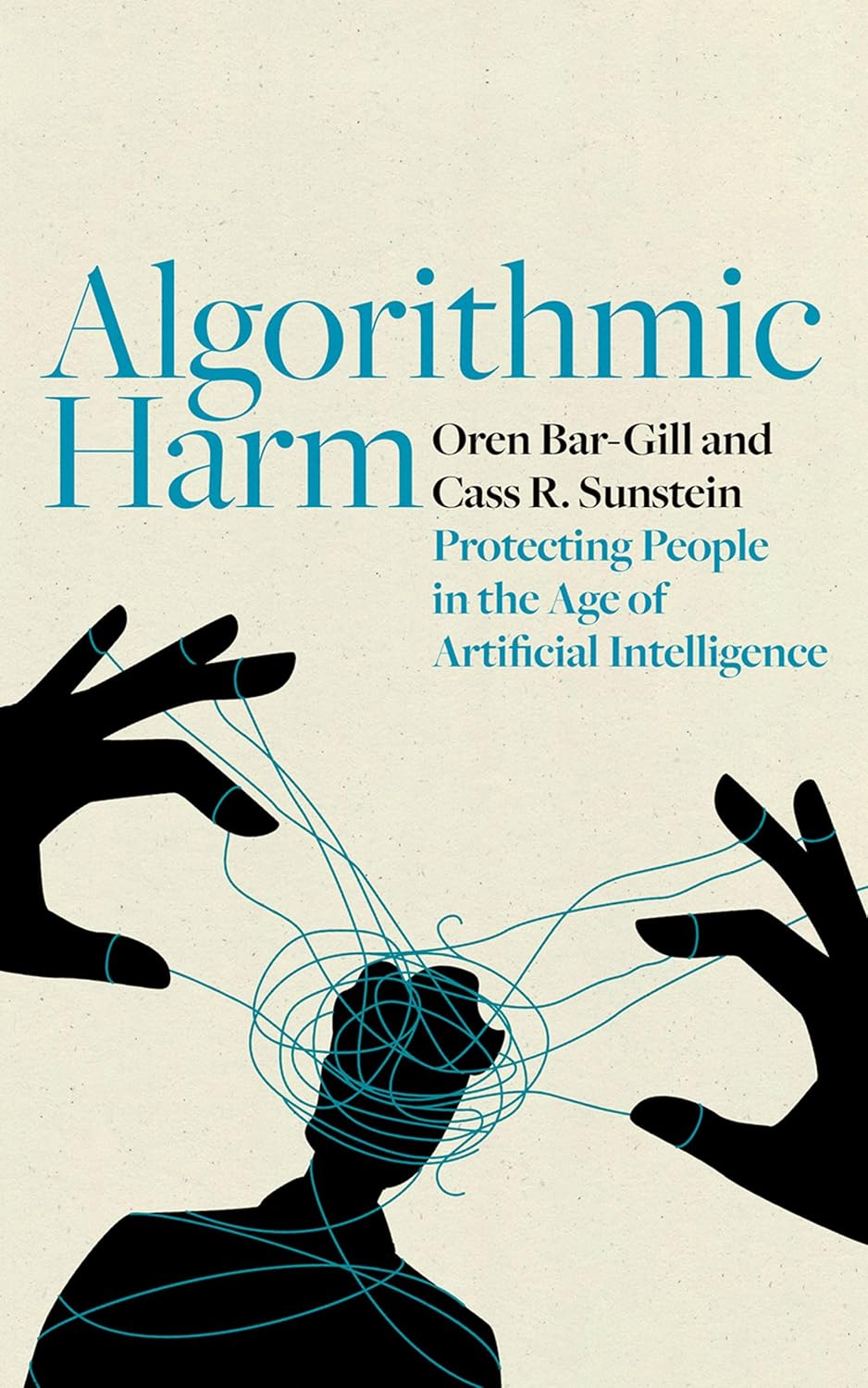
The question of whether artificial intelligence will help or harm ordinary people sits at the centre of some of the most consequential policy debates of our time. In Algorithmic Harm, the authors, Oren Bar-Gill and Cass R. Sunstein bring both rigour and accessibility to a subject that too often generates more heat than light. The book is neither a celebration of algorithmic innovation nor a counsel of despair. Its ambition is analytic: to identify precisely when and why algorithms cause harm, and to propose regulatory responses proportionate to those specific conditions. In that sense, it is a timely and disciplined intervention in a debate that is frequently distorted by ideological excess at both ends of the spectrum.
The book’s organising framework is a distinction between two types of consumer markets. ‘S markets’ are populated by sophisticated consumers – those with sufficient information and the rational capacity to use it effectively. ‘U markets’, by contrast, are populated by unsophisticated consumers who either lack relevant information or are subject to behavioural biases such as unrealistic optimism, present bias, or availability bias. The authors are careful to note that this is a shorthand: when they speak of S and U consumers, they should be understood as referring to the likelihood of mistakes rather than fixed categories of persons. Nevertheless, dividing the analysis in this way allows them to advance a clear overarching conclusion: ‘algorithmic differentiation is generally beneficial in S markets but often harmful in U markets.’
The book is structured in three parts. Part I focuses on algorithmic harm in consumer markets and is the analytical core of the work, comprising seven chapters. These cover algorithmic price discrimination and its extensions, algorithmic targeting, algorithmically enhanced misperceptions, algorithmic coordination, race and sex discrimination and consumer-side algorithms. Part II turns to policy and law, addressing how regulators might intervene through disclosure mandates, algorithmic transparency requirements and a combination of ex post policing and ex ante regulation. Part III extends the analysis beyond consumer markets to labour markets and political markets, closing with a warning that democracy and self-government are also at risk and that the same framework of analysis applies.
The treatment of price discrimination is among the most sustained in the book. The authors demonstrate that where consumers are sophisticated, algorithmic price discrimination reduces consumer surplus while increasing overall efficiency. In U markets, however, the analysis shifts: the willingness to pay of unsophisticated consumers includes a misperception component, meaning that pricing algorithms trained on behavioural data may exploit distorted signals rather than genuine preferences. The Facebook example the authors cite is instructive here – a leaked internal document reportedly showed the platform identifying when young users felt stressed, defeated or anxious, and using those emotional states to micro-target advertising. This is algorithmic targeting at its most troubling: not merely personalisation, but the deliberate exploitation of psychological vulnerability.
The dynamic dimension of the argument is also significant. Over time, as sellers accumulate more data about consumers’ past behaviour, the degree of price discrimination increases. The authors flag the case of behaviour-based pricing (BBP), noting that consumers with lower willingness to pay – who are likely to be poorer – may, in some respects, benefit from BBP because lower prices allow them to enter markets they would otherwise be excluded from. The labour market chapter draws the parallel explicitly: employers, like sellers, are increasingly using AI to make or assist in hiring and wage-setting decisions, and the asymmetry of sophistication between employer and employee maps closely onto the seller-consumer dynamic explored in Part I.
On the regulatory side, the authors propose that policing algorithms – tools developed by regulators to monitor sellers’ pricing algorithms – could play an important role, noting that the actual number of commercially deployed algorithms is smaller than it might appear, with a handful of large technology firms and a small number of developers supplying the market. They also argue that regulatory approaches should be designed to remain relevant as technology evolves, rather than becoming obsolete with the next wave of innovation.
Bar-Gill and Sunstein’s analytical framework is genuinely valuable, and the S/U market distinction gives the book a clarity of argument that some of the writings I have read on AI and regulation lack. The progression from consumer markets through to labour and political markets is coherent, and the policy prescriptions – disclosure mandates, algorithmic transparency, and the development of regulatory policing algorithms – are grounded and reasonable.
Yet the framework has vulnerabilities that the authors do not fully reckon with. The binary of sophisticated and unsophisticated consumers, however carefully the authors caveat it, risks masking important gradations within the ‘sophisticated’ category itself. What an engineer understands about AI is not the same as what a product manager understands, which in turn differs from what a marketing executive understands. A consumer who is sophisticated about one domain of algorithmic activity may be significantly less so in another. The authors’ own observation that willingness to pay includes a misperception component is worth pressing further here: even informed consumers may suffer from confirmation bias or operate with bounded knowledge about rapidly shifting technologies. The disruption caused by DeepSeek’s emergence is one recent illustration of how quickly the landscape can shift beneath even technically literate observers. The ‘S consumer’ may be a more unstable category than the book seems to acknowledge.
There is also a structural assumption embedded in the analysis that deserves scrutiny. The behaviour-based pricing discussion largely treats consumer decisions as driven by willingness to pay and the presence or absence of misperception. But purchasing decisions are also shaped by circumstances entirely outside the algorithm’s model — emergencies, sudden changes in income or one-off windfalls. These exogenous shocks do not map neatly onto the S/U framework, and their exclusion risks overstating the predictive tidiness of algorithmic consumer profiling.
One question that lingers after reading this book is whether the regulatory architecture the authors propose is politically achievable within the currently flailing democracy systems, as it’s a generally known fact that governments play catch-up with technological advancements. The suggestion that policymakers develop policing algorithms to monitor sellers’ pricing behaviour is intellectually coherent, but it rests on assumptions about regulatory competence and political will that the current environment does not obviously support. In a context where major technology firms are significant funders of electoral campaigns and cultivate close relationships with elected officials, the appetite for robust algorithmic oversight may be structurally limited in ways the book does not confront directly. The authors recommend that regulatory approaches be designed to avoid obsolescence as technology evolves – a sound principle, but one that presupposes a regulatory body both technically capable and institutionally independent enough to keep pace with commercial AI development. In my opinion, that presupposition deserves to be stated and interrogated rather than assumed.
There is also a broader geopolitical dimension that sits largely outside the book’s frame. The framework is calibrated primarily to Western liberal market economies and the consumer protection traditions of the United States and European Union. How the analysis translates to emerging market contexts where regulatory capacity, data infrastructure, and levels of consumer digital literacy may differ is a question the book’s scope does not seem to address, but that a globally oriented reader will find pressing.
Algorithmic Harm is recommended reading for scholars of law, marketing, behavioural economics, business management/leadership and technology policy, as well as for policymakers and practitioners engaged with AI governance. Bar-Gill and Sunstein have produced a framework that is both analytically rigorous and practically oriented, and their extension of the consumer market analysis to labour and political markets gives the work a reach that elevates it above a mere academic work. Some readers will find the S/U binary simplistic, and the book’s engagement with the political economy of regulation could be deeper. But as a serious, evidence-based and accessible intervention in one of the defining debates of the present moment, this work appropriately contributes to contemporary discussions and deserves recognition within the field.

Akin Akinbusoye is a PMP-certified IT Project Manager at HAP Consulting LTD with over 12 years of experience specialising in digital transformation, IT sourcing, and technology investment optimisation. His professional interests lie at the intersection of technology implementation, business strategy, business ethics, and the policy implications of algorithmic systems in organisational contexts.
In many areas of our lives, we join associations or engage in activities where there are rules that impose limits on or direct our behaviour. To give one example, over 7 million people are members of 40,000 football clubs, all with their own rules which are, in turn, regulated by the Football Association (FA). The FA, in turn, is a member of UEFA and FIFA with their own rules systems. There is, in the jargon, polycentricity or nested rules systems.
However, over time, the role of the state in regulating our lives has increased and the role of other bodies has reduced. Even football is now regulated by a government regulator.
By way of another example, we often think of the 1980s as a period of deregulation of financial markets. In 1986, there was an episode called ‘big bang’. This is often wrongly described as ‘deregulation’. In reality, the regulatory powers of a private body, the stock exchange, were radically curtailed after 300 years of independence, and they were replaced with a bureaucracy accountable to the Treasury. The scope of bureaucratic rulemaking in financial markets has increased exponentially ever since.
Our lives are now dominated by regulation from one source – central government. Even local government effectively acts as a set of Whitehall branch offices. When institutions do have some form of independence from the state, instead of this being regarded as normative, it tends to be regarded as a privilege, as if the state has a natural right to order our social, civic, professional, economic and family life. And there is always a threat hanging over quasi-independent institutions that they will have their independence snuffed out by the state – for example, when it comes to teaching about sex and religion in Catholic schools. And the remaining independence that universities, schools, professions, sports associations, and so on, have is radically tempered by employment regulation, equalities regulation and regulation that purports to promote human rights but, in reality, curbs freedom of association.
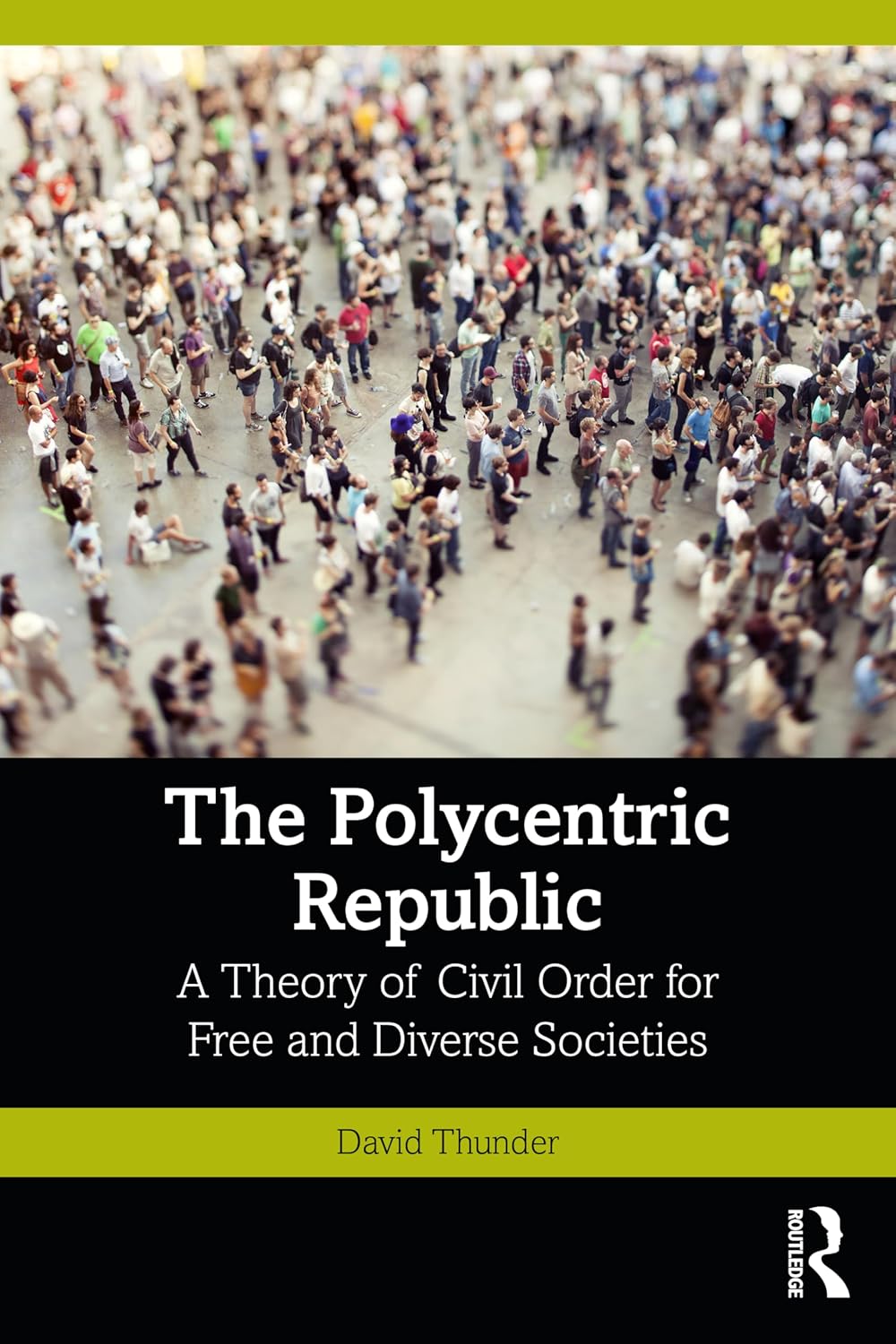
Pope Benedict produced a papal encyclical in 2009 in which he identified these problems, writing: ‘The exclusively binary model of market-plus-State is corrosive of society, while economic forms based on solidarity, which find their natural home in civil society without being restricted to it, build up society.’ This is surely true. And David Thunder’s excellent book, The Polycentric Republic: A Theory of Civil Order for Free and Diverse Societies, provides the antidote.
Thunder identifies the problem of the all-powerful centralised state as lying with classical theories of government in which the individual gives a monopoly of power (or coercion) to the state to keep order with the aim of promoting a peaceful society and preventing a ‘war of all against all’.
Thunder does not base his case for a system of decentralised governance on the principle of individual freedom but on the ability of such a system to promote flourishing and the practice of the virtues.
Thunder divides institutions of governance into two types: enterprise associations and civil associations. The former are not necessarily related to commerce and business, but they would be non-territorial. They would include professions, sports associations, universities, securities exchanges, and so on. Civil associations would be territorial in nature. Most powers in civil associations would be held at local level. The national political community would obtain its authority not just from a franchise of individual voters, but also from the lower-level civil associations and the enterprise associations: authority would flow upwards and not downwards. Interestingly, in some respects, the City of London operates on such a basis. Enterprise associations would be constrained by the right of exit. Civil associations would be constrained by the wide dispersion of authority.
In terms of philosophical outlook, the title of the book makes a clear nod towards Elinor Ostrom. Her Nobel Prize winning work showed how systems of governance which disperse authority with multiple layers and institutions adjusting to each other, evolved naturally in situations where economists and political scientists believed that centralised political control was often necessary.
There is an admirable chapter in the book which deals with possible objections to Thunder’s approach. But perhaps, there are a few other questions that could be considered. Firstly, reading this book from a UK perspective, one might be tempted to ask why he could not base his case on individual freedom and freedom of association. Until the growth of the centralised state from 1914, Britain had a huge network of self-governing institutions, many of which had developed over the previous 50 years. Local government was pretty autonomous too. Indeed, a Select Committee of inquiry into the stock exchange was able to conclude in 1878 that it was ‘capable of affording relief and exercising restraint far more prompt and often satisfactory than any within the read of the courts of law’. That is a pretty strong endorsement of forms of regulation that grow out of the market and civil society through enterprise associations.
Sporting associations also flourished. Indeed, it is worth noting that, in the case of football, three entirely autonomous rule-making bodies developed with very different organisational structures (association football, rugby football league and rugby football union). There was order, but also competition between rule-making bodies. A world of free, rule-making bodies in the context of a limited state is exactly what classical liberals would like, and it is what David Thunder wants too. So, the first challenge to Thunder is to ask why he does not join the queue of people who would simply like to go back to a smaller state.
The answer to that is that Thunder’s justification is different. His justification relies on creating a society in which we can all flourish and not one which simply maximises freedom, including freedom of association to form rule-making bodies. Pope Leo XIII, in 1891, published a strong defence of the family and private associations in Rerum novarum and argued that the state should protect the family and such associations and not interfere with them. His starting point was that of natural rights – we are born into a family, and society and the state should protect the family and society. But this perspective was also based on the need for society to flourish. Perhaps freedom and flourishing are best thought of as complementary arguments and so Thunder adds a new dimension to classical liberal arguments for a limited state.
And there is also the challenge, which Thunder does raise, that enterprise associations can be monopolistic and exclusive. I discuss this issue in a variety of papers, including, for example, an article ‘Private regulation versus government regulation: The example of financial markets’ Economic Affairs, 42(1), 30–49. In this respect, David Thunder refers to the Hanseatic league positively. But that organisation was extremely cartelistic. The Test and County Cricket Board (TCCB) was taken to court in 1977 for banning cricketers who played for an Australian entrepreneur, Kerry Packer. The TCCB lost. I disagree with the court decision, but we have to accept that a return to a world in which there is much greater diversity in rule-making institutions may lead to the restrictive practices that used to dominate economic life. That said, economic life today is dominated by state occupational licensing and government regulation of professions that restrict entry on arbitrary criteria.
I hope that David Thunder’s work will widen the constituency of people who believe in a limited state and dispersed competing forms of governance. Those of us who believe in a limited state but the maximum possibility for civil society structures of governance to emerge tend to be dismissed as ‘neo-liberal’ in a lazy misrepresentation of our views. But with his focus on creating a system of governance in which people can flourish and practise the virtues, David Thunder should avoid any such allegation, at least from interlocuters who exhibit a generosity of spirit and a genuine desire to engage with his arguments.
In the final chapter, David Thunder states that he hopes that the polycentric, federalist approach that he lays out provides a useful theoretical paradigm in which the future of our governance arrangements can be discussed. He has achieved that objective. His approach should be widely discussed and developed. It should be read by students on university politics and political economy programmes and by those who seek to influence the climate of opinion. It certainly should be of interest to Christians. Thunder states in the penultimate chapter that his purpose is to ‘stimulate our moral and political imagination with a view to stimulating institutional and cultural reform.’ This he does.
‘The Polycentric Republic: A Theory of Civil Order for Free and Diverse Societies’ by David Thunder was published by Routledge in 2024 (ISBN: 978-1-032-88889-7). 196pp.
Philip Booth is professor of Catholic Social Thought and Public Policy at St. Mary’s University, Twickenham (the U.K.’s largest Catholic university) and Director of Policy and Research at the Catholic Bishops’ Conference of England and Wales. He is also Senior Research Fellow and Academic Advisor to the Centre for Enterprise, Markets and Ethics.
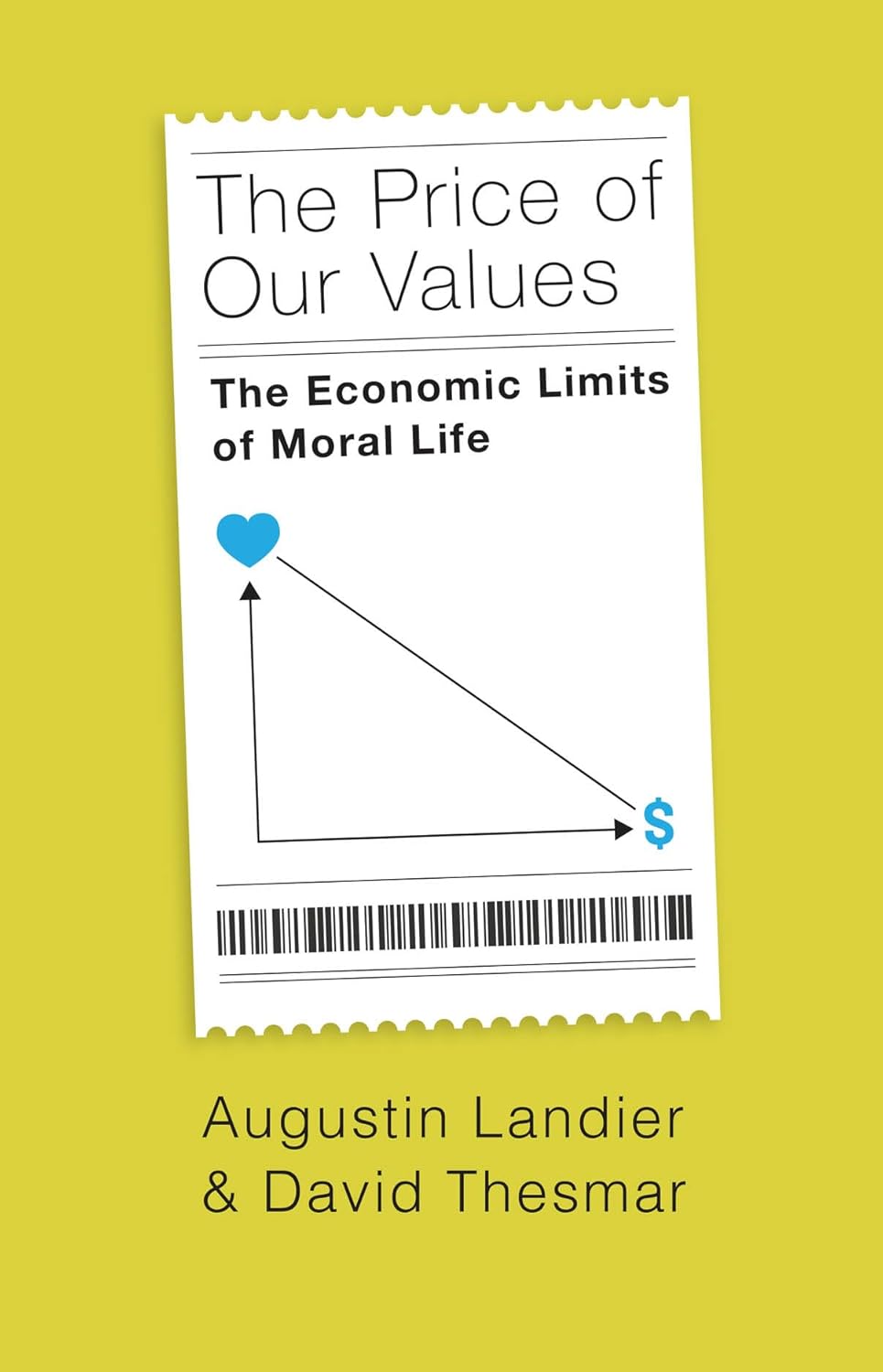
Written by two professors of finance (at HEC Paris and the MIT Sloan School of Management, respectively), this book considers the connection between economic thought and moral values, and the fact that they frequently come into conflict. Through a series of chapters on different issues, it focuses on the need for our moral decisions need to acknowledge their own costs – whether direct monetary costs, or simply the costs that arise in consequence of choosing one path over another – while economic analysis needs to acknowledge more fully the moral aspects inherent in any problem. This requires a willingness to include economic reflections in our moral thinking, but also a preparedness in economics to look beyond the default position of economic analysis – a utilitarian aggregation of pleasure, economic gain or material wellbeing – acknowledge its shortcomings and consider other moral perspectives.
The first two chapters set up the book, pointing out that we often separate economic thinking from moral thinking, as though economic thought has a corrupting influence on or no place in ethics. As the authors remind us, however, too often real life forces us to engage in both (for instance when deciding how to allocate resources in healthcare settings). They trace the emergence of utilitarianism as a central part of economic analysis, which, in its aggregation of ‘wellbeing’ or ‘pleasure’ also appears to make room for moral concerns, provided these are approached from a consequentialist perspective. Following a critique of utilitarianism, the book examines the shift in economic thought away from seeing people as self-interested and towards a recognition of altruism in human decision-making and policy-making. Nevertheless, the authors contend that in its treatment of ethics, economics still assumes a consequentialist outlook, continues to see human-beings as essentially selfish and views altruism as a form of universal or impartial utility-maximisation – all of which is open to question and does not appear to be supported by existing social scientific research into the ways in which people actually approach moral questions.
The point therefore emerges that greater recognition of ‘value pluralism’ is required: an acknowledgement that people do not typically think and behave as economics tends to assume, even when it takes account of moral considerations. As such, the authors state their intention of raising a series of dilemmas with a view to inviting readers to consider a range of responses, which draw on various philosophical positions beyond utilitarianism, as well as survey results, to show the trade-offs involved in each case and shed light on how people do in fact think.
Each subsequent chapter addresses a particular issue, covering liberty, competition and rents, justice, globalisation, cultural goods, companies and corporate virtue, and responsible investment. The treatment of each issue tends to differ. In some chapters, the authors outline a fairly characteristic approach from within economics and then subject it to criticism, showing that in their actual thinking, people do not tend to bear out the wisdom of the discipline but in fact have other legitimate concerns. For example, Chapter 6 examines the many reasons for which the population at large does not necessarily adhere to the general approach within mainstream economics that favours globalisation. This might not be because the public is simply bigoted or ignorant of the net benefits of free trade or migration, but because people have in mind not so much their own economic self-interest as concerns about socio-cultural and moral issues.
Other chapters, such as those on responsible investing or ‘beauty’, offer a more general discussion of relevant economic and non-economic considerations, and the trade-offs that have to be faced. Chapter 7, for instance, is concerned with cultural goods such as art and nature, and examines the ways in which we tend to view them not for their utility as consumption goods, but as having a value in their own right. This is a very interesting chapter that presents more in the way of philosophical discussion of our relationships with nature, heritage, science and the arts, closing with some reflections on possible cultural policy and the nature of the decisions that we might sensibly be expected to consider in relation to cultural goods.
This is not to say that chapters clearly follow one of two models but readers who begin the book expecting to find in each chapter a sustained discussion of ‘economic’ utilitarianism, deontological ethics and virtue ethics in relation to a specific issue, are likely to be disappointed. Instead, the book draws on these different approaches as they appear relevant to the direction of the discussion in hand. This approach does work but some might be of the view that this is not what they had come to expect from reading the introduction – but neither is the book a straightforward critique of the assumptions of economics. Indeed, the authors are keen to point out that they have themselves often argued for the positions that they subject to criticism – for instance in support of free trade – so in no sense is the work a rejection of the methods and models of economics as a discipline.
One or two chapters (particularly Chapter 5, on justice) probably attempt more than the space available allows, with the result that some of the discussions (such as the one on algorithms) are left somewhat short and leave the reader wondering what the purpose of their inclusion really is. Nevertheless, the book is clearly written in engaging prose and the purpose is clear: to call for ‘value pluralism’ in our consideration of important questions and to urge economic analysis to engage more fully than it currently does with the kinds of moral concerns that will often shape our thinking. This occupies more space in the book than the argument that our moral thinking needs to allow greater room for economic considerations, such that the subtitle (The Economic Limits of Moral Life) is arguably the wrong way round, but the book has much to recommend it. Importantly, in stressing ‘the need to understand and incorporate diverse perspectives on moral-economic trade-offs,’ the authors draw attention to the implications for public discourse. As they point out, such a ‘pluralistic approach acknowledges that different persons may prioritize different, yet equally legitimate, values, such as freedom, justice, tradition, or economic efficiency,’ adding that the ability to recognise ‘various moral perspectives on economic issues facilitates discussions about difficult choices’ (page 162). The book leaves open the question of how to balance these differing values and reach a consensus when they come into conflict or when policies are unpopular, but in calling for value pluralism, it represents a first step in making these conversations possible. It is certainly to be recommended to those interested in the relationship between economic analysis and moral reflection.
‘The Price of Our Values: The Economic Limits of Moral Life’ by Augustin Landier and David Thesmar was published in 2025 by The University of Chicago Press (978-0-226-82708-7). 191pp.

Neil Jordan is Senior Editor at the Centre for Enterprise, Markets and Ethics. For more information about Neil please click here.
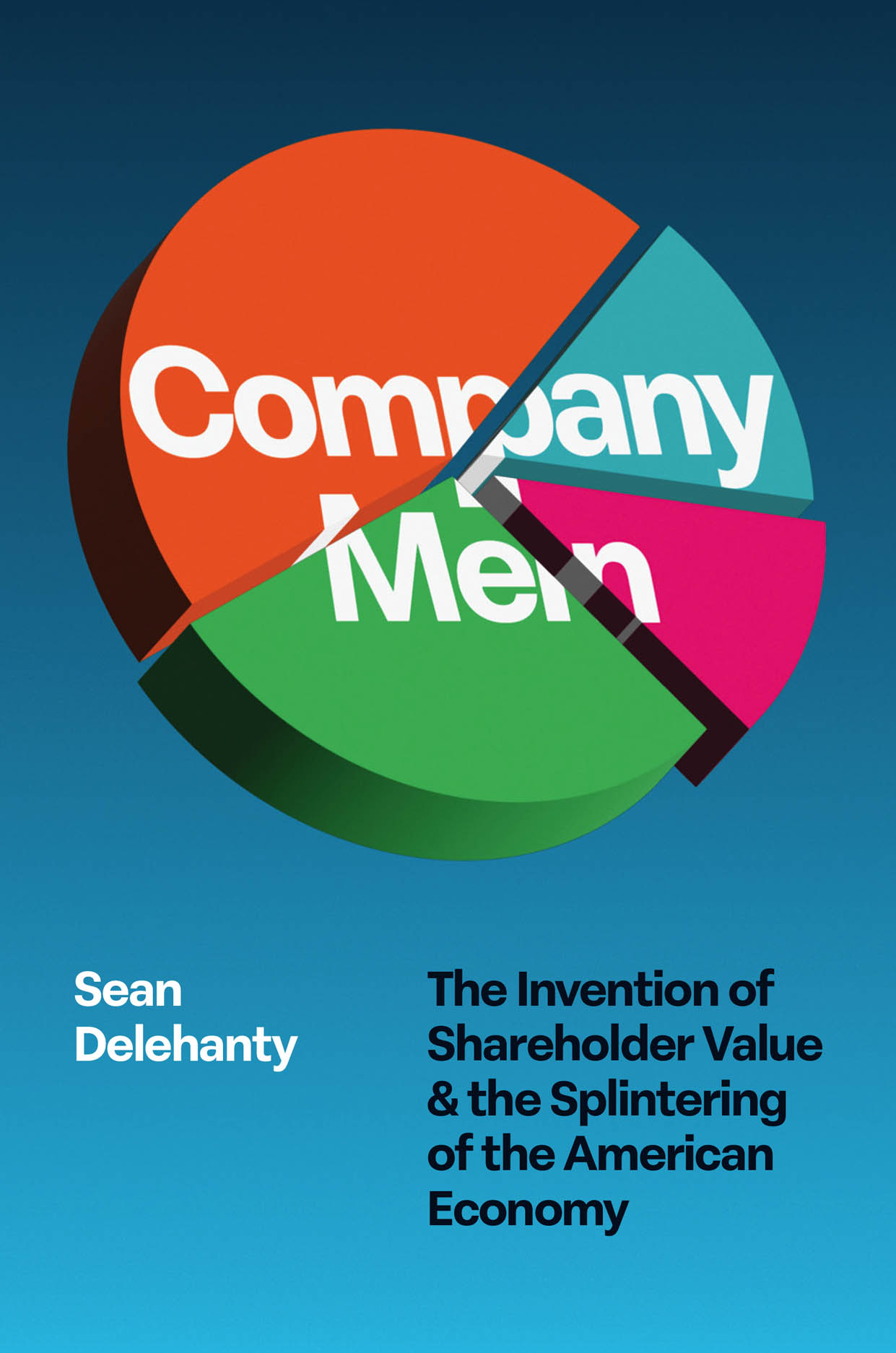
In one of the many mansions of today’s obsession with ‘neoliberalism’ resides a long-running debate about the nature and role of the corporation. Those arrayed on one side of the debate argue that stockholders do not own the corporation – all they own are their own shares – and that corporations should (perhaps consequently) be managed in the interests of a wide variety of ‘stakeholders’. At the other table sit those who believe that, as possessors of the residual rights of control, shareholders are indeed the owners of the corporation and that corporations ought (perhaps consequently) to be managed so as to create the most value for the shareholders. In Company Men, Sean Thomas Delehanty promises to illuminate this debate through an intellectual history of the shareholder-value idea. Unhappily, he is more successful at throwing shade than at throwing light.
On the plus side, the book is well written, and it covers a lot of the right ground. Emerging from Delehanty’s dissertation at Johns Hopkins, it is an attempt to craft the kind of intellectual history of free-market thinking that his advisor Angus Burgin achieved in his important study of the Mont Pèlerin Society. But unlike his mentor, Delehanty is unable to sublimate his own strongly felt ideological position. The result is not only ideological bias – which is common enough, and fair enough with a good argument – but also, in this case, an overall shallowness.
The shareholder-value debate has deep roots, but Delehanty focuses on the modern-day fons et origo of the idea that corporations should be run in the interests of shareholders, a wildly influential 1976 paper by Michael Jensen and William Meckling. Delehanty rightly sees this paper as an attempt, by two free-market-oriented, Chicago-trained economists, to develop the ideas in a famous article by Milton Friedman: that the only ‘social responsibility’ of business is for employees to pursue the goals of the firm’s owners within the constraints of legal and ethical norms. (That would usually, but not always, mean making as much money as possible.) Jensen and Meckling recognized that this implied what economists were coming to call a principal-agent problem. Employees would very likely arrive at work with their own goals, which they could typically pursue at the expense of the goals of the owners.
Jensen and Meckling made this agency problem the centerpiece of their theory of the firm – an attempt, as they saw it, to open up the black box of the firm as portrayed in conventional price theory. On the one hand, the separation of ownership from control in the modern public corporation had untethered the provision of capital from personal supervision, thus unleashing the massive real capital flows that underpinned economic growth. But on the other hand, the agency relationship had its own costs, in response to which firms had generated organizational responses that economists could study. The 1976 paper would become a landmark – though by no means the last word – in the economics of organization, a subfield that was beginning to gain traction in the 1970s.
Delehanty chooses to read the Jensen and Meckling paper, and indeed all of their (mostly Jensen’s) work, as nothing more than ideological weaponry, ‘part of their broader political project of protecting capitalism from democracy. A commitment to shareholder value maximization insulated businesses from the kinds of democratic pressures Jensen and Meckling warned about in their political work, which in turn had a profound effect on the nation’s political economy’ (page 61). As a result, Delehanty never engages with Jensen’s intellectual contributions in any substantive way.
Did the ideas of Jensen and Meckling have ‘a profound effect on the nation’s political economy’? The economic historian Deirdre McCloskey has warned against conflating what she calls think-history with do-history. Good intellectual history must surely engage with the events of the world in order to understand the evolution of thought. Similarly – but with far more difficulty – good economic history must confront ideas as it chronicles events and unearths the economic forces that operate behind events. But it is all too easy to depict a think-history as if it were causative of do-history. Although he occasionally backs off and portrays Jensen’s work as merely ‘justifying’ the movement for shareholder value, Delehanty sometimes seems, especially in an impassioned conclusion, to want us to believe that Jensen’s ideas are largely at fault for the increasing ‘financialization’ of the economy in the late 20th century, which is in turn largely at fault for a litany of what the author believes to be society’s ills.
The U.S. economy was already on the road to financialization early in the twentieth century. But, as I have argued, wars, depression, and the New Deal effectively de-marketized the economy for much of the middle of the century, giving comparative advantage to the large corporations as a locus of economic institutions and to their managers as arbiters of capital allocation. Managerialism continued after World War II, which had bolstered the capabilities of American corporations while destroying their foreign competitors. This was a stable era that saw the slow consolidation of the innovations of the second industrial revolution. Many now look back on the post-war period with nostalgia, even though most segments of American society are far better off today in material terms – and even though critics once complained about the depredations of managerialism in the same loud tones they now use to complain about financialization.
By the 1960s, large American firms were earning economic rents, which appeared to managers in the form of what Jensen famously called free cash flow. Rather than returning those rents to stockholders in the form of dividends, managers acquired firms in wholly unrelated lines of business, creating the conglomerate. (Significantly, conglomerates are in a sense a manifestation of both managerialism and financialization: managerialism because the managers not the market were making decisions about capital allocation; financialization because managers acquired assets in financial transactions rather than developing them internally.) This turned out to be as inefficient in practice as it is in theory, and entrepreneurs arose to unbundle the conglomerate by buying up stock and attempting to unseat the incumbent management, often forcing the selloff of the unrelated divisions. Thus was born the era of the takeover, both hostile and otherwise, which picked up pace over the next decades with the emergence of strong foreign competition and a dramatically changing macroeconomic environment. The assault on the conglomerate both initiated and benefited from the rapid development of external financial markets, which had been a sleepy, clubby sector in the middle of the century.
Delehanty tells much of this story, often in the same terms I have used. But in his account the events of economic history fly by like Burma Shave signs, leaving little real effect. All that seems to matter are the ideas of Jensen, who did indeed provide an intellectual framework for understanding how the market for corporate control created value in the economy. It shouldn’t be surprising that financialization created value, even despite the dramatic (and by no means waste-free) forms it took at the height of hostile takeovers. Handing the task of capital allocation off to a specialized industrial sector brings to bear many more perspectives and much more knowledge than is available to managers for internal decisions, and this is true even if one believes in only the weakest forms of the efficient-markets hypothesis.
What about the terrible effects of financialization? Jensen and others marshaled empirical evidence that takeovers did not reduce overall employment, investment, or R&D but had significantly increased productivity. Delehanty sees these as merely ideological efforts to ‘fully leverage the argumentative power he could gain from claiming the mantle of “scientific” research’ (scare quotes original). Like Nicholas Lemann, whose marvelous if often problematic Transaction Man covers much of the same ground as this book, Delehanty lays the blame for late-century deindustrialization and job loss on financialization while actually using as examples industries – like steel and automobiles – populated by the most managerial and least financialized firms in the economy.
So how important to the events of economic history were the ideas of Jensen and fellow proponents of the shareholder-value theory of the firm? It is certainly true that these ideas were influential. Raiders like T. Boone Pickens could be heard talking about the problem of free cash flow. But would events have moved along much the same path if these ideas had never been uttered? Company Men doesn’t take us much closer to an answer.

Richard N. Langlois is Professor of Economics and Head of the Department of Economics at the University of Connecticut. He is the author of The Corporation and the Twentieth Century: The History of American Business Enterprise (Princeton University Press 2023).
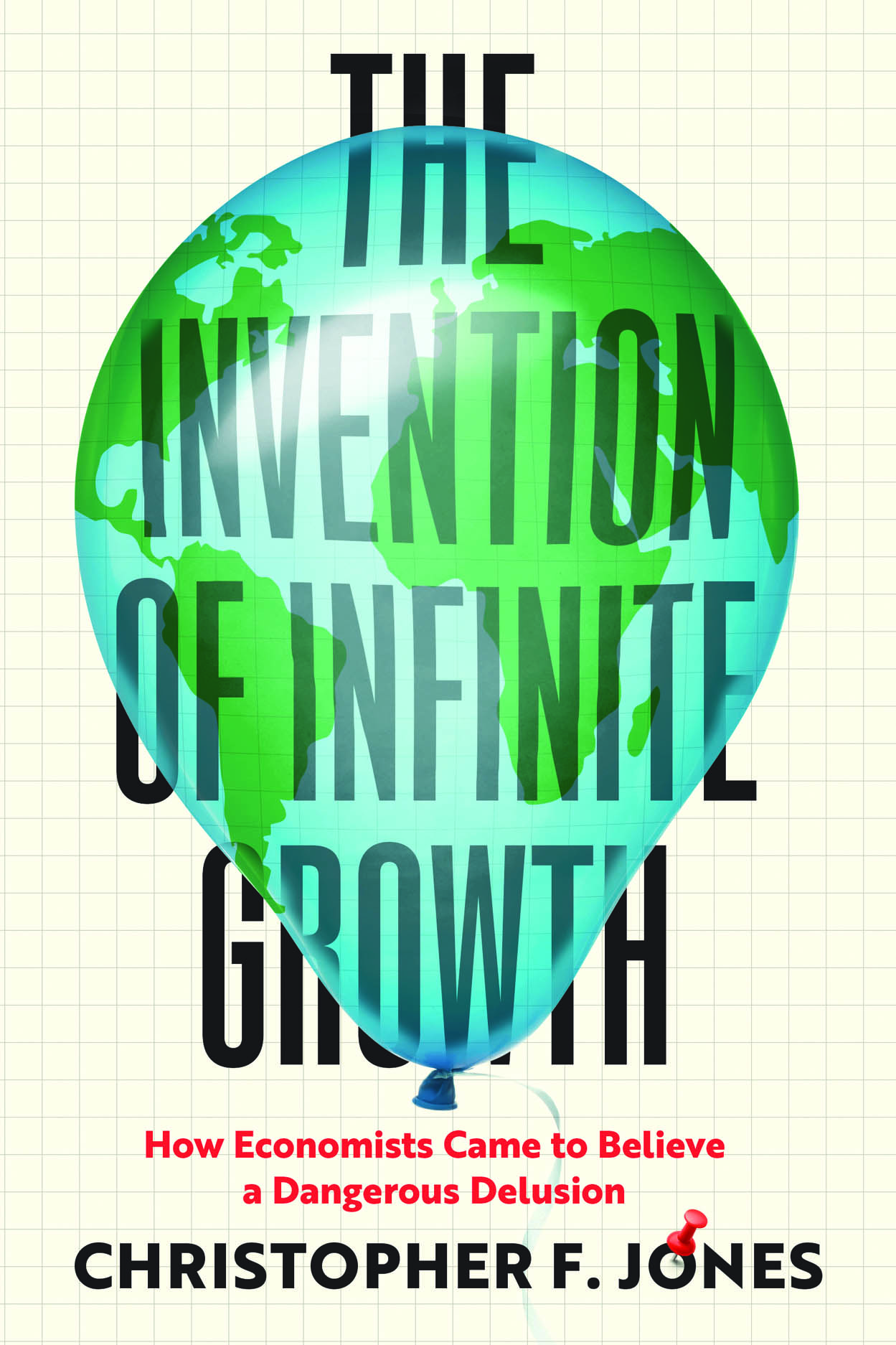
Christopher Jones has a straightforward thesis. Economists invented the concept of infinite economic growth which makes unsustainable demands on the natural world. As the global economy grows, so does the negative impact on the environment. More activity means more pollution and harmful climate changing emissions. The only way to live on the planet in a genuinely sustainable way is to accept limitations in economic growth. Few would dispute the idea that there is a real tension between the level of economic activity and the impact on the planet, although innovations have allowed greater consumption with less environmental impact. There is little merit in increasing wealth if the result is a planet which can’t support the current level of human life. John Stuart Mill’s hope that abundance would lead to better lives as focus moved to the good from the useful remains an attractive prospect.
The strengths of this work are also its limitations. Jones covers in detail the history of academic American economics. For those interested in how the ideas of Simon Kuznets, Paul Samuelson, Robert Solow, Joan Robinson, William Nordhaus, Paul Romer and many others relate to each other, this provides a useful guide. Jones explains clearly how the tension between the desire for economic growth and sustainability have been explored from Malthus and Mill to ecological economics and green growth. He is particularly strong in exploring the way that the school that developed around Robert Solow and Paul Samuelson at MIT, and their models which sought to analyse the factors which account for economic growth, came to dominate academic economics. He focuses on the development of GDP as the key metric for national economic activity and how it has come to be a key element in political discourse. Jones provides a useful reminder of the history of global attempts to reduce global warming from the enthusiasm of the Earth Summit in Rio de Janeiro in 1992 to the disappointments in the same city twenty years later. He concludes that the ‘fixation with growth instead of better lives and healthy ecosystems is apparent in sky-rocketing levels of inequality’ and that ‘growth must give way to degrowth’.
This analysis may be more persuasive to an American audience with high incomes. However, given that environmental concerns are global, his rather parochial approach is problematic. Narrowly, one may wonder if Jones is inclined to exaggerate the role of academic economists. Whether they ‘invented’ the idea of growth being infinite or rather sought to explain the evident step change in global economic performance after the industrial revolution is less important. More significant is the failure to engage substantively with the experience and perspective of the majority of the world’s population in Asia. While Jones bemoans increasing inequality in America, he gives no attention to the astonishing reduction in poverty in Asia, for instance.
He recognises that the arguments for ‘degrowth’ have received little support from mainstream economists but shows little interest in why this is the case or in how his ideas would be put into practice. He calls for growth to be ‘targeted to those who need it most, and away from those who do not’. That may be hard to disagree with in principle, but we hear nothing as to how this objective would be achieved apart from vague calls for more focus on how wealth is distributed. With egalitarian redistribution the world economy would have to quintuple for every person on the planet to be as well off as the average Dane. For every person to reach the line of poverty in the developed world ($30 a day), the world economy would have to double. [1]
Moreover, the author’s focus on America seems to blind him to the impact of economic growth elsewhere. Jones completely fails to engage with the crucial question of how an affluent global north can expect a relatively poorer global south to deny themselves the benefits of economic growth. It might be unrealistic to expect an answer, but to fail to recognise such a key challenge undermines the value of this work. It is particularly disappointing that Jones describes the argument for ‘degrowth’ as being straightforward. It may appear so from an American perspective, but perhaps much less so for those still emerging from poverty.
The economics of comparative advantage have been demonstrated on a global scale by the transfer of manufacturing activity from higher cost American and European economies to those with cheaper labour in Asia. This aspect of globalization has been an engine for significant improvements in living standards for those employed and cheaper goods for consumers (perhaps especially the poorest Americans). This has caused dislocation and distress in communities (comparatively wealthy communities in an international context) which have seen factories close, but Jones has little to say about these trade-offs.
By contrast, he is concerned about growing inequality in America, although unusually, he seems rather to assume this and does not provide a reference in support of his assertion. (Andrew Lilico’s review of The Myth of American Inequality by Phil Gramm, Robert Ekelund and John Early is interesting in this regard.)
This focus on America finds expression in a weakness in dealing with the rest of the world. Citing a 1988 article by Robert Lucas, Jones claims that India’s economy, from the perspective of 1980, ‘had grown only 1.4 per cent over the preceding two decades’. Lucas in fact suggests that ‘rates of growth of real per capita GNP’ had averaged 1.4% per year over that period. This may be no more than a lack of attention to detail, but it does not encourage confidence. The same is true of a suggestion that the elder Malthus was alive in the 1970s. For a work by an academic, this book is rather uneven in quality and perhaps not the ‘scholarly miracle’ claimed by J R McNeill in a blurb for the book.
The book is strong on the way that ideas around the tension between growth and the natural world have developed but disappointing in adding nothing useful to the debate on how our generation should approach these issues. There is arguably little merit in reducing economic activity and the related emissions in America and Europe if they are simply to be exported to Asia. To suggest that accepting the end of economic growth is straightforward, while not at least recognising that this is unlikely to be accepted by much of the world, reduces the value of the work. If the reader is interested in the history of the study of economics in America, and the way that thinking on the tension between economic growth and the environment has developed, this book contains much useful material. The suggestions for change are perhaps less compelling.
[1] See Ritchie, H. (2024) Not the End of the World: How We Can Be the First Generation to Build a Sustainable Planet. Chatto & Windus. Pages 34-5.

Andrew spent his career with PricewaterhouseCoopers where he was a partner for more than 25 years. He led a variety of the firm’s businesses both in the UK and globally, with a focus on the pharmaceutical industry. He also led the firm’s work on explaining corporate taxation to civil society and the public. Since retiring from PwC he has completed a master’s in history at Oxford and is hoping to undertake further research. He is also a trustee at the London Handel Society and the Open Spaces Society.
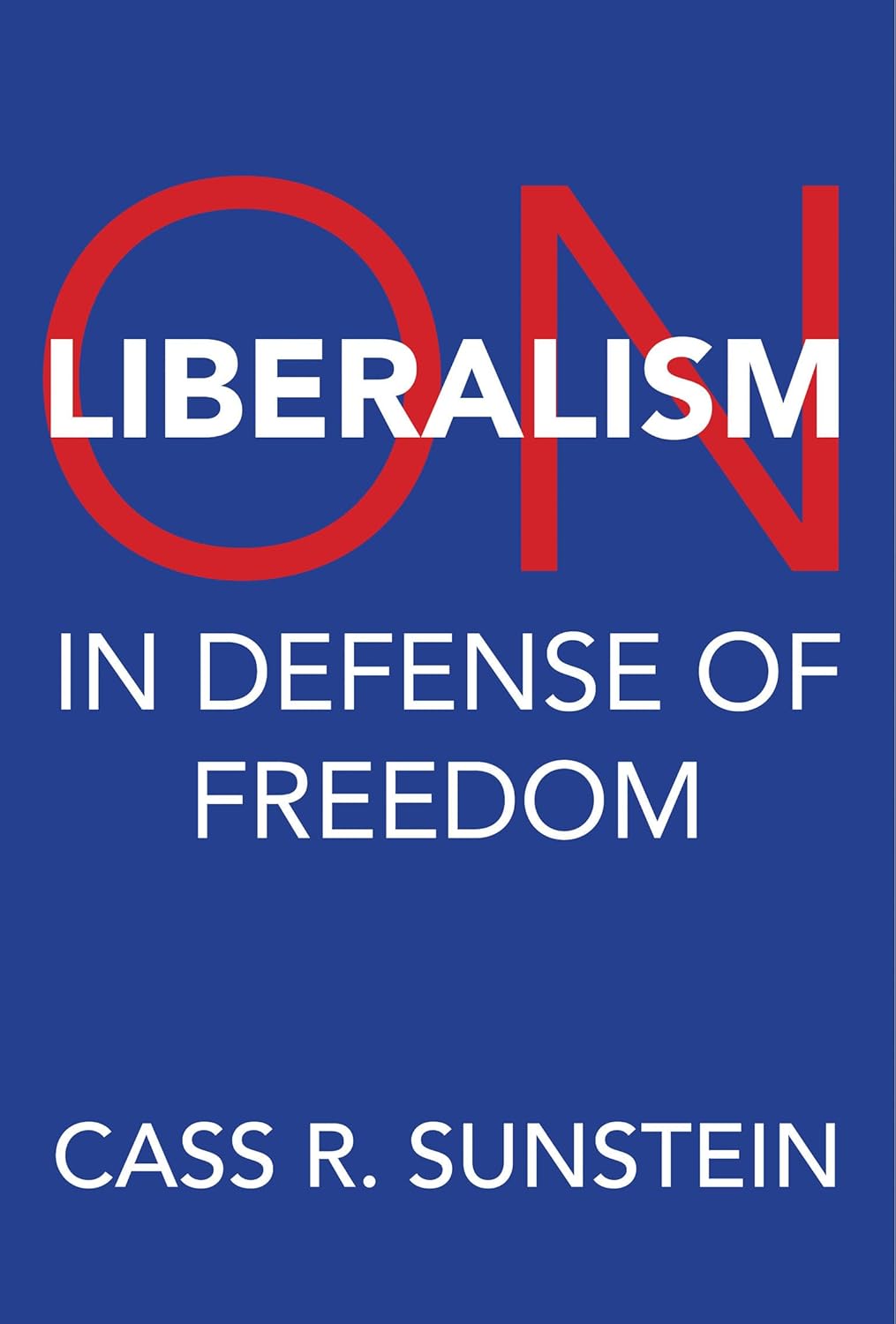
Cass Sunstein has written what may be the most lucid and unembarrassed defense of liberalism in recent memory. On Liberalism is at once a philosophical meditation, a political testament, and a quiet act of intellectual recovery. In an age when the word ‘liberal’ is either wielded as an accusation or whispered with apology, Sunstein offers something rare: a confident, humane, and historically informed affirmation that liberalism remains the best moral and political framework we have.
‘Festschrifts’ may be uneven, but manifestos rarely are—and this short, tightly reasoned book is nothing if not a manifesto. Sunstein begins from the premise that liberalism, properly understood, is not the ideology of any faction but a moral vision grounded in freedom, equality, and dignity. ‘Liberalism is a big tent,’ he writes, ‘but it is also a fighting faith.’ His is a creed of pluralism and restraint, of reasoned disagreement and institutional humility. Throughout, his tone is that of the patient teacher rather than the polemicist: confident without arrogance, passionate without bitterness.
Sunstein structures his argument around six cardinal principles: freedom, pluralism, security, equality, the rule of law, and opportunity. Each principle receives a concise yet profound exploration, enriched with historical insight and contemporary resonance. This is no abstract taxonomy; it reads more like a meditation on civilization itself. Sunstein insists that these values were not conjured from ideology but forged through centuries of moral conflict and political experiment. They are, he reminds us, ‘the slow achievements of human decency.’
He returns repeatedly to his intellectual hero, John Stuart Mill, whose On Liberty becomes for him the liberal catechism. Sunstein’s Mill is not the sterile rationalist of caricature but a passionate moral romantic, convinced that individuality is the flame that sustains civilization. The passages on Mill’s courage—his insistence on defending free thought even when it scandalized his age—are among the most stirring in the book.
Hayek and Rawls also make appearances, not as combatants but as partners in conversation. Sunstein treats Hayek’s spontaneous order and Rawls’s distributive justice as complementary rather than contradictory. This capaciousness of spirit is one of Sunstein’s chief virtues. He refuses to reduce liberalism to a party platform. Like Mill’s, his liberalism is both moral and experimental: an ongoing inquiry into how human beings can live together without coercion and with dignity.
What distinguishes On Liberalism from other recent defenses of the creed—Fukuyama’s or Pinker’s, for instance—is its realism. Sunstein’s liberalism is neither sentimental nor technocratic. It is, in his own phrase, ‘freedom with seatbelts’: confident in human agency but mindful of its limits. The author of Nudge remains attentive to the psychology of choice, arguing that freedom is not mere non-interference but the cultivated ability to make good decisions within a just and enabling framework. Markets, he insists, are indispensable to liberty, yet they must be tempered by law and animated by conscience.
This realism extends into his treatment of governance. The discussion of Franklin D. Roosevelt’s ‘Second Bill of Rights’ is exemplary. Sunstein interprets these social and economic rights not as a betrayal of classical liberalism but as its completion, a recognition that liberty without security can be a cruel illusion. Here his liberalism proves both moral and muscular, insisting that compassion and competence are not opposites but allies.
What gives this book its particular charm is its tone: Sunstein writes as a moralist in the best sense—not to lecture, but to elevate. Quoting Germaine de Staël’s call for ‘a lever against egoism,’ he suggests that liberalism, rightly understood, is an ethic of generosity. Freedom requires self-restraint; tolerance is not indifference; civility, far from weakness, is a civic virtue.
He is at his most eloquent when he turns from theory to temperament. Liberalism, he argues, is not only a political creed but a psychological posture: a preference for conversation over coercion, persuasion over purity, humility over hysteria. He concludes one reflection with Rawls’s understated line from A Theory of Justice: ‘Purity of heart, if one could attain it, would be to see clearly and to act with grace’—a sentence he takes as the very essence of the liberal spirit.
The later chapters engage the challenges of our present age: populism, nationalism, digital tribalism, and the collapse of trust in institutions. Sunstein does not scold; he reasons. Liberalism, he concedes, has sometimes seemed weary or complacent. Yet its promise remains the most humane path between authoritarian discipline and revolutionary fervor. What is needed, he suggests, is ‘freedom with fire’—a moral energy without moralism, conviction without cruelty.
In his closing ‘Epilogue: Fire and Hope,’ Sunstein sounds almost pastoral. Liberalism, he writes, ‘is not a creed of cold reason but of faith in improvement—faith that reason and decency can coexist.’ That faith may seem quaint today, but Sunstein wears it with sincerity and grace. His optimism is not naïve; it is hard-won.
And yet, the reader may feel a lingering unease. Liberalism’s problem has never been its ideals but its optimism—that freedom and equality, individuality and solidarity, can always be harmonized. Sunstein’s ‘big tent’ sometimes feels like a moral circus: everyone is welcome, provided they follow the rules. Liberalism’s greatest temptation is procedural perfection, the belief that decency can replace depth. When politics becomes mere management and conscience mere sentiment, something vital withers.
Still, this is not an external critique but a filial one. Sunstein himself acknowledges liberalism’s contradictions as inseparable from its vitality. On Liberalism is both defense and confession: an admission that the creed is perpetually unfinished, forever balancing liberty and order, reason and passion. The miracle, he suggests, is not that liberalism has survived its crises—but that it continues to offer a vocabulary of hope in an age of exhaustion.
On Liberalism is not a book for cynics or ideologues. It is a work of intellectual courage, written with clarity, warmth, and historical intelligence. Sunstein’s liberalism is moral without moralism, rational without reductionism, principled yet pragmatic. The book deserves to be read by anyone who believes that the center of civilization is still worth defending—not because it is safe, but because it is, however precariously, free.
In the end, Sunstein’s liberalism is less a political doctrine than a moral temperament: a quiet faith that humanity is improvable, that reason can temper rage, and that freedom, properly tended, can still burn bright—without burning down the house.
‘On Liberalism: In Defense of Freedom’ by Cass R. Sunstein was published in 2025 by The MIT Press (978-0-262-55018-4). 186 pp.

An interesting example of market transformation can be seen in the growth of worldwide spending on beauty products, which reached $440bn in 2024. There are various trends (or pressures) at work, with men now feeling freer to spend on beauty products and demand growing among young people, who are purchasing such products at much earlier ages than their grandparents. Social media has played a significant role: as influencers share their beauty regimes, the online space is becoming the biggest shop window for the beauty industry. Additionally, there has been a shift in the marketing and consumption of beauty products, as consumers have become increasingly interested in the ingredients of the products that they buy and their supposed effects. In consequence, packaging is now plainer and bears something of the ‘laboratory look’.
Naturally there are concerns about trends among young people. With reports that beauty products are now being bought by children as young as eight, there has been alarm at the loss or increasing sexualisation of childhood, as well as concern about the damage that certain products can do to children’s skin. In consequence, there have been calls for regulation. It is normal to seek restriction or regulation of products that are deemed harmful, as witnessed in relation to tobacco, for instance, and more recently in connection with tobacco alternatives, such as of vapes and nicotine pouches. In connection with the beauty industry, one might wonder whether (or hope that) a ban on social media accounts for under-sixteens, as implemented in Australia and currently under consideration in the UK, will have an effect. Regulation in one sphere might affect associated behaviour in another. If young children are heavily invested in ‘beauty’ in an unprecedented manner – to the point of talking about anti-ageing products before they reach their teens – and social media influencers are in part responsible for driving such an interest, then restrictions on social media access could go some way towards addressing the problem. However, it is important to consider whether regulation is the answer.
The thought of the sociologist Max Weber (1864-1920) perhaps offers one means of shedding light on the issue. Weber described the phenomenon of ‘disenchantment’ and its effects on society. With the advance of reason and scientific principles, it becomes increasingly difficult to believe in spirits, gods or supernatural forces, with the result that the influence of religion and superstition is diminished. As the world becomes demystified and science is able to explain everything in rational terms, the world loses its mystery and appears mechanised and predictable. However, science cannot adequately fill the void created by the ousting of religion and people are no longer able to find the kind of meaning once provided by the values grounded in traditional beliefs; moral questions can be articulated and analysed, but not satisfactorily answered.
Some have questioned Weber’s account of the disenchantment of society, while others have proposed the possibility of re-enchantment: meaning and value – if they have indeed been lost – can be restored to the disenchanted world, either by projecting subjective values onto it, or by locating value as objectively existing in nature itself.
One interpretation of a shift in the market for beauty products might employ these concepts. Is the move towards a greater interest in the active ingredients of cosmetics a sign of an increasingly ‘scientific’ mindset, as society becomes more rational? Or is this in fact a form of re-enchantment, whereby ‘science’ – however ‘science’ is understood – is elevated to the status of religion and becomes a new dogma or article of faith? Do those who seek to buy plainly packaged cosmetics that resemble medicines display a tendency to deify ‘science’, almost to the point of seeking purpose and meaning in it? If influencers with questionable credentials in dermatology are helping to drive sales, perhaps such an account is not so far-fetched.
Perhaps the disenchantment thesis is able to make some sense of the disproportionate interest in beauty among young people, with children buying – or being given – adult cosmetics. In a disenchanted society in which transcendent values and traditional notions of meaning are lacking, preferences are shaped by other forces – or themselves become the locus of value and meaning. In either case, they can become disordered and unrestrained. Might skewed and superficial notions of beauty, driven in part by the forces of consumerism and assisted by social media, be behind the behaviour of some children? Where certain values have lost their influence, it is possible that people no longer see anything wrong with eleven-year-olds using anti-ageing products. If that is what they want and their parents have no objection, the thought might run, then so be it.
It is no surprise that there are calls to regulate access to social media for children. Social media – or its excessive use – has been associated with all manner of ills. The question is whether restriction will solve the problem. Likewise, we might ask whether, should the trend towards childhood use of adult cosmetics reach a scale at which it is felt that something must be done to protect the physical and developmental health of children, regulation would prove effective.
Markets simply match vendors with buyers, and it is something of a truism that businesses, if they want to survive, adapt to markets – or seek to shape them – in order to be able to offer a product for which demand exists. In the sense that the demand side of the ‘supply and demand relationship’ characteristic of markets is shaped by societal values, it is clear that markets do not simply serve society; they reflect it, too. When we hear calls for regulation to address problems, it is important to consider whether regulation can achieve the desired outcome. For instance, what manner of legislation could ever prevent parents from buying anti-ageing or beauty products for their barely-teenage children? In the absence of parental oversight, can any regulation really prevent determined teenagers from accessing social media? Parents who buy £1,000 phones and let their children scroll through social media until the small hours, or buy expensive, adult cosmetics for their children because ‘this is what she wants’ or ‘these are what her friends have’ are arguably not matters for regulation. These are questions of values.
Markets can only serve a society because to some degree, they act as a mirror of that society. Where markets are an expression of who we are or what we have become, concerns ought perhaps to be directed not at the statute book with a view to controlling the market itself, but at our own values: the attitudes of the society that the market both reflects and serves.
Image by Freepik (www.freepik.com)
Neil Jordan brings to CEME seventeen years’ experience of academic publishing, having previously served as a senior commissioning editor for Ashgate and Routledge where he specialised in research level publications in the social sciences. His primary focus was on sociology and social theory. Neil has also been employed as a teacher of philosophy and religious studies. He holds bachelor’s and doctoral degrees in philosophy, both from the University of Southampton, and has published on the subject of ethics.

In his Nobel Prize lecture, Ronald Coase said: ‘a large part of what we think of as economic activity is designed to accomplish what high transaction costs would otherwise prevent’.
Think of the retail sector, for example. Its sole function is to reduce transactions costs – not to produce anything tangible. If you want a roast chicken dinner in the absence of retailers, you would go to a farm to buy a chicken; another farm to buy a cabbage; another to buy potatoes; and so on. The so-called transactions costs of collecting up the ingredients would be enormous, far greater than the actual costs of the ingredients themselves.
Of course, the internet has transformed retailing by finding a way to reduce transactions costs without the need for a visible retail store. Indeed, in general, changes in technology that change transactions costs can lead to radical changes in industrial structure.
The financial sector also exists to reduce transactions costs and the retail and financial sector between them are around one-sixth of the economy. It may seem a lot to spend on something as intangible as reducing transactions costs. But imagine the alternative.
Universities also exist, though only in part, to reduce transactions costs. An individual who wants higher learning (whether for practical reasons or to expand his or her mind) could put together the elements without a university. In theory, we could have organisations that sold syllabuses and reading lists. You could sign up for lectures given by freelancers. You could get together with some people studying the same subject and a freelance professor and have some discussions. You could try to find a way to signal to employers that you have actually acquired some knowledge. But imagine the costs of doing this.
A university saves you the bother by bringing all this together: you pay the fee and hope to have a structured programme, appropriate reading lists, other students to talk to, competent professors, assessment and certification under one roof.
Our education sector used to be much more diverse. Elements of the above were available in a range of different institutions (professional bodies, correspondence course providers, teacher training colleges, worker educational associations, municipal training colleges, private training colleges, polytechnics, university colleges and, for just a few, universities).
Will AI radically change transactions costs and thus give rise to significant changes in the sector? The answer is probably ‘yes’. Almost certainly, AI will not just change how universities do what they already do. If universities simply plan on this assumption, the whole sector will be in trouble. As Fr. Stephen Wang suggested in another context, AI may find radical new ways to achieve intermediate (and, in this case, end) objectives. Perhaps there will be unbundling of what universities do. Perhaps we will go back to the diverse range of institutions that used to exist, albeit in a different form.
There may be some disciplines where the accumulation of technical knowledge is especially important and where a provider can use AI to provide excellent guided reading, syllabi, pedagogical materials, assessments, certifications, and so on, which can be supplemented by discussion groups, also organised by the provider, using AI to bring together the most appropriate people. These discussion groups may be based in the workplace, the local area, or be online. Subjects such as law and business may be especially appropriate for this approach. Professional bodies can do the certification. This does not mean that learning for its own sake, debate or discussion of higher-level principles, and so on, will not happen. They can happen in other forums, both to complement the technical education and assessment process and as a form of continuing professional development.
This leads to the question of where Cardinal John Henry Newman’s vision of the university fits in. Some would say that this has broken down over many decades and that the modern university looks nothing like Newman’s vision. I would argue, instead, that the university has expanded to take on many functions other than the provision of Newman-style education. It is not that the university has dropped Newman, it has acquired other functions. Perhaps the development of AI will lead those other functions to be done better in other learning contexts – or by universities using different models of provision.
St. John Henry Newman, declared by the Catholic Church as a co-patron saint of education recently, famously produced ‘The Idea of a University’. The key features of such an institution are as follows: the acquisition of knowledge for its own sake; a university that teaches all subjects and integrates theology as the lynchpin of all subjects; it cultivates the character of the student so that they develop a critical intellect not limited to a specialism; personal contact with tutors; and separation of teaching and research. As it happens, certification is not essential to any of this. Indeed, if education is for its own sake, certification might be regarded as redundant. In reality, many people combine many objectives of education when they undertake a degree.
It is easy to see that these characteristics of education necessitate genuine human interaction between students, and between students and teachers. However, they do not only have a place within a university, though the second of them is, perhaps, challenging for other institutions. Many of these Newman characteristics are, today, apparent in the programmes of organisations outside the university sector. Often, such programmes are, as in past times, financed philanthropically with professors giving their time for free – after all, the process is just as enriching for teachers as it is for students.
For example, we already see hints of this approach in think tanks and other organisations such as the Prosperity Institute, Alliance Defending Freedom, the Acton Institute, the Institute of Economic Affairs (working with the Vinson Centre at the University of Buckingham), the London Jesuit Centre, the Thomistic Institute and many other organisations. These programmes provide useful skills as well as intellectual enrichment without certification. They involve higher learning, discussion in peer groups and with mentors, all guided by university professors. The Centre for Enterprise, Markets and Ethics has a mini version of such programmes linking the study of economics to Christianity.
It is easy to see how think tanks, and Churches, might – indeed, perhaps should – develop such programmes further, always remembering that, in a Christian context, personal interaction is vital, and technology should be kept in its place.
But what about the future of universities? The different functions of universities could be undertaken in different institutions in an AI world. Businesses, such as BPP, are well placed to provide technical education very effectively across a number of fields.
But the multi-purpose university is not dead. However, reflection is needed. When a revolution such as AI happens, as Fr. Stephen Wang explained, we do not just need to look at AI-enhanced ways of doing what we are doing. The important questions are: ‘What are the intrinsic features of the service we are offering?’ and ‘How can these intrinsic features be best provided in an AI world in different fields – vocational, technical, teacher training, liberal arts, physical sciences, and so on?’
I suspect that, if the multi-purpose university is to survive, it will have to house different approaches to education and training under one roof (perhaps, a partly virtual roof). Diversified institutions exist in a number of sectors – think of banks, for example, with their wealth managers, traders, investment managers and banking service providers: these are all very different types of service. There will also be plenty of room for niche institutions in this new world. The development of AI should force universities, charitable education providers, business providers, professional bodies and think tanks to think about what the distinct essential elements in higher learning are and then consider the best ways to deliver them. Whether the regulators and funding framework will allow education to evolve in response to new technology is another question, of course. If they do not, they may find that the sector they are regulating and funding shrinks.
Philip Booth is professor of Catholic Social Thought and Public Policy at St. Mary’s University, Twickenham (the U.K.’s largest Catholic university) and Director of Policy and Research at the Catholic Bishops’ Conference of England and Wales. He is also Senior Research Fellow and Academic Advisor to the Centre for Enterprise, Markets and Ethics.
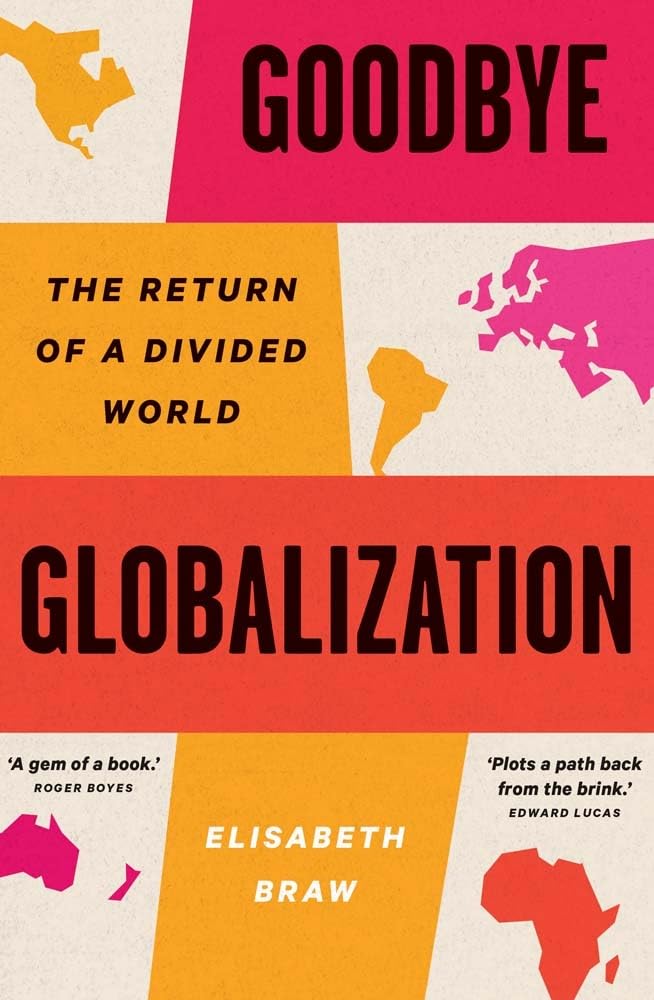
The timing could hardly be better. Elisabeth Braw’s Goodbye Globalization: The Return of a Divided World was published just as Donald Trump returned to the White House, and it has lost little of its pertinence in the year since then. And yet Braw, an Atlantic Council fellow delivers a deeper message. Trump isn’t the cause of deglobalization. He’s merely the symptom of a much deeper malaise that the Western establishment spent three decades pretending didn’t exist.
The book’s central thesis is brutally simple. The globalization project that dominated from the fall of the Berlin Wall until roughly the mid-2010s is already dead. Braw traces the story chronologically, from the giddy optimism of the 1990s through to today’s fractured world order. Back then, we were assured that opening up trade with China would inevitably lead to political liberalization. Beijing would discover the joys of democracy once its middle class got rich enough. Meanwhile, integrating Russia into the global economy would prevent any return to Cold War tensions. Financial deregulation would spread prosperity. Supply chains spanning multiple continents would deliver ever-cheaper goods to grateful consumers.
It all sounded fantastic in the economics faculties and corporate boardrooms. Out in the real world, however, it did not work out quite so well. Manufacturing workers in the West watched as their jobs vanished to China. Entire communities were hollowed out. The promised retraining programmes turned out to be worthless. The nineties offered plentiful opportunities, but there were plenty of people who were left behind.
What makes Braw’s account particularly valuable is her willingness to name names and tell human stories. This isn’t some dry academic treatise. She’s spoken to executives, policymakers, and ordinary workers across the globe. The result is a book that comes vividly to life with the full cast of characters who shaped this era.
The financial crisis of 2008 should have been the wake-up call that something was not working. Instead, the elites doubled down. Yes, there were problems with financial integration, but surely the answer was more regulation, not less interconnection? Then came Brexit. Then Trump’s first presidency. Then Covid, which revealed just how dangerously dependent Western nations had become on Chinese manufacturing for everything from pharmaceuticals to personal protective equipment. Russia’s invasion of Ukraine, with tacit Chinese support, delivered the final blow. Suddenly, all those smart people who’d been lecturing us about the virtues of economic interdependence had to confront an awkward reality: authoritarian regimes don’t share our values and will happily weaponize trade relationships when it suits them. Who could have guessed?
Braw documents how China has used its dominance of supply chains and critical materials to pursue strategic advantages. An increasingly authoritarian China’s control over products and materials needed for the energy transition has created dependencies that Western governments are only now scrambling to address. But it’s rather late in the day to suddenly discover that outsourcing your entire industrial base to a geopolitical rival might have downsides.
The book excels at explaining why plenty of leaders have concluded that globalization simply isn’t working anymore. Supply chains are vulnerable. National security has been compromised. Domestic social cohesion has frayed as entire regions were sacrificed on the altar of cheaper consumer goods and fatter corporate margins. So what comes next? For Braw, the answer is ‘friendshoring’. The idea is straightforward: trade should continue, but primarily with countries that share Western values of human rights, free markets, and the rule of law. Build supply chains through allied nations. Accept that this will mean higher costs, but gain security and resilience in return.
It’s a sensible enough prescription, though one can’t help wondering if it’s practical. Most countries quite sensibly want to trade with everyone. Consumers choose the best value products, which is precisely why Chinese electric vehicles are proving so popular despite Western politicians’ huffing and puffing. Raising tariffs to force friendshoring will increase costs for ordinary people and risk making Western industries permanently uncompetitive. Likewise, the Trump administration seems keener on battling with Europe than China. There is not much sign of ‘shared values’ in its tariff schedules.
Still, Braw deserves credit for facing up to uncomfortable truths. The West was naive and arrogant in assuming liberal democracy would inevitably spread alongside McDonald’s franchises. The assumption that economic integration would automatically produce political convergence was always wishful thinking dressed up as sophisticated analysis. The book won a gold medal at the 2024 Axiom Business Book Awards, and it’s easy to see why. This is sharp, well-researched work that cuts through decades of conventional wisdom to explain how we arrived at this fractured moment. Braw writes with authority but also wit, making complex geopolitical developments accessible without dumbing them down. As Trump imposes sweeping tariffs and the EU erects barriers against Chinese imports, we need clear-eyed analysis of what deglobalisation actually means for economies, businesses, and ordinary people. Braw provides exactly that.
Her conclusion is bracing: the world is dividing once again into competing blocs, but international cooperation remains possible if we’re more realistic about who we’re dealing with. The era of naive globalization is finished. What replaces it depends on whether Western nations can rebuild industrial capacity, strengthen alliances, and accept that cheap stuff from authoritarian regimes comes with a price tag that goes far beyond the sticker on the shelf. It’s going to be expensive, difficult, and politically fraught. But then, perhaps we should have thought of that before we outsourced our future to Beijing.
‘Goodbye Globalization: The Return of a Divided World’ by Elisabeth Braw was published in 2025 by Yale University Press (ISBN: 978-0-300-28263-4). 352pp.)

Matthew Lynn is an author, journalist and entrepreneur. He writes for The Daily Telegraph, The Spectator and Money Week, is the author of the Death Force thrillers, and is the founder of Lume Books.
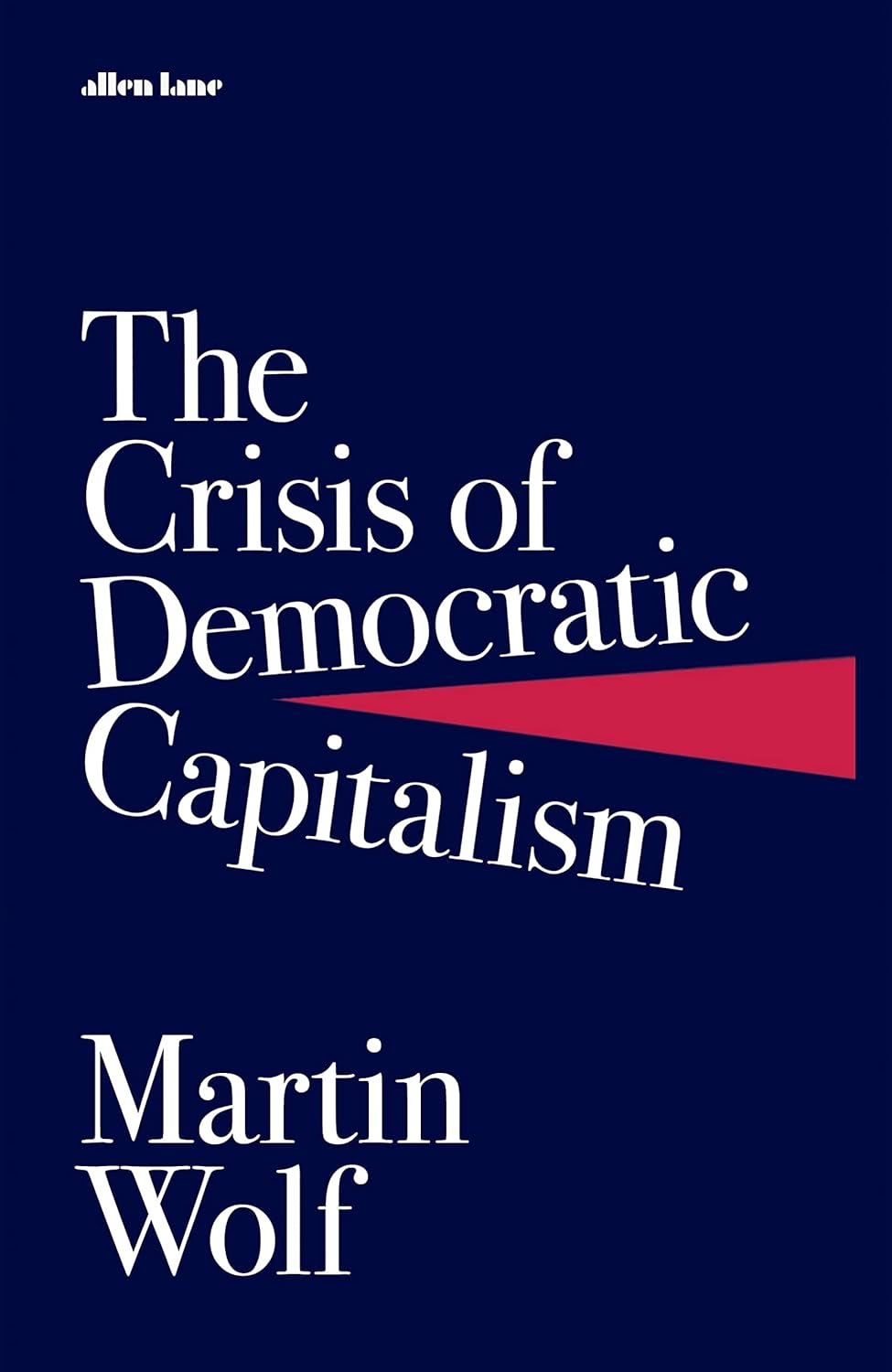
Scholars ranging from Milton Friedman to Paul Krugman have argued that liberal democracy and market capitalism are ‘symbiotic twins’: each requires the other. Yet there is increasingly a sense that the relation is becoming abusive. Martin Wolf sees a crisis, and his diagnosis is sweeping and urgent: elites must reform the system, and soon, before it collapses.
But Wolf’s prescriptions depend on cooperation, or at a minimum consent, from the very elites he sees as causing the crisis in the first place. This is a common problem in ‘Public Choice’ analysis, the part of political economy where this reviewer works. Systemic problems need not reflect any irrational or mistaken behavior on the part of actors in the system. Appallingly, it is precisely the self-interested, narrowly ‘rational’ choices being made by those with the power to effect change that ensure that change will be difficult.
Wolf brings together political theory, growth and distribution data, financial history, and current events to explain how shocks (financialization, the global trade and technology wave, and social media dynamics) weakened the democratic-capitalist symbiosis. The book is well-reasoned, but fails (in this reviewer’s opinion) to understand the pathology of the codependence between capitalism and democracy.
Wolf’s account focuses on what he calls ‘pluto-populism’, which he sees as having four main features. The first is ‘pseudo-populist rhetoric,’ where super wealthy candidates or their pet parties publicly adopt populist language—though likely not policies—blasting corrupt elites and presenting themselves as the only possible saviors of the interests of ‘the people’. The second is plutocratic policy priorities once those parties gain office. They cut social program spending, and slash taxes and regulations that constrain the wealthiest segments of society: Once in power, the policies enacted serve the interests of the extremely rich.
The third feature is a ‘bait and switch’: to cover the betrayal on economic policies, pluto-partisans inflame cultural grievances by focusing on immigrants, minorities, or (in the U.S., in particular) out-of-touch university faculties and Hollywood stuffed shirts. Fourth, and ultimately most dangerously, the pluto-partisans actively weaken democratic institutions, because they know their ersatz populist rhetoric cannot permanently disguise their self-serving policy choices. Again, from a U.S.-centered perspective, this would mean extreme gerrymandering, and dismantling restrictions on torrents of money entering and influencing politics.
It is hard to tell if Wolf thinks this is a particular, historically contingent, empirical description of the process or if he believes the problem is inherent in demo-capitalist systems. I agree with his view that only liberal democracy reconciles efficiency with personal freedom and accountability. This is an important counterweight to calls, from the left and the right, to sacrifice liberal democracy to address the crisis.
One might note that, even if one accepts the merits of Wolf’s claims, there are blinders for some important outside ‘shocks’ in the recent period. The rise of China as a global economic superpower, the expansion of social media in politics in ways that don’t even require money, and the disruptive forces resulting from artificial intelligence, have all destabilized the system. The fact that there is political and economic chaos need not lead us to infer that a cabal of super-rich Bond villains are controlling and directing the process behind the scenes.
That said, the broad strokes of the crisis portrait painted by Wolf ring true. But in agreeing with that diagnosis, this reviewer is much less persuaded by Wolf’s prescription. His ‘solution’ is the usual progressive dog’s breakfast of aggressive industrial policy, antitrust, forcible takeover of corporate governance, stronger social insurance and place-based support, more effective public administration, and insulation of democratic institutions from outside influence, especially real political campaigns where money can be spent to level the pitch against concentrated government power.
Look: the reason there is too much ‘money in politics’ is that there is far too much politics in money. Constitutional restrictions on the ability to take, manipulate, and redistribute wealth would be more effective in separating economic power from political power, and more supportive of democratic institutions. Giving property rights the same status as political rights would separate the two spheres more effectively, and with better results. However, that ‘solution’ would require that elites in Congress give up the lucrative right to be corrupted, and that elites in the corporate world give up the right to do the corrupting. Even though the solution is simple, it is not easy.
A recent book by Ruchir Sharma, What Went Wrong With Capitalism? (Munger review, CEME review) is instructive in this regard. Sharma notes that the story of ‘austerity’ and cuts in social programs—a story Wolf embraces—is entirely fabricated. In fact, government spending has gone up steadily, in real terms, per capita, and as a proportion of GDP. There have not been cuts in social spending; the ‘cuts’ have only been reductions in the anticipated rates of increase. Austerity is, in short, a myth: government spending has grown steadily, and mostly on a straight trend, since 1960.
As a result, Sharma contends, productivity has slowed, inequality has widened, and economies are increasingly dominated by large, entrenched firms (oligopolies or ‘zombie’ firms) that suppress competition. But the direction of causation is not ‘plutocracy ruins democracy,’ but rather ‘democracy invites crony capitalism, because elected officials benefit from corruption.’ That is, the driving force is the unfettered domain of ‘democratic’ industrial policy and taxpayer-sponsored giveaways. In this view, modern capitalism was ‘ruined,’ because the democratic system, driven by self-interested elected officials, has found it useful (and profitable!) to expand state power over the private sector
But there is a problem. Capital has come to depend on these infusions of cash-amphetamines, focusing on increases in deficit-financed state spending rather than investing in production and research on new products. The solution is to block democratic governments from putting a thumb on the scale in subsidizing and supporting favored industrial sectors or companies, not to expand that control. It must be noted that the decline in any capacity of corporate leaders to self-govern, based on a sense of morality and ethics, is partly a justification for state regulation, but it is also likely caused by state overreach. If we want less intrusion from the state, we’ll need to require more capacity for moral virtue for private leaders.
The problem with the ‘austerity narrative’—which is, as noted above, empirically ludicrous—is that it privileges the sorts of ‘solutions’ that actually caused the problem in the first place. Wolf, and those who argue from that perspective, have no hope of solving the problem of the rocky marriage between democracy and capitalism. A wise counselor would advise instead that the couple learn to define some boundaries and give each other some space.
‘The Crisis of Democratic Capitalism’ by Martin Wolf was published in 2023 by Penguin (ISBN 978-0-141-98583-1). 496pp.

Michael Munger is Pfizer/Pratt University Professor of Political Science and Economics at Duke University. He is a past President of the Public Choice Society, and works at the intersection of commerce and politics.

Providing Christian commentary on the recent budget is not especially easy. There was a measure to remove the two-child cap on Universal Credit payments that was welcomed by many Christians. But the rest of the budget was really a collection of bits and pieces with many deferred tax rises, on which it is difficult to provide a Christian analysis.
Some Christians might welcome the significant increase in gambling taxes which will bring in relatively little revenue. However, even if we regard gambling as an ‘occasion of sin’ (to use the Catholic terminology), it does not follow that governments should tax or regulate it more. Taxes in this area can lead to serious problems of black markets. They also land squarely on the shoulders of the less-well-off.
One of the reasons for a succession of budgets which have involved tinkering around the edges is that the level of debt and social spending on the growing elderly population is so high, with the result that Chancellors of the Exchequer have been focusing on shoring up revenue – or at least attempting to do so. We thus have a situation where people are simultaneously complaining about record levels of taxation, a squeeze in welfare provision to people of working age and to children, problems in the provision of public services, and rising levels of debt. All these complaints have merit. Indeed, one of the problems is that we seem to demand incompatible policies from politicians: we should, perhaps, whatever our political sympathies, pause for a moment and empathise with politicians. Maybe we demand too much.
A time of crisis is a good time to go back to fundamentals. The Catholic Bishops’ Conference of England and Wales did that recently with the publication of Render unto Caesar, which included fine chapters from CEME staff members. Below I will highlight four areas from the document which merit further reflection from Christians. I will start with a major challenge and then move on to what could, in a sense, be regarded as responses to the challenge.
The UK, in common with most other developed countries, has a historically large peacetime national debt. This is a burden we are imposing on future generations and, as Christians, we should be able to shed light on this topic. Whilst the subject is complex, it can be regarded as an injustice if a government consistently spends more than it takes in taxation without very good reason. Today, we spend the same on debt interest as we do on education and this has a real cost in terms of the tax burden on families. If the impact on disposable income leads to social conflict, government indebtedness injures the common good and human dignity. Indeed, people may misattribute blame for falling living standards to vulnerable groups such as migrants, thus undermining both the common good and the dignity of those groups.
Related to this problem of the government debt are the promises made to future generations of older people in terms of future pensions and healthcare provision. The projections of the government’s Office for Budget Responsibility suggest that our national debt will explode to around 350% of national income on current policies because of those obligations – and that is on pretty optimistic assumptions. No advanced provision was made by way of some sort of capital fund when these promises were made. It was just assumed that the number of younger people would always be sufficient to support the system. It was never realised that fertility rates might plummet, and people would live longer. These plummeting fertility rates are, in and of themselves, something which the Church might be concerned about. Does our society support family life? We will come to that topic below.
There is no shortage of examples where the common life of society and social peace have totally broken down as a result of high levels of government indebtedness. I hope that we are not going to relive that in the West, but we might.
But what about taxation? Let us consider three areas.
It can be argued that we have a very bad and inefficient approach to climate change policy. For around 100 years, economists have favoured taxes designed to reflect environmental harms caused by consumers or producers. Interestingly, the last two popes have done so too – in papal encyclicals Laudato Si’ and Caritas in Veritate. For example, Laudato Si’ mentions the ‘obligation of those who cause pollution to assume its costs’. This is a question of both distributive justice and economic efficiency. What politicians tend to do when it comes to climate change policy is to come up with incredibly complex and expensive methods of reducing carbon emissions rather ineffectively because they are frightened of the electoral consequences of explicitly taxing carbon emissions (for example by putting value added tax on domestic fuel consumption and using the revenue to reduce other taxes paid by the less well off). Once again, we should make it easier for politicians to do the right thing in this respect.
Another area which is ripe for reform is the relationship between local and central government. We cannot look through the lens of the Catholic principle of subsidiarity or the Calvinist principle of sphere sovereignty without being critical of the centralisation of government in the UK. This really involves delegation of certain powers to local authorities from central government. We must reform government so that at a variety of levels (starting with parishes and towns) local communities can have true responsibility in a whole range of areas and not just act as branch offices of national government.
Taking the principle of subsidiarity one step further, we should also ask whether we have a tax system that is designed to ensure that families can flourish. In the UK, unlike in countries such as France and Germany, the concept of the family is largely ignored in the tax system which is based on individual rather than household income, so that families in which one adult undertakes caring responsibilities rather than paid work are strongly discriminated against.
The way in which the tax and welfare systems interact penalises marriage and family formation – especially for people on low incomes. Figures produced by Marriage Care show that fewer than a quarter of low earners marry. And it is at low levels of earnings that the tax and welfare system are least conducive to marriage and family life. Christian teaching on the nature of marriage and the family would suggest that our tax system is fundamentally flawed and should be reformed.
We should remember, as Christians, that our obligations to the poor do not end when we have paid our tax bill. The early Church fathers gave pretty stark warnings about the duties of the rich. Riches can be ruinous of the soul. We must use our wealth to promote the common good whether through business, philanthropy, social enterprise or otherwise. In turn, the state should not take all our wealth from us. It should tread lightly and leave room for philanthropy and civil society (including Church) solutions to poverty and the promotion of welfare. This also involves having a tax system which encourages philanthropy. As it happens, that is one thing our tax system does get right.
Philip Booth is professor of Catholic Social Thought and Public Policy at St. Mary’s University, Twickenham (the U.K.’s largest Catholic university) and Director of Policy and Research at the Catholic Bishops’ Conference of England and Wales. He is also Senior Research Fellow and Academic Advisor to the Centre for Enterprise, Markets and Ethics.