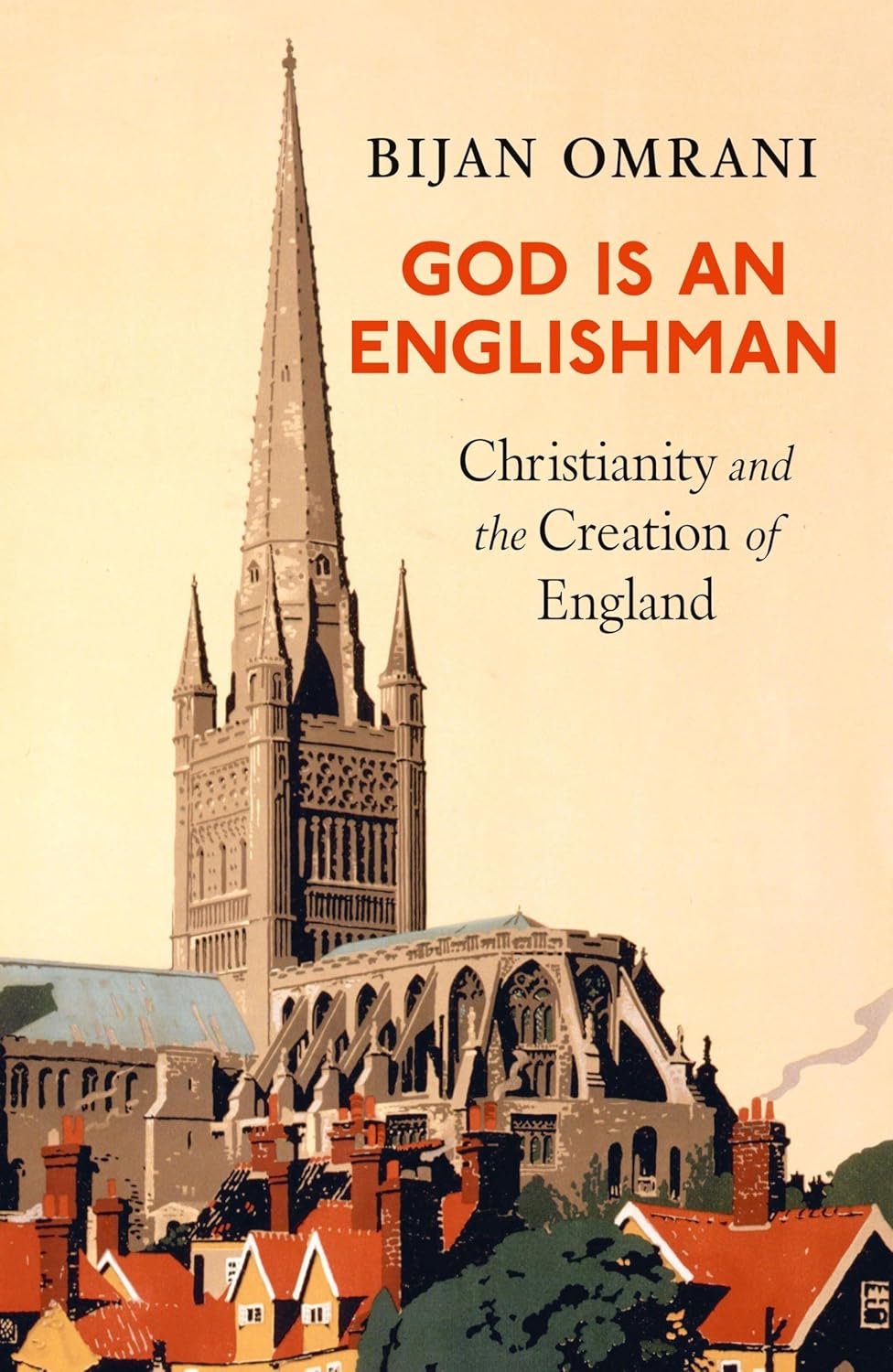
Bijan Omrani has a story to tell which he does under the provocative title, God is an Englishman. The sub-title is probably a better guide to what he is doing: Christianity and the Creation of England. Many readers will be aware of the wider narrative of the influence of Christianity on western culture in general, not least through Tom Holland’s masterful Dominion. Omrani seeks to take this sort of account down to the next level of granular detail; how specifically did Christianity form and shape law and institution and culture in Britain? That is an important task, for the author regards Christianity in England to be dying, and he laments the losses that this would engender. This provides him with an opportunity to expound a fascinating storyline. In this endeavour, however, the author is only partially successful.
The book is divided into 2 parts. In part 1, 12 chapters tour us through a history of Christianity in England and how our law, nationhood, ethics, spirituality and even the notion of kingship itself have their roots in Christian doctrine and belief and that English culture, arts, landscape, language, literature, music would all be ‘unrecognisable without the Christian leaven’ (page 6). In part 2, Omrani offers contemporary reflections on matters ranging from national identity, spiritual space and inter-faith dialogue.
The first few chapters focus on the development of law and education. Here, the author, drawing on his own legal background, shows himself a skilful weaver as he combines insight into the nature and development of law with the story of the origins of Christianity in Britain, or, to be more precise, England, as it is St Augustine’s mission from Pope Gegory that forms the basis of the narrative. Here Omrani is at his most gripping and compelling. He manages to write engaging narrative explaining how this mission laid ‘the foundations for the idea of English kingship and the idea of English nationhood’ (page 28). Similarly, the chapter on the law holds the attention and interest of the reader. He again uses examples to illustrate how the general duty of care in English law has its basis in Christianity, in particular in the parable of the good Samaritan. He quotes Lord Denning that the ‘precepts of religion, consciously or unconsciously’ (page 45) have guided the administration of justice. Further examples of influence are based around limited government and property rights.
The chapter on education continues with the same type of insight and narrative. He notes that from the arrival of Augustine’s mission, ‘the Church and the clergy were pre-eminent as the educators of England’ (page 76). Canterbury was an obvious centre of learning but so were the monastic settlements, in particular Lindisfarne and Jarrow. Books, learning and literacy were, of course, central to the monastic vision. Omrani also notes the Christian concern for the education of the poor – a central facet of the faith that ran not only through the Middle Ages but also into the nineteenth century with the ragged school movement. Omrani does not mention that and here we find the first hints of the problem with the book. Omrani is really only interested in the medieval and, dare one say, the Catholic origins of the impact of the faith on English culture. These are important but in a proper scholarly survey of the impact of Christianity, not exclusive.
By the time we get into the medieval church calendar and festivals, hot cross buns, rituals, holidays and so on, the book loses its big picture narrative. It is rather like the Reformation never really happened and all we need to do is understand is the medieval background. A scholar holding to the big picture narrative would at this point want to explore both aspects of British culture, the Catholic and the Protestant, their distinctiveness and interaction.
Yet, there are hints, glimpses into important and powerful topics which are crying out for more in-depth analysis and further discussion and reflection. Perhaps the most obvious example here is the place of the Bible in English in forming and shaping the long-term impact of the faith, both directly and through liturgical developments. There is a generalised description, on pages 175-181, but no comprehensive analysis of how the translation of the Bible into English, from the oldest and most original manuscripts put together in a new Greek translation by Erasmus of Rotterdam, led to such a fundamental shift in English life and culture. This was reinforced by the seismic impact of the appearance of the liturgy in English for the first time, carrying both doctrinal and cultural implications. The book would have been strengthened by a more far-reaching analysis here.
Part 3 is rather weak. Omrani correctly, in my view, debunks the standard theories of secularisation and the loss of ideas of association. He hints here at the role of the voluntary society in Christian history. Further reflection would have deepened the book’s storyline for it is in the voluntary society, Catholic and Protestant, that we see so much of the cultural impact of Christianity for the long term in education, medicine and welfare. These chapters lack depth and sound like a rehearsal of a personal manifesto that, in some respects, stands rather contrary to the picture which the author has sought to draw so far. To describe the Christianity which has shaped Britain as allowing space for inter-faith dialogue really says nothing at all. Indeed, I am not sure most readers sympathetic to the overall thesis would agree.
Perhaps it is the failure to deal with the impact of Protestantism on the Christian culture of England that leaves the book looking incomplete. There has been at least something of a literature about the death of Protestant Britain: the cultural and national signs and symbols which reflect the Protestant foundation of the British constitutional settlement, which, in some cases have faded, but which in others remain prominent. This was exposed to public view most obviously in the rituals and ceremonies which marked the transition of the monarchy to King Charles III following the death of Queen Elizabeth II in 2022. The new king, Charles III, like his predecessors, had to make three statutory oaths on his accession to the throne: to uphold the Presbyterian Church of Scotland, to be a true and faithful Protestant and to uphold the rights and privileges of the Church of England. Given Omrani’s book is published in 2025, it is very odd indeed that he does not discuss these accession oaths. Nor, other than in a passing sentence (page 332), does he discuss the Coronation Service itself, or the central importance of the presentation of the Bible to the new monarch. It is worth quoting this part of the service in full:
‘Our gracious King: to keep your majesty ever mindful of the Law and Gospel of God as the Rule for the whole of life and government of Christian Princes, we present you with this Book, the most valuable thing that this world affords. Here is Wisdom; This is the royal Law; These are the lively Oracles of God.’
I do not think it is possible to consider the role of Christianity in England without considering these constitutional aspects.
We are left with the proverbial ‘curate’s egg’; good in parts. Bijan Omrani is surely correct when he says that ‘an objective survey of English history cannot deny the fundamental role played by Christianity in the development of national institutions, culture and identity’ (page 312). I commend the book: there is an important story to tell and some really useful insights, particularly in those early chapters. However, the omissions let the book down and weaken the narrative.
‘God is an Englishman: Christianity and the Creation of England’ by Bijan Omrani was published in 2025 by Forum, an imprint of Swift Press. (ISBN: 978-1-800-75306-8). 394pp.


Talk given at the Danube Institute’s Conference, Budapest, 2nd October 2025. Brian also gave an interview about related topics.
Mrs Thatcher became Prime Minister in May 1979 at a time when the UK economy was suffering from ‘the British disease’ and known as ‘the sick man of Europe’.
We had just emerged from the ‘Winter of Discontent’, during which there had been constant industrial disputes and strikes, many unofficial, uncoordinated and local. Some years earlier inflation had reached 27%. The Chancellor of the Exchequer Denis Healey had been forced to go, cap in hand to the IMF to avoid defaulting on our debts; no one would lend us money. We were bust. Inflation was still 13% in 1979 rising to 18% in 1980. Over the decade mismanagement of the economy and trade union militancy had led to the downfall of three governments: those of Wilson in 1970, Heath in 1974 and Callaghan in 1979. There was in British society a sense of helplessness, a feeling that the country had lost its way.
Mrs Thatcher set out to find practical remedies for the problems facing the British economy. She realised that not all could be achieved at once and I believe she thought of the response to the challenge in terms of three major steps.
First inflation must be defeated.
Second the size of the state in the economy must be reduced.
Third the market economy must be strengthened.
To start with it would be impossible to improve the standard of living without bringing inflation under control and establishing financial stability.
Inflation had been accompanied by rising unemployment which was not the Keynesian expectation. Inflation created uncertainty. It deterred business investment. It was hated by the public. Unexpected rises in the cost of living led to hardship with consequences such as higher interest rates which continued long after inflation had come down.
Although she was a practical politician, Mrs Thatcher was always interested in ideas. She was genuinely intellectually curious. She invited people into Number 10 from all sorts of different fields in order to explore ideas: historians, environmentalists, educationalists, theologians, architects and so on. And the field of economics was no exception. She valued meeting economists from abroad such as Milton Friedman, Fredrick von Hayek, Karl Brunner, Allan Meltzer as well as central bankers such as Otmar Emminger, and Karl Otto Pöhl (Bundesbank Presidents) and Fritz Leutwiler (Chairman of the Swiss National Bank).
Unlike many economists in the UK and senior officials at the Bank of England, these academic economists and practical central bankers saw inflation as a monetary phenomenon. They claimed they had achieved price stability in their countries because they had successfully controlled money supply growth, not because they had introduced prices and income policies. (Incidentally, money growth had been the traditional explanation for inflation in the writings of David Hume, Adam Smith, and Alfred Marshal – and even Keynes had spent six years in the 1920’s producing two large volumes entitled A Treatise on Money (1930), analysing the Quantity Theory of Money). This approach was also that of a small number of contemporary British economists such as Professor Alan Walters, whom she appointed as a special adviser based in No10, and Professor Harry Johnson, who held a joint chair of economics at the London School of Economics and the University of Chicago. By contrast these were not the views of the Bank of England or the UK Treasury which were still strongly influenced by Keynesian thought.
However, recognising that inflation was a monetary issue proved to be far easier than controlling the growth of money itself. How was it to be measured? How easily was it to control in the short term? How stable was the demand for money? How might it change when there were changes in the regulatory structure of the banking system, such as Competition and Credit Control 1971? Or external shocks to the system such as the Great Financial Crisis in 2008-9? These were difficult existential challenges for the Bank of England tasked with controlling money supply growth and financial stability. Controlling money supply growth however ensured that by 1986 retail price inflation had fallen to 3.4%.
Mrs Thatcher recognised that for the monetary policy to be successful, fiscal policy should accommodate monetary tightening and not work against it. This it did through the creation of a Medium Term Financial Strategy (the first ever for the UK Treasury) which linked targets for money supply growth to public sector deficits, public sector borrowing and the annual Budget. Alan Walters claimed that
It is difficult to exaggerate the importance of the commitment to the MTFS. It provided a frame of reference for all financial and economic policy. Never in the post-war history of Britain had the spending programs and the revenue and taxation consequences been so closely associated at the highest level of government decision making.
(p.83, Britain’s Economic Renaissance, OUP, 1986)
This framework provided effective fiscal discipline and led to the notorious 1981 budget. This was condemned by 364 UK academic economists in a letter The Times following a ‘round robin’ initiated by two Cambridge University professors, Frank Hahn and Robert Neild. For them, the uncomfortable fact was that this budget proved to be the turning point for Britain’s economic renaissance.
After having set out on a policy to introduce monetary discipline the second element in her policy was to reduce the scale of the state.
The case she made was that the state took too great a share national income, so government spending as a proportion of GDP needed to be reduced. The public sector borrowing requirement was crowding out private sector borrowing, so it, too, needed to be cut. In addition, state owned industries would be much better managed as commercial entities rather than being answerable to elected politicians in parliament.
This led to the policy of privatisation – steel, airlines, telecommunication, cars (Jaguar), gas, electricity, aerospace, petroleum, coal and so on. What was remarkable about privatisation was the way in which the policy, once shown to work in the UK, was adopted in the following two decades by so many countries throughout the world.
The scale of the state was also reduced by a housing policy which allowed the sale of council houses by local authorities to their tenants at considerable discounts, ranging from 33-50%, depending on their tenure. This meant a highly significant transfer of wealth and the ability of new house owners to pass their property on to their children.
The third element of Mrs Thatcher’s economic policy focused on strengthening the market economy.
In 1974 Mrs Thatcher and Keith Joseph had set up the Centre for Policy Studies to make the case for a market economy. By enabling prices to change and firms to enter or exit markets, they believed a market economy could achieve a more efficient allocation of resources than state planning, public ownership or government bureaucracy ever could.
They were also convinced that markets should be placed in the broader context of social responsibility. Many of the criticisms of the market economy were that it produced a culture of greed, individualism, and ‘dog-eat-dog’. They thought the creation of greater wealth through the market economy must be achieved alongside greater resources being available for those in need, whether due to ill-health, advanced age or deprivation.
Strengthening the market economy involved the abolition of rent controls, the abolition of foreign exchange controls, the removal of constraints on competition in banking and the London Stock Exchange – permitting foreign companies to enter London’s financial market – the removal of general controls over prices and wage growth and an almighty battle against trade unions to allow management to manage their firms without constant interruption from militant unions. This last required bitter battles in parliament and confrontations between police and protesters.
Her economic policy focused on wealth creation was part of a wider policy framework which increased parental choice and standards in education and training and increased expenditure in health and welfare. The social market economy provided the safety net for those unable to benefit directly from greater wealth. Standards in schools were improved. Scientific research dealing with technology and radical innovation was supported.
Thatcher’s economic policy had a coherence to it. It set out to achieve stable prices, reduce the size of the state and create a vibrant but socially responsible market economy. She succeeded in some areas: the importance of monetary policy in defeating inflation, reducing the size of government spending in GDP from 43% to 35%, strengthening an enterprise culture, extending home ownership and privatising state-owned industries. In others she did not succeed: the privatisation of water and railways, the imposition of the community charge for local services (the ‘poll’ tax) and increasing charitable giving.
There is one final point I would like to make.
While Mrs Thatcher engaged with the specific details of monetary policy or trade union legislation, this was in the service of an underlying moral world view. However, the idea that she had an ‘unidentified morality’, as Shirley Letwin has suggested, is somewhat misleading.
What she had was more than an intellectual framework or worldview. It is perhaps better understood by the German word Weltanschauung, which means not just an intellectual framework, but a driving force animating one’s being and generating a purpose for life’s work.
This for Mrs Thatcher was undoubtedly her Christian faith, something she made very clear in her speech to the General Assembly of the Church in Scotland on May 21st, 1988, in which she identified ‘three beliefs’ of the Christian faith.
First, that from the beginning man has been endowed by God with the fundamental right to choose between good and evil. Second, that we are made in God’s image and therefore we are expected to use all our own power of thought and judgment in exercising that choice; and further, if we open our hearts to God, he has promised to work within us. And third, that our Lord Jesus Christ the Son of God when faced with his terrible choice and lonely vigil chose to lay down his life that our sins may be forgiven. (Christianity and Conservatism, edited by The Rt Hon Michael Alison MP and David L. Edwards, Hodder & Stoughton, 1990, p.334)
She also spoke of ‘my personal belief in the relevance of Christianity to public policy’, recognising both the importance of the teaching of the Old and New Testaments and especially the importance of the family, on which ‘we in government base our policies for welfare, education and care’. (Speech by Mrs Thatcher to the opening of the General Assembly of the Church in Scotland, 21st May 1988, Christianity and Conservatism)
I believe you will never really understand Mrs Thatcher’s economics or politics unless you grasp her Judaeo-Christian worldview.
In conclusion, I believe this is ultimately the greatest legacy which Mrs Thatcher gives us today on the Centenary of her birth.

Brian Griffiths (Lord Griffiths of Fforestfach) is a Senior Research Fellow at Centre for Enterprise, Markets and Ethics (CEME) and Founding Chair of CEME (serving as Chair until 2023). Among other things he served at No. 10 Downing Street as head of the Prime Minister’s Policy Unit from 1985 to 1990 and Chair of the Centre for Policy Studies (CPS) from 1991 to 2001.
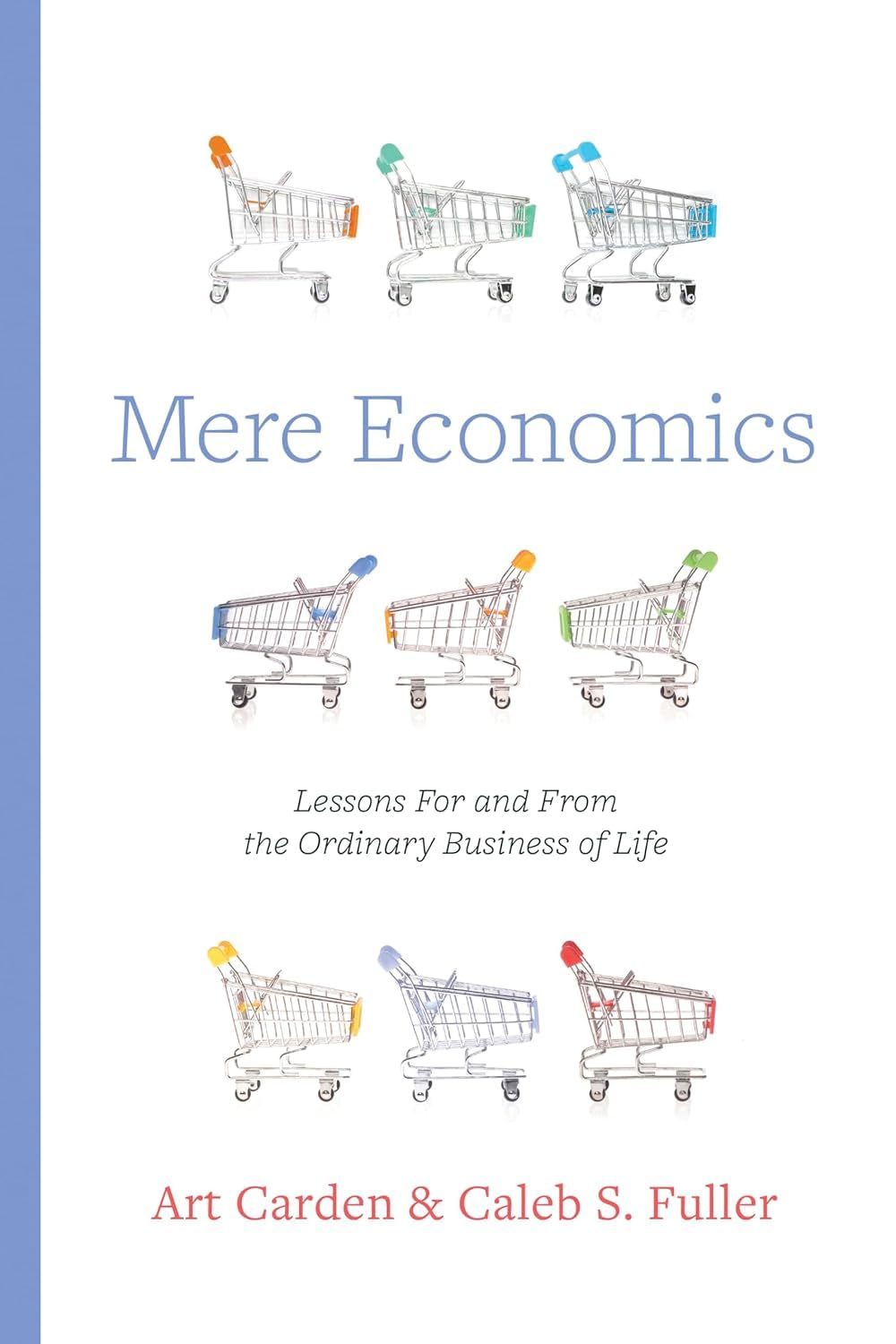
In Mere Economics: Lessons For and From the Ordinary Business of Life, authors Carden and Fuller introduce caring Christians to economic thinking. Through breezy prose and pithy examples, the authors connect essential facts of faith to central ideas of economics. In fact, the book’s title is an homage to C.S. Lewis’s (1952) highly influential Mere Christianity – a work that conveys, with crystal clarity, the foundational elements of faith that are embraced by most denominations.
The same is true here: Carden and Fuller lay out the most central economic principles to illuminate issues like poverty, environmental stewardship, and other concerns that Christians take seriously. If your faith tells you that when you serve the poor you are serving your Master, and if economics helps you understand how to care for the poor even more effectively, why wouldn’t you want to know more about economics? The same line of thinking extends to creation care and other issues that lie at the heart of Christian concern. For example, if ‘the earth is the Lord’s, and the fulness thereof,’ and economics helps us be more effective caretakers, who wouldn’t want to know more economics?
The book’s outline is sensible, both for readers attracted to the topic as well as professors at Christian colleges and universities who might want to assign it as a companion reader to a traditional textbook. Its 14 chapters make it easily adaptable to a traditional US semester calendar of about 15 weeks.
In chapter one, ‘They Feast on the Abundance of Your House: Hobbesian Horrors and Walmart Wonders,’ the authors address what they refer to as the ‘Progress Puzzle’: How it is that, despite a growing population and a limited endowment of natural resources, humanity has nevertheless enjoyed breathtaking progress and prosperity? This section is reminiscent of the presentation found in Jason Brennan’s (2024) Why Not Capitalism?, in which Brennan lines up some of the most popular claims of market critics and then knocks each down via data.
Having introduced the Progress Puzzle – that humanity is fabulously better off than it was centuries ago, despite having little central planning in place – Carden and Fuller use chapter two, ‘Thinking about the Ordinary Business of Life,’ to lay out the core economic principles around which each of the remaining chapters will be formed. The chapter’s nine core principles include (1) economics is about making choices, (2) people are purposeful in their decisions, and (3) trade must be mutually beneficial because – if it weren’t – people wouldn’t do it. Along with each core principle, Carden and Fuller disarm the most common misconceptions of each; this back-and-forth rhetorical approach is very effective.
With these principles in hand, the authors use chapter three, ‘You Can’t Always Get What You Want: Our Great Economic Problem,’ to explain how human interaction – when voluntary and informed by the price system – leads to the remarkable outcomes outlined in chapter one. In fact, the authors indirectly make the audacious claim that it’s precisely because of scarcity that, over time, we realize the stunning outcomes in chapter one. If people didn’t face scarcity, they wouldn’t make decisions as carefully as they do when the stakes are high. And institutions like property rights lead to good decisions because they lay the penalty of a poor choice at the feet of the person who has the most to lose. The best line: ‘Don’t panic about scarcity anymore than you would panic about gravity.’ They both keep us grounded.
Chapters four and five extend chapter three by considering how far-flung resources, like the individual efforts of billions of individuals – with aspirations known only to them and using tiny bits of knowledge that may also be known only to them – are nevertheless powerfully channeled into a symphony of human activity. And most stunning of all, it’s a symphony with no conductor in charge. The analysis here relies heavily on thinkers like Adam Smith and F.A. Hayek. And chapter six reminds us that profits – if honestly earned – are the reward for serving others well; losses are the brutal consequences of not offering others something they need and want at a price they are willing to pay.
Having outlined this framework, the authors use the remainder of the book to apply it to a variety of policy questions and concerns. Chapter seven describes the inner workings of the labor market and argues that most outcomes are more humane and less outrageous than critics would have us believe, including the ‘gender-pay gap.’ Chapter eight considers whether, in some instances, a large firm that feels like a ‘monopoly’ might serve humanity quite effectively. To use the authors’ examples, Amazon, Google, and Walmart became successful because they served people well. And they can just as easily mess it up if they’re not vigilant (think MySpace and Yahoo!). The authors also note that the monopolies we hate most were often either created by the government or sanctioned by them.
Chapters nine through eleven deal with efforts of policymakers to legislate prices, legislate morality, or legislate production. Here the authors compellingly argue that, even if market mechanisms do not deliver ideal outcomes, they deliver outcomes preferable to those we would observe if government intervened to ‘improve upon’ those outcomes. And, of course, such interventions require compulsion: impeding or frustrating the decisions individuals otherwise would make.
Adding to this cautionary tale of government intervention, chapter twelve introduces the field of economics known as ‘public choice’: the strand of economics that treats voters, politicians, and bureaucrats just like it treats any other human subject, assuming that they act in their own self-interest just like anyone else does. For example, if politicians are motivated more by getting votes than by doing good, they might vote for policies people like rather than what might serve them best. And chapter thirteen returns to the ‘Progress Puzzle’ outlined at the beginning, having made the case – throughout the book – that it’s not really a puzzle at all: free individuals, created in God’s image, pursue creative acts of their own that lead to stunning long-term outcomes for humanity. The chapter also offers policy prescriptions for issues like pollution and resource depletion.
A wonderful feature of each of the preceding chapters is a concluding section that provides an application step for the ideas presented: ‘How Should We Then Live?’ This section of each chapter gives the reader a useful life lesson – something much needed from most economics books. And the final chapter of the book provides a similar point of reflection upon the entire work.
The book is thoughtful, reasonable, and winsome. Yet it’s not perfect.
First, the book seems unlikely to win over readers with grave moral concerns about capitalism. The authors may be right in their hopefulness, yet the style is too breezy to connect with readers uneasy with markets.
Second, every page is full of American cultural references and memes. While most of them connected with me, I see two liabilities: first, you really must be an American born within a specific time frame to be in on the jokes. I fear many references won’t connect with readers the authors are targeting (college students) and won’t connect with international readers, either. Also, you need to enjoy quirky humor to enjoy the book, but that seems like a gamble the authors are willing to take.
Lastly, because the book flows well, it might be challenging for a professor to assign individual chapters as stand-alone reading assignments because of references to earlier material.
Despite these limitations, I nevertheless recommend the book to anyone who thinks that economics isn’t interesting, is only about money, or that it’s not useful to people of faith. Carden and Fuller will likely change your mind.
‘Mere Economics: Lessons For and From the Ordinary Business of Life’ by Art Carden and Caleb S. Fuller was published in 2025 by B&H Academic (979-8-384-50496-2). 320pp.

Victor V. Claar is Associate Professor of Economics and coordinates the economics program in the Lutgert College of Business at Florida Gulf Coast University. He also serves as an affiliate scholar of the Acton Institute, and is a visiting research fellow at the American Institute for Economic Research.
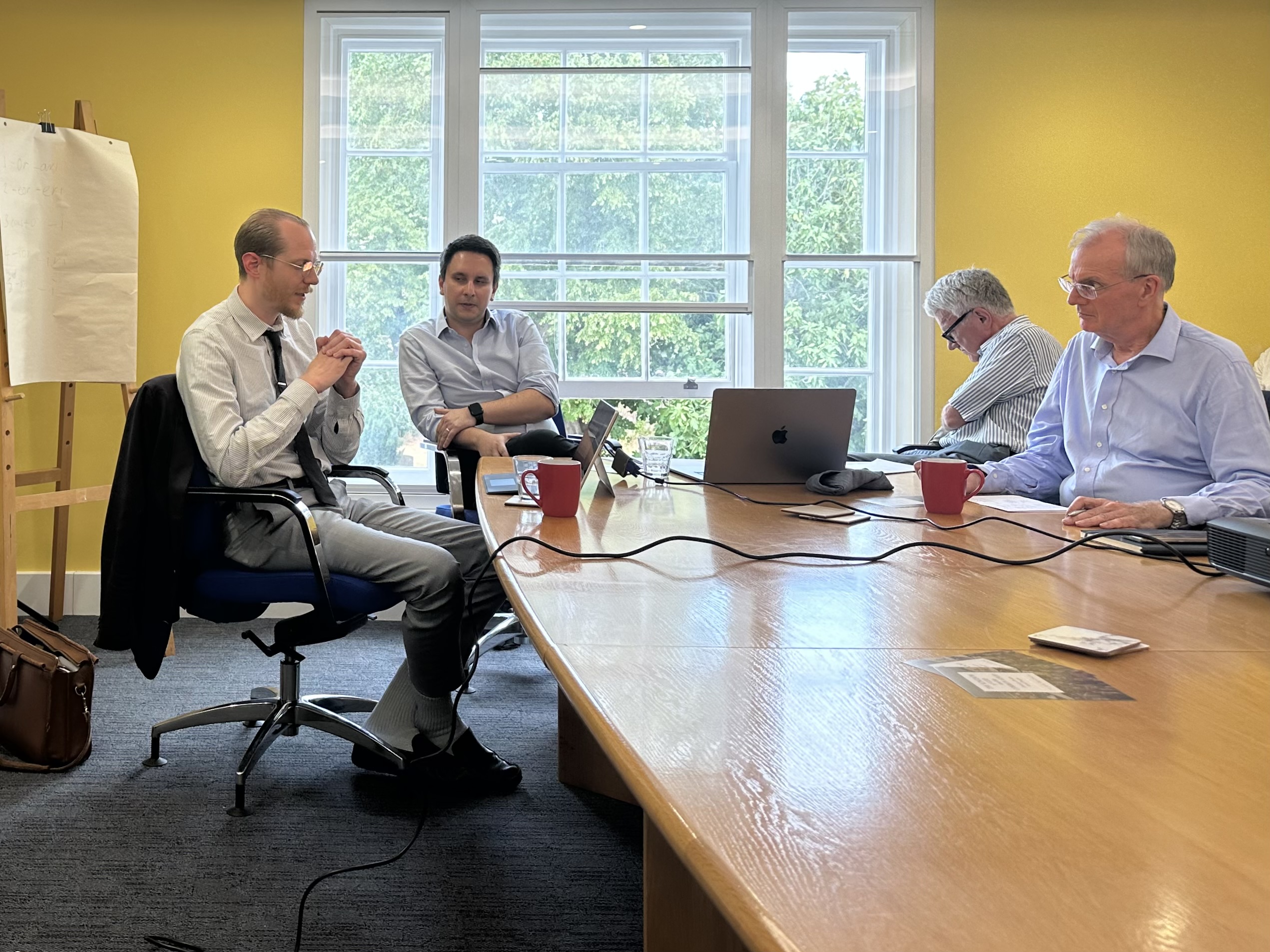
On Monday 14 July, CEME held an event with guest speaker Dylan Pahman (Acton Institute).
Organised in partnership with Blackfriars Hall, Pahman spoke on his forthcoming book The Kingdom of God and the Common Good.
The event was chaired by Andrei Rogobete.
Speaker Bio:
Dylan Pahman is a research fellow at the Acton Institute for the Study of Religion & Liberty, where he serves as executive editor of the Journal of Markets & Morality. Dylan recently completed his PhD from St. Mary’s University, Twickenham on the basis of his published works on Orthodox Christian social thought and asceticism. He is the author of Foundations of a Free & Virtuous Society (Acton, 2017) and The Kingdom of God and the Common Good: Orthodox Chrisitan Social Thought (Ancient Faith, forthcoming 2025). In addition to Orthodoxy, his research also touches on the Dutch Neo-Calvinist Abraham Kuyper, the Anglican Christian socialist F. D. Maurice, and the intersection between ethics and economics. Dylan is a member of the Greek Orthodox Metropolis of Detroit and resides in Grand Rapids, Michigan with his wife Kelly and their four children.
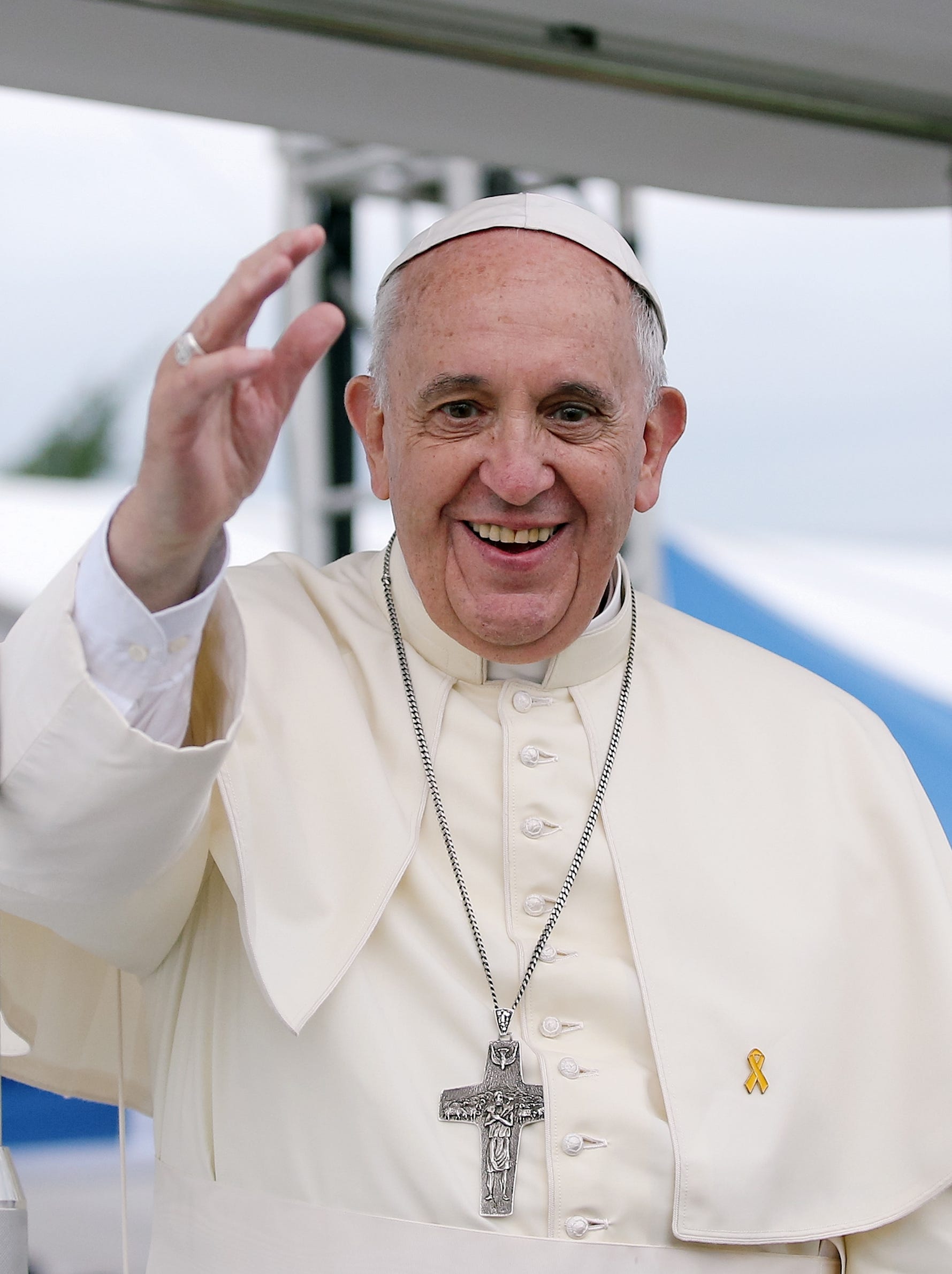
This is a repost of an appreciation of Pope Francis by CEME Fellow, Professor Philip Booth, first published on the Catholic Social Teaching blog of St Mary’s University. We thought it would be of interest to CEME readers, but reposting does not mean endorsement of every point.
In the coverage of the passing of Pope Francis to eternal life, surprisingly little has been said about an important aspect of Pope Francis’s social teaching – fraternity. This was the theme of his second social encyclical, Fratelli tutti. It is an important theme because it links the pastoral, spiritual, theological and social teaching of the late pope. The title of Fratelli tutti in English is ‘Brothers All’, and it is subtitled ‘On Fraternity and Social Friendship’.
Fraternity is part of the practice of the virtue of solidarity which was described clearly by Pope John Paul II:
Solidarity is not a feeling of vague compassion or shallow distress at the misfortunes of so many people, both near and far. On the contrary, it is a firm and persevering determination to commit oneself to the common good; that is to say to the good of all and of each individual, because we are all really responsible for all (Sollicitudo rei socialis, 38).
Fraternity has, of course, always been part and parcel of a good Christian life. As Pope Benedict wrote in an encyclical which returned to the roots of the practice of the early Church:
The State which would provide everything, absorbing everything into itself, would ultimately become a mere bureaucracy incapable of guaranteeing the very thing which the suffering person—every person—needs: namely, loving personal concern…This love does not simply offer people material help, but refreshment and care for their souls, something which often is even more necessary than material support (Deus caritas est, 28, emphasis added).
Just as Pope Benedict did, Pope Francis joins together the pastoral and the social. His exhortation to priests to ‘smell the smell of the sheep’ demonstrates how fraternity was an enduring, multi-faceted theme throughout his pontificate.
In Pope Francis’s social teaching, the idea of fraternity was developed in many ways.
Pope Francis is critical of individualistic ways of thinking, but also of bureaucratic solutions. He writes of how popular movements can make possible ‘an integral human development that goes beyond the idea of social policies being a policy for the poor, but never with the poor and never of the poor…’ (Fratelli tutti, 169).
The late pope wrote about how the virtue of solidarity starts with, and is authentically promoted within, the family but then radiates outwards, for example, in his letter following the synod on the family, Amoris laetitia: ’When a family is welcoming and reaches out to others, especially the poor and the neglected, it is a symbol, witness and participant in the Church’s motherhood’ (324).
Here we see the complementary nature of the Catholic social teaching principles of solidarity and subsidiarity. Pope Francis is showing how our human nature requires that our acts of solidarity start at the most basic level in society. However, the parable of the Good Samaritan shows how those acts should involve anybody with whom God’s providence leads us to have an encounter. Genuine solidarity requires a relationship and not just a cheque. These acts of solidarity can, if engrained in culture, radiate outwards and turn into a great social movement. But they can only take place if we have a political system which promotes the principle of subsidiarity and therefore allows the family to play its proper role.
Pope Francis’s teaching on migration is well known. Again, it is fraternity that is at the heart of his concerns. As he wrote in Fratelli tutti:
Our response to the arrival of migrating persons can be summarized by four words: welcome, protect, promote and integrate. For it is not a case of implementing welfare programmes from the top down, but rather of undertaking a journey together, through these four actions…(129)
In Fratelli tutti, Pope Francis attacks abstract proclamations of liberty (of a form which might be associated with socialism) as well as forms of liberty rooted in secular individualism. And he states that equality ‘[is not] achieved by an abstract proclamation that “all men and women are equal.” Instead, it is the result of the conscious and careful cultivation of fraternity’ (104). At the same time, he adds: ‘individualism [which might be associated with economic liberals] does not make us more free, more equal, more fraternal. The mere sum of individual interests is not capable of generating a better world for the whole human family’ (105).
But perhaps we can take this further. The French revolutionary mandates of liberty, fraternity and equality, are, according to a certain interpretation – indeed their original interpretation – incompatible with each other, despite the protestations of their proponents! If equality means equality of outcomes, its pursuit will, as Pope Leo XIII wrote in Rerum novarum, lead to a levelling down to a condition of equal misery and the loss of liberty. If freedom means a free for all, unconstrained by religious and moral norms, we will not achieve fraternity. But a Catholic interpretation of the slogan can enable us to achieve all three. If equality is equality before the law and before God, and freedom is the freedom to choose what is good guided by the grace of God, there is no obstacle to the promotion of fraternity. Indeed, our fulfilment as free human beings requires us to practise fraternity which is also necessary for the promotion of the common good and human dignity for all.
Globalisation has been a continual theme in politics since Pope Francis’s election in 2013. Some of his concerns were cultural. David Goodhart published a book in 2017 which captured a concern that some people, attracted to globalisation, became wealthy but lost their roots in their community. Others had strong community roots but were feeling marginalised from the mainstream and attracted to populism. In Fratelli tutti, Pope Francis captured this dilemma perfectly whilst giving sound practical advice to both groups based on principles of fraternity and openness.
It should be kept in mind that an innate tension exists between globalization and localization. We need to pay attention to the global so as to avoid narrowness and banality. Yet we also need to look to the local, which keeps our feet on the ground. Together, the two prevent us from falling into one of two extremes. In the first, people get caught up in an abstract, globalized universe… In the other, they turn into a museum of local folklore, a world apart, doomed to doing the same things over and over, incapable of being challenged by novelty or appreciating the beauty which God bestows beyond their borders. We need to have a global outlook to save ourselves from petty provincialism…At the same time, though, the local has to be eagerly embraced, for it possesses something that the global does not: it is capable of being a leaven, of bringing enrichment, of sparking mechanisms of subsidiarity. Universal fraternity and social friendship are thus two inseparable and equally vital poles in every society. To separate them would be to disfigure each and to create a dangerous polarization.
On a personal level, there are two things that I especially like about this theme of fraternity. In Catholic social teaching, it provides clear point of unity for people with different political perspectives. For example, the critique of the welfare state and of regulatory bureaucracies by supporters of a free economy is largely a critique of how these institutions have become impersonal: whatever their merits, it is argued that they erode relationships and personal responsibility for our fellow human beings whilst undermining civil society institutions for the provision of welfare lauded in Rerum novarum. At the same time, those on the left throw the same accusations at corporate capitalism. Both sides should be able to see the merit in the argument of the other and, in a spirit of intellectual generosity, discuss how we might bring about a more fraternal society. This can be a welcome change from two, or three, word phrases from Church documents being used to attack straw men in the attempted promotion of one’s own political cause.
Also, Pope Francis’s teaching in this area prompts personal reflection and an examination of conscience. It raises questions such as ‘do I give money to homeless charities but never stop to talk to a homeless person?’. ‘Do I campaign to change political structures, but never assist people personally or through community groups?’ ‘Do I write blog posts about Catholic social teaching but not actually make myself available to students to discuss their challenges?’.
We should end by noting again that Fratelli tutti is built on the parable of the Good Samaritan about which Pope Francis writes: ‘the parable shows us how a community can be rebuilt by men and women who identify with the vulnerability of others, who reject the creation of a society of exclusion and act instead as neighbours, lifting up and rehabilitating the fallen for the sake of the common good’ (67). And then, relating the parable to the modern world, he writes: ‘We can start from below and, case by case, act at the most concrete and local levels, and then expand to the farthest reaches of our countries and our world, with the same care and concern that the Samaritan showed for each of the wounded man’s injuries’ (78). This is a message that has been relevant from the very first book of the Old Testament to the modern Christian era.

Philip Booth is professor of finance, public policy, and ethics and director of Catholic Mission at St. Mary’s University, Twickenham (the U.K.’s largest Catholic university). He also works for the Catholic Bishops’ Conference of England and Wales as Director of Policy and Research.
Image: Korea.net / Korean Culture and Information Service (Jeon Han), reproduced from Wikimedia commons under a Creative Commons Attribution-Share Alike 2.0 Generic licence.
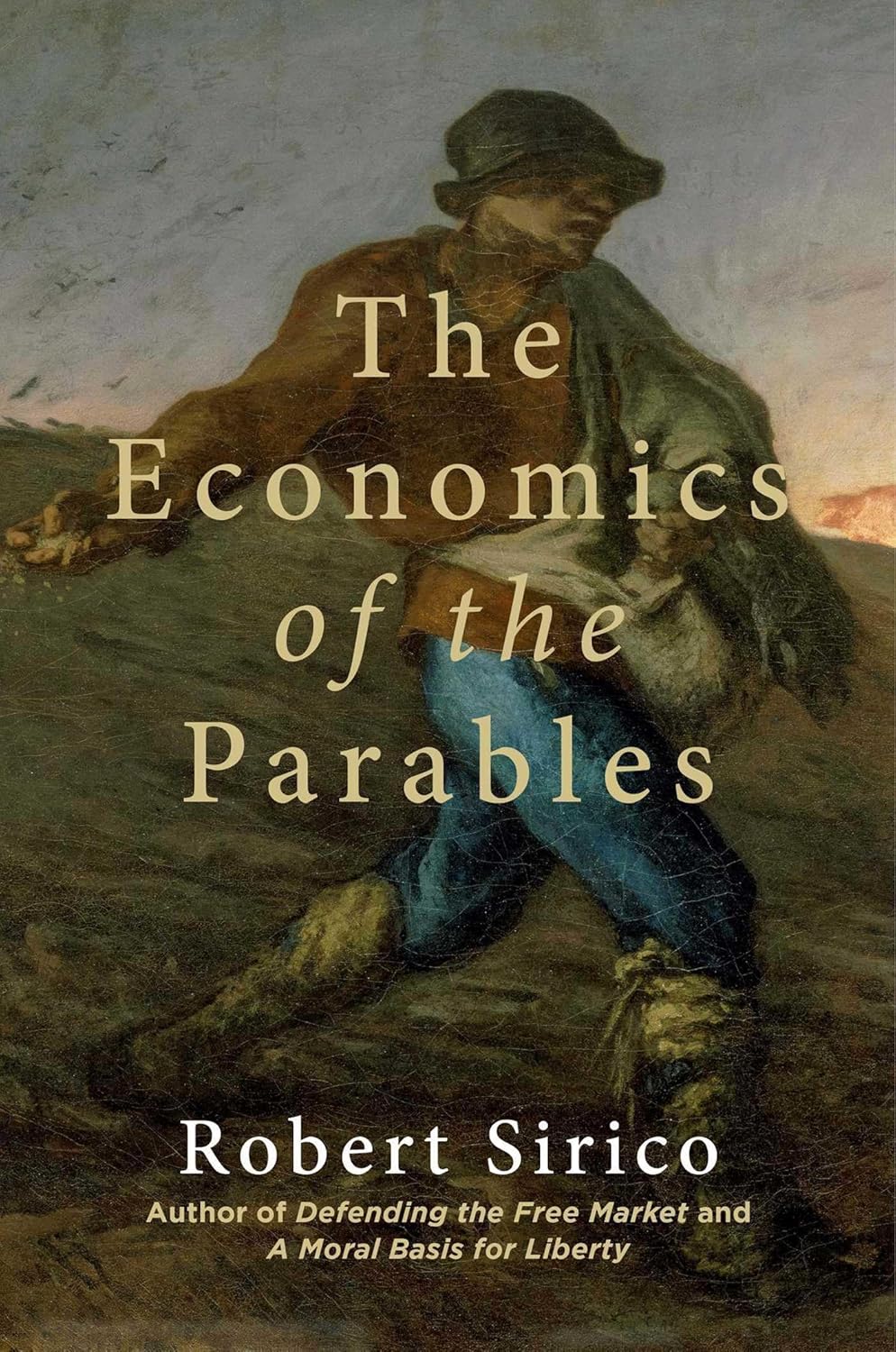
Robert Sirico is one of the leading lights in the Acton Institute for the Study of Religion and Liberty, a research organisation that promotes the benefits of free enterprise to the churches and more generally. Fr Robert is also a Roman Catholic priest, and so he also brings that ministry to bear in this book. In his Introduction he sets out his stated aim: to shed light on the economic and commercial setting of many of Jesus’s parables, as recorded in the New Testament. As he says: ‘my effort is … to detect the universal economic assumptions at play within the stories themselves, while at the same time acknowledging that these assumptions are not themselves the core intent, moral, or goal of the parable, and that, from time to time, Jesus turns such assumptions on their head to make his point.’ (page xvii). He recapitulates this point in his final section, which contains some broader thoughts on economics and the New Testament: ‘The primary focus of this book is on parables that exemplify these connections’ (page 148). As such, the author is not attempting to use the parables as the basis for instruction about economic policy or business practice. Rather, his intention is one of enriching our experience as we engage with them.
The heart of the book contains thirteen chapters, which in turn focus on a different parable – sometimes a group of related parables. These are: The Hidden Treasure (Matthew 13.44); The Pearl of Great Price (Matthew 13.45-46); The Sower (Matthew 13.3-9); The Labourers in the Vineyard (Matthew 20.1-16); The Rich Fool (Luke 12.13-21); The Two Debtors (Luke 7.37-50); The Talents (Matthew 25.14-30); The King Going to War (Luke 14.28-33); The House Built on a Rock (Luke 6.47-49); three parables which serve to give ‘Lessons in Stewardship’ (Luke 12.42-48, Matthew 24.45-51, Luke 16.1-13); The Good Samaritan (Luke 10.30-37); The Rich Man and Lazarus (Luke 16.19-31); The Prodigal Son (Luke 15.11-32). Every parable is printed out in full, in the traditional King James Version.
I felt that Sirico brought a preacher’s skills to bear very successfully in every case; he set me wondering about things, and thinking about how Jesus’s words might apply in my own life. For example, when considering the Parable of the Pearl of Great Price, he makes the obvious but interesting comment about pearls, that: ‘In the ancient world, they could not be manufactured; they had to be discovered’ (page 13). Another thought-provoking comment for me, in the Parable of the Labourers in the Vineyard, was the observation that: ‘in order to be practically generous – the virtue so abundantly displayed by the landowner in this parable – it is first necessary to have an abundant harvest, to create superfluous wealth…’ (page 37). When considering the Parable of the Two Debtors, Sirico includes a very interesting discussion about the idea of the ‘cost’ of mercy – ‘a notable act of charity, redolent with beauty, instructiveness, and inspiration’ (page 56). I was also surprised to realise that I’d never properly noticed that the Parable of the Prodigal Son follows two other ‘lost and found’ parables, a reminder for which I am very grateful (page 139).
On occasion, the author introduces a common preacher’s technique, that of re-telling the parable in a different and usually more contemporary way. For example, in the Lessons from Stewardship chapter, Sirico describes a ‘parable’ involving a CEO and their staff (the ‘stewards’), and the stockholders (the ‘owners’) (pages 103-104). He also suggests an analogy involving cars when considering the Parable of the Hidden Treasure (pages 3-4). However, his main intention is something more foundational, which is to provide more information to the reader about how economics works, so that a deeper appreciation of the parable in question can be had. This is a similar project to that of an historian or geographer, each able to give extra details about the context of a piece of teaching or writing. Economics as a subject is, at its best, interwoven with other disciplines such as history and geography, and Sirico’s project is in that sense admirable. He has helpful things to say about how markets operate, and the way in which contracts play an important part in this. However, there were occasional moments when I wanted to challenge some of his suggestions, for example when he equates a ‘negotiator’ with an ‘entrepreneur’ (page 15). It seems to me that the arbitrage function in markets is somewhat different to the way in which enterprise brings new possibilities about, and creates new markets; and indeed Sirico does hint at this as well, when at one point he brackets entrepreneurs with artists (page 27).
It is worth noting that, while extra technical contextual information about any subject can be very important, especially for those who like data and facts, there are other ways of approaching the Scriptures. For example, using the Lectio Divina method when reading a parable can be very rewarding for some, with its openness to a more sensory and imaginative approach. The ‘context’ then becomes the life of the person who approaches the parable, but it is still true that their own experience of life in an economy (working, buying, selling, owning) will be significant. In that vein, it is clearly important to the author that Jesus chooses so many ‘economic’ subjects for his parables; this reflects the fact that we are all economic agents, whether we realise it or not. To be alive as a human being is to be a player in countless markets.
Sirico does not aim to collect together and incorporate the wide variety of interpretations which scholars and preachers have applied to the parables. Of course, this is not a failing of the book, which has a different purpose. However, there were one or two moments when I felt that a particular interpretation could have been mentioned. For example, Augustine’s interpretation of the Parable of the Good Samaritan sees the wounded man as Adam and the Samaritan as Christ; and another interpretation asks us to see God as the one who takes the risk of travelling the dangerous road to be with us. I also felt that the grouping of the Parable of the Unjust Steward with the very different ‘Faithful Steward’ parables in chapter ten was perhaps a mistake. The ‘Unjust Steward’ parable is one of the most challenging, but the interpretation offered by Sam Wells in his 2019 book, A Future That’s Bigger than the Past, is very rich indeed; it was inspired by a lecture Wells heard Ched Myers give in 2006. I also noted that, in the Parable of the Talents, Sirico ignored Matthew 25.29: ‘For unto every one that hath shall be given, and he shall have abundance: but from him that hath not shall be taken away even that which he hath.’ I have always felt that this is the exegetical key to the entire parable, but Sirico, like most commentators, implicitly brackets it as an irrelevant aside. Instead, he speculates about what would have happened if the third (lazy) servant had been entrepreneurial but lost his master’s money; ‘It is hard to imagine … that he would have been treated so harshly’ (p.73). Here, my own understanding of the very purpose of this parable does vary from that of the author.
Sirico strays from the stated purpose of his book in one particular manner quite often. He re-states this claimed purpose as he introduces the final parable, that of the Prodigal Son: ‘In our study of Jesus’ parables we have sought to fill in the gaps related to their economic presuppositions and ramifications rather than attempting to offer a comprehensive analysis of the parables in all their amazing and intriguing detail’ (page 134). However, the author frequently introduces his own implicit interpretation by pushing back against Christians and Church leaders who are wary of market economics, and against economic policies that damage the free operation of markets. Examples of Sirico in this mode include: ‘All too many thoughtful Christians see this fact of people coming together to share and exchange values for mutual benefit as morally suspicious’ (page 10). ‘Policies that encourage short-sightedness, such as high taxes, immobilizing regulations, and credit expansion are to be avoided because they confuse and obscure market signals necessary to discern the proper conditions for investment’ (page 87). This is despite his stated desire, in this book at least, to eschew a temptation to read back into the Scriptures the moral basis for market-based economics (page 43). For some readers, I felt this extra strand of interpretative comment might be annoying, although for others it will be helpful. Sirico adds a final chapter which magnifies this interpretative theme, and which draws upon his 2012 book, Defending the Free Market: The Moral Case for a Free Economy.
Each chapter of this book has a picture, for example William Hogarth’s rendition of ‘The Good Samaritan’ (page 112) and Johann Eck’s ‘The Sower’ (page 22). These are mostly quite historical in feel, although there is a slightly more contemporary ‘He Built on the Sand’ image (page 92). I wondered how it would have changed the feel of the book if these images had been more deliberately current and perhaps culturally varied. After all, economics is a theme that permeates every human society in the world. I did also notice that the Parable of the Talents was wrongly ascribed to Matthew 15 rather than chapter 25 (page 64). Not-withstanding these minor quibbles, I found the aim of this book to be very worthwhile, and its execution to be skilfully done.
‘The Economics of the Parables’ by Robert Sirico was published in 2022 by The Acton Institute / Regnery Gateway (ISBN: 978-1-68451-242-3). 204pp.

Edward Carter is Vicar of St Peter Mancroft Church in Norwich, having previously been the Canon Theologian at Chelmsford Cathedral, a parish priest in Oxfordshire, a Minor Canon at St George’s Windsor and a curate in Norwich. Prior to ordination he worked for small companies and ran his own business.
He is a former Chair of the Church Investors Group, an ecumenical body that represents over £10bn of church money, and which engages with a wide range of publicly listed companies on ethical issues. His research interests include the theology of enterprise and of competition, and his hobbies include board-games, ‘acrylic resin’ art, and film-making. He is married to Sarah and they have two adult sons.
This book provides the results of research that was conducted by three academics who wanted to better understand the impact of allowing employees to demonstrate their religion in the workplace; the authors refer to this as workers bringing their whole selves into the workplace. The research questions were on how and when faith and religion are demonstrated in the workplace, what the positive and negative outcomes are of these demonstrations, and what type of professions or workplace environments are most tolerant to those who have a desire to be all of who they are in the workplace. Over 13,000 people in the U.S. completed the survey over a three-year time period; the survey respondents were from many different religious groups, including Christians, Muslims, Buddhists, and Jews, in addition to those who identified themselves as having no faith at all. Overall, the authors were attempting to identify what the potential results are for organizations and the individual employees if the employees are allowed to be fully authentic at the workplace. The references used as a foundation for this study indicate that employees are ‘more committed, motivated and act in ways that support the organization’ (page 10) when they bring all of themselves to the workplace, and the first chapter explains why this research is necessary.
There are ten chapters in the book, eight of which discuss the different results of the research. Each chapter begins with a mini-story from one of the survey participants and then the authors proceed to further explain the point made in the anecdote with the results of the questions that were asked in the multi-question survey. There is at least one table or figure in each chapter demonstrating the results, cross-tabulated with different demographic characteristics; these are very helpful for gaining a better understanding of the differences between the different workplace and personal characteristics. Every chapter ends with a section called The Bottom Line, which provides a quick summary of the main points made in the chapter. Each chapter also has many references to other research that relates to the topic being discussed (the full reference list fills six and half pages) and there are many notes that add to the discussion of the chapter. There are five appendices at the end of the book that explain the research methodology and provide the questionnaire that was used to gather the data.
Chapter 1 introduces how the book is structured and the point of the research. Chapter 2 adds a further foundation to the purpose of the research by identifying the fears that leaders may have when allowing faith practices and religious talk in the workplace. Three different fears are identified. These include the possible marginalization of some of the workers when religious faith is expressed, the conflict that could occur between workers having different faith perspectives, and the potential emotional separation workers may feel when not being allowed to fully be themselves in the workplace.
Chapter 3 identifies all the different ways that faith is expressed at work. This discussion includes the impact that different factors, such as position in the organization, size of the organization, culture of the organization, and individual characteristics have on the ways in which workers express their faith and their confidence in doing so. Chapter 4 addresses an interesting question of workers viewing themselves as having a spiritual calling for the work they are doing. This aspect was studied because other research indicated that ‘having a sense of calling was correlated with better coping with work problems, as well as overall lower stress and depression rates’ (page 43) and so many different aspects of calling are discussed in this chapter. Chapter 5 takes this discussion a step further and identifies how allowing religion in the workplace can bring meaning and purpose to a worker’s job tasks and work environment.
Chapter 6 discusses the relationship between faith and different aspects of ethical behaviour, such as questioning authority, advocating for self and others, and making change within the organization. The authors provide many interesting individual anecdotes and statistics related to ethical behvaviours demonstrated by different professions and types of organizations. Chapters 7 and 8 begin the discussion of religious discrimination and harassment, and the realistic accommodations that need to be present if religious expression is encouraged in the workplace. The authors identify the factors affecting where and when discrimination and harassment are more likely to occur; these include where in the country these workers live and work, whether the religious group is a minority within the workplace, whether there is a particular societal perception of a religious group (the authors speak about the challenge Muslims have within the U.S. since 9/11), and the leader’s perception of and experience with different religions. The authors also challenge their own research results in relation to the question of whether religion is the factor that is causing discrimination and harassment; they wonder if the cause is another demographic factor such as gender or ethnicity. The discussion on accommodation includes the influence of the human rights legislation in the U.S. and how this might impact the actions and reactions in the workplace.
Chapter 9 brings one further point to the discussion on accommodating faith in the work environment. This chapter discusses the addition of family into the equation of whether employees feel comfortable and supported in bringing all of themselves to the workplace. One interesting demographic factor noted was that employees who are more religious are more likely to be married and have children. Due to this factor, this group identified more work-life balance issues. Also, the authors discovered that in those who identified themselves as religious, there was a significant difference between the percentage of men and women in the workplace, with women participating less than men. There was also much more gender traditionalism demonstrated among these workers.
The last chapter provides a good summary of what organizations and leaders should do if they want their workers to bring their whole selves to work. The authors identify, once again, the benefits of workers having the freedom to express their faith in the workplace. They also, though, acknowledge some of the challenges that organizations may experience when allowing faith in the workplace, and provide a brief description of six things an organization can do to reduce the downsides of creating a faith-tolerant workplace.
This would be a very interesting book for someone working in an HR department to read, as they could refer to the research when recommending certain policies and procedures or proposing a shift in the organization’s work culture. This book is also a great reference for any academic studying or teaching in the social sciences or business fields. The empirical research is solid and provides much evidence for recommending freedom of faith within the workplace. The main challenge I see with this book, however, is that all the data was gathered from those working in the U.S. and thus the conclusions and recommendations may only be applicable to organizations in the U.S. The objective of the research study was to understand the benefits of allowing religion to be demonstrated in the workplace, so if this study was replicated in Europe, Asia, or Africa the results could benefit organizations that operate within a global environment.
‘Religion in a Changing Workplace’ by Elaine Howard Ecklund, Denise Daniels, and Christopher P. Scheitle was published in 2024 by Oxford University Press (ISBN: 978-0-19-767501-4). 201pp.
 Andrea Soberg is a retired professor of human resource management from Trinity Western University in Canada. She continues to be active within the global academic and business community by researching, writing, and assisting organizations that have a focus on business as mission.

This is a Vatican Press publication, which on one level is aimed at telling the story of the need for and successful actioning of reforms in the financial affairs of the Roman Catholic Church, especially the Roman Curia. As such, the preface by Sr. Raffaella Petrini, who is the Secretary General of the Governorate of Vatican City State, refers to good economics in the life of the church as an organisation and the management of its assets, and makes an early mention of Catholic social teaching as a rich and helpful resource. But the book also takes a broadly positive stance towards markets and enterprise, as Sr. Raffaella observes: ‘…a focus on the satisfaction of human needs points to economic systems that recognise the value of the market and entrepreneurship, the relevance of private property, freedom and human creativity, but also a concept of efficiency that includes the possibility for all to participate in the process of distribution and consumption’ (page 11). In this vein, the editors end their Introduction by expressing the following hope: ‘If the book inspires some readers to delve deeper and undertake further inquiries, perhaps even admire the social science of economics, encourage young Christians to study it and serve their country as entrepreneurs, then we would be overjoyed’ (page 22).
The book itself is a collection of ten separately authored chapters, and I offer some comments on each in turn.
Martin Schlag begins with a discussion of the contribution of Christian Humanism to economic thought. This sets the scene by making the important claims that economics does have an ethical aspect, and that there is a place for faith-based (Christian) contributions. I picked out a couple of thought-provoking statements. First, Schlag observes that: ‘Money apes God’ (page 35). This connects to the way in which money powerfully claims our attention and desires. Secondly, he claims that things like commerce, money and markets would have existed before the Fall (pages 37-38). I’m not sure I agree, but I’m pleased to have been stimulated in my thinking. Perhaps the most helpful section is a succinct and clear description of Catholic social thought, with its principles and norms (pages 48-51).
Joseph Kaboski gives the reader the first of three chapters which all touch on economic history. His focus is ‘growth’, and the ways in which economic growth can be balanced and sustainable (or fail to be). He gives a good survey of what we know about economic growth (pages 56-64), reminding us that it is a comparatively recent phenomenon of the past 200 years and rehearsing the extraordinarily powerful effect this growth has had on the world and human society. Mention is made in passing of Artificial Intelligence, but I would have liked more on this. He then considers the issues of sustainability and then balance, and in so doing introduces various themes that will be picked up by other contributors in subsequent chapters. While claiming that ‘The Lord did not want us to be part of a stagnant world…’ (page 78), Kaboski also observes that how we grow the economy is key, if this growth is to be a spiritual blessing.
Philip Booth’s chapter is entitled ‘Globalization and the Universal Church’. He begins by noting reasons why globalization can be unpopular, but his line is robustly positive, based on free movement of goods and services, as well as open migration. As comparative advantages are developed, this should be seen as a cooperative endeavour, and I had the feeling that Booth sees any political or societal push-back against globalization as being irrational. Whether his view stands up in the actual world of 2025 is an open question at best. I also felt his argument was weak when it came to the issue of local culture and traditions, and the way they are valued. I’d hoped that his title would open up scope for a reflection on the universality of the (Roman Catholic) Church, and how this might assist our thinking about the homogeneity of the global economy, but in fact he only mentions this briefly (page 89).
The final chapter on economic history is by Giovanni Farese, who looks at the development and evolution of economic systems. He begins with a wide-ranging list of fourteen ‘factors’ that may be important (number ten is ‘religion’), and then moves into a broad-brush narrative which describes the move away from feudalism to a modern capitalist economy. He is honest about the challenges within this story, for example the First World War and the arrival of ‘big government’. These challenges are unfurled in the form of a descriptive list, with not a great deal of interpretation, but are helpful none-the-less. The Ukraine war makes it in, but not the second Trump presidency. However, Farese flags up what he calls the ‘trilemma’ (page 133) of democracy, openness to globalization, and national sovereignty; which three things he observes are hard to reconcile.
The next three chapters are concerned with the power of market economics, but the ways in which they can ‘fail’, and in this spirit Brian Griffiths takes as his title: ‘Markets and Prices: Are They Always Efficient?’ His initial answer is, not always, but they are ‘…far more effective than any other economic system that has been tried’ (page 140). This helpfully earths the discussion in the reality of experience rather than simply the realm of theory. Griffiths sets himself three main questions. The first asks, ‘Why do markets create prosperity?’, and I was pleased to see him deploy not just the solid ‘economic’ arguments connected to flexible prices, competition and enterprise, but also to draw in the Christian perspectives of social liberty, human dignity, the goodness of work, and the care for God’s world. The second question asks, ‘Why do markets fail?’, and he touches on the familiar subjects of externalities (spill-over costs), public goods (which need a collective decision), and monopoly power (supply restriction). Griffiths does also mention the problem of markets encroaching on territory that they properly should not, and the particular challenge of the 2008/9 financial crisis: ‘…a huge subject…’ (page 154). The third question asks, ‘How should government respond to market failure?’, the answer involving use of the tax system and rationing (statutory and perhaps tradable quotas). But Griffiths expresses caution and points to unintended consequences. Instead he makes warm mention of the work done by Elinor Ostrom on community self-regulation (page 157), something which I noted to follow up with interest.
Richard Turnbull then takes up the baton, with a closer treatment of externalities and the potential role of public bodies to intervene. He starts by listing various types of intervention: price controls; minimum service standards; lowering barriers to market entry; fines and subsidies; control of monetary policy. These are tools available in the face of various kinds of market failure. He then weaves together a discussion which draws on a theological perspective as well as a stance typically taken by economists as they feel for a proper role for government. The Christian element of this discussion is by necessity concise and perhaps rather selective, but rich none-the-less, drawing notably on the ‘two kingdoms’ approach of the Reformers. Turnbull’s conclusion is that ‘…the state has a proper role, in welfare and economics, but not to the exclusion of our personal responsibility and accountability’ (page 179). This set me wondering if this balance is itself a political decision, or something that emerges more organically. Ultimately Turnbull himself comes down slightly more on the side of market solutions to the problems of externalities, and gives theological reasons for this stance (pages 186-187).
Carlo Bellavite Pellegrini and Andrea Roncella then take as their title ‘Money, Finance and Banking: Can They be Ethical?’, and use this as a launchpad to sketch out both a technical and an ethical framework. The treatment of ‘money’ draws upon conventional observations, but adds in some interesting reflections. For example, there is a claim that without money the economy and human existence would ‘regress’ (page 196); also the statement that ‘…money is a set of possibilities…’ (page 197), which reminded me of the power implicit in money; and the observation that money is ‘…the best symbol of our free control of time…’ (page 197). I found these reflections stimulating, even if they were left somewhat hanging in the air. The authors then progress to ‘finance’, and the comparatively recent development of financial capitalism. They flag up problematic issues which arise when financial instruments are ’corrupted’ (page 202) and are no longer used for the common good, for example the mortgage securitization processes which ushered in the 2008 crisis. The third topic is ‘banking’, the concept of which is explained nicely, as well as the need for good capitalisation and reserves if stability is to be found. Pellegrini and Roncella describe the need for good structures and regulations, as well as ‘virtue’ on the part of the people involved: ‘…a transformation of the hearts of individuals’ (page 203). For me, this conclusion was perfectly reasonable but perhaps rather uncritically presented as springing out of Catholic social teaching. I would have enjoyed more in the way of engagement with the richness of the Christian tradition.
The final three chapters turn more overtly to church practice. Marta Rocchi borrows from (or provides?) the title of the whole book in her chapter: ‘Business Ethics for Ecclesiastics: A Virtue Ethics Perspective’, noting the extent and variety of ‘business ethics’ methodologies, and asking how this wisdom can be employed when it comes to the running of ecclesiastical structures. Rocchi’s chosen tool is virtue ethics, and she provides a useful description of how the four cardinal virtues can be mapped onto church management issues. I was especially struck by the link she makes between the virtue of ‘courage’ – even ‘magnificence’ and ‘perseverance’ (pages 228-229) – and enterprise. This would make a whole thesis of its own! Her conclusion points to the need for education aimed at improving church management, with the suggestion of teaming up with business schools. I wondered if this might be a rallying cry for organisations such as the Centre for Enterprise, Markets and Ethics.
The next chapter, authored by Luca Mongelli and Fernando Crovetto, is entirely concerned with telling the story of one example of the institutional church in entrepreneurial mode. This is an account of the ‘Salto di Fondi’ project, involving some land near Rome that was acquired and developed over a number of years before being sold. The premise set out by the authors is that the church ‘…needs to adapt with skill, creativity and innovation to historical and cultural changes’ (page 238). I enjoyed the narrative, but felt more interpretation could have been offered. One thing that caught my eye was the importance of a specific encounter and conversation, and the need for attentiveness when it comes to spotting opportunities – something that in my mind connects closely to enterprise.
The final chapter, by Carmelo Barbagallo and Giuseppe Schlitzer, is focused entirely on a description of the changes made in the financial systems in the Vatican City State since 2009, when the Euro was adopted. No doubt these changes were necessary and important, and the technical narrative is detailed. I must confess to having skipped through it somewhat, and I found the section detailing the recent external assessment of very satisfactory progress rather self-congratulatory, but I imagine that for some in the Roman Catholic Church the detail set out here is key, and the progress made reassuring. I did not have the sense that the earlier chapters led up to this concluding piece, but perhaps the various reflections set the context within which the reforms at the Vatican are clearly right.
In sum, I was pleased to read this book, and have taken away several snippets to ponder. Parts of it would serve very well as a primer for Christians who want to know more about how the economy works, and about how theology can contribute. Taken as a whole, it might well also succeed in the aim of the editors, in encouraging young Christians to study economics, and to ‘serve their country as entrepreneurs’.
Economics for Ecclesiastics: A Guide, edited by Martin Schlag and Giuseppe Schlitzer was published in 2024 by Libreria Editrice Vaticana (ISBN 978-88-266-0921-8). 286pp.
With the subtitle of this book being ‘Your Guide to Meaningful Work in a Changing World’ the reader would assume that O’Donnell’s book would provide guidance on how we can be better at our jobs and find fulfillment with the paid work that we do. This book, however, does not really achieve this end. This is not to say that this is not a good book to read, but the reader needs to understand what they will get out of this book before reading it. This is a book that can assist the reader in acknowledging and using the gifts and talents God has given us for the work we do. The work and business examples that are provided in each chapter evolved from the research that the author conducted while completing her doctoral dissertation. This book is written by a woman who provides many examples of the challenges women have when balancing life and work. Each chapter includes many stories of leaders, employees, and entrepreneurs and their experiences with their work and work environment.
The book is written with three distinct sections, each having several chapters that expound on the focus of the section, with each chapter ending with some exercises that assist with the practical application of what was written about in the chapter. The first section is called ‘Where Do You Want To Go?’ and includes 3 chapters that discuss the challenges that most people are facing in today’s world of work. (Note that the author is writing for an audience in the developed world and does not include the challenges that someone might experience in under-developed nations). O’Donnell briefly discusses the economy, the new tools and technologies that are now used in work, and the feelings and emotions experienced by workers in today’s organizations. She proposes and challenges dysfunctional beliefs about work that Christians may have and attempts to explain what God’s calling is for our lives. Even though these chapters may set the stage for our current situation they don’t really motivate the reader to read further in the book. The saving grace of this section is Chapter 2, where the author discusses the concept of ‘lean in and let go’ and where she acknowledges that God is in control of our situations. This discussion possibly sets the stage for moving on into the second section of the book where the reader learns more about how to lean in and let go.
The second section of the book is entitled ‘Who Will You Become?’ and has 4 chapters that discuss how to be entrepreneurial in your work and business. In the author’s bio, listed on the back cover of the book, she is identified as an entrepreneur and so she has an understanding of what it feels like to start a business. Throughout the chapters in this section, she uses many of her own business experiences, in addition to the answers to questions she asked entrepreneurs while completing her doctoral research, to explain many of the concepts discussed in these chapters. O’Donnell refers to several significant topics such as the importance of building relationships, understanding creativity, and developing resilience skills. In this section of the book she utilizes many scriptural references to explain how God always uses relationships in the building of His kingdom, how creative the Lord was in the creation of the world and all that is in it, and how Jesus was resilient in all that He endured. The use of some of the biblical references, however, can appear to be forced when relating these to the topics being discussed. One example of this is in Chapter 7 where the author uses the Easter story as a demonstration for building resilience; this application to work in our current situations seems a bit contrived. Since this section of the book was focused on being entrepreneurial in your work, it may appear that this book is written for people who want to start their own businesses; this may cause some readers to feel that this book would not be a guidebook for them in making their work meaningful in a changing world.
The last section of the book is entitled ‘How Will You Get There?’ and includes 4 chapters that focus on having empathy, imagination, and taking risks. This section ends by reflecting on our past and considering how we got to where we are today. In these chapters O’Donnell re-emphasizes our need to be entrepreneurial in all we do and explains good techniques for being a successful entrepreneur. Once again, though, these chapters don’t seem to fit within the main purpose of the book, which is to make any and all work meaningful in a changing world. The thoughts in these chapters could, however, assist entrepreneurs in being more effective and successful in their entrepreneurial ventures, as they deal with their failures and successes.
In conclusion, I found the book hard to read as there seemed to be no clear focus and end goal. Most chapters were well written, but the discussions did not always hang together inside the chapter or with the following chapters. The book did not successfully provide the reader with a conclusion on how to make their everyday work meaningful. The first 3 chapters probably should appear at the end of the book, as they summarize the current situation and demonstrate how all the concepts that are discussed in the following chapters provide some of the needed skills and direction on how to better manage our current work situations. Many of the chapters read like stand-alone essays (or good talks for a conference or podcast), which are good in themselves, but don’t always lead the reader to further knowledge in how to make work matter. The integration of scripture in some of the chapters and areas of focus seemed to be forced and doesn’t provide a cohesive understanding of what was really being meant by the scripture passages being used. Overall, the best chapter in the book is Chapter 6, where there is a wonderful exposition on creativity and God’s role in our ability to create. The author provides many gems in this discussion and causes the reader to truly consider our ability to be continually creative in all we do, remembering that God is the creator and we work with Him in all we create in our lives.
Due to the structure of each chapter including many anecdotes, and the fact that the majority of the references cited were not from academic books or articles, this is not an academic treatise about the integration of faith and work. This could be a good book for a Christian book study in which people in their early career stages have a desire to better understand how to integrate their faith with their work. The questions at the end of each chapter allow for good discussion and could elicit more answers as to how to make work matter, and these answers could actually create a guide-book for creating meaningful work in a changing world.
‘Make Work Matter: Your Guide to Meaningful Work in a Changing World’ by Michaela O’Donnell was published in 2021 by Baker Books (ISBN: 978-5-40-90160-6). 234 pp.
Andrea Soberg is a retired professor of human resource management from Trinity Western University in Canada. She continues to be active within the global academic and business community by researching, writing, and assisting organizations that have a focus on business as mission.
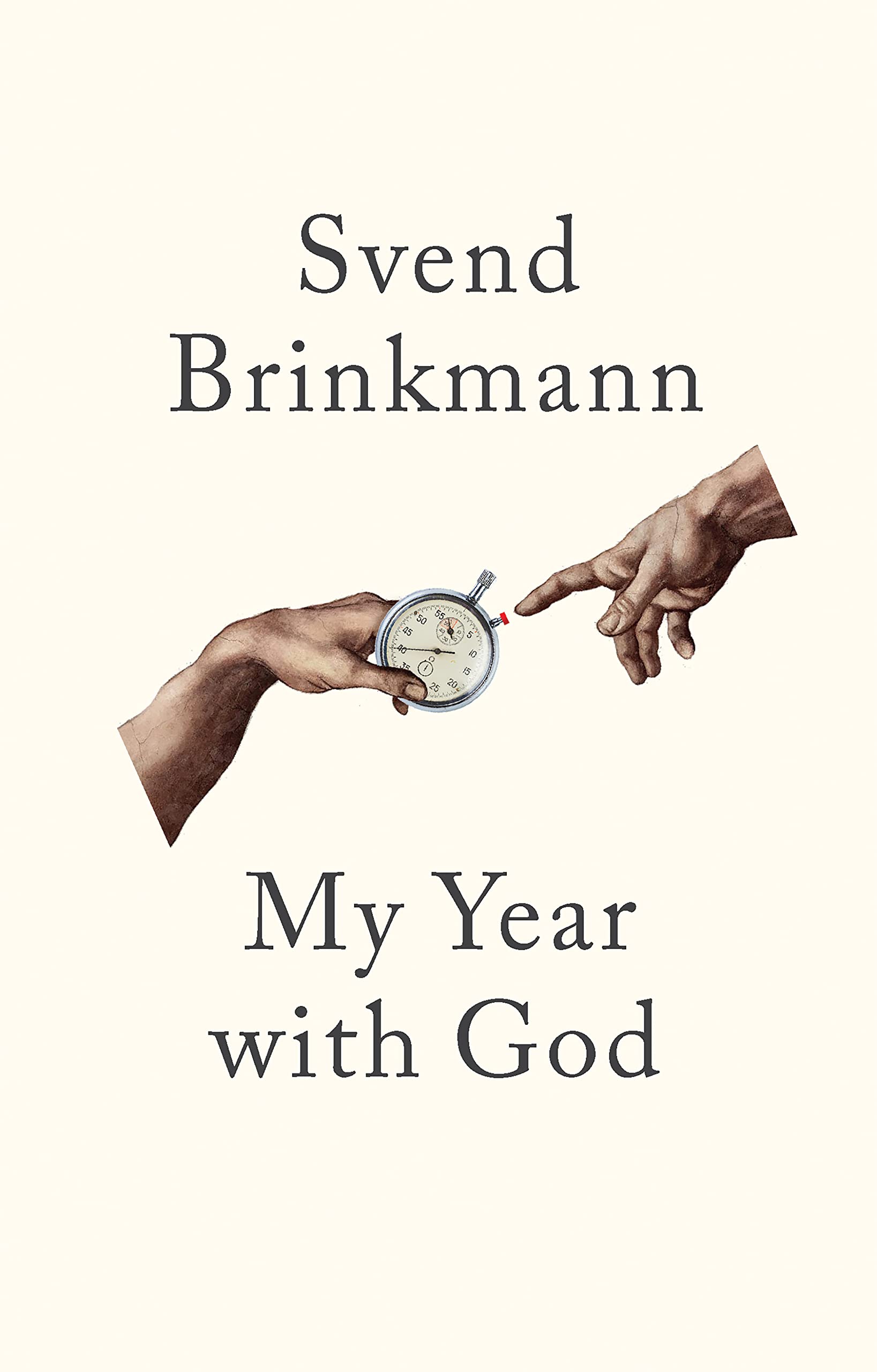
In My Year with God, Svend Brinkmann seeks to explore how someone can find meaning in religious faith in a modern, secularised world informed by science. The book is set out as a diary spanning one year, with each month addressing a particular question in connection with religion or faith. Thus, the author documents his thinking on a range of subjects, such as what religion is, how it might relate to morality or what the nature of the soul might be. The approach is commendable: the writing is accessible and honest, and Brinkmann adopts an enquiring and thoughtful approach to his subject. Indeed, he states from the outset that he has always been ambivalent about religion but recognises many important insights from religion and religious philosophy. As a Professor of Psychology (as well as a renowned public speaker, the author of several books and presenter of a radio series), Brinkmann is very knowledgeable and is as at home with philosophy and sociology as he is with his own discipline. It becomes clear fairly early on, however, that while he considers himself a ‘cultural Christian’, the book is to depart some way from the central tenets of Christianity.
Distinguishing between faith and religion, Brinkmann considers the former to be personal and connected with the individual’s ‘total reaction upon life’ (to use the language of William James), while the latter is defined in communal or social terms, as a collection of rituals and symbols that binds people together.
Following John Caputo’s thought about the ‘weak God’, he arrives at a position whereby God, as an independently existing, transcendent being, is rejected in favour of a view that considers the Almighty to be ‘the unconditional’: a moral demand that we recognise the obligation to help fellow human beings in need. God is thus recast as the absence of human perfection, which we strive to address: ‘ … God can be considered a term denoting an absence in the world – one humans are required to remedy to the best of their ability’ (page 168).
Likewise, while opposing a mechanistic view of human beings as robots made of meat, Brinkmann suggests that the soul is not an object that we can locate; rather, following Wittgenstein, he suggests that it is a way of regarding others – as people rather than objects – that demands a certain attitude. As the author says with regard to both the soul (pages 85-87) and God (pages 39-45), they insist rather than exist. Thus, they are really terms to describe moral obligations, the character of existence and our attitudes to others. Likewise, the notions of resurrection and the afterlife are reinterpreted in terms of one’s legacy in the community to future generations, in passing on the importance of our moral obligations.
As for the Bible, this is understood as expressing truths about human nature in terms of social psychology (in the creation story found in Genesis), while the teaching of Jesus highlights the moral demands of the unconditional: ‘The Bible is, therefore, a source of both psychology and ethics. As I see it, both can be expressed without a mythical belief in an omnipotent, celestial God or the rewards of an imagined afterlife … the teachings of the Bible pave the way for perhaps the most real and meaningful form of faith, because it’s only with the death of God – the revelation of the impotence of the Almighty’s omnipotence, as symbolised by the Crucifixion – that humankind is called upon to have faith. After that, it’s up to us. The Bible’s promises of resurrection and eternal life then become about passing down the narrative of the unconditional to succeeding generations’ (page 114). Jesus, then, becomes a person who embodied ‘the unconditional’ in Christianity, about whom we tell stories in the absence of any proof of the existence of God – the unconditional (page 182-3).
When reinterpreted in secular terms, then, religion and faith ultimately have to do with our moral relations with others and the search for meaning, and provide a way of speaking about these central aspects of our lives in a way that the purely causal, mechanistic, materialistic language of empirical science cannot. An important facet of religion, therefore, is what it enables us to say or express. As the author says, ‘ … we need the language of poetry and religion to comprehend life. If it makes sense to talk about religious truth, then it must be poetic’ (page 179). Religion and faith therefore help us to express those experiences and relations that are of fundamental importance to us as human beings, but the traditional truths posited by religion are re-interpreted in secular terms. In accordance with the author’s ‘social’ definition of religion, many of our secular practices (such as grieving and commemoration) retain a religious character.
Given that this book amounts to the author’s personal reflections on a series of religious questions – and one conducted in a respectful and open manner – it is difficult to be critical. As Brinkmann himself says, ‘Many will object that this is a very strange idea of God. And that’s fine’ (page 178). There are several matters that invite comment, however. Some might wonder whether his treatment of scripture is somewhat thin: reducing Jesus’ teaching to a message about the unconditional, for instance, is perhaps something of an over-simplification that misses the radical novelty of Jesus’ message, particularly in relation to the Hebrew scriptures. The author does acknowledge that he runs the risk of being accused of being a dilettante when it comes to theology but expresses the hope that his reflections will provide food for thought (page 172-3). Interestingly on the matter of scripture, he asks: ‘why is it the Bible, of all books, that is so crucial to conveying the message of the unconditional? Why couldn’t it be Harry Potter or Star Wars, both of which are also about good and evil? An essential part of the answer is probably that it is simply due to the Bible’s reception history. It is the Bible, and especially the New Testament, that conveyed this message first – and most clearly. Other texts simply follow its lead’ (page 118). Many Christians would take the view that the reason for the Bible’s reception is that is emphatically not like Harry Potter or Star Wars, as libraries of exegetical scholarship have demonstrated.
A more fundamental problem is that the book fails to engage directly with religion itself, as lived and experienced by its practitioners. The subtitle, which does not appear on the cover, is ‘Faith for Doubters’. Both title and subtitle might lead one to expect a book in which the author, though sceptical, decides to give religion a try in its concrete form – perhaps by attending church services, visiting catechetical groups or talking to worshippers – and recording his reflections. Since the book was written at the time of the COVID-19 pandemic, perhaps this was an intention that was thwarted, but it is an unfortunate omission and can only result in a somewhat hollowed-out analysis of the content and role of faith in people’s lives. A fundamental aspect of religious life is missed and a good deal of the core content of religion is removed by (re-)interpretation. Religion and faith are thereby reduced to an individual ‘reaction on life’, a set of symbols and rituals that have a social role, a form of language and a moral demand. Given the author’s starting point, perhaps this is the most sympathetic and complete treatment one could expect – but it is thoroughly immanent. In placing everything squarely in this world and stripping away the transcendent, together with the experience of religion itself, the final picture that emerges is a long way from anything that most Christians would recognise.
Sympathetic, honest and open as it is, this book represents a year of reflection, using scholarly resources, on questions relating to faith and religion – but it is not a year with God. As a thoughtful and personal reinterpretation of God, faith and religion, that seeks meaning in a modern, secular context, it is interesting, but those approaching it from the position of an existing faith are likely to find little with which they can seriously engage.
‘My Year With God: Faith for Doubters’ by Svend Brinkmann, was published in 2022 by Polity (ISBN: 978-1-5095-5272-6). 193pp

Neil Jordan is Senior Editor at the Centre for Enterprise, Markets and Ethics. For more information about Neil please click here.
The history of the liberals, radicals, socialists, feminists, and Christians who advocated for free trade as the necessary accompaniment to anti-imperialism and peace is the subject of Marc-William Palen’s Pax Economica: Left-Wing Visions of a Free Trade World. Pax Economica was a term promoted by Jane Addams of the Women’s International League for Peace and Freedom, whose idealistic vision was of such a world after the catastrophe of the First World War (page 199).
Today, free trade is most often associated with neo-liberal economic thought but Palen demonstrates that its origins are rooted in nineteenth-century left-wing politics, with its advocates promoting a heady blend of peace, anti-imperialism, and free trade: a vision at odds with the powerful currents of nationalism, protectionism, and colonial expansion.
The book charts the continuous movements for free trade from the 1840s to the present day. Its scope is broad in time and space, with the core themes often intersecting with major events across the period. The vicissitudes of the drive for free trade as the harbinger of a peaceful world is prominent, and its mutability is closely considered and evaluated.
Palen reveals how, for some of its more left-wing adherents, free trade represented a challenge to imperialism and militarism. In its most idealistic form, it was held that free trade would create international bonds of union, dependence, and harmony which would make war obsolete. Suffice to say, that idealist vision has not materialized.
Nonetheless, the vision of a ‘Pax Economica’ evolved to include supranational regulation, and the establishment of post-1945 liberal institutions such as the United Nations (UN), International Monetary Fund (IMF), and the General Agreement on Trade and Tariffs (GATT) which did meet, albeit insipidly and ultimately disappointingly, their support for global governance and cooperation. Yet Palen’s work is not primarily a history of international institutions but rather a detailed study of the left-wing vision of globalism. In the main, this means a roll call of movements, pressure groups, and individuals, mostly those employing an ‘outsider strategy’ as a means of changing policy. The work is ambitious, immaculately researched, and a timely publication amid the resurgence of economic nationalism and geopolitical conflict.
The text, divided into six chapters, ranges over an extensive landscape, encompassing the anti-imperialism of free trade, Christian pacifism, socialist internationalism, feminism, and Marxism. The idealism conflating free trade, peace, and prosperity is well-delineated, and the intellectual antecedents well-identified and contextualized, with Richard Cobden, Henry George, and Norman Angell referenced throughout in multiple contexts. The geographical diaspora of free trade sentiments is a fine testimony to the vibrancy and durability of these ideas.
The book considers these developments, broadly defined, with short-hand organizing themes such as the ‘Marx-Manchester’ and ‘Marx-List’ traditions. Continuity of struggle and complexity of the tasks are keynotes of the work, from the battle against the systemic protectionism of the 1840s to the current disputes over trade liberalization and neoliberalism.
Indeed, divisions over the legitimacy of free trade principles were explicitly made with the publication of Friedrich List’s National System of Political Economy as early as 1841 at the height of the campaign for economic liberalization in Britain. Economic nationalism, as a counterpoint to free trade, features prominently, with List’s ‘infant industry’ framework and the ‘American System’ of Alexander Hamilton appearing equally, if not more, historically important, in the commercial policy of nations. The idea of tariffs as a shield against foreign competition, and more positively, as an economic development strategy, proved highly influential in the United States, Canada, Australia, Germany, and even Britain.
Free Trade has always been presented in many different guises, and Palen effectively demonstrates that it is intersectional and situational. It could be a liberal, socialist, or anti-colonial force, for the variegated ‘productive profile’ of nations meant it possessed different connotations and meanings on a country-specific basis. While viewed as a liberating measure in Victorian Britain, the same policy preferences led to it being considered by less-developed countries, such as India, Ireland, and China, as a tool of economic imperialism, used against territories which had ‘suffered under the yoke of British free-trade imperialism’ (page 109). Conversely, protectionism, while historically often reflecting the dominance of political and business elites, was often considered, especially in recent times, integral to the economic development of emerging states, and in anti-colonial national struggles. Hence the terminology of ‘Marx-List’ and ‘Marx-Manchester’ traditions as a way of understanding political economy preferences via national subjectivities and economic complexities. Undoubtedly owing to constraints of space, the book does not go far in its forensic analysis of divergent commercial policy preferences, and a particularly notable omission is the extent to which policy preferences were influenced by the fiscal demands of increasingly democratic electorates.
Chapters on free trade feminism and Christian pacifism demonstrate the continuing influence of Cobdenite ideas into the twentieth century. The final chapter takes the story up to the present day, charting the post-war Bretton Woods system, and the triumph of the Pax Americana and neoliberalism, with the caveat that economic nationalism aligned with infant-industry strategy continues to challenge the long-standing association between equity and free trade. Argentina is usefully highlighted as a case study of a nation adopting a growth strategy informed by Listian and American System ideas as ‘economic blueprints’ for development (page 196).
In a divided and unequal world, an absolutist stance for free trade has often been construed as entrenching inequality. Interestingly, free traders often reconciled these Global South infant-industry strategies as a rational, though hopefully temporary, response to Western neo-liberalism, which preached free trade but practiced protectionism. Most notable in that respect, despite the guiding principles of Reciprocity and Non-Discrimination promoted by the World Trade Organization, is the recent surge of regional trade agreements delimiting and protecting rather than expanding market access.
In some ways, the timing of the book’s publication in 2024 was unfortunate, and the idea that the ‘neo-liberal order has been placed on notice’, appears chimerical. With rising global geopolitical tensions, and war in Ukraine and Gaza, any notion of Pax Economica appears unlikely (page 222).
Nonetheless, the analysis within the book is broad-ranging, conceptually coherent, and highly informative. A particular strength is the ability of the author to convey the changing nature of free trade movements, yet while the breadth of the study is highly impressive, it does necessitate a sacrifice of depth in places.
The book is primarily an intellectual and institutional history with a plethora of organizations, acronyms, and an eclectic array of individuals. At times, it would have been useful to know how popular many of the cited organizations were, and how long they lasted. Some readers may find the numerous terms, ideologies, adjectives, and acronyms difficult to follow. Equally, the thematic approach means there is some reiteration and repetition.
Nomenclature is a little odd at times, with John Bright described as an ‘antislavery activist’ and Cobden as an ‘opponent of slavery’ (page 155). It is not that these descriptions are inaccurate but that they convey a limited view of individuals whose backstory is much wider than suggested by the description. There are also some contentious points, such as the claim that the Manchester School ‘envisaged the gradual decline of the nation-state, and with it the elimination of national rivalries and trade barriers’ (page 97). Despite its purported universalist and utopian principles, there existed many, maybe even Cobden himself, who supported free trade at least partly because it aligned with vested class and/or national interests. Self-interest could co-exist with or even be disguised by idealism. Indeed, trade agreements today, such as the USMCA, are examples of managed and negotiated free trade, which are a far cry from the voluntarist model promoted by free trade idealists portrayed within the book.
At times the book appears a somewhat breathless account (indicated by 65 pages of notes and a 20-page index) in covering so many events, times, and places but there is much to be gained from a close and careful reading of the text.
In sum, the book will interest scholars and general readers. It follows the tradition of ‘broad sweep’ history, informed by a considerable body of research and synthesis, and as such is thought-provoking, engaging, and interesting to read.
‘Pax Economica: Left-Wing Visions of a Free Trade World’ by Marc-William Palen was published in 2024 by Princeton University Press (ISBN: 978-0-69-119932-0). 309pp
 Gordon Bannerman is a professor teaching Business History at Wilfrid Laurier University and the University of Guelph-Humber, Ontario. His primary research interests focus on modern British political and economic history.