Our sixth Fforestfach Colloquium was held in the House of Lords on Thursday, 16th April, 2026. We had the pleasure of listening and responding to three excellent speakers addressing the question, ‘How Much Love, To Which Neighbours? Our Duties Within the Nation and Beyond.’
Our three presenters included Dr Nick Spencer, Senior Fellow at Theos, a Christian think tank; Daniel Johnson, journalist, and founding Editor of TheArticle, an online journalism platform, and a former senior editor, editorial writer and columnist for The Times and The Daily Telegraph; and Dr David Miller, Professor of Political Theory at the University of Oxford and author of On Nationality and National Responsibility and Global Justice (2007). The audience of about 20 invited guests listened intently and responded readily with insightful questions and comments that ranged freely across the speakers’ remarks.
Our speakers have kindly provided us with the text of their presentations, which can be accessed below.
What are our Moral Duties as a Nation? by Nick Spencer
Dr Nick Spencer is Senior Fellow at Theos. He is the author of a number of books and reports, including Magisteria: The Entangled Histories of Science and Religion (Oneworld, 2023), The Political Samaritan: How Power Hijacked a Parable (Bloomsbury, 2017), The Evolution of the West (SPCK, 2016) and Atheists: The Origin of the Species (Bloomsbury, 2014). He is host of the podcast Reading Our Times.
How Much Love, to Which Neighbours? Our Duties Within the Nation and Beyond, by Daniel Johnson
Daniel Johnson is a British journalist and author who was the founding editor of Standpoint magazine and a former senior editor, editorial writer and columnist for The Times and The Daily Telegraph. Since 2018, he has been founding editor of the online journalism platform TheArticle, as well as being an associate editor of The Critic magazine and commentator for The Daily Mail, The Mail on Sunday and The Daily Telegraph.
And Who is My Neighbour? Moral Duties at Home and Abroad, by David Miller
David Miller is an English political theorist. He is Professor of Political Theory at the University of Oxford and an Official Fellow of Nuffield College, Oxford. He previously lectured at the University of Lancaster and the University of East Anglia. He is the author of a number of publications, including Social Justice, On Nationality (Clarendon Press, 1995) and Citizenship and National Identity (Polity, 2000).
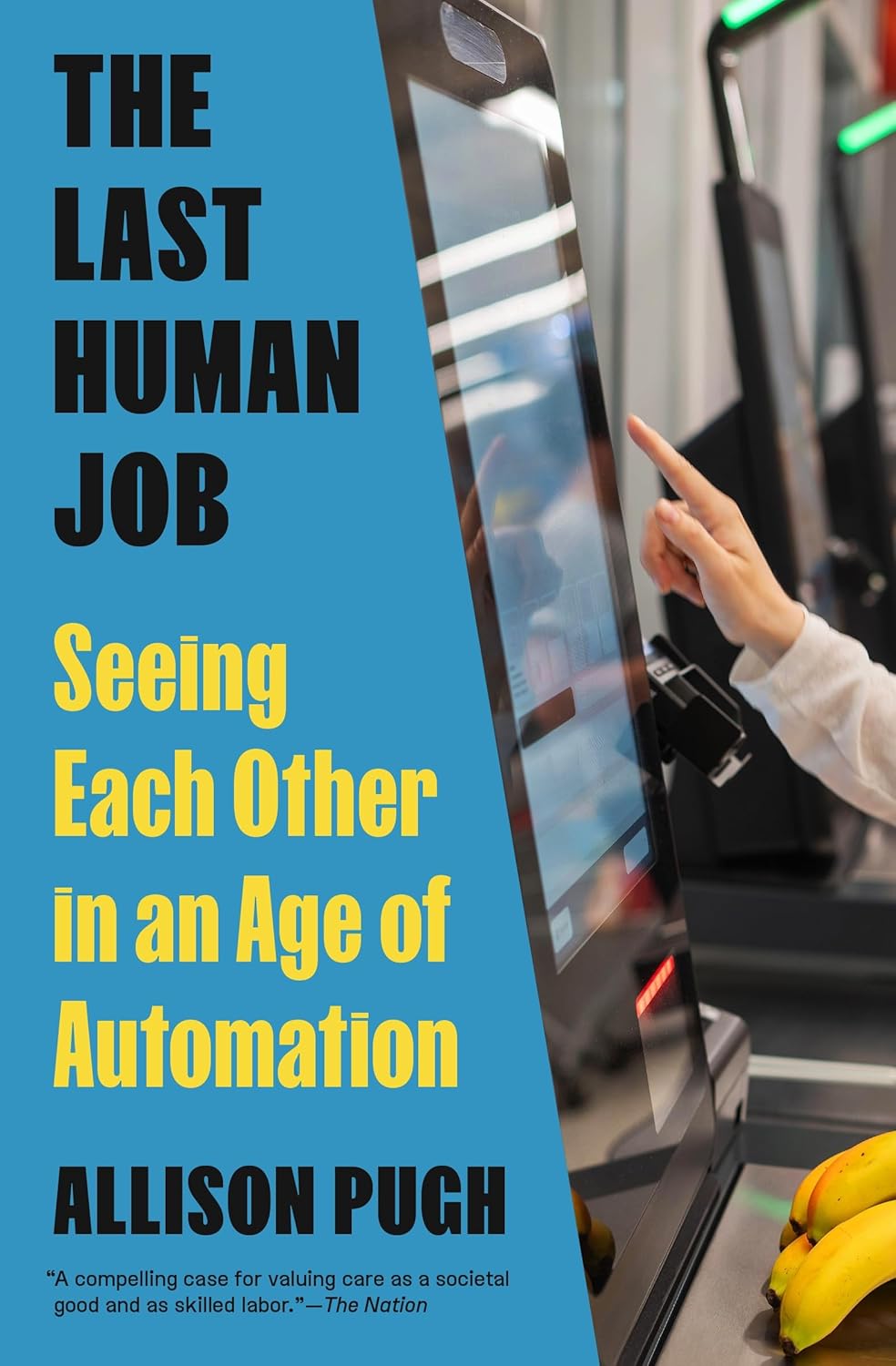
I was struck while reading this book on the plane as a flight attendant passed through the cabin with his trolley, asking, ‘Any waste, rubbish or trash?’ Three words to say the same thing, I thought, but a clear attempt to do exactly what this book was describing: connect with people who experience and express things in different ways.
The Last Human Job is premised on the concept of connective labour as an essential element of human relationship through work. ‘The crux of this labour,’ Pugh tells us, ‘involves “seeing” the other and reflecting that understanding back. … Yet it is work that is essentially invisible, only partially understood, and not usually recognised, reimbursed, or rewarded, despite its ubiquity and importance’ (page 2). It is also, Pugh argues, only doable by a human being.
Pugh endeavours to prove this by sharing the studies and interviews she has undertaken with people working across a range of professions whose success relies on connective labour. She shares the stories of chaplains, nurses, teaches, therapists, cashiers and sales staff, and argues that human beings and connective labour must be protected in an age where automation and artificial intelligence are trying to create shortcuts or replace them.
The book is in itself an attempt at connective labour as Pugh seeks to break down complex psychological and sociological concepts and terminology for the reader. Whether or not she achieves this depends also on the reader and their ability to understand the scientific analysis within the book, which is unavoidable and also gives this research its credibility. I would argue that for the non-scientific reader, of which, as a musicologist and ethicist, I am one, Pugh’s message resonates most when supported by the voices of her interviewees, which are quoted directly and conversationally: ‘I was just like, something was kind of off, like, it didn’t feel the same’ (page 117).
I would argue that this, too, lends the book credibility and is what makes it accessible to an audience which reaches well beyond the academic readership such research might traditionally attract. The anecdotal style might seem jarring at first, compared to the formal analytical prose which precedes these examples, but Pugh weaves these voices in throughout the book often making it feel more like a narrative with characters who the reader gradually gets to know over the course of its nine chapters. The result is that reading The Last Human Job does not feel like someone is explaining something to or at you, but rather that you are there in the room with them, learning and growing in understanding of each other as human beings, and equipping the reader with the skills to improve one’s own connective labour practices in work and daily life.
A lot of Pugh’s theory seems obvious: be a good listener, use your body language to make others comfortable, speak with authenticity. However, the reality described by those who do this work is much more complex: motivate a depressed stage four cancer patient to take their medication, inspire a truant pupil who is living in poverty and abusive parental relationships to come to school. There are challenges which humans face which a machine or automated sequence are simply unable to fix.
Pugh proposes that we are in a moment of ‘cultural reckoning of what it means to be human’ (page 60), and argues that as a result of increased automation and loneliness, we are ‘in the midst of a depersonalisation crisis’ (page 282). Discussion of artificial intelligence figures surprisingly little in the book, and Pugh does not reject or negate its positive uses and attributes. However, her focus on human relations and connection, and her thorough exploration of various and sometimes surprising professions and the connective labour they involve provide the critique in itself. For example, a lot of time is devoted to the work of chaplains in hospitals.
My ten years of working in social justice policy, research and programmes in the Catholic Church have given me, I will admit, a not entirely unfounded but certainly prejudiced expectation that religion or spirituality is somehow frowned upon by the more ‘logical’ fields. In addition to this, we are living in a cultural context in the UK where religious literacy seems to be increasingly non-evident. I therefore found it pleasantly surprising that a scientific book would consider such a profession as worth exploring at all.
‘The power of connective labour,’ Pugh concludes, ‘is in its capacity to knit together communities of disparate souls – in other words, to create belonging’ (page 280). Human beings crave recognition, not in terms of fame, but feeling understood and that they belong: ‘Through connective labour, we enact respect for the other; across our differences, witnessing conveys that someone is a fellow human being who deserves to be known’ (page 282). If this all seems a little too sugar-coated, we are brought back to reality a few pages later when Pugh gives us the stark choice: ‘the real question we face in an AI future is whether, as humans, we choose to be pets or livestock’ (page 282).
Pugh admits that the future she is proposing, one in which authentic human relationships rule supreme, seems ‘almost utopian’ (page 288); however, she also states, and I too was convinced, that the stories and cases she has recounted over these 365 pages prove that it is possible. In the same way that the readership of feminist literature is mostly women who often already know and agree with what they are reading, The Last Human Job is surely more likely to attract an audience which is already seeking to build the future for which Pugh is advocating.
Much like feminist literature, I hope that The Last Human Job will also fall into the hands of those who may not necessarily immediately agree with its argument. I would suggest that the people in the powerful position of shaping the future through AI and automation could do with receiving a copy as a matter of greater urgency.
The Last Human Job is more than a piece of sociological research, it is a masterpiece in the art of connective labour, at times technically challenging, other times deeply moving. Pugh tells us early on that ‘in German, the world Herzensbildung means “training one’s heart to see the humanity of another”’ (page 24). The Last Human Job is calling us to rise to this challenge.
Some airline companies now provide their flight attendants with a badge on which is printed their name and the flags of the countries whose languages they speak, evidently to help those passengers for whom the standard English announcements may not be easily understood. So, as I sat on the plane reading with this book with my empty plastic cup ready to throw into the rubbish cart, I looked up and saw a Spanish flag on the flight attendant’s badge. ‘Gracias,’ I said, and smiled to myself.

Developers of artificial intelligence and tech futurists are prone to foretelling the devastation of the labour market at the hands of AI. Predictions regarding the extent and speed of the decline in the demand for human labour vary, with some suggesting that half of white collar jobs will be lost to automation in a painful readjustment and others contending that almost all human labour will be replaced by technology in the next 20 years. Whether one views such developments as catastrophic or the beginning of an era of efficiency and abundance, there are clearly implications for public policy, such as the effects on governments’ ability to secure tax revenues.
It seems unlikely that all human labour could be replaced by machines. It is hard to imagine having a robot plumber visit to repair a leak or cut one’s hair, and indeed in the short run greater use of AI appears to be driving a spike in demand for blue collar labour, but beyond this, there are good economic arguments for questioning the idea that the human being is bound to go the way of the horse, as this interesting article by Brian Albrecht argues.
However, if we take seriously the claim that all, or almost all, or even most human labour is likely to vanish, then some proposal is needed for addressing the issue of how, with the demise of wages, human beings are to secure the means of subsistence. One suggestion is that our needs will be met by some kind of universal basic income provided by the state, funded in part by levies on the profits of AI and tech companies.
There would be very real practical considerations to deal with under such an arrangement: How would UBI be adjusted to take account of changes in the price level or inflationary pressures? If a tech firm had a ‘bad year’, what would this mean for people’s income? How could one fairly take account of differing standards of living in the distribution of universal basic income? Some would doubtless be better off than they currently are but others would most likely see a significant decline in their standard of living. Would their higher living costs be borne by the state – and would this be just?
Questions of Value, Questions of Dignity
There are important moral questions or questions of value to consider, too – questions which perhaps need to be answered before the more practical considerations can be addressed. A world without work (or largely divested of many kinds of human work at least) bears some comparison with the Roman latifundia or the vast plantations of the American south prior to the civil war, where a small number of vastly wealthy individuals owned huge estates while others existed in poverty or servitude.
It might be thought that these historical analogies could be developed to suggest that AI is not to be feared, but welcomed. Analysed over time, they are examples which illustrate the dynamism of socio-economic development: those who worked on those estates were first liberated from slavery and the work done by waged employees who enjoyed a degree of economic freedom. With the advent of technological development much of that work was automated, but the result was not massive, permanent unemployment; rather, new jobs were created in its place. However it could be argued – and indeed is being argued – that this time the latter mechanism will not apply, given the broad applicability of AI technologies across the economy.
If this prediction is accepted, then in a future scenario in which human labour has all but vanished, there remains of course a further, important difference: instead of large sections of society being enslaved by an aristocratic class, it is machines that are exploited for broader societal gain (and the much greater wealth of a few). Nevertheless, under a system in which millions depend for their basic income on a class of extremely wealthy elites whose operations are taxed by the state, we are obliged to ask questions about human dignity.
While a life of leisure funded by the functioning of AI bots might be appealing, many are likely to experience such an existence as stultifying or lacking in purpose. Some need to work, to feel that they are making their way in life, to thrive in a particular setting involving dynamism and pressure. Some require competition and the many social and individual goods that it brings, such as improved performance and personal excellence (as discussed in a recent post here by Ernie Graham). Without such a spur to action, many individuals are likely to feel their sense of purpose waning.
This might not be a consequence for all but it is related to a much wider point about human dignity and certain moral concepts that we take for granted. Where so many people are simply provided with their means of existence without the spur of economic necessity, what becomes of entrepreneurship, innovation and creativity? More widely, even for those that work in jobs they find tedious purely to earn a living, there are questions about freedom and responsibility. Where the individual works to secure her living, there is a greater degree of freedom than otherwise. Each pound or dollar secured by the individual is a mark of independence, of personal sovereignty – as that which the individual has and may by right keep as her own, removes her from the power of the state and dependence on it. The independence – whether from a feudal baron or a tech baron – won by securing property by one’s own endeavours confers liberty and with this comes responsibility. Will both be eroded in a world of greater dependence on the activity of tech companies and the largesse of government?
Being engaged in gainful activity – earning a living and making one’s way in life – brings a form of dignity. This is reflected in social thought of various kinds. According to Christian teaching, part of humanity’s purpose is to work: man is made in God’s image (Genesis 1:27) and God himself undertakes the work of creation (Genesis 1:1). Moreover, God instructs man to work (Genesis 2:15) – and Jesus himself worked (Mark 6:3). The idea that work constitutes part of the dignity of humanity is reflected in the papal encyclical Laborem Exercens, in which Pope John Paul II writes, ‘man, created in the image of God, shares by his work in the activity of the Creator’ and ‘man’s life is built up every day from work, from work it derives its specific dignity’. And if, relatedly, as he continues, ‘at the same time work contains the unceasing measure of human toil and suffering’, that still leaves work as part of the definition of the human conditon. In Laudato Si’ Pope Francis states, ‘Work is a necessity, part of the meaning of life on this earth, a path to growth, human development and personal fulfilment.’ Beyond Christian thought, the perspective of virtue ethics also lends itself to the idea that work is ennobling. Where virtues are taken to be excellences internal to specific types of activity, as in the thought of Alasdair MacIntyre, it is clear that work is a site of human fulfilment and flourishing. Socialist thinking also recognises the dignity of work. Indeed, part of Marx’s critique of capitalism was that in its dehumanising and exploitation of the worker, it alienates him from what renders work meaningful and strips work of its dignity.
Perhaps lives of near universal leisure funded via the taxation of the activities of AI companies will be abundant, meaningful and purposeful. After all, there is more to life than work and the world abounds with enriching activities, meaningful relationships and worthwhile experiences. Where work vanishes, however, that which provides a spur to much that is best in us is also at risk. Where the meeting of our needs by our own efforts goes into decline, there are important questions about our independence, our liberty, our sense of desert and self-worth, and above all our dignity. When receiving our basic income, will we still refer to ourselves as ‘getting paid’?
Image: Designed by vectorpocket: www.magnific.com
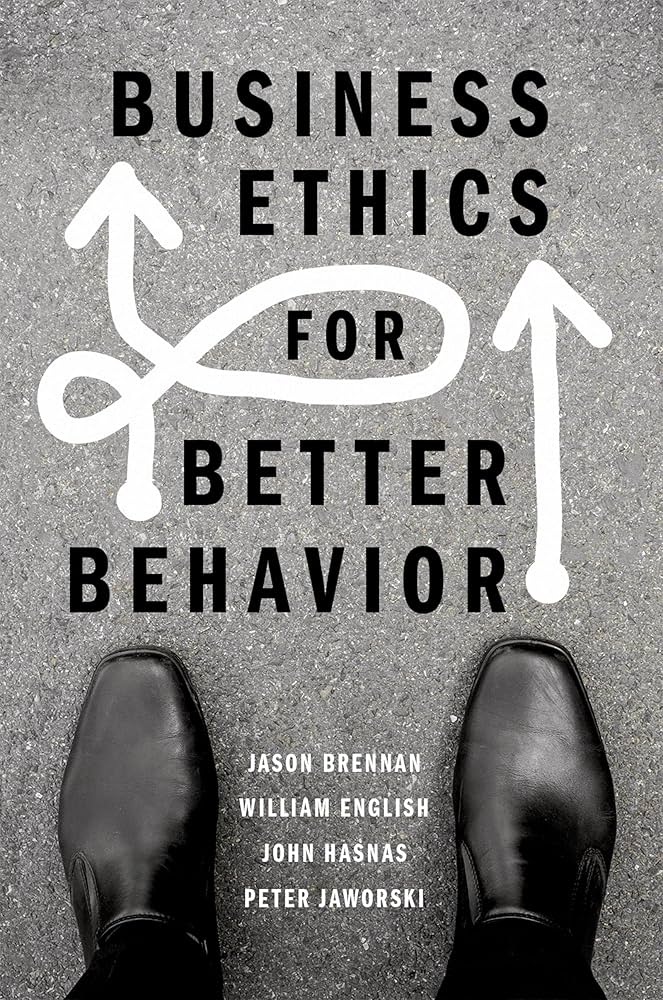
This is what an ethics textbook looks like when you actually care about helping people to be more ethical. It is profoundly refreshing in its appreciative treatment of business and of market institutions, whilst humbling the reader in demonstrating the vast scope for moral failure that is possible even within a fairly good institutional structure. The book avoids getting bogged down in the core philosophical questions of normative ethics, and rather concerns itself chiefly with how we can avoid non-controversial moral failures: cheating, lying, stealing, and shirking responsibility, and telling ourselves we did nothing wrong.
The authors are a group of moral and political philosophers and legal scholars working at the Georgetown University’s McDonagh School of Business. There, they have innovated in the teaching of business ethics and compiled a textbook informed by their overlapping vision of the field and their experience in the classroom. The book not only offers a refreshing new way of thinking about ethics in the world of business but philosophically justifies it in a way that is itself pedagogically valuable. This is a strong textbook around which to build an ethics course, or even program, in a vocational educational setting like a business school. But more than that, it is a manual for the morally conscientious. The book address itself to people who want to be good, to help others to be good, and work in or manage organisations that avoid bringing out the worst of human nature. Chapter 1, Why Do Good People Do Bad Things?, and Chapter 2, Why Are We Not All Saints?, synthesise the moral philosophy, moral psychology, and social psychology, on selfishness, moral confusion, cognitive biases, incentives, moral blind spots, and weakness of the will, to break down any preconception the reader might have that acting immorally is just what other people do, because they are simply bad people. There are universal features of our psychology and the institutional world in which we find ourselves that set even well-intentioned people up for moral failure in predictable aways. The purpose of the book is to prepare students for the stumbling blocks they will face as entrepreneurs, managers, employees, and citizens, so that these may be anticipated.
The authors argue that business ethics should not be an afterthought or a cherry-on-top of entrepreneurship, as if the only question of ethics that arises in the course of economic cooperation is what one should spend one’s profits on. Business ethics is often reduced to the mere study of ‘Corporate Social Responsibility’ (CSR). Morality is not limited to transient fashions of corporate governance and political ideologies. Ethics – like legal compliance – should be built into one’s business plans from the very foundation. What kind of person do I want to be? How do I want to achieve that? How will I treat my customers, partners, employees, and bystanders, in the process? How does my product or organisation make the world a better place? How will I know if I have succeeded or not? These are all questions one should ask before one engages in entrepreneurship, not after. (pages 13-16)
The CSR-based model of business ethics also sells business short. It implicitly assumes that businesses do nothing good for society until they decide to implement some scheme in which they donate profits to charitable causes, or what have you. But for a firm to even have profits for which this question arises presupposes that they already have in fact served society quite substantially: in providing something of value that other members of society deem worthy to part with their cash for. We often assume that because a business is profitable, the only motive its managers and owners have is producing income for themselves. This assumption is a case of extrinsic motivation bias, in which we imagine other people (but not ourselves) to be more extrinsically motivated than they are. The converse of this is the assumption that firms who practice CSR do so only for intrinsic reasons, and not because it often improves their bottom line (pages 203-207). However, even if this were true, the typical result of self-seeking economic behaviour in a well-governed marketplace is the provision of value for others. The more profit a firm makes tends to be indicative of the amount of value they have provided to their customers. Service to others, accounted for through profit and loss in a competitive marketplace, tends to be a more accountable mode of social beneficence than CSR (pages16-22).
The authors clearly echo the idea, most famously ascribed to Adam Smith, that economic agency in market conditions tends to economise on virtue and align our incentives with the good of others. In equally Smithian spirit, however, the authors clearly believe that this is far from the final word on the question of ethical conduct in business.
The book can be divided into three sections. The first (chapters 4-6) deal with moral confusions that might lead us into immoral conduct: chiefly moral relativism and the conflation of ethics with mere legality. The authors cut through these distinctions to show when, how, and why cultural variation is relevant from a moral perspective (for example, different rules and conventions that societies have for concluding contracts or of showing hospitality) and when it isn’t (for instance, when a society deprives foreign workers of their passports in order to de facto enslave them). The philosophical analysis and argumentation in these parts is accessible but robust. These chapters could and should supplement courses taught in philosophy departments.
The second section (chapters 7-10) deals with the question of incentives. Do normal people merely respond rationally to material incentives? In Smithian fashion, the authors argue that whilst we are significantly self-regarding, we not only desire material wellbeing but social esteem in society. We need to be able to think of ourselves as good people so that we can present ourselves as such to others (partially for its own sake, partially to secure their cooperation, which in turn benefits us materially). This presents an internal limit to our otherwise ‘rational utility maximization.’ We will often opportunistically cheat the rules of morality when it benefits us, but only to the extent that we can tell ourselves a plausible story that rationalises or minimises it. Limiting the scope for such rationalisations is therefore a crucial criterion for setting good rules – out in society and within the firm. This section gives a working account of game theory and how a concern for our own reputation is beneficial to us in strategic circumstances. The authors argue that if one were a psychopath who lacked any empathy for other people, it would be materially rational for one to wish this away since, actually having empathy for other people and being intrinsically motivated to be honest and trustworthy is a better way of doing well in life than merely pretending to for strategic reasons. The authors give a helpful and empirically informed overview of the varieties of collective action problems that can arise in societies and within organisations, both public and private. They demonstrate the different ways in which incentives can be aligned, and accountability baked in, so as to decrease bad behaviour, and show which ones are fitting for which scenarios, and how to identify them. They also detail attempts businesses have made to align incentives that have ended in disaster.
The third section (chapters 11-12) deals with our psychological limits. The authors reflect on the research on the depletion of will-power that finds the strength it takes to do the right thing in the face of temptation is a lot like physical strength. Taking this seriously means two things: that using will-power has opportunity cost and that will-power can be trained. We should avoid situations in which we will have to ‘spend’ our will-power if we know that we need to conserve it for something more important later. (If you are going to have a difficult meeting dealing with professional conflict, it would be good if you had not had to spend the whole day resisting the bowl of M&Ms sitting on the reception desk.) Taking steps to ensure avoidance of unnecessary exposure to temptation enables greater moral heroism in the face of the unavoidable challenges we have to address. However, it also means that repeated, manageable exposures can give one a greater capacity to do the right thing in the face of temptation. The authors also reflect on empirical research on ‘moral blind spots’. Just as we use decision-making heuristics to reduce the ‘transaction costs’ of executive functioning, and these heuristics often break down in predictable ways (e. g., in the face of novel circumstances), our moral heuristics can also break down such that we fail to notice what the moral stakes of a decision were – they are in our moral blind spot. This can occur due to the framing of a decision (for example, Is this a technical problem or a legal problem? Is this a competitive game or an economic transaction?), or of one’s role within the circumstances (for instance, Am I a friend or a manager? Am I a salesperson or a citizen?). Sometimes these frames and roles can direct our attention away from where the moral stakes really are, even if they work well as a rule of thumb the rest of the time. The authors, reflecting on the official Jesuit ethos of their own university, suggest that practices of self-accounting can help us to anticipate these mistakes by reflecting on cases in the past in which we have committed them.
I have used this book for teaching business ethics but it is essential reading for anyone who wants to become a better person and is willing to confront themselves with difficult questions. It is particularly crucial for leaders of organisations, both public and private.
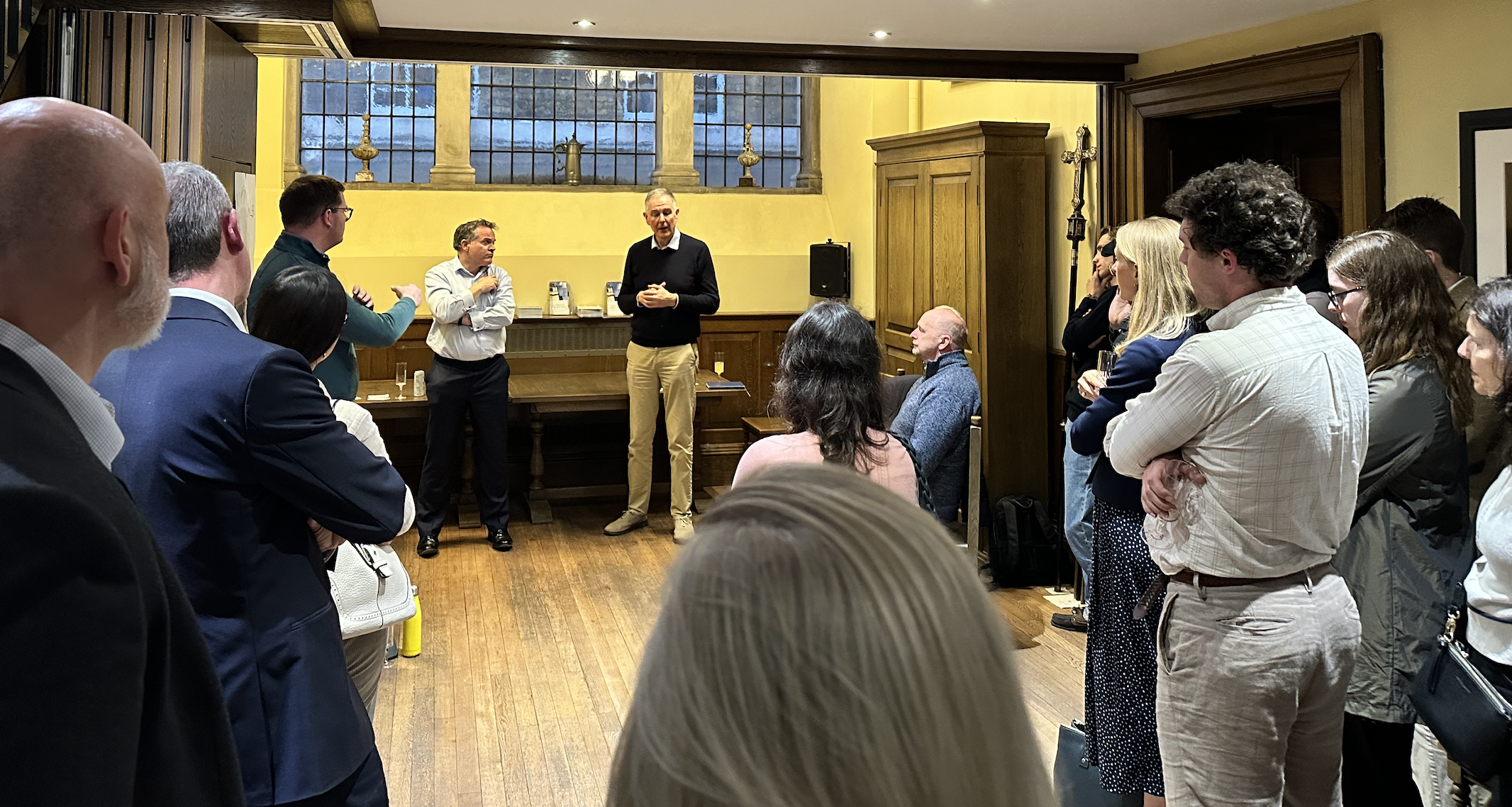
We are pleased to introduce an initiative designed to support those in the private sector and develop their thinking in matters related to faith, ethics, business and economics. We aim to provide a dedicated space to examine the moral underpinnings of business and how contemporary issues may affect practitioners. Most of our engagements will be through regular evening gatherings which will feature insights from one or two guest speakers followed by a drinks reception. We hope to offer participants the opportunity for both intellectual growth as well as fostering relationships with like minded peers.
The first of these took place on 6th May on the theme of “Ethics and Faith in a Competitive Market Economy” in the Vestry of St Mary-le-Bow Church in the City of London.
Our Director Philip Krinks spoke on the general topic first and was then followed by Ernie Graham who spoke on the topic of his previous blog post ‘Competition – Not only Ethically Positive, but Necessary’
To receive notice of forthcoming events join our mailing list.
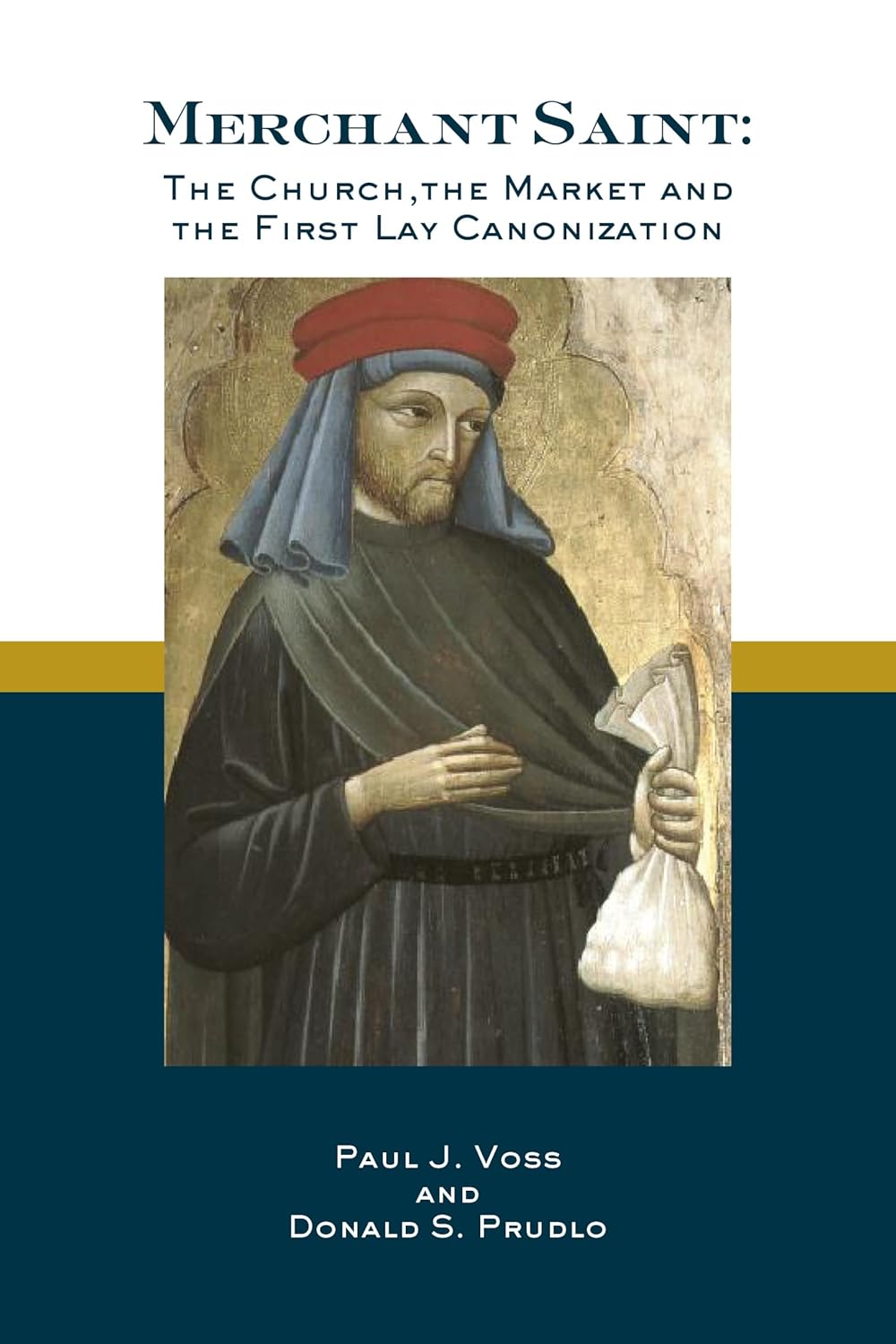
There are few figures who more directly challenge modern assumptions about the moral ambiguity of commerce than St. Omobono of Cremona. A merchant, husband, and citizen of a rising medieval city, he was also the first layman formally canonised by the Church. Paul Voss and Donald Prudlo’s Merchant Saint brings this largely forgotten figure back into view, and in doing so offers a striking meditation on whether economic life can itself be a genuine sphere of Christian virtue.
At first glance, the very idea of a ‘merchant saint’ appears paradoxical. The Christian tradition – especially in its early centuries – was often deeply suspicious of wealth, trade, and accumulation. The authors begin by carefully reconstructing this tension. Scriptural warnings against riches, patristic critiques of avarice, and the moral dangers of commerce form a powerful background against which Omobono’s life must be understood (pages 15–32). Wealth was not neutral; it was spiritually perilous. Yet, as the authors show, the tradition also developed a more nuanced account: riches could be redeemed through right use, particularly through almsgiving, which was increasingly understood in almost transactional terms – as a way of ‘storing treasure in heaven’ (pages 33–40).
It is precisely at this point of tension that Omobono emerges. Far from renouncing economic life, he inhabits it fully. A cloth merchant and artisan in the bustling commune of Cremona, he is neither monk nor ascetic outsider, but a man embedded in contracts, trade, and civic responsibility (pages 63–70). His sanctity does not consist in withdrawal from the market, but in a transformation of intention and practice within it. Prudlo and Voss are careful to stress that Omobono’s conversion did not abolish his economic activity; rather, it reoriented it. Property became the means of charity, profit the occasion for generosity, and work itself a field of moral discipline.
This is where the book makes its most significant contribution for contemporary readers. Omobono’s life suggests that commerce need not be morally neutral at best or corrupting at worst. Instead, it can become a site of virtue – provided it is governed by justice, honesty, and a recognition of the common good. The authors’ analysis of the early hagiographical sources is especially illuminating here. The evolution of Omobono’s vitae shows a gradual but decisive shift: from a model of piety centred on prayer and almsgiving to one that explicitly affirms the integrity of lay, economic life (pp. 120–135). The merchant is no longer merely tolerated; he is held up as exemplary.
The broader historical context reinforces this point. The twelfth and thirteenth centuries witnessed the rapid expansion of urban life, trade networks, and commercial practices. The Church could not simply condemn these developments without alienating the very fabric of emerging European society. Prudlo and Voss argue convincingly that figures like Omobono represent a kind of ‘medieval synthesis’ in which economic activity is neither sacralised nor rejected, but integrated into a wider moral and theological vision (pages 180–195). The market, as they memorably put it, begins to find its place on the ‘Christian map’ (pages 192).
For an audience concerned with the ethical foundations of markets, this is a crucial insight. Omobono does not anticipate modern capitalism, nor does he provide a blueprint for economic systems. But he does offer something arguably more fundamental: an account of the moral agent within economic life. The emphasis falls not on structures alone, but on character – on the virtues that shape how individuals engage in exchange, accumulation, and distribution.
The later chapters of the book extend this reflection by examining literary and cultural representations of merchants. Here the authors show that suspicion of commerce never fully disappears; the merchant often remains a morally ambiguous figure, associated with calculation, worldliness, and spiritual risk (pages 220–230). Against this backdrop, Omobono stands out all the more sharply. He embodies a counter-image: not the calculating trader, but the just and generous one; not the manipulator of value, but its steward.
If the book has a limitation, it lies in the fact that it stops just short of its own most important question. The authors offer a rich historical reconstruction and a compelling theological intuition – that economic life can be integrated into sanctity – but remains largely descriptive where a more explicitly normative account would be most fruitful. They show convincingly that such a reconciliation took place; they are less explicit about how it ought to guide economic life today. The internal norms of commerce – what distinguishes just profit from unjust gain, where the limits of accumulation lie, or how practices such as pricing, risk, and exchange are to be morally evaluated – are present only in outline. The reader is thus given a powerful figure, but not a fully articulated theory. One might say that Voss and Prudlo recover the merchant saint without quite developing a theology of the market adequate to his example. For a readership concerned with the moral foundations of economic life, this feels like a missed opportunity, especially since the material for such a development is clearly at hand.
Nevertheless, this is a minor reservation. The Merchant Saint succeeds admirably in recovering a figure who deserves far greater attention. More importantly, it reframes a question that remains urgent: whether economic life is merely a technical domain governed by efficiency and utility, or whether it can be ordered toward higher goods.
Omobono’s answer is quietly radical. Commerce, he suggests, need not be opposed to sanctity. Properly understood, it may even become one of its forms.
‘Merchant Saint: The Church, the Market, and the First Lay Canonization’ by Paul Voss and Donald Prudlo was published in 2025 by St. Augustine’s Press (ISBN 978-1-587-31513-8). 315 pp.

Entrepreneurship is a calling or vocation. It is, though, quite different from management. All aspects of business, whether one is in management, employment or an investor should be conducted ethically, but the characteristics and virtues demanded of entrepreneurs are quite specific – and rarely discussed.
Entrepreneurship requires alertness to opportunities, but it also involves a leap in the dark: a leap into the genuinely unknowable. Entrepreneurship also often involves radical uncertainty where, however much analysis we do, we cannot predict the outcome – or even quantify the risks that are faced.
Jack Cohen, the founder of Tesco, started as a market stallholder and even invested his wedding present in his then-micro business. He was an entrepreneur, and his actions gave rise to huge consequences that he could not have predicted.
Entrepreneurs also have to be prepared for failure: most businesses do fail. This requires a certain strength of character and detachment from material things. As the economists Alchian and Allen note:
Fortune does not hand down information and guidance to discover improved techniques of production and distribution of better products. It’s obtained by investing in risky exploration and experimentation with one’s own wealth. Some experiments fail, perhaps most fail. The failures disappear with little publicity.
Entrepreneurs, therefore, need a certain detachment from material things if they are going to take risks. Entrepreneurs could choose to do nothing, and many could choose not to start a new venture whilst carrying on living a life of considerable material comfort. The act of entrepreneurship requires people to move away from the familiar and risk their secure life and their material comforts. Thomas Aquinas comments that people would not carry out what he describes as works of magnificence (which could include, but is certainly not limited to, establishing a business) if they had not moderated their love for money. Otherwise, they would not have undertaken the financial risk – they would just have accumulated interest on their fortune.
The first Pope to use the word ‘entrepreneur’ in a public statement was probably Pope Pius XII. He did not write a social encyclical, but he produced broadcasts and speeches which demonstrated an advanced understanding of economics, and which were often related to business practice, including entrepreneurship. For example, he said in an address to the First National Congress of Small Industry in January 1956: ‘Among the motives that justified the holding of your convention, you have given the first place to “a vindication of the indispensable functions of the private entrepreneur”.’
And, in an address to the Third International Congress on the Distribution of Food Products in June of the same year, he noted some of the attributes and virtues that entrepreneurs needed: ‘they should rid themselves of prejudices that hinder the establishment of more economical methods and be open-minded with a taste for the calculated risk.’
As well as mentioning the characteristics of entrepreneurs, as discussed above, Pope Pius XII also mentioned, in his address to the Third International Congress on the Distribution of Food Products in June 1956, some of the virtues that entrepreneurs needed:
Men must [have]…solicitude for the common good, even if individual interests must suffer a little at first, and perfect honesty: all these qualities of a good merchant have now, more than ever, a rightful claim on you, and are clearly prime factors of success.
Adam Smith made a similar point, in fact. You may be able to make some quick money if you are dishonest. But, in general, if you are to build a lasting business, you need to develop trusted relationships with employees, suppliers, financiers, and so on.
Pope John Paul II certainly had a good understanding of the distinct role of the entrepreneur. In his encyclical, Centesimus annus, he wrote about entrepreneurship and the values and virtues of the entrepreneur. He mentioned the need for co-operation; a common goal; the need to organise properly; the willingness to take risks; discipline; diligence; industriousness; prudence in ensuring that the risks are reasonable; reliability and fidelity in personal relationships; courage in taking difficult decisions.
The Vatican document ‘The Vocation of the Business Leader’ goes further and, quoting Pope Pius XI’s social encyclical, Quadragesimo Anno, it is argued that an entrepreneur’s first aim should be to produce a good product or service and only secondly consider gain: the entrepreneur should produce true goods by good means (44).
We can go still further than this. The role of the entrepreneur is to produce goods or services by good means whilst making a return for the investors – which will include the entrepreneur himself.
If the entrepreneur does not make a return, he is running a charity, not a business. It is not intrinsically problematic for a business to make a return – after all, the profits from businesses pay pensions, payouts on insurance policies, allow people to save, and so on. But a business should make a profit through moral means.
Radich (2024), in his article, ‘Toward a Thomistic Account of the Virtues of the Entrepreneur: Moral, Intellectual, and Theological Strengths for Flourishing’, Journal of Markets and Morality 27(1) has, perhaps, the most comprehensive account of the virtues of the entrepreneur. He breaks down the cardinal virtues into constituent parts. He suggests that particular aspects of prudence are important for the entrepreneur. Entrepreneurs need docility (the ability to learn from others, which helps them make fewer mistakes and make more rapid judgements); they need providentia, by which the entrepreneur can see ahead; and they need circumspection, which requires them to be attentive to their surroundings.
These are all sub virtues of the virtue of prudence, and they can easily be related to the economic analysis above which emphasised the importance of, for example, alertness and being able to envisage the future as shaped by entrepreneurial activity.
The sub virtues of the virtue of fortitude involve overcoming challenges through effort and by taking financial risks in order to do great things.
Temperance is also important. Entrepreneurs may come across challenges that might endure over long periods of time, so patience is necessary. Entrepreneurs are not rash gamblers. If they are to be successful, they must restrain their impulses.
Interestingly, Radich also cites a study by researchers at Baylor university which suggested that entrepreneurs prayed more than the average. Radich speculated that this might be because they are aware of their dependence on others and, hence, upon the divine, and also that they are aware of their inability to control the circumstances that surround them.
Indeed, Pope Francis referenced the virtue of courage in entrepreneurship in an address at an audience for the Italian Family Business Association:
In your case, you are characterized by the delicate balance between family and work, which is expressed in entrepreneurial courage and responsibility. It is good, it is constructive when courage and responsibility go together. Action that comes from the heart is bold, it does not retreat into itself, but knows how to look far ahead; and responsibility, then, is the secret of business….
Indeed, there was a ‘Jubilee for Entrepreneurs’ in the Catholic Church’s 2025 jubilee year.
The concept of entrepreneurship – or certainly, its attributes – should not be thought of as being limited to the field of business. The characteristics of entrepreneurship apply in many other human activities. For example, we could imagine doing the following in a Church, civil society or public service context:
All these require the characteristics of entrepreneurs that we have described above such as:
This link between entrepreneurship and the mission of the Church is part of a longer research project that I am pursuing with CEME over the coming months.
Written by economists at the Bank of England with a view to helping the public understand economics and economic matters, Can’t We Just Print More Money? represents an engaging and accessible contribution to the Bank’s purpose of contributing to the public good. As an exercise in explanation, there is no sustained argument to follow (or for a review to critique), which means that each chapter could be read in isolation – but considering how readable the prose is, there is no need to take such an approach.
Following an account of the reasons for writing the book, the introduction offers a series of illustrations to show the centrality of economics – as that which is concerned with decisions about how to use (scarce) resources – to many of our everyday experiences. The authors provide a brief history of the discipline and the tension between more ‘social scientific’ approaches and those more concerned to treat economics as a hard or mathematical science, and then explain the structure of the book: through a series of chapters, each raising one straightforward question, it will explore major issues of both micro- and macro-economics.
The first three chapters explore markets, with Chapter 1 focusing on the functioning of markets and discussing certain foundational concepts, such as ‘utility maximisation’, ‘monetary costs’, ‘opportunity costs’ and ‘marginal revenue’. In connection with these, it covers the importance of supply and demand and the factors that can influence each (such as pricing). The central point is that markets exist as the places where supply and demand (sellers and buyers) meet and prices are determined as the two are brought into equilibrium, with prices acting as signals to producers. In doing so, markets coordinate decisions made by countless individuals and bring about various outcomes that we find beneficial, without anyone managing the process or even in many cases directly intending those specific outcomes. Several useful examples illustrate these points perfectly, particularly in relation to pricing.
Subsequent chapters follow a similar pattern, the second covering the idea of market failure and the problems of externalities, imperfect knowledge and imperfect competition. These notions are brought to bear on the problem of climate change (or environmental damage more broadly) to illustrate not only the problems with markets, but also the reasons why some do not believe that market mechanisms can be employed to address the problem. Nevertheless, the authors consider the ways in which economic thinking can inform the alternatives and do discuss possible market solutions, such as carbon trading schemes. Chapter 3 turns to labour markets, framed in terms of the question of how to secure a pay rise.
From here, the book begins to shift towards macro-economic issues, considering (in Chapter 4) the question of growth by way of the question: Why am I richer than my great-great grandma? The authors discuss the concept of GDP and the ways in which it is measured, along with the factors affecting growth, its advantages and the negative outcomes of certain types of growth. Asking why so many clothes are made abroad, Chapter 5 focuses on trade, offering an explanation in terms of the specialisation brought about by the division of labour and the comparative advantage to each region or country of producing particular types of goods, components or services. The impact on trade of lower wage costs in some regions is considered, and the authors offer an interesting discussion of the controversies that arise from protectionist measures and competing interests – and the ways in which these can be (and have been addressed), reminding us that trade, and countries’ specialisms, are always shifting.
Chapter 6 addresses the issue of inflation, examining the factors that contribute to it and explaining the indices by which it is measured and the difficulties of doing so. The authors illustrate well the significance of the fact that inflation, by eroding the purchasing power of money, constitutes a major influence on our economic wellbeing. They also explain clearly why inflation constitutes a tax on savings and the reasons for which debt-laden governments are tempted to stoke inflation. This chapter also notes that moderate, controlled inflation tends to be favoured by economists as protection against the dangers of sustained deflation, and closes with a brief look at some of the major schools of thought on the causes of inflation. The discussion of a complex phenomenon that has been one of the major economic issues of recent years is very accessible. Opened (and closed) with the question of what was happening with the price of a Cadbury’s Freddo, it invites readers to look at the major causes of inflation, the reasons for which inflation is encouraged both responsibly and perhaps sometimes recklessly, who it tends to harm or benefit and its relationship with money. Missing perhaps, alongside the recognition that heavily indebted governments can be tempted to encourage inflation, is a short discussion of how the amassing of public debt can itself be inflationary.
Chapters 7 and 8 are also interesting and clear, focusing on the origin and functions of money and the role played by the banking system. With the recurring themes of the creation, storing, lending and circulation of money, these chapters cohere well and the authors emphasise the centrality of trust and confidence – though perhaps an opportunity was missed here to refer back to the discussion of inflation specifically in this regard.
The two final chapters look at economic crises. Chapter 9 addresses the question of why nobody saw the crisis of 2008 coming and considers the kinds of crisis that can occur, their causes and effects and the difficulties faced by economists in trying to foresee them. Chapter 10 raises the titular question of the book: Can’t we just print more money? It examines the measures that policy-makers can adopt to manage the economy. Some fairly difficult mechanisms connected with interest rates and their effects are handled well and there is a detailed discussion of how quantitative easing functions to affect the money supply and the reasons for which it affects rates of inflation. In addition to monetary policy, the chapter also looks at fiscal policy and the levers that governments have at their disposal in the form of taxation and spending to affect economic activity, closing with a discussion of government debt in relation to GDP and the debates surrounding the need to balance the books.
Following a summary conclusion that reiterates the importance and relevance of economics to our daily lives, a short appendix offers page references for answers to even simpler questions addressed in the course of responding to the major questions that form the basis of each chapter.
This is a lively volume that is richly illustrated with examples throughout, whether imagined for the purposes of explanation, or taken from history or current affairs. In consequence, it is easy to follow and material that could become abstruse is presented with clarity. The book’s stated aim is to enable readers to make more sense of the economic world they inhabit and in this, it is surely successful: all readers, including those with no grounding whatsoever in economics, ought to be able to understand the book without difficulty (and without becoming bored). It should therefore be read by anyone looking for an orientation in the major issues central to economics and clarity on the fundamental ideas and mechanisms that arise in public discourse on economic affairs.
The central thesis of The Permanent Problem, by Brink Lindsey, is that we are living through an historic transition in which capitalism has delivered mass prosperity but has not yet worked out how to deliver mass flourishing (providing meaning, purpose, belonging, fulfilment). In addition, the author argues that the very forces that created mass abundance, are now undermining the social and cultural foundations that are required for a fulfilling life. So, in Lindsey’s view, capitalism has largely solved the problem of material scarcity, but it has not yet solved – and may be making harder – the deeper problem of human flourishing. In so doing, Lindsey sets out a series of epochs and epic transitions, from a world of scarcity to a modern world of mass abundance and a future world of mass flourishing. But Lindsey is not certain, or indeed confident, that the world of mass flourishing will be attained.
Throughout, Lindsey emphasises that capitalism has succeeded on multiple fronts historically, delivering unprecedented affluence, together with freedom, health, longevity and education. He readily acknowledges the extraordinary achievements of capitalism. But he then fears we have hit a wall, because he asserts that capitalism is not well designed to deliver meaning, status, identity and relationships. He argues that prosperity itself creates destabilising effects in the form of consumerism weakening deep relationships, individualism undermining social bonds, collapsing fertility, a deterioration in mental health and the fragmentation of communities.
In his view, this creates a mismatch between rising expectations and actual lived experience, as we move up the hierarchy of needs from material provision to deeper psychological desires. The knock-on effect of this mismatch is, according to Lindsey, essentially a triple crisis: (1) a crisis of dynamism – with slower productivity growth, innovation bottlenecks and regulatory and institutional drag; (2) a crisis of inclusion – a widening class divide, especially by education, entailing a breakdown of family, community and social cohesion; (3) a crisis of politics – falling trust in democracy, rising populism and institutional paralysis.
The problem becomes permanent in the sense that there will be no return to scarcity, but affluence continually generates new expectations, frustrations and forms of dissatisfaction. Lindsey argues that solving the material problem does not eliminate human problems, it merely transforms them. His broad conclusion is that we need to refocus (to restore dynamism and innovation and remove barriers to growth such as rent seeking and regulation) and restore (strengthen communities and shift some functions away from markets and the state, towards civil society and personal relationships) capitalism in order to translate material abundance into meaningful lives. Essentially, he is arguing that economic systems are good at producing means (wealth, goods and services) but human beings ultimately care about ends (purpose, belonging, identity, love).
This is a rich, and indeed powerful thesis, taking a broad conceptual sweep of history. But is it true, and how should one approach it from a Christian perspective? Lindsey acknowledges that he is not a believer. But his thesis might appeal to many Christians due to it: (a) placing deeper psychological and spiritual needs above material considerations; (b) asserting that materialism has undermined more important values; (c) focussing on inclusion and the fragmentation of society.
However, whilst recognising the many fascinating insights contained in the book, I’m deeply sceptical of the thesis of The Permanent Problem for a number of reasons:
First, because from the perspective of Christianity – and of other faiths too – the root problem is not material but spiritual. The challenges of the human condition were never primarily about prosperity and so that was never going to solve them. The Bible teaches us that human striving and achievement in the material world will fail to satisfy. That failure to satisfy is attributable to a God-shaped hole in people’s lives, and whilst it cannot be filled by material abundance, neither can it be filled by flourishing either, if that excludes God. Mass flourishing ultimately requires a great awakening. Secular flourishing will never be enough. In economic terms, there is an omitted variable in the permanent problem model, namely God.
Secondly, there is a need to focus on the ethical formation of individuals. Christians for example would express this by saying that human nature is distorted by the Fall. The problem therefore is not just a matter of institutions, such as capitalism. Instead of blaming the sinner, fallen man repeatedly blames the system. Whilst Lindsey clearly recognises capitalism’s role in prosperity, he ultimately still blames the system. But capitalism alone was never meant to deliver the flourishing that he seeks. That flourishing comes from placing wealth creation in its rightful context, seeking first His kingdom and His righteousness. That is the route to meaning, purpose, identity and fulfilment.
Thirdly, the problems it attributes to capitalism are more likely the fault of the state. The 1980s saw the Gordon Gecko ‘greed is good narrative’ take root in the media. But the idea that capitalism as a system is based on greed and rampant individualism is erroneous. Capitalism is a system of voluntary exchange to meet the need for goods and services. Without doubt, to the extent that the Judaeo-Christian ethic and worldview have been withdrawn from the public square, capitalism has become an uglier process, but the problem is surely too little God, not too much capitalism. Less inclusion and more fragmentation are more a consequence of secularisation, as the Leviathan state forces the good Samaritan off the road, and in so doing has undermined social capital.
Fourthly, the state is undermining the very prosperity Lindsey takes for granted. The idea that prosperity is done and dusted, and we can take it for granted, may prove a triumph of hope over experience. The economics literature clearly sets out negative trade-offs between the size of the state (measured in terms of tax and spend, regulation and public debt) and economic growth. Trend output growth – based on supply-side potential – in many of the advanced economies is around 1% less than that of only a few decades ago. Statism and an ageing population promise to reduce this growth rate even further over the coming decades, with the mother of all fiscal crises potentially waiting for us at the end. Lindsey correctly identifies, and argues well, the need for far greater dynamism. But I fear he understates the significance and scale of the required reduction in the size of the state in order to facilitate this dynamism.
The Permanent Problem is an excellent book. It is thought provoking and challenging throughout, but its fundamental flaw is the same for all such works – in attempting to represent reality without reference to God, it seeks an external solution to an internal problem. Lindsey recognises that secularisation has been part of the problem, but he seeks to find meaning and community within a secular society. He sees the problem as social and institutional, not spiritual, so his solution is worldly and pluralistic. Those of us who are committed to the Judaeo-Christian ethic will respond that it is the solution to the problem he identifies.

Some years ago CEME published a fascinating report called God and Competition by Edward Carter. This notes that competition is often viewed with some suspicion in Christian thinking. It is typically treated as something to be restrained or carefully managed. While there is some truth in that, it does not go far enough. Competition is not merely permissible; when rightly ordered it is positively good and, in many areas of life, necessary for human flourishing.
At a basic level, competition reflects the reality that human abilities are not uniform. Across every sphere of life – intellectual, physical, creative, relational – people display different levels and types of ability. This is not simply the result of a fallen world but appears to be part of the intentional ordering of creation. Scripture itself assumes this pattern. In the Parable of the Talents, resources are given ‘each according to his ability’. Unequal gifts, therefore, are not a problem to be removed, but a reality to be recognised and worked with.
And here it is important to go a step deeper. If we are thinking in a properly Christian way, shaped by the doctrine of the Trinity, we should not confuse equality with uniformity. The Father, Son, and Spirit are fully equal in being, yet distinct in person. Equality does not mean sameness. In fact, the beauty of the Trinity lies precisely in unity without flattening difference.
That has profound implications for how we think about human life. The instinct to eliminate competition often comes from a deeper assumption – that fairness requires sameness, and that differences in ability are somehow problematic. But that instinct reflects a misunderstanding. A desire for uniformity may make sense in a worldview where persons are interchangeable, but it does not sit comfortably within a Trinitarian vision of reality. If difference is not only permitted but intrinsic to ultimate reality, then it should not surprise us that human life is marked by variety, distinction and differing levels of ability.
If that is right, then competition plays an important role in allowing those differences to be expressed and recognised. In any complex society, there needs to be a way of discovering who is best able to solve problems, lead organisations, innovate or create. Competition provides that framework. It allows people to strive for excellence and, in doing so, makes it clearer where real strengths lie.
This connects directly to stewardship. If individuals are entrusted with particular abilities, then they are called to develop and use them well. But stewardship is not just a private matter. Gifts need to be exercised in real situations, often alongside others pursuing similar goals. Competition creates the conditions in which those abilities are properly tested and sharpened. It pushes people beyond what they might otherwise settle for and helps prevent complacency.
You can see this very clearly in practice. In business, competition tends to lead to better products, better service and more innovation, because organisations are constantly being tested against one another. In the arts, whether music, writing or visual work, the presence of others producing high-quality work raises both ambition and output. And in sport, of course, without competition, performance simply would not reach the same level. In each case, the presence of others striving for the same goal raises the standard for everyone involved.
By contrast, attempts to minimise or remove competition often have unintended consequences. A system that tries to flatten differences or avoid comparison altogether can end up suppressing excellence rather than promoting fairness. When there is little incentive to strive, or when outstanding performance is neither recognised nor required, standards tend to drift downward. Exceptional ability can be discouraged, not deliberately, but because there is no clear place for it to be expressed.
Yet excellence, properly understood, is not just a private good; it benefits the wider community. When individuals or organisations perform at a high level, the effects extend well beyond themselves. In medicine, breakthroughs improve lives. In business, better services benefit customers. In the arts, exceptional creativity expands what others think is possible. And in sport, elite performance raises the standard for everyone coming through behind. Competition, by encouraging people to reach the limits of their ability, plays a key role in that process.
This also helps to reframe a common concern. The real moral danger here is not competition itself, but envy. Competition can expose unhealthy attitudes, but those attitudes are not caused by competition; they come from within. Envy resents the success of others and wants to diminish it. Healthy competition, by contrast, recognises and even delights in excellence. It allows one person’s success to become something that others can learn from and aspire to.
In that sense, competition can foster a culture of aspiration rather than rivalry in the negative sense. The success of others becomes something to build on rather than something to resist. Properly understood, competition does not undermine community; it can strengthen it, as each person’s contribution helps raise the level at which everyone operates.
Of course, competition does need to be rightly ordered. Like any powerful dynamic, it can be distorted. When detached from integrity, it can lead to dishonesty, exploitation, or an unhealthy focus on status. But these are not arguments against competition itself. They are arguments for ensuring that it operates within clear ethical boundaries – marked by fairness, honesty, and respect for others.
When those boundaries are in place, competition also plays a formative role in shaping character. It tests how people respond to success and failure, to pressure and comparison. It provides opportunities to grow in perseverance, humility, integrity and respect for others. In that sense, it contributes not just to what people achieve, but to who they become.
Competition, then, is not something to be apologised for or merely contained. When rightly understood and properly ordered, it reflects a deeper truth about reality itself: that difference is not a threat to equality, but part of its expression. And so, far from being a problem to solve, competition is one of the primary means by which human beings are stretched to use their gifts fully and through which both individual excellence and shared flourishing are brought into view.
What has Silicon Valley to do with Rome? One moves quickly and breaks things; the other holds fast to timeless tradition. One seeks to maximise utility; the other seeks to preserve human dignity. One pursues technological salvation in this life; the other patiently waits for divine salvation in the next. Founded in disparate worldviews, motivated by different objectives and driven by divergent incentives, the Artificial Intelligence (AI) hubs of San Francisco Bay seem a world away from the ancient halls of the Vatican.
And yet, it is in this wide, surprisingly fertile, plain that Encountering Artificial Intelligence: Ethical and Anthropological Investigations clears the soil, plants the seeds and gently waters the green shoots of ethical and theological insight that have begun to bloom into a fruitful dialogue between Catholic social teaching and the development and use of AI.
Through a series of learned, thoughtful and perceptive reflections, the authors of Encountering Artificial Intelligence shine light on the possibility of positive-sum games between tradition and innovation, human dignity and prosperity, and right relationship with God alongside technological advancement. Neither naively credulous nor narrowly cynical, there is acknowledgement of both the great gift of technological advancement for human flourishing as well as the reality of human fragility and the attractive temptation towards an idolatrous worship of AI.
Why Should the Catholic Church Discuss AI?
Encountering Artificial Intelligence is the first fruit of multi-year collaboration between the AI Research Group for the Centre for Digital Culture, part of the Holy See’s Dicastery for Culture and Education, and the Journal of Moral Theology. Formed under the shadow of the COVID-19 pandemic in March 2020, the A.I. Research Group gathered a range of North American theologians, philosophers and ethicists for a series of discussions over three years on the promises and pitfalls of AI for our common life and society. Between the four lead authors and sixteen contributing authors, a valuable breadth and depth of insight permeate the writing. Pleasingly, Encountering Artificial Intelligence is only the first of three volumes in this new Theological Investigations of Artificial Intelligence book series.
The stated objective of the collaborators is to promote dialogue between the world of faith and the world of technology, between a culture of Christian humanism and a culture of positivism, to better discern the ways in which to be most fully human in our increasingly digital world. The volume is presented as akin to an ‘instrumentum laboris’ (working instrument), which communicates a general Catholic consensus on the emerging issue of AI while leaving space for further dialogue and discernment. It is an example of the Catholic social teaching principle of subsidiarity in action: the Church, alongside the rest of civil society, has a critical role to play in supporting state and market to understand and respond to the crucial cultural, legal and political issues of our time.
The open-hearted and open-minded approach of Encountering Artificial Intelligence is guided by the influence of Gaudium et Spes (1965), visible from the first footnotes of the introduction. Promulgated by Pope Paul VI in 1965 as a principal document of the Second Vatican Council, Gaudium et Spes (Joy and Hope) called on Christians to integrate ‘new sciences and theories […] with Christian morality and the teaching of Christian doctrine, so that religious culture and morality may keep pace with scientific knowledge and with the constantly progressing technology’ (Gaudium et Spes, 62). Through engagement with a variety of scriptural, traditional and intellectual authorities (from the Book of Genesis and St Benedict of Nursia, to the writings of British mathematician Alan Turing and the American sociologist Sherry Turkle), the volume responds to the call of Gaudium et Spes with a truly catholic, as in universal, appetite for knowledge and wisdom in its attempt to analyse AI in an authentically Christian fashion.
A helpful introduction sets the scene, establishing the longstanding Catholic embrace of the mutual benefit of faith and reason and firmly stating the compatibility of religious belief and scientific progress. For less tech-savvy readers, there is a succinct summary of the historical development of AI and a neat primer on the key concepts. Thereafter, a brief but significant chapter addresses the various ethical approaches being taken to AI, from human rights-based perspectives to more utilitarian calculus.
The book is divided into two main sections: Anthropological Investigations and Ethical Challenges with AI. These represent separate but connected lines of enquiry: what does it mean to be human in an age of AI, and how can we best respond to the threats, challenges and opportunities presented by AI across our personal and professional lives?
Anthropological Investigations
The emergence of AI has raised some fundamental philosophical questions about the similarities and differences between human nature and the nature of AI. What is AI? What is AI not? What does it mean to be human?
A chapter on ‘AI and the Human Person’ uncovers the deep Christian understanding of personhood and intelligence. Made in the image and likeness of God, the human person is deeply relational and intuitively intelligent in ways that imitate the divine life of the Trinity, and which transcend any of the impressive capabilities of AI.
A deep exploration of ‘Consciousness’ demonstrates its necessity for human relationality and rationality and the limitations of mechanistic arguments for AI consciousness based on physiology, behaviour or functionality. Consciousness, properly understood, involves a full grasp of reality, which allows for the authentic mutual encounter of another person and participation in the divine life of grace.
‘Encounters with Seemingly Personal AI’ offers fascinating analysis of the complex relational dynamics between humans and AI. While the prospect of employing AI models as a ‘good enough’ substitute for a friend or romantic partner can be attractive, any truly authentic mutual encounter between a human and an AI agent is impossible, not least because of the impossibility of mutual vulnerability. The authors caution against the use of AI in caring contexts, especially the risk of moral and relational deskilling through the loss of opportunities to grow in the capacity to care for others.
An intriguing section on ‘AI and Our Encounter with God’ reveals the limitations of AI as a tool in sacramental or spiritual mediation. Rather than succumbing to idolatry of AI as an omnipotent and omniscient source of spiritual truth, there is a call to reclaim a providential vision of human creation and salvation in which AI can only play a more minor assisting role.
In the face of significant philosophical challenges presented by our interactions with AI, the authors mount a strong defence of the irreplaceable magnificence of humanity. Formed in the imago Dei (image of God), intended for a life of relational self-gift with others, and empowered by grace to participate in divine life, human beings are uniquely different from any AI programmes.
Ethical Challenges with AI
Having provided greater clarity on the nature and purpose of AI, the authors turn to the practical ethical problems and possibilities posed by these new technologies.
A strong defence of the relevance of Catholic social teaching to the treatment of AI starts this section. Catholic understandings of human dignity, subsidiarity and the common good are highlighted as helpful resources for understanding and responding to the signs of these new times. Particular attention is paid to the late Pope Francis’ influential critique of the so-called ‘technocratic paradigm’, especially the modern-day temptation to exploit human beings as machines of efficiency and optimisation.
An expansive entry on ‘The Promises and Pitfalls of AI in Contemporary Life’ showcases the upsides and downsides of applying AI across different domains. From the prospect of AI-improved diagnostic and treatment applications to the potential for unequal access to AI to further entrench educational inequities, a realistic Catholic vision of both the limitations of human nature and the limitation of technology allows for an effective cost-benefit analysis of the adoption of AI across various fields.
In closing, an engaging reflection on ‘Recommendations for an AI Future’ proffers practical advice on living and working well alongside AI in new and changing contexts. Notable recommendations include the importance of offline creative activities, prudent regulation to limit the harms of AI programmes, and the need to incentivise better behaviour in our digital culture.
Legacy
Encountering Artificial Intelligence is an excellent start to this new Vatican-led, three-volume series of theological investigations into AI. It should surely serve as an essential textbook for Christian, and non-Christian, students of AI anthropological and ethical questions. The chapters themselves are worthy of standalone treatment, especially the rich anthropological reflections of ‘Encounters with Seemingly Personal AI’ and the extensive ethical coverage of ‘The Promises and Pitfalls of AI in Contemporary Life’. While these sorts of publications may typically tend to be of greater interest and importance to an internal Christian audience than an external secular audience, there is no reason why technologists, entrepreneurs and investors would not find some value in reflecting on these philosophical and ethical matters.
The impact of Encountering Artificial Intelligence has already been felt in the Catholic world, not least through its clear influence on the form and content of the landmark Vatican publication on AI, Antiqua et Nova: Note on the Relationship between Artificial Intelligence and Human Intelligence, which was published the following year in January 2025. Naturally, much more remains to be said in several areas of AI ethics. The emerging threats of AI hallucination and deception, the practical and economic effects of AI on the creative industries, and the ways in which our use of AI may reshape our methods and models of thinking, writing and communicating each merit closer attention.
Although Pope Leo XIV now carries the baton for the development of the Catholic Church’s engagement with AI, the influence of the late Pope Francis’s theology of encounter, which runs throughout this volume, is likely to loom large. As the late Pope Francis emphasised, there is a profound and persistent human desire for the ‘truly real’, which can ultimately only be experienced through authentic mutual encounter with another thinking, feeling and loving human being (Pope Francis, Fratelli Tutti, 33). Given that the phenomenon of ‘AI companionship’ seems to be growing from strength to strength, not least in its promise of risk-free relationships, there will be an equal and opposite need for the Church to communicate the enormous and irreplaceable value of risky but rewarding human-to-human relationships compared to the simulated substitutes supplied by AI models.
There is no shortage of AI coverage and commentary at present. Predictions, prognostications and prophecies of the future impact of AI abound in plentiful supply. Yet amid the heat of ever-evolving debate over job losses, regulatory options and corporate liabilities, there can sometimes be precious little light of insight. Here, through cohesive anthropology and coherent ethics, is where Encountering Artificial Intelligence bears fruit.
‘Encountering Artificial Intelligence: Ethical & Anthropological Investigations’ by the Dicastery for Culture and Education of the Holy See was published in 2024 by Pickwick Publications (979-8-385-21028-2). 274pp.

Naoise Grenham is a senior policy and research analyst for the Catholic Bishops’ Conference of England and Wales, where he advises Catholic bishops in areas of artificial intelligence, criminal justice reform and healthcare. He is one of the inaugural Edington Fellows of the Prosperity Institute in Mayfair, London, and serves as a Trustee for the national Catholic domestic charity, Caritas Social Action Network (CSAN).