

Adapted from a talk at the UNIAPAC Think Tank meeting, December 2025
People often look to priests to appear at the end of a conversation and offer a blessing as it concludes. However, I have always believed, following St. Ignatius of Loyola, that priests should not be the ones who close conversations, but the ones who ignite them. St. Ignatius once wrote to St. Francis Xavier as he sent him across the world to share a message of hope: Ite, inflammate omnia. Go, set everything on fire.
Vocation: Good Goods, Good Work, Good Wealth
My own understanding of the relationship between faith and economic life has been significantly shaped by a document published by the Vatican in 2018: The Vocation of the Business Leader. One reason that it has been so influential is that it resists the simplifications which often dominate discussions on the role of ethical leadership in the business world. Instead of reducing business to technique, or spirituality to interior sentiment, it insists that business leadership is a genuine vocation. It is a calling rooted in human dignity and oriented towards the common good.
And yet, for all its depth, this document is not as widely read, discussed, or implemented as it deserves to be. If you have not read it, or not returned to it recently, I deeply encourage you to do so. For those interested in an ethical standpoint inspired by Christian, and especially Catholic thought, it offers a lens through which we can interpret the world of business. Its central triad offers a valuable and demanding framework: good goods, good work, good wealth. It reminds us that producing excellent goods, creating dignified jobs and distributing wealth in ways that strengthen society are not optional extras: they lie at the very heart of ethical leadership.
But this triad reveals something further. It exposes the moral depth of the economic sphere. It invites us to confront a dimension of human life that the modern business environment often avoids, and that even many faith-based organisations hesitate to name explicitly: the reality of sin. If we misunderstand this word, we will misunderstand our vocation.
A Matter of the Heart
When a writer in the Christian tradition, such as for example St. Augustine, speaks of human shortcomings, of sin, he does not begin by condemning behaviour. He begins by describing the human heart. He describes challenges which every human being is familiar with, whether they are Christians, or not. Sin, for St. Augustine, is fundamentally the disordering of desire. It is the restless, self-enclosed movement by which the human heart loses its orientation toward the good. Pride replaces humility; fear replaces freedom; control replaces trust. And whenever desire becomes disordered, human structures – including economic structures – reflect that disorder.
St. John Paul II extended this insight further by speaking of structures of sin. The economy is not a machine insulated from the moral life. It is shaped by the desires, choices, and relationships of human beings. If pride becomes the organising force of the heart, then inequality is not an accident; it is a structural expression of a spiritual wound. If fear governs decision-making, then precarious labour is not merely a technical outcome; it reveals something about our anthropology.
More recently another theologian, William Cavanaugh, reminded us that modern markets often present themselves as morally neutral mechanisms, but that this neutrality is an illusion. Markets shape desires, habits, and forms of belonging. They are not only systems but liturgies: they teach us how to imagine the good life. That is also what Alasdair MacIntyre warned. We live in a world where the meaning of virtue has been largely hollowed out. Institutions pursue efficiency without purpose; technique replaces teleology; moral language becomes decorative rather than operative.
Transforming Structures
This matters for business leaders concerned with ethics because, if we do not dare to speak in these categories – desire, virtue, sin, conversion – then we allow economic discourse to be dominated by a vocabulary too thin to sustain the hope we proclaim. We cannot speak of ‘vocation’ without speaking of moral anthropology. We cannot speak of ‘good wealth’ without recognising that both good and evil can structure the economic world.
And that is why advocacy, important as it is, will never be enough. Advocacy influences conversations. But the vocation to ethical leadership, certainly if it is Christian, must transform structures. Our mission is not merely to promote good causes but to implement an ethical approach in the concrete realities of business life. Christian business leadership is therefore not philanthropy, nor is it corporate social responsibility layered onto existing practices. It is the integration of Gospel principles into wages, taxation, governance, workplace culture, supply chains, investment decisions and distributive policies. It is an incarnational ethic. A former President of the UNIAPAC network, José Ignácio Mariscal, insisted on this time and time again, and we should not become numb to his warning.
Examples to Provoke Us
Business leaders sometimes feel like this is all too hard, that it cannot be done. But there are many examples to inspire us and to provoke us. Consider the lives of three business leaders, which reveal what business leadership looks like when it becomes a form of ethical commitment, indeed of discipleship.
José María Arizmendiarrieta, the founder of the Mondragón movement, understood that economic structures could be shaped from within by the logic of cooperation. For him work was a participation in God’s creative action; economic organisation was an expression of fraternity; inequality was not destiny but the result of ethical failure. His vision demonstrates that solidarity is not sentiment; it is action – in a way which almost makes one wonder if he was a regular reader of Maurice Blondel. It is possible to create systems where the human person is not an instrument, but a co-creator.
Léon Harmel, whose spiritual and social intuition anticipated much of modern Catholic Social Teaching, insisted that justice must be woven into the fabric of industrial life. His factories pioneered fair wages, worker participation, social protection, and mutual aid. More radically, he believed that holiness and business leadership were not incompatible. Holiness was not reserved for monasteries; it was available, indeed demanded, in the factory, the workshop, the boardroom.
Finally, Enrique Ernesto Shaw, the Argentine businessman, offers a profoundly contemporary model of Christian economic leadership. His life embodied what Benedict XVI would later call an ‘economy of gratuity,’ in which business becomes not merely a space of efficiency and profit, but an arena of gift, responsibility, and communion. Shaw was known for treating workers not as human resources, but as human persons, investing in their families, their education, and their long-term well-being. He insisted that profit and care were not rivals but partners. His decisions were guided by a deep conviction that trust is a form of capital, and that a company prospers when its people flourish. Even during moments of economic difficulty, Shaw sought ways to protect employment rather than sacrificially reduce the workforce. In Shaw’s example therefore we see that a Christian leader does more than manage an organisation. He or she builds a moral ecosystem, a community where virtue becomes operative, where justice and charity shape strategy, and where the leader’s deepest identity is not proprietor but steward.
Provocation – To Orient AI Toward Justice
From these three lives I draw two specific provocations for leaders in 2026. The first concerns Artificial Intelligence. There is no need to talk about it for too long; we already hear enough about it. But we can at least say this: AI offers an opportunity to improve working conditions for those whose tasks are hardest and least recognised. Used ethically, it can free people from repetitive labour, open opportunities for education, and contribute to greater human dignity. The question is not simply how to mitigate risks, but how to orient AI toward justice. We tend to forget that in the 19th century all humanity dreamed of was the arrival of the machine, something particularly evident in Jules Verne’s novels, because automation would mean being freed from the manual and servile labour which was and still is demeaning to so many of our brothers and sisters around the world. So: can we use AI in a way that would be fitting to the lives of Arizmendiarrieta, Harmel, and Shaw? Can we use it to the benefit of the poorer, the frailer, the ones who suffer the most violence? Can we consider it not just from the point of view of the time it saves, but also from the point of view of the lives it saves?
Provocation – To Make Peace a Daily Practice
A second provocation concerns peace. In a world increasingly shaped by polarisation, inequality, and conflict, business leadership can be either a source of peace or a source of fracture. Christian leaders are called to build peace through transparency, stability, inclusion, and the generation of trust. Peace is not only a political concept; it is a daily economic practice. Pope Francis was almost obsessed with the need for the Church to be the promoter of peace. Arizmendiarrieta, Harmel, and Shaw built peace around them in noticeable ways: by improving the quality of life of their employees, by bringing education to contexts that did not hope to get it, or just by being caring and gentle and warm-hearted in their interactions with people. How far can we go here? How much can we actually aspire to build a peace that is concrete through our business vocations?
Wrapping Up
Let me end where I began. As a priest, I hope not to offer closure, but to kindle desire. My hope is that these sparks might take hold in the business community, and especially among Christians; that our spaces for ethical reflection might become not just fora for ideas but laboratories of moral transformation; that The Vocation of the Business Leader may become not a beautiful text but a living guide; that we may learn to name both the sin and the grace at work in the economic world; and that the lives of Arizmendiarrieta, Harmel, and Shaw may continue to challenge us with missionary clarity.
St. Ignatius knew that some words belong not at the end, but at the beginning of mission. Ite, inflammate omnia. Go, set everything on fire – the economy, the world of business, and most of all, the hearts of those who you lead and who lead with you.
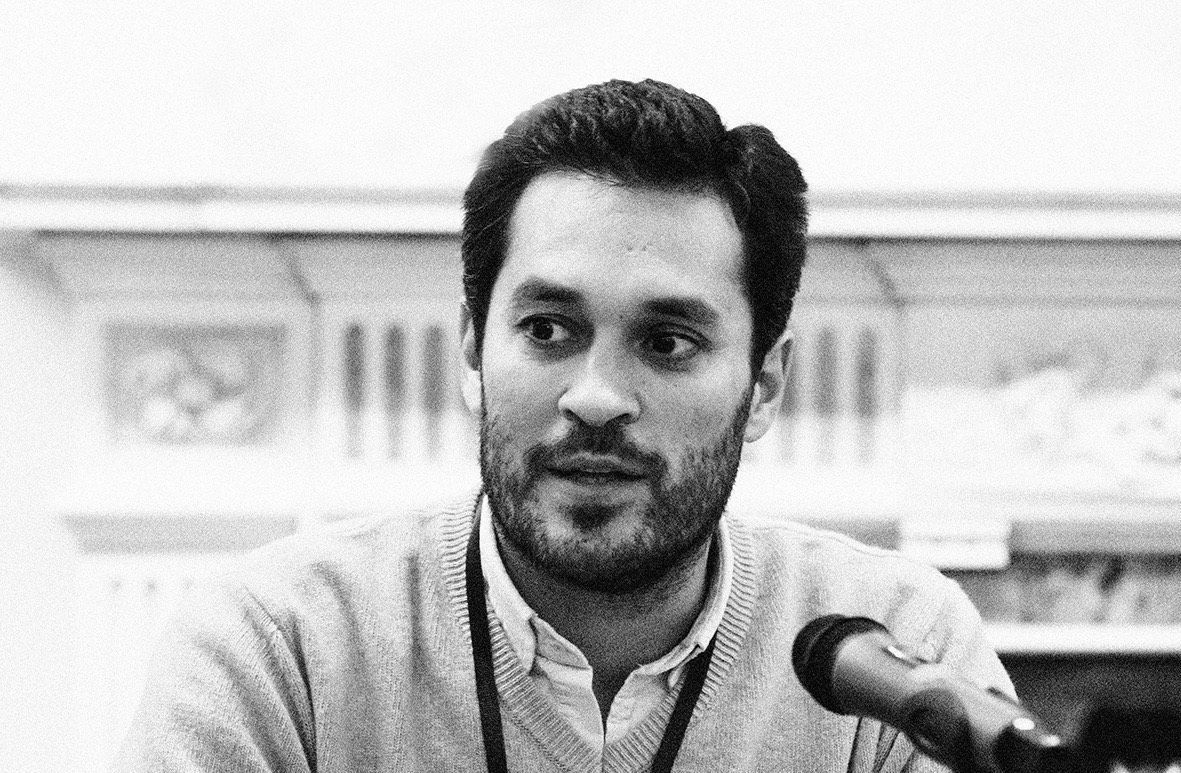
Francisco Mota S.J. is the Spiritual Advisor of UNIAPAC International, a global federation of Christian business organisations. He is a Portuguese Jesuit and was formerly Director of the Maputo campus of the Catholic University of Mozambique and Chairman and Executive Director of Brotéria. Fr. Mota currently serves as Province Treasurer for the Portuguese Jesuits.
Main photograph by Julen Iglesias, 2022, from Wikimedia Commons
Used in accordance with a Creative Commons Attribution-Share Alike 4.0 International licence