

Before the torrent of games available on your phone, a popular game in magazines was ‘spot the difference’. It’s amusing to play and realise that often we don’t immediately spot all the differences even when we stare at both pictures intently. But I wonder if the same issue arises in spotting a Christian in the workplace. What differences can we expect to find? In contrast to many religions, Christians don’t display external markers beyond, perhaps, wearing a cross or if you’re more edgy a tattoo – my daughter has a Bible verse tattooed on her foot which I guess could be a conversation starter if she’s willing to go in feet first! Christians don’t wear a veil and relate to God with unveiled faces but does that relationship with Christ that transforms us from within make it all the way to the outside?
When Jesus commands us to let our light shine before others he is assuming that what people will see is our good deeds and that as a result they will glorify our Father in heaven (Matt 5:16). He makes a connection between our deeds and our devotion that will point people to the glory of God. Glory is the manifestation of God on earth, and our good deeds are evidence of God at work. That’s what makes the study of Christian ethics so important. It is about understanding the distinctives of character by which followers of Christ display Christ in action. Interestingly, the apostle Paul in one of his early letters to the Christians in Thessalonica says that he is assured they are Christians who have turned from idols to serve the true and living God (1Thess 1:9) because their work is produced by faith, their labour prompted by love and their endurance inspired by hope in the Lord Jesus (1Thess 1:3). It’s the fruit of faith, love and hope that he sees as they discover more of God’s love, work out how to show that love to others, explore more of the resurrection future and apply lessons to their present lives. At its heart a Christian ethic is the practical outworking of an encounter with the Living Lord
What is Distinctive about Christian Ethics?
There are three distinctive characteristics of Christian ethics:
- Connects us to the source code
Christian ethics is based on Christ, the Word of God and the wisdom of God through whom all things are created and hold together (Col 1:16-17). Jesus is the incarnate Word – wisdom with flesh on. When Jesus teaches, he uses the term, ‘I say…’ rather than ‘the Scriptures say’ and has that direct authority which people noticed wasn’t like the teachers of the law (Mk 1:27). The implication for ethics is that we are reading the source code and don’t need to add our own, or filter it, or choose parts or test its veracity and efficacy. Christian ethics goes straight to the source by going to the person who made it, the living Lord of Creation, and lived it, in the fullness of grace and truth. The more we get to know the person who made the rules, the more we understand the purpose behind the rules, appreciate the posture with which they give the rules and incorporate the priorities they embed into the rules.
In business, therefore, Christian ethics has the clarity of being the pure unadulterated principles embedded into the fabric of creation. The economic principles of generative growth are productive because God embedded fruitful work into the way the world works. He formed what was formless and filled what was empty and then commanded us to do the same in fruitful and multiplying labour (Gen 1:2, 28). The relational principles of truth, trust and kindness are part of business because they are part of how God has made us in his image (Gen 1:26). ‘My word is my bond’ is good business because it’s how God acts in covenant faithfulness towards us (Gen 17:7). Christians practise the universal principles found in the Bible with a confidence in the manufacturer’s instructions.
- Given for our good
Like any relationship, our willingness to follow someone else’s advice or commands will depend on how much we trust that they are on our side. When someone can guarantee their promises, we have confidence rather than risk. When someone has our best interests at heart then we have gladness rather than reluctance in following their instructions. Jesus says when we approach God in prayer we’re talking to a Father who knows what we need and loves to give good gifts to His children (Matt 7:11). If God’s motivation in giving the law is fatherly love with abundant grace, then our attitude to following his law is childlike trust. If God’s motivation were vindictive judgement with impossible achievement, then our attitude would be fear and failure.
Our attitude to the law is shaped by our perception of why the law is there. For example, do you consider speed cameras to be there to spoil your fun, get revenue from you or protect people from harm? Your answer to that will be informed by your experience. For me, my middle name roots my attitude to traffic speed. Before I was born my cousin was killed by a speeding car when playing with his brother outside their home on a residential street. I was born soon after and named Jonathan in his memory. It’s personal and I get why reducing speed is vital. Christian ethics gets personal and understands the heart of God, the lawgiver. That’s why the Psalmist can say: ‘how I love your law…it is a lamp to my path and a light to my feet’ (Ps 119:97, 105).
In business, therefore, Christian ethics has the confidence of being from a good God, slow to anger and abounding in love. Like the ring of steel that surrounded the City of London in response to a terrorist bombing incident, the law of God is a strong guardrail that keeps us from harm and gives us the confidence to build life on and enjoy the freedom of life in the fulness that God intended in the beginning (Ps 119:97-105).
- Leads us to grace
Ethics in the business world can become depersonalised into a compliance department or obfuscated with reams of exceptions or vague aspirational statements. Ethics in our personal lives can provoke nervousness or be avoided for fear of being made to feel guilty. Christian ethics is distinct because it is in facing up to our failure that we immerse ourselves fully in God’s forgiving grace.
The classic example is King David who committed adultery with another man’s wife and then conspired to have her husband killed. David was aware that what he was doing was wrong, but he did it anyway because in his position of power he thought he could make his own rules. He followed his personal desires and treated the law as an inconvenience. It took the Prophet Nathan to bring him back to his senses. David threw himself on God’s mercy and knew both forgiveness and restoration of iniquities blotted out and of bones that were metaphorically crushed by guilt restored (Ps 51).
Christian ethics is willing to admit we are at fault and that we need forgiveness. In the business world people are wary of admitting fault and act with competitive harshness with the excuse that ‘it’s only business.’ But we can become minimised by expressive individualism and hardened by toxic practices. Personal repentance and forgiveness transform. To return to King David, his prayer of ethical repentance goes on to ask for a new ethical experience so that he can come into God’s presence and meet with him face to face (Ps 51: 9, 11). What David longs for and expresses in his prayer is not just a clean slate but a new heart, not just relief from guilt but joy of salvation: ‘Create in me a clean heart, O God, and renew a right spirit within me… Restore to me the joy of your salvation and uphold me with a willing spirit’ (Ps 51: 10, 12).
Christian Ethics is Inscribed on the Heart
The deepest, most life changing truth in the universe is that God’s forgiving grace renews us on the inside by restoring us to God’s presence and empowering us with God’s atoning love. When ethics consists of rules that impose on us from the outside, it can add pressure of compliance without heart-change or just be stubbornly resisted. But when ethics is an encounter with atoning love that changes us on the inside, it transforms our experience through receiving and therefore transforms our actions in giving. The more I know forgiveness the more I want to forgive, the more I’m shown generosity the more I want to act generously, the more I’m trusted and spoken truth to the more I can trust others and speak truth. For many business leaders, it is the experience of God that founds their practice in business. Take, for example, John Pierpont Morgan, the founder of the bank that bears his name and churchwarden of his local church in Manhattan, who wrote at the start of his will:
“Article 1. I commit my soul into the hands of my Saviour, in full confidence that having redeemed it and washed it in His most precious blood He will present it faultless before the throne of my Heavenly Father.”
His understanding of atonement was the main thing he went on to entreat his children about and was clear in some of the institutions he created and funded. Knowing we’re loved and are presented faultless before the throne (Col. 1:22) changes everything about how we see ourselves and others and therefore how we practise ethics. Christian ethics isn’t just behaviour modification but personal transformation. It’s not simply compliance with company policies but acting according to inner character because the law isn’t just written on a scroll but on our hearts (Jer 31:33).
The Beginning of a Christian Ethics in Business
Corporate strategy is all about finding your distinct value proposition that gives clarity to what you offer and how you act in the marketplace. A Christian worldview offers a distinct ethical proposition – rather than being based on utilitarian advantage or human imperatives, it’s a response to who God is, what he’s done and where his purposes are heading. A great example is Boaz who was a successful business owner and is described in the book of Ruth as being held in high esteem by his workers. He didn’t just follow the letter of the law by allowing Ruth to glean from the edges of his fields, he gave her more than enough and acted to restore land to her even though he wasn’t required to do so. Why did he do what others wouldn’t? He says it’s because of who the God is that he follows – a God of generosity and refuge (Ruth 2:12).
How do we live a distinct Christian ethic? Be more Boaz in business! Deeply encounter the Living Lord and wear the distinct clothes of Christ to the office each day.
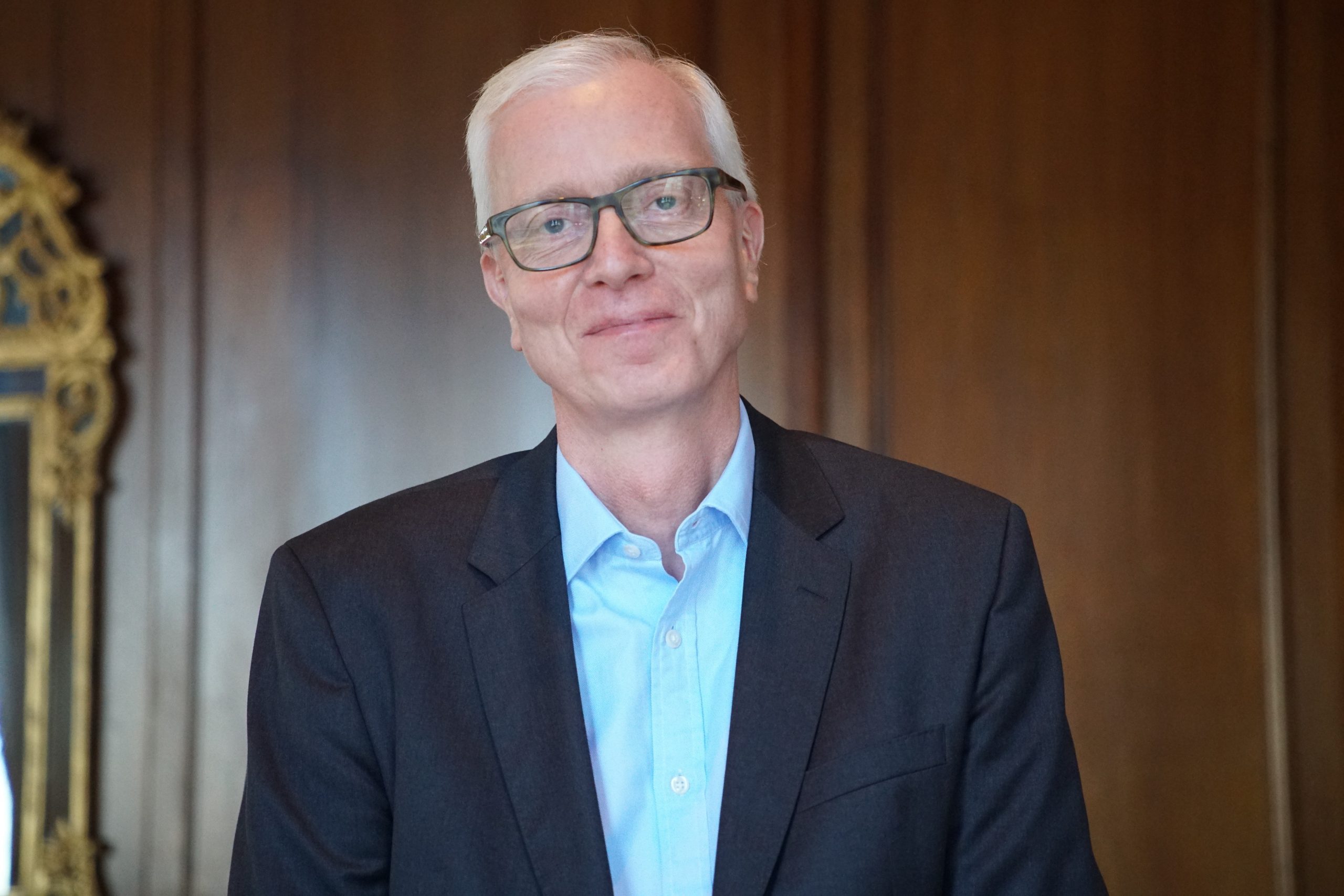
Andrew Baughen is a management consultant specialising in mapping the whole value of organisations. He researches business worldviews and teaches ethics at Bayes Business School and is also an associate minister at St Margaret’s Lothbury.