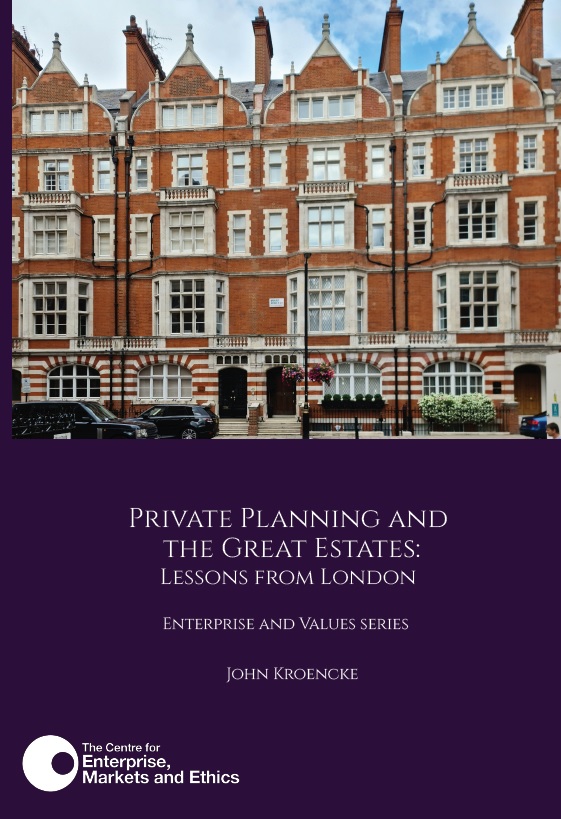
This publication by John Kroencke examines the great estates of London: the large aristocratic landowners who, from the 17th century onwards, developed new districts of inner London. Families such as the Grosvenors in Mayfair and Belgravia and the Cadogans in Chelsea kept ownership of the land as it was built on through leasehold development. When leases ended after a set term, control of the whole area returned to the landowner.
Kroencke shows how this leasehold system amounted to a form of private planning. It worked partly through decisions made when an estate was first laid out. More importantly, it worked over the long term, through private law restrictions and the landowner’s continued ownership. He argues that these planning functions were carried out with an eye to the market. Because their landholdings were so large, the great estates could capture spillover effects that piecemeal development could not.
Rather than maximising the value of any single plot, the estates maximised value across a whole area and over time. This gave them both the interest and the means to provide public goods, such as garden squares like Grosvenor Square and Belgrave Square, and to prevent negative externalities.
ISBN: 9781910666234