
If one wanted to run a political campaign as an idealist left-leaning technocrat, this would be the book to write or use as manifesto. A Brief History of Equality is Thomas Piketty’s attempt to synthesize multiple years of research into a manifesto (albeit one published by Harvard University Press) that a politician could pick up to showcase not only a consistent vision of the world but also the remedies and solutions to make a better one.
Piketty argues there have been strong egalitarian forces—generated via political action leading to institutional and social change—that have worked to moderate the natural forces of capitalism that increase inequality (the argument for this natural tendency is the subject of his famous Capital in the Twenty-First Century). It was the twentieth century—particularly the period from 1914 to 1980—that generated a long egalitarian trend because this is when the egalitarian counterforces gathered momentum: progressive taxation, expansion of public education, greater regulation and social welfare program policies. Ultimately, the proposal is to continue and expand these policies.
Beyond this, any reviewer faces a struggle after reading the book. How should it be reviewed? As political manifestos go, this is outstanding work. There is substance and coherence. At the same time, however, I doubt how much a politician can win on such a manifesto because the remedies offered are also accelerants to the forces of populism and illiberalism. The politics of redistribution can lead to tensions between those who pay and those who receive. This is why numerous economists point out that policies reducing the size of the state (in both scale and scope) are associated with less populism.
For example, when using ‘economic freedom’ indices—which weigh components such as property rights protections, free trade, business regulation, monetary policy, and the size of government—in conjunction with measures of political populism (both right and left), one finds that ‘economic freedom’ depresses populism. In other studies, what some call ‘welfare chauvinism’ is what drives anti-immigrant feelings (nativism). As Krishna Vadlamannati and Indra de Soysa summarized, the ‘positive effect of a bigger immigrant share of the population on support for nativist populism is conditional upon higher degrees of social welfare’ spending. In other words, the book proposes remedies that have fueled the rise of the populist right and left.
It is not surprising, then, that in Piketty’s home country of France, the Rassemblement National of Marine Le Pen and Jordan Bardella (which seems poised to win in 2027) has been a confused mix of left-wing economic policies and right-wing identitarian ones. France, with its sprawling welfare state that goes well beyond what the near-totality of economists would call the optimally sized state, has already implemented most of what Piketty recommends—and it is precisely there that liberal democracy appears most threatened, both from the left and the right.
So, what if the book was reviewed on deeper grounds—that of the deeper scholarly arguments embedded in it? There, I feel I am hardly more positively inclined. This is because the book relies on research that has been heavily criticized in top journals and in ways that dramatically alter the interpretation of the evolution of inequality in western countries.
Consider chapters 6 and 7 where Piketty discusses the fall of income and wealth inequality from 1914 to 1980 and its partial reversal thereafter. Considerable (though not exclusive) attention is devoted to America in these chapters. The decline is causally assigned to the rise of the welfare state and higher tax rates on the rich. However, this ignores multiple works showing that inequality started to decline before 1914—an age tied to ‘laissez faire’ and free markets. The decline has recently been noticed when some researchers (including myself) pointed out that the prices of goods and services consumed by the poor fell faster than those consumed by the rich. This means there was ‘declining’ inequality in the cost of living. This most egalitarian force essentially reverses any increase in inequality between 1870 and 1914 between the top 10% and the bottom 90% and eliminates half of the measured increase in inequality between the top 1% and the bottom 90%. At the same time, there were massive improvements in living standards which means the poor were getting richer nearly as fast as the wealthy.
Then, when one accounts for spatial differences in price levels within the country (suggesting that real incomes differed less than nominal incomes), one further reduces the level of inequality. Because of internal migration, one also reduces the trend of inequality. Extending both adjustments from 1914 to 1941 shows that inequality did not behave at all as depicted. It either stagnated or declined between 1870 and 1941.
But this is not all. The tax data used has many known flaws that historians have long documented (and that contemporaries themselves knew about), but that Piketty has ignored even after their importance was pointed out to him. For example, it is well established that unlike today, tax evasion in America was the ‘poor man’s business’ prior to the introduction of tax withholding in 1943. This is because the IRS had too few resources to investigate anyone but the very rich, and it even advertised that it never really investigated tax returns below $5,000—essentially applying to everyone below the top 1%. The result was widespread evasion below the top 1%. This evasion affects both the estimate of income of the ‘higher income groups’ and the total income of society (because tax evasion also depressed the source materials downward). The result is that we know tax evasion leads to an overestimation of inequality before 1943. By how much? Take any estimate pre-1943 and cut one fifth of it—that is the effect of tax evasion below the top 1% on the estimates of inequality.
Probably most egregiously, Piketty, alongside his co-authors Emmanuel Saez and Gabriel Zucman, was shown to have misused and misunderstood the tax data they employed while making crude assumptions to estimate inequality—even though data that would have avoided these assumptions existed in an easily available form. Correcting these errors (which I documented here before), I have shown that the level of inequality prior to 1943 is overestimated by roughly one fifth of what is reported. Combining this with the effect of evasion mentioned above is difficult because the corrections for the multiple errors of Piketty and Saez overlap with some of those to correct for evasion. However, all the clearly independent corrections suggest that a quarter of pre-1943 inequality is ‘artificial’.
Moreover, most of the decline in inequality did not happen in 1943 with the advent of a more robust tax administration, higher tax rates, and a more generous welfare state. Most of it occurred between 1929 and 1935—during the Great Depression, when virtually everyone was getting poorer. Separate independent works have pushed in exactly the same direction. A large share of the decline is due to the errors but it is computed by the use of a far-less than ideal statistical method. When we shift to a method that is more data-driven and give far fewer degrees of freedom to researchers, we see that the level of inequality is further overestimated by a bit less than one twenty-fifth of the level. Moreover, the errors induced by Piketty and Saez’s choice of method are mostly concentrated in the 1940s in ways that artificially enhance their story. With the superior data method, the majority of the decline occurred during the Depression as a result of collapsing incomes (and notably capital gains income, which is to say the income of the rich).
The overall level and movements of inequality are so massively changed—something which is also confirmed in multiple other pieces of research showing the poor understanding and shoddy treatment of the data by Piketty and his acolytes—that it leads one to accept to a more familiar claim that the only forces that can massively reduce inequality in a short period of time are wars and other catastrophes (e.g., the Great Depression). The tax policies and welfare state praised by Mr. Piketty played a minor support role.
Things only get worse from there since the argument is that the reversal of the golden age of egalitarianism from 1914 to 1980 is due to a reversal of social-democratic policies (and a turn to far more ‘liberal’ policies). In recent years, a great deal of attention has been dedicated to the estimates of inequality after the 1960s. They all show the same thing. For example, Gerald Auten and David Splinter show that the ‘golden age’ of equality was overstated. Once correcting for tax policies that altered how income was reported, they find inequality rose far more modestly. Whereas Piketty estimates the top 1% share of income rising from between 12% and 14% in the 1960 to 1980 period to 20% today, Auten and Splinter place it at between 8% and 10% in the 1960 to 1980 period with a rise to 14% today. Those results are confirmed in separate works using different methods.
Auten and Splinter also reveal that after taxes and redistribution, inequality has not risen since 1960—despite smaller government and lower tax rates—undercutting Piketty’s case for high taxation and expansive welfare states. That finding is echoed in the work of Sylvain Catherine, Max Miller and Natasha Sarin, who showed that once the valuation of social security (National Insurance in Britain) is accounted for, there are no wealth inequality changes between 1960 and today. The welfare state, despite claims to it being slashed, did what it aimed to do—redistribute and moderate inequality. Given that social security is only a part of the welfare state, this also indicts the broader claims that massive expansions of the welfare state generated the golden age.
Other parts of the book are even more problematic than this. Chapter 8 is one of the lesser offenders in that matter. There, Piketty speaks of educational equality. This is in line with a standard view in economics that human capital is important to growth and that inequality affects the capacity to make human capital investments for poor people. Nothing controversial there even if there are quibbles on details. In any case, the importance of human capital to growth and development (especially of the poor) is empirically well documented. When discussing the leveling of 1914 to 1980 and then when discussing what would be needed to generate further leveling in the future, the answer is ‘more education’ and ‘more educational access’. The problem is that there is an implicit assumption that all of the gains in human capital can be attributed to the state’s efforts to provide schooling. Ergo, since schooling reduced inequality and schooling is state-provided, more state-provided schooling is needed. There is a vast literature showing that state provision of education is often of low-quality in developing countries and that a sizable chunk of improvements in human capital (which then contributed to reductions in global economic inequality) actually comes from the market–based provision of schooling. Moreover, empirical studies of ‘educational mobility’—which compare the educational attainment of parents with that of their children—as well as studies of educational achievements over time (without comparing children and parents) consistently indicate that regions characterized by lower tax burdens and greater economic freedom exhibit higher levels of upward mobility in education and higher levels of educational achievements.
In other words, the very institutional arrangements and policy frameworks that Piketty criticizes as obstacles to equality appear, in practice, to foster intergenerational progress in educational achievement. Far from hindering mobility, economic freedom and moderate taxation seem to create an environment in which children are more likely to surpass the educational outcomes of their parents. What this chapter amounts to is a complaint about ‘not enough’ (an arguably fair complaint) and then a series of rehashed clichés about solutions for which there are good reasons (not discussed and ignored) to believe would make things worse.
The most important criticism, however, concerns something barely mentioned in the book—social mobility. The word mobility itself appears only once (page 121). There is a well-documented link between inequality and social mobility, with the logical connection being that inequality limits the ability of the poor, all else equal, to seize opportunities for upward advancement relative to the rich. This is why some speak of the ‘social reproduction of inequality,’ often with tedious distinctions that are without real differences. Yet, that argument has merit. Yet another, equally (and maybe even superior) meritorious argument exists: market–based economies systematically display higher intergenerational and intra-generational income and social mobility.
Using economic freedom indices (notably the Fraser Institute’s Economic Freedom of the World), one can assume that higher scores correspond to more capitalist economies with more liberal policies—precisely less of what Piketty prescribes. Evidence shows that ‘big liberalizations’ not only raise average incomes but also lift those in the bottom deciles along with the top, leaving inequality relatively unchanged. Conceptually similar results apply to economically disadvantaged groups such as women who gain noticeably from liberalizations (there is evidence that this applies to minority groups as well). Crucially, such liberalizations also generate large increases in income mobility. These causal results align with a growing body of associational studies linking economic freedom to greater upward mobility—relationships consistently stronger than those between inequality and mobility.
The reason for this connection is that the welfare state advocated by Piketty does have some potential for uplifting. However, through taxation, it can also discourage effort and innovation, thereby pushing people down. A modest welfare state—designed to target help while minimizing these downsides—is possible. Such a welfare state can be found in the visions of Milton Friedman and Charles Murray (libertarians), Marcel Boyer and Peter Lindert (social democrats), and Arthur Brooks (a conservative). Yet the key ingredient accompanying it must be open markets, minimal regulation, a limited state, and secure property rights (another term that appears only rarely in the book, and when it does, it carries a soupçon of disdain). Ignoring this point—as I was compelled to emphasize earlier in a symposium in Analysis & Kritik (in which Piketty participated, alongside my coauthor Nick Cowen of the University of Lincoln, to discuss another book which is a longer pre-iteration of this book)—is essential for Piketty. After all, the book is a political manifesto. It is not meant to engage with academic or scholarly arguments.
Indeed, to paraphrase Percy Shelley’s Ozymandias, little beside remains of A Brief History of Equality. Round the decay of its pretensions to scholarly output, the only monument left standing is a political manifesto. If the mighty seek to run for office, they may find some use in these pages; so too might Piketty himself, should ambition turn him toward politics. But manifestos are poor substitutes for analysis. They bend to fashion and fleeting desires for fame and popularity, drift with the winds of ideology, and mistake slogans for substance. What endures is not truth, but rhetoric. And, as with so many manifestos before, the time will come when even this too will be forgotten—leaving nothing besides.
‘A Brief History of Equality’ by Thomas Piketty was published in 2022 by Harvard University Press (ISBN: 978-0-674-27355-9. 288pp.

Vincent Geloso is assistant professor of economics at George Mason University and fellow at the Centre interuniversitaire de recherche en analyse des organisations (CIRANO). He has published multiple articles on estimating historical income inequality in multiple journals such Economic Journal, Economic Inquiry, Cliometrica and Southern Economic Journal. He is also senior economist for the Institut économique de Montréal.
In the popular imagination, the US economy is certainly rich in total. But most people who think about the matter probably assume the US partly secures those overall riches by tolerating much higher inequality than is normal elsewhere in the developed world (certainly than in Europe). They assume the US has much higher income and wealth inequality than is allowed in other developed countries, with that occurring partly because transfers to those lower down in the income distribution are much more restricted than those in Europe and partly because those at the very top of the income distribution are allowed to pay lower taxes than is permitted in other countries — indeed, those at the very top paying lower tax rates than those in the middle. They probably also think that inequality in the US is rising over time.
Some people (e.g. myself) might say inequality is of no moral importance. Others may even see the US as an example to follow — if one wants a prosperous society one ought not to try hard to limit inequality. Others may feel high American inequality is a moral and social indictment of capitalism. But whichever of these responses one picks, at least there is agreement that US economic inequality is high and rising.
However, in their book, The Myth of American Inequality, Phil Gramm, Robert Ekelund, and John Early argue that this picture is wrong in almost every respect. Crucially, the vast majority of their case is not about alternative judgements or complex additional factors the standard analysis does not take into consideration. Rather, they argue that the picture is wrong because obvious and in many cases officially acknowledged statistical or methodological errors are not reflected in the relevant official statistics that academic or popular analyses of US inequality rely upon.
A case in point is the income of the poor. US official income statistics simply exclude a large portion of the monies those on lower incomes receive as government transfers. Monies given to those on lower income in the form of food stamps, Medicare, Medicaid, and the reimbursable Earned Income Tax Credit and Child Tax Credit are not counted. That means that only 32 per cent of transfers appear as income. For poor families only 12 per cent of transfers are counted.
Adjusting for this, the authors argue that the top 20% of households have an income only four times that of the bottom 20% (not 16.7 times as per the official statistics). This ratio has declined over time (not risen) – e.g. it was 5.6 to 1 in 1947. Instead of 12.3% of the population meeting the official US poverty definition, only 2.5% do. Perhaps most strikingly, once the effects of taxes are included, the authors argue that the bottom 60% of the population all have essentially the same income.
The authors frequently appeal to independent ways to think about the factors they are considering. For example, when thinking about how poor low-income US households really are they note that the average ‘poor’ American family lives in a house larger than the average middle-income French, German or British family do.
Some of the factors they highlight are extraordinary. The US census-based measure of inequality changed its basis between 1992 and 1993 by increasing the maximum level of income considered (from just under $250k to just under $1m), then in 1999 removed it. That factor alone greatly increased the aggregate measured income at the top even though it involved no actual increase in inequality. Similarly, in 2013 additional categories of income were asked about, again boosting the total without any actual change in inequality. Yet there was no adjustment to the back-series, so official measures of inequality proceed as if the extra income ‘discovered’ by these methodological changes were actual extra income, creating a completely artificial impression of increasing inequality driven by rapid rises at the top.
These two factors alone boosted official statistics on a rise in inequality by 42.1%. The authors argue that income inequality after taxes and transfers actually fell. They find that as of 2017 inequality in disposable income is less in the United States than in the UK or Japan, only slightly above Australia and Canada, and slightly more above that in France and Germany.
Even in terms of taxes, the authors argue that the US imposes the most ‘progressive’ top-end taxes amongst developed countries. The top 10% of US households each 33.5% of income and pay 45.1% of taxes – a ratio of 1.35. The ratio in Germany is 1.07 and in France 1.1.
Tax changes also changed the definition of personal income versus company income, because a 1986 law tax-favoured income over company profits. This led to wholesale corporate structure change, with a flourishing of partnerships and other corporate forms tending to make income more personal. This again boosted measured income at the top without changing actual income.
Academic studies and books such as those of Thomas Piketty that claim the very rich pay lower taxes than average income or low income Americans embody the above errors, but perhaps even more significantly they don’t measure incomes at all. Instead they take the appreciation of asset wealth of the rich and treat it, quite erroneously, as if it were income. Think about that. If you do a degree then your human capital increases — you have some extra skills that you could one day turn into money. But you haven’t done so yet. Your degree cost you money. You didn’t make money by studying because your (human capital) assets had appreciated! If and when the rich spend the increased value attributable to their assets they will pay taxes on that.
Earned income inequality in the US has indeed risen, but that is heavily driven by a large rise in another form of inequality: working hours inequality. The average working hours of the bottom 20% of US households have risen by much less than those in higher quartiles. The authors argue that the reason is that large transfer payments, along with increased ease of receiving them and of receiving them indefinitely (rather than using them for a short period before becoming self-supporting), have reduced the incentives for those at the bottom end of the income distribution to work. Other factors explaining increasing earned income inequality include education and female labour force participation. As the authors put it: ‘Not surprisingly, increased equality of opportunity and the attendant expansion of effort to succeed often generates more earned-income inequality.’
This is not a book for the faint-hearted. It contains extensive statistics and involved reasoning. Some of the points it makes are quite well-known — e.g. the incomplete reflection of increased welfare in income statistics because the value to consumers (what economists call ‘consumer surplus’) of consumer products has greatly increased over time; or the fact that some inflation measures don’t take account of the way consumers can substitute away from products that rise more rapidly in price to slower price-rising products. Some points are contentious — e.g. it is not so obviously a mistake for the benefits paid to those on low incomes to rise in line with inflation metrics that do not assume substitution, because those consuming only necessities may not easily be able to substitute for them.
Overall, though, this is a book that may make you think differently about the inequality (or otherwise) of the American economy — which is exactly what the authors hoped to achieve.
‘The Myth of American Inequality: How Government Biases Policy Debate’ by Phil Gramm, Robert Ekelund and John Early was published with a new preface in 2024 by Lexington Books / Bloomsbury (ISBN: 978-1-538-19013-5). 274pp.

Andrew Lilico is an economist and a writer on politics and philosophy. As managing director of an economics consultancy firm he works extensively with governments and bodies such as the European Commission, especially on technical matters relating to price caps for utilities, auction design and economic analysis of emissions trading systems, and on competition cases (especially cartels). His doctorate is in Game Theory.
The mega-rich have pulled away from the rest of society. Inequality has widened dramatically. And without dramatic government intervention in the form of higher taxes society will eventually be torn apart. There are a whole series of assumptions that the liberal-left, along with much of the media, take as so obviously true that they hardly even need to be debated. There is just one problem, however. As Daniel Waldenström makes clear in this excellent and timely new book, they happen not to be true. In reality, we have, as the title pithily suggests, be getting both richer and more equal – and with a few minor, pro-market reforms we could carry on doing so.
Waldenström is not exactly a household name. As Professor of Economics at the Research Institute of Industrial Economics in Stockholm he has however established himself as an expert on the long term trends in capital, wealth distribution and equality measured over many decades. Indeed, his research was drawn upon by the French economist Thomas Piketty for his best-selling, and very influential, Capital In The Twenty-First Century. And yet, Waldenström draws very different conclusions from Piketty. ‘In this book, I build…a new analysis of the history of wealth and inequality in the West,’ he writes. ‘The data shows that we are both richer and more equal today than in the past, and the accumulation of housing wealth and pension savings among the middle classes emerge as the main factors behind this development.’
The facts, at least as set out here, are very different from the conventional narrative. Digging into 130 years of dense data, Waldenström argues that not only is the world far richer than it was 100 years ago – which admittedly is not going to prove very controversial – but also that ‘the value of assets owned by households after adjusting for hikes in consumer prices has increased many times over’. Perhaps more controversially, at least to anyone under the intellectual spell of Piketty and his many followers, he goes on to argue that ‘the twentieth century ushered in a democratization of wealth’, explaining that while in the 19th century wealth mainly consisted of agricultural and corporate assets concentrated in the hand of a tiny elite, over the last hundred years it shifted to property and pensions savings ‘contributing to a more equal distribution’. Finally and perhaps most importantly of all, Waldenström argues that ‘wealth has become notably less concentrated over the last 100 years,’ a process that he describes as ‘the great wealth equalisation’.
Those claims are backed up with robust statistical evidence surveying all the main assets. In a nutshell, however, Waldström’s key finding is that the spread of home ownership, and of pensions, means that wealth has been very widely distributed at least among the middle classes. Even taking into account offshore wealth, a favourite bugbear of the Piketty crowd, ‘modifies the details, but not the overarching narrative of a decreasing concentration of wealth’. The mainstream critique of capitalism – that it leads to rampant and accelerating inequality – turns out to be completely false. Modern economies have been getting steadily richer and more equal. ‘Over the past 130 years, wealth per capita in Western societies has escalated almost tenfold in real terms,’ the book states. ‘Since 1980 alone, it has multiplied by factors of more than two and three. The accumulation of wealth in the bottom groups outpaced that of the top groups in the postwar era, especially in Europe and, for some periods, also in the US.’
The strength of the book is the mass of detail. For anyone who wants to get into the thickets of why the claims that we are becoming less and less equal are completely unfounded, the statistics, tables, charts and growth are all here. In fairness, that is its weakness as well. Waldenström is not an exciting writer, preferring to meet the claims of his opponents with some detailed footnotes instead of a barbed retort or a rhetorical flourish. It is not going to change many minds for the simple reason that, unfortunately, not many people, especially if they are convinced anti-capitalists, will want to wade through a mass of statistical analysis. Waldenström is preaching to a narrow, specialist audience. That said, he has done the hard work that perhaps others can popularise.
That said, this is important work. The widespread assumption, pushed by the left, that inequality has been getting worse and worse, has led to demands for wealth taxes, global levels on offshore assets, as well as global corporation taxes. If the data is wrong, and Waldenström convincingly shows that it is, then so are the policy recommendations. Instead, we should be looking at what most of the developed world got right over the last 150 years, and how we can continue to become both ‘richer and more equal’. It is not that hard to figure out. First, argues Walderström, we should encourage individual home ownership. It is typically the single biggest driver of equalizing wealth distribution, and, unfortunately, in countries such as the UK, it has been going backwards. We need to get that rising again. Next, we should switch to ‘funded pension schemes’ over ‘pay as you go’ retirement systems, as that way people are building up stocks of assets over their working lives, and that will generate substantial wealth, as well as spreading it amongst the population. We should try to reduce the taxes on income, since it reduces the ability of people on average incomes to invest in their home and their pension, the two key assets that are likely to increase their wealth over time. Finally, we should tax the income earned on capital, not wealth itself, as attempts to impose wealth taxes have time and time again. If we stick to those simple principles, then we should continue to become both richer and more equal just as we have for the last century – no matter how hard the left might try to pretend otherwise.
‘Richer and More Equal: A New History of Wealth in the West’ by Daniel Waldenström was published in 2024 by Polity (ISBN: 978-1-03-207336-1). 256pp.
 Matthew Lynn is an author, journalist and entrepreneur. He writes for The Daily Telegraph, The Spectator and Money Week, is the author of the Death Force thrillers, and is the founder of Lume Books.
In the Introduction to her book Limitarianism, the author Ingrid Robeyns says her project begins with two ‘very urgent and largely overlooked questions. Can a person be too rich? Does extreme wealth have negative consequences?’ Suppose we just changed these questions slightly and asked, instead: Can a person have eyes that are too beautiful? Does the presence of extreme eye beauty have negative consequences? You might feel inclined to say the correct answers are: ‘That’s none of your business.’ And: ‘That’s irrelevant.’ And you would be right.
Your beauty, your intelligence, your good-humouredness, the elegance of your manners — these things all belong to you. They are yours, and it is not for other people to question whether you have too much of them or whether your excesses of them cause damage to others.
‘But’, the wealth questioner cries, ‘Your wealth is not yours in the same sense your beauty, intelligence or good-humouredness are yours.’ And that’s where they are wrong. And that is where their project goes wrong — right at the first step. For your wealth is yours in exactly the same sense your beauty and those other properties are yours. When you use your intelligence, beauty and those other characteristics, we call that your ‘labour’. And your labour is yours, for you are not a slave. And the fruit of your labour is wealth. So the wealth your labour produces is yours because your labour is yours. Furthermore, as well as using your labour to create wealth for yourself, you can give your labour away or you can sell your labour to other people. And in exactly the same way, you can give away or sell the fruit of your labour – your wealth – to other people and other people can give or sell their labour to you. And when they do so, it becomes yours.
Thus there is no ethical distinction between the questions: ‘Can there be too much wealth?’ or: ‘Can there be too much difference in wealth?’ and the questions: ‘Can there be too much beauty?’ or: ‘Can there be too much difference in beauty?’ Both are questioning whether you should really be permitted to have what is yours. And both are equally sinister, based on assumptions liable to lead to the most appalling oppression and de facto enslavement or even scarring.
Robeyns offers four reasons we should believe there should be a maximum amount of wealth permitted. She says the existence of high wealth contributes to the existence of poverty because the very wealthy garner the highest share of newly-created riches and also gain the most from government subsidies and tax breaks. She claims the very wealthy distort political processes through lobbying and campaigning. She says the very wealthy have gained some of their wealth (or its originating basis) at the expense of the climate and would not have become so wealthy if they had been paying the correct externalities taxes as they built up their wealth. And her fourth reason, which she says is the most fundamental, is that wealth is a matter of luck not desert.
These first two arguments are rather uninteresting. Obviously those with the most property tend to gain the most when that property is used. And if subsidies and tax breaks benefit the richest the most, then don’t have subsidies and tax breaks or don’t have those particular ones. This is nothing more than a complaint that government policies aren’t socialist enough. Very dull. Claiming the wealthy distort the political process amounts to little more than the familiar claim that some democratic political systems allow too much spending on political campaigns. If you think that, then have campaigning limits (like those we have in the UK). Or have limits on how much individuals can donate to political campaigns, but bear in mind that there are well-known objections, which explain why such limits don’t often exist. Why, for example, should views that are already popular (and so have lots of adherents willing to donate small amounts of money to fund them) get more of a hearing in a democracy that views initially believed by only a small number of people? Limiting spending on campaigning tends to entrench orthodoxies.
Objecting that wealth wouldn’t be as high if people had paid higher climate taxes at an earlier point might in some contexts be at least a challenge worth responding to. But for the current purpose it’s sufficient to note that it wouldn’t get us anywhere close to a limit on wealth. If someone with $10 billion would only have had $9 billion if she’d paid the right climate levies, that doesn’t remotely imply she ought only to have $10 million!
That leaves us with the fourth objection, which Robeyns rightly regards as the key one. She’s right insofar as there’s a good sense in which we don’t really deserve any of our wealth. We inherit some amount of intelligence, beauty, parental care, money, societal order and environmental placidity. We did nothing to create any of that, but without any of it we would have no chance of flourishing to the extent we do. Even the effort we put in and the self-discipline we exert owe much to our inherited biology.
But so what? Why would the fact there’s a clear sense in which I don’t deserve the things that are mine mean they shouldn’t be mine? I don’t deserve my beauty. I don’t deserve my intelligence. I don’t deserve my genetic propensities towards or against certain cancers. But none of these things are mine as some kind of cosmic reward. They’re mine because they’re mine. They’re not ‘ours’ such that it is for ‘us’ to get to choose, collectively, how much of any of them one individual ‘deserves’ to have.
A key reason people ask whether wealth should be subject to limits is that they envision wealth being transferred to the less wealthy. So although the question is dressed up as about the undesirability of ‘extreme’ wealth it is in the end as much as anything a device for seeking to reduce poverty and to elevate the wealth of the middle classes.
Closely connected to this, a key reason people debate whether wealth should be subject to limits but not beauty is that they do not imagine beauty being transferrable. But we could imagine some future world in which technologies existed to allow us to transfer beauty or intelligence. Surely the invention of such technologies would not suddenly mean there was a legitimate question of whether beauty could be excessive when no such question existed before! Rather, there must be a question of whether extreme beauty is damaging now, and should be redistributed as soon as such a technology exists. And furthermore, perhaps some extremes of beauty are so damaging that it would be better simply to reduce excess beauty now, even if we could not transfer it to others, much as we might accept that some wealth will inevitably be lost in the process of distribution (e.g. in bureaucratic costs or market distortions)?
Inequality has all kinds of explanations and serves all kinds of economic purposes. And some of those with extreme wealth do things like trying to land humans on Mars, trying to solve climate change with electric vehicles and trying to get an AI robot in every home — projects of potentially enormous collective value to humanity, not the worthless vanity projects Robeyns dismisses them as. But these things do not ‘justify’ extreme wealth. For wealth is not the sort of thing that requires any justification.
Perhaps for some people their wealth gets in the way of other things they would be better pursuing. Jesus told the rich young ruler to give all his money away because his wealth was preventing the ruler from doing the thing that would be best — following Jesus. The same may be true of extreme intelligence or beauty (there is a House episode in which a genius takes medicine to make him less intelligent so he can be happier). And if some very wealthy people want to give their wealth to charities, that is how they choose to use it and is their business, every bit as much as if you choose to use some of your labour working cooking meals in a homeless shelter, that is your business.
But at the fundamental level, what is mine is mine, whether that is beauty, intelligence or wealth. And whether I deserve to have what is mine is neither here nor there and is not a basis on which others are entitled to decide I have too much of it.
‘Limitarianism: The Case Against Extreme Wealth’ by Ingrid Robeyns was published in 2024 by Penguin (ISBN: 978-0-24-157819-3). 336pp.

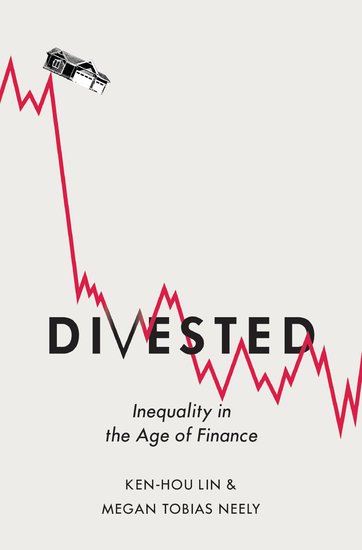
Ken-Hou Lin is an Associate Professor of Sociology at the University of Texas at Austin and Megan Tobias Neely is a Post-Doctoral Researcher at Stanford University, studying gender, race and social class inequality. They are alarmed by the growth of inequality in the United States of America over the past generation and blame this on the “financialisaton” of the US economy, which they define as “The wide-ranging reversal of the role of finance from a secondary, supportive activity to a principal driver of the economy” (page 10, italics original). They assert that “To understand contemporary finance is to understand contemporary inequality” (page 2) and that previous studies often touch only on fragments of the connection between finance and inequality. Hence, they set out to “provide a more comprehensive synthetic account of how financialisaton has led to greater inequality in the United States” (page 4).
The analysis which follows includes a whistle stop review of the world economic system since the Second World War and a closer examination of many trends over recent decades. Building on the work of others, they bring together copious statistics, particularly in the form of dozens of graphs indicating economic trends. Absorbing the statistics and considering their implications takes time, so this is not a book to be read fast. However it is not a heavy read and does not require a great amount of prior knowledge.
Lin and Neely make a number of interesting observations that deserve careful consideration. These relate to subjects as diverse as the implications of outsourcing, the reluctance of employers to provide on the job training and the risk implications of the modern dislike of investment managers for conglomerates. There is thus much in the book that is worthy of consideration.
Unfortunately, however, the analysis that the authors provide, which purports to bring the wealth of statistical information together, is most unsatisfactory. In particular, the analysis of causation is poor and unpersuasive even in relation to the core thesis of the book. Although Lin and Neely acknowledge the role of globalisation and the growth of IT in increasing inequality (at one point saying that former “is a broadly convincing explanation of rising inequality”, page 38), they dismiss these things as primary factors, regarding them as essentially background circumstances against which other things have resulted in growing inequality. Yet there is no satisfactory analysis to back up this position and their blaming of many US specific factors is somewhat undermined by their frank admission towards the end of the book that “similar trends have unfolded in Europe, Asia, and other countries” (page 181).
The book contains many statements designed to demonstrate that the authors recognise fundamental economic realities and do not wish to deal in caricatures: early in the book, they recognise that finance is indispensable for a prosperous society and dismiss populist claims that financial professionals are evil; they acknowledge that deregulation could be beneficial (citing evidence that suggests that relaxing the US intrastate bank branch restrictions in the 1980s was associated with local economic growth); they draw attention to the problems with Keynesian economics that emerged in the 1960s and 1970s; and they accept the value of many financial products, including derivatives. However, these promising statements are outnumbered by less balanced comments and, at times, careful analysis is replaced by extreme assertions, such as the statement that the profitability of financial ventures “depends on the harm they bring” (page 60, emphasis original) and that finance “has morphed into a snake ruthlessly devouring its own tail” (page 83).
On a number of occasions, the authors come close to Luddism. The statement that the Industrial Revolution “created … massive poverty” (page 29) is extraordinary but irrelevant to the argument of the book. However, other statements are less easily ignored. For example, it is clearly arguable that some of the cost cutting and other actions taken by the management of numerous companies over the past generation has been unduly influenced by short-termism (particularly short-term stock market considerations) and on occasion has been carried out in a way that many would consider reprehensible. If Lin and Neely had confined their comments regarding cost cutting to this then there would have been little to object to in what they say about it. However, they do not: they lump together all cost saving measures and thus fail to recognise the long-term economic benefits of continually increasing efficiency. Thus they comment adversely on those managers who had “a deep conviction that a firm’s performance could be optimised with sophisticated cost-benefit analysis” and that parts of companies should “be evaluated, eliminated, or expanded according to their profitability” (page 87). They also lament the fact that “new technologies have been adopted to replace unionised work forces” (page 110) and the fact that “To maximise returns for shareholders, firms have cut costs by automating and downsizing jobs, moving factories oversees, outsourcing entire production units, and channelling resources into financial ventures” (page 118).
Although in places, the authors acknowledge that things were not perfect in the past and they warn about romanticising it, there is a definite note of nostalgia in the book. On several occasions, they contrast current management attitudes unfavourably with what they perceive to be the objective of US industrialists in past years, namely “to broaden their market share – the prior gold standard for corporate management” (page 180). They also talk fondly of the historic “capital-labor accord” (e.g. page 45) and suggest that there was once “a fair-wage model” that sustained long-term employment relationships (page 47), seemingly blind to the confrontations that dogged industrial relations in the USA and elsewhere through much of the twentieth century. One wonders whether, deep down, they are nostalgic for the days of US economic hegemony and the prosperity that it bought in the generation following the Second World War.
Whatever the deficiencies in the book’s analysis one would have expected it to contain clear policy suggestions but it does not. Lin and Neely urge us to “scrutinise the rules of the game” (page 177) and call for “inventive and carefully considered policies” (page 184) but what follows is little more than a series of vague general comments and micro proposals. It is hard to understand what the authors are advocating. For example, in the introduction, they indicate that they believe that policies targeting high-earners, such as earnings caps and progressive taxes, are necessary but they never explain what kind of earnings caps they have in mind and, in their conclusion, appear to suggest that increasing tax may not be practicable or even the best approach. Likewise, having suggested on various occasions that the repeal of the Glass-Steagall Act (the US Banking Act of 1933) has caused many problems, the authors declare that “The Glass-Steagall era has passed and its restrictions are no longer sensible a century later” (page 184).
The book concludes in an anti-climax: “We suspect that there are many answers to the social question through which economic institutions could be organised and conducted so that all members of society more justly share their benefits. These answers must be imagined” (sic, page 190). Indeed they must, because there is little in the book to tell us what they might be.
“Divested: Inequality in the Age of Finance”, by Ken-Hou Lin and Megan Tobias Neely, was published in 2020 by Oxford University Press (ISBN 978-0-19-0638313). 190pp.
 Richard Godden is a Lawyer and has been a Partner with Linklaters for over 25 years during which time he has advised on a wide range of transactions and issues in various parts of the world.
Richard’s experience includes his time as Secretary at the UK Takeover Panel and a secondment to Linklaters’ Hong Kong office. He also served as Global Head of Client Sectors, responsible for Linklaters’ industry sector groups, and was a member of the Global Executive Committee.

Thomas Piketty’s Capital in The Twenty-First Century, published in 2013 (English edition, 2014), is the economics equivalent of Stephen Hawking’s A Brief History of Time: it is a technical book that has secured mass sales, over two and a quarter million copies having been sold worldwide. One may wonder how many of the purchasers have read and properly understood it but there is no doubt that it has achieved almost cult status among those on the left of the political spectrum.
Its reception amongst economists has been mixed with divisions along predictable lines. Few, however, deny that its arguments, and the wealth of data underlying them, require critical evaluation and After Piketty, edited by Heather Boushey, J. Bradford DeLong and Marshall Steinbaum, is a significant academic contribution to this process. It focusses on the issue of economic inequality and comprises 21 essays framed by an introduction from the editors and a response to the essays from Piketty himself. Most of the contributors are economists, although some come from other disciplines (e.g. Daina Ramey Berry is Professor of History and African Diaspora Studies at the University of Texas and Gareth Jones is Professor of Urban Geography at the London School of Economics).
It is not a book to be read quickly and non-economists will find some parts heavy going, especially those littered with mathematical formulae. However, most of the book is accessible to any intelligent reader and, since Piketty’s key arguments are clearly set out, a prior knowledge of these arguments is not essential.
Most of the contributors are left-leaning and share significant parts of Piketty’s political outlook and the editors pin their colours to the mast in their introduction: they ask whether Piketty’s arguments are right or, at least, if they are not definitely right, whether his “disturbing scenario” is plausible and state that “the answer strongly appears to us to be: yes” (page 9). However, the book as a whole is by no means uncritical of Piketty. In fact, parts of it attack the foundations of his arguments and leave his edifice tottering.
Some of the essays are poor. In particular, a few descend into tedious left-wing rants (e.g. the section of Suresh Naidu’s essay entitled “Spheres of Wealth-Dictated Injustice”) and a number contain flashes of imprecise polemic, of which the reference to “proto-fascist populism” in the editors’ introduction is the first example (page 4).
Sadly, the essays of two of the editors (Heather Boushey and Marshall Steinbaum) are among the weakest in the book: Heather Boushey’s “A Feminist Interpretation of Patrimonial Capitalism” contains a few important points but ultimately adds little to the debate whilst Marshall Steinbaum’s “Inequality and the Rise of Social Democracy: an Ideological History” comprises a whistle-stop 30 page economic history of the USA, UK, France and Germany which is packed with contentious and unsupported assertions (of which perhaps the most extraordinary is the statement that the American entry into the First World War “had the flavour of a fanciful, elite foreign adventure”, page 448) and simple factual inaccuracies (such as the assertion that the UK government ministers during the Second World War “were for the most part the Labourites who had long advocated for a planned economy”, page 456). Gareth Jones’s essay (subtitled “Inequality, Political Economy, and Space”) is likewise short on careful logic and long on aggressive attacks on standard left-wing targets.
Parts of the book focus on issues that most people would regard as peripheral to its main subject (e.g. the two chapters that focus on historic – not modern – slavery) and there are a number of points that are assumed rather than argued (e.g. the Fabian sounding belief, expressed by several of the authors, that education is a key to overcoming the equality gap, which needs to be examined in the light of the growing evidence of the existence in a number of countries of a significant number of university educated people who are unable to secure anything other than low paid jobs). Furthermore, there are significant omissions. In particular, despite the commendable desire of the editors to integrate economics and other social sciences, there is no discussion of the impact of the conclusions and policy prescriptions on individual freedom, an omission that is most notable in David Singh Grewal’s essay, “The Legal Constitution of Capitalism”, which chillingly attacks the rule of law on the basis that it upholds capitalism.
These failings unquestionably mar the book but it remains well worth reading. It contains a number of high quality essays and much that should be thought provoking for all readers, whatever their political persuasions. The high points include Devesh Raval’s essay critiquing Piketty’s model, Eric Nielsen’s essay on human capital and wealth, Laura Tyson and Michael Spence’s essay on the effects of technology on income and wealth inequality and Mark Zandi’s essay on the macro-economic implications of rising inequality. Christoph Lakner’s essay regarding the global perspective is also an important correction corrective to the unduly western (or US) perspectives of some of the other essays.
Devesh Raval attacks Piketty’s famous assertion that inequality will continue to rise because r > g (the rate of return on capital is greater than the rate of economic growth). He points out that Piketty’s estimates of the elasticity of capital-labour substitution are out of line with the available literature and suggests that, in fact, capital and labour are not substitutable enough to sustain Piketty’s argument. He goes on to put forward two other explanations for the rise in the capital share of the economy: globalisation and labour saving technical change. These themes are then developed in subsequent essays, notably by Tyson and Spence and by Lakner. The conclusion of the former is that, “Inequality in market-based wealth and incomes is likely to increase over the next several decades, not because of features inherent in the capitalist system, but because of the effects of the digital revolution …” (page 203).
Neilsen questions Piketty’s focus on capital as the market value of tradeable goods. He cogently argues that “the omission of human capital is a serious weakness for both the data and the theory presented by Piketty” (page 151). In particular, he points out that inherited endowments include not merely the financial endowments considered by Piketty but also “social networks, cultural attitudes, and much else” (page 165). He rightly suggests that the inclusion in human capital in the mix is likely to result in policy proposals dramatically different from those put forward by Piketty. Indeed, he is bold enough to point out that, “A possible effect of Piketty’s plan … would be the immiseration of everyone to achieve a reduction in inequality”.
Some of the other contributors are likewise willing to draw conclusions that are unlikely to be welcome to many of Piketty’s supporters. In particular, coming from a global perspective, Lakner asserts that “The available evidence suggests that the Gini index of the global distribution of income has fallen for the first time since the Industrial Revolution, a development that is likely to continue” (page 261) and Zandi suggests that the “hand wringing over the prospects of a further erosion in income and wealth inequality the implications for the economy’s performance”, although reasonable, is likely to be misplaced since “prospects are good that inequality has peaked” (pages 406/7).
Such comments and conclusions demonstrate that, taken as a whole, After Piketty is by no means a simple contribution to the left wing scriptures: it is a serious exploration of the issues raised by Piketty. In fact, perhaps its most valuable contribution to the ongoing debate about inequality is the honest admission in a number of the essays that, despite the wealth of data that is now available and despite Piketty’s analysis, there remains much that we don’t know or don’t understand. Zandi points to numerous methodological and modelling problems that limit our understanding and several of the other authors point to deficiencies in the available data. The result is that, as Mariacristina De Nardi, Giulio Fella and Fang Yang point out in their essay, “Macro Economic Models of Wealth Inequality”, the mechanisms that cause both overall wealth inequality and individual outcomes within that distribution of wealth remain uncertain. Zandi thus wisely concludes, “Macro-economists should … not be comfortable that they have a good grip on what inequality means for our economic prospects” (page 411).
“After Piketty”, edited by Heather Boushey, J. Bradford DeLong and Marshall Steinbaum, was published in 2017 by Harvard University Press (ISBN 9780674504776). 565pp, plus notes.

Richard Godden is a Lawyer and has been a Partner with Linklaters for over 25 years during which time he has advised on a wide range of transactions and issues in various parts of the world.
Richard’s experience includes his time as Secretary at the UK Takeover Panel and a secondment to Linklaters’ Hong Kong office. He also served as Global Head of Client Sectors, responsible for Linklaters’ industry sector groups, and was a member of the Global Executive Committee.